Garden Blog - Top Tropicals

Date: 28 Jan 2026

Moonlight Cactus, the Night Blooming Wonder with a mystical twist: Epiphyllum oxypetalum FAQ

Epiphyllum oxypetalum, Queen of the Night

Epiphyllum oxypetalum, Queen of the Night

Epiphyllum oxypetalum, Queen of the Night, Night-Blooming Cereus, flower close up

Epiphyllum oxypetalum, Queen of the Night, Night-Blooming Cereus, flower close up

Epiphyllum oxypetalum, Queen of the Night, Night-Blooming Cereus, flower

Epiphyllum oxypetalum, Queen of the Night, Night-Blooming Cereus, flower

Epiphyllum oxypetalum, Queen of the Night flower center

Epiphyllum oxypetalum, Queen of the Night flower center

Epiphyllum oxypetalum, Queen of the Night flower with highlight

Epiphyllum oxypetalum, Queen of the Night flower with highlight

Epiphyllum oxypetalum, Queen of the Night flower with highlight

Epiphyllum oxypetalum, Queen of the Night flower with highlight

🔮 Moonlight Cactus, the Night Blooming Wonder with a mystical twist: Epiphyllum oxypetalum FAQ


🌙 Epiphyllum oxypetalum, also known as Queen of the Night or Night-Blooming Cereus, is a tropical epiphytic cactus famous for its huge, fragrant white flowers that open only at night. The blooms usually last just one night, often opening after sunset and closing by morning, which is why it has such a mystical reputation. The plant itself has long, flat, leaf-like stems and is often grown in hanging baskets or trained to climb. It is easy to grow, prefers bright filtered light, and rewards patience with one of the most dramatic blooms in the plant world.
  • 🎆 Why is it called Queen of the Night?


    Because it produces large, fragrant white flowers that open only at night. The blooms usually open after sunset and close by morning.
  • 🎆 How often does it bloom?


    Usually once or a few times a year, often in late spring or summer. Blooms are short-lived but unforgettable.
  • 🎆 Is it really a cactus?


    Yes, but it is a tropical epiphytic cactus. It grows more like an orchid or jungle plant than a desert cactus.
  • 🎆 Does it need full sun?


    No. It prefers bright, filtered light or partial shade. Direct hot sun can scorch the stems.
  • 🎆 Can it be grown indoors?


    Yes. It does very well indoors near a bright window or outdoors in warm, shaded areas.
  • 🎆 Does it need a lot of water?


    More than desert cacti, but not soggy soil. Water when the top layer of soil dries out.
  • 🎆 Can it grow in a pot or hanging basket?


    Yes. It is commonly grown in containers, hanging baskets, or trained to climb on a support.
  • 🎆 Is it rare?


    Mature blooming plants are highly valued because flowering takes patience and good care.


🛒 Add Moonlight Queen of the Night to your exotic plant collection

Collect epiphytic jungle cacti:

📚 Learn more:

Plant Facts

Epiphyllum oxypetalum
Belle de Nuit, Lady of the Night, Queen of the Night, Night blooming Cereus, Dutchman's Pipe
USDA Zone: 9-11
Large shrub 5-10 ft tallSemi-shadeShadeModerate waterRegular waterEpiphyte plantWhite, off-white flowersPink flowersPlant attracts butterflies, hummingbirdsFragrant plantSubtropical plant. Mature plant cold hardy at least to 30s F for a short time

#Container_Garden #Shade_Garden #Nature_Wonders

🟢 Join 👉 TopTropicals

Date: 25 Jan 2026

Collecting clerodendrums: big color, little effort

Clerodendrum collage

Clerodendrum collage

🎨 Collecting clerodendrums: big color, little effort

  • 🎨 Collector hook


    If you love plants that look rare, unusual, and a little dramatic - but do not want high-maintenance divas - Clerodendrums belong in your collection.
    Clerodendrums are a surprisingly diverse group of plants, ranging from flowering vines to shrubs and even small trees. What they all share is bold, colorful blooms and an easygoing nature that makes them far less fussy than they appear. This combination of exotic looks and forgiving care is exactly why collectors gravitate toward them.
    Many clerodendrums bloom repeatedly through the year in warm climates, and several tolerate lower light better than most flowering plants. That makes them flexible - happy in the garden, in containers, on patios, or even indoors near a bright window. Their flowers come in striking combinations of red, white, blue, pink, and purple, often with unusual shapes that stop people mid-walk.
  • 🎨 Why clerodendrums earn collector status


  • ✦ Uncommon, eye-catching flowers
  • ✦ Long or repeat bloom cycles in many varieties
  • ✦ Vines, shrubs, and small trees in one genus
  • ✦ Excellent performance in containers
  • ✦ More tolerant of lower light than expected


🎨 Clerodendrum care made simple


Give clerodendrums bright filtered light to partial sun, regular watering with good drainage, and light feeding during active growth. A little pruning keeps them tidy and encourages fresh blooms. That is it. No complicated routines, no constant fixing.

For collectors who want maximum visual payoff without constant effort, clerodendrums deliver exactly what the title promises - big color, very little work.

🛒 Start your Clerodendrum collection

📚 Learn more:
#Butterfly_Plants #Shade_Garden #How_to #Hedges_with_benefits #Container_Garden

Plant Facts

Clerodendrum bungei
Cashmere (Cashmir) bouquet, Glory Bower, Clerodendron
USDA Zone: 9-11
Large shrub 5-10 ft tallSemi-shadeFull sunRegular waterRed, crimson, vinous flowersPink flowersPlant attracts butterflies, hummingbirdsDeciduous plantFragrant plantSubtropical plant. Mature plant cold hardy at least to 30s F for a short time
🟢 Join 👉 TopTropicals

Date: 9 Jan 2026

Mango Tree for Zone 5: top 15 Condo Mango for growing in cold areas

Mango Tree for Zone 5

🥭 Mango Tree for Zone 5: top 15 Condo Mango for growing in cold areas

  • 🥭 Can you grow a mango tree in Zone 5? Short answer - yes! The trick is - containers!
  • Mango trees are tropical plants but they do great in pots when you choose the right varieties.
  • 🥭 Compact types stay short, respond well to pruning, and produce in containers.
  • You can grow them on a patio, balcony, even move them indoors in your condo for winter. That is why they are called condo mangoes!
    During warm months, they live outside.
    When cold weather hits, they come inside.
  • 🥭 With good light, proper watering, fertilizing, and some patience, these trees can reward you with real mangoes. Not a farm harvest, but enough to enjoy and share.


🏆 Most popular Condo Mango varieties:


Baptiste
Carrie
Cogshall
Diamond
Fairchild
Ice Cream
Julie
Keitt
Lancetilla
Lemon Meringue
Mallika
Nam Doc Mai
Okrung
Pickering
Venus

🛒 Discover Condo Mango

📚 Learn more:
#Food_Forest #How_to #Discover #Mango

🟢 Join 👉 TopTropicals

Date: 20 Feb 2026

Florida freeze damage - what to replant after a record cold winter

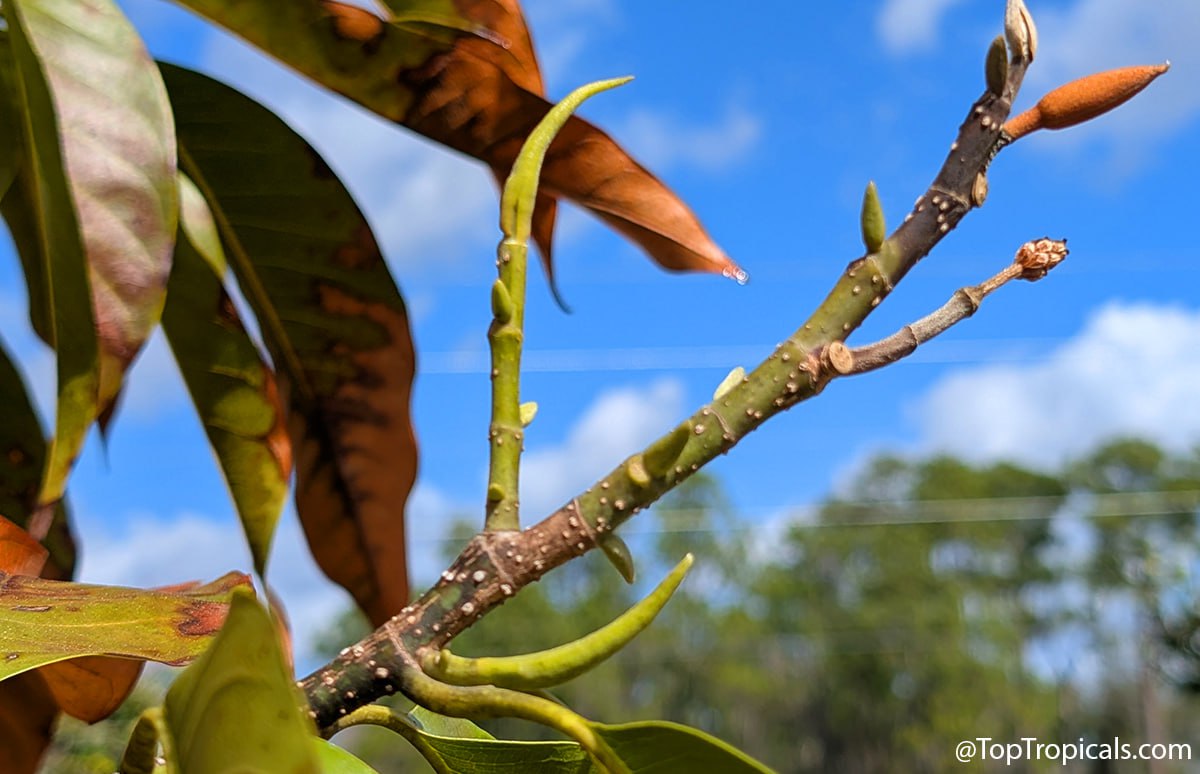
Magnolia champaka new shoots

Magnolia champaka new shoots

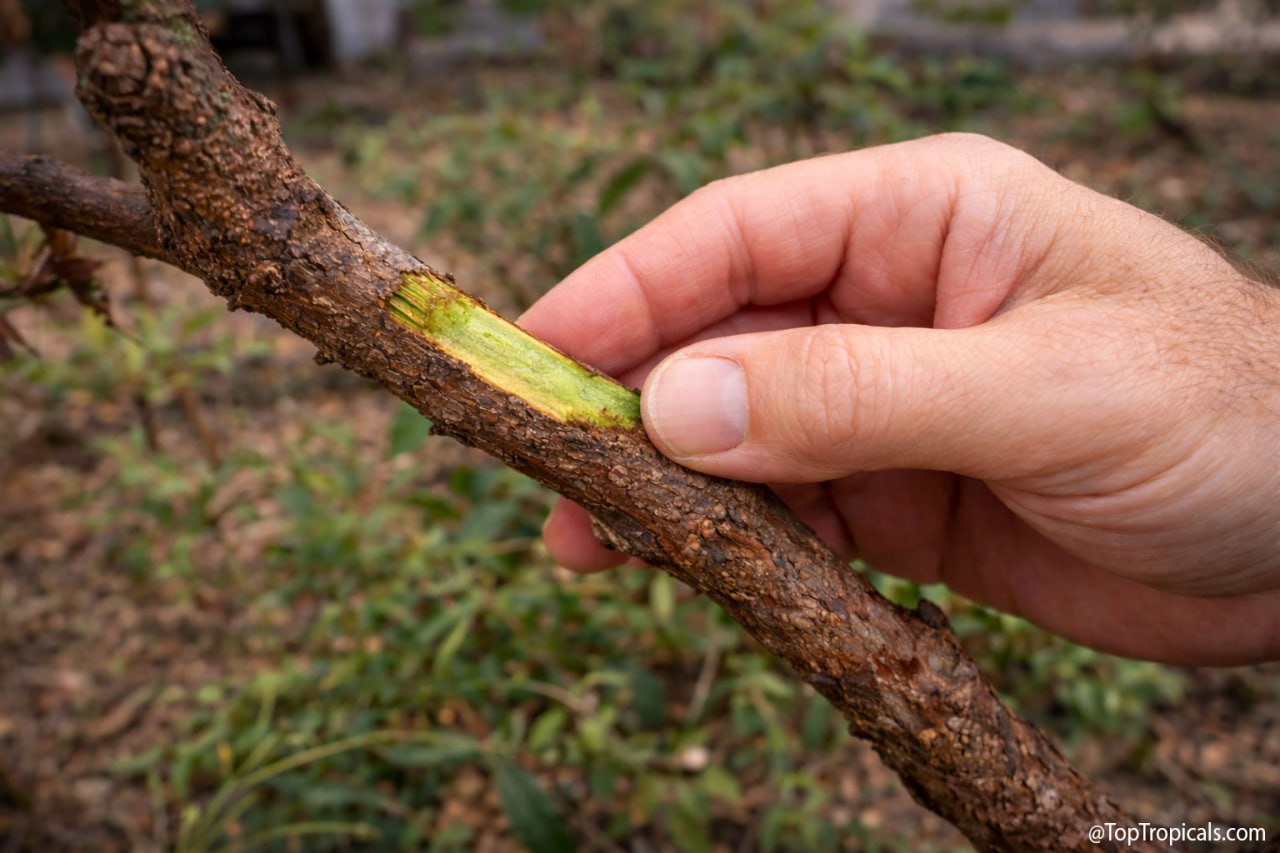
Scratch test on a bark

Scratch test on a bark

❄️ Florida freeze damage - what to replant after a record cold winter

  • 🌱 A record freeze changed Florida gardens


    After the recent record cold across Florida, many gardeners are now seeing the real damage - browned leaves, split stems, collapsed shrubs, and fruit trees that may not recover.
    Some plants surprised us with new growth. Others are clearly gone.
    The practical question is simple: what should you replant so it does not happen again next winter?
    The good news - you can build a more frost-resilient garden without giving up beauty or fruit.
  • 🌱 First - do not rush to rip everything out


    Before replacing anything, check carefully:

Scratch the bark lightly - green underneath means the branch is alive.
  • Wait for consistent warm weather - some plants re-sprout weeks or even months later.
  • Look for growth higher on the stem, not just at the base.
After freezes, many tropicals look worse than they are. Patience often saves money.
  • 🌱 Why some plants survived and others did not


    Freeze survival depends on several factors:

Duration of cold - 2 hours vs 8 hours makes a major difference
  • Microclimate - south-facing walls, wind protection, canopy cover
  • Plant maturity - established roots handle stress better
  • Pre-freeze health - overfertilized, soft growth freezes faster
This explains why two identical plants in the same yard can perform very differently.
  • 🌱 What to replant for a frost-resilient garden


    Instead of replacing losses with the same tender species, consider:

Cold-hardy fruit trees
  • Proven freeze survivors from this winter
  • Shrubs that tolerate brief dips below freezing
  • Layered planting for wind protection

  • When redesigning:
  • Plant tender species closer to structures.
  • Use hardy trees as windbreaks.
  • Avoid low frost pockets.
  • Improve drainage - wet roots freeze faster.
You do not have to remove tropical character. You just have to plant smarter.

✍️ Check the list of freeze survivors:


What tropical plants survived Florida's historic freeze without protection
  • 🌱 Rebuild with strategy, not emotion


    After freeze damage, many gardeners replant quickly - only to repeat the same losses.
    A better approach:

Identify what truly died.
  • Learn which species survived locally.
  • Choose varieties proven in your climate zone.
  • Design with cold in mind.
One freeze can become a turning point. Many Florida gardens become stronger after a hard winter because the plant list gets refined.

🌱 Spring Equinox - a natural reset


The Spring equinox marks equal day and night and the astronomical start of spring. From this point forward, daylight increases and active growth accelerates.
For Florida gardeners, it is a natural reset.
New growth begins. Roots wake up. Replacement planting becomes safer.
This is the right time to rebuild.

🛒 Explore cold tolerant tropical plants and cold hardy Avocados

📚 Learn more:


#Discover #How_to

🟢 Join 👉 TopTropicals

Date: 10 Feb 2026

Cold-hardy avocado survival groups - what the numbers really mean

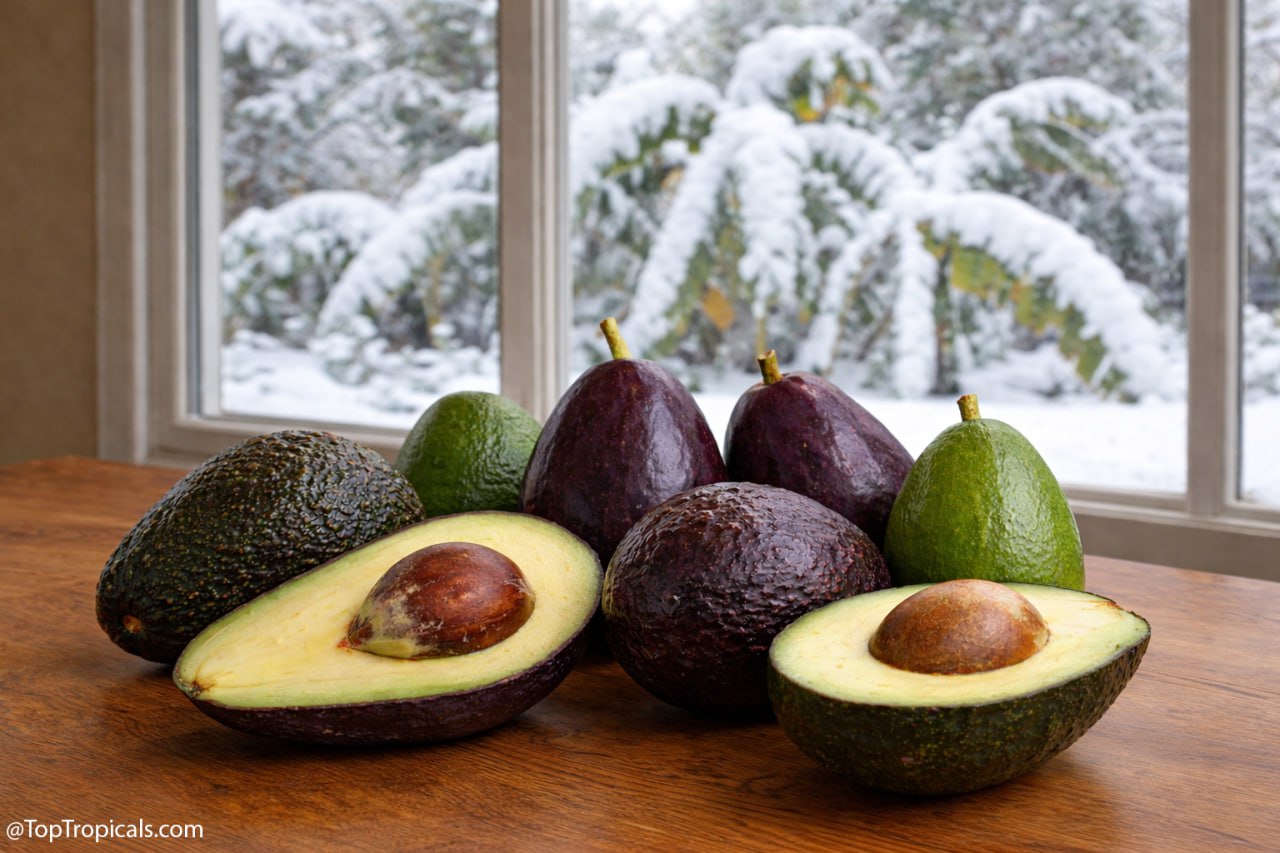
Different varieties of Avocado fruit on a table

Different varieties of Avocado fruit on a table

Cold-hardy avocado survival groups - what the numbers really mean


Avocado cold hardiness is often misunderstood. Temperature numbers do not mean a tree stays untouched - they describe survival, not appearance. Leaf burn, twig dieback, and temporary setbacks are normal even on hardy varieties. The difference is whether the tree recovers.
Below are cold-hardy avocado varieties grouped by minimum reported survival temperatures, along with what growers typically observe after a freeze.

🌡 Hardy to 15F:


Brazos Belle (Wilma), Fantastic, Joey, Lila (Opal), Day.
Best freeze survivors. Minor leaf burn possible, but trees usually recover quickly with little structural damage. These are among the most cold-tolerant avocado varieties when fully established and exposed to short-duration freezes.
What to expect: Trees in this group often survive temperatures near 15F with little to moderate leaf damage. Some tip dieback is possible, but major limb loss is uncommon. Recovery is usually strong once warm weather returns, especially in dry winter conditions.
  • 🌡 Hardy to 20F:
  • Bacon, Brogdon (Brogden), Fuerte (Dwarf), Mexicola, Miguel, Ulala (Super Hass), and Waldin.
    Reliable survivors in cold-prone areas. Expect leaf damage and some setback, but established trees typically rebound.
    These varieties perform well in marginal climates and are commonly grown where freezes are expected but not extreme.
    What to expect:
    Leaf burn is common at or below 20F, and young shoots may be damaged. Trees typically survive, but may need a full growing season to regain canopy density. Established trees usually rebound well with good drainage and protection from wind.
  • 🌡 Hardy to 25F:
  • Black Prince, Choquette, Hall, Hardee Red, Lula, Marcus Pumpkin, Mexicola Grande, Nishikawa, Oro Negro, Poncho (Pancho), Tonnage, Winter Mexican, Wurtz (Dwarf) and Yamagata.
    Moderate cold tolerance. Leaf drop and branch dieback are common after freezes, though trees usually survive.
    This group includes moderately cold-tolerant avocados that handle light freezes but are more easily damaged during prolonged cold.
    What to expect:
    Expect noticeable leaf drop and some branch dieback when temperatures fall near 25F. Trees usually survive but may look rough for weeks or months. Proper placement and drainage greatly influence recovery speed.
  • 🌡 Hardy to 30F:
Bernecker, Catalina, and Florida Hass (Haas).
Frost-tolerant only. Damage occurs quickly, and repeated freezes can cause serious stress without protection.
Actual results depend on tree age, freeze duration, wind, moisture, and microclimate. Lower numbers do not mean damage-free - they mean the tree lived to grow again.
These avocados are best suited to areas with only occasional frost and minimal freeze exposure.
What to expect:
Leaf damage occurs quickly near 30F, and unprotected trees may suffer significant canopy loss. Survival is possible during brief cold events, but repeated freezes can cause lasting damage. These varieties benefit most from proactive protection.

❗️ Important reminder


All temperature figures are approximate and experience-based, not guarantees. Survival depends on tree age, duration of cold, wind, moisture, and microclimate. Cold tolerance improves significantly as trees mature, while young trees remain vulnerable across all groups.
Understanding the difference between survival and damage is the key to choosing the right avocado for colder climates.

🛒 Explore cold hardy Avocado varieties

📖 Our Book: Avocado Variety Guide, Snack or Guacamole?

📚 Learn more:


🎥 These Avocados survived 25F hard freeze 3 nights of Florida Record Freeze

#Food_Forest #Avocado #Discover #How_to

🟢 Join 👉 TopTropicals