Garden Blog - Top Tropicals

Date: 6 Dec 2025

🌿 Bring the Jungle Inside: Winter Survival Guide Part 1: Lighting ❄️

Smokey  the  taxedo  cat  adjusts  an  indoor  grow  light  while  Sunshine  the 
 ginger  tabby  sits  holding  a  hygrometer  he  does  not 
 understand.

Smokey: "Winter lighting must be precise. I need this light exactly at 14 inches."
Sunshine: "Sure. I am holding this… little number thing."
Smokey: "It reads humidity. Your main job is to look cute."

🌞 LIGHT, TEMPERATURE, PLACEMENT

Winter indoors is a different kind of battlefield. Dark rooms. Dry air. Cold windows. Random drafts. Weak light. Sad plants. We've been talking about keeping your tropicals alive outdoors previously. But some of you have no choice this time of year. You have to bring the jungle inside.

If that is you, then this is your plant survival guide.
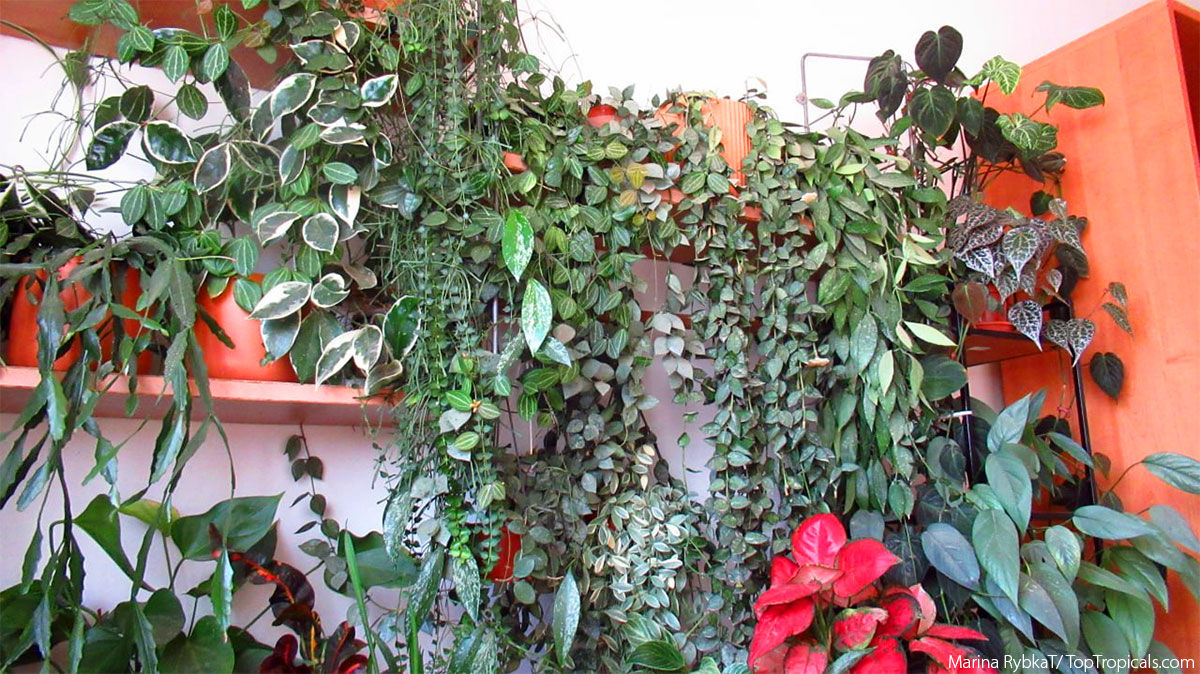
Indoor  wall  of  tropical  houseplants,  including  cascading  vines,  variegated  foliage,  and  mixed  aroids  arranged  on  shelves.

☀️ LIGHT: THE WINTER LIFELINE

Light advice here comes straight from our in-house expert, Michael Dubinovsky, a high-tech lighting engineer with over 30 years of hands-on experience. If he says brightness beats hours, trust him.

Here is the truth: Indoor light in winter is 10 to 50 times weaker than outdoors. Short days. Low-angle sun. Windows filtering half the useful light. It all adds up.

Tropicals need 10 to 12 hours of real brightness. Winter sun cannot do that on its own. Not even in a big window. So we help them.

Use bright LED shop lights or utility lights. 5000K to 6500K CCT. High lumen output. Skip decorative bulbs. Skip purple grow fancy toy lights. If you want a single plant light, even a clamp lamp is fine if you screw in a bright daylight LED bulb.

Panels work best for plant clusters. Bars for shelves. Bulbs for single plants. And grouping plants under one bright panel always beats spreading them out.

Distance matters: keep LEDs about 12 to 18 inches above the leaves. Too close: leaf burn. Too far: stretching, weak stems.

Leaves reaching up? Light is too high or too weak. Leaves curling down? Light is too close.

If you want a reality check, download any smartphone lux meter app. Most indoor corners are 50 to 200 lux without supplemental light. Tropicals want much more

And a quick tip about windows: winter sun comes in sideways. A spot that looks bright at noon can go dull by 2 PM. Don't count of window light
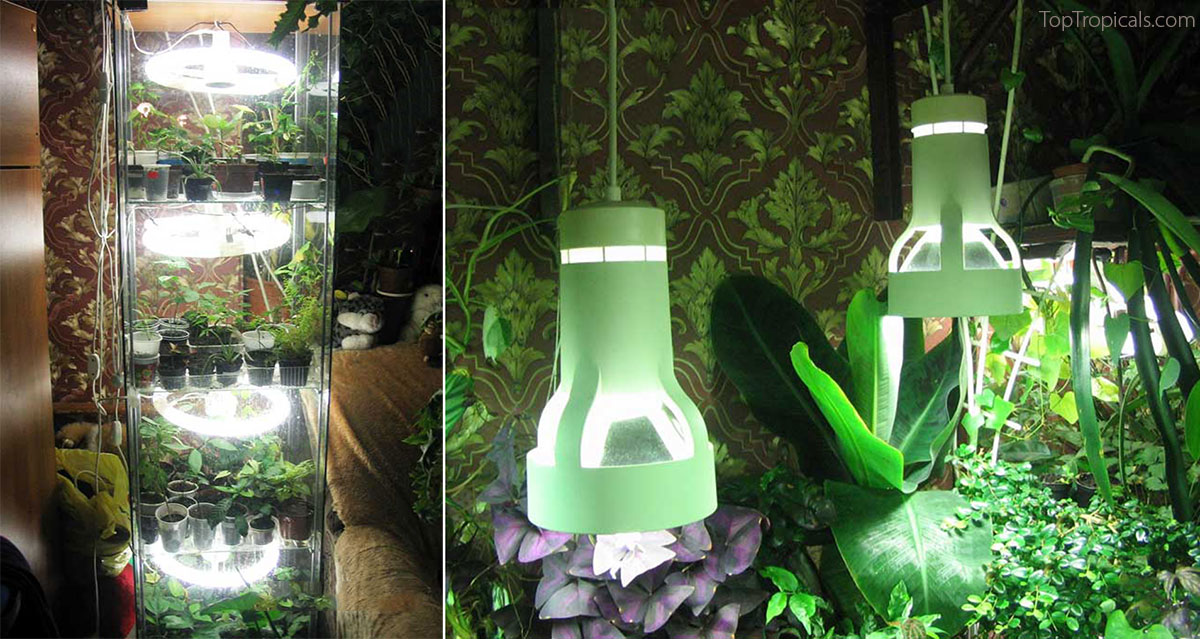
Indoor  grow  setup  with  bright  LED  lights  illuminating  shelves  of  tropical  plants.

Bright light or long hours

People try to fix weak light by running it for 16 or 18 hours. That does not work. Plants care more about light intensity. A few hours of strong light beats all-day dim light. If the light is weak, adding more hours will not change anything except your electric bill.

Simple rule: Short duration but bright is always better than long duration but weak. - by Michael, Top Tropicals lighting expert

No need for fancy horticultural panels

You do not need purple grow lights. You do not need special horticultural fixtures. You do not need expensive panels unless you want real winter growth.

For winter plant holding till spring, the inexpensive solution works great:

  • Bright LED daylight bulbs (5000K to 6500K) from hardware store
  • High lumen output
  • Inexpensive clamp lamps
  • Aim directly at the plant from 12 to 18 inches

This setup keeps tropicals happy until spring without buying anything fancy. Save the money for soil, pots, or your next plant.

Indoor plant lighting safety note:

  • Use timers. Keep cords dry. Do not overload outlets.
  • Do not hang lights over humidifiers.
  • And do not put fixtures on piles of books to raise them. People do this.
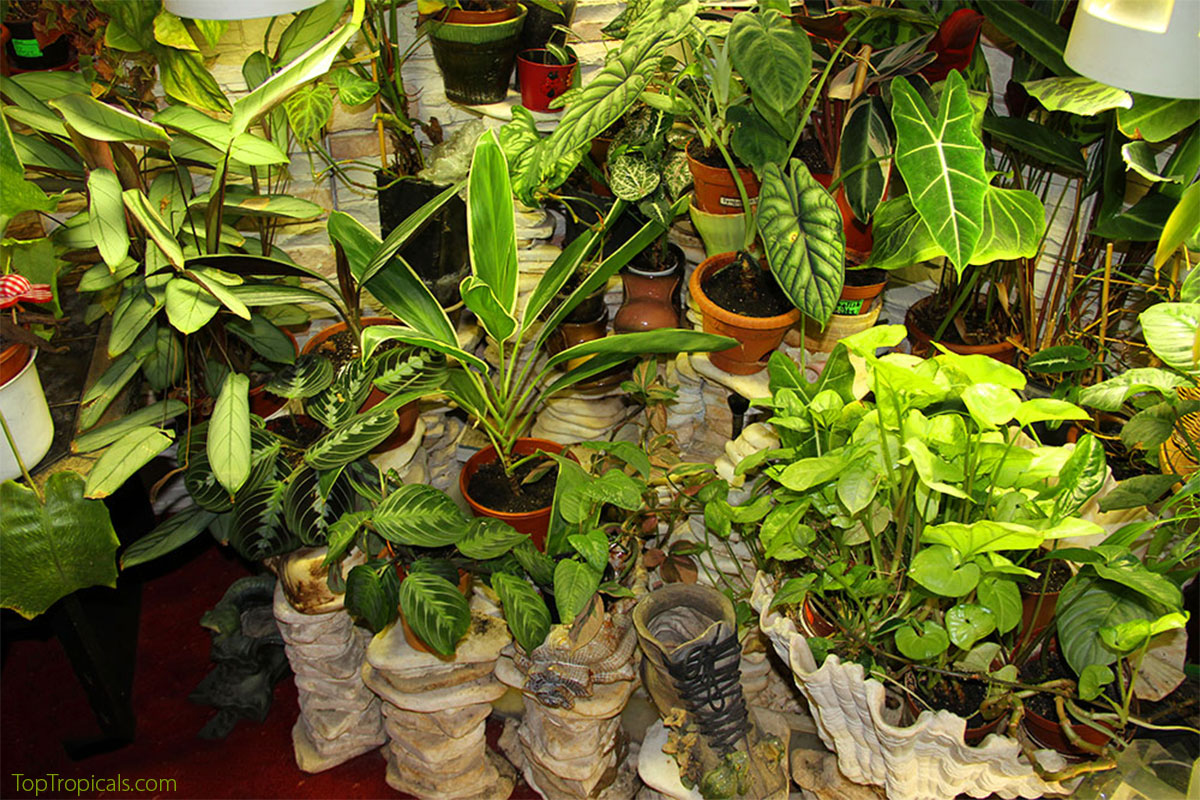
Indoor  plants


✔️ WINTER INDOOR FAQ: TEMPERATURE AND PLACEMENT

Q: I am in Home Depot. Which light do I buy?
A: LED shop light, daylight color (5000K to 6500K), high lumens. Skip fancy plant bulbs.

Q: Can I use clamp lamps or floor lamps for plants?
A: Yes. Clamp lamps with a bright daylight LED bulb work great for winter holding.

Q: Do I need special horticultural grow lights?
A: No. A bright LED daylight bulb works fine for winter. Save the fancy lights for real growth projects.

Q: How far should the light be from the plant?
A: About 12 to 18 inches above the leaves. Too close burns. Too far stretches.

Q: Can I run weak lights for 18 hours to compensate?
A: No. Weak light plus long hours still equals a weak plant. Brightness matters more than hours.

Q: How do I know if a spot is bright enough?
A: Use a free phone lux app. Most indoor corners are much too dim for tropicals.

Q: I have a huge window. Why do I still need LEDs?
A: Indoor winter light is weak, short, and filtered by glass. Plants want intensity, not just a big window.

Q: My window faces north. Now what?
A: North windows are decorative only. Use supplemental lighting or move the plant.

📚 Learn more:


Date: 15 Dec 2025

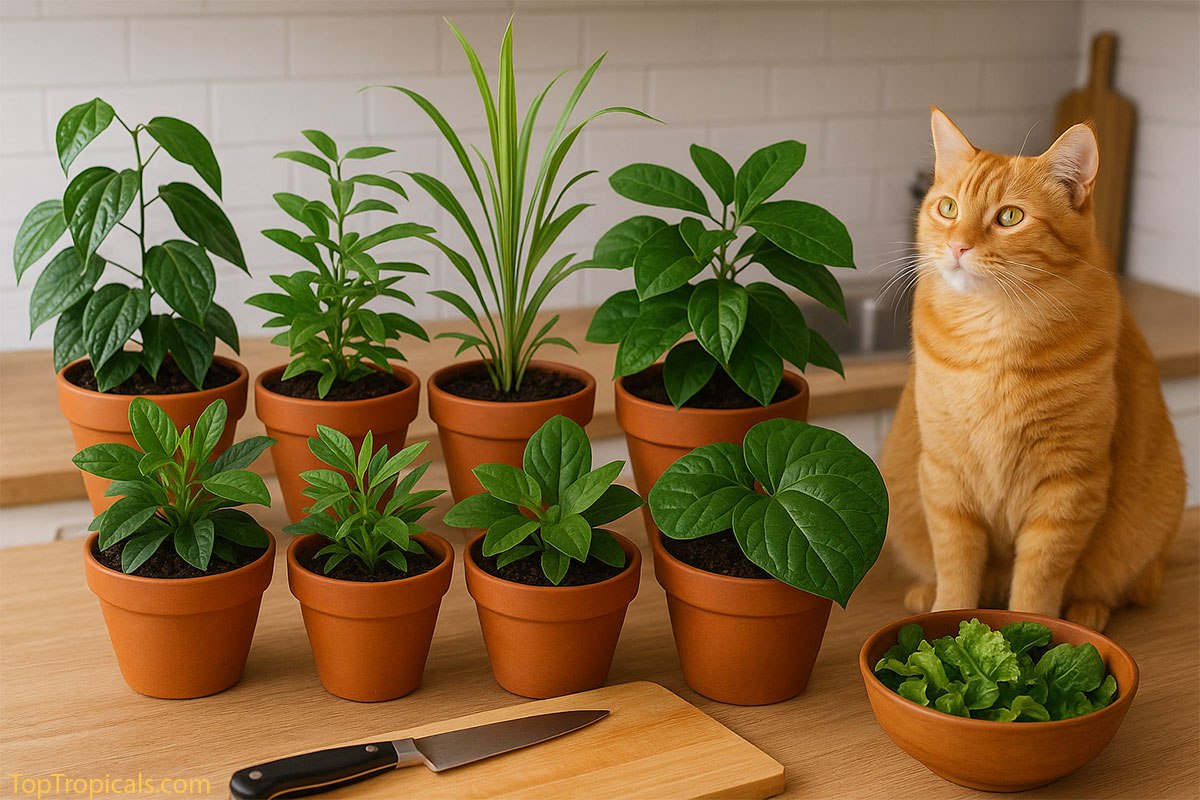
9 tropical vegetables to grow indoors, or how to have garden-fresh produce all year

9 tropical vegetables to grow indoors

9 tropical vegetables to grow indoors

🌱 9 tropical vegetables to grow indoors, or how to have garden-fresh produce all year


Cold weather does not have to mean the end of homegrown food. According to Southern Living, vegetables like lettuce, carrots, and radishes can be grown indoors during winter. The downside is that most of these are annuals - you harvest once, then start over.

Tropical vegetables work differently. Many are perennial, long-living plants that grow well in containers and keep producing for years. Grow them indoors year-round, move them outside in summer for extra sun and growth, then bring them back indoors before cold weather. With enough light and regular care, these plants can provide fresh harvests in every season.
  • ✅ Tips for growing tropical vegetables indoors


  • 📍Place plants near a bright window or supplement with grow lights for steady growth
  • 📍Use containers with good drainage and quality potting mix
  • 📍Keep plants away from cold drafts and heating vents
  • 📍Rotate pots and prune regularly to encourage fresh, tender growth
  • 📍Feed regularly with natural Sunshine Boosters - they are formulated for edibles


✅ Tropical vegetables to grow indoors

  • 🌿 Gynura procubens - Longevity Spinach, Cholesterol spinach - a fast-growing leafy green often called a superfood. The tender leaves are used fresh or lightly cooked and can be harvested repeatedly. This plant stays compact, handles containers easily, and regrows quickly after cutting.
  • 🌿 Sauropus androgynus - Katuk, Tropical Asparagus. One of Southeast Asia’s most popular leafy vegetables. Katuk produces edible shoots and leaves that are cooked in soups and stews. It grows well indoors and rewards regular harvesting with constant new growth.
  • 🌿 Cymbopogon citratus - Lemon grass: a tough, productive plant that adapts well to container growing. The stalks and leaves are used for teas, soups, and flavoring. Indoors, it grows more slowly but stays productive, especially when moved outdoors in summer.
  • 🌿 Lippia dulcis - Aztec Sweet Herb, Sweetleaf: a low-growing herb with naturally sweet leaves. The foliage can be eaten fresh or used as a sugar substitute in teas and desserts. It stays compact, tolerates pruning, and performs well in pots indoors.
  • 🌿 Piper sarmentosum - Vietnamese Pepper, Lalot: grown for its aromatic, edible leaves rather than peppercorns. The leaves are eaten fresh, cooked, or used as food wraps. This plant stays manageable indoors with light pruning.
  • 🌿 Piper nigrum - Black Pepper: the true black pepper vine. Grows well indoors as a container vine with support. It prefers warm temperatures, steady moisture, and bright filtered light.
  • 🌿 Piper auritum - Root Beer Plant, False Kava-Kava: close relative of Piper methysticum (Kava-Kava) known for its large, fragrant leaves with a spicy, root beer-like aroma. The leaves are used for wrapping foods and flavoring dishes. Best grown indoors with room for its bold foliage.
  • 🌿 Piper betle - Betel leaf: a traditional edible and medicinal leaf used widely in Asia. The glossy leaves are harvested continuously and used fresh or as wraps. This vine grows well indoors with warmth, humidity, and a small trellis.
  • 🌿 Piper longum - Indian Long Pepper, Pippali, Bengal Pepper: A tropical pepper relative grown for its elongated spice fruits and edible leaves. Slower to fruit indoors but easy to maintain as a leafy spice plant in containers with bright light and regular feeding.

Tropical vegetables make indoor gardening more rewarding because they do not stop after one harvest. With containers, light, and basic care, these plants can become long-term food producers that move seamlessly between indoors and outdoors - keeping fresh flavors within reach all year.

🛒 Explore tropical edibles, herbs and spices

📚 Learn more:


🎥 Karkade Tea
Longevity Spinach


#Food_Forest #Remedies #Container_Garden #How_to #Discover

🟢 Join 👉 TopTropicals

Date: 13 Dec 2025

Holiday Plant Market Event Mementos

Holiday Plant Market Event Mementos

🎄 Holiday Plant Market Event Mementos

  • Thank you to everyone who came out for our Holiday Plant Market!
  • It was a joy watching the garden fill up with familiar friends and first-time visitors all exploring, chatting, and discovering new favorites.
  • Our PeopleCats took their jobs very seriously, trotting ahead of guests, inspecting carts, and making sure no one left without the perfect plant. The whole place buzzed with good moods, warm weather, and that fun holiday energy only a tropical garden can create.
  • If you see yourself or your friends on the photos, save or forward to share the memories!
  • If you spot yourself or someone you know in the photos, go ahead and save them or pass them along. We hope your new plants settle in beautifully, and we look forward to seeing you back in the garden soon. Happy holidays and happy growing!
  • Check out more pictures of the Event


📱 Watch this slideshow on YouTube

#PeopleCats

🟢 Join 👉 TopTropicals

Date: 15 Dec 2025

Thank you for coming to Plant Market in Ft Myers

Kristi  Vanbenschoten,  Top  Tropicals  manager,  holding  Persephone  the  cat
    on  her  shoulder  in  the  garden

Kristi Vanbenschoten, Top Tropicals manager, and Persephone the cat

Thank you to everyone who came out and supported our Holiday Plant Market last Saturday, December 13, 2025. It was great to see familiar faces, meet new visitors, and watch the garden fill with people exploring, asking questions, and choosing new plants to take home. Our CatsPeople were busy greeting guests, supervising carts, and making sure everyone felt welcome. Your support and good energy are what make these events special for us. We hope your new plants settle in beautifully, and we look forward to seeing you back in the garden soon!

Check out Event Mementos

Persephone  the  cat  at  Garden  Event

Date: 21 Dec 2025

Everyone wants Red Jade vine - this is the one that lives! How to grow Red Jade outside the Tropics

Camptosema grandiflorum - Dwarf Red Jade Vine, Cuitelo, or Rooster's Crest

❤️‍ Everyone wants Red Jade vine - this is the one that lives! How to grow Red Jade outside the Tropics.

  • 🔥 Camptosema grandiflorum (grandiflora) - Dwarf Red Jade Vine, Cuitelo, or Rooster's Crest - this Brazilian superstar brings cascading chains of bright red blooms.
  • 🔥 Love the stunning, fiery blooms of the famous Red Jade Vine (Mucuna benettii) but live outside the tropics? Its cousin - Dwarf Red Jade Vine - delivers the same jaw-dropping, flame-red flower chains as the famous tropical Red Jade vines - but without the extreme fuss.
  • 🔥 This vine is native to Brazil, where it grows at higher elevations. That is the secret. It is noticeably more cold tolerant than Mucuna benettii and can handle short dips to around 28F with little or no damage. It is also more forgiving with watering and can tolerate brief dry spells once established.
  • 🔥 Bloom time is late fall through winter, exactly when most gardens slow down. The flowers are long, heavy, and hang best from a pergola, arbor, or fence where they can cascade freely. Butterflies, bees, and hummingbirds find it fast.
  • 🔥 Despite the word "dwarf," this is a vigorous vine. It grows quickly, needs strong support, and rewards good care with a massive display. Give it sun to light shade, water when the soil feels slightly dry, avoid soggy roots, and prune after flowering. Mulch helps keep roots cool.
  • 🔥 It can even be grown in a large container with solid support.
  • 🔥 If you have ever wanted the iconic Red Jade look but live in a place with real winters or surprise cold nights - this is the smarter choice.


🛒 Plant the Red Jade Vine that grows outside the Tropics

📚 Learn more:

Plant Facts

Camptosema grandiflorum
Crista-De-Galo, Dwarf Red Jade Vine, Brazilian Red Jade Vine
USDA Zone: 9-11
Vine or creeper plantSemi-shadeShadeRegular waterRed, crimson, vinous flowersPlant attracts butterflies, hummingbirdsSubtropical plant. Mature plant cold hardy at least to 30s F for a short timeSeaside, salt tolerant plant
  • Camptosema grandiflorum - Dwarf Red Jade Vine in Plant Encyclopedia
  • Cold-hardy Dwarf Red Jade Vine
  • Camptosema grandiflora, Dwarf Red Jade Vine - my favorite plant

  • #Nature_Wonders #Hedges_with_benefits #Butterfly_Plants

    🟢 Join 👉 TopTropicals