Garden Blog - Top Tropicals

Date: 15 Nov 2025

What to do and not to do before a cold snap?
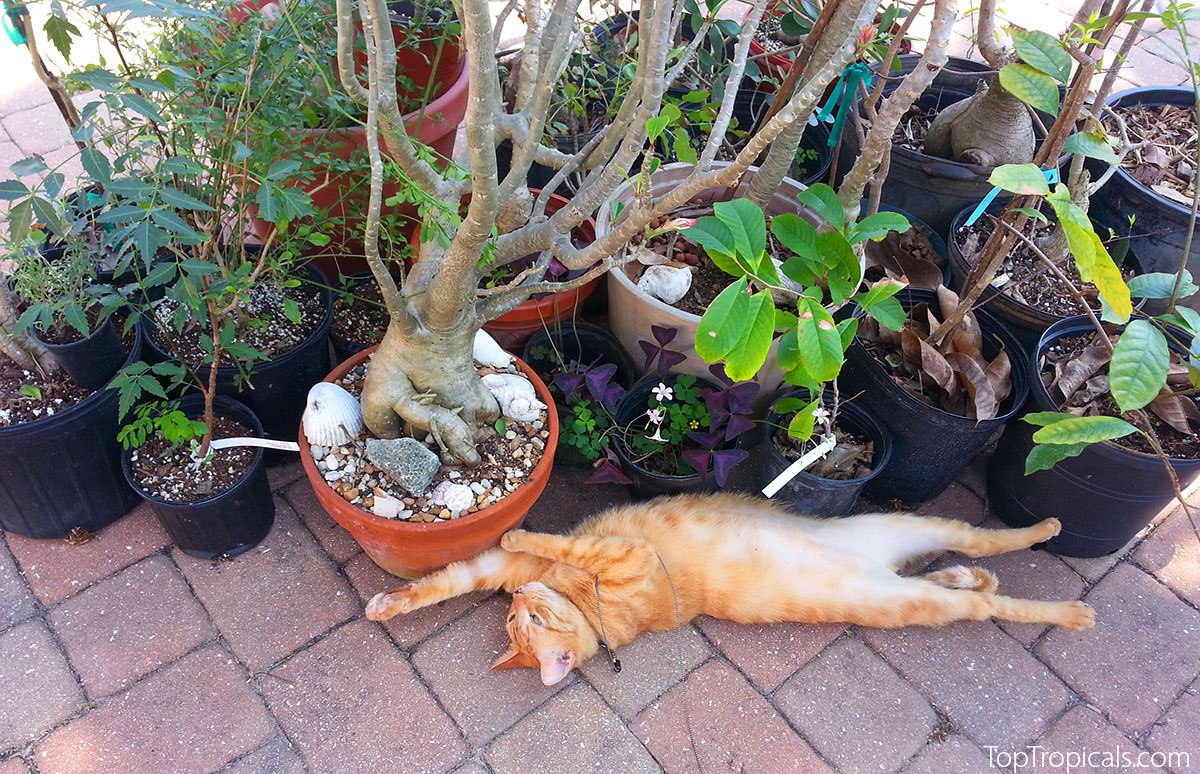
Cat and potted plants
Cat and potted plants

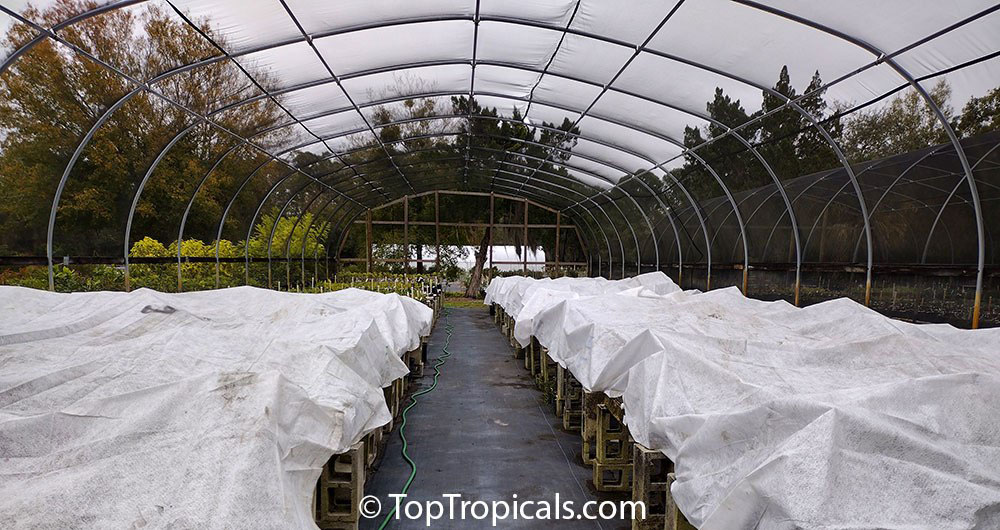
Frost covers

Frost covers

What to do and not to do before a cold snap?


Growing tropical plants outdoors? Here are a few practical notes for your cold protection guide.

⭕️ 5 things to DO to prepare your plants before a cold snap:


1. Water well. A well-hydrated plant is stronger. Juicy stems and leaves handle cold better than dry ones.
2. Add mulch. A thick layer around the base helps insulate the roots and keep them warm.
3. Block the wind. Move pots to a sheltered spot or set up a windbreak.
4. Cover at night, uncover by day. Use frost cloth, blankets, or plastic at night - but remove during the day so plants don’t overheat in the sun and can get as much light as possible.
5. Add gentle heat if needed. Christmas lights or a small heater can help - just use caution and make sure everything is safe.

❌ 5 most common mistakes, what NOT to do before or during a cold snap:


1. Don’t prune. Fresh cuts and new growth are tender and will freeze first.

2. Don’t overwater. Cold and soggy roots can rot. Keep soil moist, not soaked. Water just enough to quench the plant’s thirst and fill stems and leaves with moisture. Cold and wet is a dangerous combination.

3. Don’t let plants dry out either. Wilted, thirsty plants are more likely to suffer cold damage. Cold and dry can be just as harmful as cold and wet.

4. Don’t use dry fertilizer. It can burn roots in cold soil. A gentle liquid feed like amino-acid Sunshine Boosters is an exception and safe to use with every watering. Its intake naturally slows down as watering decreases.

5. Don’t just watch the thermometer. Duration and wind chill matter. A long cold night with wind can do more harm than a brief freeze.

✔️ Keep these in mind, and your plants will thank you when the cold passes!

#How_to

🟢 Join 👉 TopTropicals
Date: 4 Jan 2026

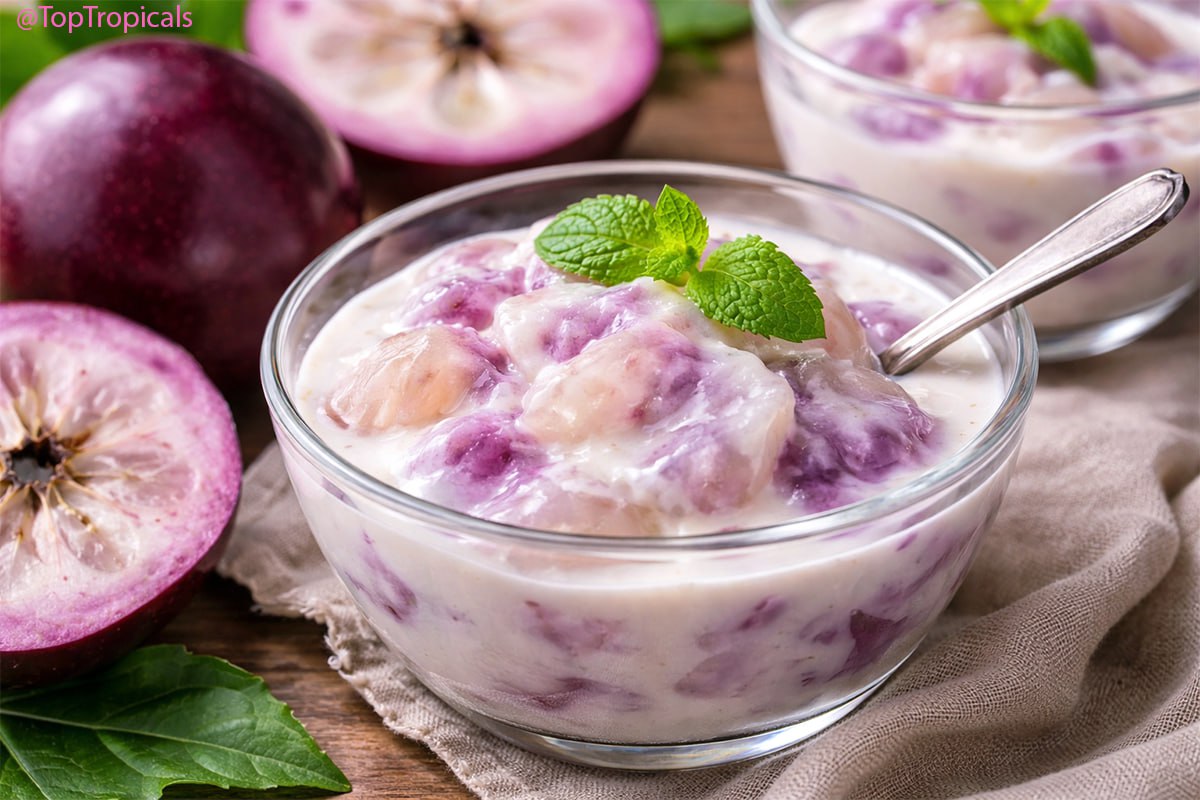
Caimito creamy scoop: quick-n-fun exotic recipes

Caimito creamy scoop

Caimito creamy scoop

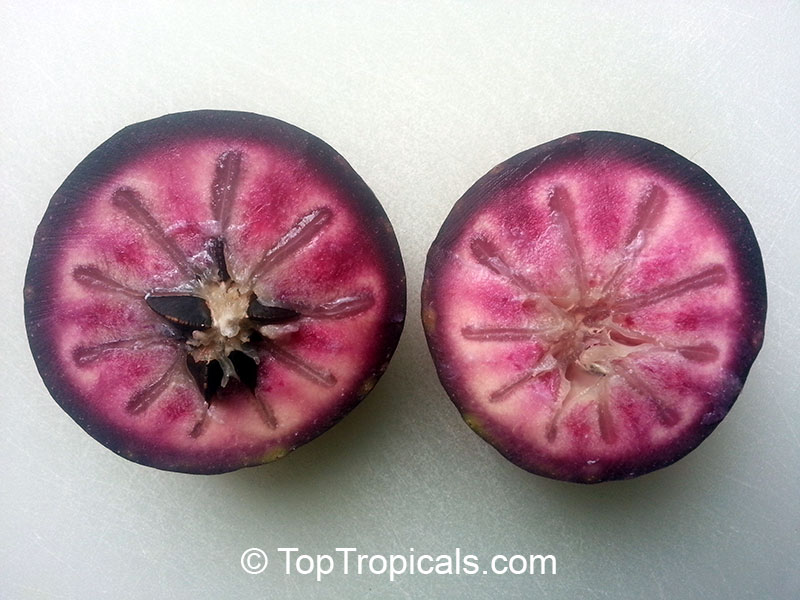
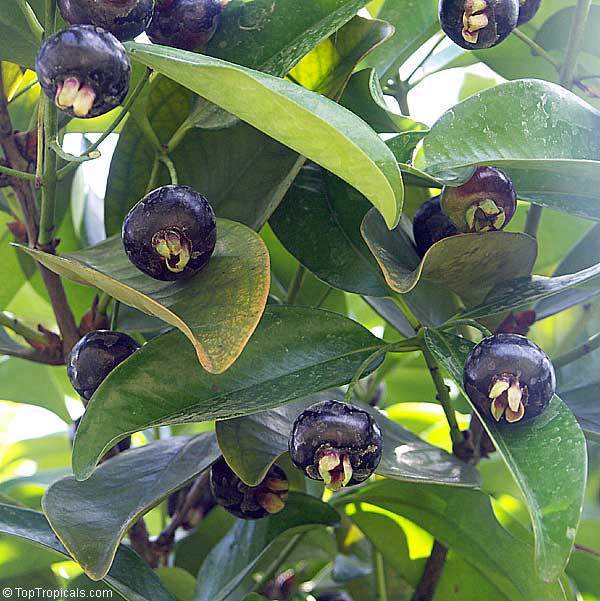
Caimito Star Apple (Chrysophyllum cainito), fruit

Caimito Star Apple (Chrysophyllum cainito), fruit

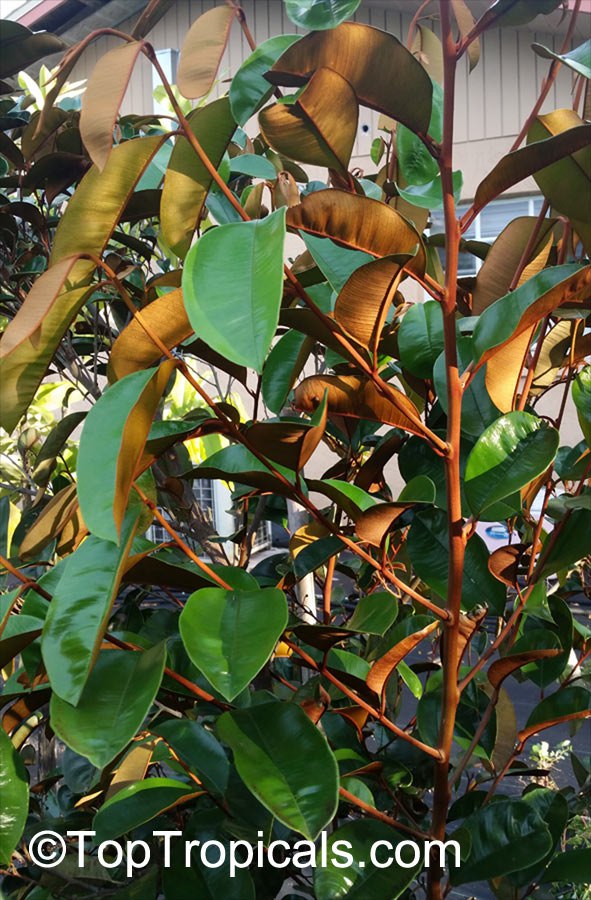
Caimito Star Apple (Chrysophyllum cainito), leaves with rusty underneath

Caimito Star Apple (Chrysophyllum cainito), leaves with rusty underneath

🍴 Caimito creamy scoop: quick-n-fun exotic recipes


🔴Chill star apple halves, then scoop out the jelly-soft pulp.
🔴Stir gently with cold sweet cream for a tropical dessert cup.

⭐️ About the fruit:


Caimito, also known as star apple, is a classic tropical fruit tree native to the West Indies and widely grown throughout the Caribbean, Central America, and other warm regions. It thrives in USDA zones 10-11 and can handle brief dips into the low 30s. The fruit has a mild, grape-like flavor and a soft, jelly texture, and is a good source of vitamin C and minerals. Traditionally eaten fresh, caimito is also used in desserts, drinks, and preserves.

🌱 In the garden:


Beyond its fruit, caimito is highly ornamental. Its large, glossy green leaves have a striking coppery-rust colored underside, giving the tree a dramatic two-tone effect when stirred by wind. It prefers full sun and regular watering and grows well in the ground or large containers. In cooler climates, container-grown trees can be moved indoors for winter protection, making caimito both a productive and visually stunning addition to the garden.

🛒 Plant exotic Caimito Star Apple fruit tree

📚 Learn more:

Caimito Plant Facts

Botanical name: Chrysophyllum cainito, Achras caimito
Also known as: Caimito, Star Apple, Satin Leaf
USDA Zone: 9 - 11
Highligths Large tree taller than 20 ftFull sunWatering: Regular. Let topsoil dry slightlyEdible plantSubtropical plant. Mature plant cold hardy at least to 30s F for a short time
Get personalized tips for your region

Caimito Star Apple (Chrysophyllum cainito) in Plant Encyclopedia
Starry fruit and rusty leaves: the tropical tree full of surprises
Why is it called Star Apple?

#Food_Forest #Recipes

🟢 Join 👉 TopTropicals

Date: 10 Feb 2026

These Avocados survived 3 nights of 25F hard freeze, Florida Record Freeze

Cold hardy avocados

⛄️ These Avocados survived 3 nights of 25F hard freeze, Florida Record Freeze


⛄️ Recent winter freezes have once again raised the same urgent question among avocado growers - which varieties actually survive cold weather, and what does survival really look like afterward?

⛄️ After widespread freeze events, trees across many regions showed very different outcomes, from minor leaf burn to complete canopy loss.

⛄️ This video taken on February 4, 2026 at Top Tropicals BFarm in Sebring, FL, reflects what we observed in real conditions after 3 nights of hard freeze.

⛄️ The trees in the video had no protection.

❄️Weather data

Feb 1-6, 2026, Coldest in Recorded History (132 years of observations)
Top Tropicals Farm and Nursery at Sebring FL

🌡 Min temps: 25F, wind chill 14F
⏳ Duration of cold: 3 nights of 8-10 hour hard freeze, along with 7 days of cool daytime temps around 50F
🌀 Wind: 20 mph, with 40-50 mph gusts.

🛒 Explore cold hardy Avocado varieties

📖 Our Book: Avocado Variety Guide, Snack or Guacamole?
·
Hard copy · PDF File Download

📚 Learn more:


· Avocado Variety Guide
· How to protect Avocado from cold and how hardy is it?
· Avocado that laughs at frost: Mexicola Grande for cooler climates
· Cold hardy Avocado Joey - you eat it with the skin
· Cold-hardy avocados: how cold-hardy are they?
· Cold-hardy avocado varieties - what freezing they really survive
· Cold-hardy avocado survival groups - what the numbers really mean

#Food_Forest #Avocado #Discover #How_to

🟢 Join 👉 TopTropicals

Date: 24 Jun 2018

Cold hardy tropical fruit trees for Luisiana

Q: I've just moved to Louisiana and have been wondering whether it would make sense to plant some tropical fruit trees in our garden. Average lows in New Orleans are 41 deg F in January and February, although we did hit 25 once with the Arctic vortex. I'm interested in litchi, longan, rambutans, and persimmons. Do you have varieties that can tolerate Louisiana's temperature range? I'd love mangosteen but I don't suppose they will survive. Do you have any suggestions on tropical fruit trees that I could try?

A: Average temperatures are for statistics only; it is actual temperatures that may hurt your cold sensitive plant. This is what you should keep in mind when starting your tropical fruit collection:
1) Ultra-tropical plants like Rambutan can not survive winters below 45-50F. However, they can be successfully grown in containers in a greenhouse or moved indoors into a sun room during cold periods.
2) Tropical plants like Litchi and Longan may take some light frost once established. Still, for areas with freeze our advice is - keep them in pots and move inside in case of cold.
3) There is a number of subtropical fruit trees that are hardy enough to take some freeze. Persimmon, Feijoa, Fig, Cattley Guava, Jujube, Kiwi, some Eugenias and others. Please refer to our Tropical Fruit Sensitivity Chart.
4) Remember that plant's ability to survive winter depends on several factors, not only temperature itself. Important factors are: wind protection (chill wind kills rather than low temperature itself), exposure, how close the tree is planted to the house, plant maturity and its overall strength and health. If a plant had received good nutrients during summer, has well established root system, planted in enclosed area protected from winds and has plenty of bright sunlight - it has better chances to survive than a weak plant in warmer conditions.
5) Use SUNSHINE plant boosters for improving cold tolerance of your tropical plant. It only takes a few drops, and only costs $5!

Date: 7 Feb 2017

After Super Bowl Sale

Chill out and relax by planting a tree! We just watched the most exciting Super Bowl ever... What a game! It was the greatest comeback in Super Bowl in history. Now it is time to let Top Tropicals help give your garden a great comeback too. Relax, have some peaceful happy time, and nothing can be better than planting a tree!

The best tree ever, by many features is a Mango tree. Here at least 5 reasons why:
1. Mango tree is good for beginners since it has low maintenance requirements, including low water needs.
2. Mango tree is easy to ship.
3. Mango tree is a great present.
4. Mango tree is a rewarding fruit tree that will produce fruit for you the same or next year - all our varieties are grafted and ready to bloom.
5. Mango tree produces the most delicious fruit in the world. The sweetest, flavorful, fiberless varieties can be only tasted from home gardens - they simply are not available from grocery stores due to transportation reasons (only fiborous low quality fruit can be safely shipped and stored).

Take advantage of this generous 25% off offer and get yourself a mango tree:
- Dwarf varieties, "Condo" mangoes, great for containers: Carrie, Cogshall, Ice Cream, Julie, Lancetilla, Lemon Meringue, Mallika, Nam Doc Mai, Pickering.
- Large, fast growing, vigorous trees that will quickly create shade and comfort in your garden: Bailey's Marvel, East Indian, Haden, Jakarta, Philippine, Southern Blush, Valencia Pride.
- Exotic collectibles that are hard to find and almost nobody has, be a proud owner of delicious exotic flavors: Alampur Baneshan, Alphonso, Choc Anon (Miracle), Heidi, Maha Chinook, Pim Seng Mun.

Happy planting, end enjoy your fruit soon! See all varieties (for backorder items, add to your wishlist and you will be notified when available, very soon!)

Hurry up, WHILE THE STOCK LASTS! Offer is valid 2 days only, and expires February 9. Offer not valid for previous purchases.