Garden Blog - Top Tropicals

Date: 18 Jul 2025

Fragrance lovers, this plant changes everything!

Cerbera x manghas - Enchanted Incense

🌸 Fragrance lovers, this plant changes everything!

  • 🌸 Cerbera x manghas - Enchanted Incense - is one of the newest and most sought-after perfume plants, prized for its incredible fragrance that outshines even jasmine and gardenia. Its red-and-white flowers release an intense, sweet scent you won't forget.
  • 🌸 This compact, plumeria-like tree has beautiful mauve-tinted leaves and grows slowly, making it perfect for containers.
  • 🌸 Easy-care, evergreen in warm climates, and low on water needs - this is a rare gem for fragrance lovers.


🛒 Add rare perfume power to your patio

📚 Learn more:

Plant Facts

Cerbera sp.
Cerbera Enchanted Incense
USDA Zone: 9-11
Small tree 10-20 ftFull sunRegular waterOrnamental foliageWhite, off-white flowersPink flowersToxic or PoisonousDeciduous plantFragrant plantSubtropical plant. Mature plant cold hardy at least to 30s F for a short timeSeaside, salt tolerant plant

What flower is sweeter than any Jasmine

#Perfume_Plants #Container_Garden

🟢 Join 👉 TopTropicals

Date: 14 Aug 2025

Homegrown coffee - the journey begins

Coffee tree - Coffea arabica

☕️ Homegrown coffee - the journey begins!

Coffee trees (Coffea arabica) that you saw blooming at Top Tropicals in May with fragrant, gardenia-like flowers, now in August - they are loaded with fruit! We will update on them once they turn red and ripe...

🛒 Start your own coffee harvest

📚 Learn more:


#Food_Forest #Container_Garden #Shade_Garden

🔴 Join 👉 TopTropicals

Date: 31 Oct 2023

How to establish Tabernaemontana
and get more fragrant blooms

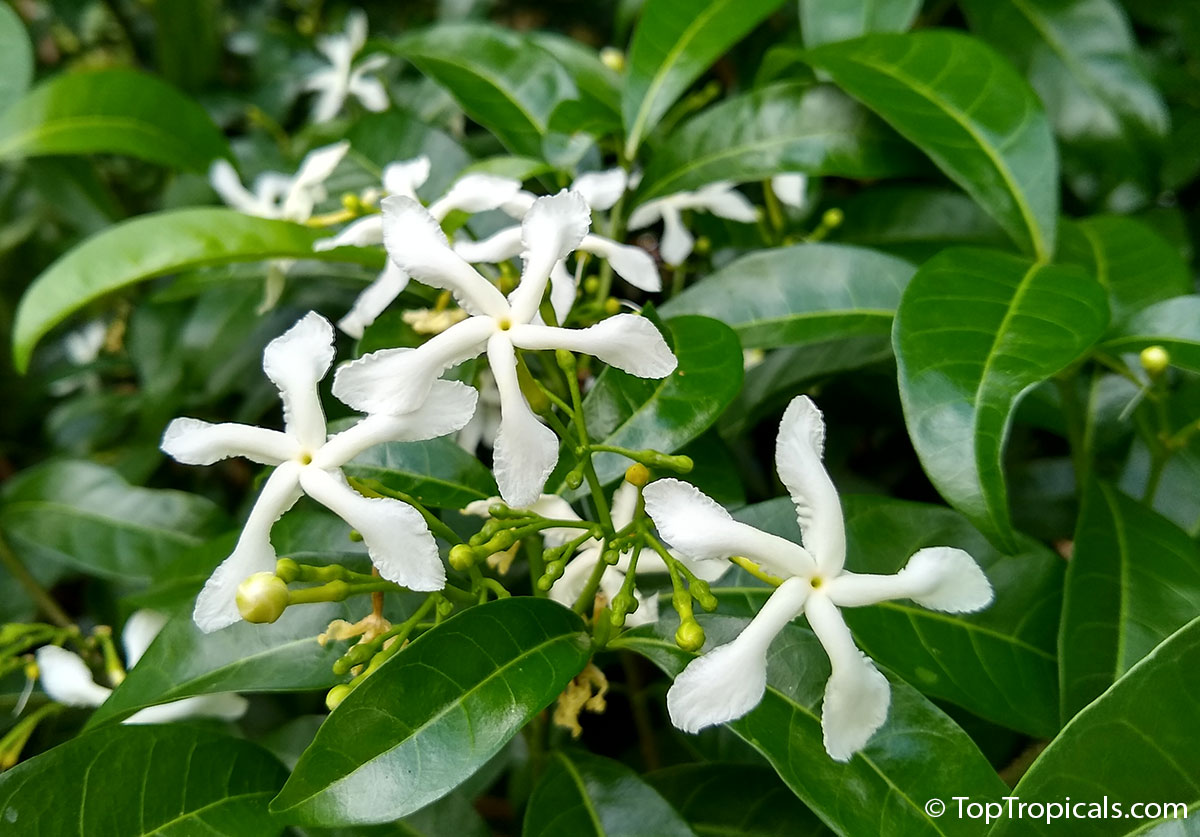
abernaemontana  australis  flowers

Q: I purchased Tabernaemontana australis from you back in June of this year and it recovered just fine, but the new growth got some chlorosis.   Older leaves still look normal.   The flowers also look normal but lack fragrance.   Since I live up north, I have it in a heated greenhouse for the winter, with a grow light to compensate for the short days.   I have it in a 10 inch clay pot in a mix of equal parts standard indoor potting soil, peat moss, and perlite.   It gets fed with half strength 10-10-10 about once a month on average.  Is there some specific culture that you would recommend for this plant ? I really love it and want it to thrive.

A: Tabernaemontana is a plant that may take some time to establish itself, and leaf chlorosis often becomes a common issue when the root system is not well-established. This symptom is indicative of Iron deficiency, and possibly other micro-element deficiencies, such as Boron or Molybdenum, which become more apparent when the plant receives excessive water. This problem tends to intensify as temperatures drop, particularly when a combination of cool and wet conditions prevails. It's worth noting that your potting mix seems to be appropriate for this plant.

In light of these circumstances, we recommend the following steps:

1) Reduce watering during the cooler season, especially when daylight hours are shorter. Allow the top layer of the soil to dry before watering again.

2) Consider supplementing with microelements using a product like   Sunshine Superfood. You can apply this as a foliar spray and mix it with your watering can.

3) Maintain your regular fertilizing program throughout the winter months, but ensure that you use only liquid amino-acid fertilizer, such as   Sunshine Megaflor. Follow the instructions on the label for the correct dosage and apply it with each watering, even during the winter. Since you will be reducing amount of water, the amount of fertilizer also will be adjusted accordingly.
Important: do not use any dry fertilizers during winter months (Nov-March).

Regarding the fragrance of the flowers, they typically emit a mild, sweet scent, although it may not be as potent as that of gardenia or jasmine. The strongest aroma usually becomes more prominent during warm (but not excessively hot) and humid conditions, particularly in the morning hours. As the plant grows larger and healthier, the fragrance should become more intense because the flowers produce more essential oil when the plant is robust. You may also apply Sunshine Honey supplement to improve flower quality and fragrance strength.

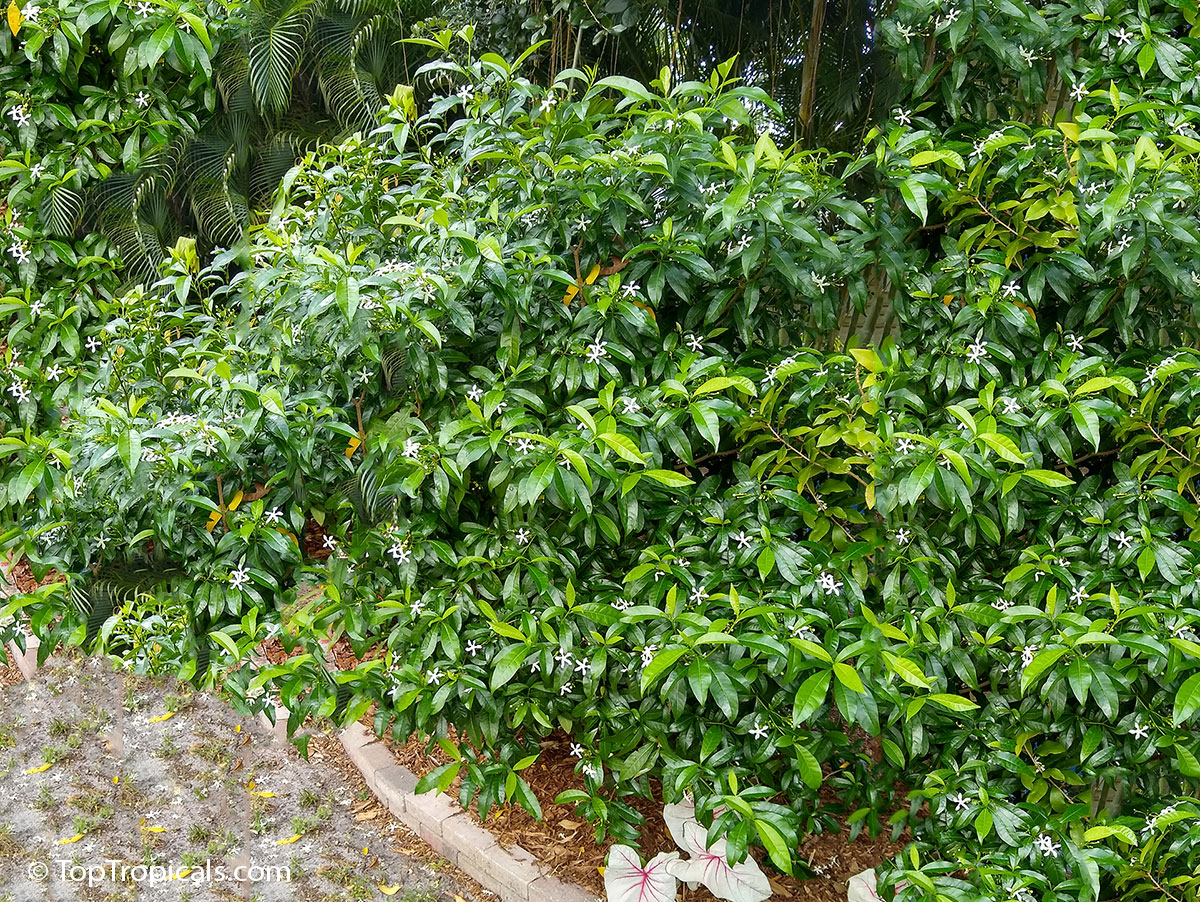
abernaemontana  australis  bush

Date: 26 Apr 2017

Plant Horoscope. Taurus Zodiac lucky plants: Apricot and Verbena

Taurus - 4/20-5/20. Taurus is an EARTH sign ruled by the planet Venus.
Venus is the planet that represents desire and beauty, regarded as the female embodiment of sexual love and human appetite, so Taurus plants often have gorgeous flowers and enticing fragrances and, occasionally, red fruit. It rules the internal sexual organs, the nose and sense of smell.
Because Taurus rules the throat and ears, the best plants for the Bull are often soothing to the throat, or may calm the digestive system after overindulging in the finest foods. Taurus is related to those things we want and value. It harmonizes various body systems, and influences the complexion and facial appearance. Also under Venus's dominion are the abdomen, kidney, thymus, and breasts. Venus-governed herbs are soothing and help to regulate the body's metabolism through the endocrine system (see Libra). Taurus herbs are traditionally used to attract money and resources. Earthy Taurus sign is all about building a stable and comfortable foundation and can help you generate greater abundance and prosperity in your life.

Taurus Zodiac lucky plants: Aglaia, Cananga odorata (Ylang-Ylang), Artabotrys (Climbing Ylang-Ylang), Cerbera, Night blooming jasmine, Chonemorpha, Erblichia, Euodia, Hiptage, Iboza (Musk Bush), Anise, Lavender, Lonchocarpus Lilac Tree, Nutmeg, Parijat, Camphor Basil, Osmanthus, Funeral tree, Quisqualis, Satureja (Kama Sutra Mint Tree), Viburnum, Carissa, Murraya, Curry Leaf, Bunchosia (Peanut butter fruit), Eucalyptus, Lily, Vitex agnus castus (Blue Chaste Tree), Alstonia scholaris (Sapthaparni), Papaya, Maple, Jasmine, Guaiacum, Camellia, Ephedra, Fuchsia, Geranium, Spider lily, Gardenia, Magnolia, Plumeria, Paeonia, Verbena, Clerodendrums, Apple, Pear, Apricot, Peach, Plantain, Olive, Grape, Pomegranate, Mango, Neem Tree, Cherry, Cypresses, all Berries, Raspberry, Asparagus, Mint, Clove, Roses, Stagshorn fern, Catnip.

For links to these plants and other signs information, see full Plant Horoscope

Date: 26 Apr 2023

The Benefits of Companion Planting

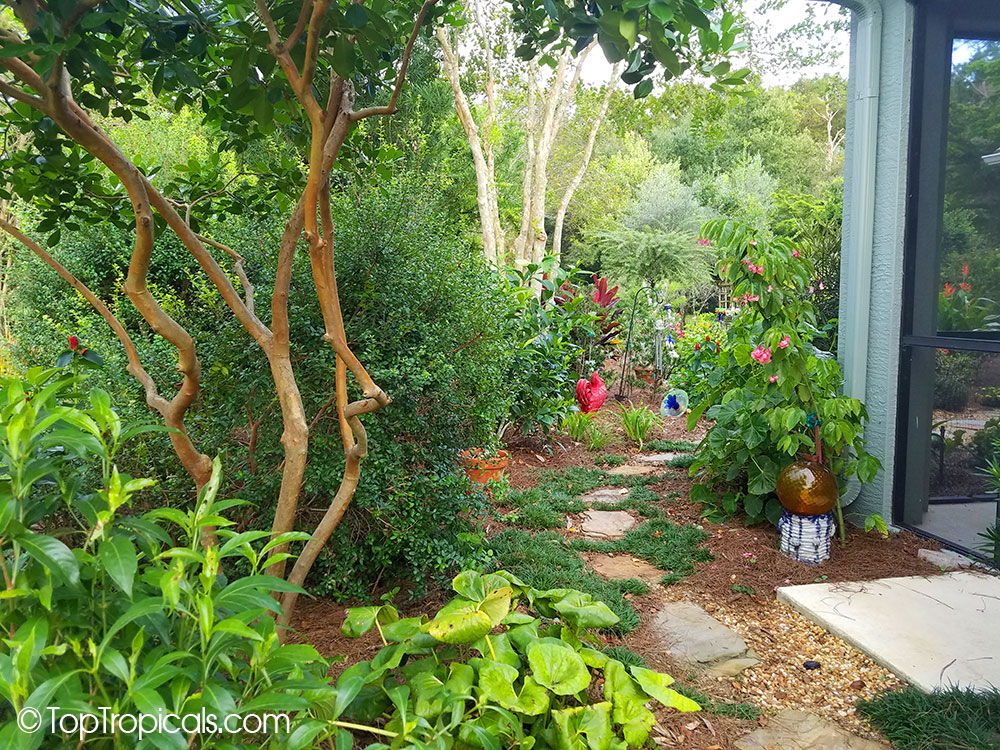
Landscaped  garden  with  companion  planting

Q: What is companion planting?

A: Companion planting is a gardening technique that involves planting different crops or types of plants together in a way that benefits all plants. This practice has been used for centuries, and it can be especially useful in tropical gardens where there is a diversity of plant life: trees, shrubs, vines and climbers, ground covers, fruit and edibles, and different flowering ornamentals. It is a great way to improve the health and yield of fruit tree crops while reducing the need for fertilizers and pesticides. By choosing the right companion plants and planning your garden layout carefully, you can create a vibrant and diverse ecosystem that will benefit both your plants and the environment.

Companion planting involves:

Planting different crops together to repel insects: adding such plants as Lemon grass, Patchouli leaf, or Moujean Tea near your vegetables can deter aphids and other pests.

Attracting pollinators - Butterfly plants. Many tropical crops, such as passion fruit, papaya, mango, and avocado, rely on pollinators to produce fruit. Companion planting can help to attract pollinators such as bees, butterflies, and hummingbirds to your garden.

Providing nutrients to the soil, adding mulch and low growing plants (ground covers) to preserve moisture.

Planting a variety of different types of plants together in order to create a more resilient ecosystem that is less susceptible to pests and diseases.

To get started, plan your garden layout and choose companion plants with similar water and light requirements.
For example, plant in the same group lush foliage plants, gingers, and flowering brunfelsias in shady areas; plant jasmines and gardenias in full sun and very well-drained spots.
Rotate annual crops regularly and experiment with combinations to find what works best. By doing this, you can create a thriving ecosystem that benefits both your plants and the environment, reducing the need for harmful chemicals.

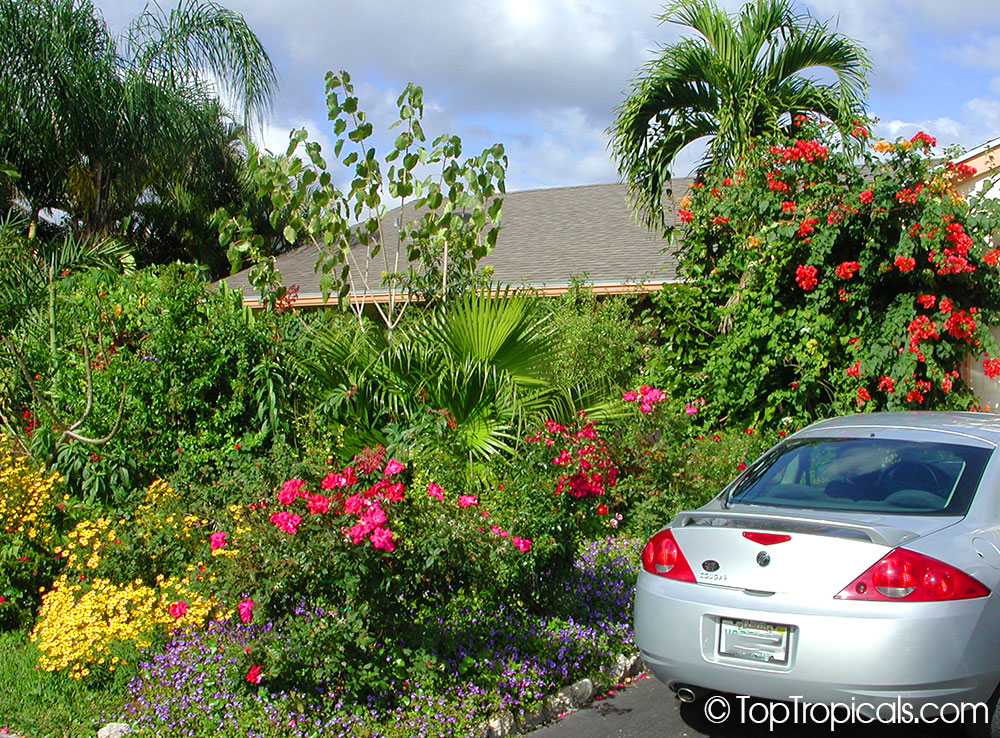
Landscaped  front  yard  with  companion  planting

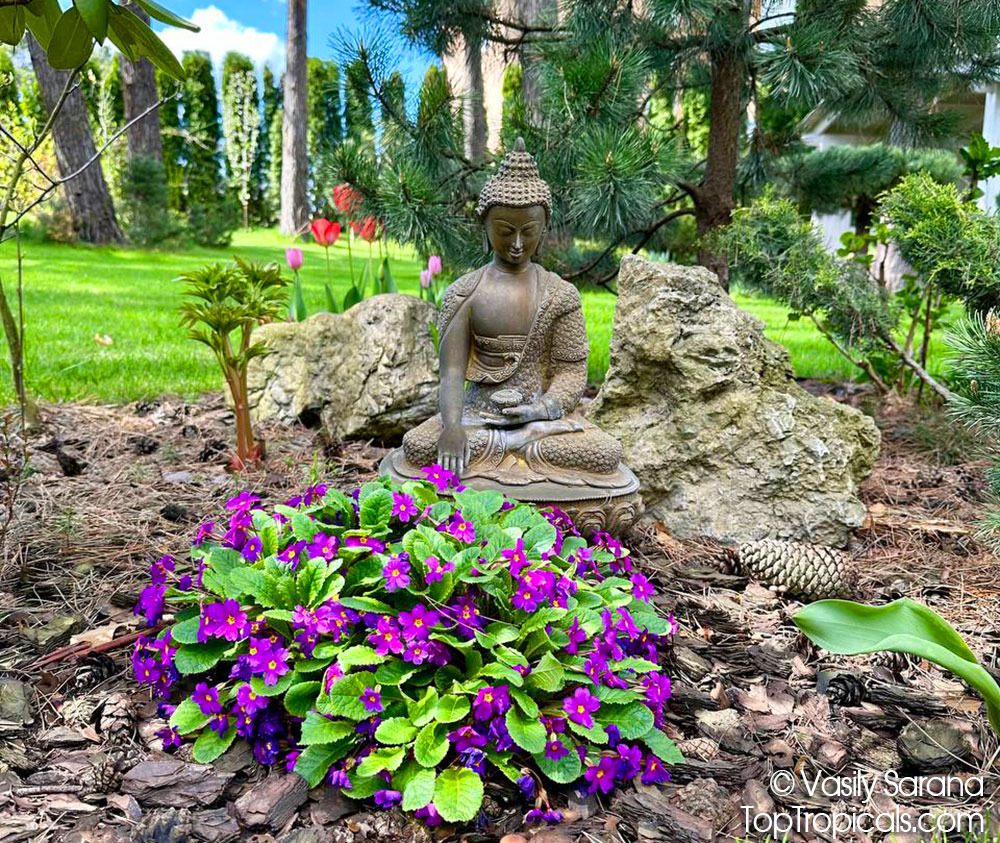
Buddah  and  flowers