Date: 19 Jan 2021
Healthy Plants: Q&A from Mr Booster
Fertilizing in Winter
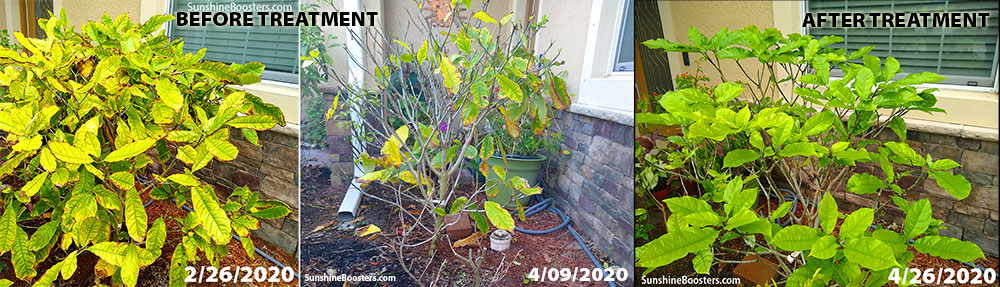
Q: I have many tropical plants in my garden, both in the ground and in pots. I realize it is wintertime and some of them, the Hydrangea, Hibiscuses, and roses are in bloom but the rest of them seem wilty and droopy. Is it alright to fertilize them now, or should I wait for a few days? I have an all purpose tropical fertilizer and a 20-20-20 also. Please advise what to do.
A: During wintertime, tropicals may suffer from low temperatures
and lack of sunshine which causes droopy leaves, and leaf loss.
Regardless of the cause and plant condition, you should NEVER apply
traditional dry fertilizers during cool months. When cold, dry fertilizers
(EDTA-chelated) may create nutrient lock up in soil and damage the roots. Dry
fertilizers (both granulated and water-soluble) can be used only during hot season -
when min temperatures stay above 65F for at least a week in a row, and
daytime temperatures are over 75-80F. During hot, active growth season plant
metabolism increases. This provides less chance for a chemical root burn, as the
nutrients are used up quickly.
However, liquid fertilizers, as long as they are amino-acid based, can
be used year round. From our own experience last winter, we discovered that
fertilizing sickly looking plants (with signs of cold damage and root issues)
with Sunshine Boosters actually revived those plants. Sunshine Boosters even
brought back to life some hopeless specimens. Take a look at this gardenia
that grows in our garden (picture above). See full article.
In your case, it would be beneficial to use a mild formula of liquid
boosters in combination with Sunshine Epi -a natural plant hormone that boost their growth and helps
to cope with cold-, temperature- and low-light-related stress.
These are the products we recommend:
- Sunshine Bombino - add to every watering
- Sunshine Epi - twice a month as foliage spray
Since you grow plants in pots, feeding program is especially essential,
because plants are limited with a container size where roots can't reach out to more food in the outer soil.
In professional nursery set up with injector irrigation systems, container plants are fed daily (depending on season, more than once a day) with every watering. This is why greenhouse plants are so healthy looking.
So feel free to give your plants Sunshine boosters with every watering,
dozing according to the label. During cold period, plants need less frequent
watering, so fertilizer input will be balanced accordingly, it will depend on
temperature and plant metabolism.
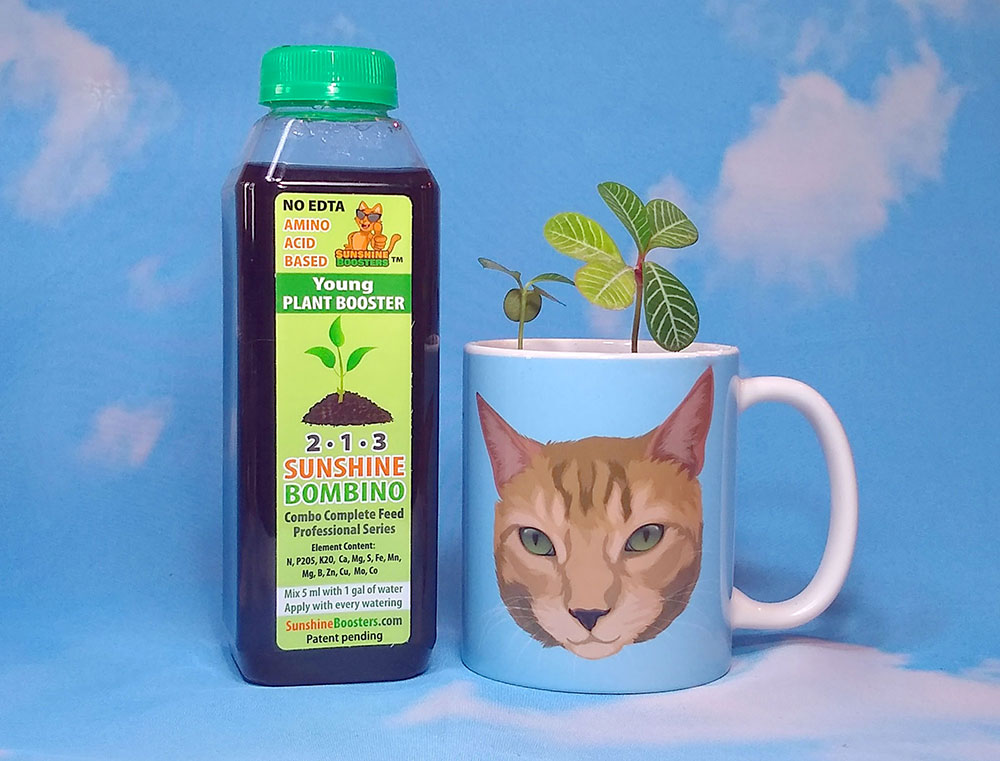
Sunshine Bombino - mild, "pampering" formula for young and tender plants, as well as plants recovering from stress and/or winter damage.

Date: 16 Feb 2019
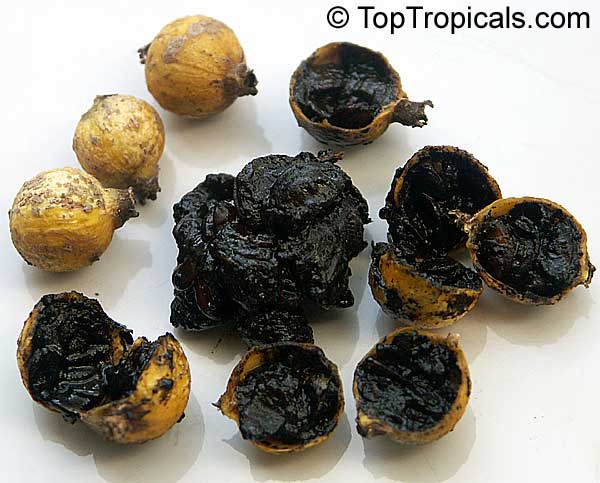
Featured plant. Randia formosa - Blackberry jam fruit
Randia formosa - Blackberry jam fruit
This unique compact plant, perfect for container culture, combines features of a fragrant flower and tasty desert fruit. Kids love it! Originally from Central and South America, this rare tropical small evergreen tree bears fruit which tastes like fresh Blackberry jam. Many claim that it's even better than preserves. Closely related to the gardenia, its flowers are sweetly fragrant. This relatively hardy tropical has attractive foliage and can be grown in a container as well as in the ground. The Randia formosa (or Rosenbergiodendron formosum) produces as many as 25 to 30 fruits at a time. Since it blooms for a few months in the fall and winter, fruiting and flowering can be enjoyed when many other plants are dormant. Large tubular white flowers that attract nocturnal moths... Read more about this plant...
Date: 3 May 2024
Best picks of the Season
Special SALE deals - from our horticulturist
These plants are large, developed and beautiful NOW!
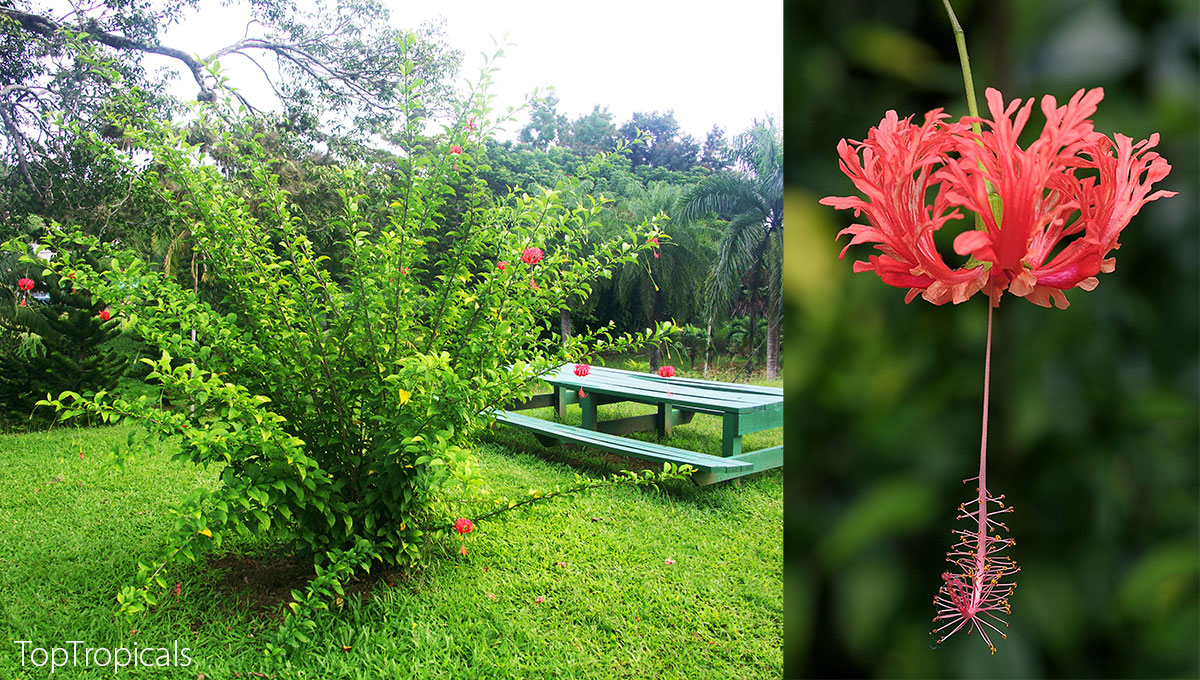
Hibiscus schizopetalus - Coral Hibiscus. Spectacular weeping tree hibiscus, rare and hard to find. Grows rapidly and blooms freely. Flowers look like parachutes and can be recognized by the fringed and lacy petals which are bent backward. It has slender and gracefully curved stems. Can be trained into a showy standard.
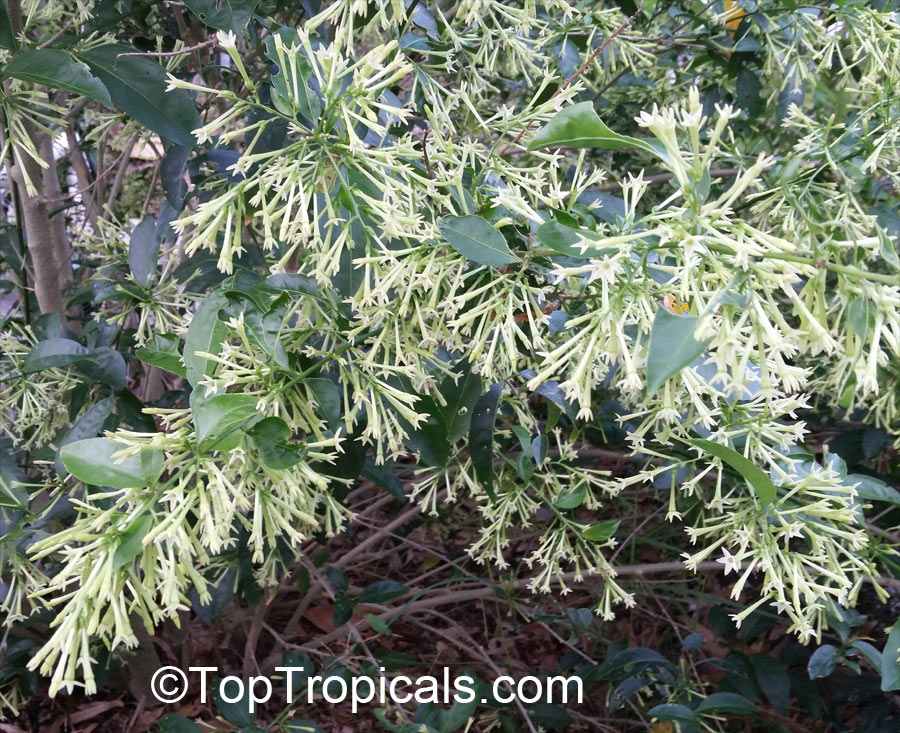
Cestrum nocturnum - Night blooming jasmine. Garden favorite - the sweetest fragrance at night is intoxicating. One of the most famous and desirable fragrant plants. Flowers are pale yellow to white, open at night and stay extremely fragrant until sunrise. These flowers are widely used in India and other countries of South Asia for perfumery, medicinal applications and in religious ceremonies. Best location will be near driveway, window or entrance, where the magic fragrance can be appreciated.
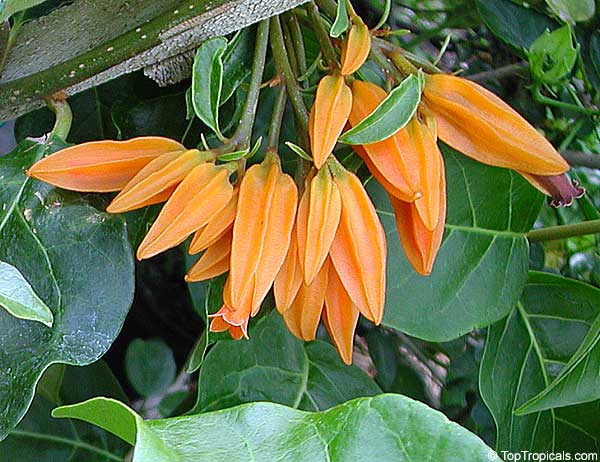
Juanulloa aurantiaca - Gold Finger plant, Mexican Spoon Flower - this one is soooo pretty! Unusual looking vine or shrub with yellow-orange fleshy flowers, everblooming and a VERY fast growing. Rare, collectible plant.
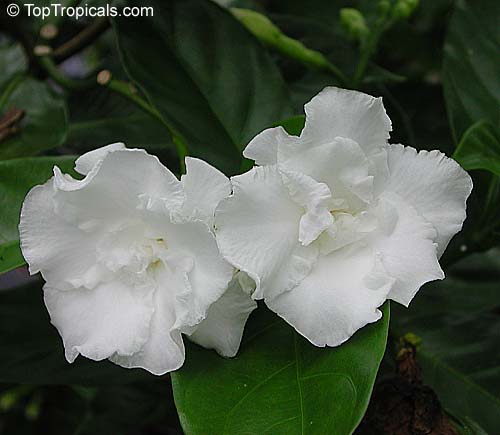
Tabernaemontana Flore Pleno - Crape Jasmine, Carnation of India, Florida Gardenia - this fast growing bush with waxy leaves and beautiful fragrant flowers is a must in tropical garden. Easy to grow and free flowering, dense bush.
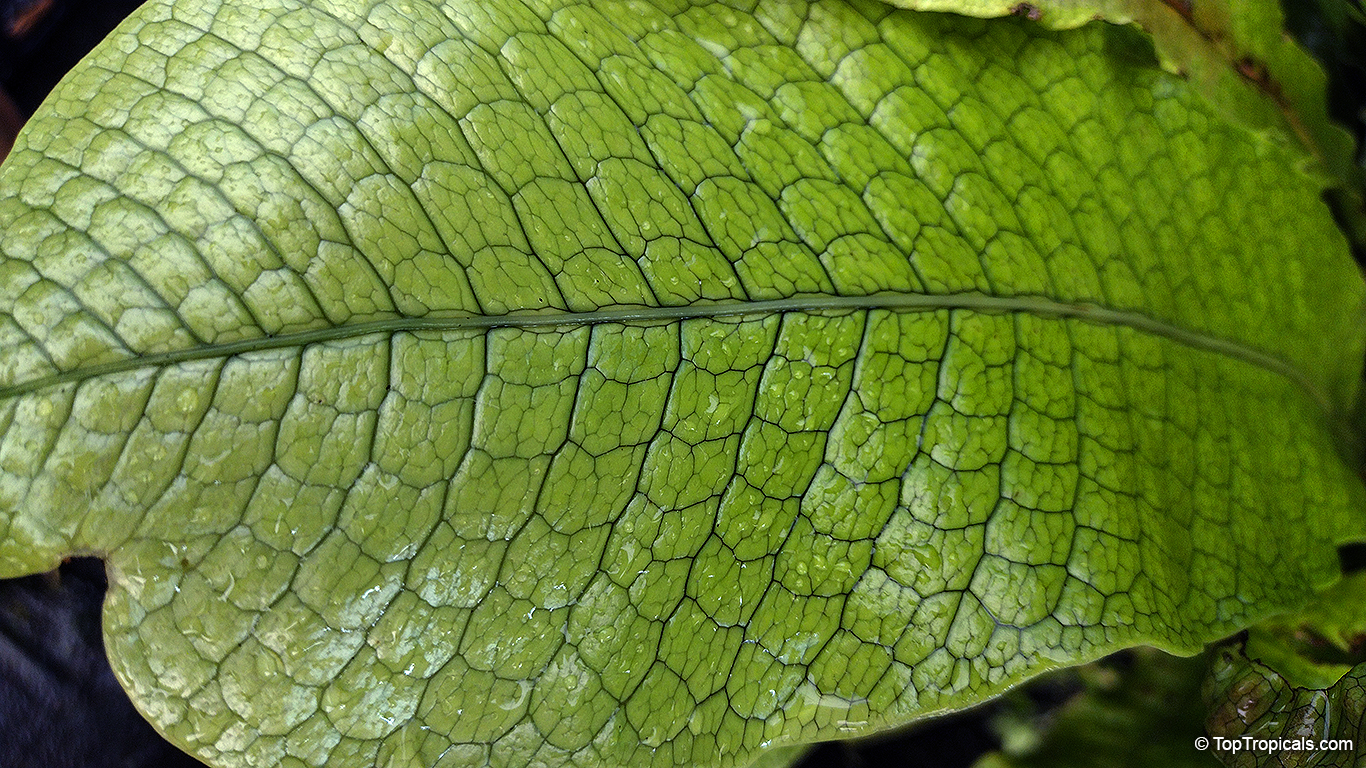
Microsorum musifolium - Alligator Fern, Crocodile Fern from Australasia. Perfect for shade! An epiphytic fern with cool alligator-skin looking leaves. The strikingly shaped, light green fronds of the fern form a lovely backdrop to its stunning stiff, leathery, dark green alligator-skin foliage. Perfect as a houseplant, or planted under a tree. Grows to 2-3 ft in height and likes a sheltered, semi-shaded location, no direct sunlight.
Date: 19 Dec 2024
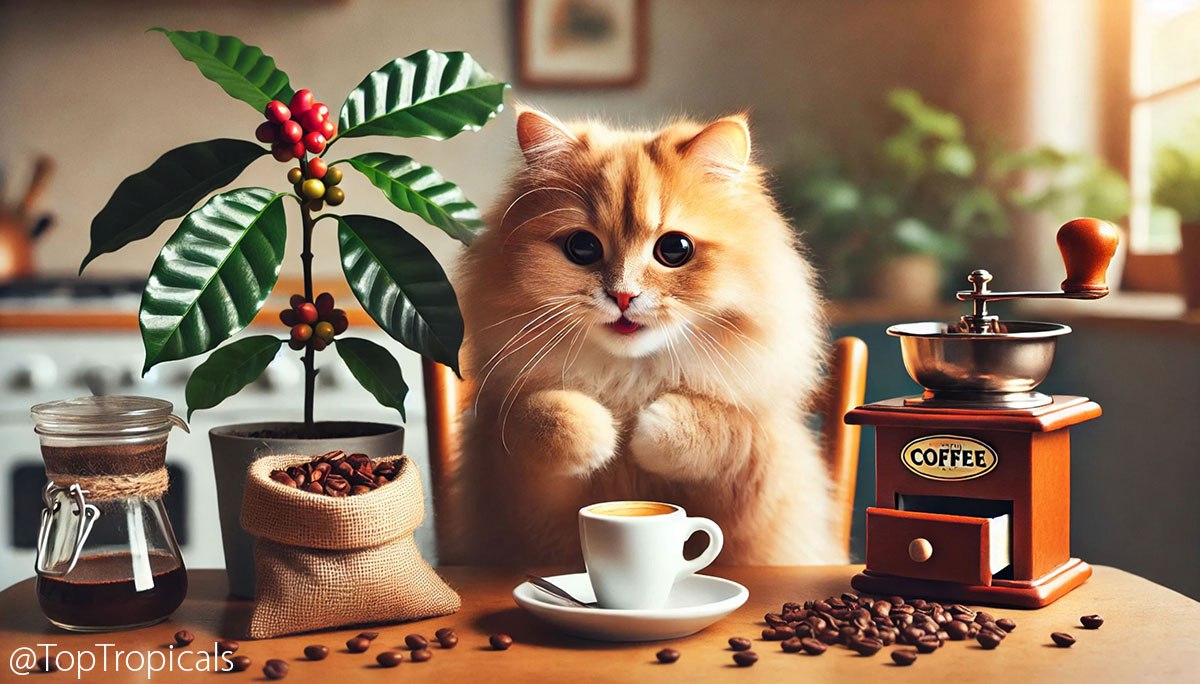
Why Coffee tree is the best gift plant
☕️ Why Coffee tree is the best gift plant
☕️ Discover the joy of growing one of the most beloved indoor fruit trees – the Coffee Plant
Date: 17 Jun 2025
What jasmine has a stronger scent than Sambac?
Jasminum molle, Indian Jui, Jasminum auriculatum
🎆 What jasmine has a stronger scent than Sambac?
- ⭐️ Once you smell it, you’ll never forget it! If you are looking for a jasmine that truly stands out, Jasminum molle (also known as Indian Jui or Jasminum auriculatum) is one of the best-kept secrets among fragrant plants.
- ⭐️ An uncommon jasmine with an unforgettable scent, with a rich, gardenia-like perfume that rivals the world-famous Jasmine Sambac, this stunning species deserves a special place in your collection.
- ⭐️ Extraordinary fragrance: The satin-white flowers release an intense, sweet scent that fills the air - one of the strongest among all jasmines.
- ⭐️ Multiple growth habits: Naturally bushy and fast-growing, it can be shaped into a dense shrub, grown in containers, or even allowed to climb slightly on a trellis. It also makes a great hedge.
- ⭐️ Versatile and hardy: Adapts well to full sun or part shade, wet or dry soil. Fairly cold-hardy, it can handle a light frost with no damage.
- ⭐️ Seasonal blooms: While blooming peaks in summer, flushes of flowers can appear again in fall or even winter, often in clusters that cover the plant.
- ⭐️ Cultural significance: In India, this jasmine is sacred to the Goddess Devi and widely used in religious ceremonies, garlands, perfumes, and hair adornments.
- ⭐️ Medicinal uses: Traditional remedies use jasmine oil for hair and skin health, and the roots for treating skin conditions.
- ⭐️ With small, dark green leaves and powdery white blooms, Jasmine Molle is a top choice for gardeners who love richly fragrant plants. It's easy to grow, low maintenance, and incredibly rewarding. Whether in a pot, a border, or a spiritual garden, this jasmine is more than just a plant - it's an experience.
🛒 Bring sacred fragrance into your garden
📚 Lean more about #Perfume_Plants
#Perfume_Plants #Hedges_with_benefits
🟢 Join 👉 TopTropicals