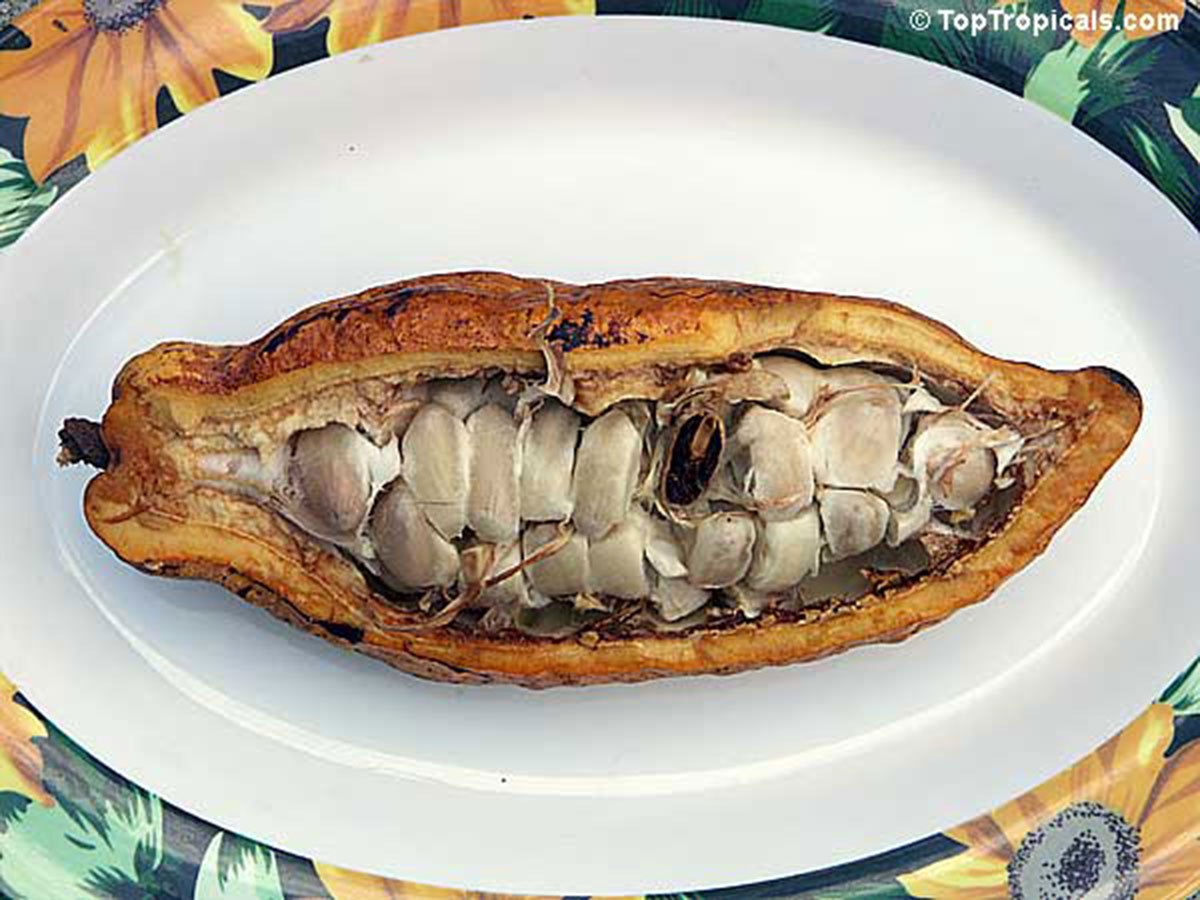
Chocolate tree fruit (Cocoa, Cacao beans) - Theobroma cacao
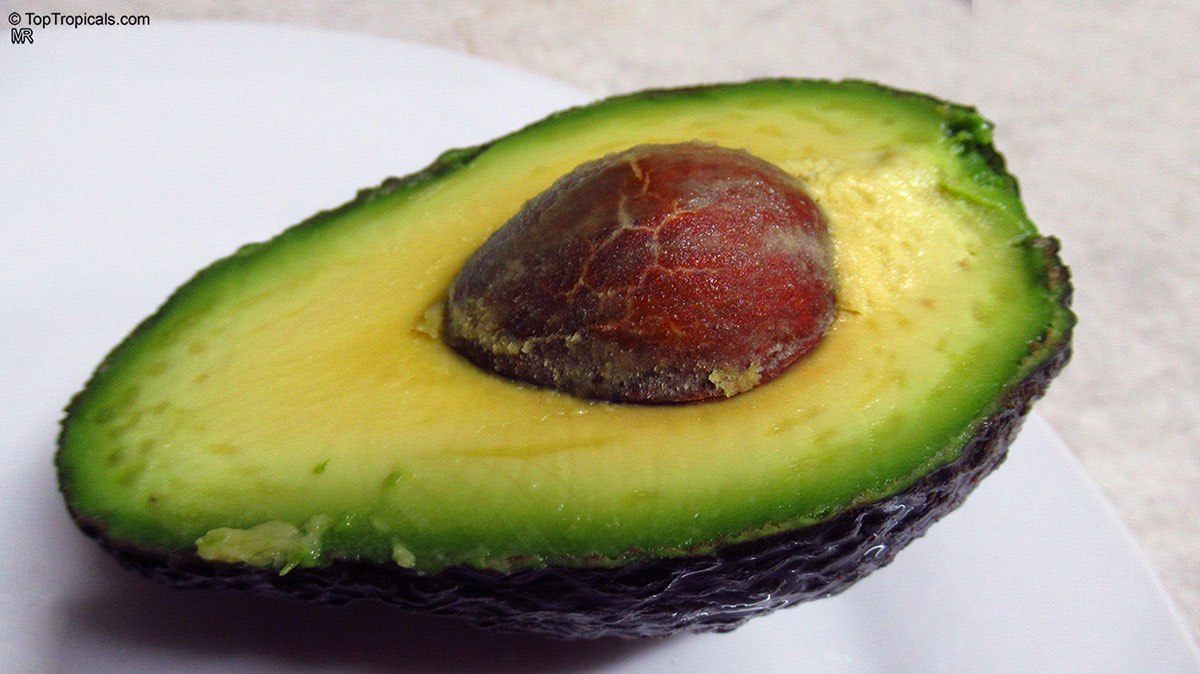
Avocado fruit
☕️ Grow your own brain food: Avocado and Cocoa
Avocado and cocoa aren't just a delicious combo - they’re also great for your brain. Studies show that Avocado's healthy fats
improve blood flow and memory, while Cocoa’s flavonoids
boost attention, mood, and overall cognitive performance. Together, they help protect brain cells from inflammation and aging.
Avocados are rich in monounsaturated fats and lutein, nutrients that support sharp thinking and long-term brain health. Cocoa, meanwhile, enhances circulation in the brain and has been linked to lower risk of stroke and dementia. So, growing your own avocado and cacao trees means growing your own natural brain boosters right in your garden.
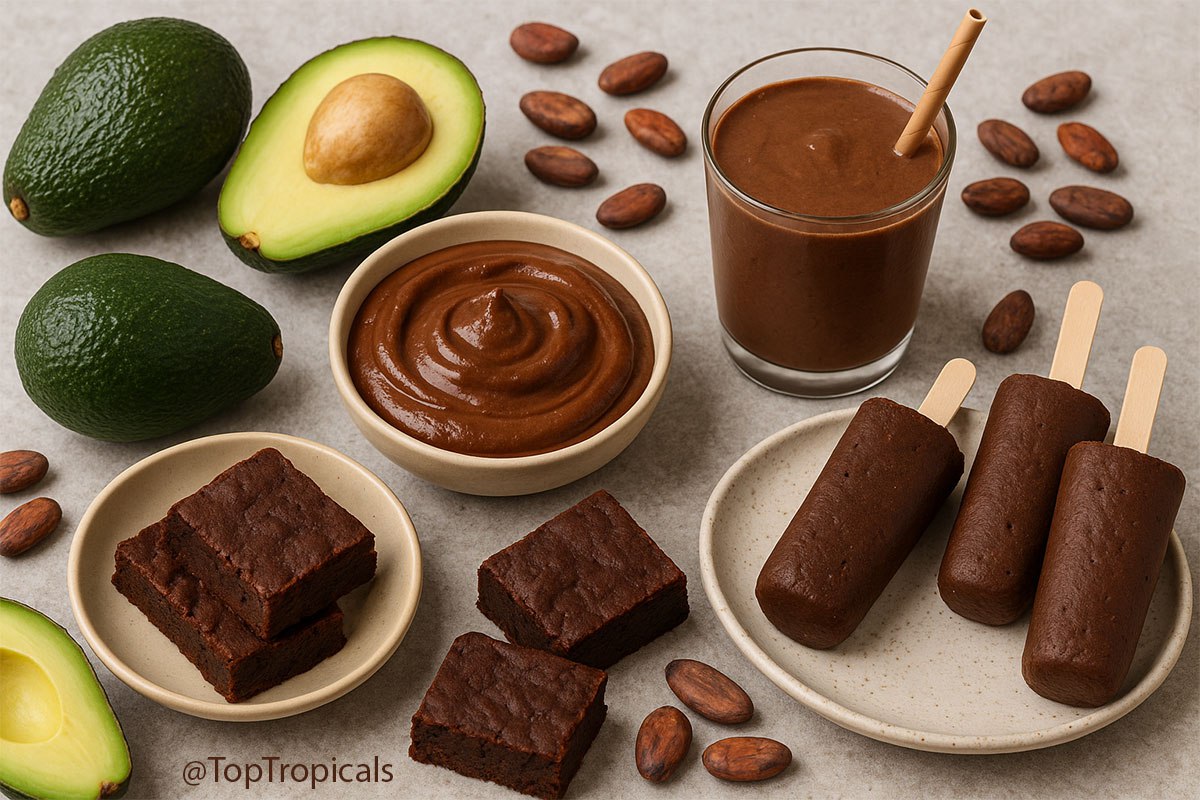
Try blending the two in simple treats like avocado chocolate mousse or a smoothie with banana and almond milk - creamy, rich, and packed with brain-loving nutrients.
🍽 Delicious Avocado-Chocolate recipes:
🍵 Avocado Chocolate Mousse
To make this, simply blend ripe avocado, unsweetened cocoa powder, honey (or maple syrup), and a splash of vanilla for a rich, creamy mousse that feels indulgent yet guilt-free.
🍵 Avocado Chocolate Smoothie
This is perfect for breakfast and to make it, combine avocado, cocoa powder, banana, almond milk, and a touch of nut butter for a thick, chocolatey breakfast smoothie.
🍵 Avocado Brownies
This one is for the sweet tooth lovers, use mashed avocado in regular brownie batter, add cocoa powder, and bake for fudgy, nutrient-dense brownies.
🍵 Chocolate Avocado Pudding Pops
To make this bite-size snack, blend avocado, cocoa powder, dates (or honey), and coconut milk, then freeze in molds for refreshing delights.
Smokey: Guava for fiber, banana for power. Pick wisely.
Sunshine: I pick whatever requires zero effort.
Smokey: So... guava in a hammock. Perfect.
🍉🍌 What's for breakfast? Guava versus Banana
Some mornings you want something light. Some mornings you want something that hits like a tiny energy bomb. That’s why people always compare guava and banana. Both are everywhere, easy to eat, and trusted since forever - from Ayurveda scrolls to modern nutrition charts.
But they’re not the same kind of morning fruit. Let’s walk through them like we’re in the kitchen deciding what to slice first.
🍉 Guava - the fiber champion
Guava looks innocent, but it’s one of the most nutrient-dense fruits.
Per 100 g: 68 calories, 5.4 g fiber, over 200 mg vitamin C, a little protein, and solid potassium.
Fiber does most of the work. It smooths digestion, keeps you full, and steadies blood sugar. Vitamin C boosts immunity, and antioxidants reduce inflammation. Studies suggest guava lowers LDL and triglycerides. Not bad for a tennis-ball-size fruit.
🍌 Banana - the quick energy classic
Bananas are the opposite personality: soft, sweet, ready in seconds.
Per 100 g: 89 calories, 22 g carbs, good potassium, and a little vitamin B6.
Bananas give fast energy without upsetting the stomach. Athletes eat them before workouts because carbs, sugars, and potassium wake up your muscles. Vitamin B6 helps mood and brain function, which is why a banana on a groggy morning works wonders.
They also pack antioxidants, polyphenols, and heart-protective compounds. Even the peel has nutrients (though not exactly breakfast-friendly).
· Banana: antioxidants, fiber, vitamins C and E, carotenoids, flavonoids, and heart-protective compounds.
🔮 What Ayurveda says
· Guava calms Pitta and Kapha - great for acidity or sluggish digestion.
· Bananas balance Vata - grounding and nourishing - but can raise Kapha at night. Morning banana = good. Night banana = maybe skip.
🏆 Guava or banana - which one wins?
Both win, just in different ways:
🍉 Pick guava for:
· light, high-fiber start
· better digestion
· steady energy
· low calories
· weight control
🍌 Pick banana for:
· instant energy
· easy digestion
· pre-workout boost
· quick carbs
· soft, comforting fruit
🍉 Slow mornings love guava.
🍌 Busy mornings belong to banana.
For home growers
If you live in a warm climate, both fruits are incredibly rewarding to grow.
🍉 Why grow guava?
· Fruits in 1-2 years.
· Compact for small yards or containers.
· Super productive when mature.
· Needs only sun, warmth, and pruning.
· Homegrown flavor is sweeter and more aromatic.
🍌 Why grow banana?
· Grows fast and looks lush.
· One mat can feed a whole household.
· Dwarf varieties fit small gardens.
· Homegrown bananas taste richer and creamier.
· When a bunch ripens, breakfast is handled for a week.
Growing your own fruit means you’re never out of a healthy breakfast. Something is always ripening, always ready to pick, and always sweeter than anything you buy.
Welcome to our new Telegram
Channel!
We finally did it, and excited to connect with all of you on this amazing
platform. After using Telegram for a few years for both business and personal
communications, we realized it is a winner of the modern Social Media!
In Top Tropicals Telegram Channel
you will find much more than on our website or Newsletter: Fun Plant Facts,
Nature Wonders, Amazing Plant Videos, Gardening How-to Tips, Exotic Recipes,
Contests, Sweepstakes, Give-aways and so much more. Plus, of course, your
favorite PeopleCats!
Telegram is a messaging app with
a focus on speed and security, it's super-fast, simple and free. You can
use Telegram on all your devices at the same time - your messages sync
seamlessly across any number of your phones, tablets or computers. It's perfect for
sharing your comments, photos, videos, even making calls.
You can watch news, browse your interest, message to friends and
colleagues, save your files, create groups, make phone calls, and the most amazing
thing - Telegram works where nothing else works, no WiFi or cell service! It
proved to be more reliable than any other apps and (surprise!) even works in
airplane without wifi connection - proved!
The platform has its own cloud and offers limitless storage. And the
last and not least - it's ad-free! Telegram is free and will stay free - no ads,
no subscription fees, forever. It's a clean, clear and easy to use for all
ages and applications. Try it yourself and discover how easy and pain-free it
is!
Telegram is for everyone who wants fast and reliable
messaging and calls.
See you in Telegram!
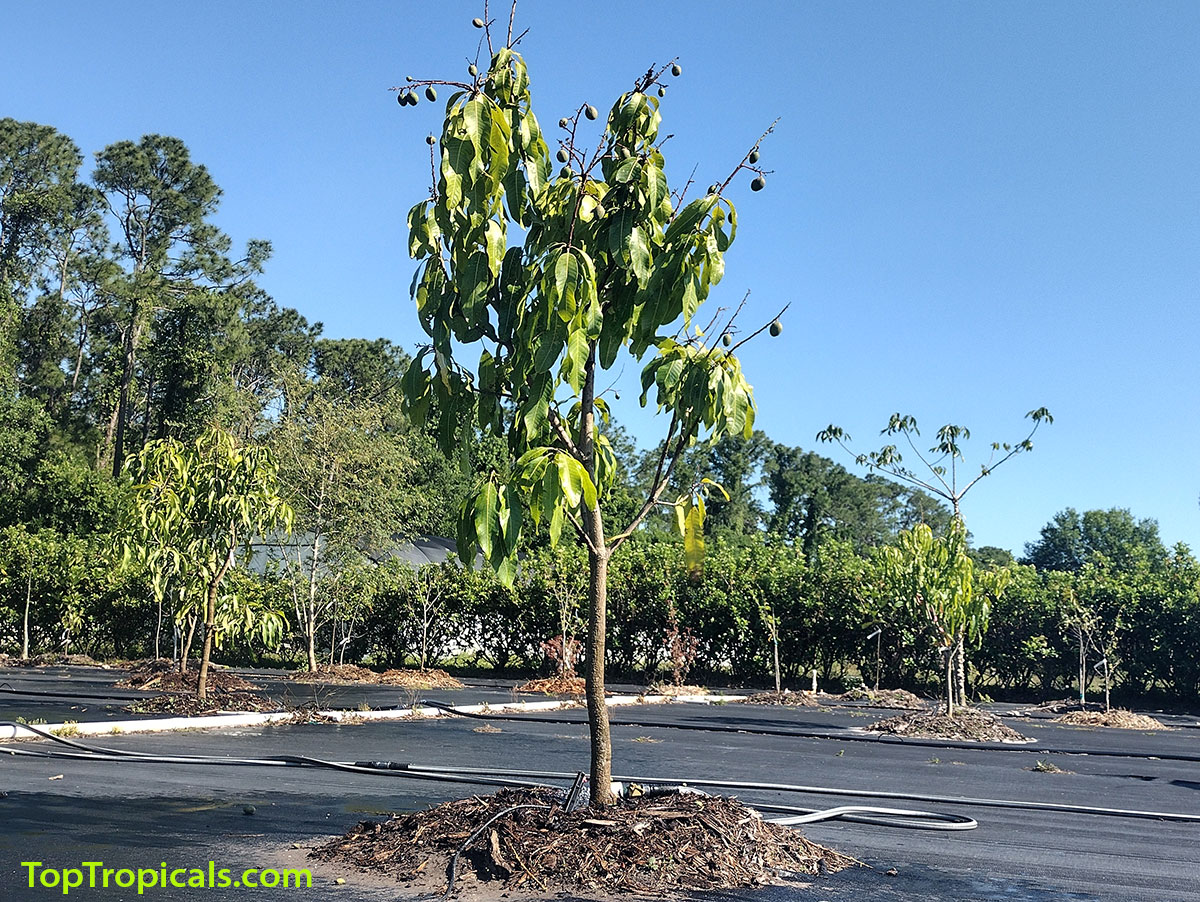
Q: I got a large mango tree from your garden
center recently, planted in the ground, but noticed the corners of the leaves
turning brown. It was full of little fruit when I planted it but now they are
falling off... I wonder how much should I water the mango tree? We have lawn
sprinkler system that runs daily, is this enough?
A: Generally speaking, never rely solely on your
sprinkler system when planting a new tree, especially during the first week
or even several weeks if you have no rain. By rain, we mean a nice downpour.
Here in Florida, we usually have a hot and dry spring, and while springtime is
great for starting new trees, additional hose-watering becomes essential for
establishing them during the first months.
Dry leaves are a signal of under-watering. Make sure to hand water your
mango tree every day for at least the first week after planting. Even if you
have an individual sprinkler for the tree, ensure that the soil around the
rootball receives enough water, not only around the trunk. Surprisingly, the
bigger the tree, the more it may suffer from a lack of water, and sprinkler
watering does not saturate the large root system, sometimes only reaching around
the trunk. Big tree means lots of leaves and branches - they all get
thirsty!
Mangos are pretty drought-tolerant trees, but only once established.
They even benefit from hot, drier air (means less leaf fungus). However, young
trees require regular irrigation until they start growing new leaves and
branches.
Note that fertilizing your Mango tree is especially important during the
spring and summer seasons - the period of active growth. This ensures that
the tree takes the best advantage of nutrients with a faster metabolism
encouraged by high temperatures. Give your tree a chance to build up lots of energy
for the cooler winter as well as for the next flowering and crop season. To
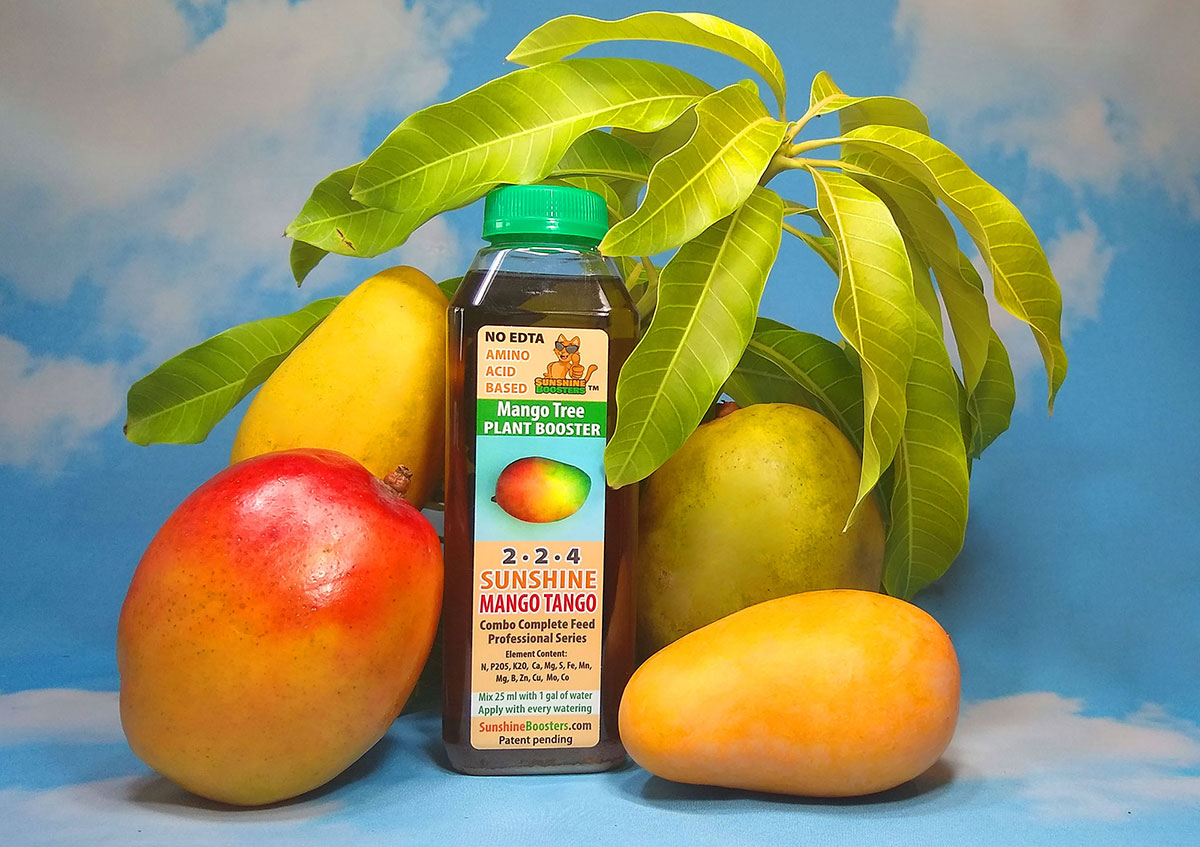
ensure a strong tree and reliable crop with no fruit drop, apply Sunshine Mango Tango liquid fertilizer with every watering and watch
your mango tree become a Champ!
Q: Can I grow an olive tree in Florida and have
my own olives? How long does it take to fruit?
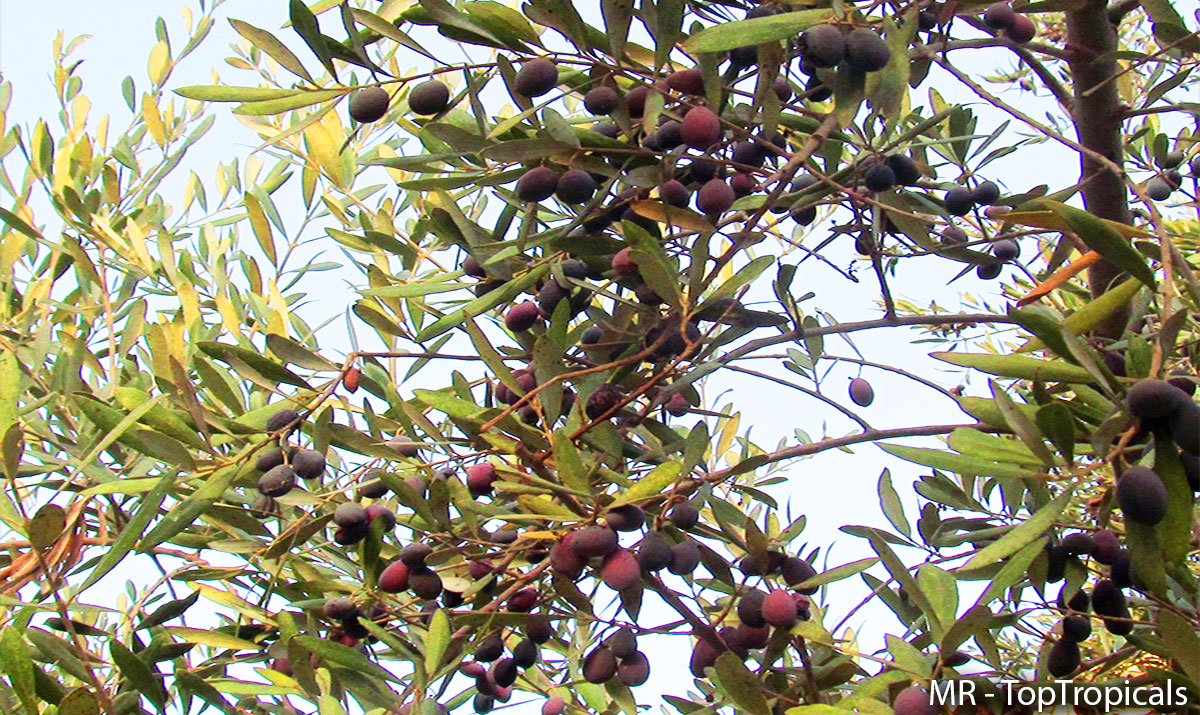
A:Olive trees can indeed thrive and fruit in various regions of Florida.
Their adaptability to different climates makes them suitable for the state's
diverse conditions. In the northern and central parts of Florida olive trees
can flourish.
Easy to grow. Olive trees prefer well-drained soil, and they
thrive in full sun, which Florida offers in abundance. While they may not produce
as prolifically as in their native Mediterranean habitats, with proper care
and suitable varieties, such as Arbequina, Coratina and Leccino, you can
still enjoy a bountiful harvest.
Cold hardy. One advantage of olive trees in Florida is their cold
hardiness. They can withstand occasional frosts and freezes, particularly
when they are mature.
Heat- and drought-tolerant. Olive trees also offer additional
benefits beyond their fruit production. They are drought-tolerant once
established, making them well-suited to Florida's sometimes erratic rainfall patterns.
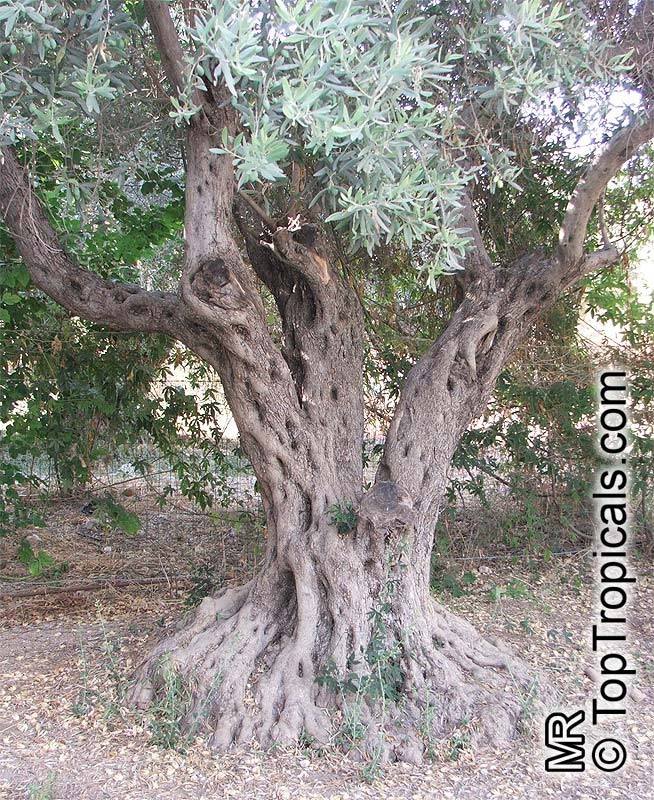
Beautiful in landscape. Evergreen foliage of olive trees adds
aesthetic appeal to landscapes year-round, and their gnarled trunks and
silvery-green leaves create a Mediterranean ambiance reminiscent of warmer
climates.
Fertilize for quick fruit. Olives will start flowering within 1-2
years of planting, providing regular fertilizing program. We recommend
Sunshine Boosters C-Cibus liquid fertilizer, perfect for edibles and
organic gardens.
Symbol of Prosperity. The olive branch has long been revered for
its symbolic significance, representing peace, prosperity, and hope across
cultures and centuries. It transcends mere botanical importance to embody the
enduring power of goodwill.
Healthy Olive Oil. Similarly, olive oil, extracted from these
timeless fruits, has been celebrated not only for its culinary excellence but
also for its remarkable health benefits. Rich in antioxidants and heart-healthy
fats, olive oil has sustained generations with its nourishing properties,
earning it a cherished place in both culinary traditions and holistic wellness
practices worldwide. So, whether adorning Olympic crowns or enriching
Mediterranean cuisine, the olive and its offerings continue to inspire and enrich
our lives with their timeless allure and profound significance.