Garden Blog - Top Tropicals

Date: 15 May 2024

What does a dragon taste like? Does Dragon Fruit come from a monster cactus? Learn why you need to grow your own
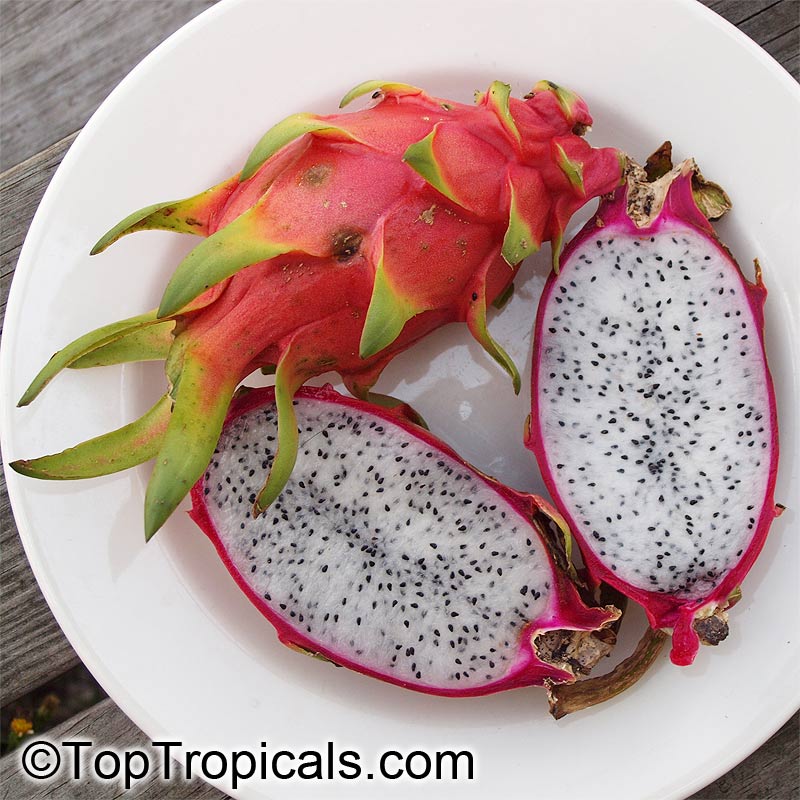
Hylocereus and Selenicereus Dragon Fruit or Pitaya
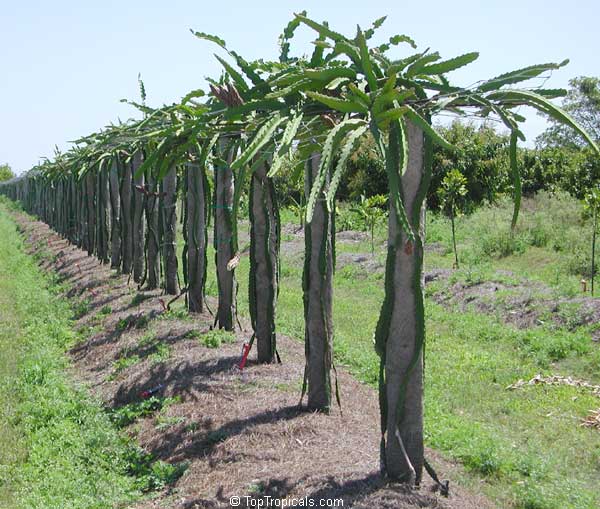
Hylocereus and Selenicereus Dragon Fruit or Pitaya

Hylocereus and Selenicereus Dragon Fruit or Pitaya trees on trellis
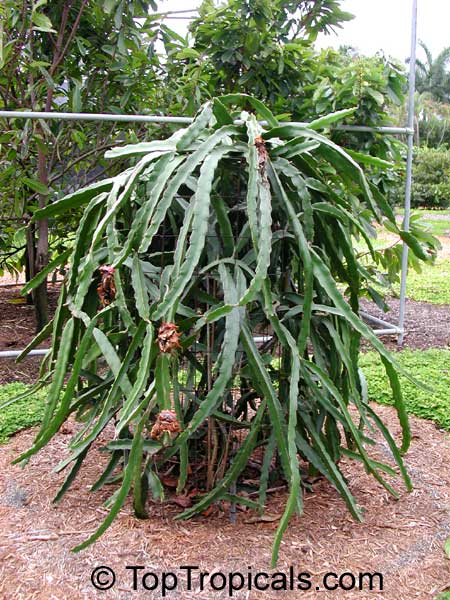
Hylocereus and Selenicereus Dragon Fruit or Pitaya trees on trellis

Hylocereus and Selenicereus Dragon Fruit or Pitaya on trellis
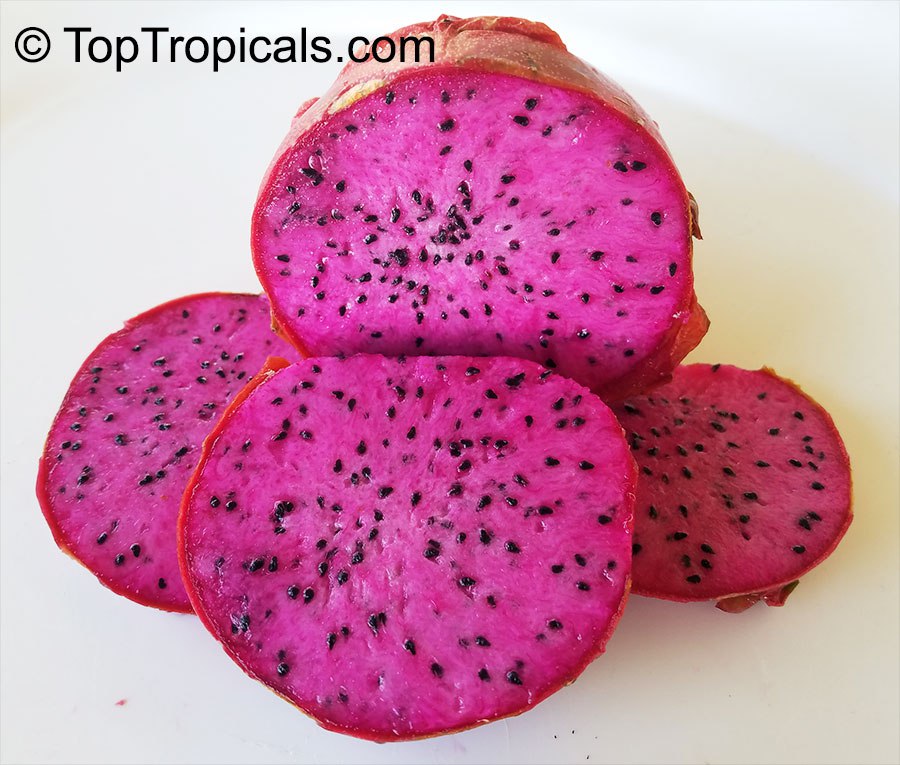
Hylocereus and Selenicereus Dragon Fruit or Pitaya on trellis

Hylocereus and Selenicereus Dragon Fruit or Pitaya red fruit
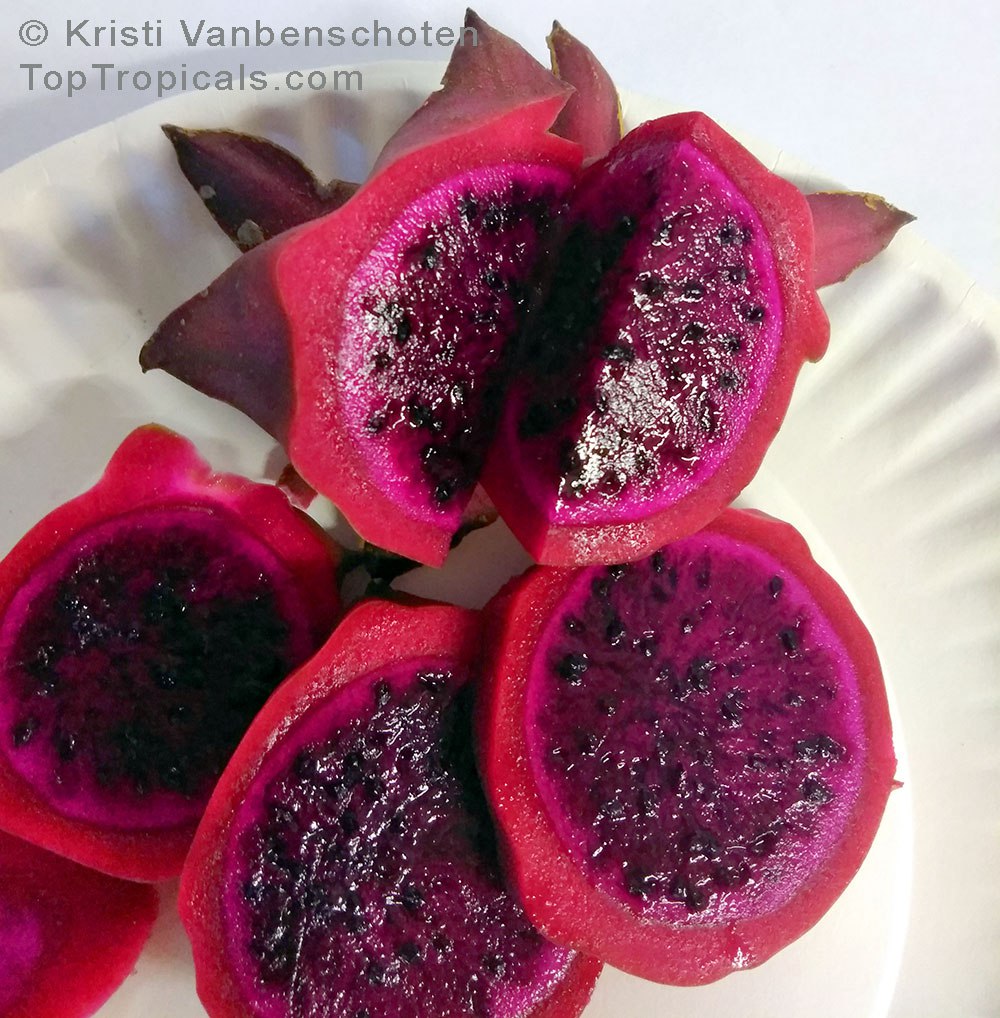
Hylocereus and Selenicereus Dragon Fruit or Pitaya red fruit

Hylocereus and Selenicereus Dragon Fruit or Pitaya purple fruit
Hylocereus and Selenicereus Dragon Fruit or Pitaya purple fruit

Hylocereus and Selenicereus Dragon Fruit or Pitaya Yellow Parlora
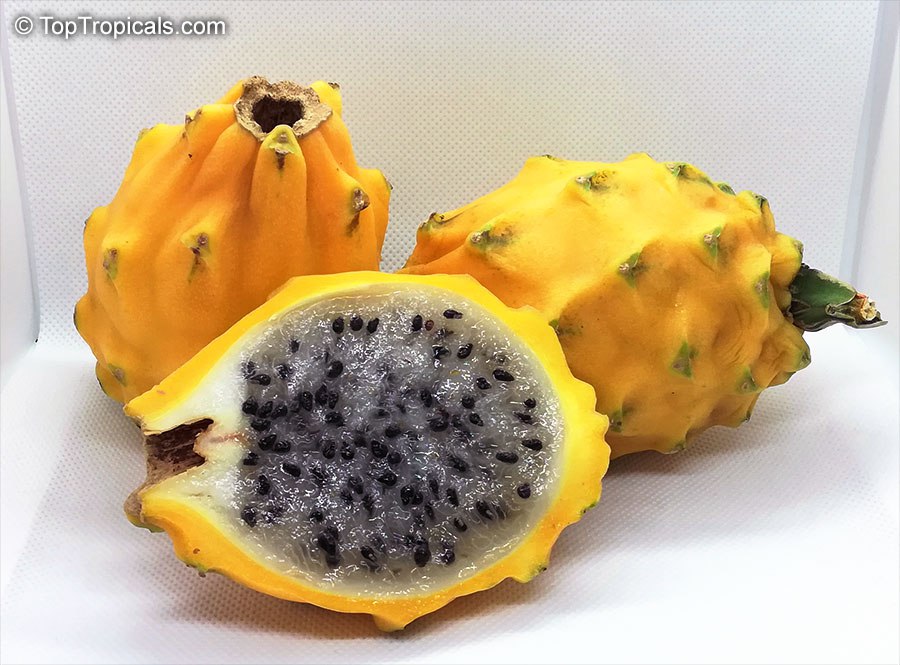
Hylocereus and Selenicereus Dragon Fruit or Pitaya Yellow Parlora

Hylocereus and Selenicereus Dragon Fruit or Pitaya flower

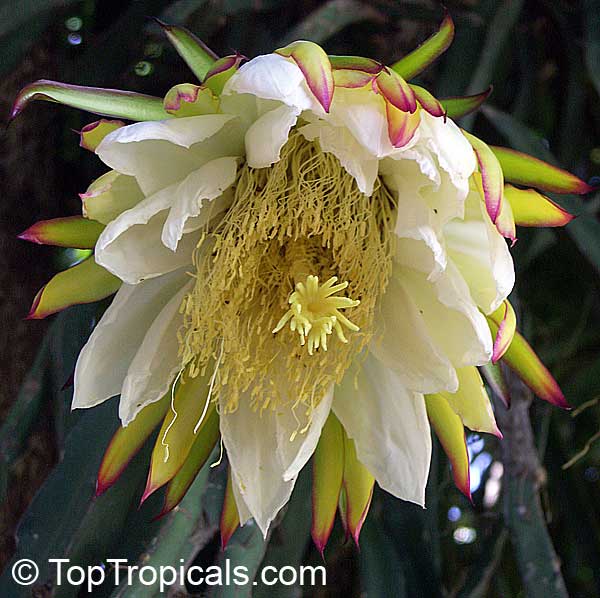
Hylocereus and Selenicereus Dragon Fruit or Pitaya flower

🐲 What does a dragon taste like? Does Dragon Fruit come from a monster cactus? Learn why you need to grow your own. 🌵

🔴 You may have tried a Dragon fruit from the store l, but do you know how it grows? On a cactus tree!

🔴 Names: varieties of Hylocereus and Selenicereus - these fruit bearing cactus plants are also called Dragon Fruit or Pitaya.

🔴 Commercially grown fruit sold in a grocery store may be tasteless. You need to grow your own good variety to have tasty, sweet, flavorful fruit!

🔴 Dragon fruit comes in many varieties. Colors of flesh differ: white, pink, dark red and even purple. The outside of the fruit can be red/pink or yellow.

🔴 In commercial groves, Pitayas grow like cactus trees, over a strong support - big "umbrella frames" ☂️

🔴 It is an easy plant, with low water needs, takes both sun and semi-shade.

🔴 Our favorite variety is Yellow Dragon Fruit Palora, (Selenicereus megalanthus). It is the sweetest and has the most flavor of all. We shared some recipes earlier.

🔴 Can be grown in container with a wooden trellis. And the flower is beautiful, too!

📚 Learn more about Dragon Fruit
🍹 Recipe: What to do with a Dragon fruit?

🛒Grow your own Tasty Dragon Fruits

#Food_Forest #Recipes #Nature_Wonders

🏵 TopTropicals

Date: 5 Jan 2026

☘️ What plants are easy to ship in Winter?

Lush  tropical  garden  with  a  bright  green  leafy  Magnolia  champaka  surrounded  by  flowering  shrubs,  such  as  Brunfelsia  grandiflora,  at  Top  Tropicals  nursery

Ordering plants in winter is often easier than people expect - and for many plants, it is actually better. Lush foliage plants like philodendrons and medinilla, fine-leaved trees such as moringa, jacaranda, and poinciana, and even sensitive fruit trees like papaya, jackfruit or starfruit ship more safely in cool weather without overheating stress.

Winter is also ideal for subtropical and cold-tolerant plants, dormant or deciduous plants like plumeria and adenium, orchids - including ground orchids and vanilla orchids, and winter bloomers that flower their best right now. Winter care is simple: water less, use gentle liquid amino-acid fertilizers like Sunshine Boosters, and monitor insects.

In mild climates, many tropicals can be planted anytime, while extra-tender plants can stay potted until spring. Winter is a perfect time to bring tropical warmth indoors and enjoy greenery when you need it most.

🌿Learn more: easy plants for Winter shipping

Date: 13 Sep 2025

🌸 Meet the Most Colorful Ground Orchids

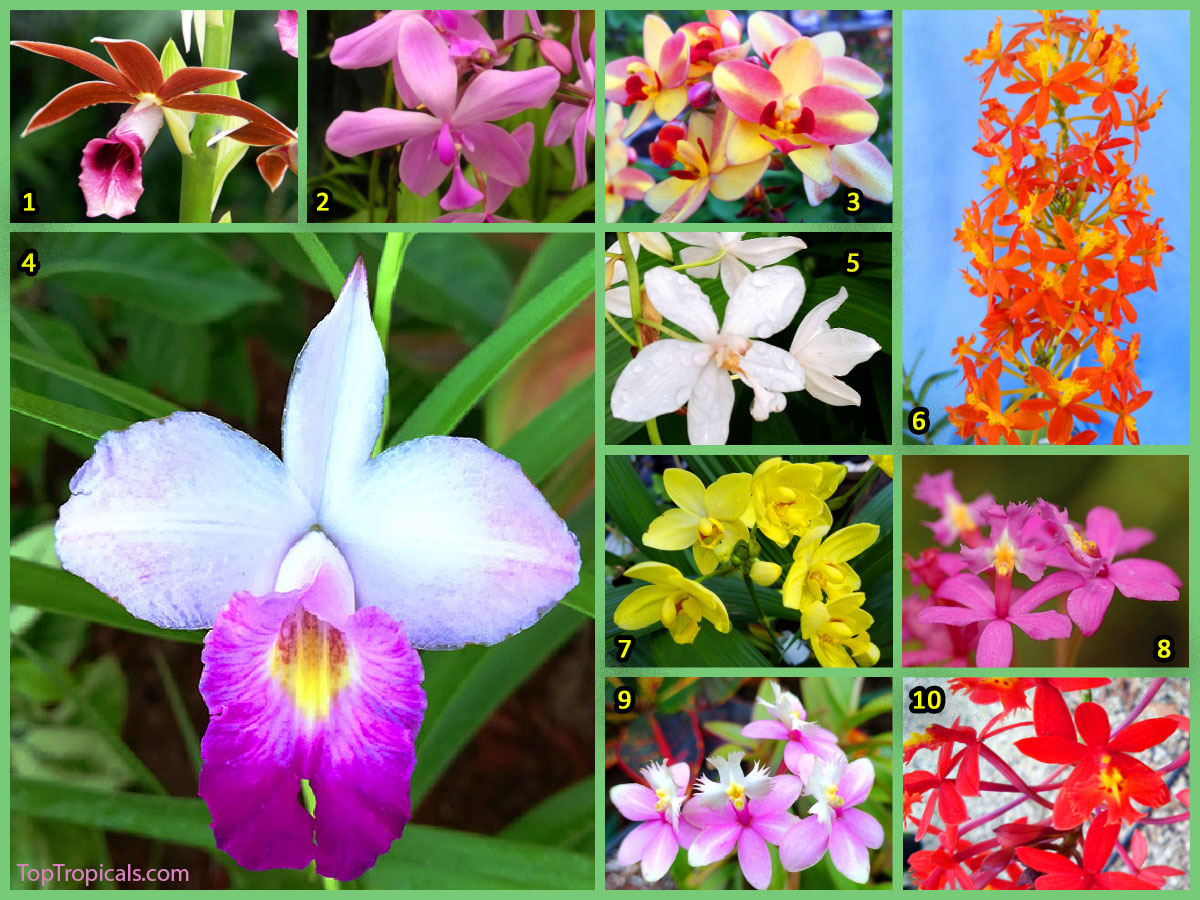
Collage  of  ground  orchids  –  Phaius  tankervilleae  (Nun  Orchid), 
 Spathoglottis  varieties  (purple,  yellow,  white,  pink),  Arundina  graminifolia
    (Bamboo  Orchid),  and  Epidendrum  species  (orange,  pink,  red  Reed 
 Orchids)

Ground Orchids – Spathoglottis, Phaius, Arundina, Epidendrum

  1. Chinese Nun Ground Orchid (Phaius tankervilleae)
  2. Yokohama Ground orchid Kate (Bletilla striata x formosana)
  3. Tropical Punch, Sorbet Ground Orchid (Spathoglottis plicata)
  4. Bamboo Orchid (Arundina graminifolia)
  5. Snow Angel, Coconut Cloud Ground Orchid (Spathoglottis alba)
  6. Orange Reed Ground Orchid (Epidendrum radicans Sunrise)
  7. Lemon Kiss, Sorbet Ground Orchid (Spathoglottis chrysanta)
  8. Pink Reed Ground Orchid, Violet Queen (Epidendrum radicans Fuchsia)
  9. Lavender Reed Ground Orchid (Epidendrum elongatum x radicans)
  10. Red Raspberry Reed Ground Orchid (Epidendrum radicans Red Glow)

Orchids have a mystique that sets them apart — elegant, exotic, almost unreal in their perfection. But let’s be honest, not everyone has luck with the fancy ones that cling to trees or need greenhouse tricks.

Ground orchids are different. They grow in regular garden soil, bloom in sun or shade, and come in all sorts of shapes and colors. They’re the orchids you don’t have to fuss over.

Nun Orchid (Phaius tankervilleae) – Ever wonder why it’s called the Nun Orchid? The flowers really do look like the white veil and brown habit nuns used to wear. The plants send up spikes 3–4 ft tall with 10–20 fragrant blooms that open one after another for weeks. I like them best tucked under trees where they just keep spreading year after year.

Spathoglottis – The nonstop bloomer – If you want flowers that just don’t quit, this one’s it. Spathoglottis clumps up and throws spikes of purple, pink, or yellow that last for weeks, then keep coming back through the summer. In warm spots they’ll bloom almost year-round. Honestly, it’s one of the easiest orchids you’ll ever grow.

💲 Special Offer – 20% off Ground Orchids!

Get 20% OFF ground orchids with code

ORCHID2025

Min order $100. Excluding S/H, valid online only, cannot be combined with other offers.

Hurry, offer expires September 17, 2025!

Shop ground orchids

Date: 10 May 2026

🍑 Tree-Ripened Peaches Change Everything

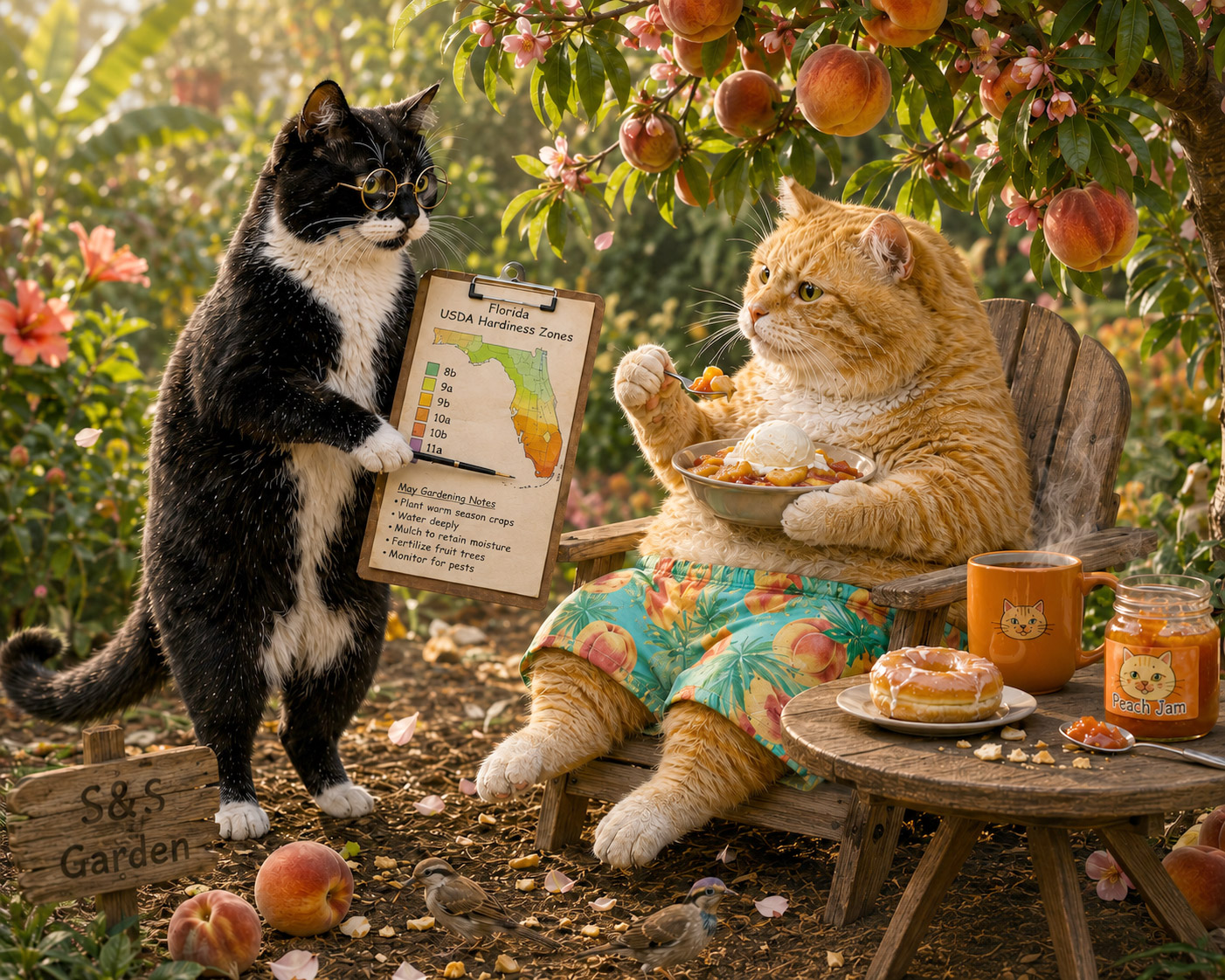
Smokey  and  Sunshine  relax  under  a  peach  tree  in  the  S&S  Garden, 
 discussing  low-chill  peaches  for  Florida  while  enjoying  peach  cobbler  with 
 ice 
 cream.
Sunshine: I love peach cobbler. Smokey, why are peaches on the tree so early?
Smokey: Low-chill peach varieties for Florida. They ripen much sooner.
Sunshine: I thought peaches were for Georgia.
Smokey: Not if you plant low-chill peaches. And speaking of peaches, do you know about donut peaches?
Sunshine: Donut peaches? Finally, horticulture I can understand.

Some fruits carry memories before you've even tasted them.

There's something about a peach still warm from the tree - the way it gives a little when you pick it, the smell that hits you before you even take a bite. It makes you slow down. It makes summer feel like it actually meant to show up.

Peach Plant Facts

Botanical name: Prunus persica, Amygdalus persica
Also known as: Peach
USDA Zone: 5 - 10
Highligths Small tree 10-20 ftFull sunWatering: Regular. Let topsoil dry slightlyWhite, off-white flowersPink flowersEdible plantDeciduous plantSubtropical plant. Mature plant cold hardy at least to 30s F for a short time
Get personalized tips for your region

For Florida gardeners, that moment used to feel borrowed. Peaches were a Georgia thing, a Carolina thing. You'd admire someone else's harvest and quietly file it under not for us.

Low-chill peaches rewrote that story.

Here's the thing about regular peaches - they need cold. Not just a cool night or two, but a real winter. We're talking 600 to 1,000 hours below 45F. That's how they know to wake up in spring and actually fruit. South Florida just doesn't deliver that. The trees will grow fine, look healthy even, and then give you almost nothing come harvest time. Frustrating doesn't cover it.

Low-chill varieties are different. They were bred specifically for places like ours - warm winters, mild springs. Some only need 100 hours of chill. A hundred. That's a few cold fronts, not a season. And because they're working with our climate instead of against it, they fruit reliably. Every year.

They're not just a Florida trick either. Gardeners in coastal Texas, southern Louisiana, southern California - anywhere in that Zone 8b to 10 range - have been growing these successfully. If you've got warm winters and thought peaches weren't for you, they probably just weren't the right peaches.

🛒 Shop Low-Chill Peach trees

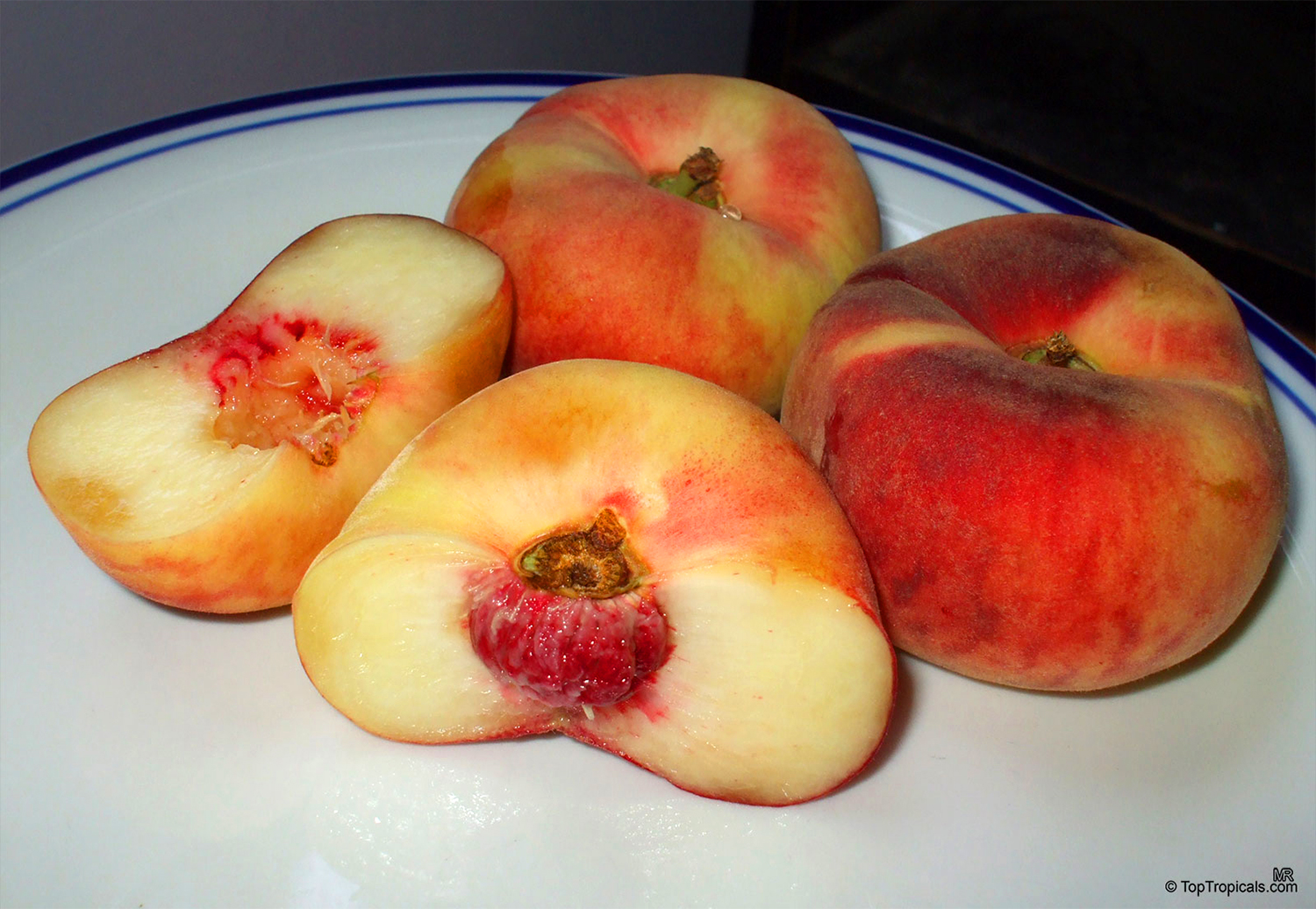
Several  ripe  flat  peaches,  also  known  as  donut  peaches  or  Saturn 
 peaches,  displayed  on  a  white  plate.  Two  peaches  are  cut  open,  showing  the 
 pale  white  flesh  and  small  central  pit  with  pink-red  coloring  around  the 
 seed 
 area.

Flat peaches - sometimes called DONUT peaches - are known for their sweet white flesh, low acidity, and fun squashed shape.

Date: 25 Apr 2026

Ackee baked rice: quick-n-fun exotic recipes

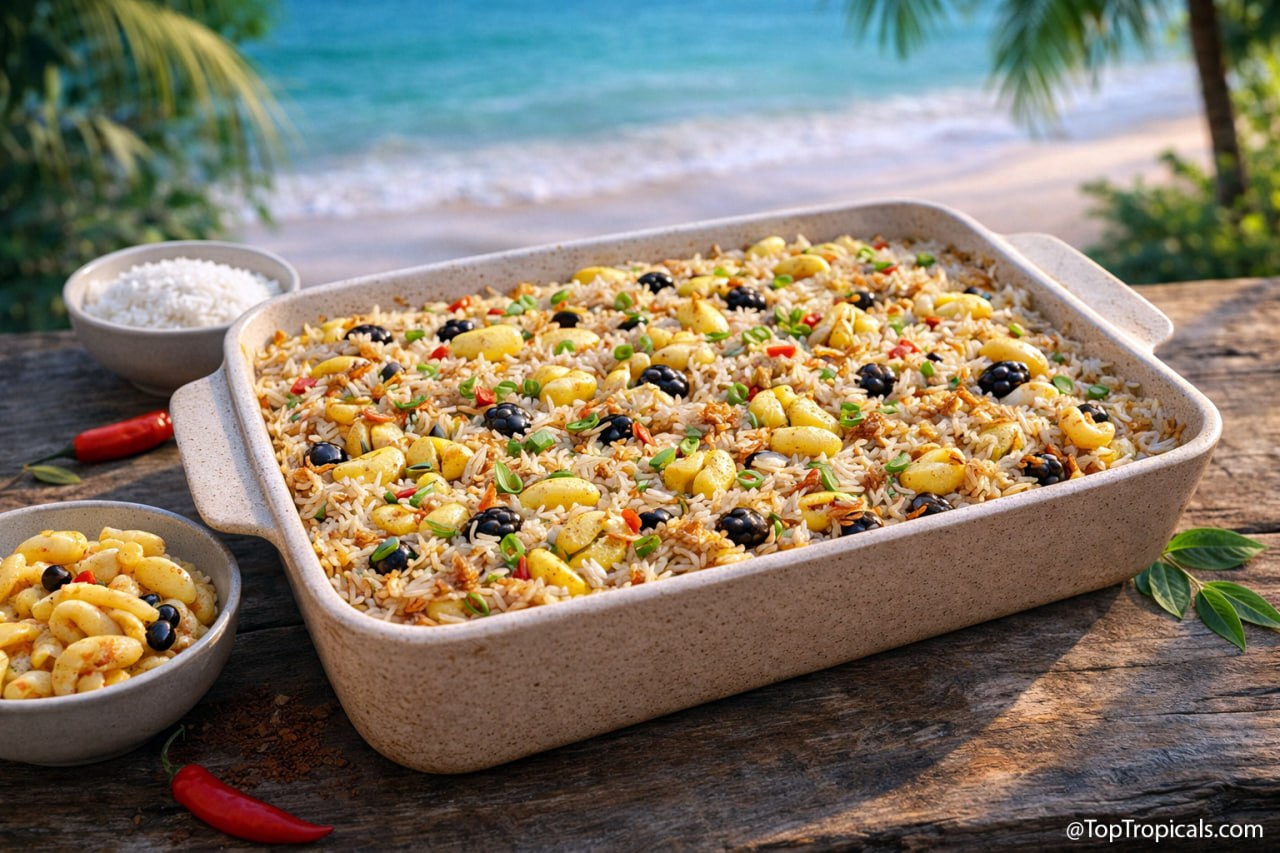
Ackee baked rice

Ackee baked rice

Ackee (Akee) - Blighia sapida - fruit

Ackee (Akee) - Blighia sapida - fruit

🍴 Ackee baked rice: quick-n-fun exotic recipes


🔴Fold cooked ackee gently into warm, seasoned rice with a pinch of salt and a little oil or butter.
🔴Spread into a baking dish and bake until the top turns lightly crisp and golden.
🔴Scoop while warm - soft inside, slightly crisp on top, simple and satisfying.

🌿 About the plant:


When properly harvested and prepared, ackee has a mild, buttery texture often compared to scrambled eggs. It contains healthy fats and is a staple ingredient in Caribbean cooking.

🏡 In the garden:


Trees require consistent warmth and do not tolerate frost. Mature trees can produce generously in suitable climates with minimal intervention.

🛒 Plant Ackee tree and harvest fruit you can't get from the store!

📚 Learn more:


Ackee (Akee) - Blighia sapida - in Plant Encyclopedia

Akee Plant Facts

Botanical name: Blighia sapida, Cupania sapida
Also known as: Akee, Ackee, Seso Vegetal, Arbre a Fricasser (Haiti)
USDA Zone: 9 - 11
Highligths Large tree taller than 20 ftFull sunWatering: Moderate. Water when top soil feels dryEdible plantPlant attracts butterflies, hummingbirdsSubtropical plant. Mature plant cold hardy at least to 30s F for a short time
Get personalized tips for your region

Ackee skillet scramble: quick-n-fun exotic recipes
Ackee breakfast scramble with hot peppers
Banned Jamaican fruit: why you never see fresh Akee in U.S. stores
Akee taste of deliciousness
Are these new Christmas ornaments? Ackee monster fruit!
What is number one tree-grown vegetable? Akee - Jamaican fruit that is actually a vegetable growing on a tree
📱 What is Akee - Jamaica's National Fruit - and how to grow it
📱 How to cook perfect Akee?

#Food_Forest #Recipes

🟢 Join 👉 TopTropicals