Garden Blog - Top Tropicals

Date: 2 Apr 2026

Skip the Egg Hunt - Start a Plant Hunt 🐰

Smokey  the  black-and-white  cat  with  glasses  sits  on  a  patio  taking 
 notes  while  Sunshine,  a  fluffy  orange  cat  wearing  bunny  ears,  holds  a  small 
 potted  mango  tree  with  light  yellow 
 flowers.
Sunshine: I went egg hunting. Found something better. Let’s grow it on the balcony. Mango-filled donuts, here I come.

Smokey: Finally. You’re thinking.

Read more about Smokey & Sunshine

Groundhog said long winter… and it sure felt like it. But now it is finally over, and balconies and patios are waking up again.

Easter is here, and with it comes that fresh start feeling - time to open the doors, bring plants back out, and start growing.

We made it through the cold. For northern gardeners, that is every year; for borderline zones, it is a reminder that freezes happen. That is exactly why growing in pots makes sense - you stay flexible.

Container growing is not just about pots - it is about choosing the right plants. The best options stay manageable, produce well, and handle being moved.

Let's look at what works. Start with plants that naturally stay compact and adapt well to containers. These are the ones that won’t outgrow your space and will reward you quickly. These are proven performers in containers - compact, productive, and easy to manage:

Simple rule: if it stays compact and handles pruning, it works in a container.

Skip the egg hunt this year - go on a plant hunt instead. Start with one or two plants this Easter - not ten. Get them established, learn how they grow, and then expand.

Container basics (keep it simple):

  • Pot size: start with 3–7 gallon, upgrade as plant grows
  • Soil: fast-draining mix (never heavy garden soil)
  • Water: soak well, then let top inch dry
  • Feeding: consistent light feeding works better than heavy doses
  • Sun: most tropicals want full sun (6+ hours)

🐣 Browse our Easter Container Collection
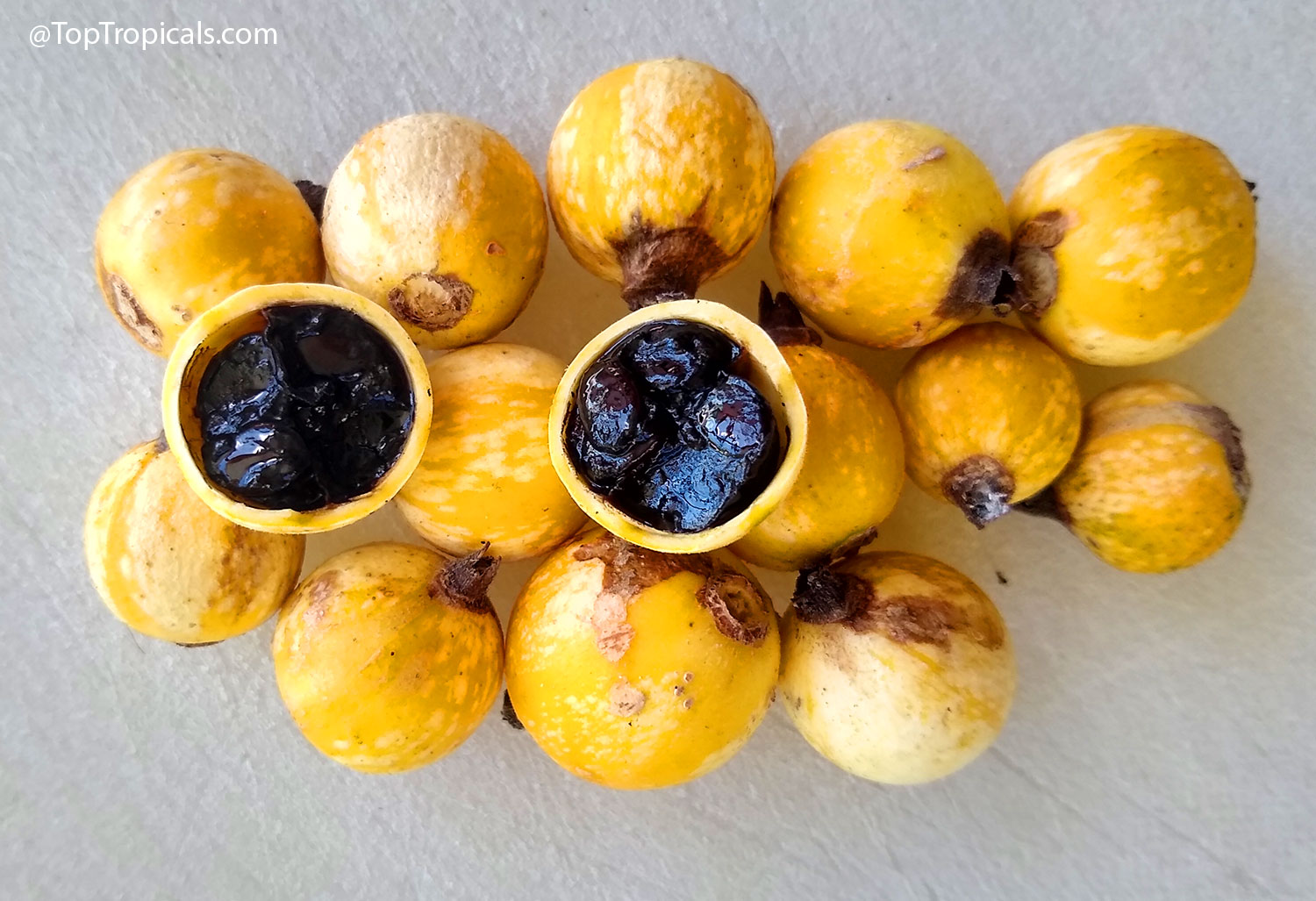
Randia  formosa  (Blackberry  Jam  Fruit)  showing  yellow  ripe  fruits,  some 
 cut  open  to  reveal  glossy  dark  pulp 
 inside.

Randia formosa - Blackberry Jam Fruit

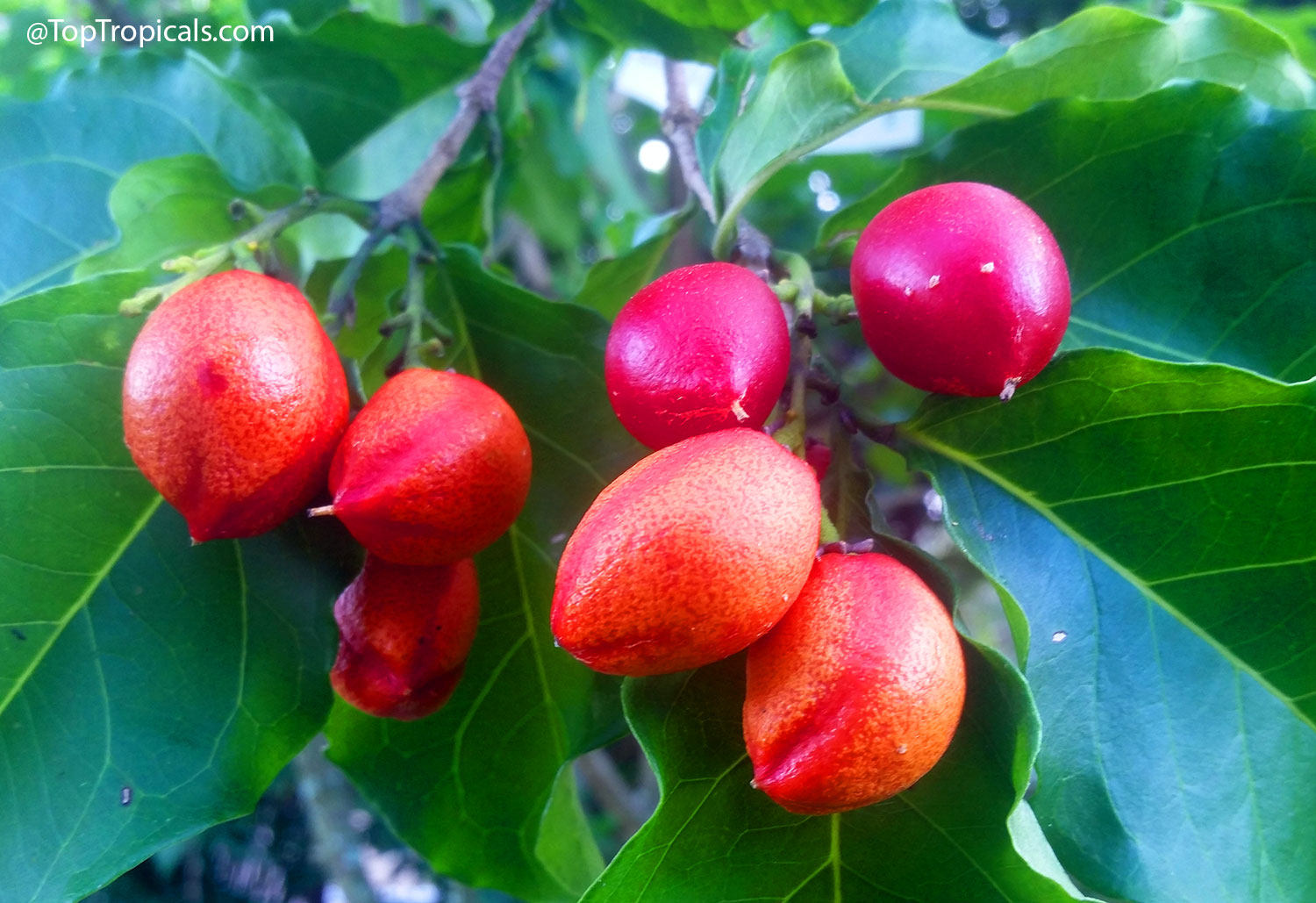
Bunchosia  argentea  (Peanut  Butter  Fruit)  showing  clusters  of  red  ripe 
 fruits  on  a  leafy 
 branch.

Bunchosia argentea - Peanut Butter Fruit

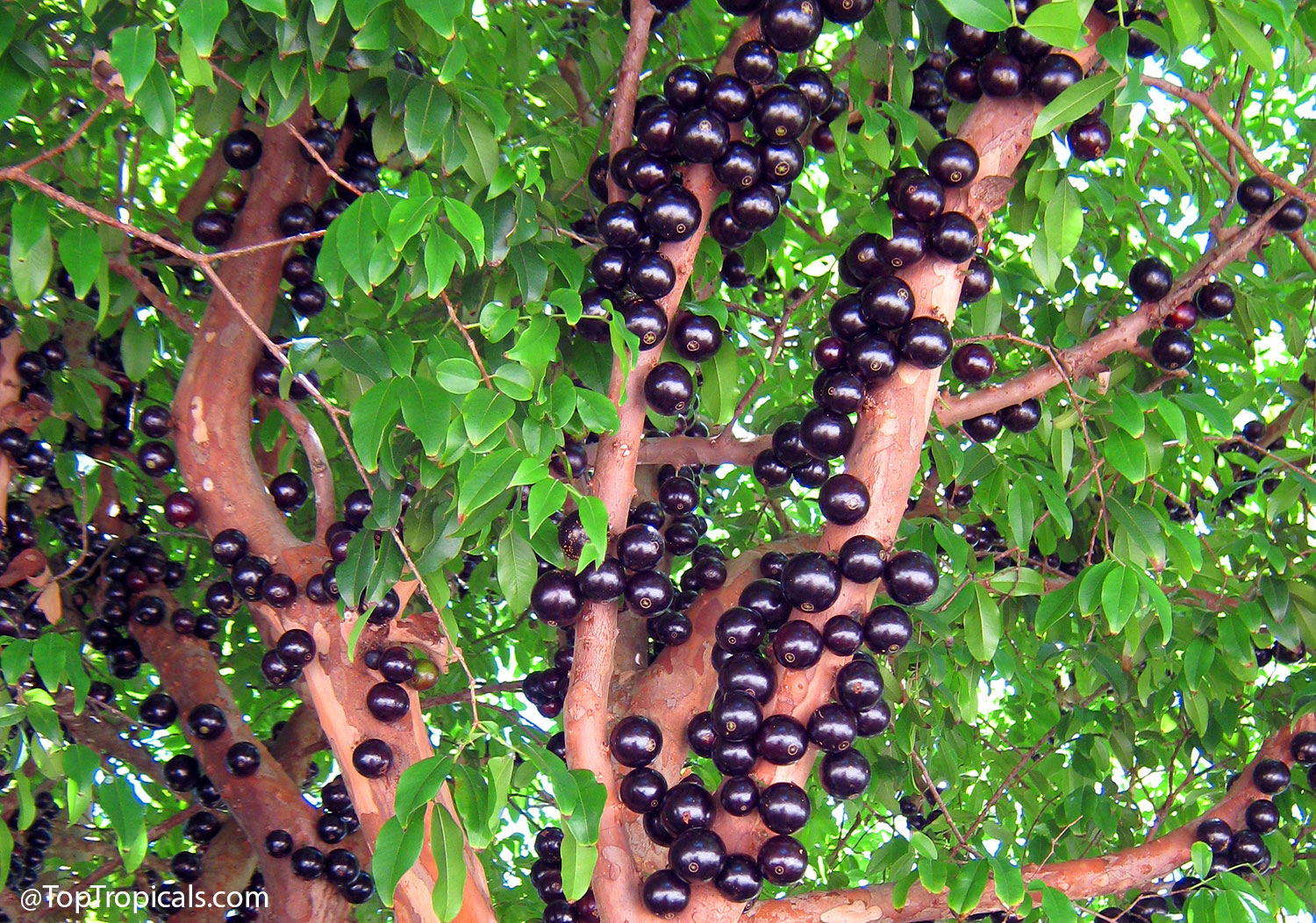
Myrciaria  cauliflora  (Jaboticaba)  tree  with  clusters  of  dark 
 purple-black  fruits  growing  directly  on  the 
 trunk.

Myrciaria cauliflora - Jaboticaba

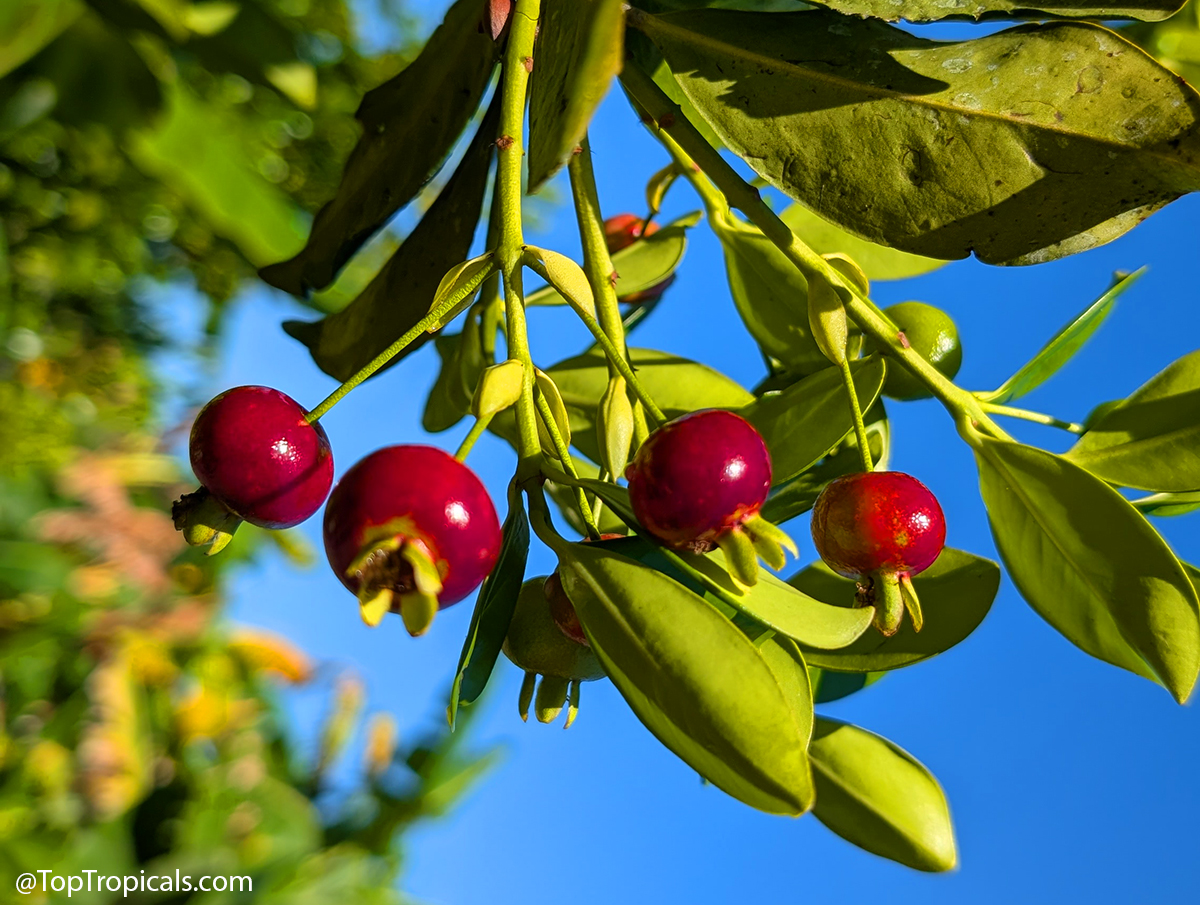
Eugenia  brasiliensis  (Grumichama)  with  red  ripe  cherries  hanging  from  a
   branch  against  blue 
 sky.

Eugenia brazilensis - Grumichama and more Eugenia Cherries

Date: 3 Aug 2025

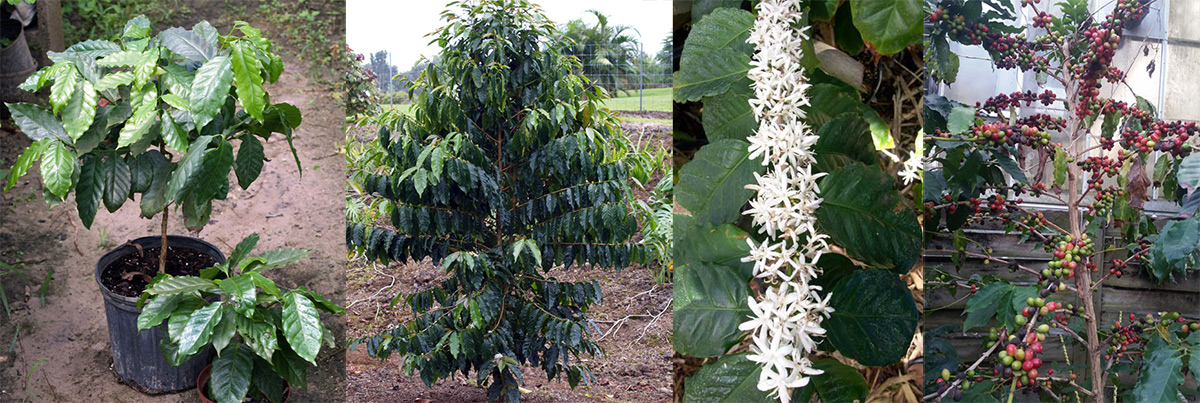
Four  stages  of  Coffee  Tree  growth:  a  young  potted  plant,  a  mature  tree  in  the  ground,  white  star-shaped  blooms,  and  a  branch  full  of  ripening  red  and  green  coffee  cherries.

What is the most popular and easiest tropical fruit tree to grow indoors?

No doubt about it - it's the Coffee Tree.

  • Coffee is shade-loving and easy to grow with regular water
  • It grows into a dark green shrub or small tree (about 3 to 5 feet tall in a pot)
  • Its fragrant, star-shaped flowers resemble gardenias
  • The whole fruit is edible and turns green to yellow to red
  • The seeds are real "coffee beans" that can be dried, roasted, and ground at home.

Five Reasons to Grow a Coffee Plant

  • Perfect Indoor Fruit Tree: Thrives in filtered light and stays compact
  • Low Maintenance: Forgiving, adaptable, and ideal for new gardeners
  • Aesthetic Appeal: Glossy green leaves and clusters of white blooms
  • Homegrown Coffee: Yes, you can roast your own beans.
  • Year-Round Beauty: Evergreen with seasonal fragrance

Coffee Plant Care Tips

  • Light: Bright, indirect light is best. Avoid harsh afternoon sun.
  • Water: Keep soil lightly moist but not soggy. Let the top inch dry out before watering again.
  • Humidity: Loves higher humidity. Mist regularly or place on a pebble tray.
  • Fertilizer: Use a balanced, gentle fertilizer like Sunshine Boosters C-Cibus every few weeks during growing season.
  • Soil: Loose, rich, and well-drained. High in organic matter and slightly acidic. For potted plants, use a quality indoor tropical mix, such as Top Tropicals Abundance mix
  • Repotting: Refresh soil and size up the pot every 1–2 years to keep roots healthy.
  • Can I grow it outdoors?: Yes - bring it outside in warm months and back indoors before frost. It's best suited for USDA zones 10-11, but container growing gives you flexibility in cooler climates.
  • How long until I get beans?: Expect flowers and fruit within 3 to 4 years from seedling stage - often sooner if you start with a young tree.
  • What does the fruit taste like?: Mild and sweet-tart, like a mix between a cherry and a cranberry. You can eat it fresh.

How to Make Coffee from Your Own Tree

  • Harvest: Pick the ripe red cherries
  • Pop and Soak: Squeeze out the beans and ferment 1-2 days to remove pulp
  • Dry: Spread out to dry for 1-2 weeks until hard and papery
  • Husk: Remove the thin shell to reveal green beans
  • Roast: Use a dry skillet or oven until fragrant
  • Grind and Brew: Cool, grind, and enjoy the freshest coffee you've ever had.
    Learn more: How to make your own coffee from homegrown beans

Coffee Health Benefits

  • Rich in antioxidants - supports heart and brain health
  • Boosts focus and mental alertness
  • Supports metabolism and fat-burning

Why Coffee Makes the Perfect Gift Plant

  • Long-living and beautiful
  • Symbolic, useful, and personal
  • Great for coffee lovers, gardeners, and the "person who has everything"

Read Garden Blog about Coffee

Shop Coffee Plants

Date: 6 Oct 2025

Hot Pepper pickles: quick-n-fun exotic recipes

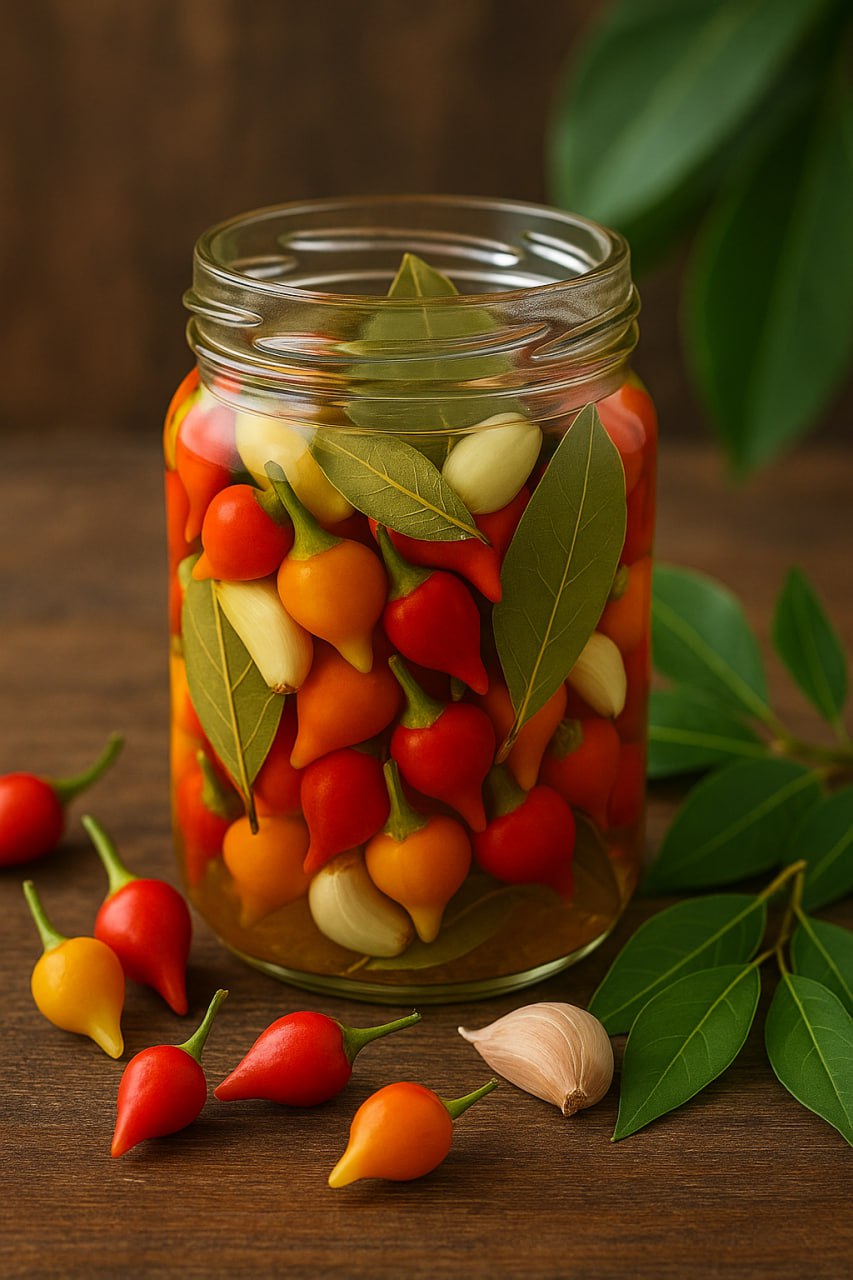
Hot Pepper pickles with hot and spicy pickles - Biquinho and Wiri Wiri peppers

Hot Pepper pickles with hot and spicy pickles - Biquinho and Wiri Wiri peppers

🍴 Hot Pepper pickles: quick-n-fun exotic recipes

  • 🔴If you like hot and spicy pickles - Biquinho and Wiri Wiri peppers (Capsicum) are perfect for new experiments!
  • 🔴Pickle whole little peppers in vinegar, garlic, Bay leaves (Laurus nobilis) and sugar.
  • 🔴Sweet, tangy, and spicy little bites! Perfect as appetizers, chasers and hot parties! 🔥

Hot Pepper pickles: quick-n-fun exotic recipes

🍲 Ingredients

🔥 Instructions

  • 🔴 Place whole peppers, garlic, and Bay leaves into sterilized jars.
  • 🔴 Boil vinegar with sugar and salt, then pour over the peppers.
  • 🔴 Seal and let cool. Store in the refrigerator for a few days before enjoying.
  • 🔴 Sweet, tangy, and spicy — perfect for appetizers, chasers, and hot parties!

🛒 Invite Biquinho, Wiri Wiri peppers and Bay Leaves to your kitchen

#Food_Forest #Recipes

Plant Facts

Capsicum chinense
Yellow Lantern Chili
USDA Zone: 9-11
Small plant 2-5 ftSemi-shadeFull sunRegular waterWhite, off-white flowersSpice or herb plantIrritating plant
🟢 Join 👉 TopTropicals

Date: 21 Mar 2023

How to grow Calathea indoors

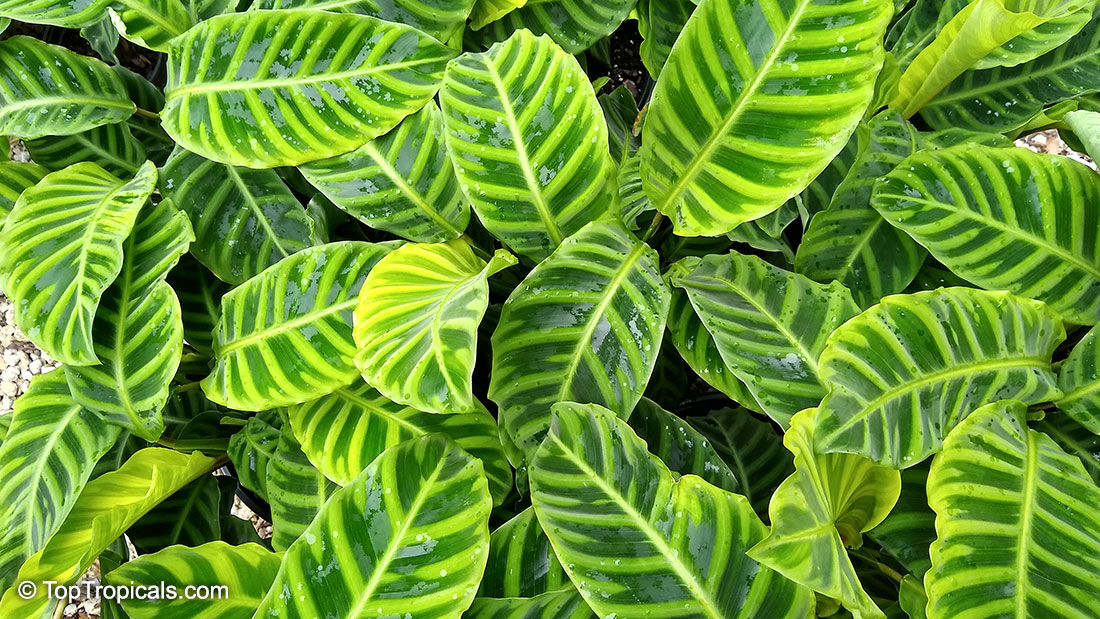
Calathea  zebrina  -  Zebra  Plant

In the photo: Calathea zebrina - Zebra Plant

Calathea is a beautiful and popular houseplant known for its unique and colorful foliage. Here are the steps to grow calathea indoors:

1. Choose a suitable location: Calathea plants prefer bright, indirect sunlight, so choose a location near a window with filtered light. Avoid direct sunlight as it can scorch the leaves.
2. Select a pot that is slightly larger than the plant's root ball and has drainage holes. Fill the pot with a well-draining potting mix that is rich in organic matter. Plant at the same depth as it was in its previous pot.
3. Water: Keep the soil consistently moist but not waterlogged. Water when the top inch of soil feels dry to the touch. Use room temperature water and avoid using hard water or water that contains high levels of minerals.
4. Provide humidity: Calathea plants thrive in humid conditions, so provide them with regular misting or place a tray of water near the plant to increase humidity. You can also use a humidifier to maintain optimal humidity levels.
5. Fertilize: Apply Sunshine Boosters liquid fertilizer. It is safe to feed the plant with Rubusta formula with every watering and year around. Feeding plants is especially important in Spring when active growth starts.
6. Prune any yellow or damaged leaves regularly to keep the plant healthy and attractive. Use clean, sharp scissors to make clean cuts.

By following these steps, you can successfully grow a beautiful and healthy Calathea plant and any beautiful container plant indoors.

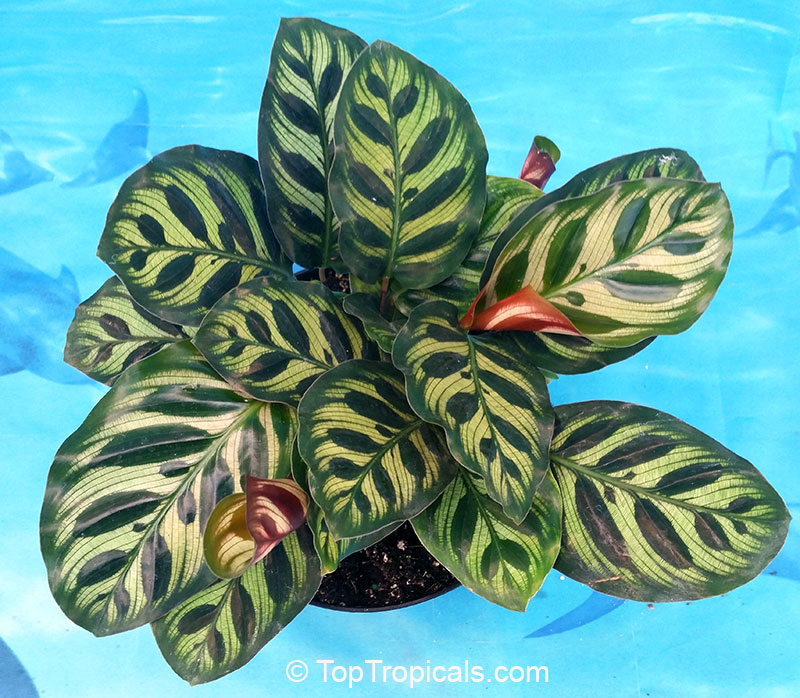
Calathea  makoyana  -  Peacock  plant

In the photo: Calathea makoyana - Peacock plant

Date: 21 Dec 2022

Heat [Cat] Pack for Winter shipping

James  Coconuts  and  Riki  staying  warm  and  cozy

In the photo: James Coconuts and Riki are purrfectly hot People!

Not too warm on the way to your home? No problem! Heat Pack will help your plants to have a safe and warm trip from Top Tropicals to your house.

Heat  pack

Heat Pack maintains warm temperature while shipping, and is good for 20+ hours. It is a must if temperature drops below 40F in your area. Large orders require 2-3 packs. When ordering large 3-7 gal size plants (especially sensitive ultra-tropical plants), you may need 1 pack per plant. Contact us for more information on particular species.

Alternatively, we can include a warm cat!
(subject to limited supply)