Garden Blog - Top Tropicals

Date: 24 Jun 2018

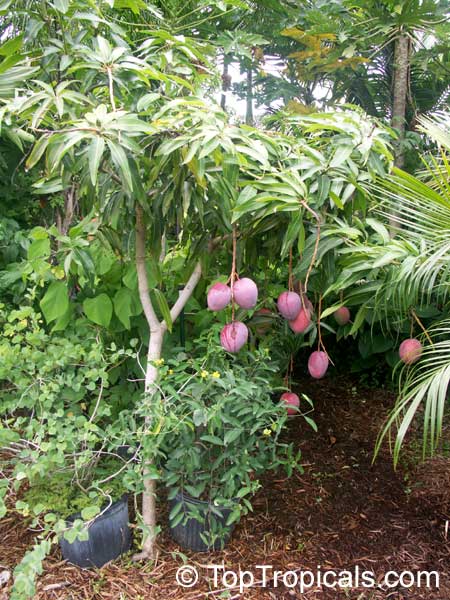
Choosing the right Mango for your garden

Q: Do the mango trees you sell already have fruit? Or how long does it take to get fruit? Are they tricky to keep up? I live locally and have been interested in getting a few!

A: Some of our mangos in both 3 gal and 7 gal pots have fruit on them. All our mango trees are grafted which means they are ready to produce fruit. So if not the same year, you should get fruit the next year.
Mangoes in general are easy to grow plants. They are not picky about soil and water, however they need full sun for fruiting. When you are lucky to live in tropical or subtropical climate, your mango will thrive in a ground, and within 2-3 years you will have a mature tree, and a crop every year (those who have cold winters, still can grow a mango tree in a pot, and move it indoors for colder period). Visit our garden center for a tour of our Mango Gardenthat is only 3 years old and is full of fruit! Tasting table available :) We offer over 100 varieties, and our experts can help you to make the right choice for your garden. To start your own mango tree collection, depending on space available, you may begin with the following varieties:
Nam Doc Mai - one of the most popular and delicious Asian mango
Carrie - very compact grower, reliable producer with great taste
Cogshall and Ice Cream - dwarf varieties for small yards, excellent taste
Alphonso - considered one of the best tasting

See full list of our mango varieties, all fiberless and great sweet flavors.
Date: 7 Mar 2017

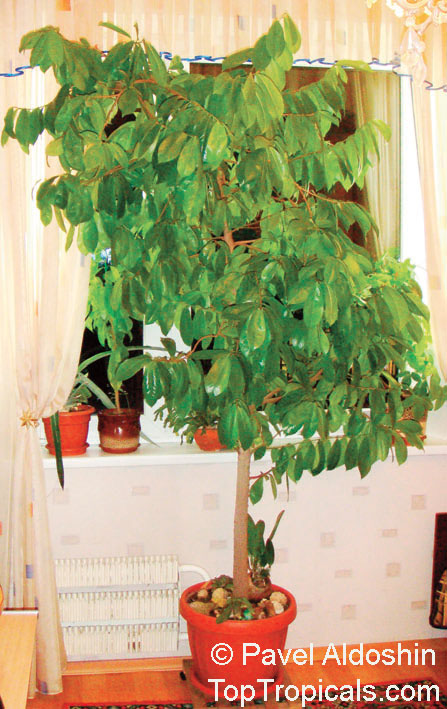
Taking care of Guanabana (Soursop) after shipping

Q: Since I have never grown a soursop tree before I need some pro help. My tree was delivered absolutely beautiful, leaves were a pretty green. I potted it and gave it a good drink of water and put it in a shaded area outside. Then the weather here became cool so I brought it in for a few days until the weather warmed, and it lost all the leaves. Is it in shock and will come around eventually? Will I be able to grow this tree indoors during winter?

A: Soursop - Annona muricata trees are very sensitive to temperature drops. This always causes leaf loss. You seem to be doing everything right. Do not water until soil gets slightly dry; keep it in bright shade. The weather should be good now with high temperatures and humidity rising. No fertilizer until the plant shows active new growth. Be patient with your plant, it should recover soon.

Soursop is an ultra-tropical tree and doesn't take any freeze. If you live in cooler climate, keep the plant in a pot (the good news is, Annonas in general have compact nature and are perfect for container culture). Bring the tree indoors during cold period, providing bright light.

Remember that grafted trees start flowering and producing fruit right away, unlike seedlings of Soursop that may take a few years till fruiting.

We have very interesting article about growing and fruiting Soursop in apartment. Check out Tropical Treasures Magazine #7.

Date: 15 May 2024

What does a dragon taste like? Does Dragon Fruit come from a monster cactus? Learn why you need to grow your own

Hylocereus and Selenicereus Dragon Fruit or Pitaya

Hylocereus and Selenicereus Dragon Fruit or Pitaya

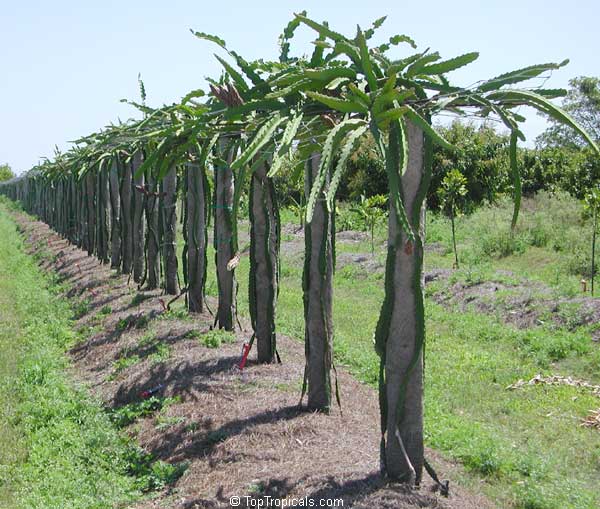
Hylocereus and Selenicereus Dragon Fruit or Pitaya trees on trellis

Hylocereus and Selenicereus Dragon Fruit or Pitaya trees on trellis

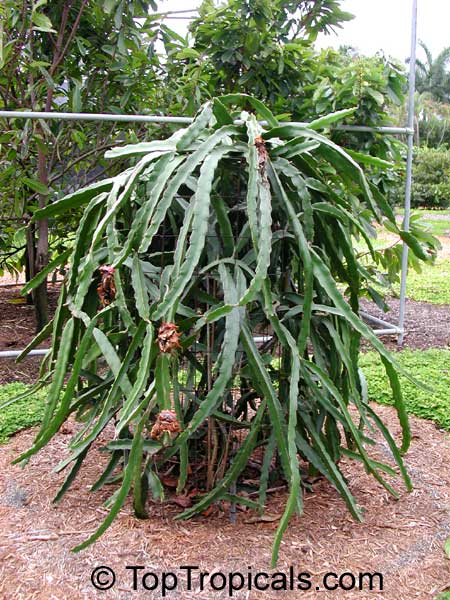
Hylocereus and Selenicereus Dragon Fruit or Pitaya on trellis

Hylocereus and Selenicereus Dragon Fruit or Pitaya on trellis

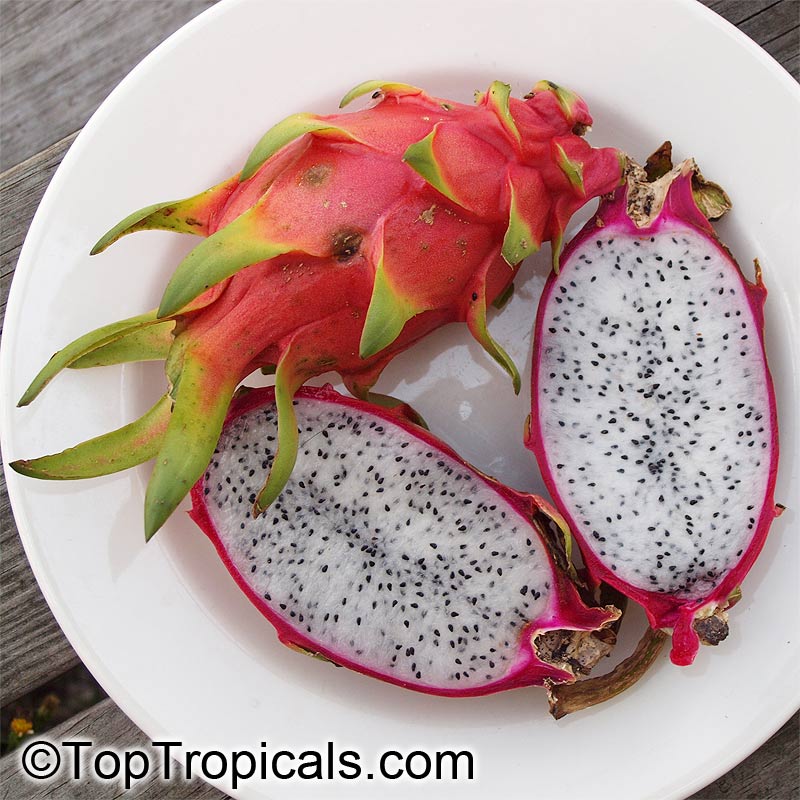
Hylocereus and Selenicereus Dragon Fruit or Pitaya red fruit

Hylocereus and Selenicereus Dragon Fruit or Pitaya red fruit

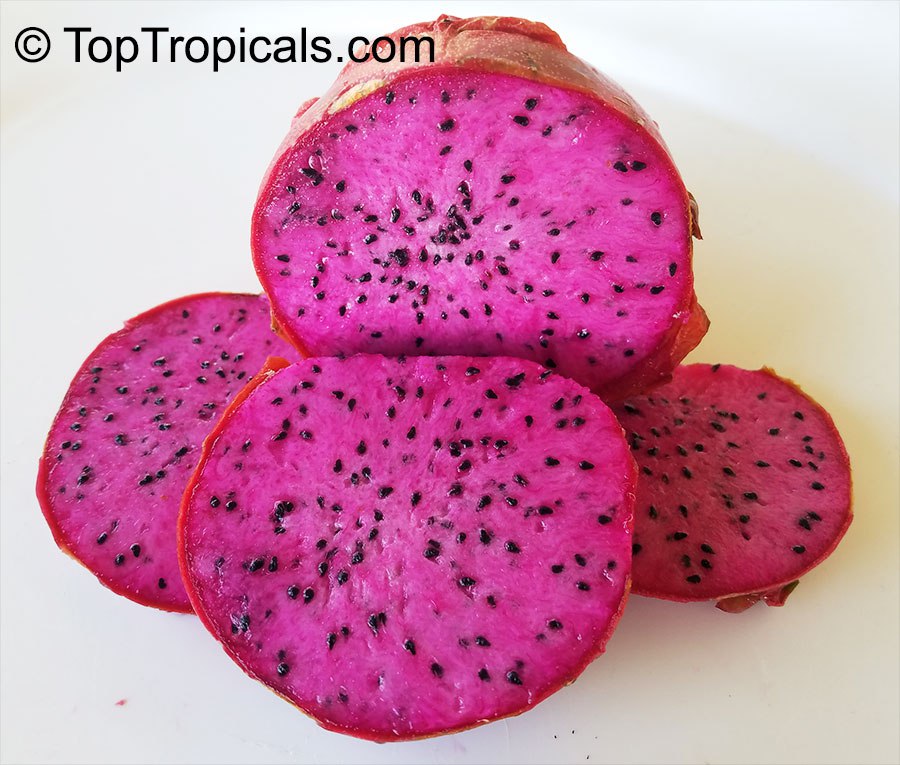
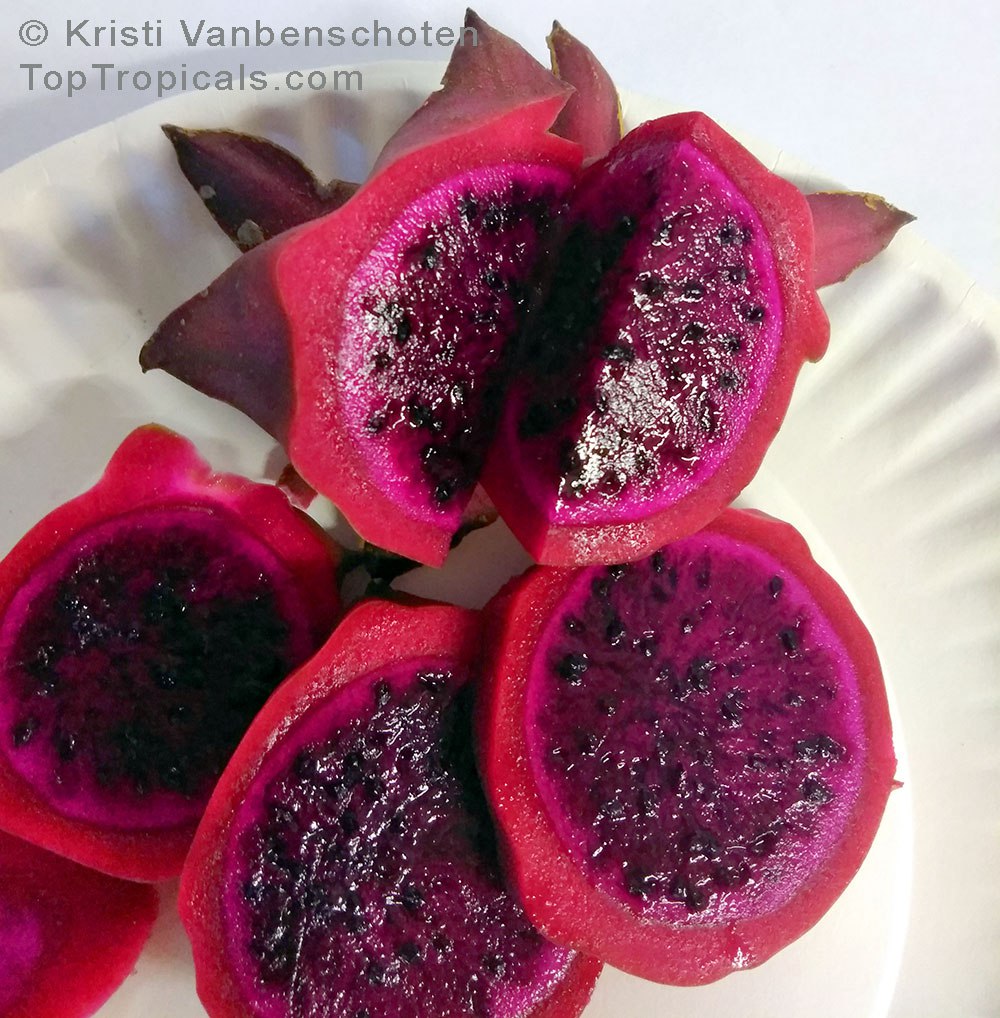
Hylocereus and Selenicereus Dragon Fruit or Pitaya purple fruit

Hylocereus and Selenicereus Dragon Fruit or Pitaya purple fruit

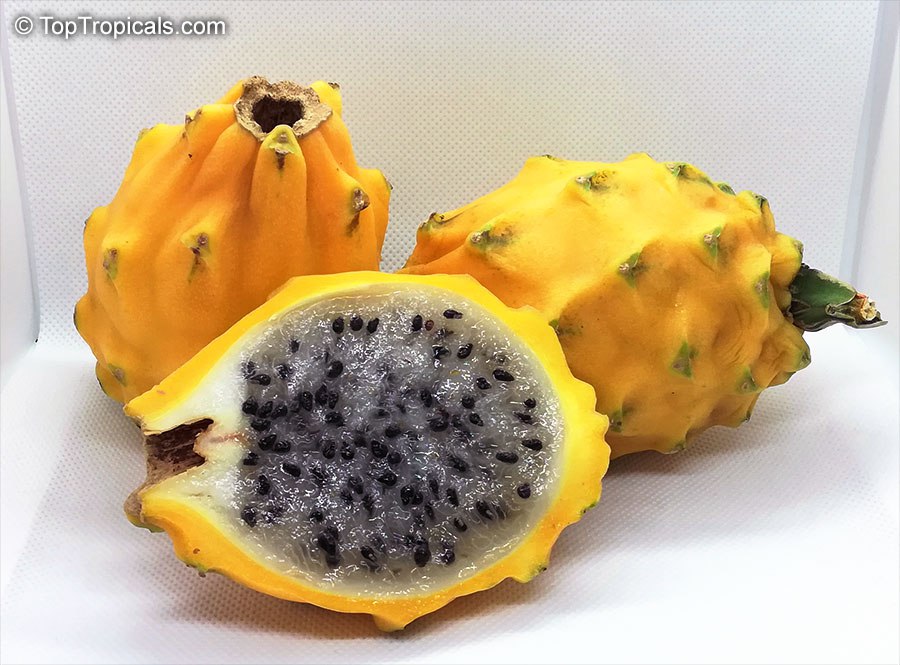
Hylocereus and Selenicereus Dragon Fruit or Pitaya Yellow Parlora

Hylocereus and Selenicereus Dragon Fruit or Pitaya Yellow Parlora

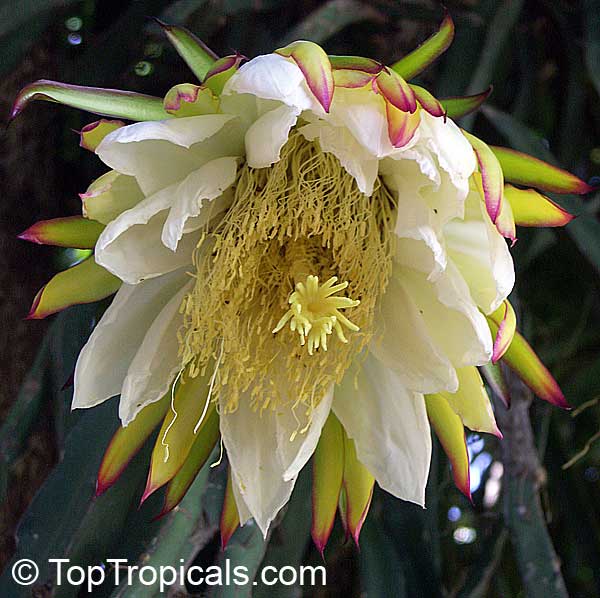
Hylocereus and Selenicereus Dragon Fruit or Pitaya flower

Hylocereus and Selenicereus Dragon Fruit or Pitaya flower

🐲 What does a dragon taste like? Does Dragon Fruit come from a monster cactus? Learn why you need to grow your own. 🌵
  • 🔴 You may have tried a Dragon fruit from the store l, but do you know how it grows? On a cactus tree!
  • 🔴 Names: varieties of Hylocereus and Selenicereus - these fruit bearing cactus plants are also called Dragon Fruit or Pitaya.
  • 🔴 Commercially grown fruit sold in a grocery store may be tasteless. You need to grow your own good variety to have tasty, sweet, flavorful fruit!
  • 🔴 Dragon fruit comes in many varieties. Colors of flesh differ: white, pink, dark red and even purple. The outside of the fruit can be red/pink or yellow.
  • 🔴 In commercial groves, Pitayas grow like cactus trees, over a strong support - big "umbrella frames" ☂️
  • 🔴 It is an easy plant, with low water needs, takes both sun and semi-shade.
  • 🔴 Our favorite variety is Yellow Dragon Fruit Palora, (Selenicereus megalanthus). It is the sweetest and has the most flavor of all. We shared some recipes earlier.
  • 🔴 Can be grown in container with a wooden trellis. And the flower is beautiful, too!


📚 Learn more about Dragon Fruit
🍹 Recipe: What to do with a Dragon fruit?

🛒Grow your own Tasty Dragon Fruits

#Food_Forest #Recipes #Nature_Wonders

🏵 TopTropicals

Date: 5 Jan 2026

☘️ What plants are easy to ship in Winter?

Lush  tropical  garden  with  a  bright  green  leafy  Magnolia  champaka  surrounded  by  flowering  shrubs,  such  as  Brunfelsia  grandiflora,  at  Top  Tropicals  nursery

Ordering plants in winter is often easier than people expect - and for many plants, it is actually better. Lush foliage plants like philodendrons and medinilla, fine-leaved trees such as moringa, jacaranda, and poinciana, and even sensitive fruit trees like papaya, jackfruit or starfruit ship more safely in cool weather without overheating stress.

Winter is also ideal for subtropical and cold-tolerant plants, dormant or deciduous plants like plumeria and adenium, orchids - including ground orchids and vanilla orchids, and winter bloomers that flower their best right now. Winter care is simple: water less, use gentle liquid amino-acid fertilizers like Sunshine Boosters, and monitor insects.

In mild climates, many tropicals can be planted anytime, while extra-tender plants can stay potted until spring. Winter is a perfect time to bring tropical warmth indoors and enjoy greenery when you need it most.

🌿Learn more: easy plants for Winter shipping

Date: 13 Sep 2025

🌸 Meet the Most Colorful Ground Orchids

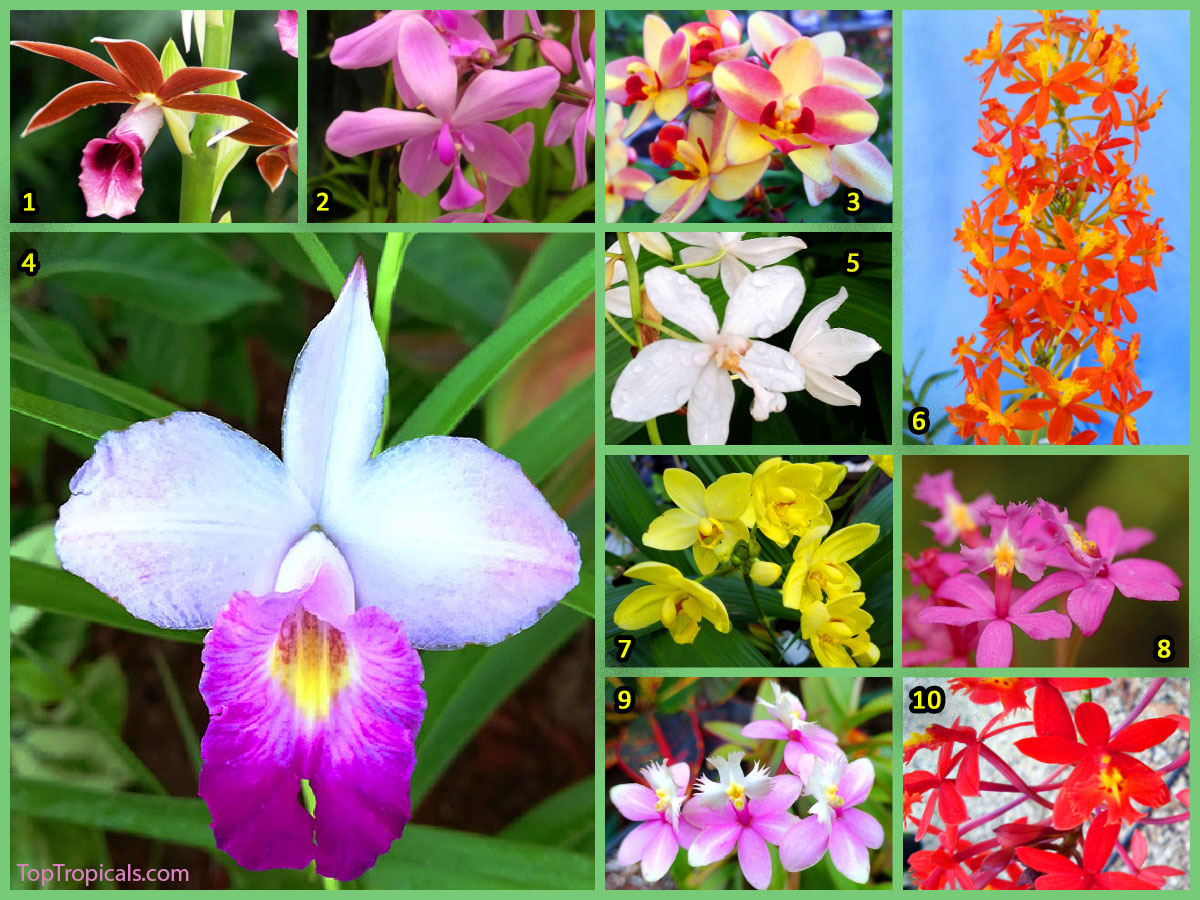
Collage  of  ground  orchids  –  Phaius  tankervilleae  (Nun  Orchid), 
 Spathoglottis  varieties  (purple,  yellow,  white,  pink),  Arundina  graminifolia
    (Bamboo  Orchid),  and  Epidendrum  species  (orange,  pink,  red  Reed 
 Orchids)

Ground Orchids – Spathoglottis, Phaius, Arundina, Epidendrum

  1. Chinese Nun Ground Orchid (Phaius tankervilleae)
  2. Yokohama Ground orchid Kate (Bletilla striata x formosana)
  3. Tropical Punch, Sorbet Ground Orchid (Spathoglottis plicata)
  4. Bamboo Orchid (Arundina graminifolia)
  5. Snow Angel, Coconut Cloud Ground Orchid (Spathoglottis alba)
  6. Orange Reed Ground Orchid (Epidendrum radicans Sunrise)
  7. Lemon Kiss, Sorbet Ground Orchid (Spathoglottis chrysanta)
  8. Pink Reed Ground Orchid, Violet Queen (Epidendrum radicans Fuchsia)
  9. Lavender Reed Ground Orchid (Epidendrum elongatum x radicans)
  10. Red Raspberry Reed Ground Orchid (Epidendrum radicans Red Glow)

Orchids have a mystique that sets them apart — elegant, exotic, almost unreal in their perfection. But let’s be honest, not everyone has luck with the fancy ones that cling to trees or need greenhouse tricks.

Ground orchids are different. They grow in regular garden soil, bloom in sun or shade, and come in all sorts of shapes and colors. They’re the orchids you don’t have to fuss over.

Nun Orchid (Phaius tankervilleae) – Ever wonder why it’s called the Nun Orchid? The flowers really do look like the white veil and brown habit nuns used to wear. The plants send up spikes 3–4 ft tall with 10–20 fragrant blooms that open one after another for weeks. I like them best tucked under trees where they just keep spreading year after year.

Spathoglottis – The nonstop bloomer – If you want flowers that just don’t quit, this one’s it. Spathoglottis clumps up and throws spikes of purple, pink, or yellow that last for weeks, then keep coming back through the summer. In warm spots they’ll bloom almost year-round. Honestly, it’s one of the easiest orchids you’ll ever grow.

💲 Special Offer – 20% off Ground Orchids!

Get 20% OFF ground orchids with code

ORCHID2025

Min order $100. Excluding S/H, valid online only, cannot be combined with other offers.

Hurry, offer expires September 17, 2025!

Shop ground orchids