Date: 12 Apr 2016
Hot novelty plant for hot Arizona
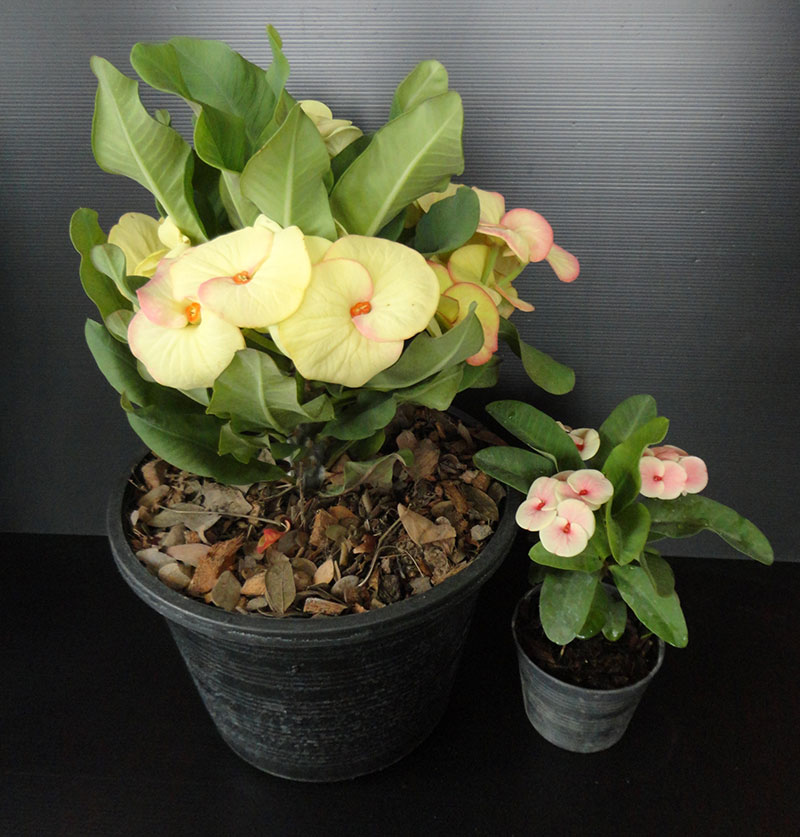
Q: What plants would you recommend for very hot and dry spot in front of my house that gets full sun all day long? I live in AZ, we recently had a couple good rains but this is going to be it for a long time. It gets so hot during the day that every plant I tried didn't make it. We have a few nice orange trees growing well but I would like to plant something compact, colorful and hopefully fragrant if there is such plant.
A: There is a perfect small size plant for you that is extremely fragrant and yet will be thriving in these conditions. It is the famous Jasmine sambac. It will appreciate dry air of Arizona and will bloom profusely for you in full sun or in partial shade. It doesn't mind heat at all.
For colorful accents, a proven winner is Crown of Thorns - Euphorbia millii. New giant size flower varieties were recently selected in Thailand, and we just received a great selection, look at the colors! These plants don't mind hot sunny location at all. The more sun, the better the bloom! Small plants need regular watering until establish, then once they start developing, they will require less water.
Giant Euphorbia flowers from Thailand are 4-5 times bigger than regular flower euphorbia. Diameter of the flower is around 2". Compare giant flower to normal size - picture on the right.
Date: 26 Mar 2016
Growing Exotic Adeniums
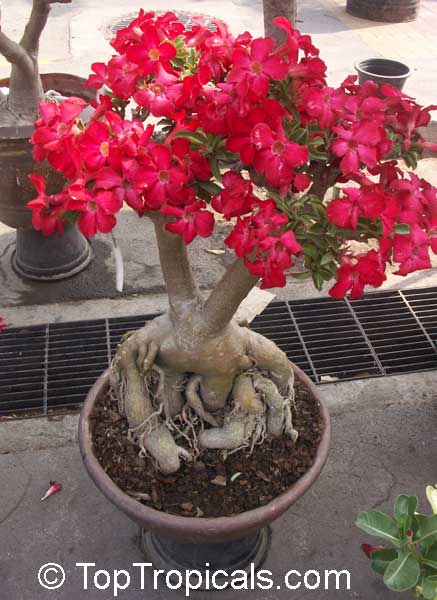
Exotic varieties of Desert Roses. Adeniums have many spectacular hybrids. The basic culture is very similar to orchids. A small pot with excellent drainage is a must. Adeniums do not like both over-watering or drying-out. There is a secret how to create a large swollen caudex: raise the plant a bit every time you re-pot it, so that the upper part of roots will be a little exposed. The plant will form more roots that will go down.
To make your plant develop a large swollen base/trunk, you'll need a good quality fertilizer. Fertilizer requirement for swelling up trunks is also used to increase flowering. It shouldn't be too high in nitrogen, the middle number should be the highest (similar to 10-50-10). Never apply fertilizer directly on roots and do not liquid feed when a plant is thirsty: always water first slightly to avoid root burn and leaf drop. Do not wet leaves. Adeniums need lots of light for heavy flowering.
Most hybrids and species start blooming in the spring when the conditions are warm and days get longer, and continue blooming through the fall and winter in warmer climates. Adeniums like a neutral to hard water. Acidic water tends to sour the soil too fast and may cause root rot. Water plants preferably in the early morning, and allow them to drink up throughout the day. Watering can be done daily to every few days. Never allow your plants to sit in a saucer of water, but don't let them to dry out too often - this causes adeniums to go into early dormancy.
Planting instructions for bare-rooted succulent plants. Position the plant in a pot, size of root system. Use only well-drained soil with high content of Perlite and/or sand (cactus mix can be used), water once and keep in warm (75-80F) place in filtered light. Do not water again until soil dries on surface. Once the plant is established and starts growing new leaves (may take a few weeks), gradually move it into brighter light. Then you can start fertilizing it.
Date: 3 Aug 2025
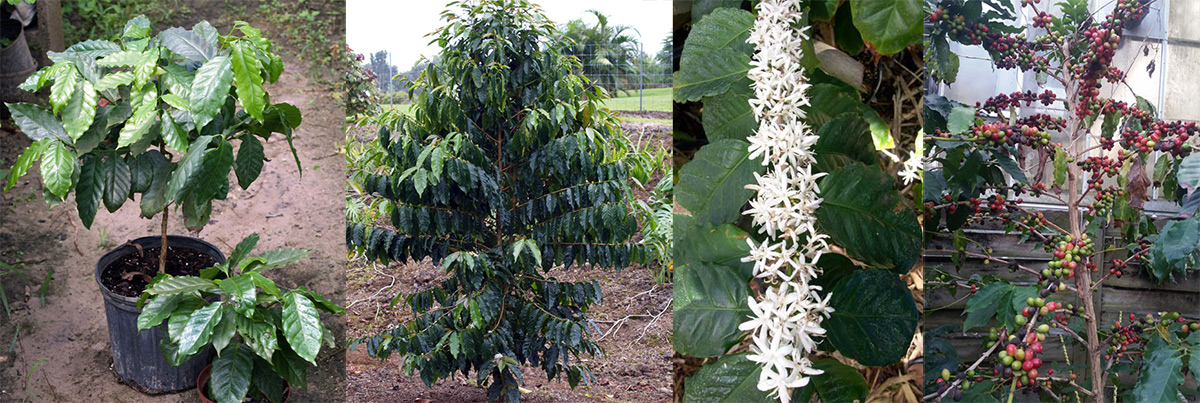
What is the most popular and easiest tropical fruit tree to grow indoors?
No doubt about it - it's the Coffee Tree.
- Coffee is shade-loving and easy to grow with regular water
- It grows into a dark green shrub or small tree (about 3 to 5 feet tall in a pot)
- Its fragrant, star-shaped flowers resemble gardenias
- The whole fruit is edible and turns green to yellow to red
- The seeds are real "coffee beans" that can be dried, roasted, and ground at home.
Five Reasons to Grow a Coffee Plant
- Perfect Indoor Fruit Tree: Thrives in filtered light and stays compact
- Low Maintenance: Forgiving, adaptable, and ideal for new gardeners
- Aesthetic Appeal: Glossy green leaves and clusters of white blooms
- Homegrown Coffee: Yes, you can roast your own beans.
- Year-Round Beauty: Evergreen with seasonal fragrance
 Coffee Plant Care Tips
- Light: Bright, indirect light is best. Avoid harsh afternoon sun.
- Water: Keep soil lightly moist but not soggy. Let the top inch dry out before watering again.
- Humidity: Loves higher humidity. Mist regularly or place on a pebble tray.
- Fertilizer: Use a balanced, gentle fertilizer like Sunshine Boosters C-Cibus every few weeks during growing season.
- Soil: Loose, rich, and well-drained. High in organic matter and slightly acidic. For potted plants, use a quality indoor tropical mix, such as Top Tropicals Abundance mix
- Repotting: Refresh soil and size up the pot every 1–2 years to keep roots healthy.
- Can I grow it outdoors?: Yes - bring it outside in warm months and back indoors before frost. It's best suited for USDA zones 10-11, but container growing gives you flexibility in cooler climates.
- How long until I get beans?: Expect flowers and fruit within 3 to 4 years from seedling stage - often sooner if you start with a young tree.
- What does the fruit taste like?: Mild and sweet-tart, like a mix between a cherry and a cranberry. You can eat it fresh.
How to Make Coffee from Your Own Tree
- Harvest: Pick the ripe red cherries
- Pop and Soak: Squeeze out the beans and ferment 1-2 days to remove pulp
- Dry: Spread out to dry for 1-2 weeks until hard and papery
- Husk: Remove the thin shell to reveal green beans
- Roast: Use a dry skillet or oven until fragrant
- Grind and Brew: Cool, grind, and enjoy the freshest coffee you've ever had.
Learn more: How to make your own coffee from homegrown beans
Coffee Health Benefits
- Rich in antioxidants - supports heart and brain health
- Boosts focus and mental alertness
- Supports metabolism and fat-burning
Why Coffee Makes the Perfect Gift Plant
- Long-living and beautiful
- Symbolic, useful, and personal
- Great for coffee lovers, gardeners, and the "person who has everything"
Date: 6 Oct 2025
Hot Pepper pickles: quick-n-fun exotic recipes
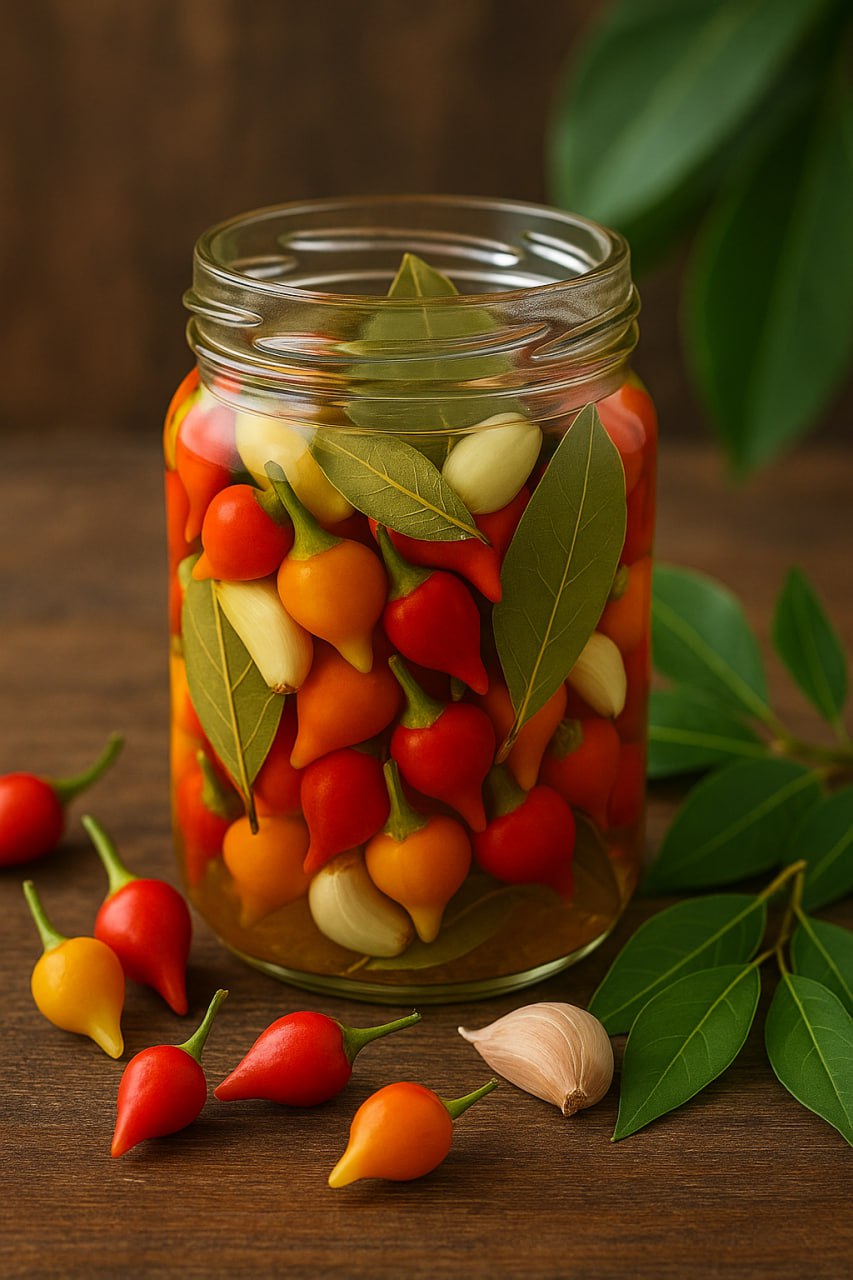
Hot Pepper pickles with hot and spicy pickles - Biquinho and Wiri Wiri peppers
🍴 Hot Pepper pickles: quick-n-fun exotic recipes
- 🔴If you like hot and spicy pickles - Biquinho and Wiri Wiri peppers (Capsicum) are perfect for new experiments!
- 🔴Pickle whole little peppers in vinegar, garlic, Bay leaves (Laurus nobilis) and sugar.
- 🔴Sweet, tangy, and spicy little bites! Perfect as appetizers, chasers and hot parties! 🔥
Hot Pepper pickles: quick-n-fun exotic recipes
🍲 Ingredients
- 🔴 A mix of Biquinho peppers (Capsicum chinense) and Wiri Wiri peppers (Capsicum frutescens)
- 🔴 Fresh Bay leaves (Laurus nobilis)
- 🔴 Garlic cloves
- 🔴 Vinegar and sugar
- 🔴 Salt to taste
🔥 Instructions
- 🔴 Place whole peppers, garlic, and Bay leaves into sterilized jars.
- 🔴 Boil vinegar with sugar and salt, then pour over the peppers.
- 🔴 Seal and let cool. Store in the refrigerator for a few days before enjoying.
- 🔴 Sweet, tangy, and spicy — perfect for appetizers, chasers, and hot parties!
🛒 Invite Biquinho, Wiri Wiri peppers and Bay Leaves to your kitchen
#Food_Forest #Recipes


Date: 21 Mar 2023
How to grow Calathea indoors
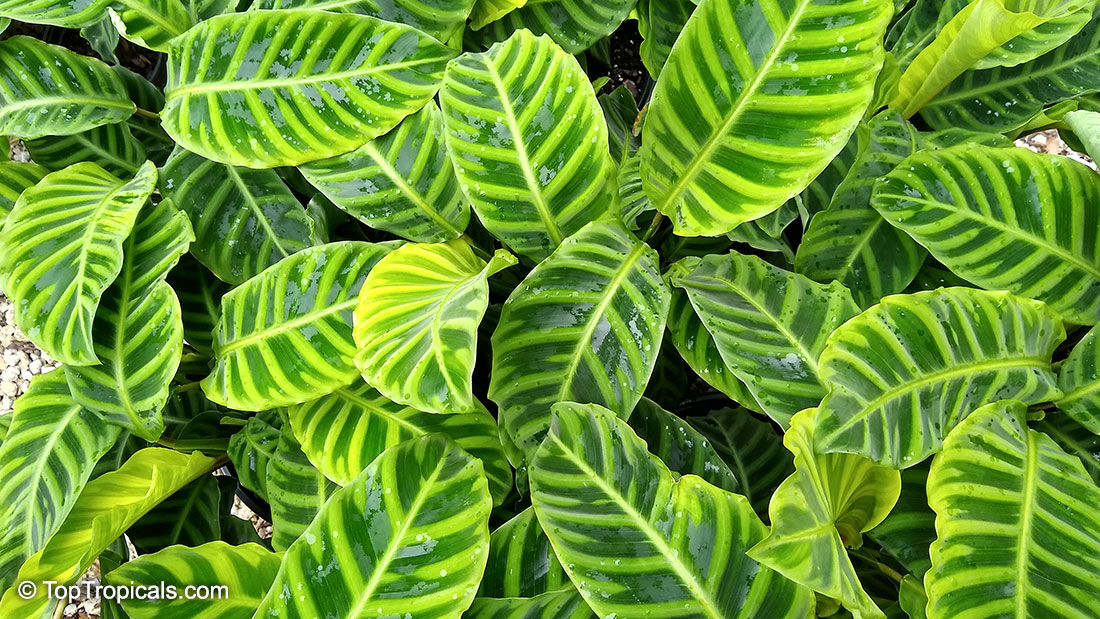
In the photo: Calathea zebrina - Zebra Plant
Calathea is a beautiful and popular houseplant known for its unique and colorful foliage. Here are the steps to grow calathea indoors:
1. Choose a suitable location: Calathea plants prefer bright,
indirect sunlight, so choose a location near a window with filtered light. Avoid
direct sunlight as it can scorch the leaves.
2. Select a pot that is slightly larger than the plant's root ball
and has drainage holes. Fill the pot with a well-draining potting mix that is
rich in organic matter. Plant at the same depth as it was in its previous
pot.
3. Water: Keep the soil consistently moist but not waterlogged.
Water when the top inch of soil feels dry to the touch. Use room temperature
water and avoid using hard water or water that contains high levels of
minerals.
4. Provide humidity: Calathea plants thrive in humid conditions, so
provide them with regular misting or place a tray of water near the plant to
increase humidity. You can also use a humidifier to maintain optimal humidity
levels.
5. Fertilize: Apply Sunshine Boosters liquid fertilizer. It is safe
to feed the plant with Rubusta formula with every watering and year around. Feeding plants is
especially important in Spring when active growth starts.
6. Prune any yellow or damaged leaves regularly to keep the plant
healthy and attractive. Use clean, sharp scissors to make clean cuts.
By following these steps, you can successfully grow a beautiful and healthy Calathea plant and any beautiful container plant indoors.
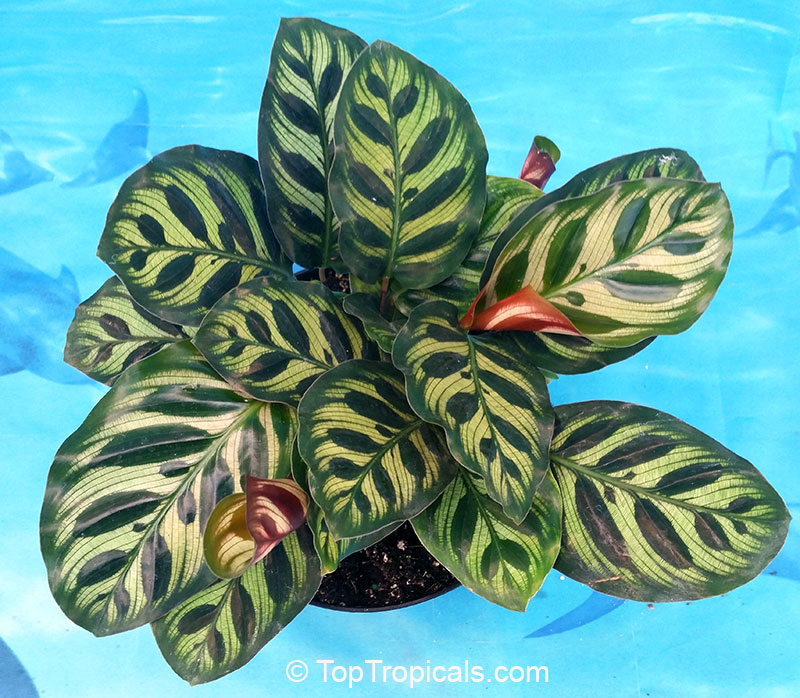
In the photo: Calathea makoyana