Date: 30 Mar 2026
How big does the Condo Mango grow?
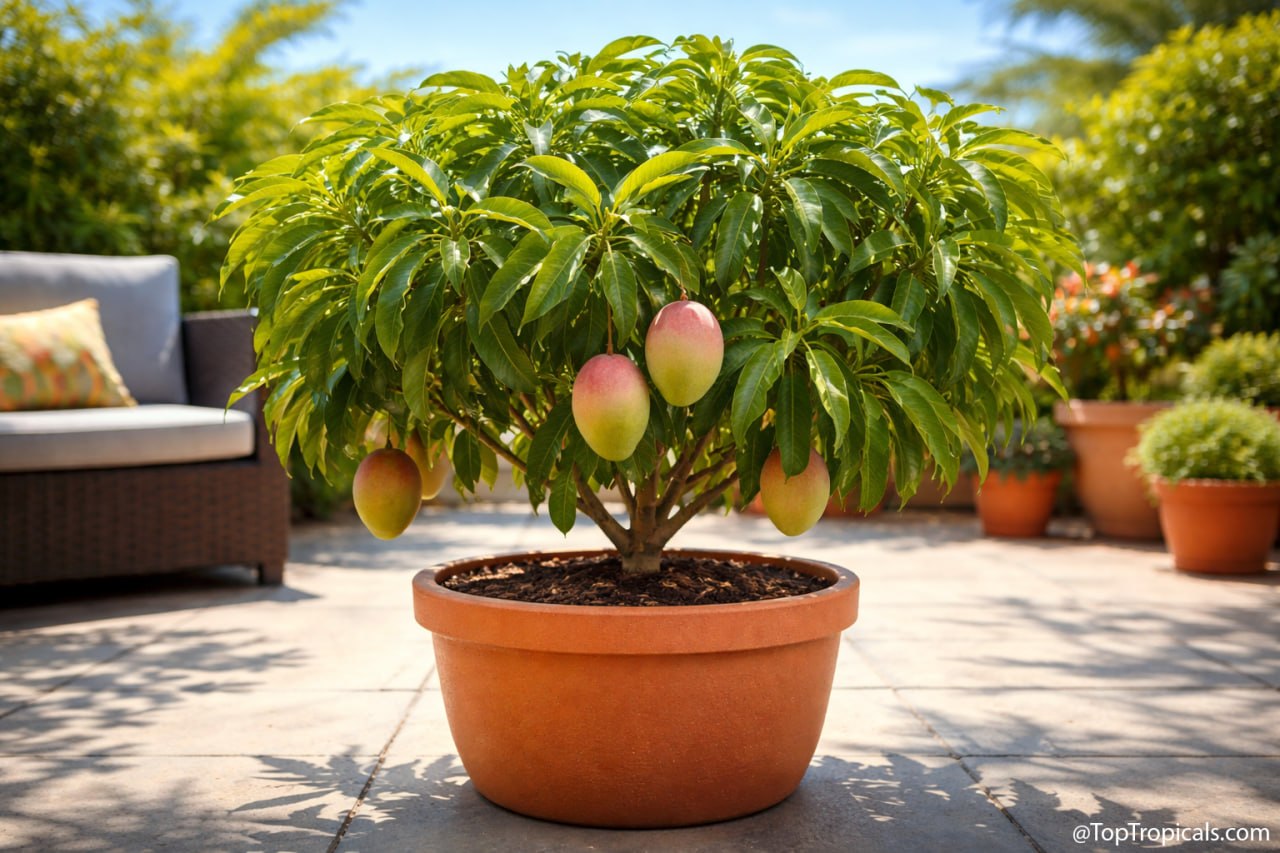
Mango tree fruiting in container
How big does the Condo Mango grow? 🥭
All mango trees are naturally vigorous and, if planted in the ground, they all can grow into full-size trees reaching 15-20 ft or more. The term "Condo Mango" refers to varieties with a more compact growth habit that can be kept small in containers with light pruning. In a pot, their size is controlled by root space and regular trimming, allowing them to stay manageable and productive for many years. Here is how:
True dwarf (easiest)
Minimal pruning, perfect patio trees
Baptiste
Carrie
Cogshall
Diamond
Ice Cream
Julie
Little Gem
Mallika
Manilita
Nam Doc Mai
Pickering
Rapoza (Dwarf Hawaiian)
Semi-dwarf (manageable)
More growth, bigger harvest, need more pruning
Cushman
Fairchild
Florigon
Fralan
Glenn
Graham
Irwin
Ivory
Keitt
Lancetilla
Lemon Meringue
Maha Chinook
Mun Kun Si
Neelum
Okrung
Philippine (Manila)
Val Carrie
Van Dyke
Venus
🛒 Select from Condo Mango varieties
📚 Learn more:
Forget the Tropics: These 5 "Condo Mango" Varieties Thrive in Your Living Room
Mango varieties and Condo Mango
Yes, you can grow a mango tree on your patio - here is how to do it right
Mango Tree for Zone 5: top 15 Condo Mango for growing in cold areas
How long does it take for a mango tree to bear fruit?
What are the Condo Mangos - a practical guide
Top 10 Dwarf "Condo" Mango, great for container culture
Yes, you can grow an avocado tree on your patio - here is how to do it right
How to grow tropical fruit outside the Tropics
Yes, you can grow a tropical fruit tree in a pot!
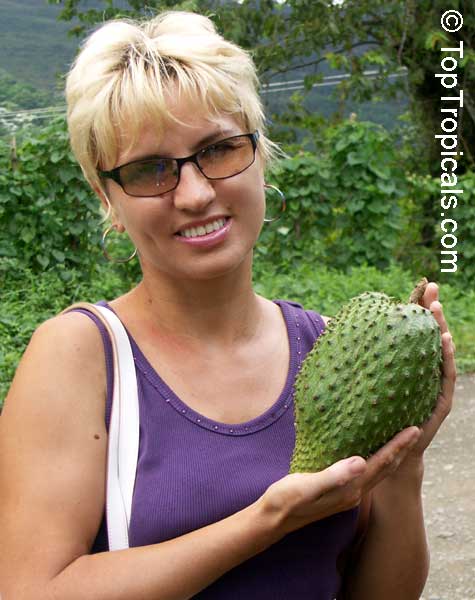
Growing and fruiting Soursop in apartment (PDF download)
#Food_Forest #How_to #Discover #Mango


🟢 Join 👉 TopTropicals
All mango trees are naturally vigorous and, if planted in the ground, they all can grow into full-size trees reaching 15-20 ft or more. The term "Condo Mango" refers to varieties with a more compact growth habit that can be kept small in containers with light pruning. In a pot, their size is controlled by root space and regular trimming, allowing them to stay manageable and productive for many years. Here is how:
- 🥭 Condo mango = mango trees that stay compact in containers with light pruning.
- ✔️ In ground: 15–20+ ft
- ✔️ In pots: keep them 6–8 ft
🥭 Best pot sizes
- · 3-7 gal - starter (3–6 months)
- · 7-5 gal - young tree (1–2 years)
- · 15-25 gal - ideal long-term
- · 25-40 gal - faster growth, more pruning
- 👉 Smaller pot = easier care
- 👉 Bigger pot = more growth + more work
🥭 Best mango types for containers
True dwarf (easiest)
Minimal pruning, perfect patio trees
Baptiste
Carrie
Cogshall
Diamond
Ice Cream
Julie
Little Gem
Mallika
Manilita
Nam Doc Mai
Pickering
Rapoza (Dwarf Hawaiian)
Semi-dwarf (manageable)
More growth, bigger harvest, need more pruning
Cushman
Fairchild
Florigon
Fralan
Glenn
Graham
Irwin
Ivory
Keitt
Lancetilla
Lemon Meringue
Maha Chinook
Mun Kun Si
Neelum
Okrung
Philippine (Manila)
Val Carrie
Van Dyke
Venus
✂️ Simple rules that matter
- · Keep tree 6–8 ft with pruning
- · Use fast-draining soil (critical)
- · Full sun = fruit
- · Feed regularly - Green Magic + Mango Tango
- · Repot or root-prune every few years
🛒 Select from Condo Mango varieties
📚 Learn more:
#Food_Forest #How_to #Discover #Mango