Date: 24 Jun 2018
4
steps how to check and save a tree:
1. Checking. To make sure a fallen tree can be
restored, check:
a) Roots: If less than a half of root ball is out and has
been exposed less than a week, the tree has more chances
to recover.
b) Trunk: scratch-test the bark, if it is green
underneath, then the tree is alive and worth saving.
2. Trimming. Before lifting, trim the tree. Bush
the crown approximately half-way, keeping round shape. If
the tree has only an upright trunk left, cut off the
broken top. It may bush out from the top.
3. Lifting and securing. Using towing strips or
strong thick rope, pull the tree up. For larger trees, you
may use a power of a pick up truck (we use our golf
carts). Hammer 48"metal stakes ($5 from Home Depot) 3-4
ways around the tree, at 45 degrees, 5 ft away or more
depending on tree size, and secure the tree with a strong
rope. Make sure to check rubbing points from now on and
loosen as needed to avoid bark damage and creating braking
points.
4. Maintenance. Water the tree on regular basis
and give it a few weeks for new buds to appear in case it
lost all its leaves. Some trees may take a few months to
recover. Keep the stakes at least for a year.
Date: 24 Jun 2018
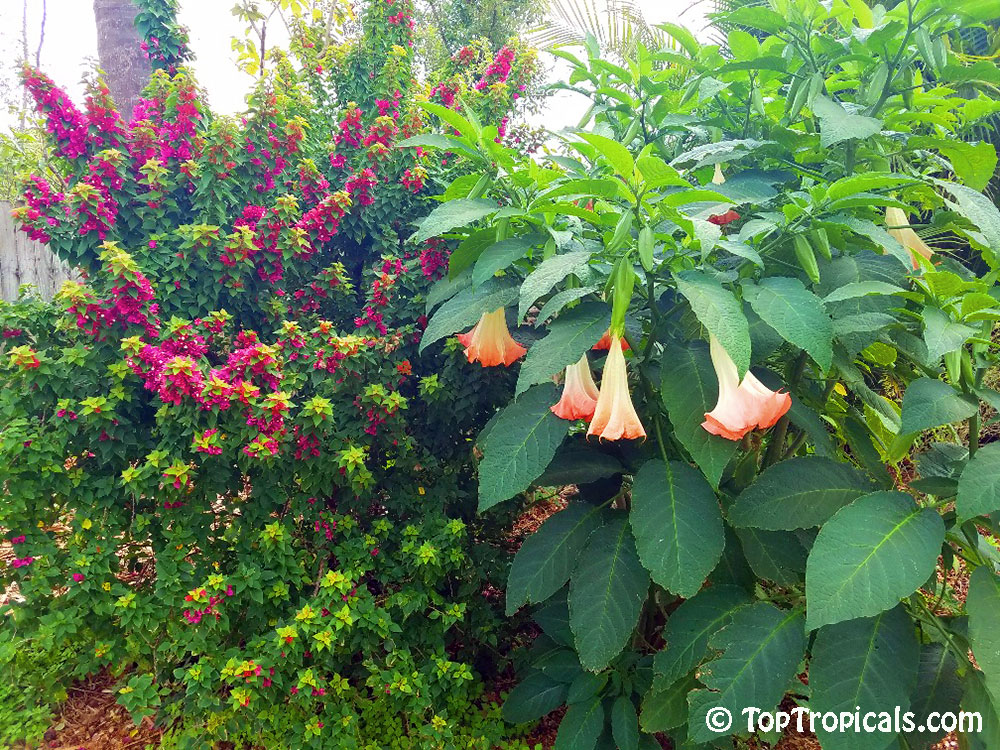
Spring is coming, plants need food! Time to fertilize...
Last winter was long and snowy in the most part of our
country. Hold on fellow gardeners up North, it is almost
over!
Here in Florida we have been blessed again with a mild
winter without serious cold snaps. Early Spring that is
already in the air. Look at this picture of flowers in our
front yard now.
If the weather is already warm in your area (low
temperatures above 55), it is time to start fertilizing.
We are sending our love and support to tropical Puerto
Rico suffered from hurricane last year, and will be happy
to help you guys to restore your lost gardens!
CHECK LIST
what
to do to give your garden a good kick start:
1. Slow release granulated food. Apply Slow Release Fertilizer and
continue once a month. 1 tsp per gallon of pot, or a
handful for in-ground plants. This will provide essential
macro elements (NPK) required for a plant growth.
2. Water soluble micro-elements. Besides
macro-elements, plants need many other elements that most
of the time missing in soil. A lack of micro-elements
causes different deficiencies, resulting in weak root
systems, slow growth, deformed leaves, leaves yellowing,
lack or no flowers/fruit. Apply these supplements as a
foliar spray once a month to induce healthy growth and
flower/fruit development. We recommend the following
micro-element products to keep your plants healthy and
vigorous year round:
a) SUNSHINE SuperFood - plant
health booster. This revolutionary new liquid complex
contains ALL microelements needed and can fix all possible
problems occuring to your tropical plants - from roots to
flowers and fruit. We have convenient dropper bottles of 5 ml for small plant
collections, 50 ml for larger gardens, and
100 ml for professional
landscape applications.
b) SUNSHINE-Micro - Microelement
booster - for common iron deficiency (pale leaves)
c) SUNSHINE-Super-Iron -
Microelement booster - for severe iron deficiency
(severe yellowing leaves)
3. SUNSHINE plant boosters -
SUNSHINE-E, -BC (caudex plants and bonsai), -H (house
plants). Apply these natural plant stimulants to
help plants recover from cold, dormancy, increase plant's
metabolism and make a plant more readily absorb both
Macro- and Micro-elements. SUNSHINE boosters also will
help plants grow vigorously, withstand Summer heat and
drought, and produce bigger and better flowers and fruit.
4. Kickstart a sweeter fruit. To get a better and
sweeter crop in Summer and Fall, you need to start first
application now. SUNSHINE Honey - is natural,
Amber-colored, honey-like liquid microelement product for
fruiting and edible plants that will make them sweeter,
tastier and more flavorful! Very effective for tropical
fruits, tubers, vegetables. Great for tropical fruit
trees: Mango, June Plum, Annonas, Tropical Cherries,
Carambola, Citrus; subtropical fruit trees: Peaches,
Apricots, Loquat and berry plants (blackberry, mulberry,
etc.)
5. SUNSHINE-S. Don't
forget to plant seeds! It's a perfect timing
now to start your tropical garden indoors even if it is
still cold outside. Soak them in SUNSHINE-S solution to
increase germination rate.
See full list of SUNSHINE boosters.
All these products are essential plant elements. They are
not toxic and can be used safely for edible landscapes.
Date: 24 Jun 2018

URBAN TROPICAL GARDENING:
10 secrets of successful Container Mango growing on a
balcony.
Q: I live in Miami in apartment on a second floor, and I have a balcony with SE exposure. I wonder if I can grow a mango tree in a pot? Will it fruit for me? I recently moved to South Florida and I don't know much about tropical plants; but I tasted real fiberless mangos from someone's garden - it was so delicious and different from those in the grocery store. I wonder if I can have a fruiting tree on my balcony? And if yes, how do I plant and take care of it?
A:
Yes, you can! Here is what you need to do:
1) Temperature. You are lucky to live in Tropics,
keep it on a balcony year round.
2) Light. Position the pot in a spot with the most
sun exposure. Mango trees can take filtered light too, but
the less sun, the less fruit you will get.
3) Soil and Container. Use only
well drained potting mix. Step up the purchased
plant into next size container (3 gal into 7 gal, 7 gal
into 15 gal). When transplanting, make sure to keep growth
point (where roots meet the trunk) just at the top of the
soil. Covering base of the trunk with soil may kill the
plant.
4) Water. Water daily during hot season, but only
if top of soil gets dry. If it still moist, skip that day.
Mangoes (unlike
Avocados!) prefer to stay on a dry side.
5) Fertilizer. Use
balanced fertilizer once a month, 1 tsp per 1 gal of
soil. Do not fertilize during fruiting - this may cause
fruit cracks.
6) Microelements. Apply
SUNSHINE-Superfood once a month. This will help your
mango healthy, vigorous, and resistant to diseases. Use SUNSHINE-Honey to make your
fruit sweeter.
7) Insect control. Watch for scales and mealybugs,
clean with solution of soapy water + vegetable oil (may
need to repeat 2-3 times with 10 days interval), or with
systemic insecticide like imidacloprid only as needed (if
non-harsh treatment didn't help). Most Flea shampoo for
dogs contain that chemical, you may try that shampoo
solution.
8) Trimming. Once potted, do not remove leaves
that are discolored or have spots until new growth
appears. Dark dots on mango leaves, especially in humid
climate like Florida, may be signs of fungus. Treat with
fungicide according to label, and remove only badly
damaged leaves. Trim crown as needed after flowering and
fruiting (by Fall). Train into a small tree, and you may
remove some lower branches eventually.
9) Flower and fruit. Mangoes are winter bloomers
with bunches of tiny flowers coming in thousands. Many of
them set fruit (if pollinating insects present). Keep in
mind that young trees can only bare a few fruit. Normally
a tree will drop excessive fruit and keep only a few that
it can manage. To save the young tree some energy, remove
fruit if too many and leave only 2-3 for the first year.
It will pay you next year with more abundant crop.
10) Variety. Last but not least: Choose the right
variety for container culture! Pick from "condo" dwarf
varieties such as Icecream, Nam Doc Mai, Carrie, Cogshall, Julie, Fairchild, Pickering, Graham, Mallika, and a few others -
check out Mango Chart pdf
and full list of our Mango varieties.
Date: 2 Dec 2021
New Video:
What is a Loquat?
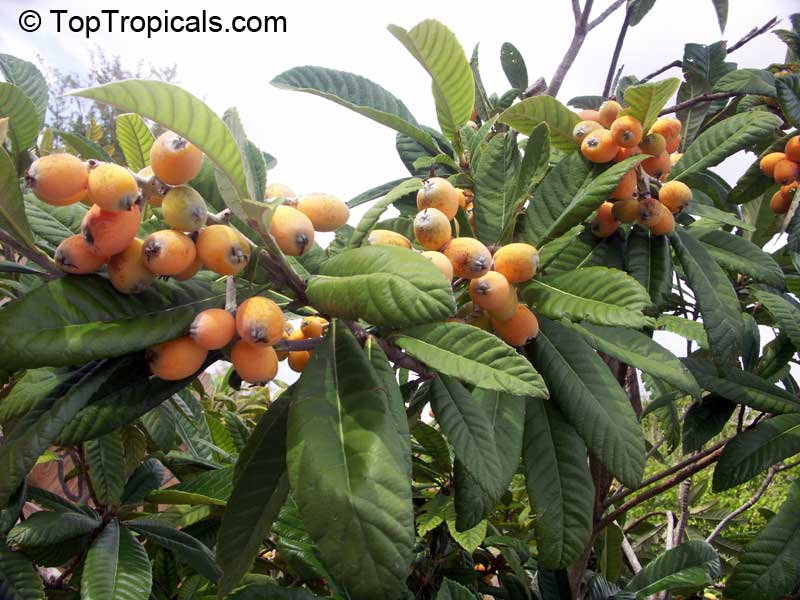
Loquat is one of the easiest tropical/subtropical fruit trees to grow, with delicious fruit resembling Apricots (in fact, from the same family!). This video presented by our video host David Mortimer.
More information on Loquat trees:
Golden Loquat - the symbol of Prosperity
Kristi's Loquat Tropical BBQ sauce
Overlooked fruit: tasty Loquat recipes (PDF from Tropical Treasures
Magazine)
WATCH NEW VIDEO >>
Stay updated with TopTropicals Videos by subscribing to our channel at YouTube.com/TopTropicals and get our latest video news of what is fruiting and blooming!
Date: 19 May 2022
Top Story: The little mango tree that could
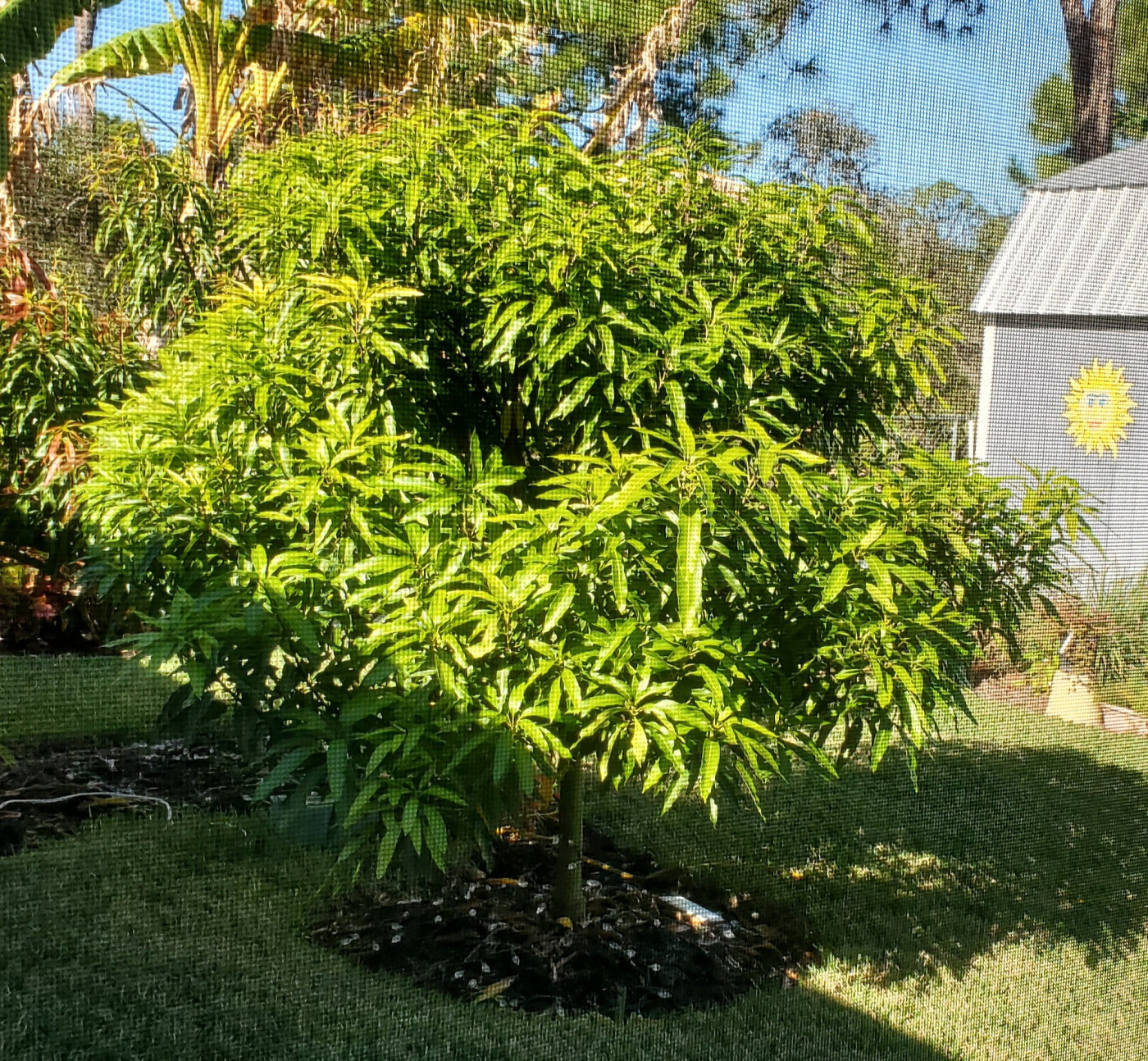
By Ed Jones, the Mango Guy
"...Until you dig a hole, you plant a tree, you water
it and make it survive, you haven't done a thing. You are just talking..."
- Wangari Maathai -
This is the story of the little mango tree that could. From the
beginning, it has been a fighter and has come through its latest battle with a few
scars, but it is still going...
...On January 30, the unthinkable happened. Cold weather was coming. We had
a low of under 25F on that Sunday morning...
...Then, on April 4, 2022 we had a very bad hail storm... Hail stones up to
3"fell for 20 minutes...
Learn more about what happened and see this mango tree today... What
helped it to survive and also what will help it to grow back into a beautiful
tree?
For information on how to shape your mango trees, see
Subscribe to our Channel:
Stay updated with TopTropicals Videos by subscribing to our channel at YouTube.com/TopTropicals and get our latest video news of what is fruiting and blooming!
REAL DEALS:
More specials
with instant 30% OFF!