Garden Blog - Top Tropicals

Date: 4 Jan 2026

Dont drink your coffee until you see this!

Coffea arabica - Coffee tree, fruit

☕️ Don't drink your coffee until you see this!

  • Our coffee trees, Coffea arabica, are growing in 7-gallon pots, and after months of waiting, the cherries are fully ripe!
  • They bloomed in May, set fruit in August, and now in winter the fruit has turned red and ready to harvest.
  • Coffee is one of the easiest fruiting plants you can grow at home. It does well in containers, loves shade, and can be grown indoors or outdoors in warm climates. With regular watering and a little patience, you can grow, harvest, roast, and brew your own coffee right from your home garden.
  • We are harvesting now, and the next video will show the full roasting process step by step.

  • 👉 Coming up next: Roasting video coming soon - stay with us!


🛒 Start your own coffee harvest

📚 Learn more:

Plant Facts

Coffea arabica
Coffee
USDA Zone: 9-11
Large shrub 5-10 ft tallSmall tree 10-20 ftSemi-shadeShadeKeep soil moistWhite, off-white flowersEdible plantEthnomedical plant.
Plants marked as ethnomedical and/or described as medicinal, are not offered as medicine but rather as ornamentals or plant collectibles.
Ethnomedical statements / products have not been evaluated by the FDA and are not intended to diagnose, treat, cure, or prevent any disease. We urge all customers to consult a physician before using any supplements, herbals or medicines advertised here or elsewhere.Fragrant plantSubtropical plant. Mature plant cold hardy at least to 30s F for a short time
  • Coffea arabica in Plant Encyclopedia
  • Homegrown coffee - the journey begins!
  • How to make your own coffee from homegrown beans
  • Coffee trees in bloom
  • •  Brew Your Future: Grow Your Own Coffee
  • •  What is coffee made of?
  • •  Why Coffee tree is the best gift plant
  • •  Top 10 fruit you'll ever need for your health benefits: #2. Coffee Tree
  • •  What is the most popular and the easiest tropical fruit tree grown as a house plant?
    🎥

    #Food_Forest #Container_Garden #Shade_Garden

    🟢 Join 👉 TopTropicals
  • Date: 5 Jan 2026

    ☘️ What plants are easy to ship in Winter?

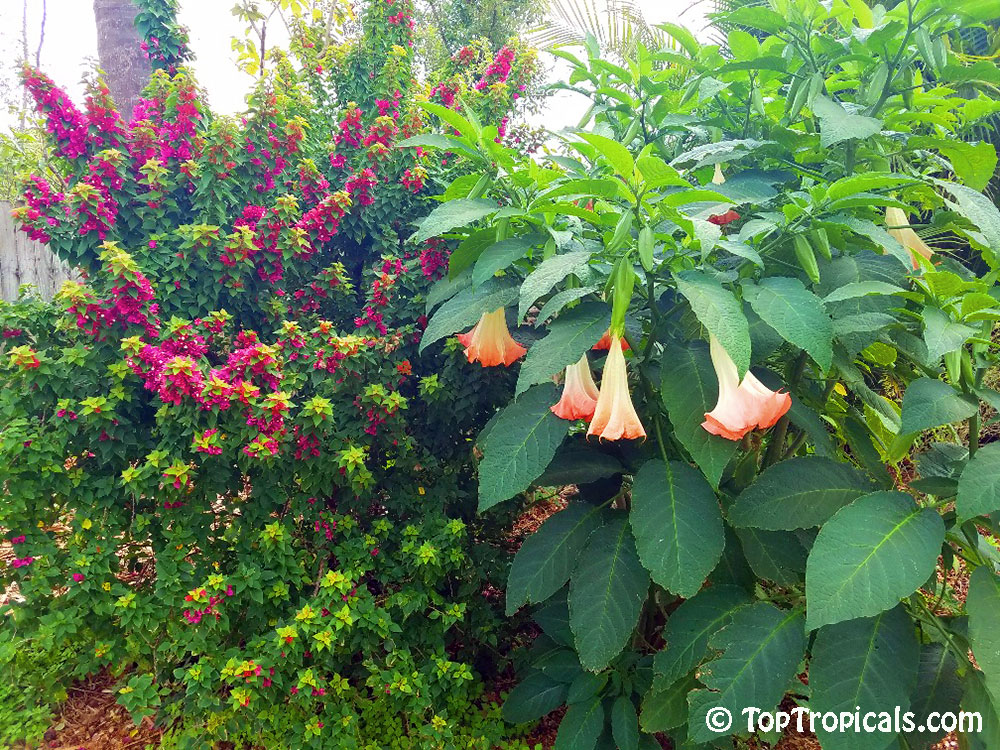
    Lush  tropical  garden  with  a  bright  green  leafy  Magnolia  champaka  surrounded  by  flowering  shrubs,  such  as  Brunfelsia  grandiflora,  at  Top  Tropicals  nursery

    Ordering plants in winter is often easier than people expect - and for many plants, it is actually better. Lush foliage plants like philodendrons and medinilla, fine-leaved trees such as moringa, jacaranda, and poinciana, and even sensitive fruit trees like papaya, jackfruit or starfruit ship more safely in cool weather without overheating stress.

    Winter is also ideal for subtropical and cold-tolerant plants, dormant or deciduous plants like plumeria and adenium, orchids - including ground orchids and vanilla orchids, and winter bloomers that flower their best right now. Winter care is simple: water less, use gentle liquid amino-acid fertilizers like Sunshine Boosters, and monitor insects.

    In mild climates, many tropicals can be planted anytime, while extra-tender plants can stay potted until spring. Winter is a perfect time to bring tropical warmth indoors and enjoy greenery when you need it most.

    🌿Learn more: easy plants for Winter shipping

    Date: 7 Jan 2026

    Do you know why its a Papaya time?

    Cat James Coconuts with his papayas

    Cat James Coconuts with his papayas

    🍊 Do you know why it's a Papaya time?


    Because Papaya Trees fruit year around! James Coconuts just harvested a big crop from his papaya trees. Varieties in fruit right now, in January: Wan Deng, Lady Red, Waimanalo, Sunrise, TR Hovey.

    🛒 Explore Papaya varieties

    📚 Learn more:


    🟡about #Papaya

    🐈📸 Cat James Coconuts with his papayas at TopTropicals PeopleCats.Garden

    #PeopleCats #Papaya

    🟢 Join 👉 TopTropicals

    Date: 20 Jan 2026

    7 steps for a care-free Spanish Tamarind - the easiest rare fruit to grow

    Vangueria infausta (Spanish Tamarind, Wild Medlar)

    Vangueria infausta (Spanish Tamarind, Wild Medlar)

    🍊 7 steps for a care-free Spanish Tamarind - the easiest rare fruit to grow


    Yes, it can handle light frost - Vangueria infausta (Spanish Tamarind, Wild Medlar) - we just discovered it can handle cold snaps! After a few cold nights in January, our young tree planted just a few months ago, still looks happy and strong!
    If you are looking for a tough little fruit tree that thrives on neglect but gives you something truly special in return - try this rare, compact fruit tree. Spanish Tamarind is native to southern Africa, it is drought-tolerant, pest-resistant, and surprisingly cold-hardy once established - making it a great choice even for gardeners in borderline zones.

    Here’s how to grow this resilient gem:

    🌞 Sun and soil


    Spanish Tamarind loves full sun, but will tolerate light shade. It isn’t picky about soil as long as it drains well - sandy, rocky, or loamy, it will grow just fine. No special amendments needed.

    💧 Watering


    Once established, it's very drought tolerant, but young trees need regular watering to develop a deep root system. In containers, water when the top inch of soil is dry. In the ground, water deeply but infrequently.

    ❄️ Cold tolerance


    Now for the surprise: while it’s considered a tropical fruit, Wild Medlar can handle brief dips into the mid-30s F without damage, especially when mature and dormant. In Sebring, FL, we’ve seen this tree shrug off light frosts with no protection!
    And what makes this even more impressive? The tree has beautiful, lush velvet leaves - soft to the touch and tropical in appearance - yet surprisingly hardy for such large, tender-looking foliage.
    • · Young plants should be protected the first couple winters
    • · Grow in containers if you’re in USDA zone 8 or lower
    • · A little mulch around the base helps stabilize soil temps in winter


    Growing in pots


    This tree is very compact and does well in containers. Use a large, well-drained pot and a loose soil mix. Keep it outside in spring through fall, then bring it indoors before a hard frost. It grows slowly and stays compact for years, making it a great fit for patios or balconies.

    🍊 When to expect fruit


    With enough sun and time, your tree can start fruiting in 2-3 years. Mature trees can bear 20-40 small round fruits per season, ripening to a golden-brown with a tangy-sweet flavor. The fruiting season may vary depending on your local climate, but typically occurs in late summer to fall.

    🛠 Maintenance? Almost none.

    • · No special pruning needed (except to shape)
    • · No major pests or diseases reported
    • · Tough and low-maintenance in the landscape


    🏆 Final thought: grow it for the surprise


    Spanish Tamarind - Wild Medlar - is a tree that rewards patience. It's unusual, beautiful in its own scruffy way, and packs a punch with cold tolerance, drought resistance, and tasty fruit. Spanish Tamarind belongs in every experimental garden or food forest - especially if you love growing things no one else in the neighborhood has.

    🛒 Add rare Spanish Tamarind to your rare fruit collection

    📚 Learn more:

    Plant Facts

    Vangueria infausta
    Wild Medlar, Spanish Tamarind
    USDA Zone: 9-11
    Small tree 10-20 ftFull sunModerate waterEdible plantDeciduous plantEthnomedical plant.
Plants marked as ethnomedical and/or described as medicinal, are not offered as medicine but rather as ornamentals or plant collectibles.
Ethnomedical statements / products have not been evaluated by the FDA and are not intended to diagnose, treat, cure, or prevent any disease. We urge all customers to consult a physician before using any supplements, herbals or medicines advertised here or elsewhere.Subtropical plant. Mature plant cold hardy at least to 30s F for a short time
  • Vangueria infausta - Spanish Tamarind in Plant Encyclopedia
  • The wild fruit with a secret: health benefits of rare Spanish Tamarind - the exotic fruit you've never heard of

  • #Food_Forest #Remedies #Discover

    🟢 Join 👉 TopTropicals

    Date: 21 Jan 2026

    Ice Cream Bean cool fluff: quick-n-fun exotic recipes

    Ice Cream Bean cool fluff

    Ice Cream Bean cool fluff

    Ice cream bean tree (Inga edulis) - fruit

    Ice cream bean tree (Inga edulis) - fruit

    🍴 Ice Cream Bean Cool Fluff

    Ingredients

    • Fresh Ice Cream Bean pulp (Inga edulis)
    • Crushed ice
    • Optional: lime wedge or mint leaf for garnish

    Instructions

    1. Open ripe Ice Cream Bean pods and scoop out the sweet white pulp.
    2. Remove and save the seeds if you want to plant more Ice Cream Bean trees.
    3. Chill the pulp for 20 to 30 minutes.
    4. Serve the chilled pulp over crushed ice as a natural shaved-ice dessert.

    🌿 About the plant:


    Ice cream bean (Inga edulis) produces long pods filled with sweet, cottony white pulp surrounding dark seeds. The flavor is mild, vanilla-like, and naturally creamy. The pulp is eaten fresh and used as a natural dessert across South and Central America.

    🌱 In the garden:


    Inga edulis is a fast-growing tropical tree with lush foliage and nitrogen-fixing roots that improve soil health. It is a perfect tree for a quick shade solution in just one season. While large in the ground, it can be managed with pruning in home orchards.

    🛒 Plant Ice Cream Bean tree

    📚 Learn more:

    Plant Facts

    Inga edulis, Inga feuilleei
    Ice Cream Bean, Inga, Guama, Guaba
    USDA Zone: 9-11
    Large tree taller than 20 ftFull sunRegular waterWhite, off-white flowersEdible plantSubtropical plant. Mature plant cold hardy at least to 30s F for a short time
  • Ice Cream Bean tree (Inga edulis) in Plant Encyclopedia
  • Did you know that ice cream actually grows on a tree?
  • What does Ice Cream Bean fruit taste like?
  • Ice Cream Bean Tree: Eating the fruit and planting the tree

  • #Food_Forest #Recipes

    🟢 Join 👉 TopTropicals