🌸 Adenium Ploysai - is named after the Thai phrase for "clear gemstone". Its soft white petals with watercolor-pink edges bloom like a crystal rose at dawn!
🌸 Ploysai features lovely creamy pink petals with soft yellow tones blending around the edges. The flower's layers create a full and elegant appearance, with a gentle gradient effect that adds to its charm. A graceful and vibrant bloom, perfect for brightening up your garden!
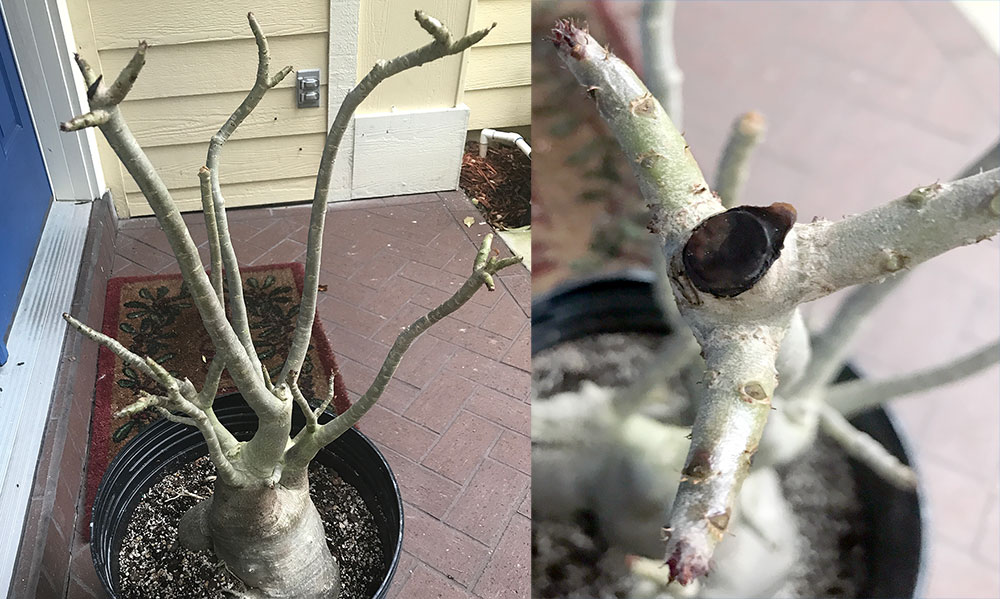
Q: My desert rose below dropped leaves after I replanted it in a
bigger pot. I noticed that one of the branches that had been pruned is black
at the tip. Please let me know if the section of the branch that turned black
needs to be cut. I also wasn't sure how often to water it since the leaves
have all dropped. None of the other dessert roses have dropped their leaves
but they are all younger plants. Any advice would be much appreciated.
A: Your plant looks healthy and vigorous overall. Dropping leaves
after repotting, or shipping, especially at this time of the year, is normal
in Adeniums. They are deciduous and stay leafless from Fall to Spring.
Some individual specimens can go into dormancy sooner than others - all depends
on conditions: temperature, light, exposure, etc. and individual plant's
"clock".
The black spot on the cut branch may be a sign of a fungus as a result of
excess water.
You may carefully clean/rub it with a paper tower dipped in Hydrogen
Peroxide (pharmacy grade). Then rinse with fresh water.
Keep the plant warm and in a dry spot. Once leaves are dropped, it doesn't
need much water. Once a week watering is enough.
Date: 24 Jun 2018
What you need for successful growing
Adeniums
1) Adenium plants - from TopTropicals Endless selection of
Adeniums. We have double flower, red, purple, yellow
and even black flowers! 2) A small pot with excellent drainage is a must.
Position the plant in a pot, size of root system. 3) Adenium soil mix. TopTropicals Adenium Soilless Mix.
Use only well-drained soil. 4) Lots of light. Adeniums need lots of light for
heavy flowering. However from our own experience, in super
hot climates, they look healthier in filtered bright
light. After initial planting, once the plant is
established and starts growing new leaves (may take a few
weeks), gradually move it into brighter light. 5) Little water. Adeniums like a neutral to hard
water. Acidic water tends to sour the soil too fast and
may cause root rot. Water plants preferably in the early
morning, and allow them to drink up throughout the day.
Watering can be done daily to every few days. Do not water
again until soil dries on surface. Never allow your plants
to sit in a saucer of water, but don't let them to dry out
too often - this causes adeniums to go into early
dormancy. Adeniums do not like both over-watering or
drying-out. 6) Fertilizer. To make your plant develop a large
swollen base/trunk, you'll need a good quality fertilizer.
Use slow-release granulated fertilizer
for overall plant health, and liquid water soluble
fertilizer for swelling up trunks that is also used to
increase flowering. It shouldn't be too high in nitrogen,
the middle number should be the highest (similar to
10-50-10). Never apply fertilizer directly on roots and do
not liquid feed when a plant is thirsty: always water
first slightly to avoid root burn and leaf drop. Do not
wet leaves. 7) SuperFood micro-elements. Besides
macro-nutrients provided by fertilizer, Adenium needs
micro-elements for balanced development of root system and
especially caudex: Sunshine-SuperFood. 8) SUNSHINE-BC. Spray leaves with SUNSHINE-BC once a month to
encourage young growth, profuse flowering and large
caudex. 9) Growing caudex. There is a secret how to create
a large swollen caudex: raise the plant a bit every time
you re-pot it, so that the upper part of roots will be a
little exposed. The plant will form more roots that will
go down.
Smokey: Winter roots make spring easy. Keep that plant straight.
Sunshine: I am keeping it straight by not touching it at all.
Smokey: That is exactly what I was afraid of.
November is the month when the garden finally stops yelling at you.
The heat backs off, the bugs calm down, and the weeds take a breath.
This is when we get to take control again.
And as gardeners, we know the truth:
Either you use your garden, or your garden will use you in
spring.
Let me walk you through this, gardener to gardener.
"November is when the garden finally listens.
Give it a little direction now, shape it, guide it, and prepare it for
spring.
It will reward you all year." - Tatiana Anderson, Top Tropicals Plant
Expert
🌴
When The Garden Uses
You
We have all lived this scene:
March weeds appear, and two days later it looks like a jungle.
One missed watering turns into five wilted plants and a full week of
recovery.
A skipped feeding shows up as yellow leaves and panic searching
online.
Bugs return fast, and suddenly you are washing leaves every other
day.
Random plant purchases fill your yard with chaos and mismatched care
needs.
When the garden takes control, spring feels like hard work, not
joy.
Overgrown Tropical Garden Showing How a Garden Can Use You
📊
When You Use Your Garden
November flips the script.
Plants slow down. Soil stays warm.
This is the safest month to experiment, move plants, fix mistakes, and
redesign.
What you do now pays off huge in March.
You map out sun zones and shade zones.
You mulch now so weeds do not explode later.
You move plants to better positions without heat stress.
You remove the high-drama plants before they start another season of
complaints.
You pick what you want for next year instead of letting impulse buys
rule you.
Spring becomes smooth instead of overwhelming.
And honestly? It feels good to walk outside in March and see order instead
of chaos.
In the photo: Every garden starts in small steps. Biquinho Pepper
(front) in the garden.
What Benefit
Do You Get Personally?
Less watering.
Fewer bugs.
Bigger fruit.
Better flowering.
Less money wasted.
Less time fixing problems you could have prevented now.
This is why experienced tropical gardeners adore November.
In the photo: Organized Tropical Garden. Firebush (lemon gold
variety) and Cordylines (Ti Leaf) make colorful spots in the garden.
🐭
Start With Something Small Today (5 Minutes)
Pick one:
Add mulch to the driest spot in your yard.
Cut one dead branch from any tree.
Move one pot to a better sun angle.
Pull three weeds from the worst area.
Water deeply once this week.
Small steps now save hours later.
⭐
One Short Story
Last year we planted a
Star Fruit in November.
By March, it was already covered in flowers, and have been harvesting fruit
non-stop since then!
That is what winter planning does: it gives plants a head start you can
actually see.
🐍
Plants That Will Use You If You Let Them
These are great plants, but only if you plan before planting them:
Papaya
- fits any yard, delicious fruit and natural digestive remedy
Pick even one of these and your garden starts giving back.
In the photo: Cattley Guava brings not only tasty fruit but also a
wonderful character with its amazing multi-color twisted trunk.
🌡️ November Advantage
You cannot ruin anything in November.
This is the safest, calmest month to shape your garden the way you want.
If you act now, spring becomes a victory lap.
If you wait, spring becomes a rescue mission.
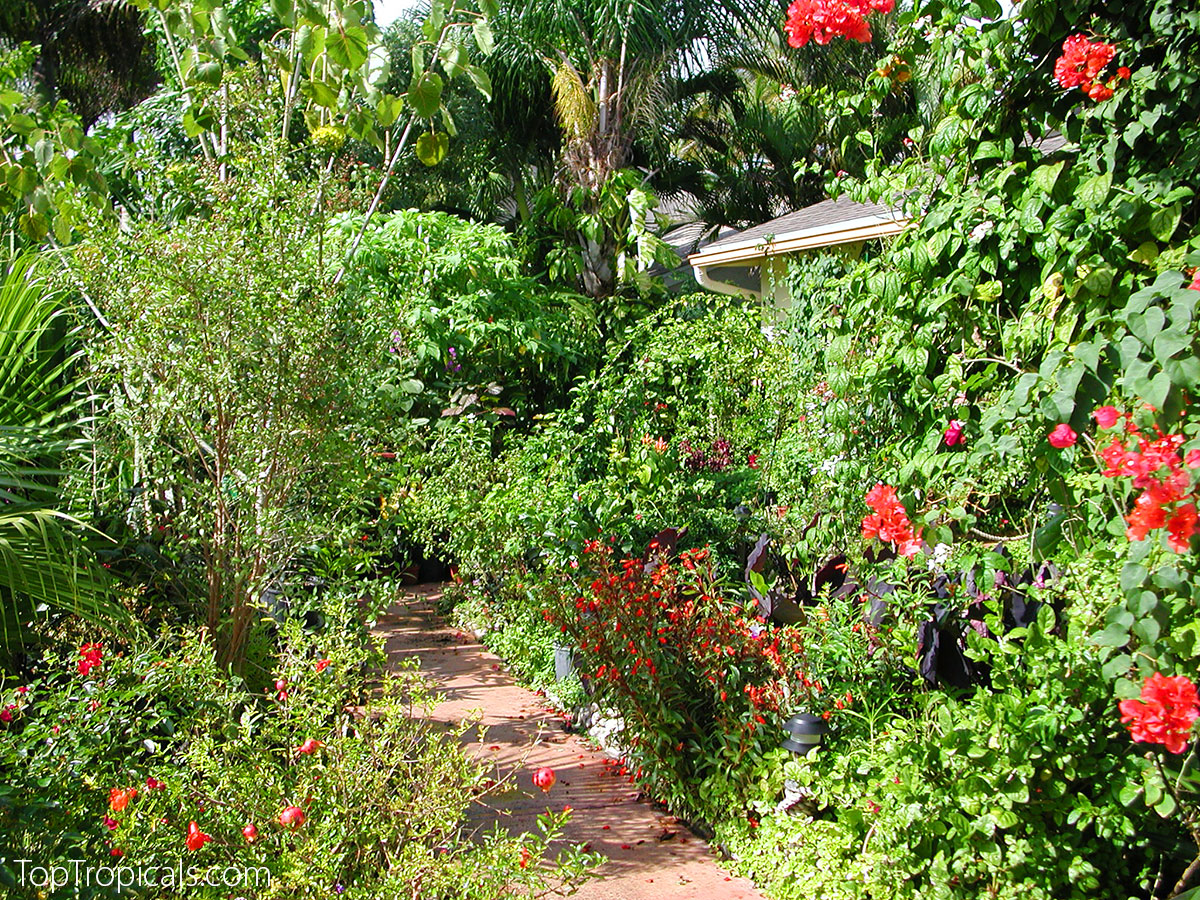
In the photo: Adenium is a colorful accent in the
garden.
💐
Thanksgiving Tie-In
This is the season to reset, breathe, and be thankful for your outdoor
space.
A garden that works for you is one of the best gifts you can give yourself
going into the new year.
Start your November plan today.
Use your garden.
Do not let it use you.
In the photo: Megaskepasma, Iris, Colocasia, Crotons, Dracaena and Ti
Leaf bring instant tropical look to your garden.