Garden Blog - Top Tropicals

Date: 8 Aug 2016

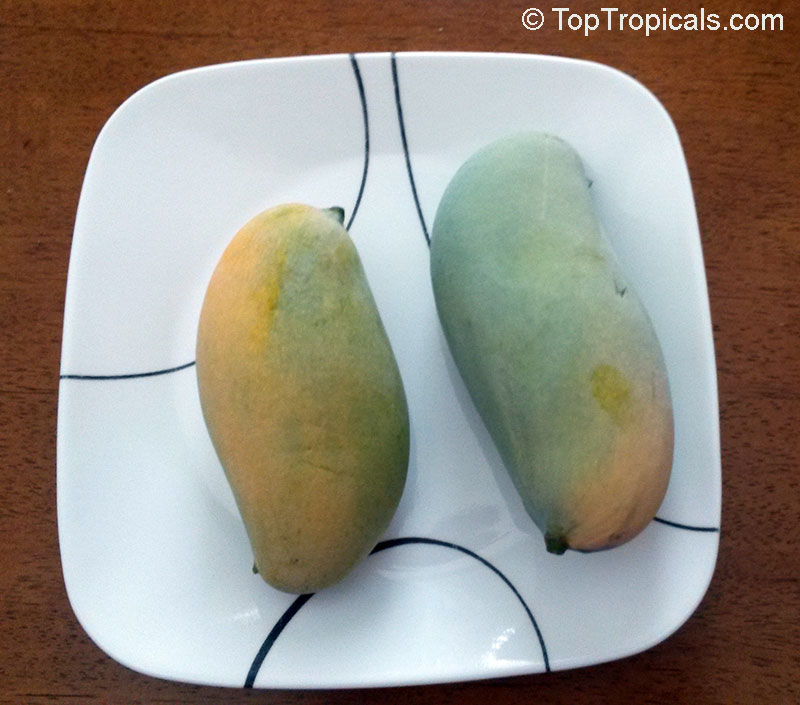
Growing mango in hot Arizona

By Mike D, Mesa, AZ. Despite to what you may think, mango can be successfully grown in desert Arizona climate. It has good heat and drought tolerance. It's possible providing the following:
1) Winter protection of a young plant when temperature goes around or below freezing. Try to plant trees in locations where they're protected from cold wind. Minimal temperatures vary widely. Areas which are closer to downtown are few degrees warmer, while outskirts can be very cold.
2) Some people are lucky enough to live in areas with good soil. However, most of us will have a so-called hardpan (extremely compacted desert) or caliche (layers of soil cemented together by calcium carbonate). Check with your local county extension office to determine how to deal with such conditions. Gypsum is usually used to loosen compacted soil.
3) When planting, dig a large hole making sure it has good drainage. Plant tree as usual, add mulch around it. It helps to conserve moisture.
4) Best time to plant is late Fall or early Spring, so mango can get established before Summer heat.
5) Plant where tree gets few hours of sun.
5) Water a lot until established. Once established, water when soil is dry.
6) Small plant may need protection from summer heat. Use shade cloth.
7) Mango requires very little nitrogen fertilizer. In hot climate, overdosing nitrogen may result in quick plant decline. Use balanced low nitrogen slow release fertilizer or avoid nitrogen completely. If you use mulch, then decomposing mulch provides enough nitrogen. Foliar spray of micronutrient solution is recommended during active growing period. Read more...

Date: 12 Apr 2016

Hot novelty plant for hot Arizona

Q: What plants would you recommend for very hot and dry spot in front of my house that gets full sun all day long? I live in AZ, we recently had a couple good rains but this is going to be it for a long time. It gets so hot during the day that every plant I tried didn't make it. We have a few nice orange trees growing well but I would like to plant something compact, colorful and hopefully fragrant if there is such plant.

A: There is a perfect small size plant for you that is extremely fragrant and yet will be thriving in these conditions. It is the famous Jasmine sambac. It will appreciate dry air of Arizona and will bloom profusely for you in full sun or in partial shade. It doesn't mind heat at all.

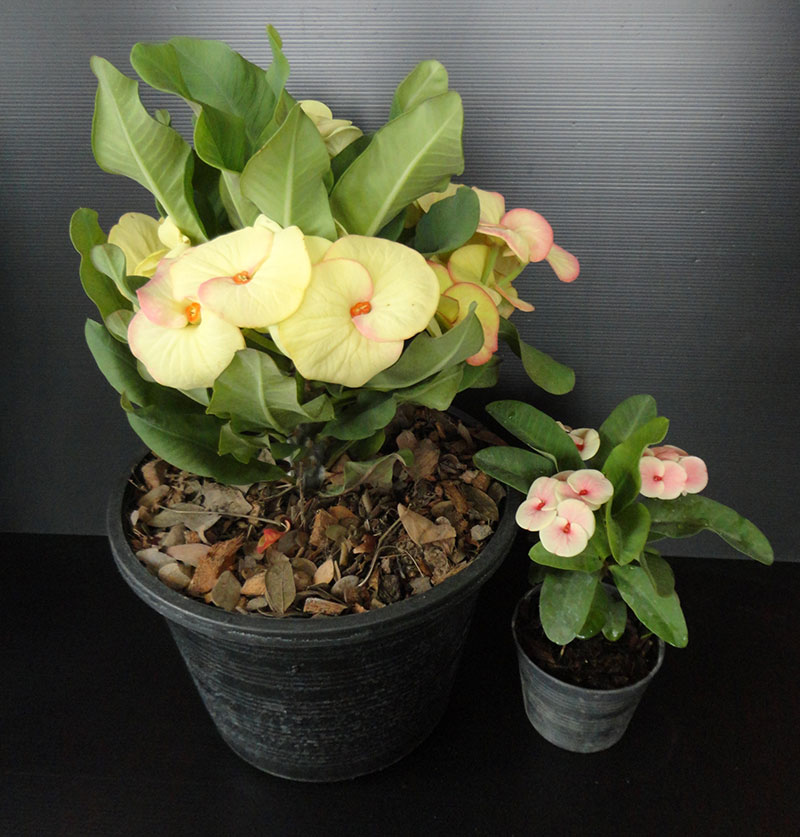
For colorful accents, a proven winner is Crown of Thorns - Euphorbia millii. New giant size flower varieties were recently selected in Thailand, and we just received a great selection, look at the colors! These plants don't mind hot sunny location at all. The more sun, the better the bloom! Small plants need regular watering until establish, then once they start developing, they will require less water.

Giant Euphorbia flowers from Thailand are 4-5 times bigger than regular flower euphorbia. Diameter of the flower is around 2". Compare giant flower to normal size - picture on the right.

See full list of plants for hot and dry spots.

Date: 15 May 2024

What does a dragon taste like? Does Dragon Fruit come from a monster cactus? Learn why you need to grow your own

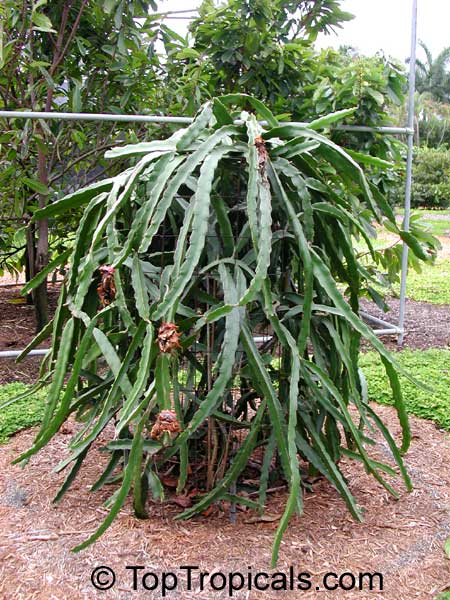
Hylocereus and Selenicereus Dragon Fruit or Pitaya

Hylocereus and Selenicereus Dragon Fruit or Pitaya

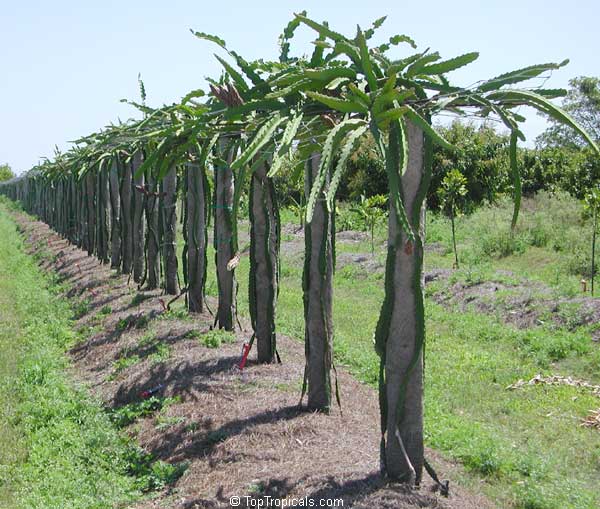
Hylocereus and Selenicereus Dragon Fruit or Pitaya trees on trellis

Hylocereus and Selenicereus Dragon Fruit or Pitaya trees on trellis

Hylocereus and Selenicereus Dragon Fruit or Pitaya on trellis

Hylocereus and Selenicereus Dragon Fruit or Pitaya on trellis

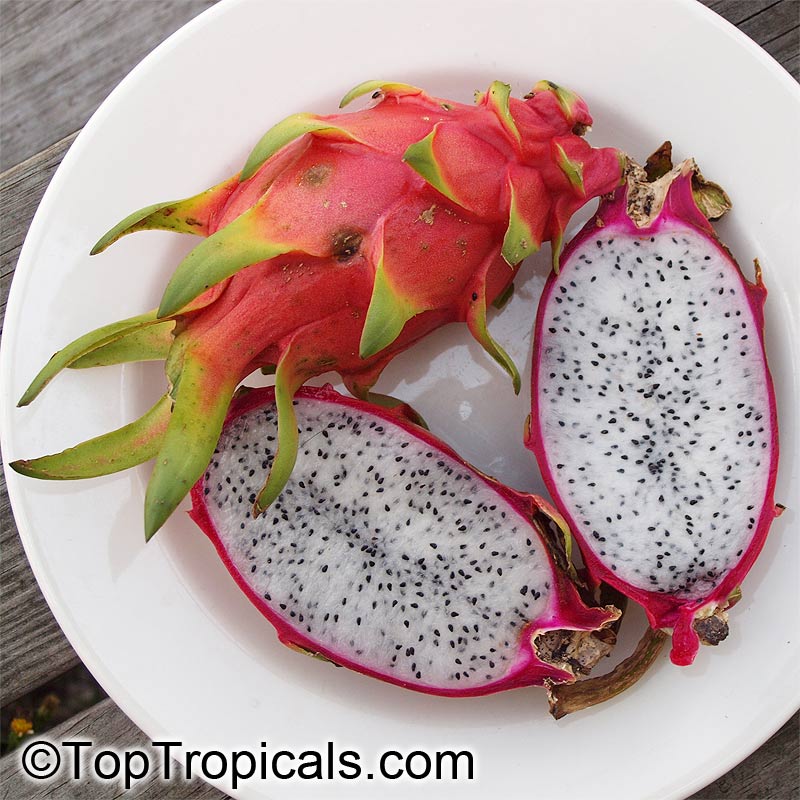
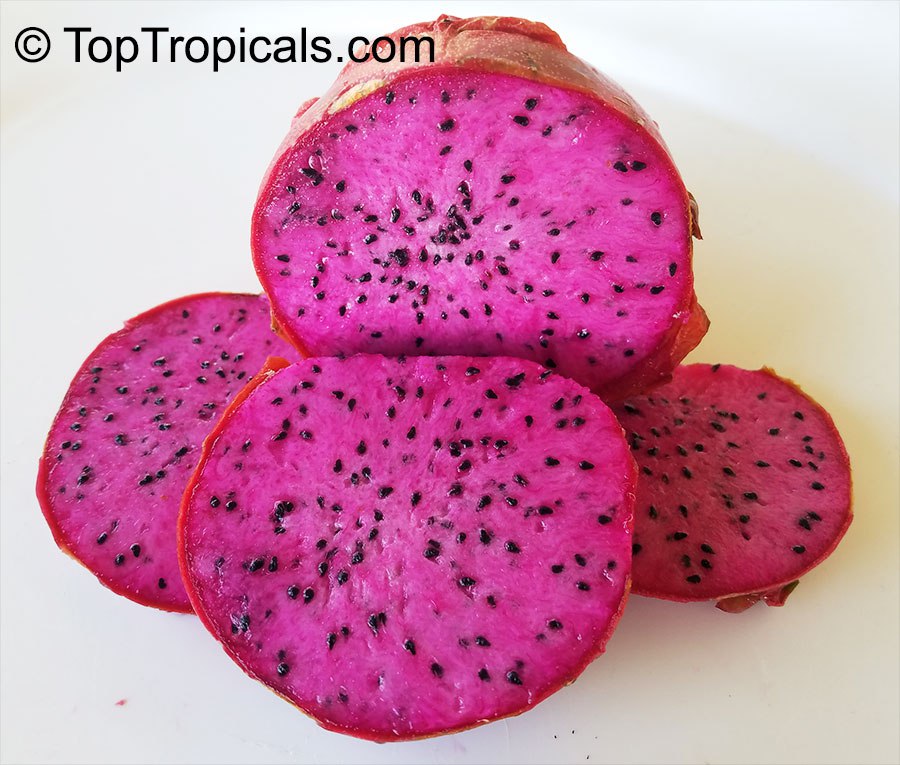
Hylocereus and Selenicereus Dragon Fruit or Pitaya red fruit

Hylocereus and Selenicereus Dragon Fruit or Pitaya red fruit

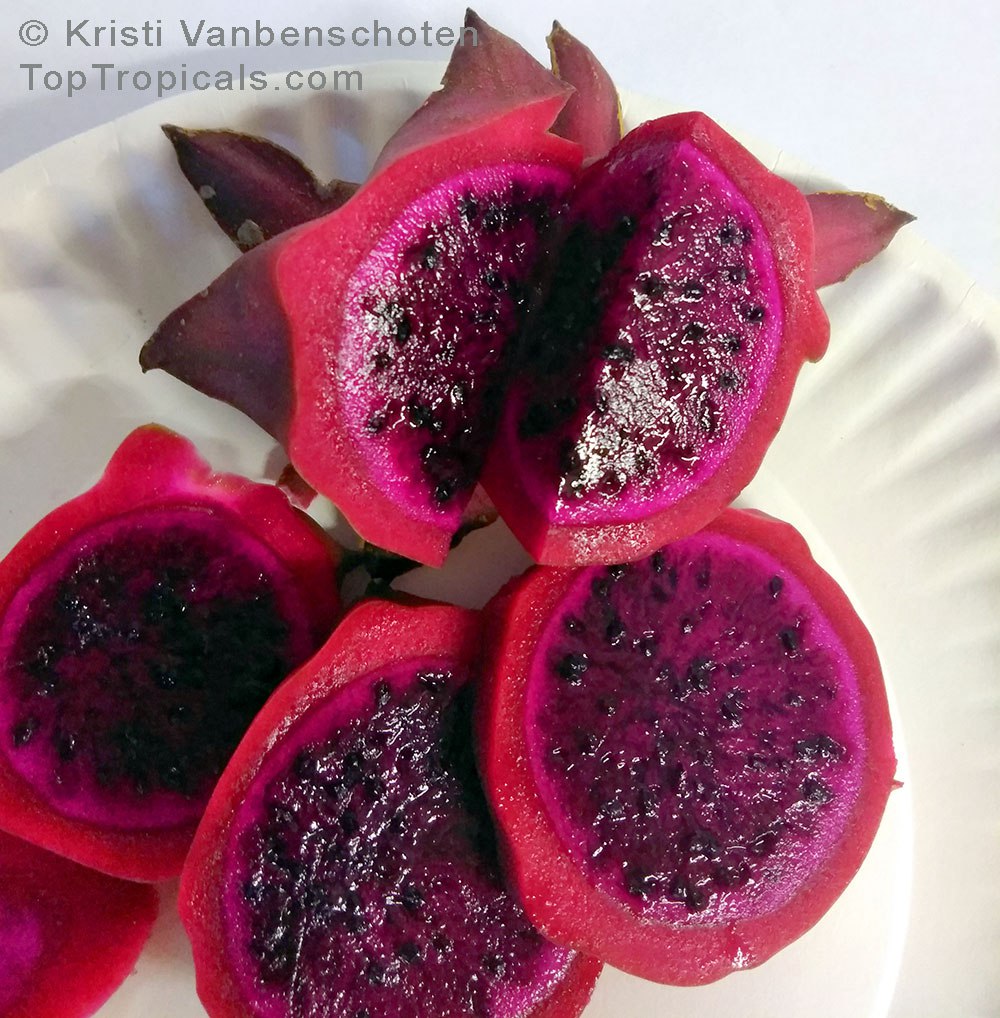
Hylocereus and Selenicereus Dragon Fruit or Pitaya purple fruit

Hylocereus and Selenicereus Dragon Fruit or Pitaya purple fruit

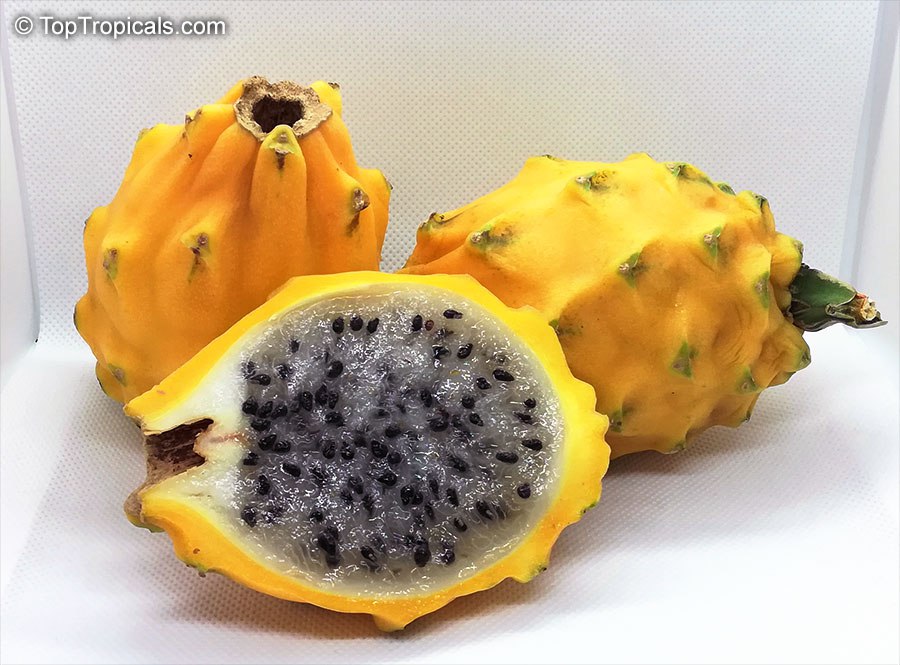
Hylocereus and Selenicereus Dragon Fruit or Pitaya Yellow Parlora

Hylocereus and Selenicereus Dragon Fruit or Pitaya Yellow Parlora

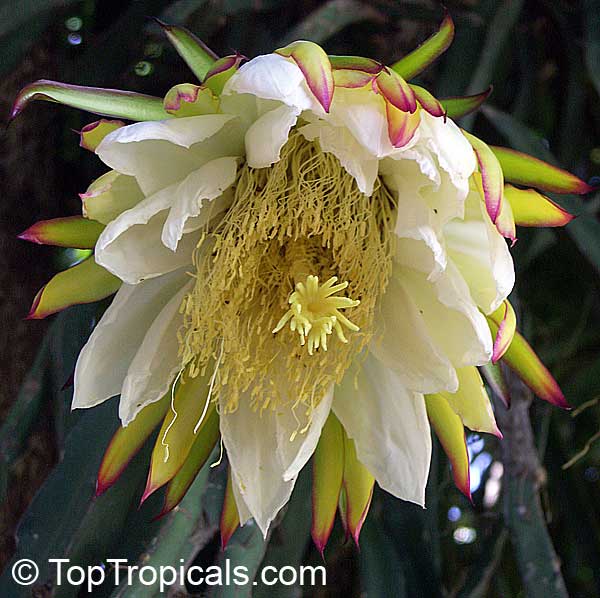
Hylocereus and Selenicereus Dragon Fruit or Pitaya flower

Hylocereus and Selenicereus Dragon Fruit or Pitaya flower

🐲 What does a dragon taste like? Does Dragon Fruit come from a monster cactus? Learn why you need to grow your own. 🌵

🔴 You may have tried a Dragon fruit from the store l, but do you know how it grows? On a cactus tree!

🔴 Names: varieties of Hylocereus and Selenicereus - these fruit bearing cactus plants are also called Dragon Fruit or Pitaya.

🔴 Commercially grown fruit sold in a grocery store may be tasteless. You need to grow your own good variety to have tasty, sweet, flavorful fruit!

🔴 Dragon fruit comes in many varieties. Colors of flesh differ: white, pink, dark red and even purple. The outside of the fruit can be red/pink or yellow.

🔴 In commercial groves, Pitayas grow like cactus trees, over a strong support - big "umbrella frames" ☂️

🔴 It is an easy plant, with low water needs, takes both sun and semi-shade.

🔴 Our favorite variety is Yellow Dragon Fruit Palora, (Selenicereus megalanthus). It is the sweetest and has the most flavor of all. We shared some recipes earlier.

🔴 Can be grown in container with a wooden trellis. And the flower is beautiful, too!

📚 Learn more about Dragon Fruit
🍹 Recipe: What to do with a Dragon fruit?

🛒Grow your own Tasty Dragon Fruits

#Food_Forest #Recipes #Nature_Wonders

🏵 TopTropicals

Date: 27 Nov 2025

Happy Thanksgiving from all of us at Top Tropicals!

Smokey  the  tuxedo  cat  holding  a  Thanksgiving  sign  while  Sunshine  the 
 ginger  tabby  smiles  beside  him  on  a  potting  table.

Smokey: "We made a list of everything we are thankful for this year."
Sunshine: "I helped. Mostly by napping next to it."
Smokey: "And that is exactly why sunshine naps are on the list."

Smokey and Sunshine wanted to share a short Gardener Thanksgiving Message about what they are thankful for this year:

"We are thankful for warm laps during cold mornings.
Thankful for every gardener who stopped to scratch our heads between loading carts.
Thankful for the smell of fresh soil, new plants, and boxes that make perfect cat forts.
Thankful for mango season (even though humans never let us eat the fruit).
Thankful for sunshine naps on potting tables and shade naps under benches.
Thankful for all the tiny moments when gardens and people slow down together.
And thankful that we get to share this tropical adventure with you."

From the whole Top Tropicals Team and PeopleCats, we wish you a warm, peaceful, plant-filled Thanksgiving 🙏 ♥️

🛒 Shop Tropical plants

Date: 19 Apr 2026

Complete Adenium Care Guide: 9 tips how to keep it simple and thriving

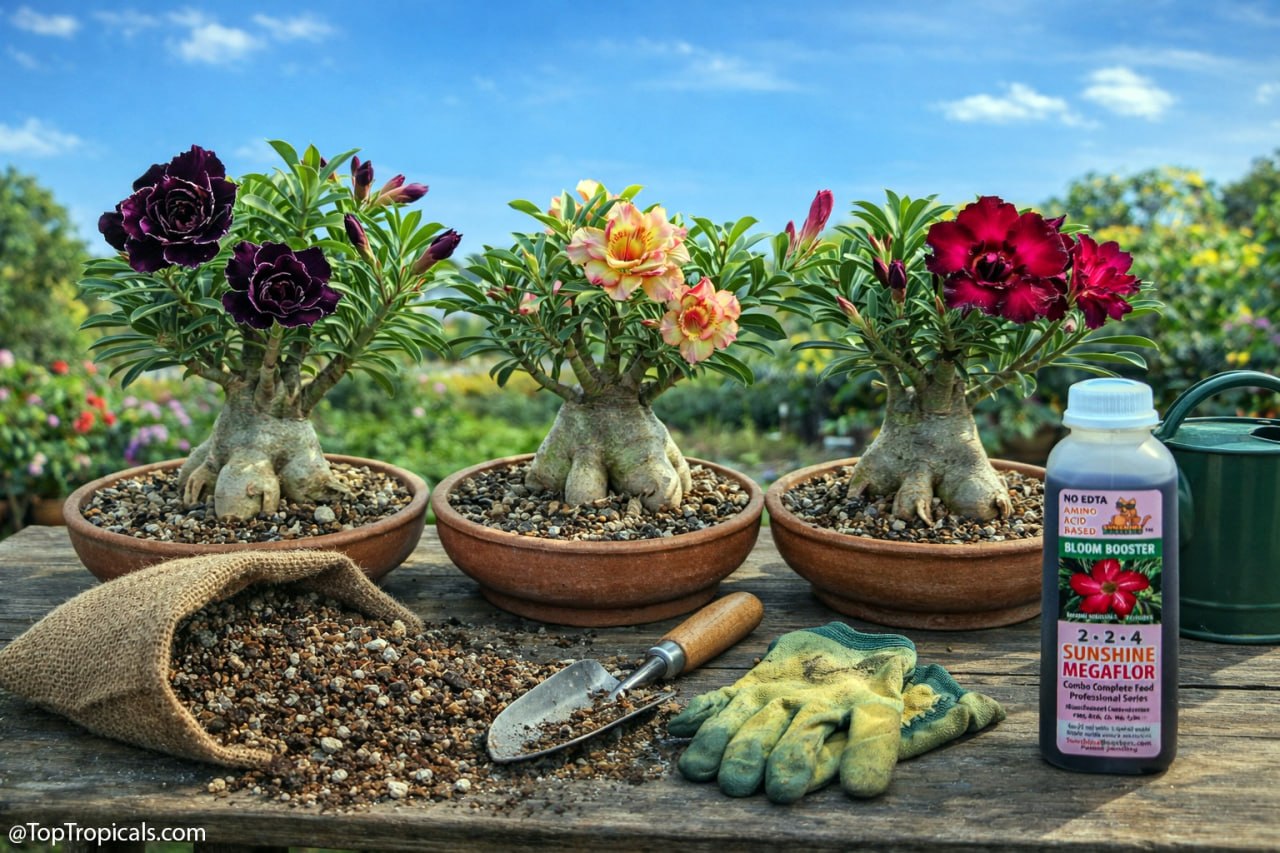
Asdenium plants on the table with adenium soil mix and fertilizer

Asdenium plants on the table with adenium soil mix and fertilizer

🌸 Complete Adenium Care Guide: 9 tips how to keep it simple and thriving


Adeniums don’t need intense care - just the right balance.
Most problems come from too much water, not enough light, or the wrong soil.

Adenium Plant Facts

Botanical name: Adenium sp.
Also known as: Adenium, Desert Rose, Impala Lily
USDA Zone: 9 - 10
Highligths Plant with caudexLarge shrub 5-10 ft tallSmall tree 10-20 ftFull sunWater Requirement: Low. Allow soil to dry out between wateringsWatering: Moderate. Water when top soil feels dryYellow, orange flowersRed, crimson, vinous flowersUnusual colorBlue, lavender, purple flowersWhite, off-white flowersPink flowersToxic or Poisonous
Get personalized tips for your region


🌸 1. Soil is everything


Why it matters
Adeniums are succulents with thick roots and a caudex that stores water. They must never sit in wet, heavy soil.
Most problems come from soil that stays wet too long - leading to root rot, soft caudex, weak growth, and poor flowering.
Good soil builds strong roots, dries faster, supports a healthy caudex, and improves blooming.

Ideal soil formula
Use a very fast-draining, airy mix with perlite, bark, sand, coconut fiber. Avoid heavy peat-based mixes.
A simple formula: TopTropicals Abundance potting mix + coarse sand (50/50). Use coarse sand (for construction), not fine beach sand. Sand improves drainage, structure, and aeration.
You can also add lava rock and charcoal.

Soil pH
Adeniums prefer slightly alkaline soil. Too much peat (acidic) holds moisture and increases rot risk.
Tip: add a few sea shells on top - watering slowly raises pH.

Golden rule
Better too fast-draining than too heavy.
You can water more. You can’t fix rot.

🌸 2. Containers


Use shallow, unglazed clay pots. They dry faster, improve airflow, and stabilize the plant as the caudex gets heavy.
Do not oversize - keep close to root ball.
When repotting, raise the caudex slightly each time to develop that thick base.

🌸 3. Light


Give as much light as possible.
Full sun is best, but in very hot climates, bright filtered light prevents leaf burn and helps flowers last longer.
Too little light = weak growth and poor blooming.

🌸 4. Watering


Water deeply, then let soil dry out completely before watering again.
Do not keep soil constantly wet. Adeniums prefer the dry side and hate sitting in moisture.
In rainy climates, protect from excess water. Keep under cover - bright light, no constant soaking.

🌸 5. Fertilizer


Feed lightly and regularly during active growth.
Use liquid fertilizer Sunshine Megafloк Bloom Booster on soil and lightly on leaves - avoid the caudex.
Bloom boosters (high phosphorus) support flowers and caudex growth.
Add controlled-release fertilizer (Green Magic) twice a year - spring and late summer. Do not fertilize during winter dormancy.
Add microelements (iron, boron, molybdenum) - Sunshine Superfood supplement - for healthier leaves and longer blooms.

🌸 6. Trimming (pruning)


Trim after flowering, especially leggy branches.
Pruning encourages branching - more branches = more flowers.
Don’t be afraid to cut - it improves structure and blooming.

🌸 7. Caudex development (secret trick)


When repotting, raise the caudex slightly above soil level.
Combined with regular feeding (bloom booster), this helps develop a thicker, more pronounced base.

🌸 8. Seedlings vs grafted plants


Seed-grown plants form a natural caudex but take 2-3 years to bloom and do not come true to type (often simple pink).
Grafted plants combine a developed caudex with a known variety.
Best choice for predictable, high-quality blooms.

🌸 9. Troubleshooting


If something goes wrong, check these first:
· Too much water
· Not enough light
· Soil too heavy
Fix these, and your plant will recover.

🛒 Explore Exotic Thai Adeniums

📚 Learn more:


· Adenium varieties in Plant Encyclopedia
· About #Adenium Rainbow - fantastic varieties
· Adenium rainbow - warm, bright, and full of energy
· Adenium rainbow - pink in every shade
· Dark tones that don’t look real. Secret of a Big Caudex.
· Variegated and impossible to ignore adeniums that change your collection. Soil tips.
· We picked 6 adeniums - you’ll probably want all 6. Soil and Watering tip.
· A few adeniums you don’t want to miss. Trimming tip.
· The adenium colors everyone is talking about right now. Light tips for hot climates.
· Adenium rainbow: these 6 will pull you in. Fertilizing tips.
· How to start your dream collection: before you start
· How to grow a happy Adenium

#Container_Garden #Adeniums #How_to #Discover

🟢 Join 👉 TopTropicals