Garden Blog - Top Tropicals

Date: 28 Jan 2026

Moonlight Cactus, the Night Blooming Wonder with a mystical twist: Epiphyllum oxypetalum FAQ

Epiphyllum oxypetalum, Queen of the Night

Epiphyllum oxypetalum, Queen of the Night

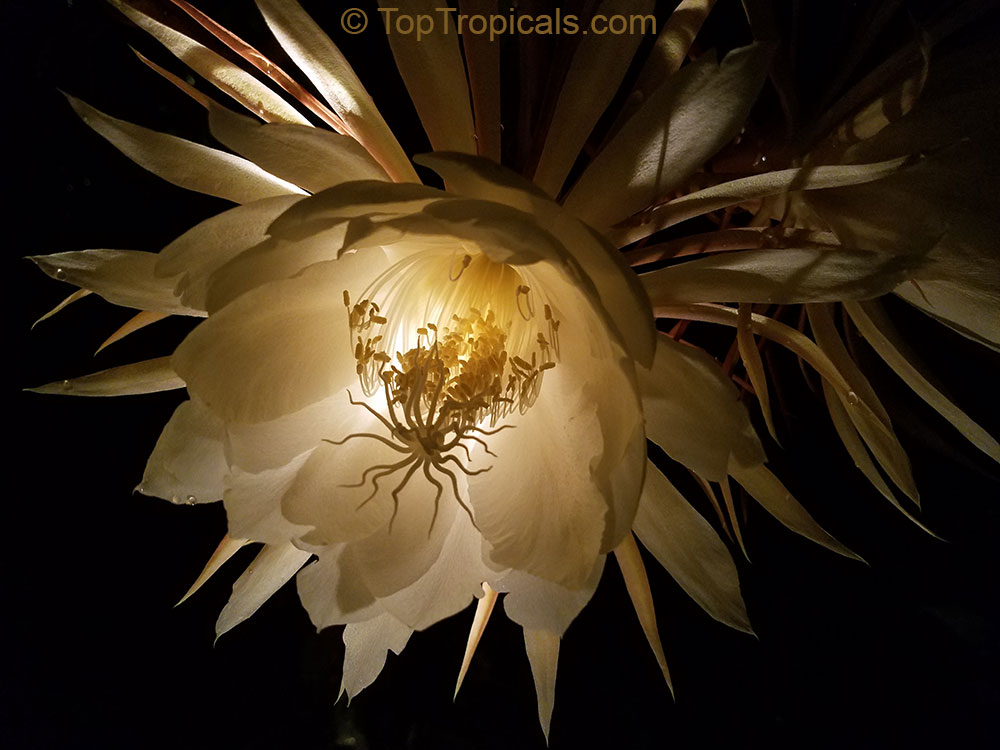
Epiphyllum oxypetalum, Queen of the Night, Night-Blooming Cereus, flower close up

Epiphyllum oxypetalum, Queen of the Night, Night-Blooming Cereus, flower close up

Epiphyllum oxypetalum, Queen of the Night, Night-Blooming Cereus, flower

Epiphyllum oxypetalum, Queen of the Night, Night-Blooming Cereus, flower

Epiphyllum oxypetalum, Queen of the Night flower center

Epiphyllum oxypetalum, Queen of the Night flower center

Epiphyllum oxypetalum, Queen of the Night flower with highlight

Epiphyllum oxypetalum, Queen of the Night flower with highlight

Epiphyllum oxypetalum, Queen of the Night flower with highlight

Epiphyllum oxypetalum, Queen of the Night flower with highlight

🔮 Moonlight Cactus, the Night Blooming Wonder with a mystical twist: Epiphyllum oxypetalum FAQ


🌙 Epiphyllum oxypetalum, also known as Queen of the Night or Night-Blooming Cereus, is a tropical epiphytic cactus famous for its huge, fragrant white flowers that open only at night. The blooms usually last just one night, often opening after sunset and closing by morning, which is why it has such a mystical reputation. The plant itself has long, flat, leaf-like stems and is often grown in hanging baskets or trained to climb. It is easy to grow, prefers bright filtered light, and rewards patience with one of the most dramatic blooms in the plant world.
  • 🎆 Why is it called Queen of the Night?


    Because it produces large, fragrant white flowers that open only at night. The blooms usually open after sunset and close by morning.
  • 🎆 How often does it bloom?


    Usually once or a few times a year, often in late spring or summer. Blooms are short-lived but unforgettable.
  • 🎆 Is it really a cactus?


    Yes, but it is a tropical epiphytic cactus. It grows more like an orchid or jungle plant than a desert cactus.
  • 🎆 Does it need full sun?


    No. It prefers bright, filtered light or partial shade. Direct hot sun can scorch the stems.
  • 🎆 Can it be grown indoors?


    Yes. It does very well indoors near a bright window or outdoors in warm, shaded areas.
  • 🎆 Does it need a lot of water?


    More than desert cacti, but not soggy soil. Water when the top layer of soil dries out.
  • 🎆 Can it grow in a pot or hanging basket?


    Yes. It is commonly grown in containers, hanging baskets, or trained to climb on a support.
  • 🎆 Is it rare?


    Mature blooming plants are highly valued because flowering takes patience and good care.


🛒 Add Moonlight Queen of the Night to your exotic plant collection

Collect epiphytic jungle cacti:

📚 Learn more:

Plant Facts

Epiphyllum oxypetalum
Belle de Nuit, Lady of the Night, Queen of the Night, Night blooming Cereus, Dutchman's Pipe
USDA Zone: 9-11
Large shrub 5-10 ft tallSemi-shadeShadeModerate waterRegular waterEpiphyte plantWhite, off-white flowersPink flowersPlant attracts butterflies, hummingbirdsFragrant plantSubtropical plant. Mature plant cold hardy at least to 30s F for a short time

#Container_Garden #Shade_Garden #Nature_Wonders

🟢 Join 👉 TopTropicals

Date: 21 Feb 2026

The best time to plant a fruit tree was 20 years ago - here is why you need to plant it now

Litchi chinensis - Smiles under the Lychee tree

Litchi chinensis - Smiles under the Lychee tree

🍑 The best time to plant a fruit tree was 20 years ago - here is why you need to plant it now


They say the best time to plant a fruit tree was 20 years ago.
The second best time is today.

A fruit tree is not a seasonal purchase. It is not a decoration. It is a decision that stretches far beyond you.

When you plant a mango, an avocado, a loquat, a lychee tree - you are not just planting for this summer. You are planting for children who will climb that tree. For neighbors who will ask for a basket of fruit. For someone who may live in your house long after you are gone.

Fruit trees are quiet investments in the future.
Unlike annual crops that come and go, a tree deepens its roots every year. Many fruit trees - especially mangoes - can live for decades, even a century. They outlive trends, owners, renovations, even mortgages. They stand there, steady, producing.

Even if you sell the house, the tree remains.
The next family will walk into the yard and discover fruit hanging overhead. Imagine buying a home and realizing someone before you planted abundance!

That is a gift.

In many parts of the world, mango trees are called generational crops. One farmer plants them. His children harvest them. His grandchildren sell the fruit. A single decision continues to feed and support a family long after the planter is gone.
There is something deeply grounding about that.

We live in a fast world. Quick returns. Quick moves. Quick upgrades.
A fruit tree moves at a different pace. It asks for patience. It rewards consistency. It teaches you to think long term.

Planting a fruit tree says:
I believe in tomorrow.
I believe this land will matter.
I believe someone will stand here after me.

And even if you never taste the fullest harvest, someone will.
Passing fruit trees through generations is more than horticulture - it is legacy. It is continuity. It is resilience. It is saying that this space, this soil, this home will keep giving.

So plant it now.
Plant it for your children.
Plant it for the next homeowner.
Plant it for shade you may never sit under.
Plant it for fruit you may never pick.
Because one day, someone will walk into that yard, look up, and thank the person who thought ahead.
Let that person be you.

🛒 Explore fruit trees for your orchard
  • 👉 Tropical Fruit favorites:


🥭 Mango
Avocado
🍒 Cherry
🍊 Loquat
🍈 Jackfruit
🍑 Peach tree
🍉 Guava
🍏 Sugar apple
🍇 Mulberry
🍐 Sapodilla

#Food_Forest #Discover

🟢 Join 👉 TopTropicals

Date: 8 Aug 2016

Growing mango in hot Arizona

By Mike D, Mesa, AZ. Despite to what you may think, mango can be successfully grown in desert Arizona climate. It has good heat and drought tolerance. It's possible providing the following:
1) Winter protection of a young plant when temperature goes around or below freezing. Try to plant trees in locations where they're protected from cold wind. Minimal temperatures vary widely. Areas which are closer to downtown are few degrees warmer, while outskirts can be very cold.
2) Some people are lucky enough to live in areas with good soil. However, most of us will have a so-called hardpan (extremely compacted desert) or caliche (layers of soil cemented together by calcium carbonate). Check with your local county extension office to determine how to deal with such conditions. Gypsum is usually used to loosen compacted soil.
3) When planting, dig a large hole making sure it has good drainage. Plant tree as usual, add mulch around it. It helps to conserve moisture.
4) Best time to plant is late Fall or early Spring, so mango can get established before Summer heat.
5) Plant where tree gets few hours of sun.
5) Water a lot until established. Once established, water when soil is dry.
6) Small plant may need protection from summer heat. Use shade cloth.
7) Mango requires very little nitrogen fertilizer. In hot climate, overdosing nitrogen may result in quick plant decline. Use balanced low nitrogen slow release fertilizer or avoid nitrogen completely. If you use mulch, then decomposing mulch provides enough nitrogen. Foliar spray of micronutrient solution is recommended during active growing period. Read more...

Date: 12 Apr 2016

Hot novelty plant for hot Arizona

Q: What plants would you recommend for very hot and dry spot in front of my house that gets full sun all day long? I live in AZ, we recently had a couple good rains but this is going to be it for a long time. It gets so hot during the day that every plant I tried didn't make it. We have a few nice orange trees growing well but I would like to plant something compact, colorful and hopefully fragrant if there is such plant.

A: There is a perfect small size plant for you that is extremely fragrant and yet will be thriving in these conditions. It is the famous Jasmine sambac. It will appreciate dry air of Arizona and will bloom profusely for you in full sun or in partial shade. It doesn't mind heat at all.

For colorful accents, a proven winner is Crown of Thorns - Euphorbia millii. New giant size flower varieties were recently selected in Thailand, and we just received a great selection, look at the colors! These plants don't mind hot sunny location at all. The more sun, the better the bloom! Small plants need regular watering until establish, then once they start developing, they will require less water.

Giant Euphorbia flowers from Thailand are 4-5 times bigger than regular flower euphorbia. Diameter of the flower is around 2". Compare giant flower to normal size - picture on the right.

See full list of plants for hot and dry spots.

Date: 15 May 2024

What does a dragon taste like? Does Dragon Fruit come from a monster cactus? Learn why you need to grow your own

Hylocereus and Selenicereus Dragon Fruit or Pitaya

Hylocereus and Selenicereus Dragon Fruit or Pitaya

Hylocereus and Selenicereus Dragon Fruit or Pitaya trees on trellis

Hylocereus and Selenicereus Dragon Fruit or Pitaya trees on trellis

Hylocereus and Selenicereus Dragon Fruit or Pitaya on trellis

Hylocereus and Selenicereus Dragon Fruit or Pitaya on trellis

Hylocereus and Selenicereus Dragon Fruit or Pitaya red fruit

Hylocereus and Selenicereus Dragon Fruit or Pitaya red fruit

Hylocereus and Selenicereus Dragon Fruit or Pitaya purple fruit

Hylocereus and Selenicereus Dragon Fruit or Pitaya purple fruit

Hylocereus and Selenicereus Dragon Fruit or Pitaya Yellow Parlora

Hylocereus and Selenicereus Dragon Fruit or Pitaya Yellow Parlora

Hylocereus and Selenicereus Dragon Fruit or Pitaya flower

Hylocereus and Selenicereus Dragon Fruit or Pitaya flower

🐲 What does a dragon taste like? Does Dragon Fruit come from a monster cactus? Learn why you need to grow your own. 🌵
  • 🔴 You may have tried a Dragon fruit from the store l, but do you know how it grows? On a cactus tree!
  • 🔴 Names: varieties of Hylocereus and Selenicereus - these fruit bearing cactus plants are also called Dragon Fruit or Pitaya.
  • 🔴 Commercially grown fruit sold in a grocery store may be tasteless. You need to grow your own good variety to have tasty, sweet, flavorful fruit!
  • 🔴 Dragon fruit comes in many varieties. Colors of flesh differ: white, pink, dark red and even purple. The outside of the fruit can be red/pink or yellow.
  • 🔴 In commercial groves, Pitayas grow like cactus trees, over a strong support - big "umbrella frames" ☂️
  • 🔴 It is an easy plant, with low water needs, takes both sun and semi-shade.
  • 🔴 Our favorite variety is Yellow Dragon Fruit Palora, (Selenicereus megalanthus). It is the sweetest and has the most flavor of all. We shared some recipes earlier.
  • 🔴 Can be grown in container with a wooden trellis. And the flower is beautiful, too!


📚 Learn more about Dragon Fruit
🍹 Recipe: What to do with a Dragon fruit?

🛒Grow your own Tasty Dragon Fruits

#Food_Forest #Recipes #Nature_Wonders

🏵 TopTropicals