Garden Blog - Top Tropicals

Date: 17 May 2026

9 awesome accent plants and vines that love heat and dry conditions
9 awesome accent plants and vines that love heat and dry conditions 9 awesome accent plants and vines that love heat and dry conditions 9 awesome accent plants and vines that love heat and dry conditions 9 awesome accent plants and vines that love heat and dry conditions 9 awesome accent plants and vines that love heat and dry conditions
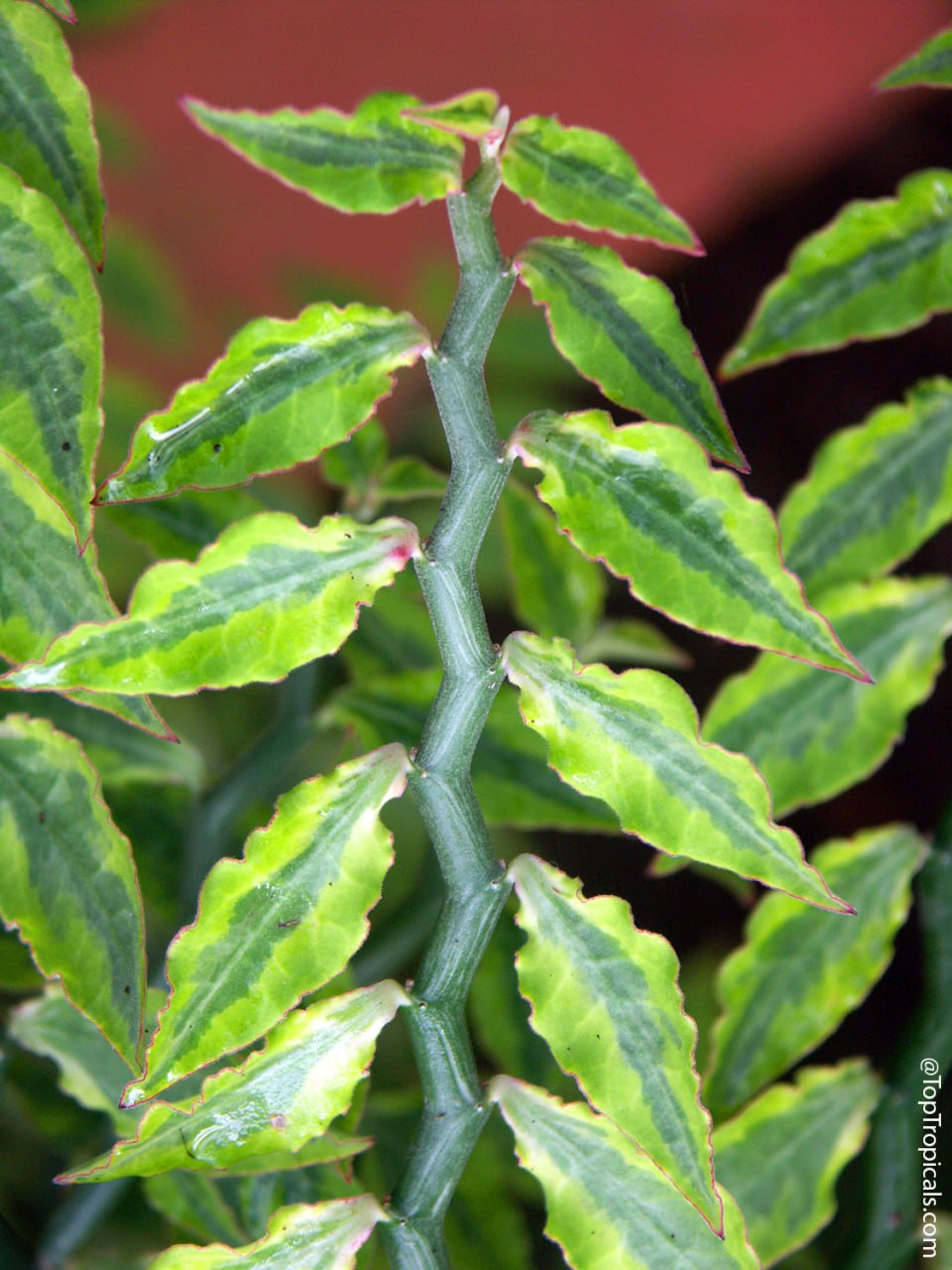
☀️ 9 awesome accent plants and vines that love heat and dry conditions


The hardest spots aren’t for trees - they’re for everything else. The toughest areas are often smaller spaces - along walls, patios, containers, or rocky patches where soil dries out fast. This is where most plants fail quickly.
These picks don’t just survive - they stand out. They bring texture, color, and structure - without needing constant watering or perfect soil.


Why containers are the toughest of all in heat


Growing in pots in hot, dry conditions is a different game. The soil heats up fast, roots can literally overheat, and moisture disappears much quicker than in the ground. If you’re using containers, protect the root zone - group pots together, tuck them into partial shade, or shield the container itself from direct sun. Choosing drought-tolerant plants helps, but don’t assume they can go totally without water - even tough plants in pots can dry out quickly, so check regularly and don’t let them go bone dry.

🔥 9 best smaller plants and vines for hot, dry spots


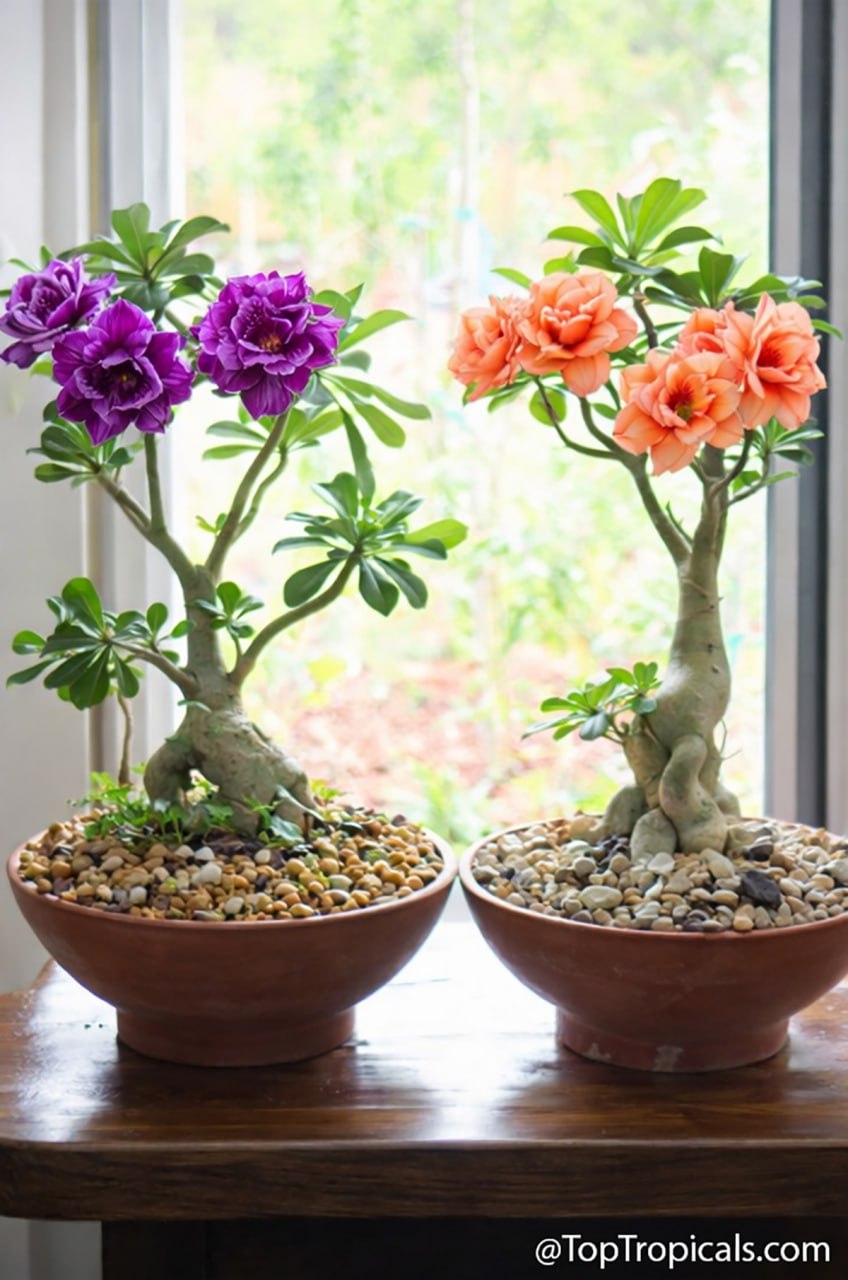
  1. ☀️ 1. Adenium - Desert Rose 📸
    Stores water in its caudex and thrives in heat - one of the best flowering plants for dry conditions.

    Adenium Plant Facts

    Botanical name: Adenium sp.
    Also known as: Adenium, Desert Rose, Impala Lily
    USDA Zone: 9 - 10
    Highligths Plant with caudexLarge shrub 5-10 ft tallSmall tree 10-20 ftFull sunWater Requirement: Low. Allow soil to dry out between wateringsWatering: Moderate. Water when top soil feels dryYellow, orange flowersRed, crimson, vinous flowersUnusual colorBlue, lavender, purple flowersWhite, off-white flowersPink flowersToxic or Poisonous
    Get personalized tips for your region
    More details
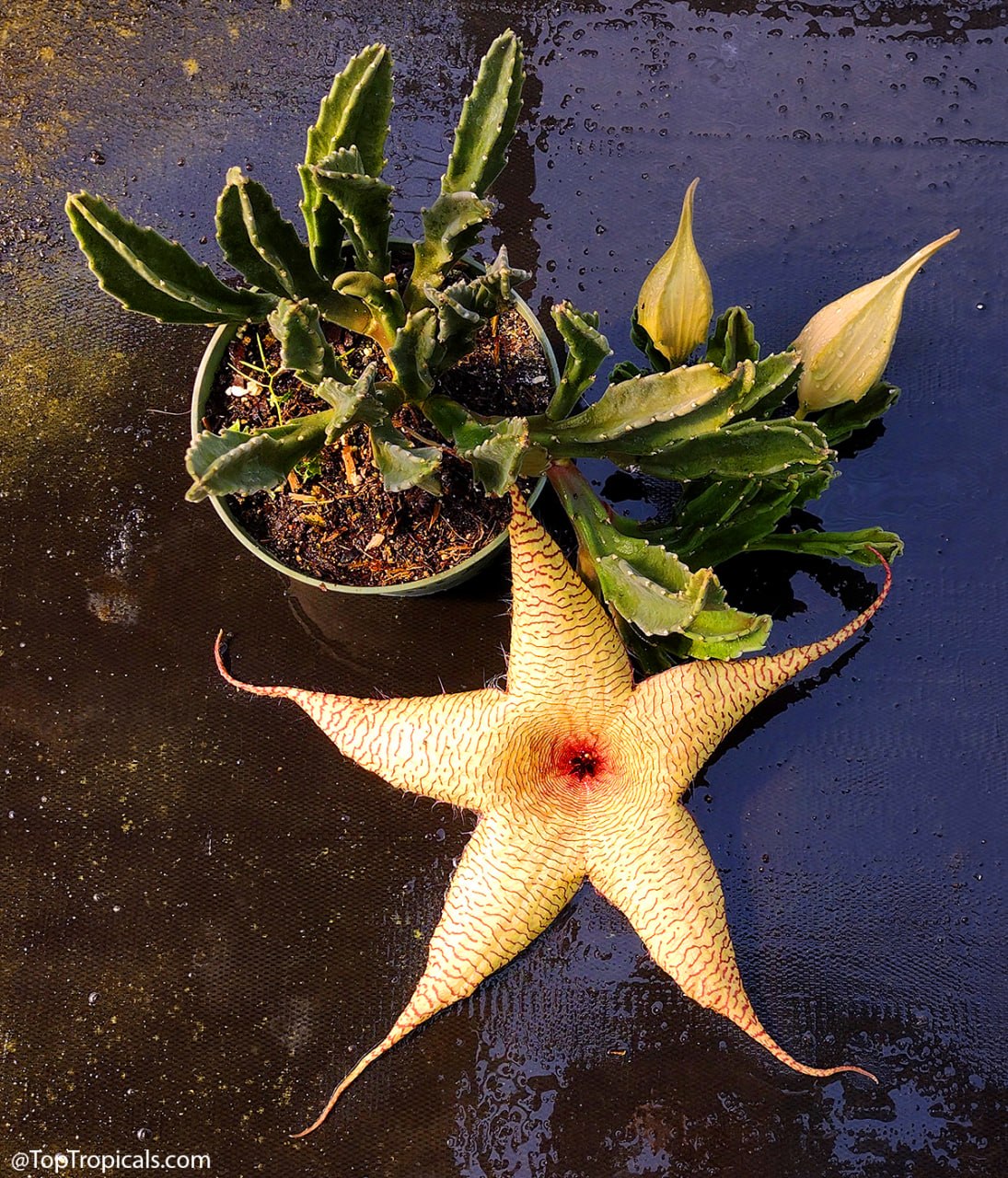
  2. ☀️ 2. Stapelia gigantea - Starfish Flower 📸
    Unusual and tough - thrives in dry soil and produces massive, eye-catching blooms.

    Zulu Giant Plant Facts

    Botanical name: Stapelia gigantea
    Also known as: Zulu Giant, Carrion Plant, Starfish Flower
    USDA Zone: 9 - 10
    Highligths Small plant 2-5 ftFull sunWatering: Moderate. Water when top soil feels dryUnusual colorPlant attracts butterflies, hummingbirds
    Get personalized tips for your region
    More details
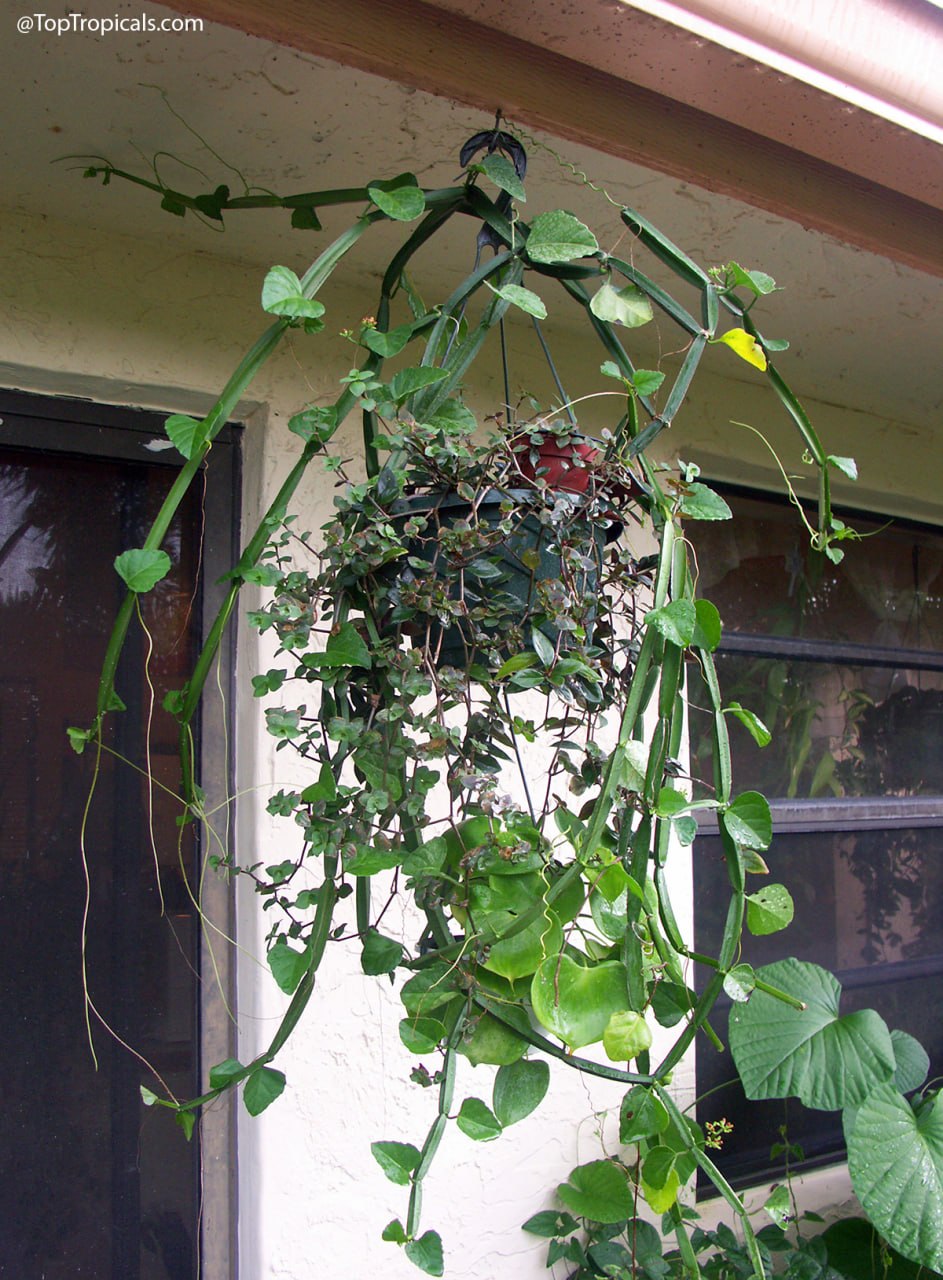
  3. ☀️ 3. Cissus quadrangularis - Veld Grape Vine 📸
    A succulent vine that handles heat and drought while adding a unique structural look.

    Veld grape Plant Facts

    Botanical name: Cissus quadrangularis, Vitis quadrangularis
    Also known as: Veld grape
    USDA Zone: 9 - 11
    Highligths Groundcover and low-growing 2ft plantVine or creeper plantSemi-shadeFull sunWatering: Moderate. Water when top soil feels dryOrnamental foliageEthnomedical plant.
Plants marked as ethnomedical and/or described as medicinal, are not offered as medicine but rather as ornamentals or plant collectibles.
Ethnomedical statements / products have not been evaluated by the FDA and are not intended to diagnose, treat, cure, or prevent any disease. We urge all customers to consult a physician before using any supplements, herbals or medicines advertised here or elsewhere.Subtropical plant. Mature plant cold hardy at least to 30s F for a short time
    Get personalized tips for your region
    More details
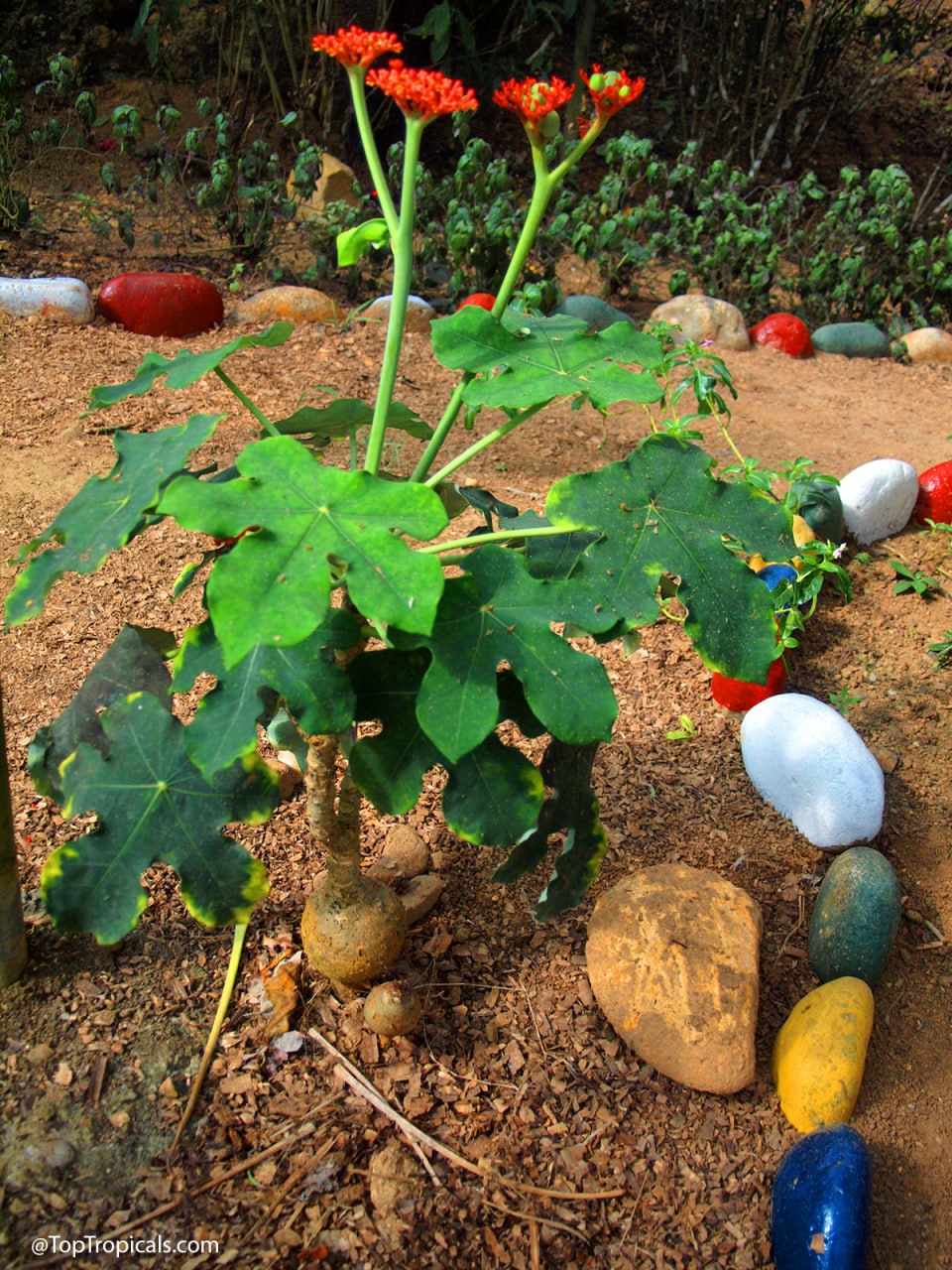
  4. ☀️ 4. Jatropha podagrica - Gout Plant 📸
    Thick stems store water, making it surprisingly drought tolerant with a bold tropical look.

    Gout Plant Facts

    Botanical name: Jatropha podagrica
    Also known as: Gout Plant, Gout Stick, Buddha Belly, Guatemala Rhubarb, Tartogo
    USDA Zone: 9 - 11
    Highligths Plant with caudexPlant used for bonsaiSmall plant 2-5 ftSemi-shadeShadeFull sunWatering: Moderate. Water when top soil feels dryYellow, orange flowersRed, crimson, vinous flowersOrnamental foliageToxic or PoisonousPlant attracts butterflies, hummingbirdsSubtropical plant. Mature plant cold hardy at least to 30s F for a short timeSeaside, salt tolerant plant
    Get personalized tips for your region
    More details
  5. ☀️ 5. Pedilanthus tithymaloides - Devil's Backbone 📸
    Extremely forgiving - thrives on neglect, heat, and dry soil.

    Devil's backbone Plant Facts

    Botanical name: Euphorbia tithymaloides, Pedilanthus tithymaloides
    Also known as: Devil's backbone, Zigzag plant, Jacob's ladder
    USDA Zone: 9 - 11
    Highligths Large shrub 5-10 ft tallSmall plant 2-5 ftSemi-shadeFull sunWatering: Moderate. Water when top soil feels dryOrnamental foliagePink flowersIrritating plantSubtropical plant. Mature plant cold hardy at least to 30s F for a short time
    Get personalized tips for your region
    More details
  6. ☀️ 6. Agave species - Tequila Agave, Century Plant
    Classic drought plants - architectural, extremely tough, and almost maintenance-free.

    Century plant Facts

    Botanical name: Agave americana
    Also known as: Century plant
    USDA Zone: 8 - 11
    Highligths Large shrub 5-10 ft tallFull sunWater Requirement: Low. Allow soil to dry out between wateringsWatering: Moderate. Water when top soil feels dryThorny or spinySubtropical plant. Mature plant cold hardy at least to 30s F for a short time
    Get personalized tips for your region
    More details
  7. ☀️ 7. Crocosmia species - Coppertips / Falling Stars
    Handles heat well once established and adds bright seasonal color with minimal care.

    Coppertips Plant Facts

    Botanical name: Crocosmia sp.
    Also known as: Coppertips, Falling Stars, Montbretia
    USDA Zone: 8 - 11
    Highligths Small plant 2-5 ftSemi-shadeFull sunWatering: Moderate. Water when top soil feels dryWatering: Regular. Let topsoil dry slightlyYellow, orange flowersRed, crimson, vinous flowersPlant attracts butterflies, hummingbirdsSubtropical plant. Mature plant cold hardy at least to 30s F for a short time
    Get personalized tips for your region
    More details
  8. ☀️ 8. Ipomoea platensis - Caudiciform Morning Glory
    A rare vine with a swollen base - built to handle dry cycles and intense sun.

    Plata Ipomoea Plant Facts

    Botanical name: Ipomoea platensis, Ipomoea platense, Ipomoea lineariloba
    Also known as: Plata Ipomoea, Caudiciform Morning Glory
    USDA Zone: 9 - 11
    Highligths Plant with caudexVine or creeper plantSemi-shadeWatering: Moderate. Water when top soil feels dryWatering: Regular. Let topsoil dry slightlyPink flowersSubtropical plant. Mature plant cold hardy at least to 30s F for a short time
    Get personalized tips for your region
    More details
  9. ☀️ 9. Plectranthus hadiensis tomentosus - Camphor Basil
    Soft, aromatic foliage that tolerates dry conditions better than most leafy plants.

    Camphor Plant Facts

    Botanical name: Plectranthus tomentosus, Plectranthus hadiensis var. tomentosus
    Also known as: Camphor Plant, Camphor Basil, Vicks Plant, Succulent Coleus
    USDA Zone: 9 - 10
    Highligths Groundcover and low-growing 2ft plantSmall plant 2-5 ftSemi-shadeFull sunWater Requirement: Low. Allow soil to dry out between wateringsWatering: Moderate. Water when top soil feels dryOrnamental foliageBlue, lavender, purple flowersPlant attracts butterflies, hummingbirdsSpice or herb plantEthnomedical plant.
Plants marked as ethnomedical and/or described as medicinal, are not offered as medicine but rather as ornamentals or plant collectibles.
Ethnomedical statements / products have not been evaluated by the FDA and are not intended to diagnose, treat, cure, or prevent any disease. We urge all customers to consult a physician before using any supplements, herbals or medicines advertised here or elsewhere.Fragrant plant
    Get personalized tips for your region
    More details


🛒 Shop drought tolerant plants - for hot and dry spots

📚
Learn more:
Jatropha podagrica - in Plant Encyclopedia
7 tough shrubs that handle heat and dry soil
9 tough trees for hot, dry spots that actually thrive
9 best tropical shrubs that bloom all summer long or year around
The bizarre bloom you cant stop staring at
Coral-blooming bonsai with a bottle-shaped trunk - perfect container plant
Caudiciform Morning Glory
Grows in neglect: tough plant for tough spots

#Discover #Hedges_with_benefits #How_to

🟢 Join 👉 TopTropicals
Date: 18 May 2026

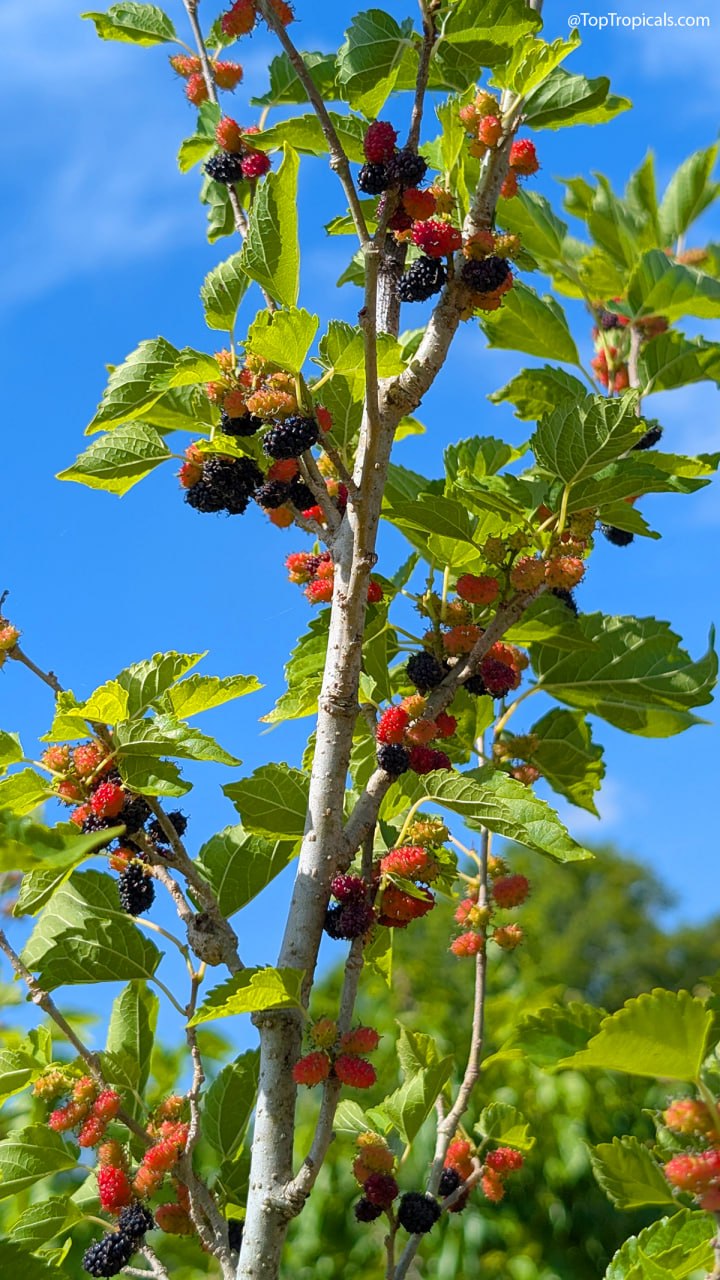
Want Massive Mulberry Harvests? Do These 5 Things Before May Ends

Want Massive Mulberry Harvests? Do These 5 Things Before May Ends Want Massive Mulberry Harvests? Do These 5 Things Before May Ends

🍇 Want Massive Mulberry Harvests? Do These 5 Things Before May Ends


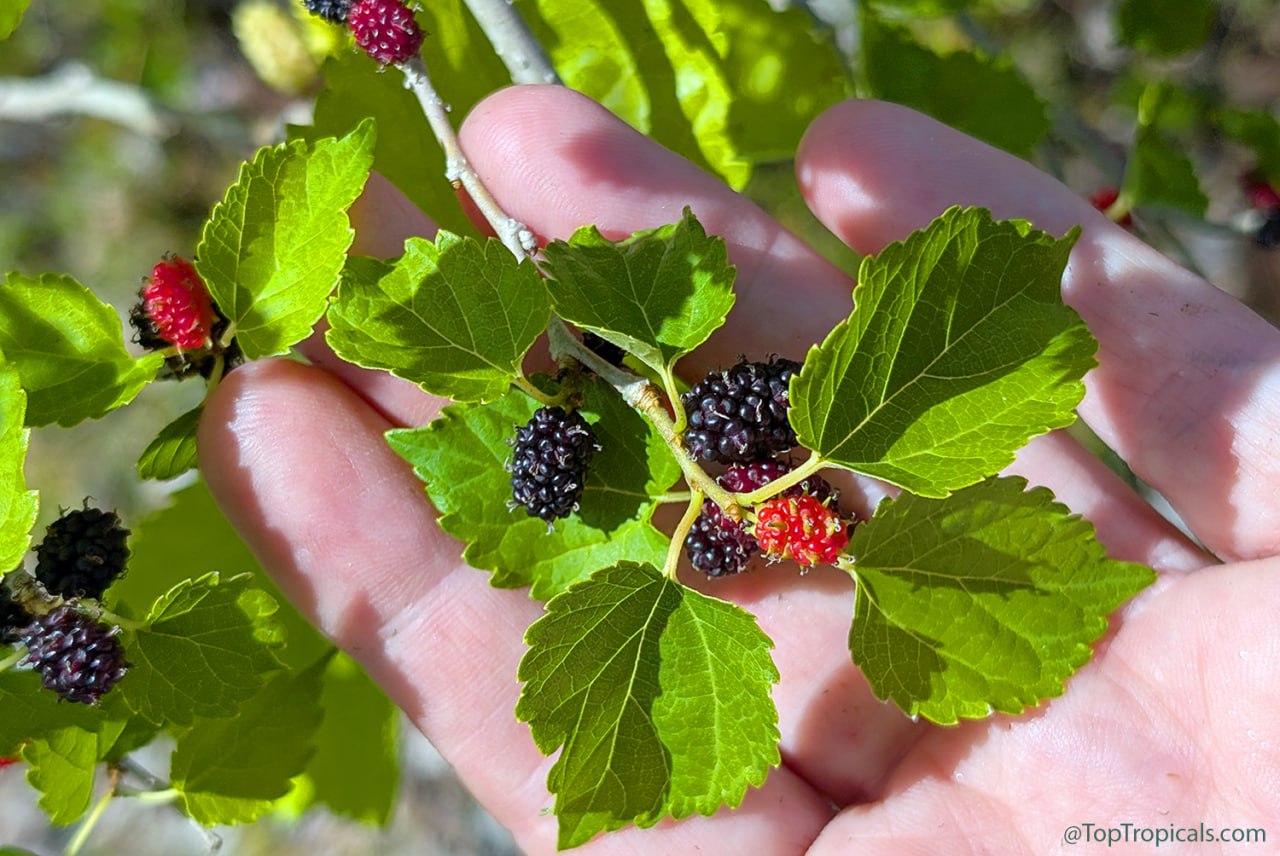
Don’t let your mulberry tree fool you. While they are incredibly low-maintenance, what you do in May dictates your summer harvest. Avoid these common mistakes for a bumper crop of juicy berries.

Mulberry trees are famously bulletproof, handling intense heat and pumping out massive crops with little care. But May is the month that decides it all. Right now, they are pouring energy into fruit development. A few simple mistakes this month can quietly sabotage your harvest.

Fortunately, maximizing your crop is easy if you follow these five simple rules:
  1. 1. The Deep Soak Rule
    While established mulberries tolerate drought, moisture stress causes them to drop young berries early. Drop the sprinkler—frequent, shallow watering only wets the surface. Instead, give the tree a slow, deep soak that penetrates the root zone. Check the soil two inches down; if it’s dry, water thoroughly.
  2. 2. Lock it in with Mulch
    Late spring heat evaporates soil moisture fast. Apply a 2-to-4-inch layer of pine bark or compost to keep roots cool and suppress weeds. Crucial rule: Leave a 4-inch gap around the base of the trunk. Piling mulch against the bark traps moisture and invites devastating fungal rot.
  3. 3. Don't Over-Fertilize
    Mulberries are naturally vigorous. If you feed them this month, use a balanced, slow-release organic plant food. Avoid high-nitrogen fertilizers. Excess nitrogen triggers a massive explosion of green leaves, causing the tree to completely forget to grow fruit.
  4. 4. Put the Pruning Shears Away
    Heavy spring pruning clips off active fruiting wood and decimates your harvest. Mulberries are also notorious "bleeders" - cutting now causes them to lose significant sap, stressing the tree during fruit set. Only remove dead or damaged wood. Save major shaping for winter dormancy.
  5. 5. Exploit the Softwood Cuttings Window
    Want more trees? May is prime time for softwood cuttings. Cut a few 6-inch flexible green stems, strip the lower leaves, dip in rooting hormone, and tuck into moist potting mix in partial shade. They root incredibly fast!

    Mulberry Plant Facts

    Botanical name: Morus sp.
    Also known as: Mulberry
    USDA Zone: 8 - 11
    Highligths Large tree taller than 20 ftSmall tree 10-20 ftFull sunWatering: Regular. Let topsoil dry slightlyEdible plant
    Get personalized tips for your region

    🛒
    Choose from Mulberry varieties


📚 Learn more:


Mulberry (Morus hybrids) in Plant Encyclopedia
Mulberry yogurt swirl: Quick-n-Fun exotic recipes
Why gardeners say this is the best Mulberry ever
What are the best Mulberry varieties

#Food_Forest #Discover #How_to

🟢 Join 👉 TopTropicals

Date: 13 May 2026

Mango Rainbow - Valencia Pride

Mango Rainbow - Valencia Pride
Mango Rainbow - Valencia Pride 🥭🌈

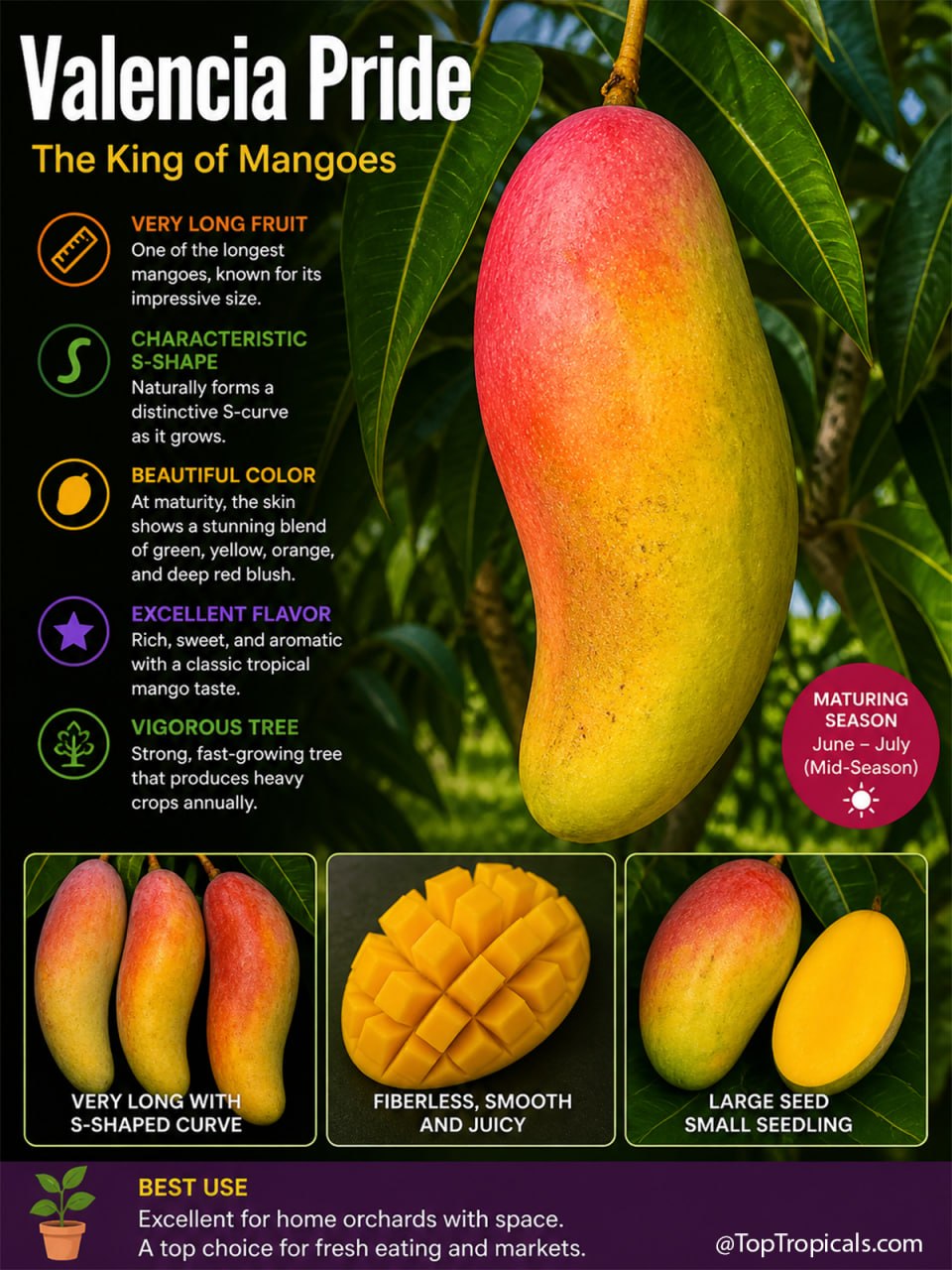
🥭 Valencia Pride is big, bold, and impossible to miss.

🔸Classic sweet tropical mango flavor
🔸Juicy, smooth, nearly fiberless flesh
🔸Large, colorful fruit with that signature S-shape

One of Florida’s classic mangoes, known for size and reliable production.
The tree grows fast and big - perfect for shade, but give it space.
If you want a mango that looks impressive and delivers every year, Valencia Pride is a strong pick. More 👉

🛒 Shop Mango varieties

📚 Learn more:
Mango Tree - Mangifera indica - in Plant Encyclopedia

Mango Plant Facts

Botanical name: Mangifera indica
Also known as: Mango
USDA Zone: 9 - 11
Highligths Large tree taller than 20 ftSmall tree 10-20 ftFull sunWatering: Moderate. Water when top soil feels dryYellow, orange flowersPink flowersEdible plantSeaside, salt tolerant plant
Get personalized tips for your region

#Mango_Rainbow - varieties you should try

#Food_Forest #Mango #Mango_Rainbow

🟢 Join 👉 TopTropicals

Date: 19 Apr 2026

Complete Adenium Care Guide: 9 tips how to keep it simple and thriving

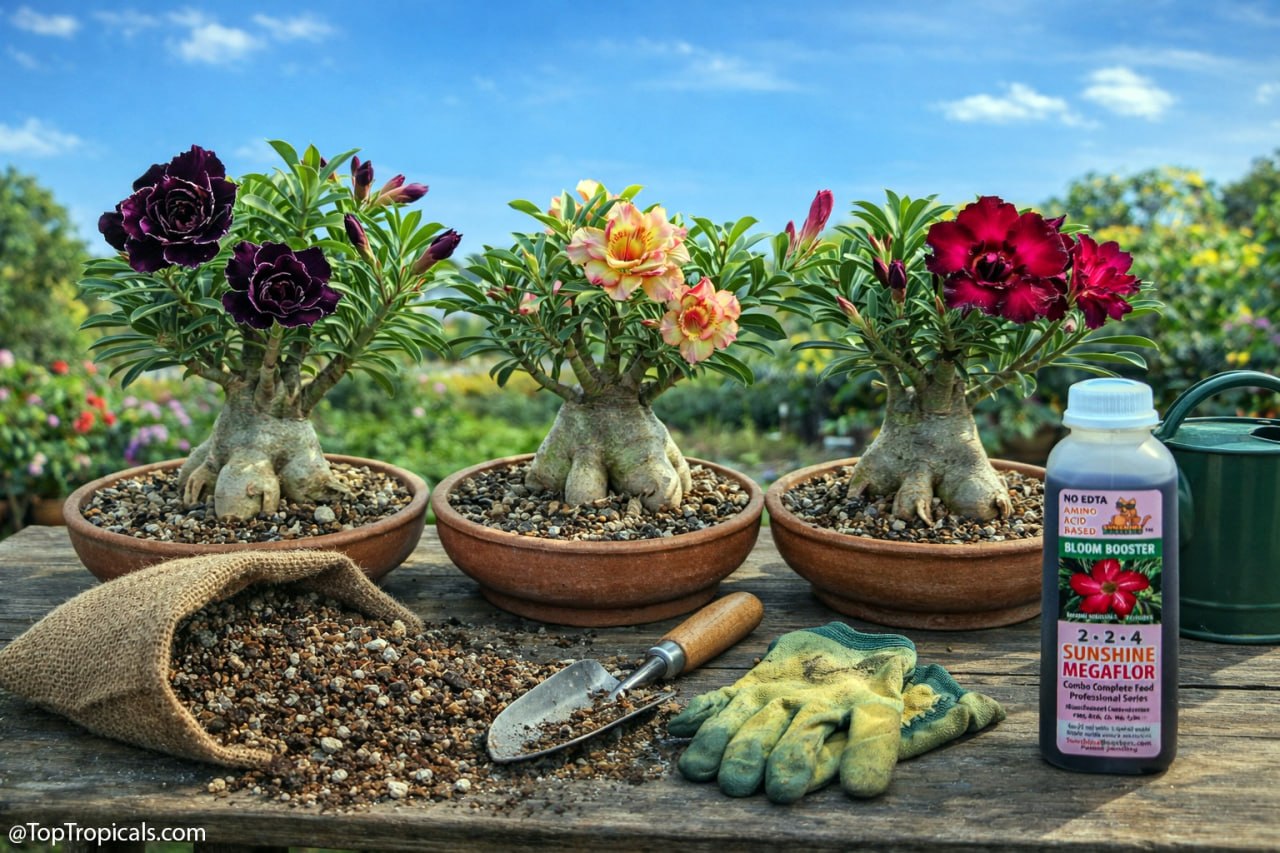
Asdenium plants on the table with adenium soil mix and fertilizer

Asdenium plants on the table with adenium soil mix and fertilizer

🌸 Complete Adenium Care Guide: 9 tips how to keep it simple and thriving


Adeniums don’t need intense care - just the right balance.
Most problems come from too much water, not enough light, or the wrong soil.

Adenium Plant Facts

Botanical name: Adenium sp.
Also known as: Adenium, Desert Rose, Impala Lily
USDA Zone: 9 - 10
Highligths Plant with caudexLarge shrub 5-10 ft tallSmall tree 10-20 ftFull sunWater Requirement: Low. Allow soil to dry out between wateringsWatering: Moderate. Water when top soil feels dryYellow, orange flowersRed, crimson, vinous flowersUnusual colorBlue, lavender, purple flowersWhite, off-white flowersPink flowersToxic or Poisonous
Get personalized tips for your region


🌸 1. Soil is everything


Why it matters
Adeniums are succulents with thick roots and a caudex that stores water. They must never sit in wet, heavy soil.
Most problems come from soil that stays wet too long - leading to root rot, soft caudex, weak growth, and poor flowering.
Good soil builds strong roots, dries faster, supports a healthy caudex, and improves blooming.

Ideal soil formula
Use a very fast-draining, airy mix with perlite, bark, sand, coconut fiber. Avoid heavy peat-based mixes.
A simple formula: TopTropicals Abundance potting mix + coarse sand (50/50). Use coarse sand (for construction), not fine beach sand. Sand improves drainage, structure, and aeration.
You can also add lava rock and charcoal.

Soil pH
Adeniums prefer slightly alkaline soil. Too much peat (acidic) holds moisture and increases rot risk.
Tip: add a few sea shells on top - watering slowly raises pH.

Golden rule
Better too fast-draining than too heavy.
You can water more. You can’t fix rot.

🌸 2. Containers


Use shallow, unglazed clay pots. They dry faster, improve airflow, and stabilize the plant as the caudex gets heavy.
Do not oversize - keep close to root ball.
When repotting, raise the caudex slightly each time to develop that thick base.

🌸 3. Light


Give as much light as possible.
Full sun is best, but in very hot climates, bright filtered light prevents leaf burn and helps flowers last longer.
Too little light = weak growth and poor blooming.

🌸 4. Watering


Water deeply, then let soil dry out completely before watering again.
Do not keep soil constantly wet. Adeniums prefer the dry side and hate sitting in moisture.
In rainy climates, protect from excess water. Keep under cover - bright light, no constant soaking.

🌸 5. Fertilizer


Feed lightly and regularly during active growth.
Use liquid fertilizer Sunshine Megafloк Bloom Booster on soil and lightly on leaves - avoid the caudex.
Bloom boosters (high phosphorus) support flowers and caudex growth.
Add controlled-release fertilizer (Green Magic) twice a year - spring and late summer. Do not fertilize during winter dormancy.
Add microelements (iron, boron, molybdenum) - Sunshine Superfood supplement - for healthier leaves and longer blooms.

🌸 6. Trimming (pruning)


Trim after flowering, especially leggy branches.
Pruning encourages branching - more branches = more flowers.
Don’t be afraid to cut - it improves structure and blooming.

🌸 7. Caudex development (secret trick)


When repotting, raise the caudex slightly above soil level.
Combined with regular feeding (bloom booster), this helps develop a thicker, more pronounced base.

🌸 8. Seedlings vs grafted plants


Seed-grown plants form a natural caudex but take 2-3 years to bloom and do not come true to type (often simple pink).
Grafted plants combine a developed caudex with a known variety.
Best choice for predictable, high-quality blooms.

🌸 9. Troubleshooting


If something goes wrong, check these first:
· Too much water
· Not enough light
· Soil too heavy
Fix these, and your plant will recover.

🛒 Explore Exotic Thai Adeniums

📚 Learn more:


· Adenium varieties in Plant Encyclopedia
· About #Adenium Rainbow - fantastic varieties
· Adenium rainbow - warm, bright, and full of energy
· Adenium rainbow - pink in every shade
· Dark tones that don’t look real. Secret of a Big Caudex.
· Variegated and impossible to ignore adeniums that change your collection. Soil tips.
· We picked 6 adeniums - you’ll probably want all 6. Soil and Watering tip.
· A few adeniums you don’t want to miss. Trimming tip.
· The adenium colors everyone is talking about right now. Light tips for hot climates.
· Adenium rainbow: these 6 will pull you in. Fertilizing tips.
· How to start your dream collection: before you start
· How to grow a happy Adenium

#Container_Garden #Adeniums #How_to #Discover

🟢 Join 👉 TopTropicals

Date: 8 Apr 2026

Adenium rainbow - warm, bright, and full of energy

Adenium Phoenix

Adenium Phoenix

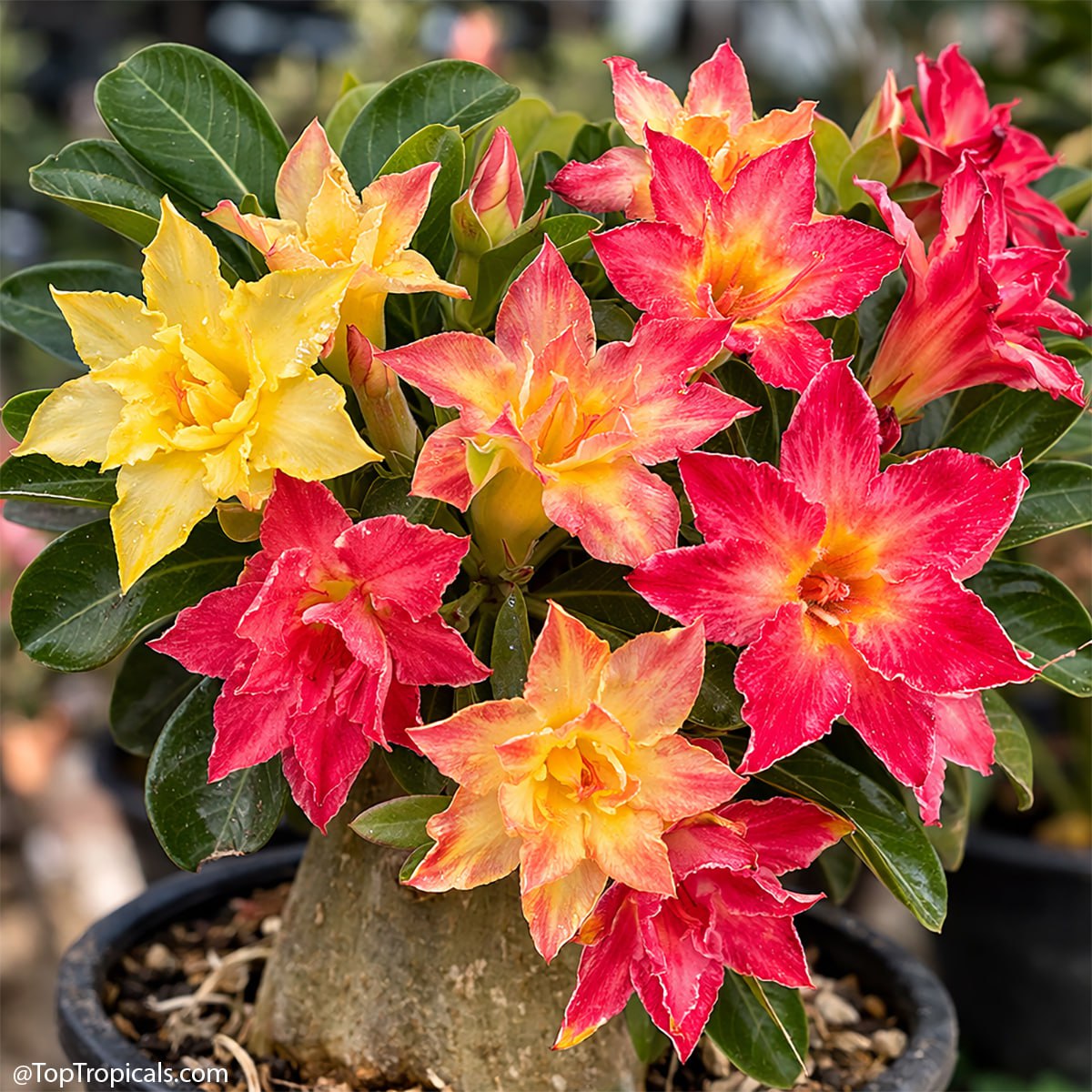
Adenium rainbow - warm, bright, and full of energy 🌈

Some adeniums feel calm. And some feel like sunshine!
This set is all about warm orange tones - bright, happy, and hard to overlook. These are the ones that light up a bench even on a cloudy day.


💡 Rainy summer tip


In places like Florida, summer rain can be too much for adeniums.

Adenium Plant Facts

Botanical name: Adenium sp.
Also known as: Adenium, Desert Rose, Impala Lily
USDA Zone: 9 - 10
Highligths Plant with caudexLarge shrub 5-10 ft tallSmall tree 10-20 ftFull sunWater Requirement: Low. Allow soil to dry out between wateringsWatering: Moderate. Water when top soil feels dryYellow, orange flowersRed, crimson, vinous flowersUnusual colorBlue, lavender, purple flowersWhite, off-white flowersPink flowersToxic or Poisonous
Get personalized tips for your region

They are succulents - Desert Roses they are! - and don’t like staying wet for long periods. Constant rain keeps the soil saturated, which can lead to root rot and weak growth.
If you have a rainy season, it’s best to keep them under a roof or covered area.
This helps control watering, keeps the soil from staying soggy, and protects the caudex and roots.
They still need bright light - just not endless rain.

🌸 Today's featured adeniums


 ✦ Phoenix: Color-changing blooms that shift from soft yellow to pink and coral - looks like a living sunset on one plant.
 ✦ Pra Rod Mary: Warm orange shades with a soft, rounded bloom.
 ✦ Pratum Thong: Golden-orange color with a rich, glowing look.
 ✦ Som Term Sab: Bright, lively tones - name tied to wealth and good fortune.
 ✦ One Heart: Balanced form with warm color and a clean structure.
 ✦ Thong Nuekao: Golden shades with a slightly deeper, more refined tone.

Orange adeniums bring a different kind of energy - warm, glowing, and full of life.
And once you add a few - your collection starts to feel a lot brighter!

🛒 Explore Exotic Thai Adeniums

📚 Learn more:


· Adenium varieties in Plant Encyclopedia
· About #Adenium Rainbow - fantastic varieties
· Adenium rainbow - pink in every shade
· Dark tones that don’t look real. Secret of a Big Caudex.
· Variegated and impossible to ignore adeniums that change your collection. Soil tips.
· We picked 6 adeniums - you’ll probably want all 6. Soil and Watering tip.
· A few adeniums you don’t want to miss. Trimming tip.
· The adenium colors everyone is talking about right now. Light tips for hot climates.
· Adenium rainbow: these 6 will pull you in. Fertilizing tips.
· How to start your dream collection: before you start
· How to grow a happy Adenium

#Container_Garden #Adeniums #How_to #Discover

🟢 Join 👉 TopTropicals