Garden Blog - Top Tropicals

Date: 14 Jun 2025

From berry to beast: how Black Dragons are born

Anthurium Black Dragon seedlings from berry to beast: how Black Dragons are born

From berry to beast: how Black Dragons are born

🐉 Baby dragons have hatched! Anthurium Black Dragon from our earlier video has been busy... and now we have baby dragons!

🐉 Each bright red berry holds a single seed, and the seeds sprout easily - usually in just 2 to 3 weeks. The seedlings start off slow, but here's the exciting part: some come out variegated, with white, purple, or even pink coloring!

🐉 No two are alike, and that's what makes Black Dragons some of the most unique houseplants out there. Everyone needs at least one in their jungle!

🛒 Get your own Black Dragon

📚 Learn more:
Why every collector wants the Gothic Black Dragon Anthurium
The most unique plant in your collection

#Container_Garden #Shade_Garden #Nature_Wonders

🟢 Join 👉 TopTropicals

Date: 27 Mar 2026

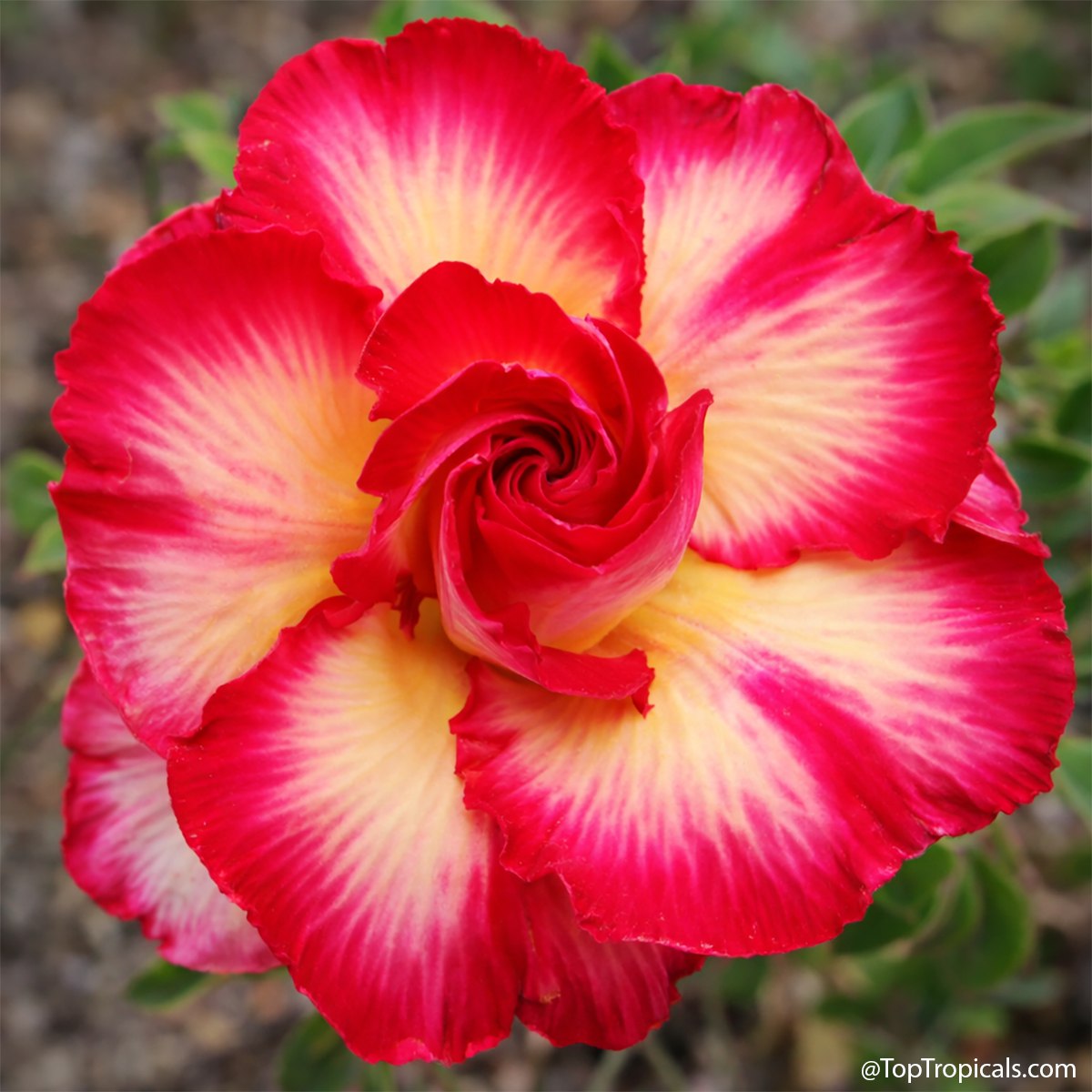
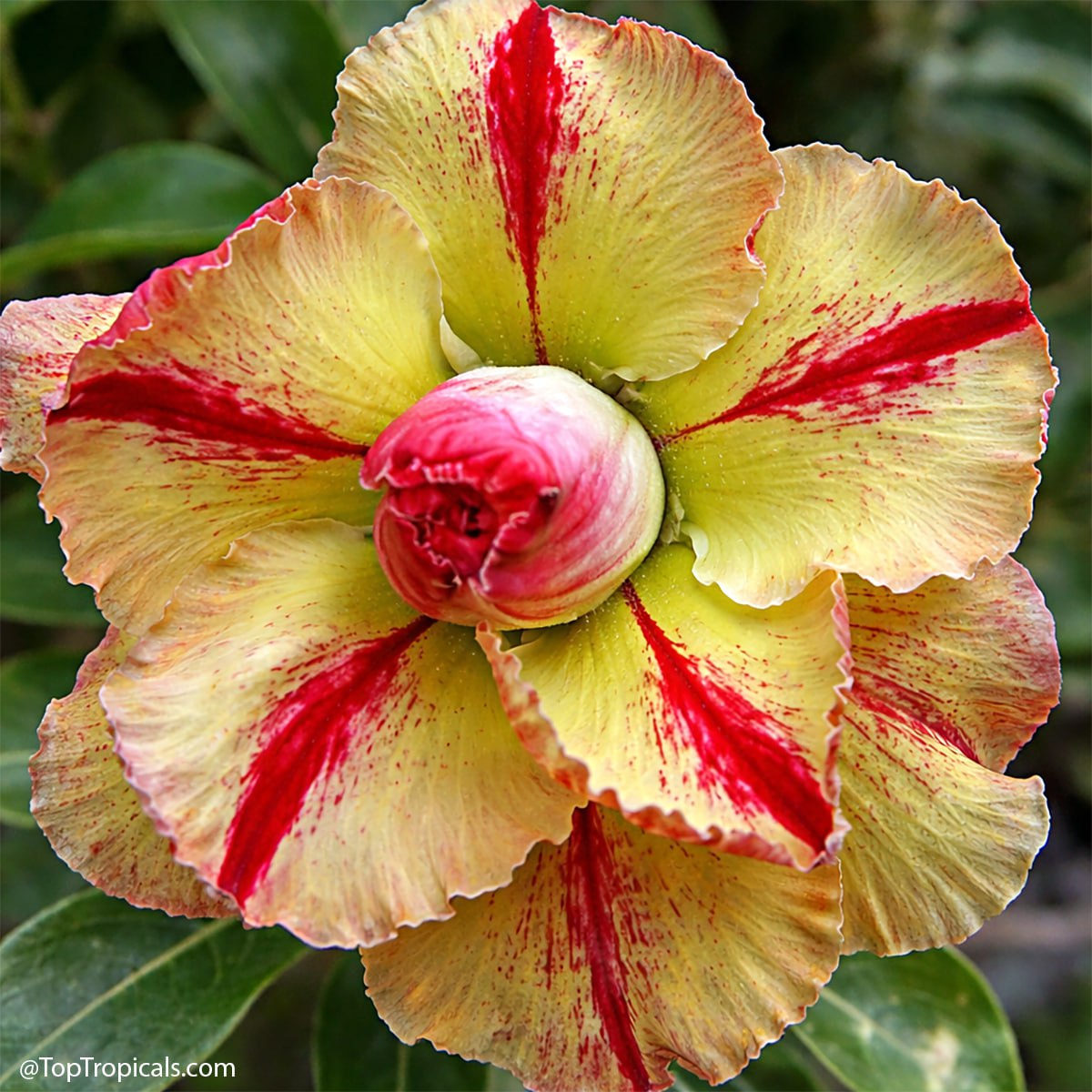
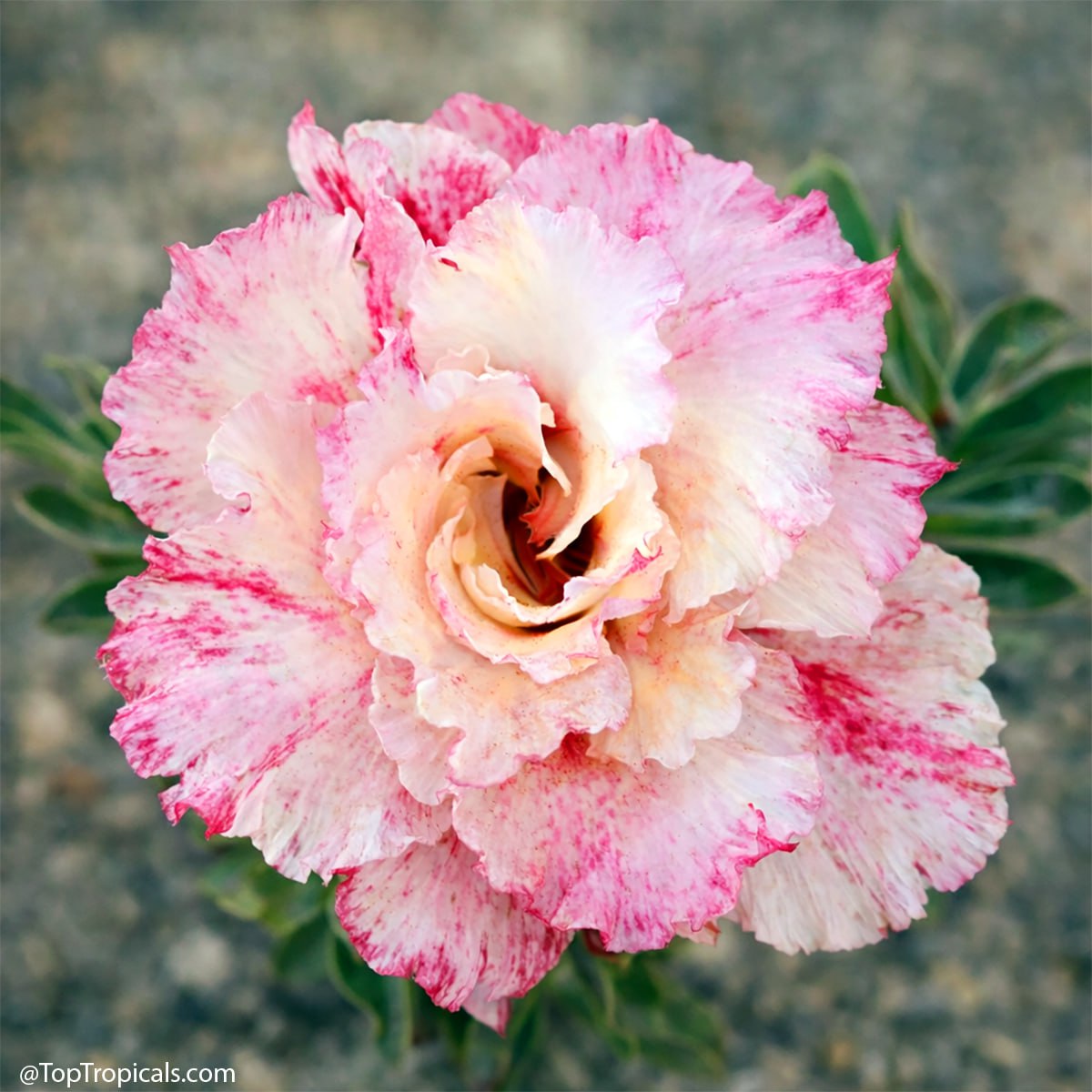
A few adeniums you dont want to miss: Adenium rainbow

Adenium Beauty

Adenium Beauty

Adenium Chok Sedthee

Adenium Chok Sedthee

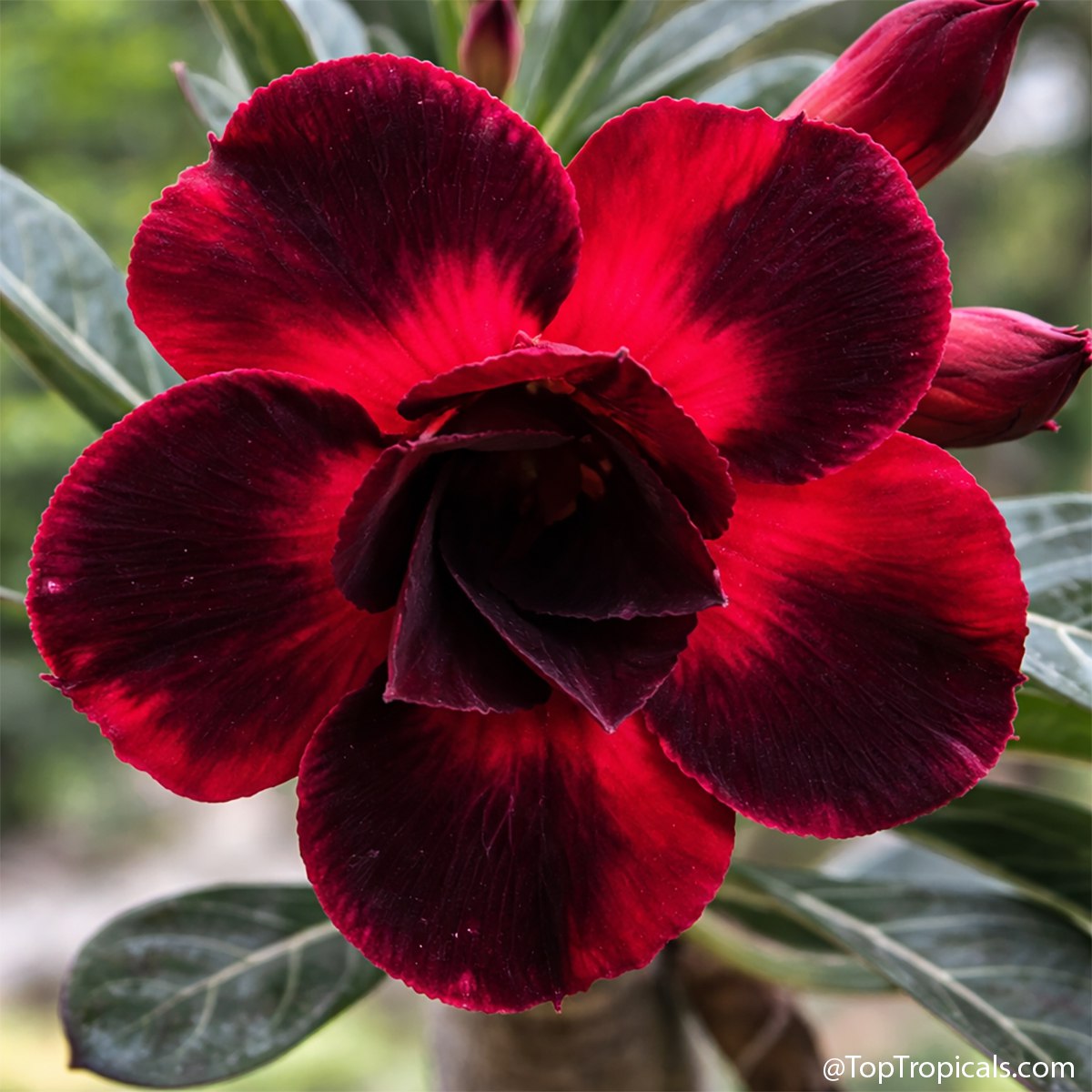
Adenium Black Dragon

Adenium Black Dragon

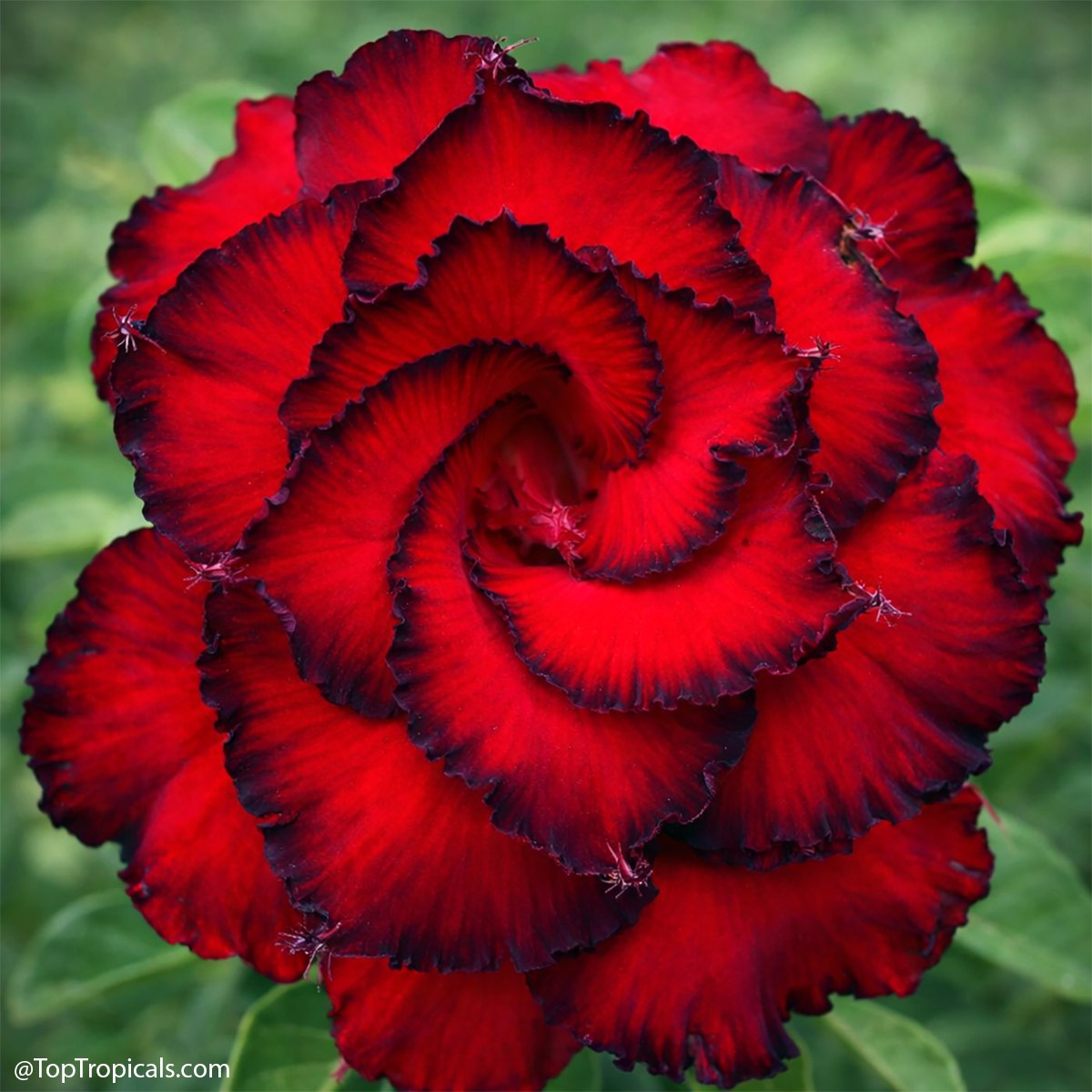
Adenium Red Dragon

Adenium Red Dragon

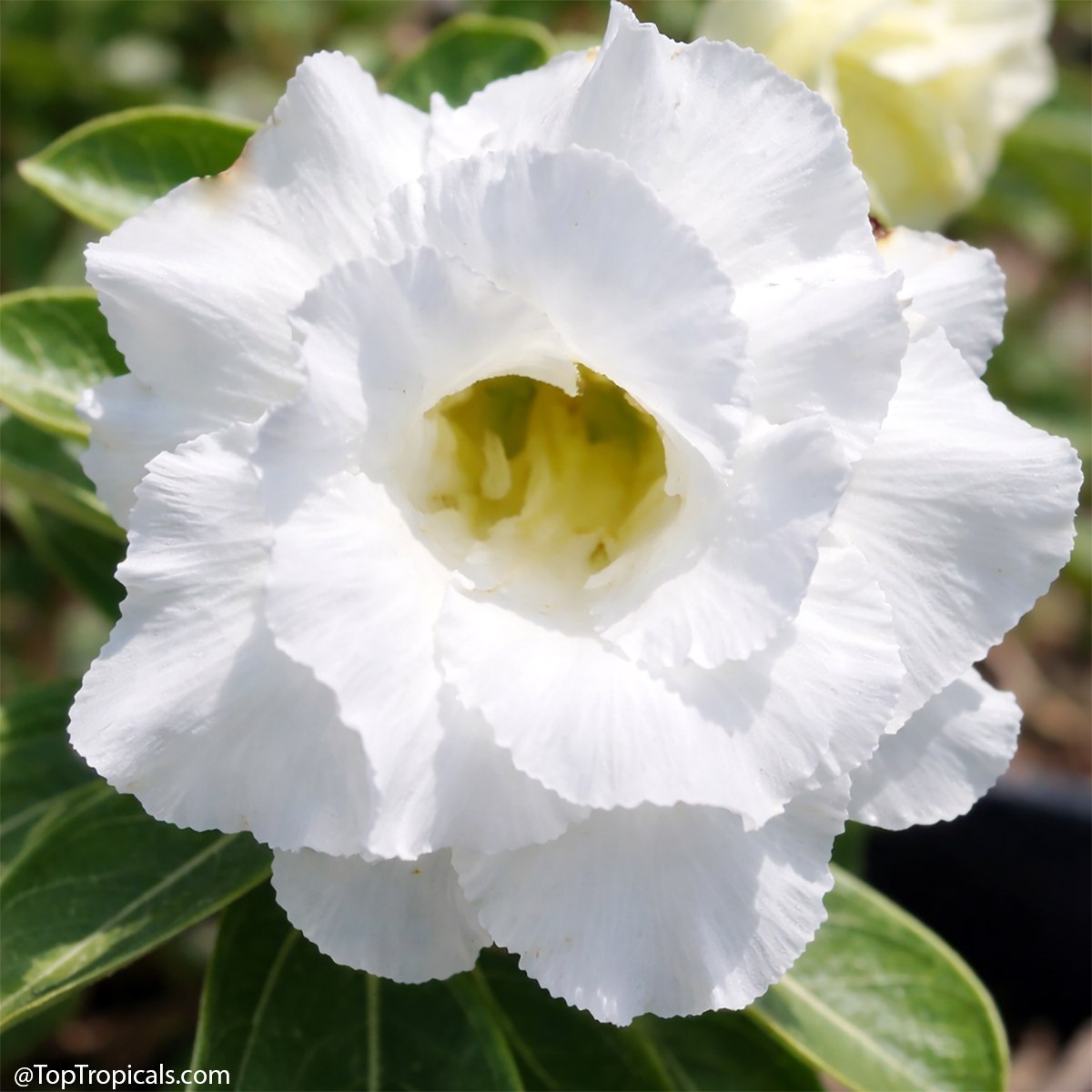
Adenium Jasmine

Adenium Jasmine

Adenium Marygold

Adenium Marygold

A few adeniums you don’t want to miss: Adenium rainbow 🌈

Adenium Plant Facts

Botanical name: Adenium sp.
Also known as: Adenium, Desert Rose, Impala Lily
USDA Zone: 9 - 10
Highligths Plant with caudexLarge shrub 5-10 ft tallSmall tree 10-20 ftFull sunWater Requirement: Low. Allow soil to dry out between wateringsWatering: Moderate. Water when top soil feels dryYellow, orange flowersRed, crimson, vinous flowersUnusual colorBlue, lavender, purple flowersWhite, off-white flowersPink flowersToxic or Poisonous
Get personalized tips for your region


Some adeniums bring color.
Some bring character.
And some… bring both.
This mix has a bit of everything - strong reds, deep tones, and soft floral shapes that balance it all out.


💡 Trimming tip


It’s always hard to cut back a branch… especially when it’s blooming.
But with adeniums, trimming is key.
After flowering, cut back leggy growth. This encourages branching, and more branches mean more flower buds.
It may feel like you’re losing blooms now - but you’re setting up a much bigger show next.
Trim, let it branch, and you’ll be rewarded with multiple blooms instead of just one.

🌸 Today's featured adeniums


 ✦ Beauty: Soft, balanced bloom with a clean look - simple and pleasing.
 ✦ Chok Sedthee: Name tied to wealth and success - a strong grower with presence.
 ✦ Black Dragon: Deep, intense tones with a bold, powerful look.
 ✦ Red Dragon: Bright red blooms with strong energy - hard to miss.
 ✦ Jasmine: Light, delicate feel with a more refined floral look.
 ✦ Marygold: Warm golden tones that bring brightness into any mix.

A mix like this gives you contrast right away - dark next to gold, simple next to unusual.
That’s what makes a collection interesting: not just how many you have, but how different they feel side by side.

🛒 Explore Exotic Thai Adeniums

📚 Learn more:


· Adenium varieties in Plant Encyclopedia
· About #Adenium Rainbow - fantastic varieties
· The adenium colors everyone is talking about right now. Light tips for hot climates.
· Adenium rainbow: these 6 will pull you in. Fertilizing tips.
· How to start your dream collection: before you start
· How to grow a happy Adenium

#Container_Garden #Adeniums #How_to #Discover

🟢 Join 👉 TopTropicals

Date: 23 Nov 2025

🏡 To Use Your Garden Or Be Used By It

Two  cats  in  a  garden  planting  a  young  tree.  Smokey,  a  black-and-white 
 tuxedo  cat,  holds  a  small  shovel  and  works  the  soil,  while  Sunshine,  a 
 fluffy  orange  tabby,  sits  smiling  beside  a  bag  of  garden 
 soil.

Smokey and Sunshine November Planting.

Smokey: Winter roots make spring easy. Keep that plant straight.
Sunshine: I am keeping it straight by not touching it at all.
Smokey: That is exactly what I was afraid of.

November is the month when the garden finally stops yelling at you. The heat backs off, the bugs calm down, and the weeds take a breath. This is when we get to take control again. And as gardeners, we know the truth: Either you use your garden, or your garden will use you in spring. Let me walk you through this, gardener to gardener.

"November is when the garden finally listens. Give it a little direction now, shape it, guide it, and prepare it for spring. It will reward you all year." - Tatiana Anderson, Top Tropicals Plant Expert

🌴 When The Garden Uses You

We have all lived this scene:

  • March weeds appear, and two days later it looks like a jungle.
  • One missed watering turns into five wilted plants and a full week of recovery.
  • A skipped feeding shows up as yellow leaves and panic searching online.
  • Bugs return fast, and suddenly you are washing leaves every other day.
  • Random plant purchases fill your yard with chaos and mismatched care needs.
  • When the garden takes control, spring feels like hard work, not joy.
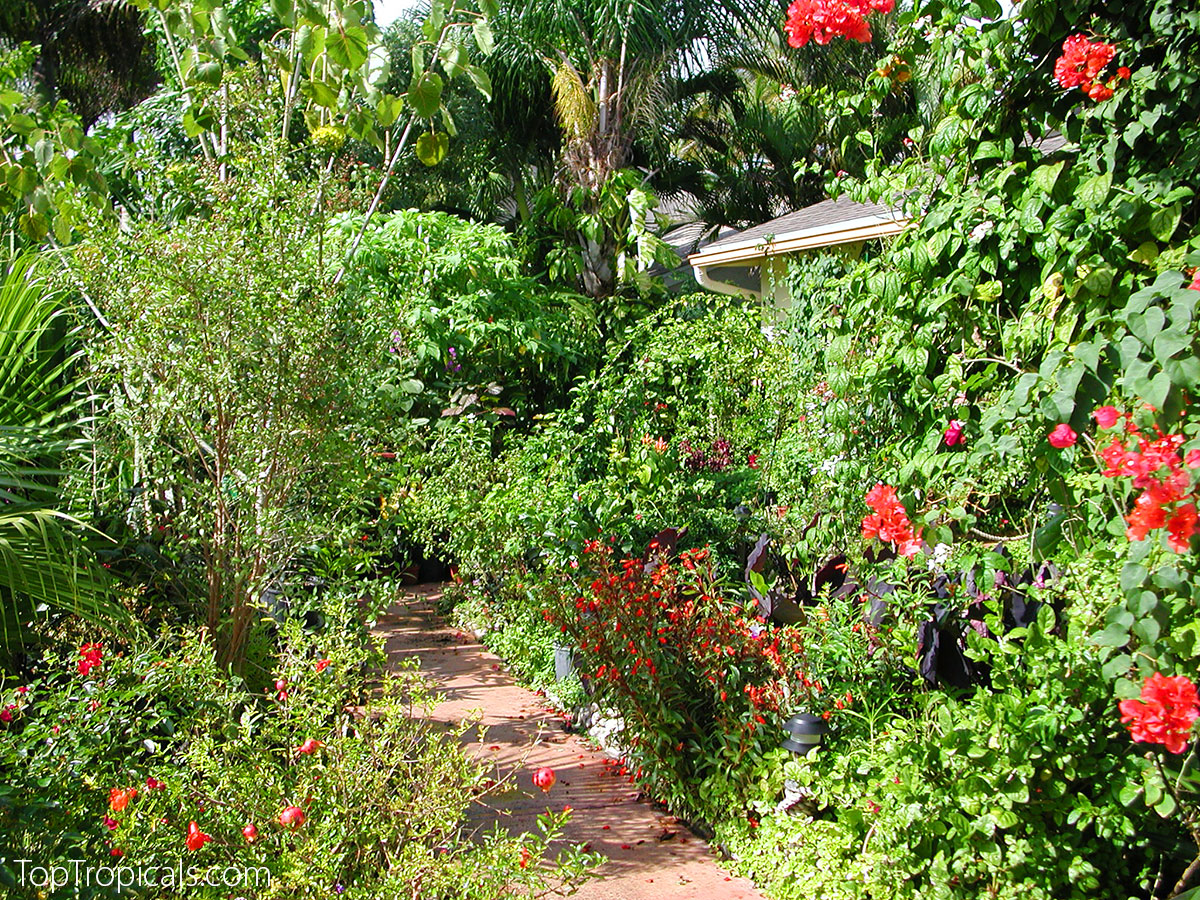
An  overgrown  tropical  garden  with  dense  foliage  and  vines  spilling  over
    a  walkway,  showing  how  a  garden  can  take  over  when  not  maintained.

Overgrown Tropical Garden Showing How a Garden Can Use You

📊 When You Use Your Garden

November flips the script. Plants slow down. Soil stays warm. This is the safest month to experiment, move plants, fix mistakes, and redesign.

What you do now pays off huge in March.

  • You map out sun zones and shade zones.
  • You mulch now so weeds do not explode later.
  • You move plants to better positions without heat stress.
  • You remove the high-drama plants before they start another season of complaints.
  • You pick what you want for next year instead of letting impulse buys rule you.

Spring becomes smooth instead of overwhelming. And honestly? It feels good to walk outside in March and see order instead of chaos.

A  neat,  organized  tropical  garden  with  trimmed  plants,  open  pathways, 
 and  balanced  landscaping,  showing  how  a  gardener  can  use  and  direct  the 
 garden.

In the photo: Every garden starts in small steps. Biquinho Pepper (front) in the garden.

What Benefit Do You Get Personally?

  • Less watering.
  • Fewer bugs.
  • Bigger fruit.
  • Better flowering.
  • Less money wasted.
  • Less time fixing problems you could have prevented now.

This is why experienced tropical gardeners adore November.

Garden

In the photo: Organized Tropical Garden. Firebush (lemon gold variety) and Cordylines (Ti Leaf) make colorful spots in the garden.

🐭 Start With Something Small Today (5 Minutes)

Pick one:

  • Add mulch to the driest spot in your yard.
  • Cut one dead branch from any tree.
  • Move one pot to a better sun angle.
  • Pull three weeds from the worst area.
  • Water deeply once this week.

Small steps now save hours later.

⭐ One Short Story

Last year we planted a Star Fruit in November. By March, it was already covered in flowers, and have been harvesting fruit non-stop since then! That is what winter planning does: it gives plants a head start you can actually see.

Young  Carambola  Star  Fruit  tree  fruiting

🐍 Plants That Will Use You If You Let Them

These are great plants, but only if you plan before planting them:

  • Banana (thirsty)
  • Hibiscus (hungry)
  • Brugmansia (sensitive)
  • Passion vine (takes over anything it touches)

Place them wrong, and they become full-time jobs.

An  overgrown  passion  vine  covering  a  garden  swing,  showing  how  a 
 fast-growing  plant  can  take  over  when  not  maintained.

In the photo: Passion Vine taking over the swing.

🐰 Plants That Work For You

These feel like free upgrades to the yard:

Pick even one of these and your garden starts giving back.

A  landscaped  garden  path  with  a  Cattley  Guava  tree  featuring  a  twisted 
 multicolor  trunk,  surrounded  by  trimmed  tropical  plants  and  decorative 
 garden 
 elements.

In the photo: Cattley Guava brings not only tasty fruit but also a wonderful character with its amazing multi-color twisted trunk.

🌡️ November Advantage

You cannot ruin anything in November. This is the safest, calmest month to shape your garden the way you want. If you act now, spring becomes a victory lap. If you wait, spring becomes a rescue mission.

A  landscaped  tropical  garden  with  a  potted  Adenium  in  full  bloom,  red 
 Cordylines  behind  it,  and  neat  mulched  beds  with  decorative  garden 
 elements.

In the photo: Adenium is a colorful accent in the garden.

💐 Thanksgiving Tie-In

This is the season to reset, breathe, and be thankful for your outdoor space. A garden that works for you is one of the best gifts you can give yourself going into the new year.

Start your November plan today. Use your garden. Do not let it use you.

A  neatly  designed  tropical  garden  bed  featuring  Megaskepasma,  iris, 
 Colocasia,  colorful  Crotons,  Dracaena,  and  Ti  Leaf  plants  arranged  in 
 mulched 
 landscaping.

In the photo: Megaskepasma, Iris, Colocasia, Crotons, Dracaena and Ti Leaf bring instant tropical look to your garden.

Shop Fruit trees

Shop Flowering shrubs
Date: 24 May 2026

Fruit Tree Hacks: 5 High-Yield Fruit Trees You Can Buy for Under $50

Fruit Tree Hacks: 5 High-Yield Fruit Trees You Can Buy for Under $50

💲 Fruit Tree Hacks: 5 High-Yield Fruit Trees You Can Buy for Under $50


Starting a home orchard doesn’t have to cost a fortune. While high-end grafted Mangoes or Avocados can easily set you back $100 or more, there is a "secret category" of fruit plants that are affordable, fast-growing, and perfect for beginners. If you have a $40-50 budget and a small sunny spot, these five options provide the best "bang for your buck" in terms of growth speed and flavor.

1. Dragon Fruit: The Vertical Speedster


Dragon Fruit is the ultimate budget win. Because it grows from cuttings easily, nursery prices stay low.
The Payoff: It grows incredibly fast. In a single season, a small pot can turn into a massive climbing cactus.
Space Saver: It grows vertically on a post or trellis, making it perfect for side-yards or balconies.
👉 More...

2. Peanut Butter Fruit (Bunchosia)

This is the ultimate conversation starter for your garden.
The Flavor: The fruit has a dense, sticky texture that tastes exactly like sweet peanut butter.
Why it’s a Bargain: It stays naturally compact (shrub-sized) and often begins fruiting in its second or third year - much faster than traditional fruit trees.
👉 More...

3. Blackberry Jam Fruit (Randia formosa)

If you love gardening in containers, this is your best friend.
The Experience: You don't pick a bucket of these; you enjoy them as a garden snack. The pulp inside is black and gooey, tasting remarkably like high-quality preserves.
The Price Point: Because it is technically a woody shrub, you can often find "ready-to-fruit" sizes for very reasonable prices compared to large-canopy trees.
👉 More...

4. The "Eugenia" Group (Surinam, Grumichama, Rio Grande)

Professional landscapers love this family of plants because they double as "Edible Hedges."
Surinam Cherry: Extremely tough. It handles poor soil and neglect while producing star-shaped, ribbed fruits.
Grumichama: Often called the "Brazilian Cherry," it produces a fruit that looks and tastes strikingly like a true Bing cherry but grows in warm climates where cherries usually fail.
Cherry of the Rio Grande: A beautiful, upright grower with attractive peeling bark. It produces dark purple, teardrop-shaped fruits that are among the best tasting of all the tropical cherries. The tree is the most cold hardy of all eugenias.
👉 More...

5. Mulberries

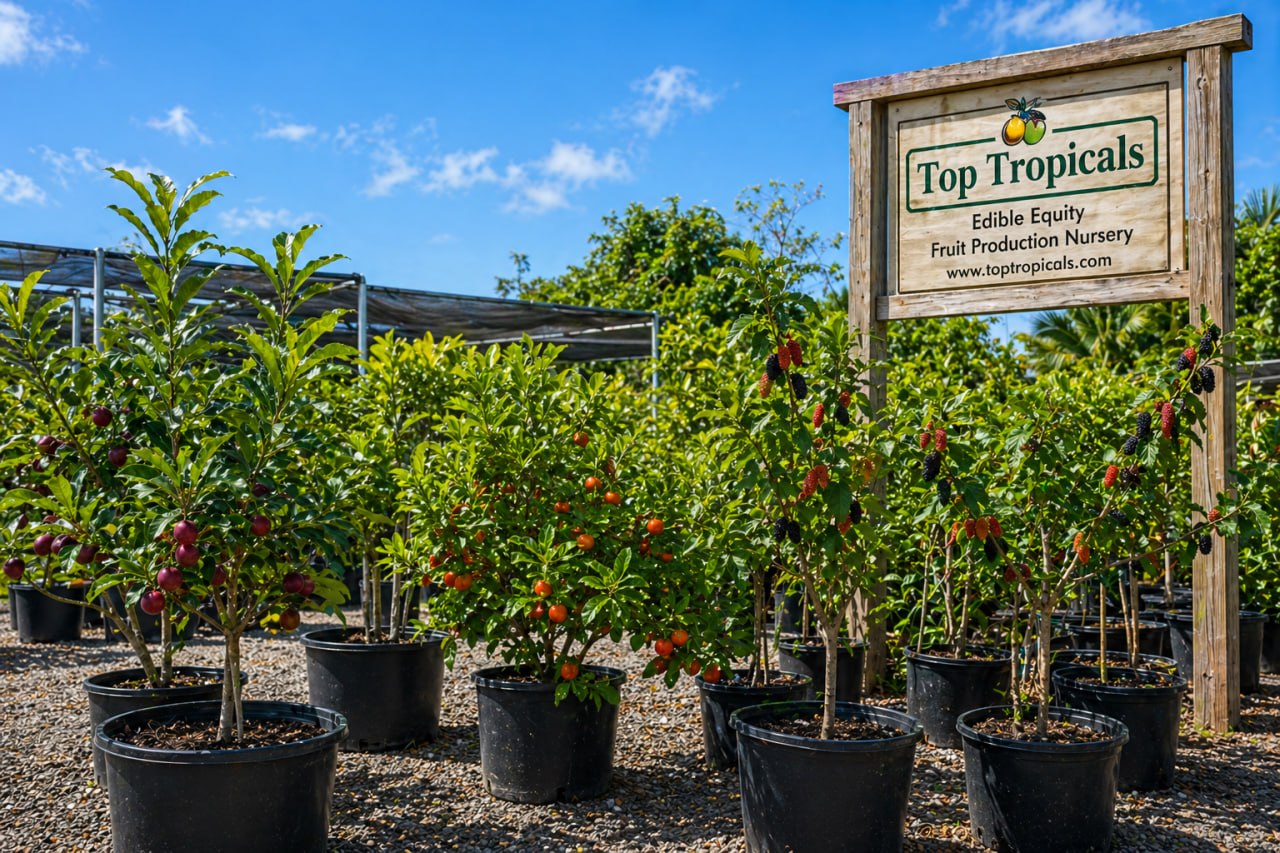
While not on every list, a Mulberry is a budget powerhouse. They are often sold in small 3-gallon pots for $30-40 and will literally start popping out berries the same week you plant them.
👉 More...

👉 Pro Tip: How to Save Even More


To keep your costs down, look for these plants in 3-gallon containers.
Why? 3-gallon plants are the "sweet spot" for value. They are large enough to be established and hardy, but they haven't reached the premium price point of 7 or 15-gallon "instant landscape" trees.

🛒 Shop Budget-Friendly Fruit Trees

📚 Learn more:

Murta Plant Facts

Botanical name: Blepharocalyx salicifolius, Eugenia salicifolia
Also known as: Murta
USDA Zone: 9 - 10
Highligths Small tree 10-20 ftSemi-shadeFull sunWatering: Regular. Let topsoil dry slightlyWhite, off-white flowers
Get personalized tips for your region

· Eugenia cherries in Plant Encyclopedia
· 3 Best Trees for a "Fast-Fruit" Garden
· 10 best fruit trees to grow in Florida and Southern landscapes
· Top 10 fast-fruiting trees
· 5 fast-growing fruit trees and shrubs for quick, low-effort harvests (Top Tropicals experts for Martha Stuart)

#Food_Forest #How_to #Discover

🟢 Join 👉 TopTropicals

Date: 17 May 2023

NEW VIDEO:
ABC7 Fort Myers News:
Rare Tropical Fruit Trees at Top Tropicals

We received lots of orders from our customers for butterfly attracting plants after our recent . We are glad you liked the story and the plants!

Today's topic is on tropical fruit. Enjoy this quick tour and learn more about different varieties of rare tropical fruit and what can be grown in your yard. We have them all! And we can ship them to your door.

Fruit and plants introduced in the video:

Persimmon
Coffee
Sapodilla
Sapote
Vanilla
Pomegranate
Yellow Dragon fruit
Litchi
Tamarind
Chocolate Tree
Raspberry
Grape

Watch the news segment by Rachel Anderson for ABC-7: Rare fruit trees at Top Tropicals.

Subscribe to our Channel:

Stay updated with TopTropicals Videos by subscribing to our channel at YouTube.com/TopTropicals and get our latest video news of what is fruiting and blooming!

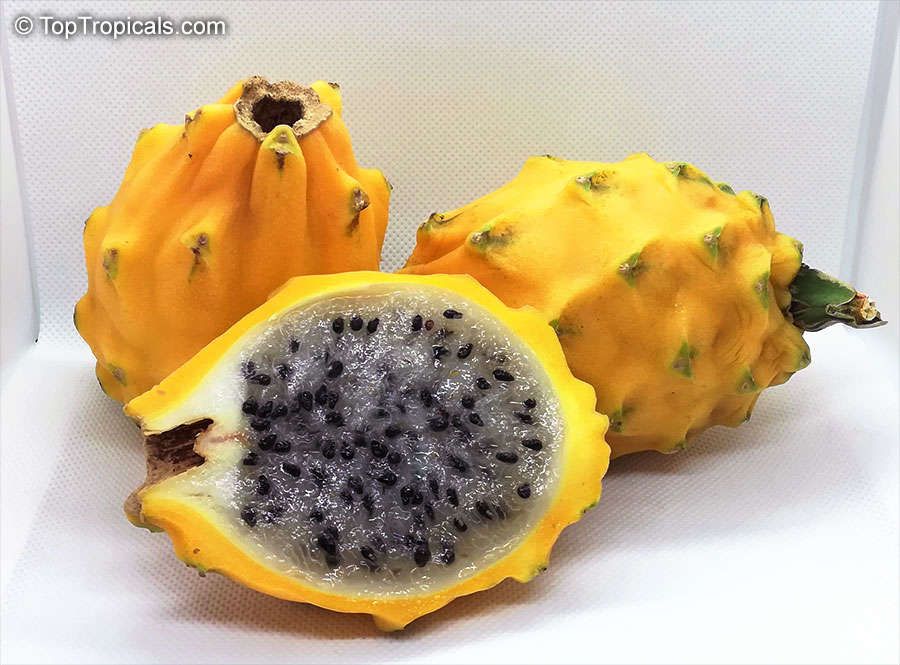
Yellow  Dragon  Fruit,  Selenicereus  megalanthus,  fruit

In the photo: Yellow Dragon Fruit, Selenicereus megalanthus, the sweetest and the most flavorful rare Yellow Pitaya. The taste is said to be superior to most cactus fruits.