Garden Blog - Top Tropicals

Date: 26 Apr 2023

The Benefits of Companion Planting

Landscaped  garden  with  companion  planting

Q: What is companion planting?

A: Companion planting is a gardening technique that involves planting different crops or types of plants together in a way that benefits all plants. This practice has been used for centuries, and it can be especially useful in tropical gardens where there is a diversity of plant life: trees, shrubs, vines and climbers, ground covers, fruit and edibles, and different flowering ornamentals. It is a great way to improve the health and yield of fruit tree crops while reducing the need for fertilizers and pesticides. By choosing the right companion plants and planning your garden layout carefully, you can create a vibrant and diverse ecosystem that will benefit both your plants and the environment.

Companion planting involves:

Planting different crops together to repel insects: adding such plants as Lemon grass, Patchouli leaf, or Moujean Tea near your vegetables can deter aphids and other pests.

Attracting pollinators - Butterfly plants. Many tropical crops, such as passion fruit, papaya, mango, and avocado, rely on pollinators to produce fruit. Companion planting can help to attract pollinators such as bees, butterflies, and hummingbirds to your garden.

Providing nutrients to the soil, adding mulch and low growing plants (ground covers) to preserve moisture.

Planting a variety of different types of plants together in order to create a more resilient ecosystem that is less susceptible to pests and diseases.

To get started, plan your garden layout and choose companion plants with similar water and light requirements.
For example, plant in the same group lush foliage plants, gingers, and flowering brunfelsias in shady areas; plant jasmines and gardenias in full sun and very well-drained spots.
Rotate annual crops regularly and experiment with combinations to find what works best. By doing this, you can create a thriving ecosystem that benefits both your plants and the environment, reducing the need for harmful chemicals.

Landscaped  front  yard  with  companion  planting

Buddah  and  flowers

Date: 31 Aug 2022

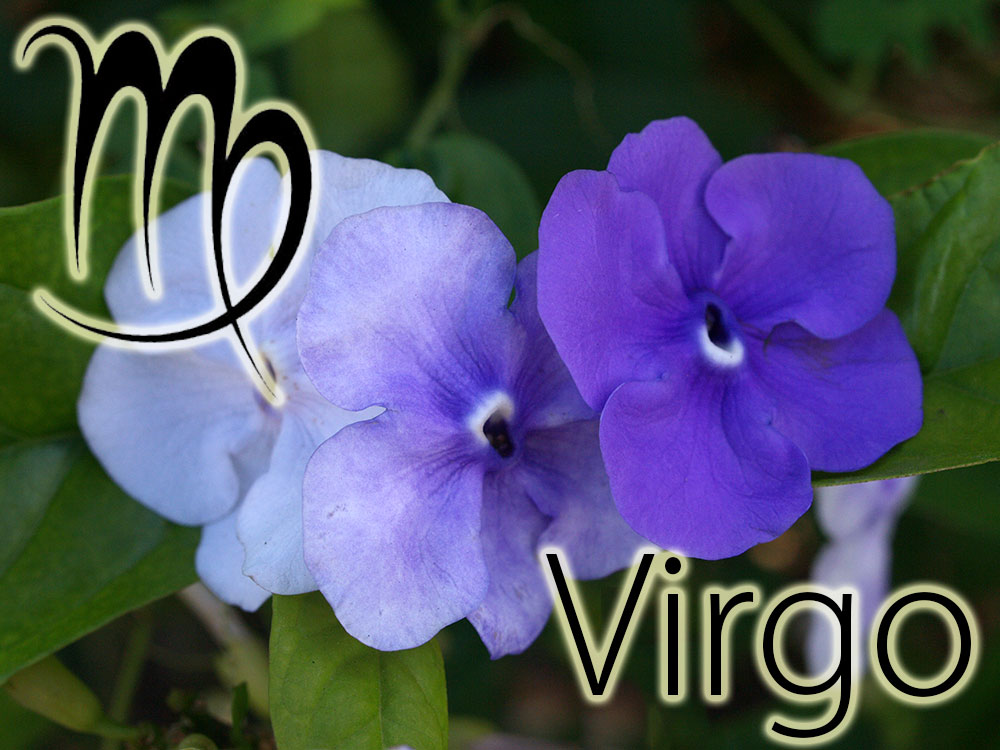
Plant Horoscope - Virgo
Lucky Zodiac Plants: 08/23-09/22

By Alex Butova, the Witch of Herbs and Cats

Brunfelsia  Zodiac  lucky  plant  -  Virgo

...Virgo is the most disciplined sign of the zodiac, the most responsible...
...She likes flowers. But she will grow them only if:
a) the task is set: to decorate the house or courtyard;
b) there is a place in her personal organizer to write: "watering, pruning, feeding, etc. - what else according to the instructions?”. And real time to do it. In all other cases, Virgo behave toward plants according to the residual principle, optimistically reasoning: "They want to live - they will survive..."
CONTINUE READING >>

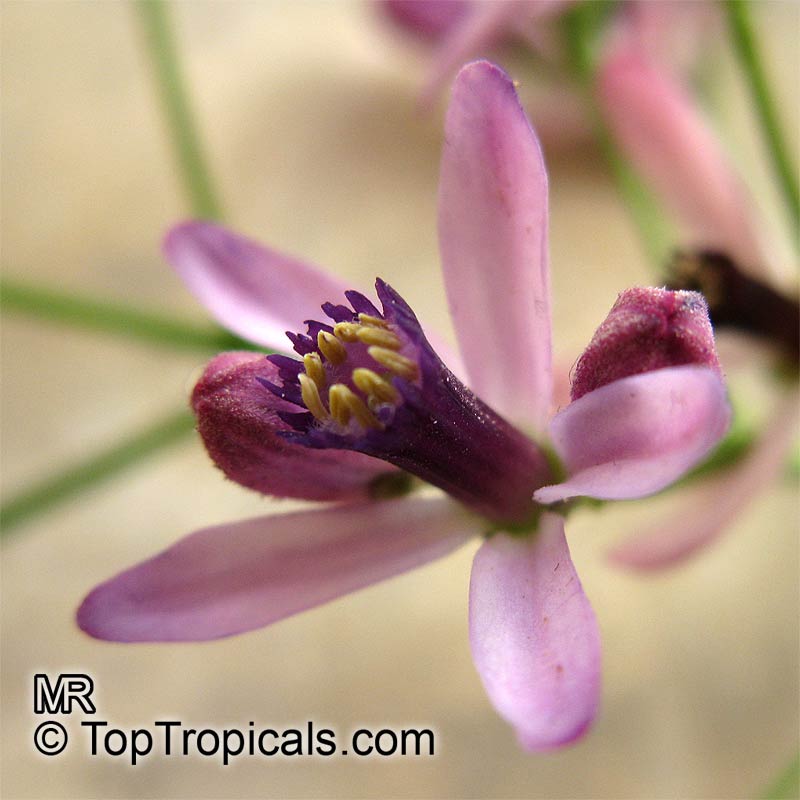
Melia  azedarach  Zodiac  lucky  plant  -  Virgo

Date: 2 Jan 2020

The most fragrant flowers

Q: Hope you can help me with the following question with an upcoming newsletter. Would you please let us know of the strongest (pleasant) fragrant plants you currently have in stock? Fragrance that fills the space.

A: The most fragrant flower that "fills the air around" in definitely Chanel #5 - Cananga odorata a.k.a. Ylang Ylang. Just one tree when in bloom can fill the air with fine perfume for yards away.
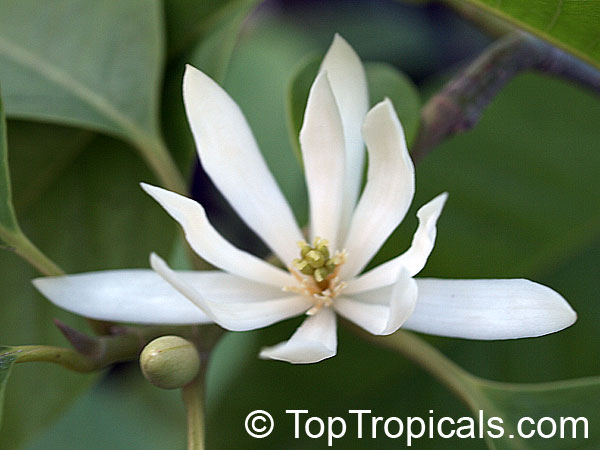
Another strongly scented perfume tree is Joy Perfume - Magnolia champaca (both orange and white flowers are sweetly fragrant).
If you are looking for a smaller size plant, then the most fragrant are -
- Jasmine sambac
- Night-fragrant white-flowered Brunfelsias - B. americana, B. nitida, B. Gigantea, B. lactea and others.
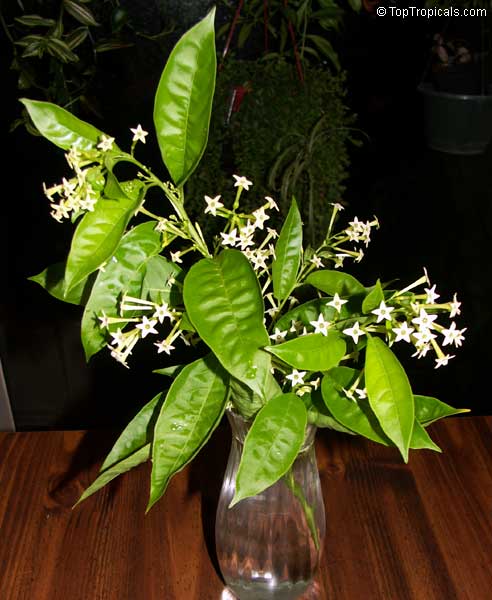
- Night blooming Jasmine - Cestrum nocturnum is another favorite shrub with night-fragrant flowers, the scent is super strong and super sweet.
- Artabotrys hexapetalus - Ylang Ylang vine with wonderful lemony fragrance that fills the air.

See Full list of fragrant plants.

Date: 14 May 2019

How to make the whole garden fragrant.
List of the most fragrant yet easy to grow plants

TopTropicals.com

Q: Dear toptropicals, thanks for the great database on tropicals plants! I really enjoy browsing your web site and I am planning on completing my collection by purchasing some plants from your shop. I am particularly looking for fragrant plants that make the whole area fragrant. Can you provide a list of recommended fragrant plants that bloom throughout the year round? I currently have: murraya, plumeria, michelia alba, figo, champaca, rangoon creeper, honeysuckle, jasmine, stephanotis, Arabian sambac, brunfelsias.

A: As a must-have additions to your impressive fragrant plant collection, we can recommend the following rare fragrant plants below. These are our favorites that are easy to grow and free-flowering. Since they flower at different times, they will add fragrance to your garden throughout the year.
Aglaia odorata - Chinese Perfume Plant
Aloysia virgata - Almond Bush
Beaumontia grandiflora - Easter Lily Vine
Brugmansia Variegated Orange Angel Trumpet
Brunfelsia magnifica floribunda Jims Giant (very fragrant and very compact!)
Cananga fruticosa - Dwarf Ylang-Ylang
Cerbera x manghas hybrid - Enchanted Incense
Cestrum nocturnum - Night blooming jasmine
Crinum Queen Emma - Spider lily
Eucharis grandiflora - Amazon Lily
Euodia hortensis - Scented Evodia, Golden False Aralia (very fragrant leaves!)
Hedychium coronarium - Butterfly Ginger
Hiptage benghalensis - Helicopter Flower
Jasminum dichotomum - Rose Bud Jasmine - very fragrant!
Magnolia virginiana - Sweet Bay
Millettia reticulata - Evergreen Wisteria
Mirabilis jalapa - Four oclock plant - super fragrant!
Osmanthus x fortunei - Fortunes Tea Olive
Oxyceros horridus- one of the most intense perfume fragrances!
Radermachera Kunming - Dwarf Tree Jasmine
Satureja Viminea - Kama Sutra Mint Tree - strong mint fragrance
Sclerochiton harveyanus - Blue Lips, Mazabuka - lavender fragrance
Solandra maxima - Variegated Butter Cup
Telosoma cordata - Pakalana vine
Wrightia religiosa - Sacred Buddhist
You may consider many varieties of gardenias, and the most rewarding are:
Gardenia vietnamensis - Vietnamese Gardenia
Gardenia Aimee Yoshioka (First Love)
Gardenia posoqueria - Shooting Star Gardenia
Gardenia taitensis Heaven Scent (double flower)
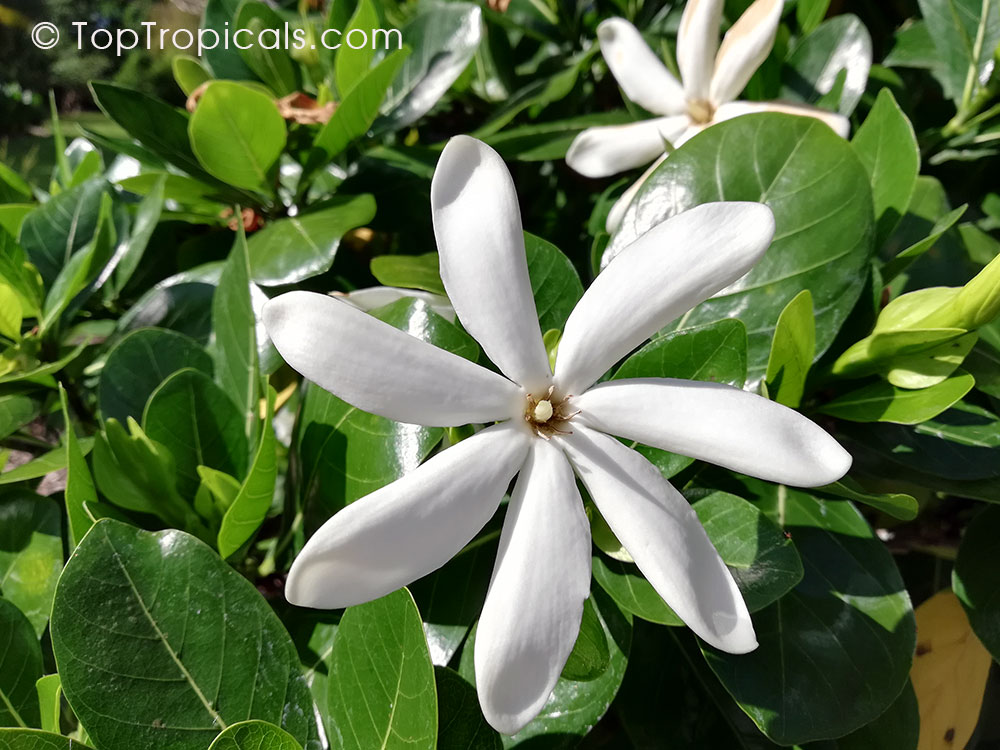
Gardenia taitensis Tiare Tahiti, single flower
Gardenia tubifera Kula - Golden Gardenia
To see the full list of fragrant flowers, follow this link.

Date: 24 Jun 2018

Full Sun Garden vs Shade Garden

"Someone is sitting in the shade today because someone planted a tree a long time ago." (Warren Buffett)

Q: I live in California and I have a large area of my garden in full shade. Are there any plants that will be happy there? I am looking for something colorful. I also have a smaller area in front of the house that has full sun almost all day long, but I am afraid this can be too hot for flowering plants? Can you recommend something?

A: Full sun gardens have a strong, bright look while shade gardens have cooler, subdued appearance. Both types of gardens are fun to design and maintain as long as you pick the right plants.
Full Sun Garden is the easiest to grow. Depending on exposure, it may require some plants that can tolerate the hottest summer days and the dry conditions in your area. The good news is, the majority of tropical and subtropical plants prefer full sun, so you have a large selection to pick from - fruit trees, flowering trees, shrubs, vines, and small perennials. The more sun, the more flowers and fruit you will get! However, keep in mind that sun gardens require more water, but generous mulching will help to minimize watering.
Shade Garden is much more restful in appearance, but sometimes may be a little more difficult to work with. As shade trees grow bigger and thicker, it may become too dark; nothing will grow in total darkness. In this case you need to prune back some branches to let more light in. Filtered sunlight or dappled light coming through the leaves of the trees is beneficial and considered light shade, which would be the best light conditions for shade loving plants to thrive. Although shady cooler spaces attract more insects and will require more attention to control them, they also have some advantages over sun gardens. You can enjoy working in cooler conditions, and your garden will require less water. Many foliage plants look more deeply colored and healthier than in full sun; white flowers shine instead of looking washed out!
Our favorite shade plants are fragrant brunfelsias , clerodendrums, and of course colorful gingers and heliconias. You may also consider ornamental foliage of Calatheas, lush Alocasias, Colocasias, and colorful Cordylines. Check out our shade loving plant list for more colorful suggestions. These are also great for indoor gardens!

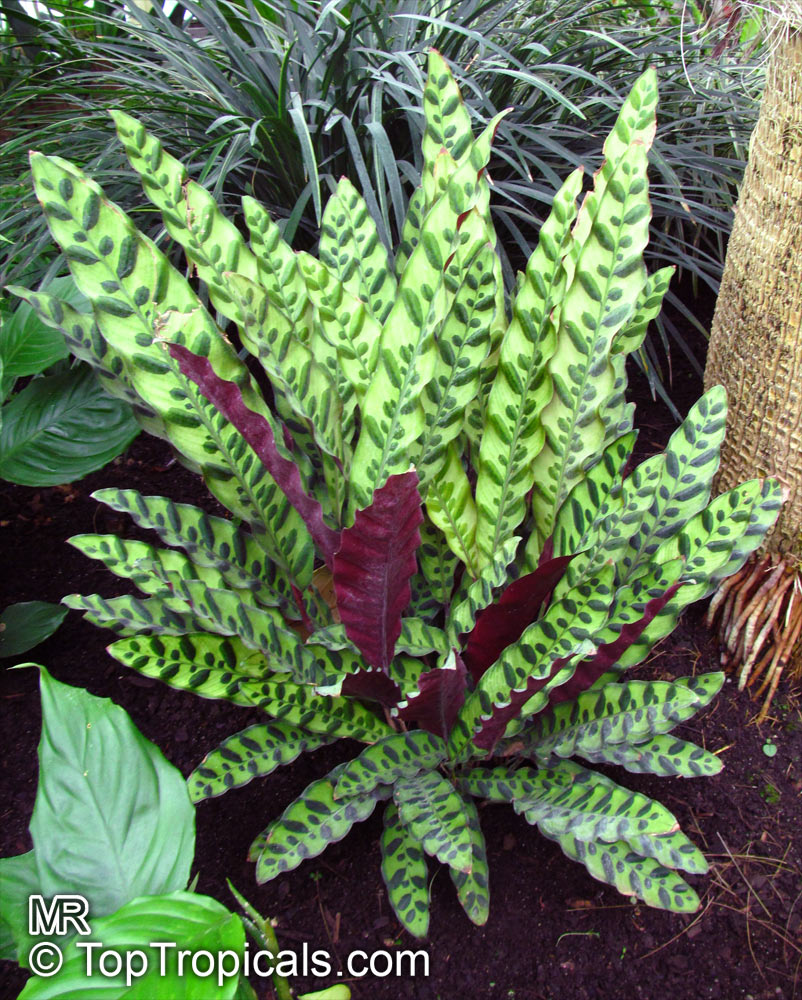
On the photo: Calathea lancifolia Rattlesnake