Date: 30 May 2020
How to prevent mango fruit drop
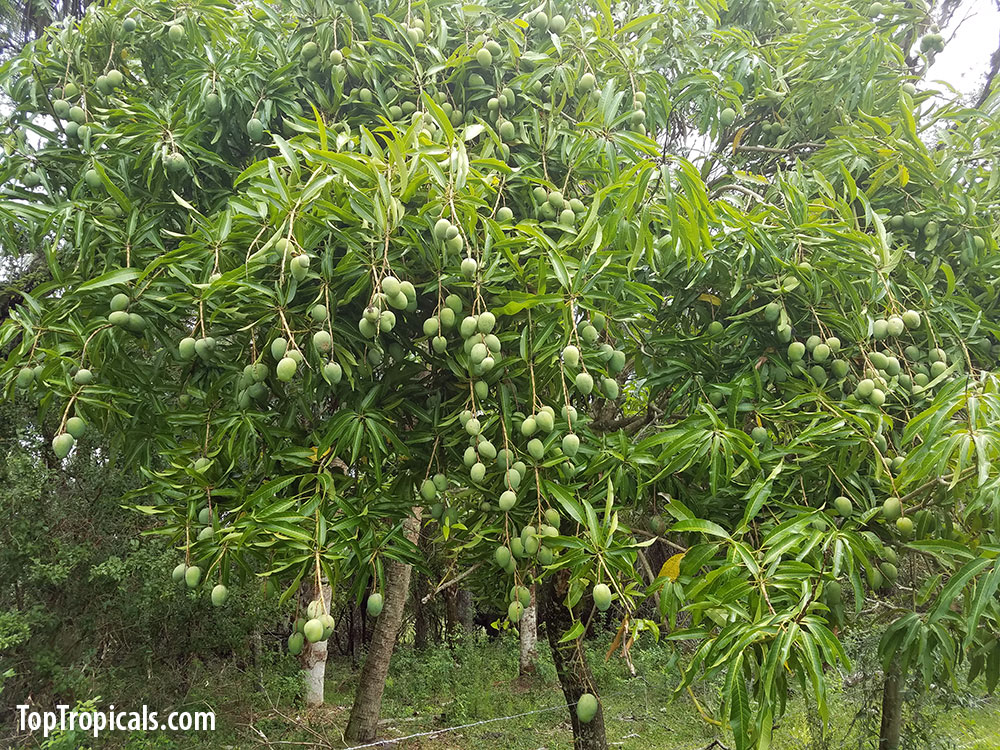
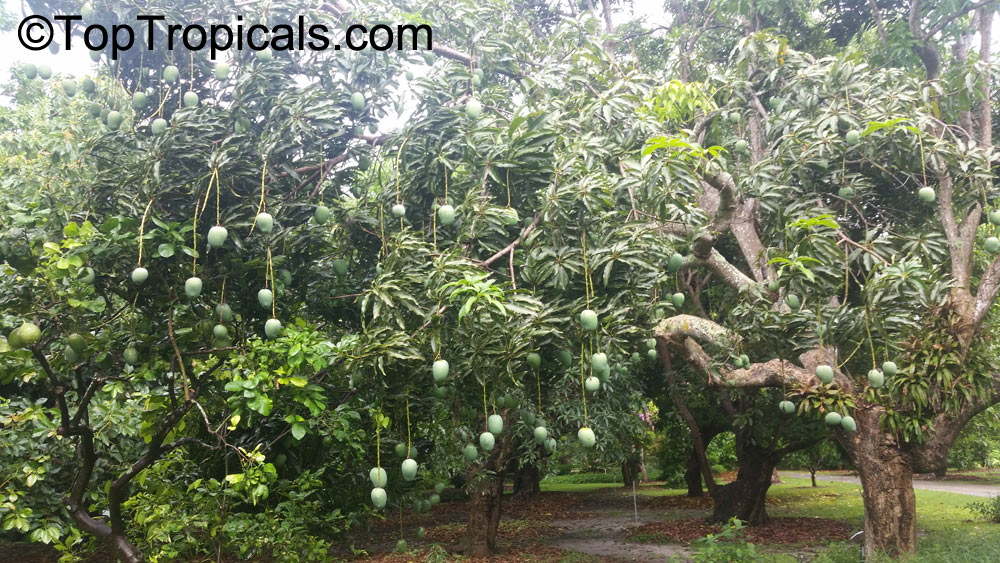
Q: My mature mango tree is fully grown 15 yrs old and each year it fully blooms, sometimes twice. Shortly thereafter, all the baby mangos and flowers fall off providing no mangos for the season. I have tried fertilizing, spraying the tree for fungus or other insects, to no avail. I give up, any suggestions?
A: Dropping fruit in pretty common issue with mango trees. There
may be several reasons, or a combination of reasons.
1. Fungal disease (anthracnose), and/or powdery mildew. To avoid
fungal disease problems, spray your tree when it just begins to form the flower
spikes. Treat foliage with Copper fungicide. There is also another
one, very effective for anthracnose: Thiophanate methyl.
2. Inadequate nutrition. Feed your tree with a combination of
granulated fertilizer Mango-Food, liquid booster SUNSHINE Mango Tango and micro-elements Sunshine Honey and Sunshine Superfood
Check out pictures of our mango tree problems that were fixed within a month by
using Sunshine Boosters.
3. Too much rain or heavy dew during blooming and fruit set (see 1 -
use preventive treatment for fungus)
4. Cold. Sometimes the cause of premature fruit drop is from the
cold weather during bloom and fruit set. Usually the most affected varieties are
the early bloomers including Glenn, Haden. The cold damages the developing
embryo in the seed. The fruit starts to develop but because of ethylene gas
given off by the damaged embryo, the fruit is triggered to drop before
maturity. To see if cold temperature was the cause for your fruit dropping, cut open
the fallen fruit. Even if there is a small speck of brown in the seed,
that's enough damage to stop fruit development.
To learn more how to care for your mango, please read this publication.

Date: 22 Apr 2020
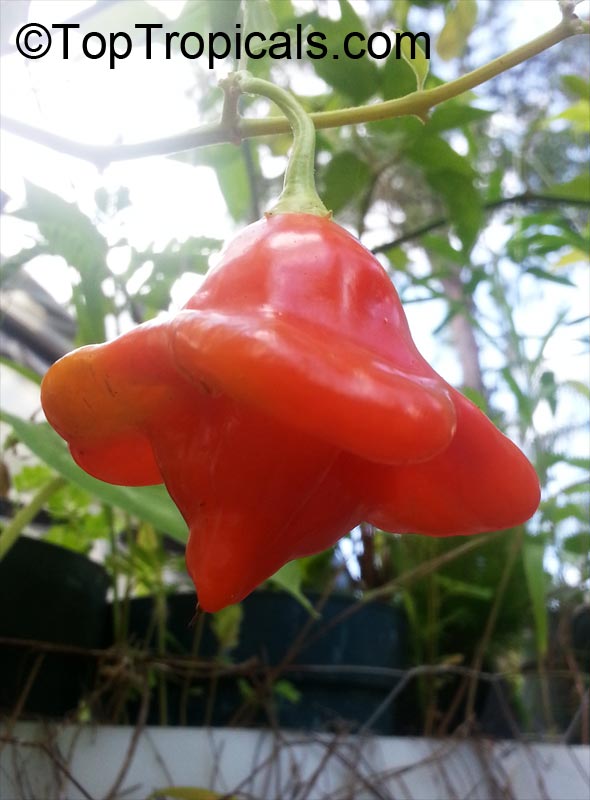
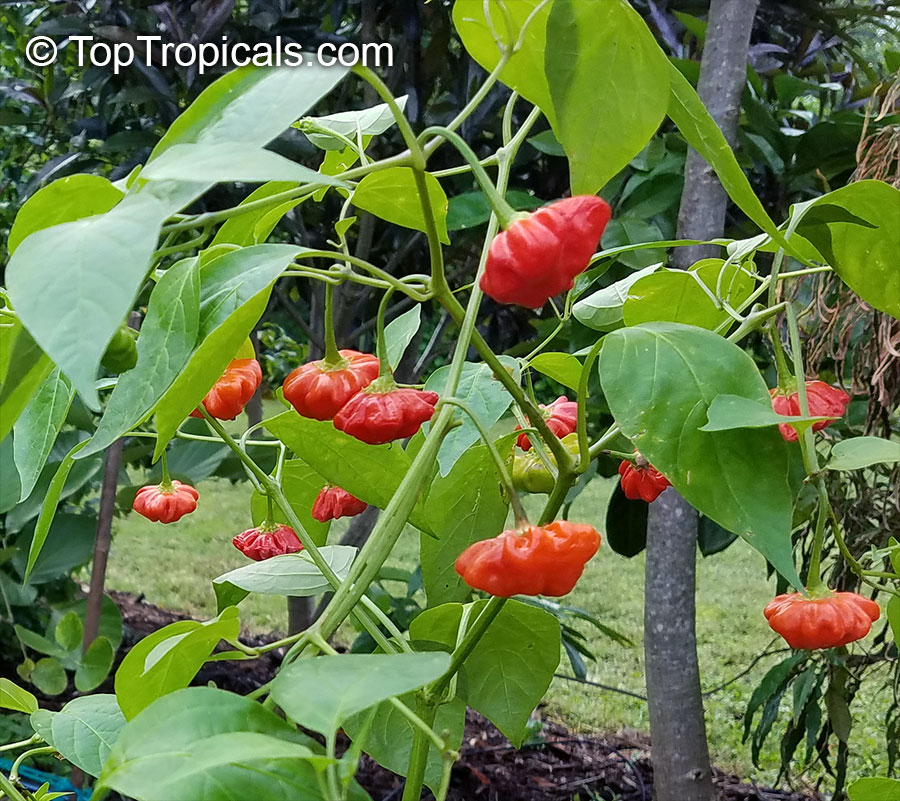
Quirky Brazilian Starfish Pepper
by Onika Amell, tropical plant expert
There is something very rewarding in growing your own peppers. Brazilian
Starfish pepper - Capsicum baccatum is a little bomb of flavor! This is not a plant you
will find just anywhere in the United States.
This is a very uniquely shaped pepper which makes it an excellent
ornamental plant. But unlike many other peppers with pretty faces and lacking in
flavor, the Brazilian Starfish pepper is delicious too. It is hailed for the
complex floral and fruity undertones and a medium level of heat for most folks.
These fruity and juicy, crunchy peppers are perfect for pickling or just eating
raw in salads or salsas. They are irresistible in a glass pickling jar
because of their unique shape. Bold and crisp, this pepper is much sought after by
foodies and gardeners alike.
CONTINUE READING AND SEE THE RECIPE >>
Date: 12 Apr 2020
Exotic Easter Lily Vine
by Onika Amell, tropical plant expert
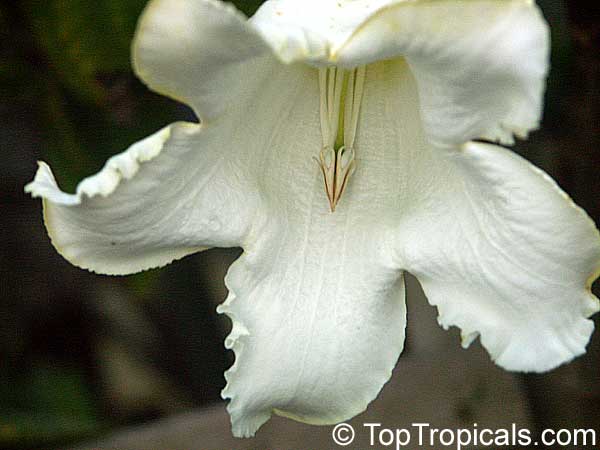
If you happen to love Easter Lilies, let us introduce you to a very beautiful and hard-to-find vine... The magnificent Easter Lily Vine - Beaumontia grandiflora, is not sold at most nurseries and is not widely grown for this very reason. We certainly feel it should be, as this woody vine is a tremendous climber which rewards the gardener with large clusters of white flowers resembling Easter Lilies, during early spring to late fall. The flowers are sweetly scented and make excellent cut flowers, which last for at least a week! An added bonus is the twining ends, which makes a very unusual and interesting addition to floral arrangements...
CONTINUE READING >>
Here at the nursery, our Easter Lily vines are almost ready to burst into full bloom. We are waiting impatiently. Order yours, and have a Happy Easter!
Seeds of Easter Lily vine also available at BOGO deal - buy 2 packs for the price of 1 with FREE shipping!
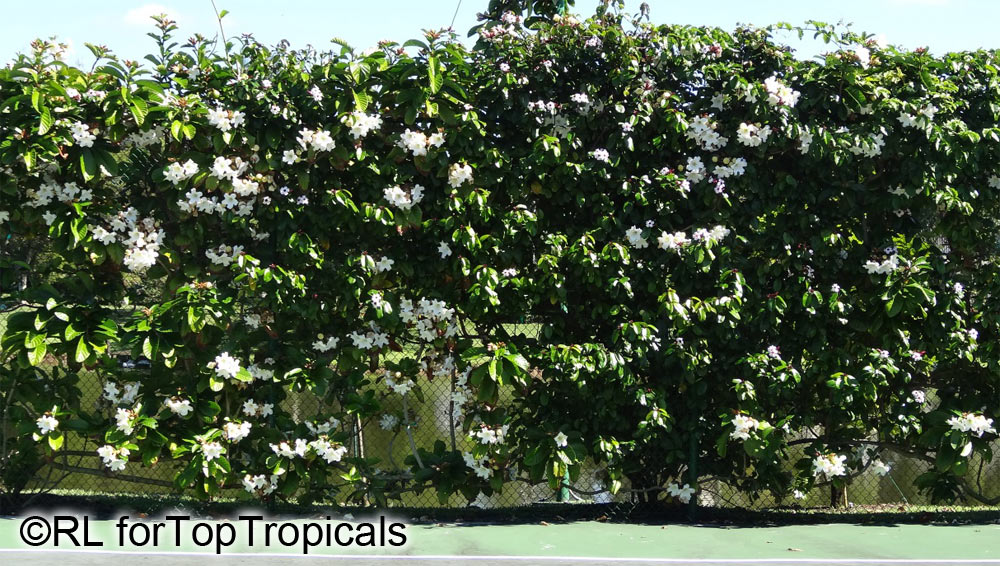
See how to how to create a fragrant privacy fence of virtually unlimited size.
Date: 16 Dec 2019
Hardy Dwarf Red Jade Vine
by Onika Amell, tropical plant specialist
Q: I simply adore Jade vines. I think they are the Queens of all the vines! I have been very been successful growing the green Strongylodon macrobotrys and purple Jade Mucuna pruriens vines here in Clewiston Florida but I am struggling to make the Red Jade vine (Mucuna benettii) thrive. It keeps dying on me during cold snaps. Any suggestions?
A: ...Here is our solution for you. Consider growing a Dwarf Red
Jade Vine or Camptosema grandiflora. It is closely related to the regular and ultra
tropical Red Jade Vine Mucuna benettii but much tougher and hardier. It is
considered to be one of the more cold hardy of the Jade Vines...
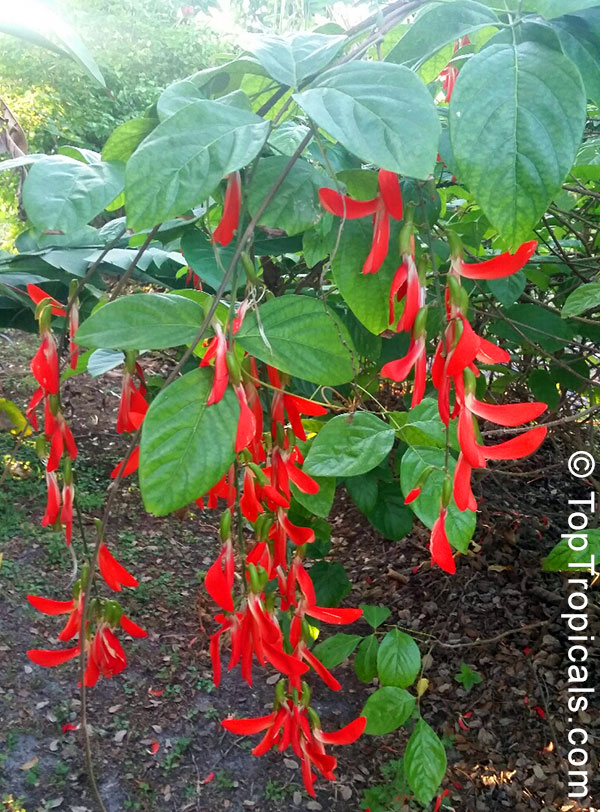
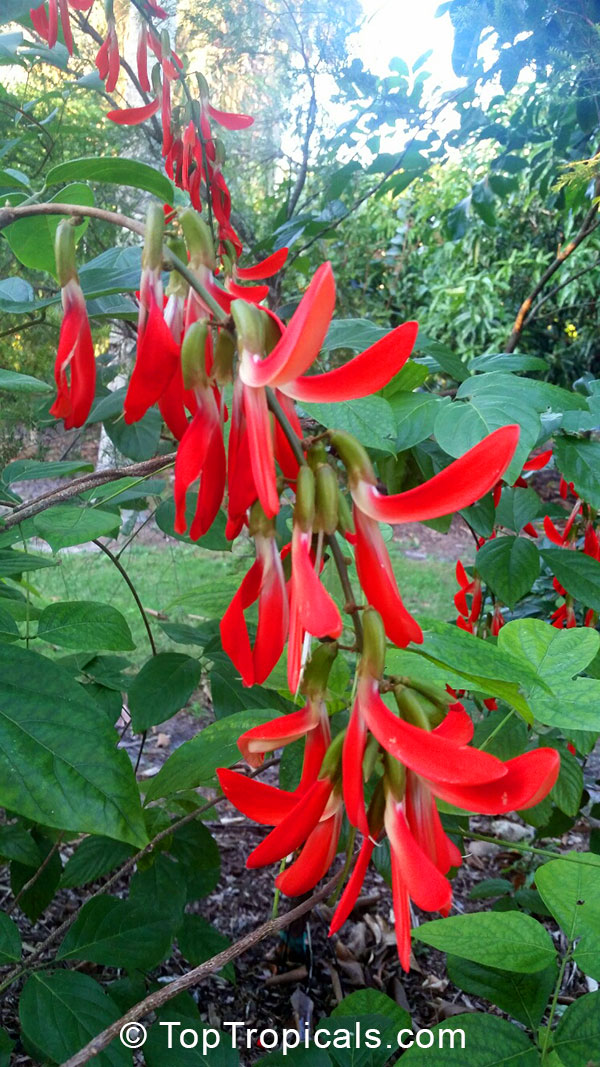
This gorgeous, rare and unusual vine is a sheer showstopper. It is easy
to grow and it will reward you with long fiery chains of dangling orange-red
flowers that bloom from late fall to early spring. Even though it is listed
as a dwarf do not be fooled. This vine will get quite large and will need a
strong support over time. The flowers are long and heavy and will show best
when planted on an arbor or pergola where they are able to hang down and wow
you and your visitors. It puts on a wonderful display. Butterflies, bees and
hummingbirds will all thank you for growing this stunner!...
CONTINUE READING >>
Date: 14 Oct 2019
NEEM - The Free Tree of India
By Onika Amell, tropical plant specialist
Q: What is Neem oil and tree, and and can we grow the Neem tree here in the US?
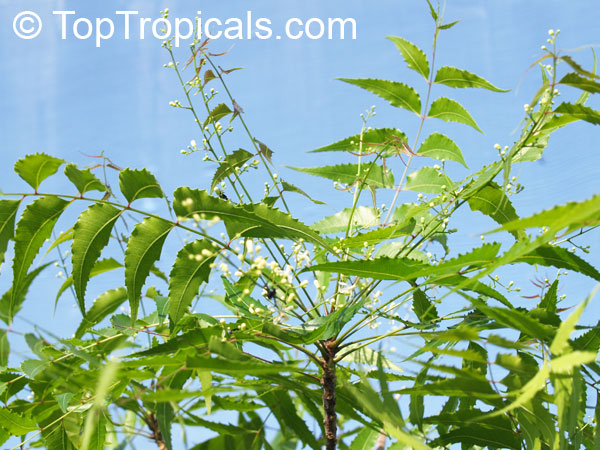
A: Neem! What an extraordinary, fascinating tree! I'm personally convinced every garden should have one, if your climate allows it. Neem tree - Azadirachta indica - will very quickly become a valuable shade tree in your garden. They can grow up to eight feet per year! Neem trees are also known to grow very well in areas with infertile soil and under very dry conditions, which makes them perfect for xeriscaping. Not only is Neem fast-growing, but it's a beautiful tree with wide-spreading branches and dark green leaves. It will form a dense, round canopy, up to 60 ft wide.
This wonderful tree has been used by humans for thousands of years. Did you know Neem has more than 100 unique bioactive compounds? Surprisingly, a lot of gardeners are still unfamiliar with it!..