Garden Blog - Top Tropicals

Date: 29 Apr 2024

How to grow the biggest fruit on Earth

Jackfruit (Artocarpus heterophyllus)

Jackfruit (Artocarpus heterophyllus)

Jackfruit (Artocarpus heterophyllus)

Jackfruit (Artocarpus heterophyllus)

Jackfruit (Artocarpus heterophyllus)

Jackfruit (Artocarpus heterophyllus)

🍐 How to grow the biggest fruit on Earth.


Jackfruit (Artocarpus heterophyllus) is one of the most fascinating tropical fruit, as we showed earlier.
  • 👉 In spite of reputation being ultra tropical, the tree is not as cold sensitive as everyone believes. Mature trees can withstand light frost for a few hours without significant damage. Keeping Jackfruit in a pot is also an option in colder areas.
  • 👉 The fruit is so large and heavy that the tree has a smart feature to produce only at the base of the trunk. This makes it possible to keep Jackfruit tree at very short height - 6-7 ft tall. It can be grown in containers considering regular topping/pruning.


🔻 Secrets of Jackfruit successful production:
  • 📍 Frost free temperatures
  • 📍 Soil rich of organic matter (compost, manure, peat moss)
  • 📍 Moist soil and regular watering
  • 📍 Constant pruning and keeping under 7-10 ft
  • 📍Regular application of fertilizer, microelements and SUNSHINE-Honey supplement for better quality fruit.


🎥 Videos: of the fruit and of the

🛒 Shop Jackfruit trees

#Food_Forest #How_to #Nature_Wonders

JOIN 👉 @TopTropicals

Date: 5 Jan 2025

What are the Condo Mangos?

Mango tree with fruit

Mango tree with fruit

🥭 What are the Condo Mangos? A Practical Guide.

  • 🟠 What Are Condo Mangos?


    Condo Mangos, also known as dwarf mango trees, are perfect for small spaces. These trees can be grown in containers, making them ideal for balconies, greenhouses, or small suburban backyards. With proper care, they can be maintained at a manageable height of 6–10 feet through regular pruning. Some plant enthusiasts even manage growing Mango tree as an indoor plant!
  • 🟠 The term “Condo Mango”


“Condo Mango” refers to mango varieties that thrive in containers and are small by nature, allowing them to be easily kept even smaller with selective pruning.
  • 🟠 Size and Growth


    Unlike traditional mango trees, Condo Mangos are compact. They naturally grow to around 6-10 feet, but with proper pruning, they can be kept small, making them an excellent choice for limited space.
  • 🟠 Growing in Containers


· Condo Mango trees thrive in pots and containers.
  • · A 15-20 gallon pot is ideal to give the roots enough room to grow.
  • · Ensure your container has drainage holes to prevent root rot.


🟠 Planting Tips

  • · Plant Condo Mangos in full sun, where they’ll get plenty of heat and light.
  • · Use well-draining soil for optimal growth.
  • · Fertilizer regularly with quality plant food. Out best choice is Sunshine Mango Tango for edibles.
  • · Late Winter to early Spring is the best time to plant in containers, before the rainy season starts.
  • · Mangoes grow well in USDA zones 9-10, but if you live in cooler climates, you can grow them indoors or in a greenhouse, as long as you meet their heat and light needs.


🟠 Pruning and Maintenance

  • · Prune Condo Mango trees once a year to keep them at the desired height (6–10 feet), right after harvesting (late Summer to Fall)
  • · Trim the tips of the branches to maintain a compact shape and encourage healthy growth.
  • · Regular pruning will help keep the tree manageable and ensure better fruit production.

  • 📝 See most popular Condo Mango varieties in the next post 👇


🛒 Shop Condo Mango

📝 Earlier posts on #Mango:
#Food_Forest #Mango

🔴 Join 👉 TopTropicals

Date: 16 Jan 2025

How to grow a Lychee tree and have a reliable crop

Lychee fruit on a tree, Litchi chinensis

Lychee fruit on a tree, Litchi chinensis

Lychee tree in a pot with fruit, Litchi chinensis

Lychee tree in a pot with fruit, Litchi chinensis

Lychee tree with fruit, Litchi chinensis

Lychee tree with fruit, Litchi chinensis

Lychee fruit, Litchi chinensis

Lychee fruit, Litchi chinensis

How to grow a Lychee tree and have a reliable crop. Practical Guide to Growing Lychee.
  • 🍑 Lychee (Litchi chinensis) is a tropical evergreen tree renowned for its delicious, aromatic fruit. Native to southern China, lychee trees can reach heights of up to 40 feet and are prized for their attractive foliage and bountiful fruit clusters.
  • 🍑 Important factors to consider when planting a Lychee tree


  • 💋Climate: Lychee trees thrive in tropical and subtropical climates with warm, humid summers and cool, dry winters. They require a period of winter chilling (100-200 hours between 32F and 45F) to induce flowering. Mature trees can tolerate temperatures as low as 25F, but young trees are susceptible to frost damage.
  • 💋Sunlight: Plant lychee trees in full sun to ensure vigorous growth and optimal fruit production. They require at least six to eight hours of direct sunlight daily.
  • 💋Soil: Well-drained, slightly acidic soils rich in organic matter are ideal. Avoid heavy clay soils or areas prone to waterlogging, as lychee trees are susceptible to root rot.
  • 💋Spacing: Ensure adequate space for the tree's mature size by planting at least 20 feet away from other trees or structures.


🍑 When and how do you harvest lychee fruit?

  • 💋Lychee trees typically begin to produce reliably after 3-5 years, with the fruit ripening in early summer.
  • 💋Timing: Wait until the fruit's skin turns bright red or pink, indicating full ripeness. Lychees do not ripen off the tree, so it's essential to harvest at the right time.
  • 💋Method: Use pruning shears to cut entire clusters, leaving a short stem attached to each fruit to prolong freshness. Handle the fruit gently to avoid bruising.
  • 💋Post-Harvest: Consume fresh lychees within a few days or store them in the refrigerator to extend shelf life. The skin may darken when refrigerated, but the fruit's quality remains unaffected.


🍑 How to grow a Lychee tree?

  • 💋Watering: Provide consistent moisture, especially during dry periods. However, avoid overwatering, as lychee trees are sensitive to waterlogged conditions. Mulching around the base helps retain moisture and regulate soil temperature.
  • 💋Fertilization: Apply a balanced fertilizer during the growing season to support healthy growth and fruit development. Avoid excessive nitrogen, which can inhibit flowering. Sunshine Boosters C-Cibus - natural liquid fertilizer - is the best choice, and is safe to use with every watering year around.
  • 💋Pruning: Minimal pruning is required. Remove dead or diseased branches and shape the tree to maintain its structure. Pruning after harvest can encourage new growth.


🍑 More practical advice on propagation and harvest in next post 👇

🛒 Shop Lychee trees

#Food_Forest #How_to

🔴 Join 👉 TopTropicals

Date: 20 Jan 2025

How to Grow Jackfruit: Practical Guide

Jackfruit (Artocarpus heterophyllus) tree

Jackfruit (Artocarpus heterophyllus) tree

Jackfruit (Artocarpus heterophyllus) fruit

Jackfruit (Artocarpus heterophyllus) fruit

Jackfruit (Artocarpus heterophyllus) fruit at the base of the tree

Jackfruit (Artocarpus heterophyllus) fruit at the base of the tree

Jackfruit (Artocarpus heterophyllus) fruit at the base of the tree

Jackfruit (Artocarpus heterophyllus) fruit at the base of the tree

How to Grow Jackfruit: Practical Guide

  • 🍈 Jackfruit (Artocarpus heterophyllus) is a tropical tree that produces the largest fruit in the world, weighing up to 80 pounds and reaching 36 inches in length. The trees thrive in frost-free, humid climates with plenty of sunlight. They require well-draining soil rich in organic matter and regular watering to flourish. Despite their reputation as ultra-tropical, mature Jackfruit trees can tolerate light frost for a few hours without significant damage. Additionally, they can be grown in containers in colder areas with proper care and pruning.
  • 🍈 What Climate is Essential for Growing Jackfruit Trees?


    Jackfruit trees require a tropical or subtropical climate, with temperatures ideally between 60-95°F. While young trees are frost-sensitive, mature trees can withstand light frost for short periods. However, cold winters can reduce fruit production. Frost-free temperatures are crucial for optimal growth and fruiting.
  • 🍈 How Often Do Trees Need Fertilizing, and What is the Best Type of Feed?


    Jackfruit trees are heavy feeders. Fertilizing them regularly is key to their health and productivity. During the active growing season (spring to fall), apply a balanced dry fertilizer once a month. Liquid amino-acid-based fertilizers, such as Sunshine Boosters, can be used year-round with every watering. These fertilizers help maintain healthy growth and encourage abundant fruiting. Supplement with organic matter like compost, manure, or peat moss to enrich the soil.
  • 🍈 How Important is Pruning, and When is the Right Time to Prune?


    Pruning is essential for maintaining a manageable tree size and promoting healthy fruit production. Jackfruit trees produce fruit at the base of the trunk, allowing them to be pruned annually to a height of 7-12 feet. This practice not only makes harvesting easier but also encourages more fruiting. Prune after the fruiting season or in late fall to remove excess growth and shape the tree. Regular pruning also improves air circulation and reduces the risk of disease.
  • 🍈 Key Tips for Successful Jackfruit Production


  • · Climate: Ensure frost-free temperatures and adequate humidity.
  • · Soil: Use well-draining soil enriched with organic matter.
  • · Watering: Maintain consistent soil moisture without waterlogging.
  • · Pruning: Keep the tree under 7-10 feet for easier management and better yield.
  • · Fertilizing: Apply balanced fertilizers and supplements regularly.


🍈 Jackfruit facts

  • · The fruit consists of large, edible bulbs of yellow, sweet, banana-pineapple-flavored aromatic flesh.
  • · Seedlings start fruiting within 3-4 years, with fruit ripening 4-6 months after flowering.
  • · A mature tree can produce up to 200 pounds of fruit annually.
  • · For colder regions, growing Jackfruit in containers is an option, provided the tree is regularly pruned and topped.


👍 Jackfruit trees grow fast and fruit abundantly with proper care, making them an exotic addition to tropical fruit collections.

📚 From previous posts:


The largest tree-borne fruit in the world
How to grow the biggest fruit on Earth

🛒 Plant your own Jackfruit

#Food_Forest #How_to

🔴 Join 👉 TopTropicals

Date: 18 Jun 2024

10 steps: how to grow a mango tree?

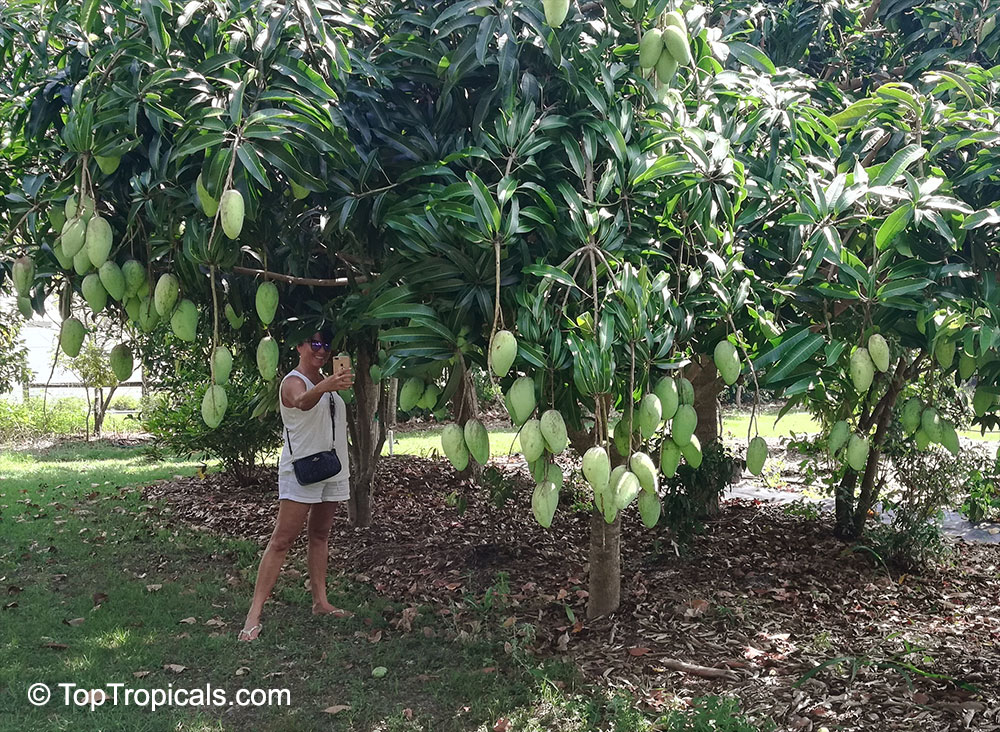
fruiting mango tree

🥭 10 steps: how to grow a mango tree?

Follow these steps and you'll be on your way to growing a healthy mango tree and enjoying delicious fruit:


1. ❗️ Choose the right variety that suits your needs and yard. See earlier posts:
5 most Favorite Mango Varieties
10 Dwarf "Condo" Mango
5 large and vigorous Mango varieties

2. 🌳 Buy a grafted tree from a reputable nursery to ensure better fruit quality and faster fruiting.

3. 🏡 Planting site: choose a sunny location with well-draining soil. Ensure there is enough space for the tree to grow, as some varieties can become quite large.

4. ⛏️ Planting: dig a hole twice as wide and just as deep as the root ball. Mix in organic compost to enrich the soil. Place the tree in the hole, making sure the growth point is 1-2"above the soil line. Fill the hole with soil, pressing gently to remove air pockets. Water the tree thoroughly.

5. 💦 Watering: Water the tree regularly, especially during the first few weeks. Allow the soil to dry slightly between waterings to prevent root rot.

6. Mulch: apply mulch around the base of the tree to retain moisture and suppress weeds. Keep the mulch a few inches away from the trunk to prevent rot.

7. Fertilize: use a balanced fertilizer formulated for fruit trees. We recommend Sunshine Boosters Mango Tango formulated specially for mango trees.

8. ✂️ Prune to shape the tree to encourage good airflow and sunlight penetration, and to improve the yield.
.

9. 🕷 Pest and disease control: monitor for scale and mealybugs and treat them with systemic pesticides. Keep an eye out for fungal diseases and treat them promptly with copper spray.

10. 🥭 Harvesting: Mangoes are ready to harvest when they change color and soften slightly.

🛒 Shop Mango Trees

#Food_Forest #How_to #Mango

🏵 TopTropicals