Garden Blog - Top Tropicals

Date: 8 May 2026

How to feed the right formula at the right time
How to feed the right formula at the right time

Most plants don't need more fertilizer - they need the right one at the right stage. Growth, flowering, and fruiting all require different support. Once you match feeding to what the plant is actually doing, everything starts to improve.

One system for every plant and stage

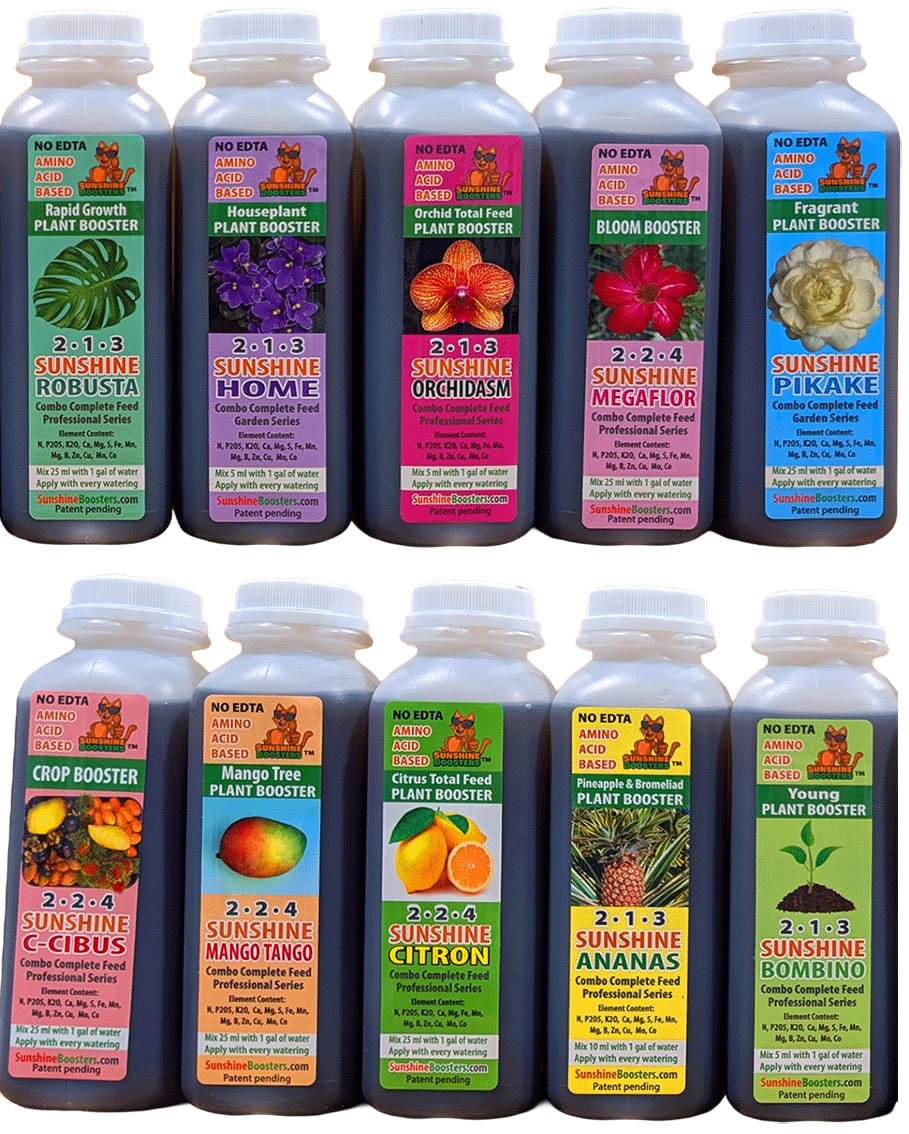
The Sunshine Boosters system includes different formulas for different stages of growth or plant types. Some are designed for young plants, some for vegetative growth, and others for flowering and fruiting. This allows you to match feeding to what your plant is doing without changing the overall system. All formulas, including additional supplements, remain compatible and can be used together when needed.

Build structure and foliage

Sunshine Robusta supports vegetative growth. It is useful for building strong structure, adding foliage, and helping plants recover after stress or damage.
Sunshine Bombino is a gentle formula for young plants, seedlings, and cuttings. It supports early root development without stressing tender growth.
Sunshine Home is made for indoor houseplants. It is mild and balanced for regular feeding of sensitive plants grown indoors.

Feeding for flowers
Sunshine Megaflor is a bloom booster. It helps plants produce more flowers, improves flower size, and supports strong pollen development.
Sunshine Pikake is designed for fragrant flowering plants. It increases the number of blooms and improves flower fragrance.
Sunshine Orchidasm is a complete feed for orchids. It supports steady growth and encourages longer and more frequent blooming cycles.

Feeding for fruit and yield
Sunshine C-Cibus is a crop and fruit booster. It is used during flowering and fruit development to improve yield and plant vigor.
Sunshine Mango Tango is designed for mango trees. It helps improve flowering, fruit set, and reduces flower and fruit drop.

Mango Plant Facts

Botanical name: Mangifera indica
Also known as: Mango
USDA Zone: 9 - 11
Highligths Large tree taller than 20 ftSmall tree 10-20 ftFull sunWatering: Moderate. Water when top soil feels dryYellow, orange flowersPink flowersEdible plantSeaside, salt tolerant plant
Get personalized tips for your region

Sunshine Citron is a complete formula for citrus trees. It supports healthy leaves, strong growth, flowering, and fruit production.
Sunshine Ananas is made for bromeliads and pineapple. It supports healthy growth and improves fruit quality in these plants.

To be continued - next we'll cover the additional boosters that take your plants from good to exceptional. More...

Get your plants real food

"
Learn more:
Why your plants need more than NPK
What makes Sunshine Boosters different
This changes how you feed your plants
Sunshine Boosters: Complete Plant Nutrition System
Frequently Asked Questions: Plant Nutrition & Fertilizer
Green Magic + SUNSHINE Boosters: A Complete System for Strong Plant Growth
Spring Nutrition Strategy: Is Your Garden Starving?
How to keep your house plants beautiful all year by feeding them right
Why do you need Sunshine Boosters?
Which dry fertilizer to use - slow release or controlled release?
Green Magic effect: before and after
The SECRET growers never tell you: simple trick how to bring plants back to life and keep green
" What are Sunshine Boosters

#Discover #Fertilizers #How_to

Join TopTropicals

Date: 23 Feb 2026

❄️ The Hardiness Report: February 2026 ❄️

🐾 Smokey & Sunshine’s real-world survival data from our Sebring, Florida Research Gardens. Smokey analyzed the data. Sunshine just stayed happy. Here is what they found.

Macadamia  tree  surviving  25F  freeze  as  Smokey  inspects  leaves  and 
 Sunshine  holds  steaming  coffee  in  frosty  garden.
Sunshine: Twenty five degrees. Wind chill fourteen. And it is still standing... like nothing happened?
Smokey: This is macadamia strength.
Sunshine: I should put a macadamia nut in my coffee and borrow some of that strength.
Smokey: Do not get too nutty yet. It still needs curing and cracking.

📊 Weather Data – February 1–6, 2026

Sebring, Florida – 132 years of recorded observations
This was not a light frost. It was a prolonged, windy, penetrating hard freeze.

  • 🌡 Minimum temperature: 25F
  • ❄️ Wind chill: 14F
  • ⏳ Duration: 3 nights of 8–10 hour hard freeze
  • ☀️ Daytime temperatures: around 50F for 7 days
  • 🌀 Wind: sustained 20 mph, gusts 40–50 mph

While all our plants in pots were protected in greenhouses, our in-ground plantings faced the freeze outdoors. We covered what we could. Even so, some plants were damaged, some died, and some surprised us by surviving.

In the next few newsletters, we will share the real survivors - the plants that proved themselves in the ground, under real conditions. Smokey and Sunshine have been out in the fields assessing the damage from the February 1–6 freeze. While many plants struggled, the Macadamia proved to be a true standout. This is how we grow them to handle the tough years.

Why does this matter? Because we have gotten used to warm winters, and this freeze was a rude awakening. Not everyone lives in Miami. If you garden in places where a real cold event can happen, you have to be prepared - and you have to plant what can take it.

🌰 Macadamia: Freeze Tested and Standing

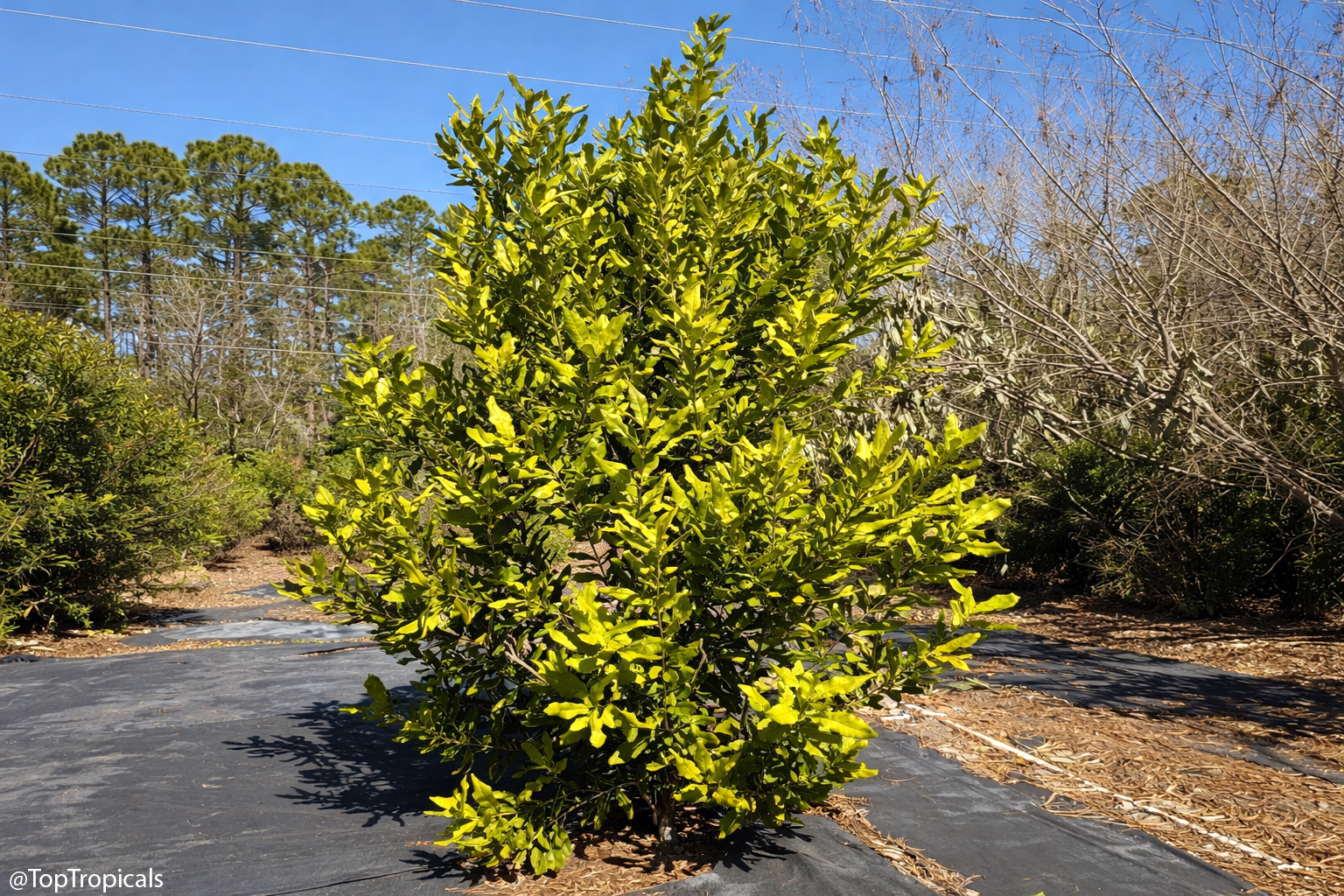
Three  year  old  macadamia  tree  after  three  nights  of  25F  hard  freeze  in 
 February  2026,  showing  healthy  foliage.

3 year old macadamia tree after 3 nights of hard freeze in February 2026 - standing strong.

When temperatures dropped to 25F with wind chill near 14F, our established macadamia trees remained upright, green, and structurally intact. Leaves held. Branches stayed firm. No collapse, no panic.

That is not luck. That is macadamia hardiness.

Often considered a "tropical luxury nut," macadamia proved it can handle more than many gardeners expect. In USDA Zones 9b-11, with proper drainage and site selection, it is not just ornamental - it is a long-term food tree with real resilience.

In a winter that reminded us not to take warmth for granted, macadamia earned its place on the survivor list.

The nut itself is famous for its strength. The shell is among the hardest in the nut world, requiring serious pressure to crack. Inside, the kernel is creamy, buttery, rich, and deeply satisfying. High in monounsaturated fats and naturally low in sugar, macadamias have long been valued both for flavor and for nutrition.

The tree is equally impressive. An evergreen with tough leaves and elegant spring flowers, it matures into a productive, manageable canopy. Nuts develop slowly over six to seven months. Production begins in a few years and increases steadily as the tree matures. Plant it once, and it can reward you for decades.

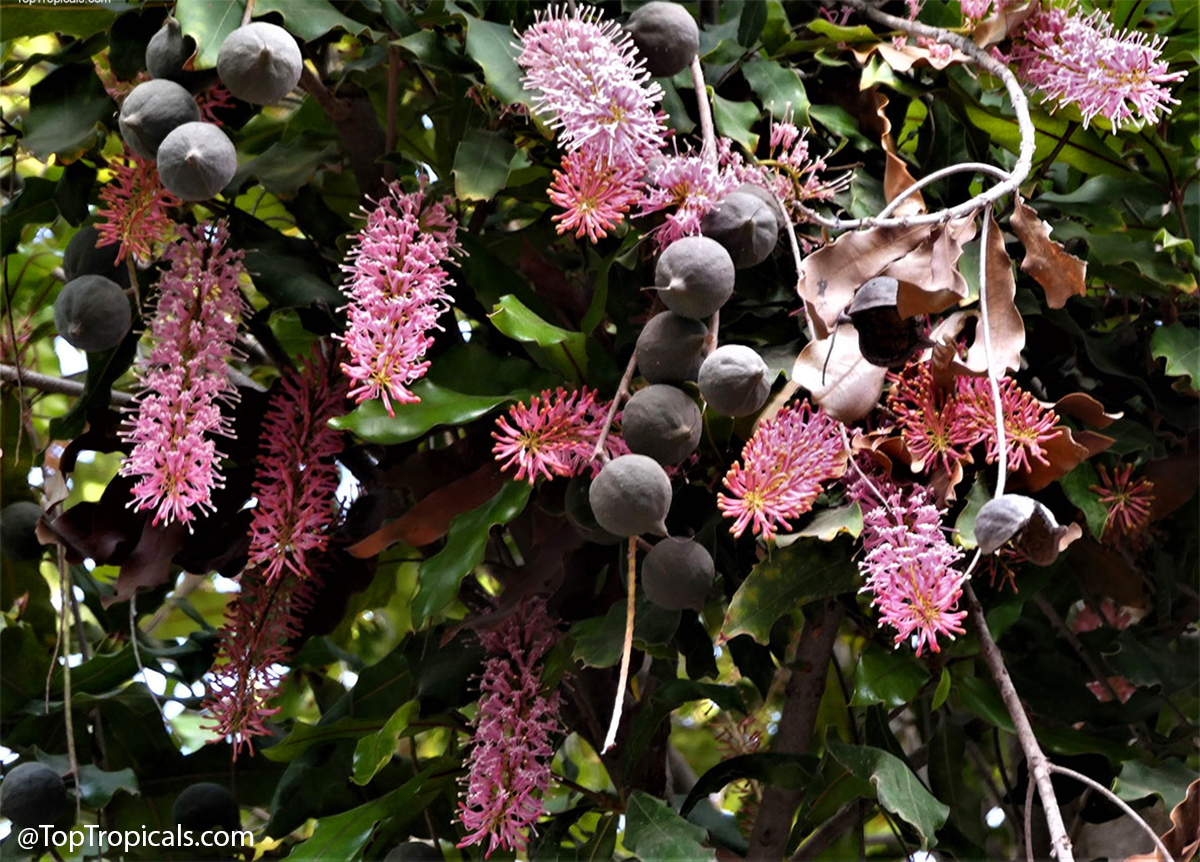
Macadamia  tree  with  pink  flower  racemes  and  developing  round  green  nuts
   on  branches.

Macadamia flowers and developing nuts on the tree.

Cold will come again. It always does. The question is not whether winter will test your garden. The question is whether your trees are ready. Macadamia proved it is. If you are building a garden that feeds you for decades, this is a tree worth planting.

🛒 Add Macadamia Tree to your garden

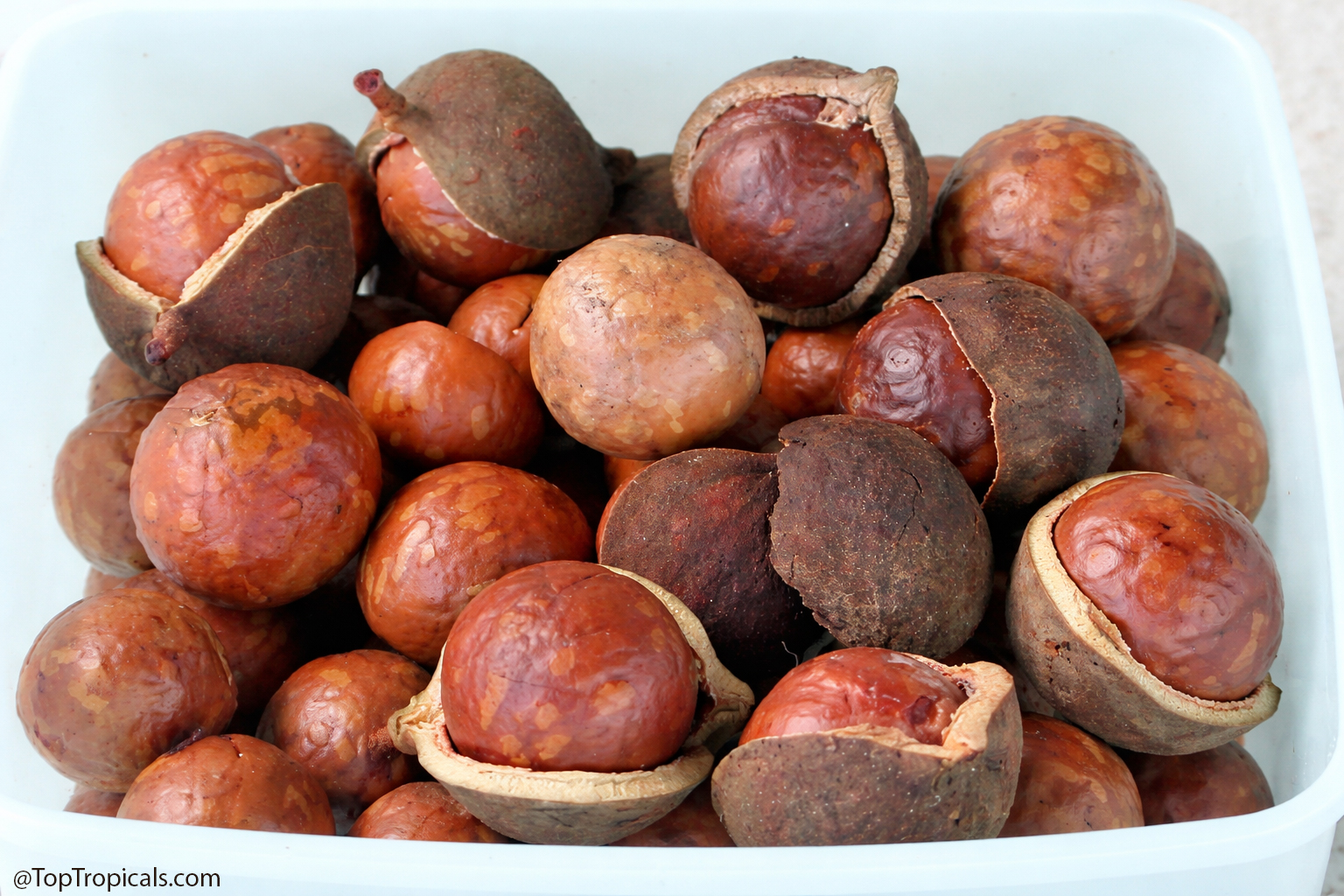
Fresh  macadamia  nuts  with  outer  husks  removed  and  hard  brown  shells 
 exposed  in  a  container.

Freshly harvested macadamia nuts with husk removed and hard shells visible.

Date: 10 Feb 2026

Cold-hardy avocado varieties - what freezing they really survive

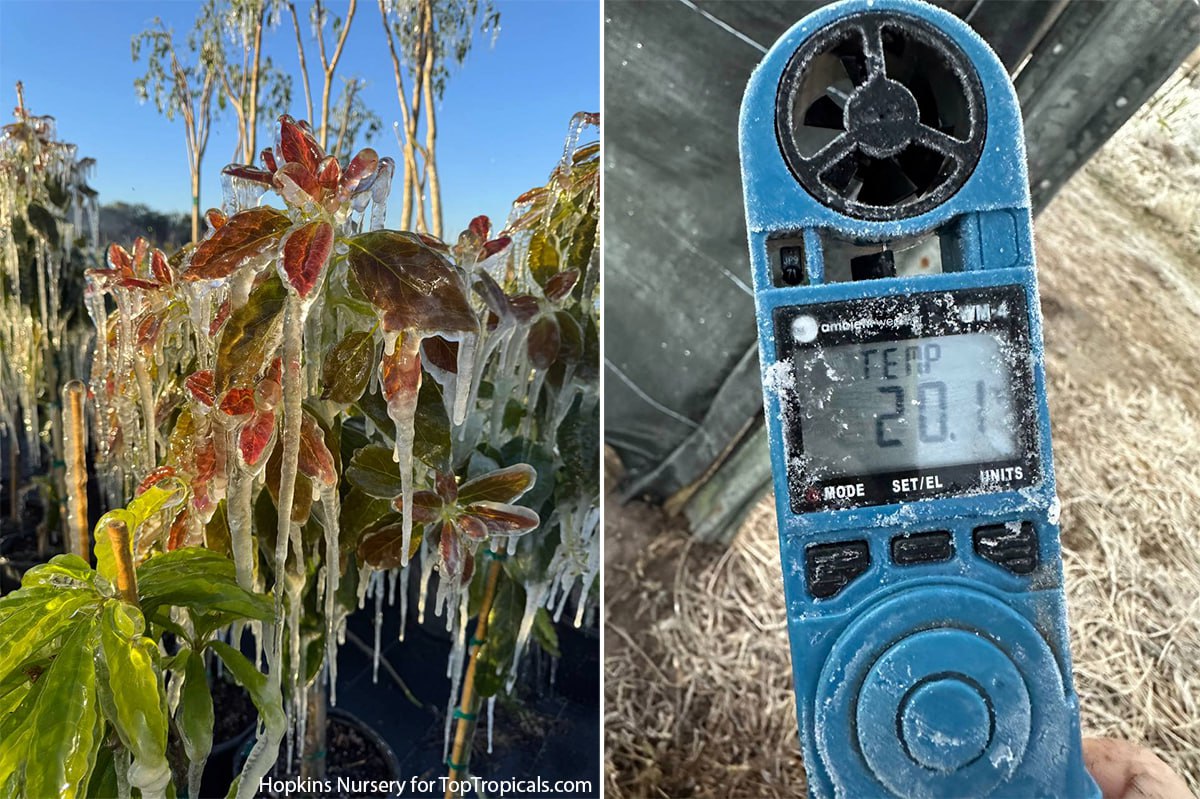
Avocado leaves covered with ice

Avocado leaves covered with ice

❄️ Cold-hardy avocado varieties - what freezing they really survive


Avocado trees are usually associated with warm, frost-free climates, so every winter freeze raises the same question - which avocados actually survive cold weather? After recent freeze events, interest spikes as gardeners look for real answers, not guesses. The truth is, avocado cold hardiness is not just about the lowest temperature. Duration, moisture, wind, and tree maturity matter just as much - sometimes more.

Avocado Plant Facts

Botanical name: Persea americana, Persea gratissima
Also known as: Avocado, Alligator Pear, Aguacate, Abacate
USDA Zone: 9 - 11
Highligths Large tree taller than 20 ftSmall tree 10-20 ftFull sunWatering: Regular. Let topsoil dry slightlyEdible plantSubtropical plant. Mature plant cold hardy at least to 30s F for a short time
Get personalized tips for your region


What cold hardiness really means for avocados


Cold hardiness does not mean an avocado tree escapes winter untouched. It simply means the tree survives a freeze without being killed.
Leaf burn, branch dieback, or temporary growth setbacks can still occur. Survival is the key distinction.

Cold tolerance is influenced by:


· Tree age and establishment. Young avocado trees are always more vulnerable. Once established, tolerance improves significantly.
· Length of the freeze
· Wind exposure
· Daytime sun and heat retention
· Drainage and soil moisture
· Overall tree health going into winter

Where cold-hardy avocados come from


The most cold-hardy avocados are of Mexican origin. These types evolved in cooler, higher-elevation regions and differ genetically from West Indian and Guatemalan avocados.
These varieties are widely grown around San Antonio, Texas (USDA Zone 8b), where trees have been damaged but not killed by temperatures near 10F. As a general rule, established Mexican-type avocados can tolerate short freezes (about 3-6 hours) down to roughly 15F with little or no permanent damage. Temperature estimates apply to established trees under favorable conditions. The best results come from combining the right genetics with smart planting, good drainage, and thoughtful winter care.

Why cold tolerance varies so much


Cold ratings are never absolute. The same variety can survive very different temperatures depending on conditions such as tree maturity, freeze duration, wind, microclimate, and humidity. For example, an avocado may tolerate 10-15F in dry Texas winters but only 15-20F in wetter East Coast conditions.

Planting and protection tips for colder climates


· Plant in the warmest available location, ideally near a south or southeast wall
· Protect trees from cold wind
· Ensure excellent drainage; standing water during cold weather is deadly
· Use raised mounds in poorly drained areas
During freezes, small trees should be covered, mulched heavily, and protected with frost cloth. In severe cold, gentle heat under covers may help. Mature trees often need little to no protection.

Avocado varieties known for the best freeze survival


These varieties are among the more reliable choices for colder regions once established, reported tolerance near 15F:
· Brazos Belle - medium to large purple-black fruit, season October-November
· Fantastic - green fruit with paper-thin skin, creamy texture, the most cold tolerant
· Joey - selected in Uvalde, Texas; purple-black fruit, excellent flavor, heavy producer, season September-October
· Lila - medium green fruit, season September-October (not to be confused with Lula)
· Poncho - medium to large green fruit

Cold-hardy avocados make growing this fruit possible beyond the tropics, but expectations must stay realistic. Survival does not mean zero damage, and protection still matters during extreme weather.

🛒 Explore cold hardy Avocado varieties

📖 Our Book: Avocado Variety Guide, Snack or Guacamole?
·
Hard copy · PDF File Download

📚 Learn more:


· Avocado Variety Guide
· How to protect Avocado from cold and how hardy is it?
· Avocado that laughs at frost: Mexicola Grande for cooler climates
· Cold hardy Avocado Joey - you eat it with the skin
· Cold-hardy avocados: how cold-hardy are they?
· Cold-hardy avocado survival groups - what the numbers really mean

🎥 Avocados survived 25F hard freeze 3 nights of Florida Record Freeze

#Food_Forest #Avocado #Discover #How_to

🟢 Join 👉 TopTropicals

Date: 21 May 2026

Rare Pineapple that looks like a sunset and thrives on neglect

Rare Pineapple that looks like a sunset and thrives on neglect Rare Pineapple that looks like a sunset and thrives on neglect Rare Pineapple that looks like a sunset and thrives on neglect

🌅 Rare Pineapple that looks like a sunset and thrives on neglect


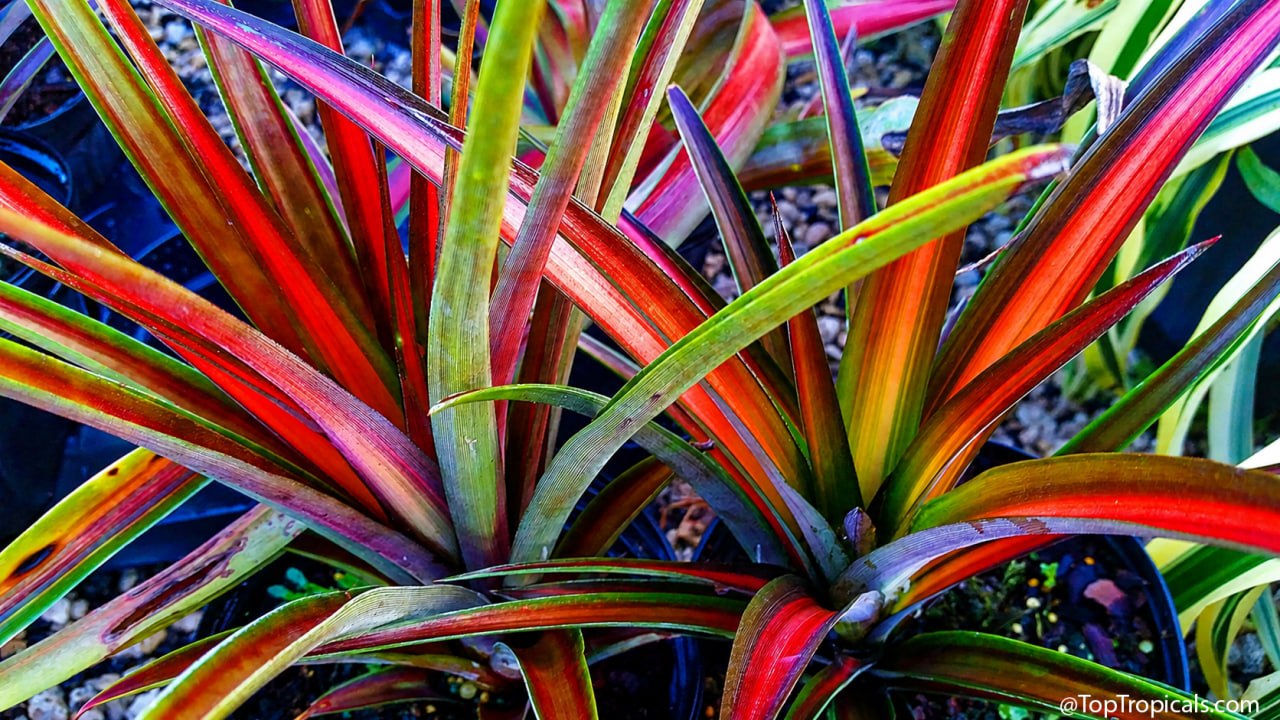
Forget plain green plants - this pineapple looks like a tropical sunset! One look at Pineapple Lava Burst and you immediately understand why people stop and stare. This isn't your typical pineapple plant hiding quietly in the background; the leaves explode with shades of burgundy, pink, cream, green, and bronze, often changing intensity depending on sunlight and temperature. Even gardeners who don't normally collect bromeliads suddenly want one after seeing it in person.

🍍 A pineapple plant that acts like living artwork


Pineapple Lava Burst belongs to the same plant family as bromeliads, and it definitely inherited the dramatic side of the family. The long arching leaves create a fountain-like shape, while the bold variegation gives the plant a painted appearance. In bright light, the burgundy and pink tones become especially intense, making the whole plant glow with tropical color.

Unlike many ornamental plants that only shine during bloom season, Lava Burst stays visually interesting year-round. Even without fruit, it looks like a centerpiece.

🍍 Yes - it actually produces a pineapple


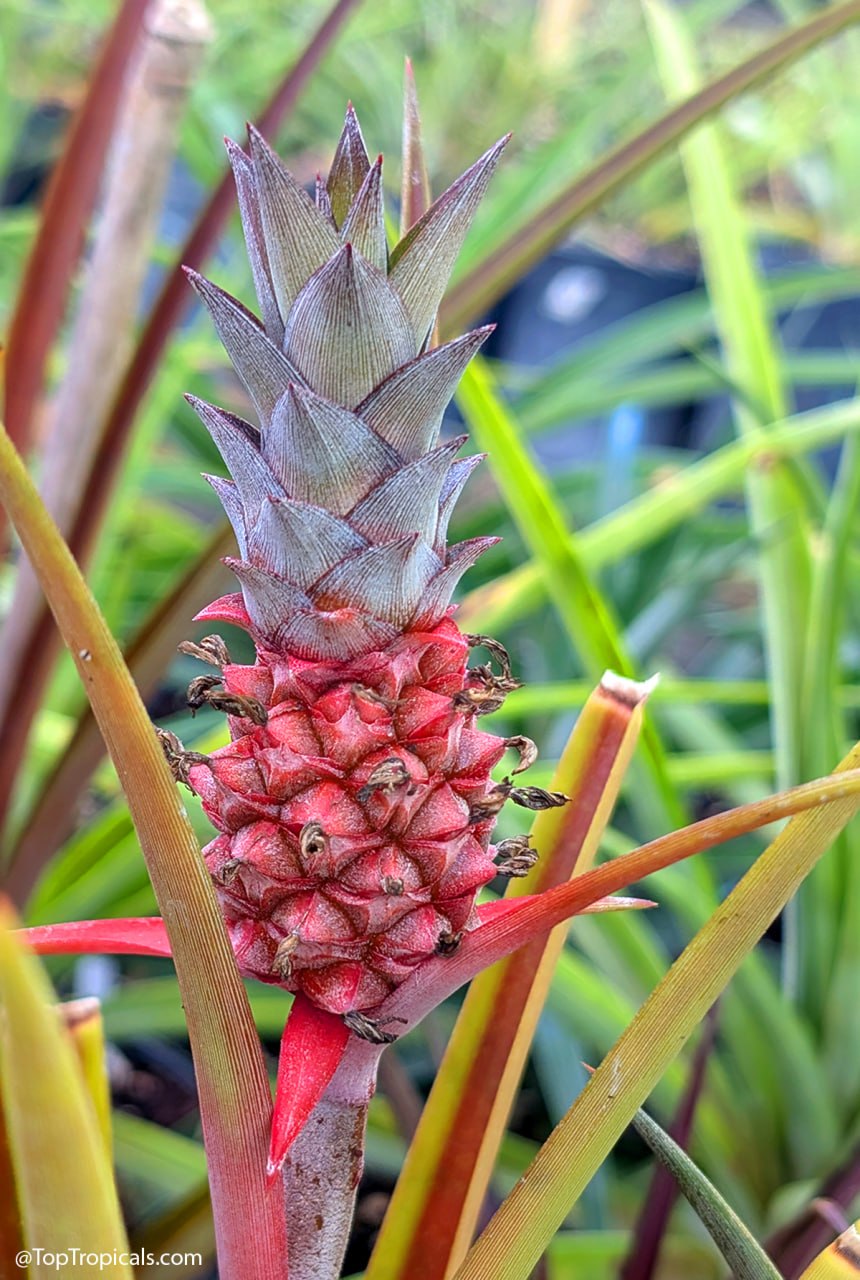
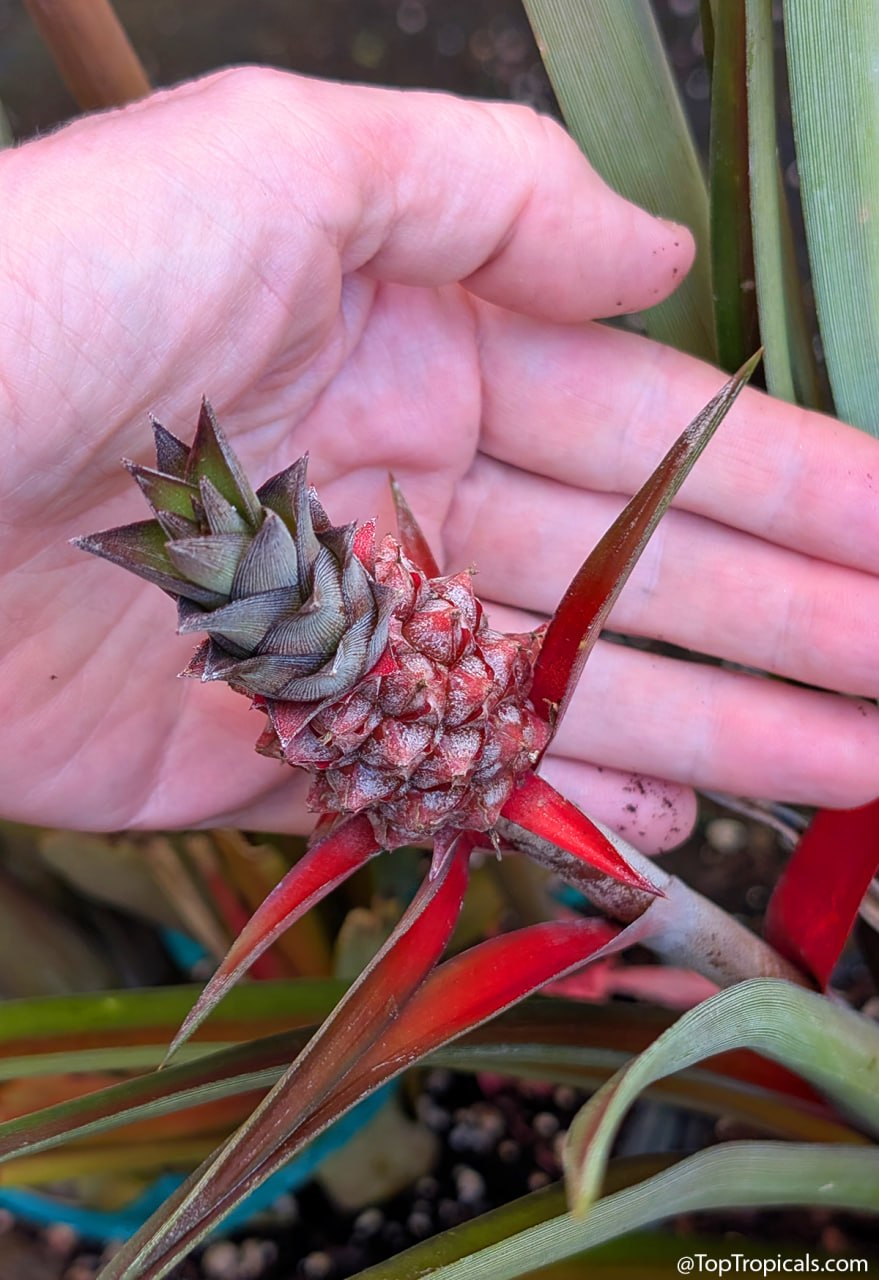
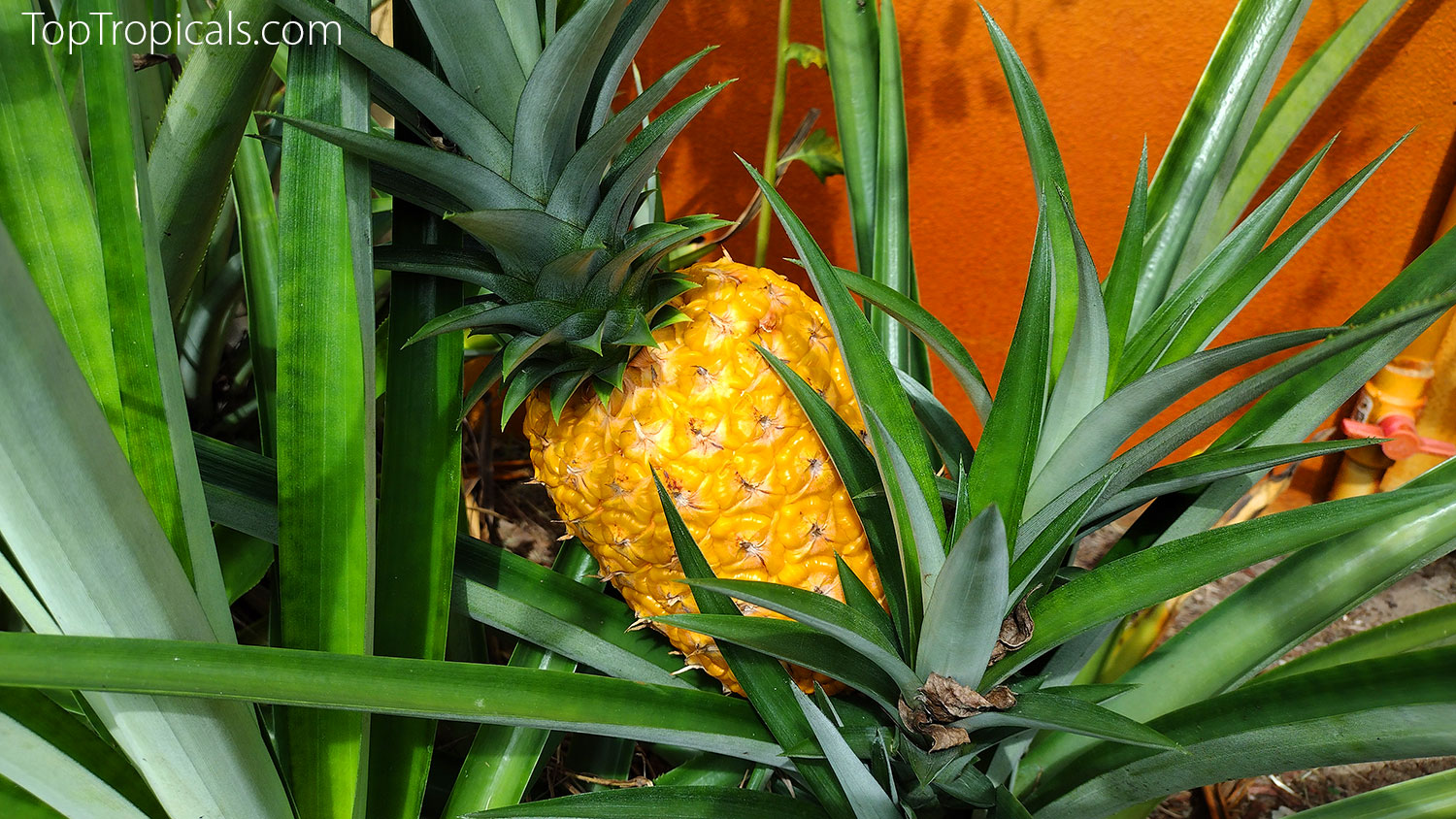
One of the fun surprises about Lava Burst is that it does produce a real edible pineapple. The fruit is usually smaller than grocery store pineapples, but that’s not really the point. When the colorful fruit forms in the center, the plant becomes a tropical sculpture - a combination of striped foliage and bright fruit that looks like it belongs in a botanical garden rather than a typical backyard.

🍍 Pro-Grower Tips for Success


  • 👌 Color Intensity: To get the most "lava" out of your plant, give it plenty of light. Increased UV exposure is the physiological trigger for anthocyanin production - the pigment responsible for those deep red and pink tones. If your plant is looking a bit green, it’s likely asking for a sunnier spot.
  • 👌 Cold Hardiness & Protection: While these thrive in the heat, they are sensitive to frost. After the recent 25°F freezes we’ve seen in Florida, remember that these are the perfect "mobile" plants. Because they handle containers so well, you can easily move them into a garage or indoors during a cold snap to protect the foliage from burn.
  • 👌 Fertilizing for Vibrancy: To keep the variegation crisp and the colors saturated, use a high-quality micro-element fertilizer - SUNSHINE Ananas - Pineapple and Bromeliad Booster with every watering. During active growth season, a gentle application of Green Magic provides the necessary nutrients to maintain plant health and color intensity without the risk of burning the delicate root system.


🍍 Surprisingly easy for a tropical-looking plant


Despite looking rare and complicated, ornamental pineapples are generally very manageable. Lava Burst likes warmth, bright light, and fast-draining soil. It handles containers extremely well, which makes it popular for patios, pool areas, lanais, and sunny windows indoors. Like many pineapple varieties, it dislikes soggy soil more than occasional dryness, making it much easier to grow than many fussy tropical foliage plants.

Its architectural shape also pairs beautifully with palms, crotons, cordylines, and other colorful tropical mainstays. Whether you have a sprawling poolside landscape or a small-space apartment garden, this plant brings a wow factor that is hard to beat.

🛒 Ready to add a burst of lava to your plant collection?
Check availability for Pineapple Lava Burst beyond traditional Pineapples

📚 Learn more:


Variegated Pineapple Lava Burst Rainbow in Plant Encyclopedia
What is the best pineapple to grow at home
What are the best varieties of Pineapples?
How we ate all pineapples from that ugly corner
The most luscious Hospitality Fruit: Pineapple
Three must-have fruit for every tropical garden

#Food_Forest #Container_Garden #Discover #Nature_Wonders

🟢 Join 👉 TopTropicals

Date: 27 Jul 2023

Top varieties of pineapples

Pineapple

Q: I want to grow my own pineapples, which varieties do you recommend for the best production? Do I need any special organic fertilizer?

A: Growing your own pineapple is pure bliss. Watching the transformation from a small crown into a luscious fruit is immensely rewarding. Every tropical gardener should experience the joy of growing this tropical gem and relishing its sun-kissed sweetness straight from the garden. Pineapples are easy to grow and can fruit in containers too, so if you live in a colder climate, no problem! They will take very little space in your greenhouse or sunroom. Just remember to feed your pineapple plants with Sunshine Boosters so they will feed you the biggest and the sweetest fruit! Sunshine Boosters are natural, organic-amino-acid based plant nutrients that are perfect for any edibles.
There are several varieties of pineapples in commercial cultivation. Below are the most interesting cultivars. Discover the pineapple paradise!

Elite Gold: Bursting with tropical flavor and vibrant gold flesh, Elite Gold dazzles with its unique taste and ornamental beauty.

Florida Special: Perfectly balanced sweetness and acidity, this variety thrives in warmer climates, gifting you a taste of Florida's sunshine.

Sugar Loaf: Irresistibly sweet with a hint of citrus, Sugar Loaf's compact size makes it an ideal choice for container gardening.

White Jade (Spineless Sweet): Exceptionally sweet and without spines, White Jade pampers you with a delectable, thorn-free harvest.

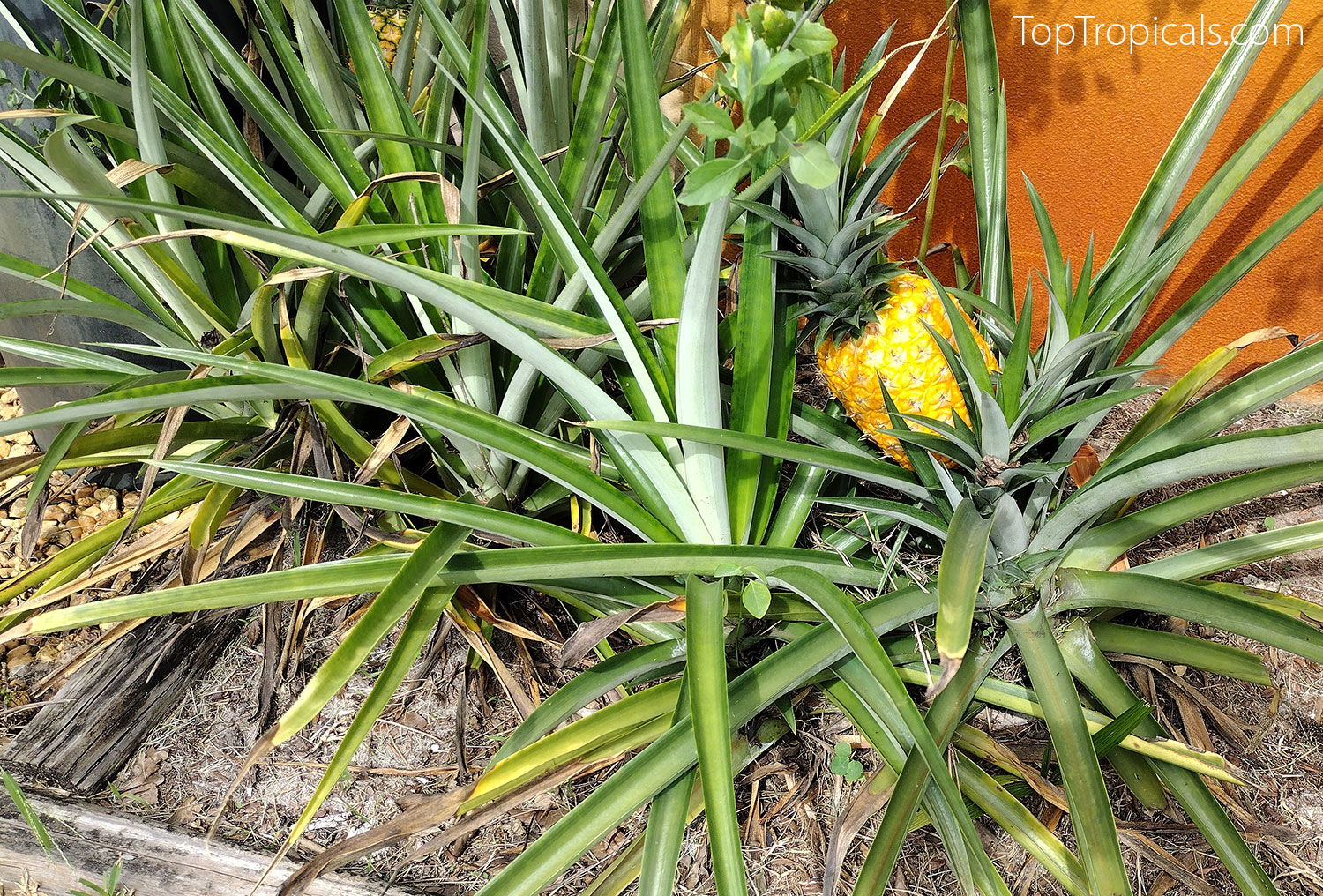
Lava Burst (Burgundy Variegated Rainbow): This visually stunning ornamental pineapple variety boasts striking burgundy and green leaves, resembling a rainbow of colors. Its fruit edible but small; its exceptional beauty adds a touch of exotic elegance to any garden or indoor space. Lava Burst is a delightful conversation starter and a captivating addition to your plant collection, making it a favorite among pineapple enthusiasts for its aesthetic appeal.

Embrace the sense of accomplishment and the satisfaction of savoring homegrown, mouthwatering pineapples - nature's sweetest gift!

Read more about Pineapples: The most luscious Hospitality Fruit.

Pineapple