Garden Blog - Top Tropicals

Date: 2 Mar 2026

😼😺 The Story Behind Smokey and Sunshine 🐾

Smokey  and  Sunshine  in  office  presentation  about  Cherry  of  the  Rio 
 Grande  freeze  survival,  with  Sunshine  pointing  at  polar  bear  and  penguin 
 marketing  poster,  coffee  and  donuts  on  table,  tropical  plants  on  shelves  in 
 background.
Sunshine: You know, February 27 was International Polar Bear Day. I just learned about it and got a brilliant marketing idea. Cherry of the Rio Grande survived 25F. With wind. Real wind. That means we go north. Let them taste this magic. I even have a donut recipe with the fruit. It’s a bomb, Smokey. We expand. Trust me. Finally you can afford that new watering timer.

Smokey: Not so fast, genius. Twenty five degrees is not the North Pole. And polar bears and penguins do not share zip codes.

Sunshine: You always pour cold water on my brilliance. Fine. Where do we start?

Smokey: Well, first you go talk to Tatiana. She graduated from the Geography Department. She can explain climate zones. Cherry of the Rio Grande can grow in North Florida, Texas, and similar climates. Let’s master that before we conquer Arctic.

Sunshine: So… Phase One: Geography?

Smokey: Exactly.

Some stories are easier to tell with a little humor. Smokey and Sunshine were never just mascots. They represent the two forces behind every decision we make here: bold ideas and careful reality. One dreams big. The other checks the climate zone map. Together, they remind us that growing plants is part science, part optimism, and always personal. If you have ever wondered why they keep appearing in our newsletters, you can read their full story on the Smokey and Sunshine page. They have been with us longer than most people realize.

🐾 Learn the Story of Smoky and Sunshine

Freeze Testing of Grumichama and Cherry of Rio Grande 🍒❄️
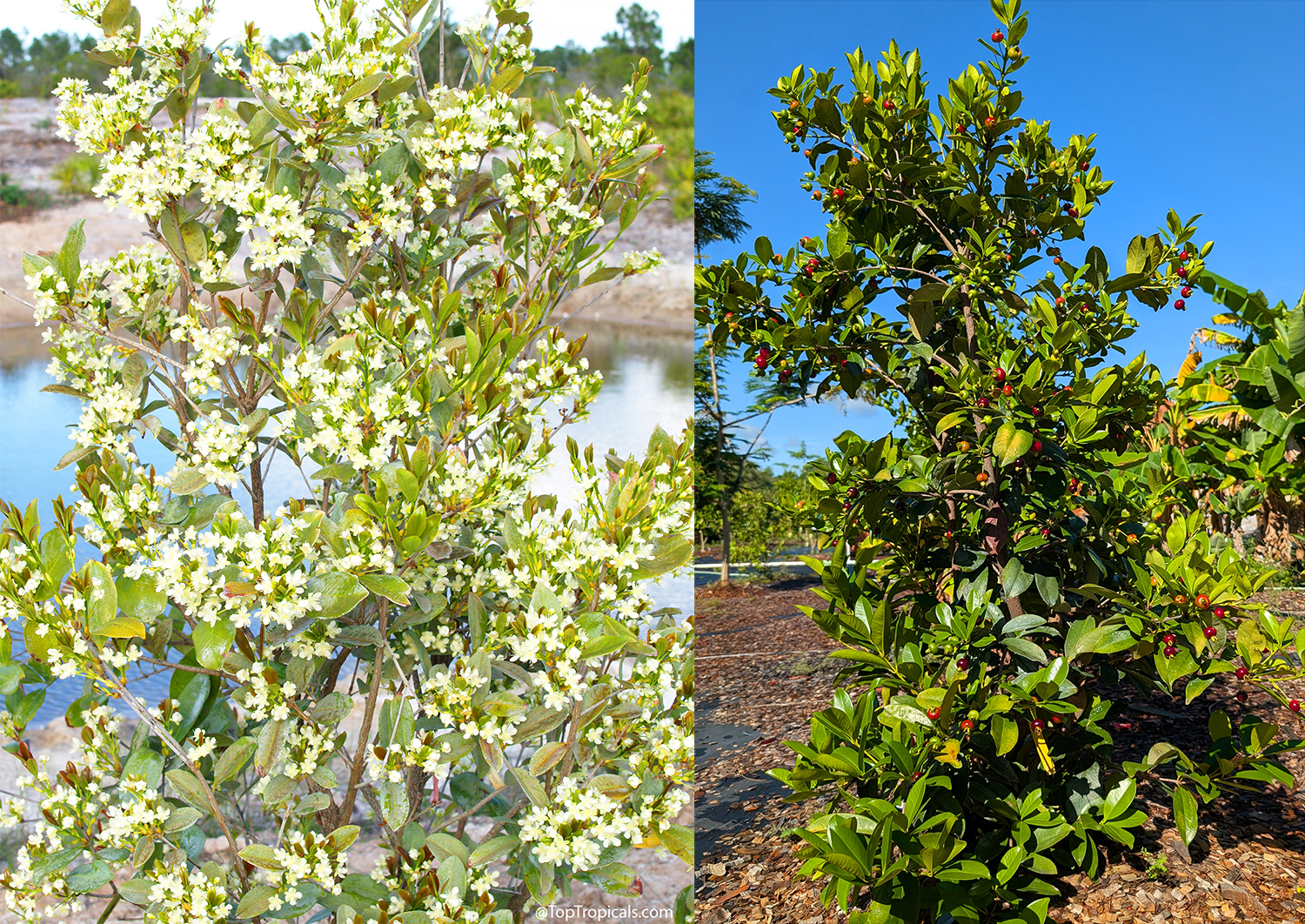
Grumichama  tree  (Eugenia  brasiliensis)  showing  white  flowers  and  ripe 
 red  fruits  in  tropical  garden 
 conditions

Eugenia brasiliensis - Grumichama tree flowering and fruiting

When temperatures dropped to 25F, with wind chill near 14F, winter made it clear which tropical trees were truly resilient. Some plants burned back. Tender growth collapsed. But our established Eugenia cherries stood steady. Leaves held. Branches stayed flexible. The canopy remained intact.

Cherry of the Rio Grande (Eugenia aggregata) and Grumichama (Eugenia brasiliensis) are among the most cold-hardy tropical cherries for Southern gardens. Both are native to Brazil and thrive in USDA Zones 9b–11, and even protected 9a sites.

Cherry of the Rio Grande produces dark ruby fruit that ripens almost black, with a rich, full cherry flavor. It flowers early in spring and can fruit well into summer. Mature trees can tolerate brief drops into the low 20s once established. Trees typically grow 8 to 15 feet tall, remain naturally compact, and often begin fruiting within 2 to 3 years.

Grumichama is an evergreen tree known for both beauty and productivity. In spring, it covers itself in white starburst flowers that attract pollinators. Within about four weeks, glossy purple-black fruit develops. Established trees tolerate temperatures into the upper 20s and grow well in the ground or in 5–10 gallon containers. Mature trees can produce hundreds of fruits per season.

Across the Eugenia group, strengths are consistent: early bearing, compact growth, heat tolerance, light freeze endurance, and low pest pressure. They are adaptable to different soils, need modest water once established, and perform in full sun or partial shade. Birds enjoy the fruit, but there is usually plenty to share.

Nutritionally, Eugenia cherries provide Vitamin C, fiber, antioxidants, and notable Vitamin A that supports eye health. They offer sweetness with real dietary value.

In the kitchen, they are simple and rewarding. Cherry of the Rio Grande makes an easy compote. Simmer the fruit with a small amount of water until soft, mash lightly, and spoon over pancakes or warm bread. Grumichama turns into a deep red jam with sugar and lime, or can be blended into a bright spoon drizzle over vanilla ice cream.

Even when not fruiting, both trees remain attractive year-round with glossy evergreen foliage and clean structure. They fit well into edible landscapes, small yards, and container gardens.

Winter will return. The difference lies in planting fruit trees that can handle heat, humidity, and the occasional cold snap. If you are building a food forest for lasting harvests, cold-hardy tropical cherries like Cherry of the Rio Grande and Grumichama deserve a place in your garden.
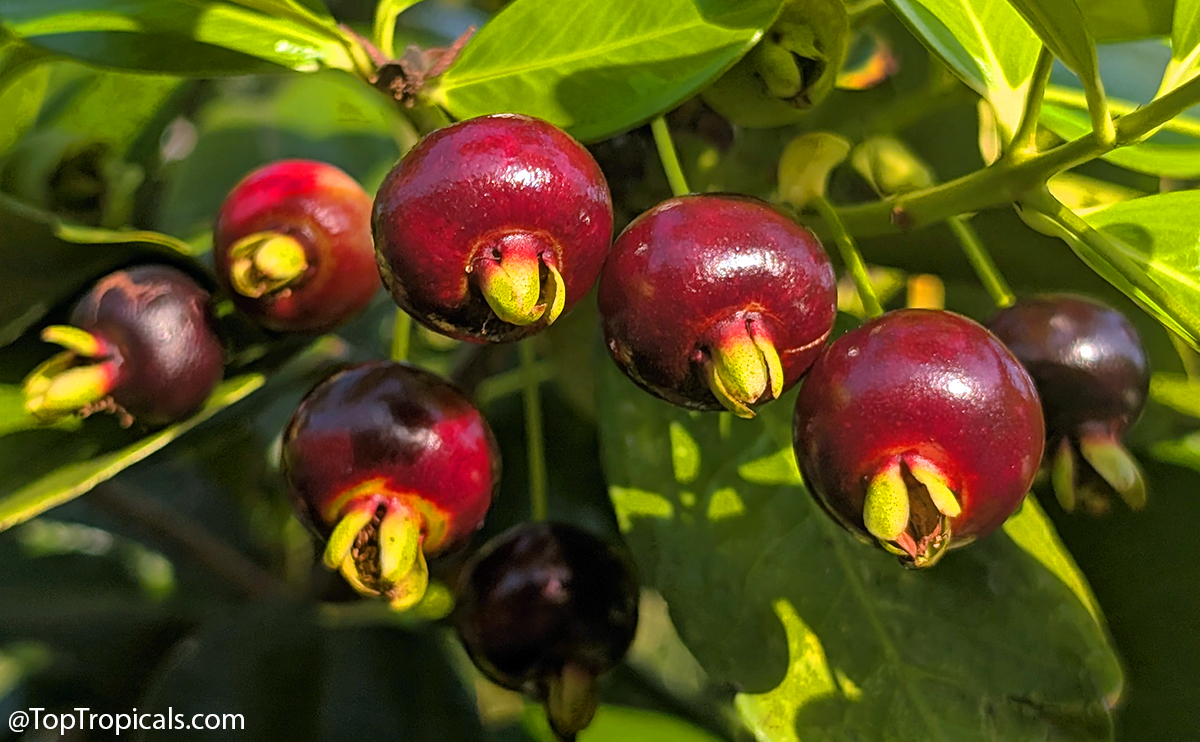
Ripe  Grumichama  fruits  (Eugenia  brasiliensis)  hanging  on  a  branch  with 
 glossy 
 leaves

Ripe Grumichama (Eugenia brasiliensis) fruits developing on the tree, turning deep red to nearly black when fully mature.

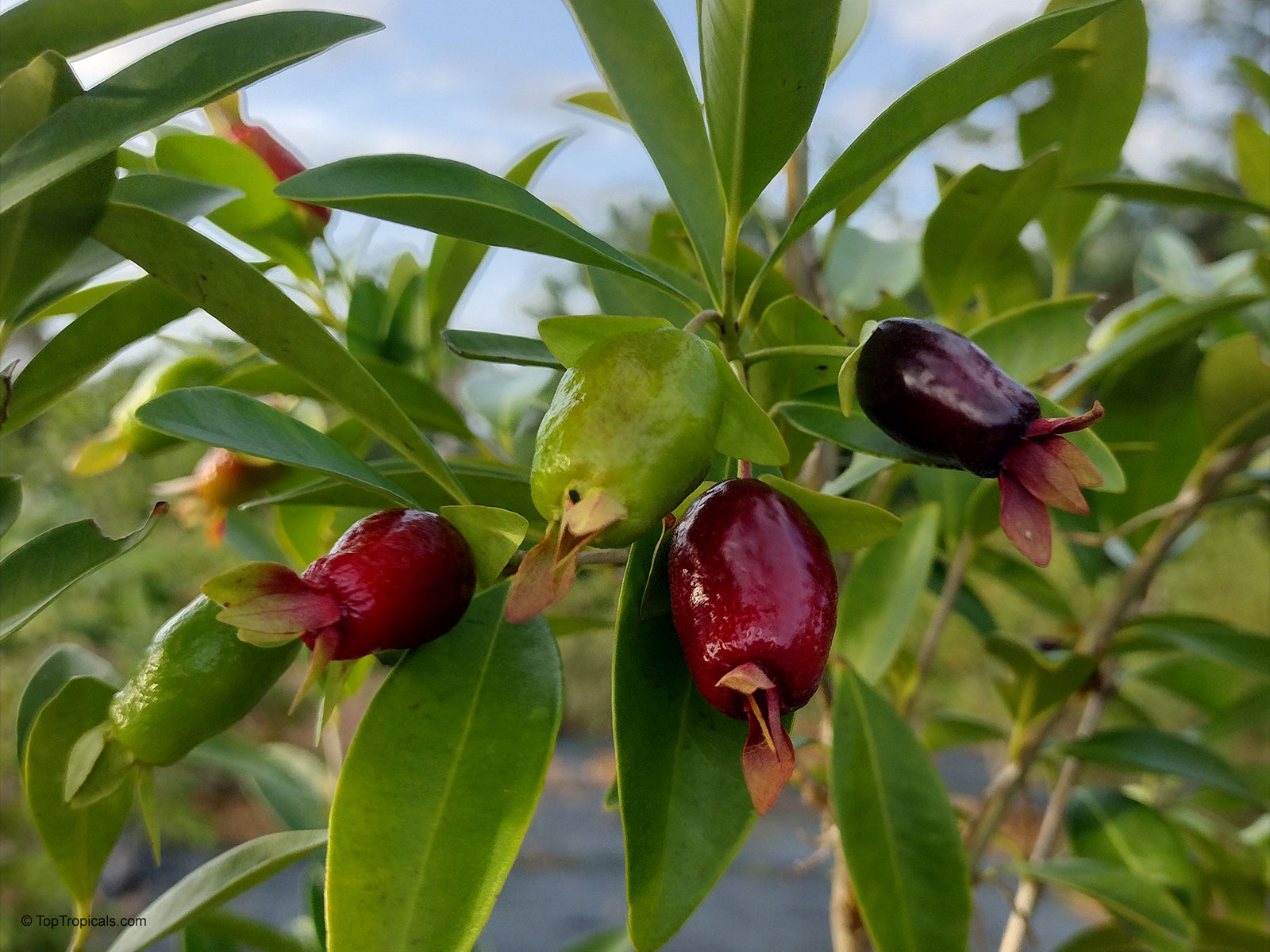
Cherry  of  the  Rio  Grande  (Eugenia  aggregata  cv.  Calycina)  fruits 
 ripening  from  green  to  dark  purple  on  the 
 branch

Eugenia aggregata (cv. Calycina), Cherry of the Rio Grande

🛒 Plant hardy Eugenia cherries

Date: 6 Jan 2024

Sunshine Boosters
Winter use... and discount!

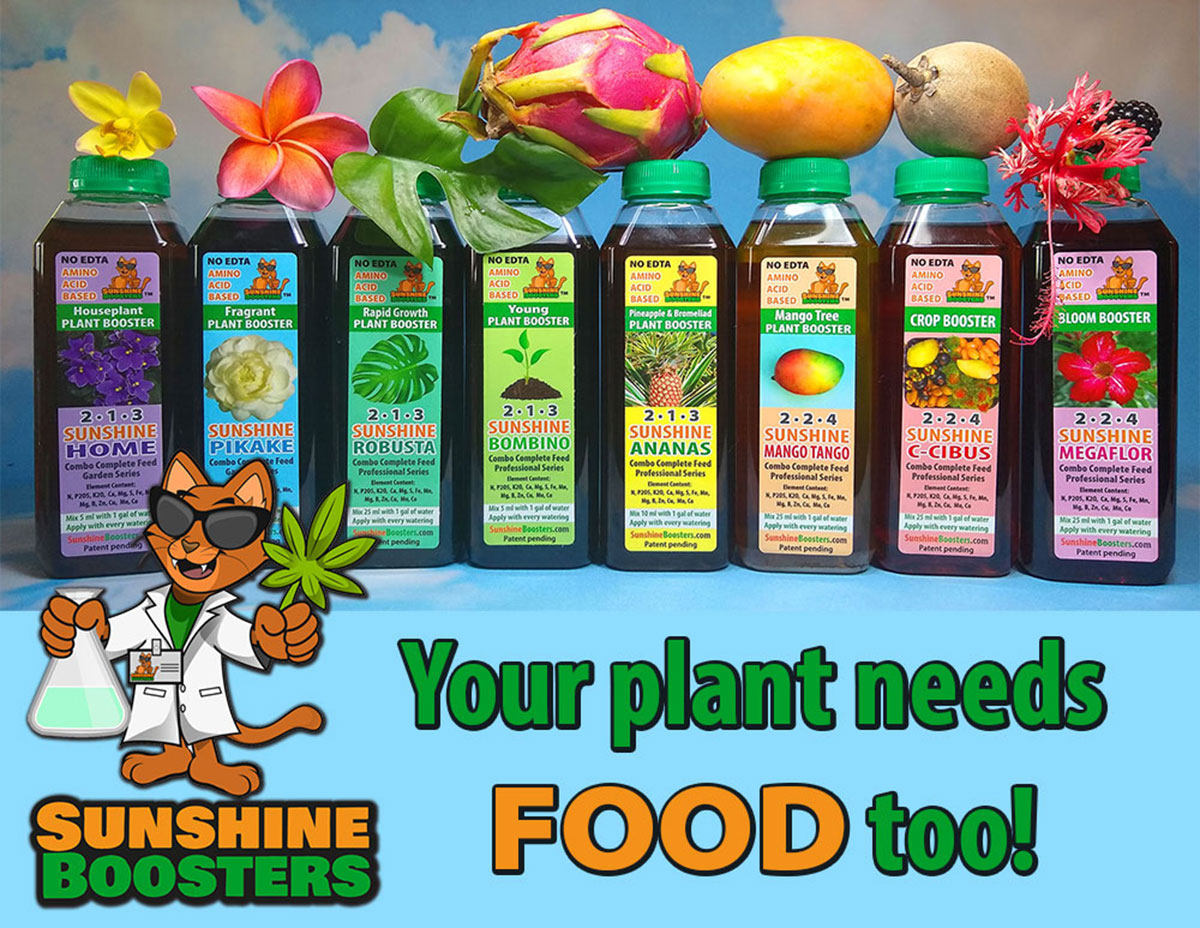
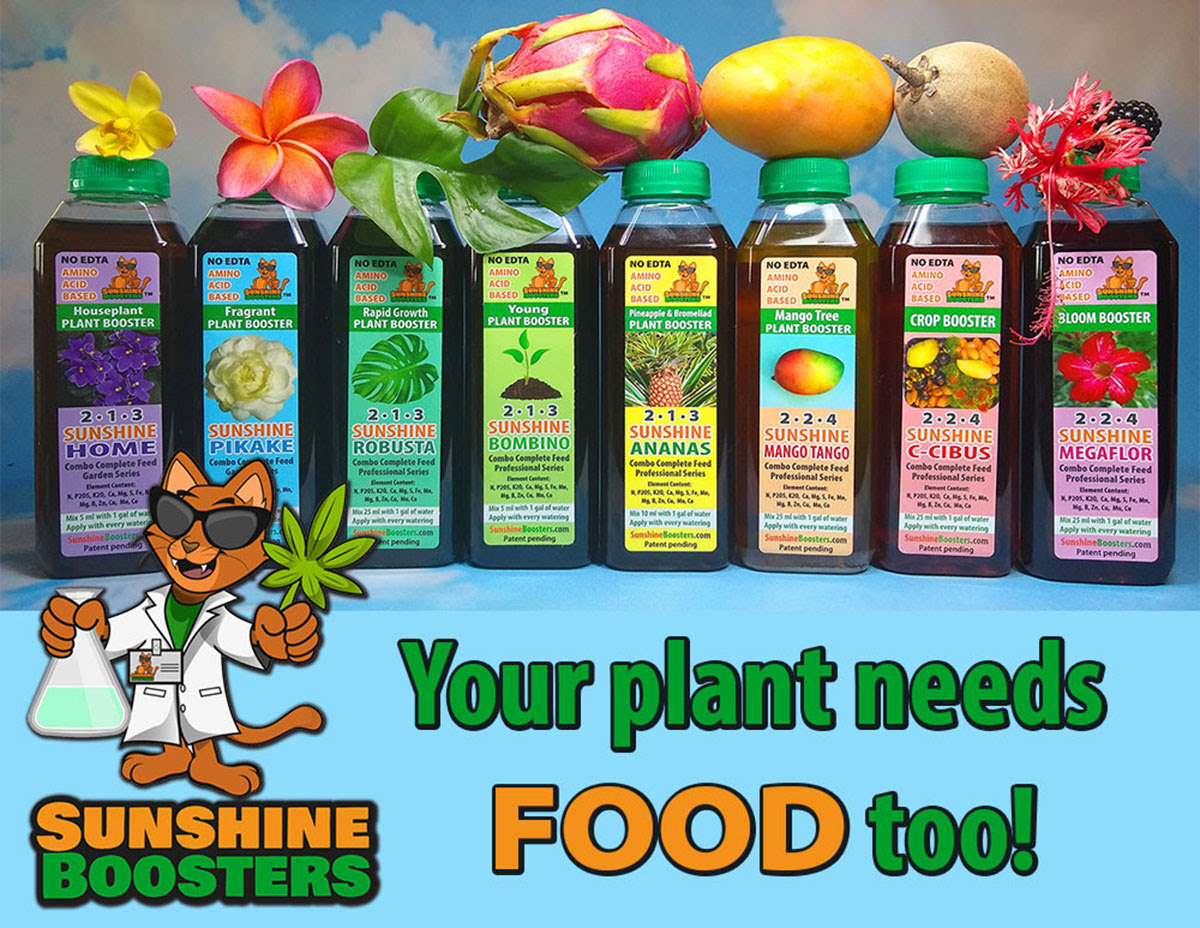
Sunshine  Boosters  different  formulas

Do you remember that Sunshine Boosters fertilizers can be applied year-round?

As natural fertilizers, their scientifically created formulas provide perfectly balanced nutrition for your plants throughout the year. Follow the instructions on the labels and apply Sunshine Boosters with every watering. Give your plants extra boost during winter months! The fertilizer amount is balanced, adjusting proportionally to the water amount, which is tailored to the plant's winter needs. Unlike dry fertilizers, Sunshine Boosters can be used all year without fear of burning plants with excessive nutrient lockup.

Take advantage of the winter sale and stock up on this perfect plant food. You'll need plenty by Spring when your plants begin active growth! Use the code below for 20% off all Sunshine Boosters products. Hurry up, the sale will end in a few days!

SBOOSTERS20

Min order $20, excluding S/H. Exp. 1-12-24

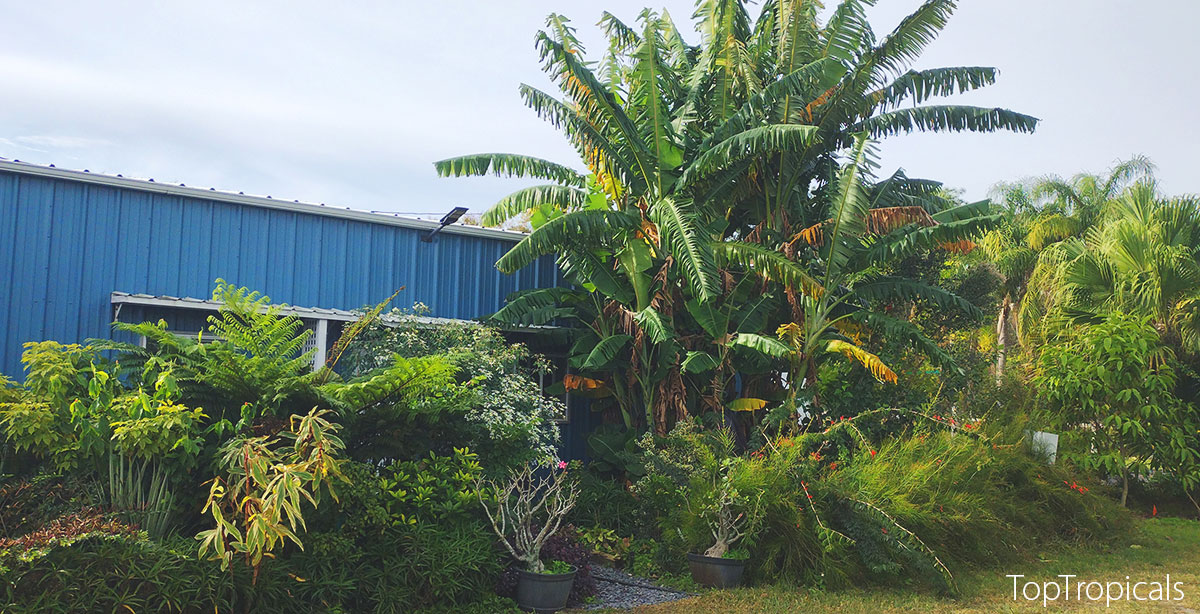
Sunshine  Boosters  effect  in  the  garden

In the photo above: This picture was taken on Christmas Eve, December 24, 2023. The little garden by our B-farm office, irrigated automatically with Sunshine Boosters using the Robuster injector, is thriving in spite of cool nights. Look at this crazy banana, it is taller than the building, we honestly have never seen a banana of that size! The solution we are using there is Sunshine Robusta; now available for pick up in 2.5 gal jugs!

Date: 31 Dec 2016

New Video: SUNSHINE Plant Boosters

TT Laboratories presents: SUNSHINE In A Bottle!

Check out this video: SUNSHINE In A Bottle


SUNSHINE is a new generation of a plant booster, formulated specifically for tropical plants. SUNSHINE intention and direction is towards the general health of the plant and boosting its immune system; helping plant to recover from stress, increase flower and fruit production, improve cold hardiness, disease resistance, seed germination and much more!
TTLaboratories is offering the following products:
- SUNSHINE E - for general applications, stress relief and growth boosting
- SUNSHINE T (Thermo) - for better cold tolerance
- SUNSHINE BC - for bonsai and caudex
- SUNSHINE S - for seeds germination
- SUNSHINE H - for house plants
All of the SUNSHINE products come in an easy to use dropper for small to large application use.

Get some SUNSHINE!...

Stay updated with TopTropicals Videos by subscribing to our channel at YouTube.com/TopTropicals and get our latest video news of what's fruiting and blooming!

Date: 2 May 2026

What makes Sunshine Boosters different

What makes Sunshine Boosters different

What makes Sunshine Boosters different


If your plants look stressed, slow, or inconsistent, the issue might not be your care - it might be how you’re feeding them. Most fertilizers are harder to use than they should be. Once you understand why, everything starts to make sense.

  • ☘️ Why fertilizers are so confusing?


If you’ve ever stood in front of a shelf full of fertilizers thinking "what do I even pick?" - you’re not alone.
Most feeding programs are a mess. Different brands, different formulas, different schedules. One for growth, one for bloom, one for micros, one more "just in case".
And somehow it still feels like guesswork.
Easy to overfeed. Easy to underfeed. Easy to waste money.
That’s exactly the problem Sunshine Boosters were built to solve.
The formulas are balanced and mild, so you can use them regularly without stressing about mistakes.
Now here’s where it gets interesting.

  • ☘️ The problem with traditional fertilizers


Most traditional fertilizers weren’t made for how we actually grow plants today. Dry fertilizers are built for large field use. They often carry excess salts and don’t work well in containers or soilless mixes. Many don’t even include enough trace elements.
And over time, they can build up in the soil.
Sunshine Boosters works differently.

  • ☘️ Why liquid feeding wins


First - it’s liquid.
Plants don’t eat nutrients, they drink them. Liquid feeding means nutrients are available right away. Every watering becomes feeding. No waiting, no uneven supply.

  • ☘️ Amino-acid chelation - the real difference


Second - the way nutrients are delivered is completely different.
Most fertilizers use synthetic chelators like EDTA. They keep nutrients stable, but plants have to spend energy to use them.
Sunshine Boosters use amino-acid chelation instead.
That means nutrients come in a form plants already recognize and use naturally. Less effort for the plant, more energy for growth, flowers, and fruit.
And there’s no salt buildup over time.

  • ☘️ Low salt index - better water uptake


Speaking of salts - this is a big one.
High salt levels in fertilizers actually make it harder for plants to absorb water. That’s why plants can look stressed even when the soil is wet.
Sunshine Boosters has a low salt index.
Less resistance, better water flow into the roots, better hydration, stronger plants.

  • ☘️ Faster growth without the risk


Put it all together and you get faster growth, stronger structure, more flowers and fruit - without the usual risk of burning or overdoing it.
Because the nutrient levels are balanced and not overly concentrated, they do not affect the natural taste of fruits and edibles.
The products are also safe for regular use and friendly to pollinating insects, which is important for fruit production.

☘️ Feeding made simple


And the best part?
It’s simple.
Mix Sunshine Boosters with water. Use it when you water. That’s it.

  • 👉 Stay with us - next we’ll break down how different formulas match different plant needs, so you can get even better results. 👉 More...


🛒
Get your plants real food

📚
Learn more:
📱 What are Sunshine Boosters

#Discover #Fertilizers #How_to
🟢 Join 👉 TopTropicals

Date: 20 Nov 2024

Sunshine Boosters Winter Use

The magic fertilizer in action

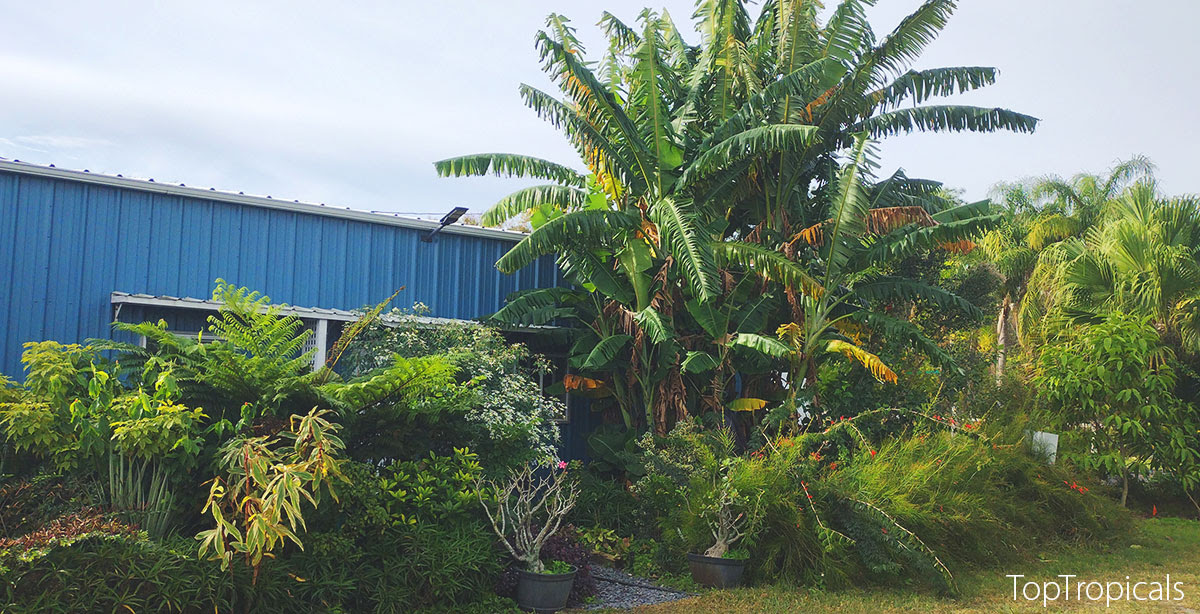
Crazy  banana  with  Sunshine  boosters

Do you remember that Sunshine Boosters fertilizers can be applied year-round?

As natural fertilizers, their scientifically created formulas provide perfectly balanced nutrition for your plants throughout the year. Follow the instructions on the labels and apply Sunshine Boosters with every watering. Give your plants extra boost during winter months! The fertilizer amount is balanced, adjusting proportionally to the water amount, which is tailored to the plant's winter needs. Unlike dry fertilizers, Sunshine Boosters can be used all year without fear of burning plants with excessive nutrient lockup.

Those who visited on B-Farm in Sebring, have noticed our little garden by the office, with plants that are always happy and vigorous - year around. They are irrigated automatically with Sunshine Boosters using the Robuster injector. We are proud of our "crazy banana", it is taller than the building, we honestly have never seen a banana of that size! The solution we are using there is Sunshine Robusta (also available for pick up in 2.5 gal jugs).

Save on Sunshine Boosters with the discount code above!

your  plant  needs  food  -  sunshine  boosters