Q: I live in the area with cooler winters so I am
keeping my mango tree in a pot. What fertilizer do you recommend for the best growth and fruit production?
A: If you're growing fruit trees in pots, using liquid
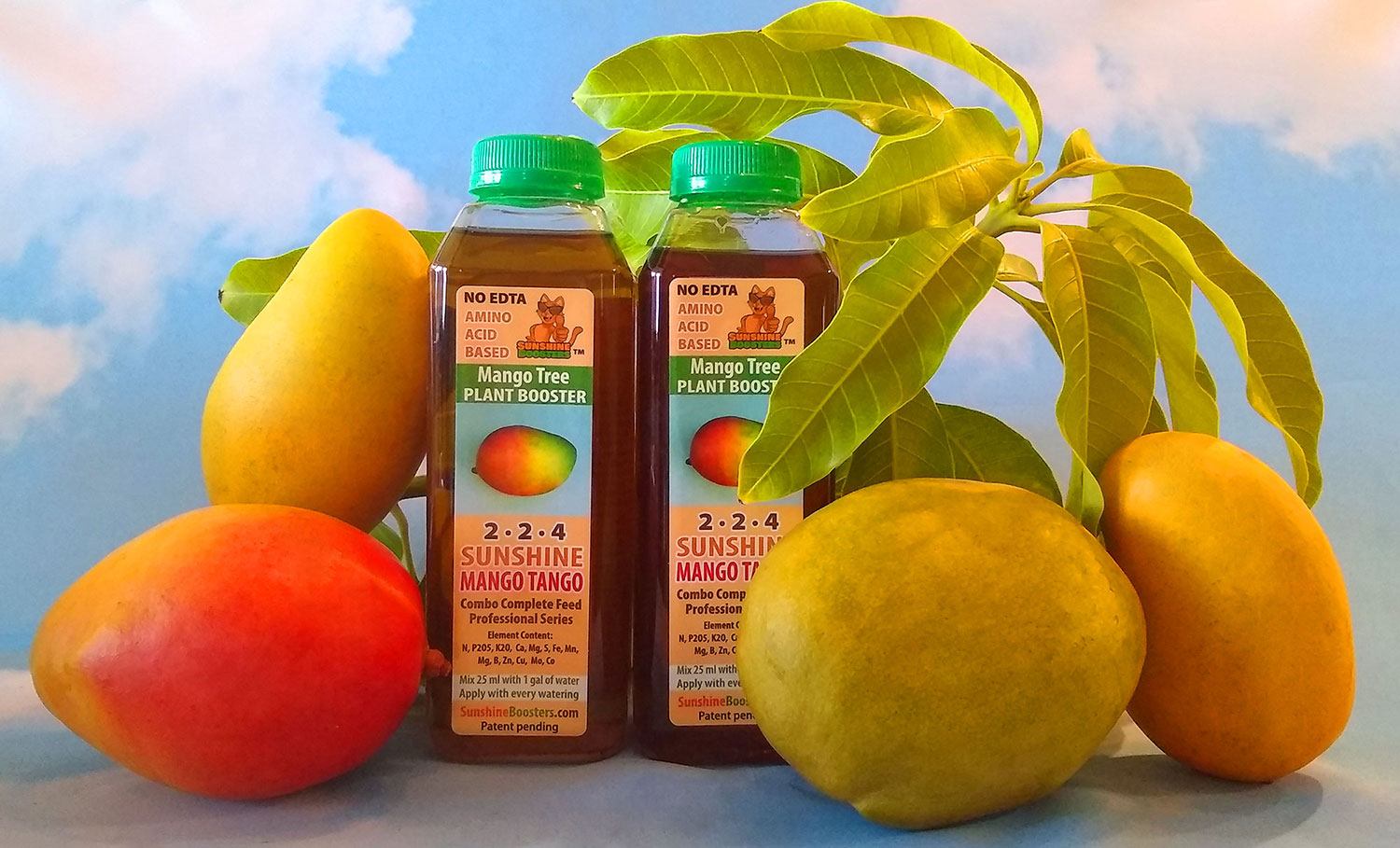
fertilizers is a great choice. And when it comes to liquid fertilizers, ones that are based on amino acids are super cool because they're natural and
plants can gobble up all the good stuff without any problems. So, if you have a mango
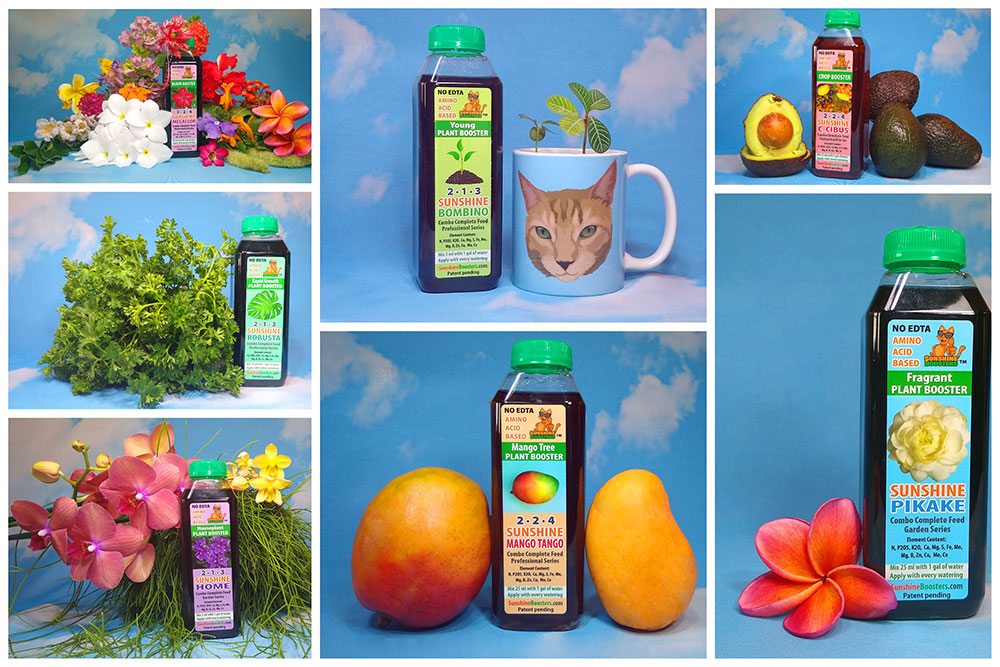
tree, the absolute star in amino acid-based fertilizers is -
Your tree will be doing a happy dance with this stuff!
Why Sunshine Boosters liquid fertilizers are so
popular?
Here are a few awesome reasons:
1. Speedy nutrients:Sunshine Boosters liquid fertilizers are like a fast pass for plants. They get absorbed by the roots super quick, giving your fruit tree a
speedy delivery of all the nutrients it needs. This is especially great for
potted plants with limited soil space, like those yummy fruit trees.
2. Nutrients for all: Sunshine Boosters are like the fairy godmothers of
nutrients. When you pour them around the base of your tree, they spread out evenly, making sure every bit of the tree
gets its fair share of the good stuff. No nutrient deficiencies allowed!
3. The power of precision: Sunshine Boosters liquid fertilizers and other cool plant supplements let you become a master
mixologist for your plant. You can measure and mix them just right, giving your tree the exact nutrients it craves. It's
like creating a customized cocktail for your tree's taste buds. Try adding the
magic works of SUNSHINE
Microelement Supplement Kit - that improves hardiness, vigor, and production.
4. Leafy goodness: Sunshine Boosters have a secret talent - they can be sprayed directly on the leaves! It's
like giving your tree a refreshing nutrient-packed spa treatment. The leaves slurp up
those nutrients, bypassing any soil limitations. Talk about a VIP treatment!
Remember, while liquid fertilizers are awesome, they work best when you team them up with other good plant care practices. So don't forget to water properly, keep that soil in
tip-top shape, and give your tree plenty of sunshine. With this dream team, your
potted mango tree will thrive and grow like a champ!
The year is almost over but the winter is not. This Christmas weekend at
our Sebring B-farm we had it down to 30F. As a tropical gardener, winter can
be challenging, especially if you grow plants outside of tropical zones.
To protect your garden from the cold, consider the following:
1. Monitor freeze watches and be prepared to take action if
necessary.
2. Create temporary structures like mini-greenhouses using PVC pipes,
carport frames, or bamboo sticks to support covers.
3. Use covers such as frost cloth, cardboard boxes, blankets, and bed
sheets.
4. Use Christmas lights and other heating elements, including propane
heaters, to keep plants warm.
5. Add a layer of heavy mulch around plant trunks to protect them from the
cold.
6. Apply plant boosters that improve cold hardiness, such as Sunshine Epi,
Sunshine-Si, and Sunshine Superfood.
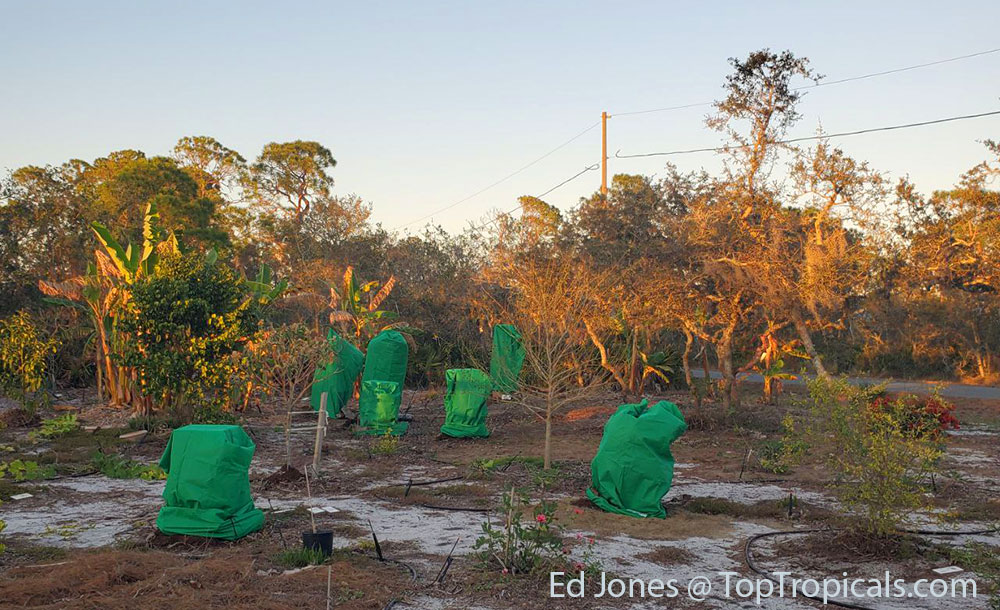
At TopTropicals B-Farm, we sprayed our plants with a special cold hardiness treatment Sunshine-Si and covered and wrapped
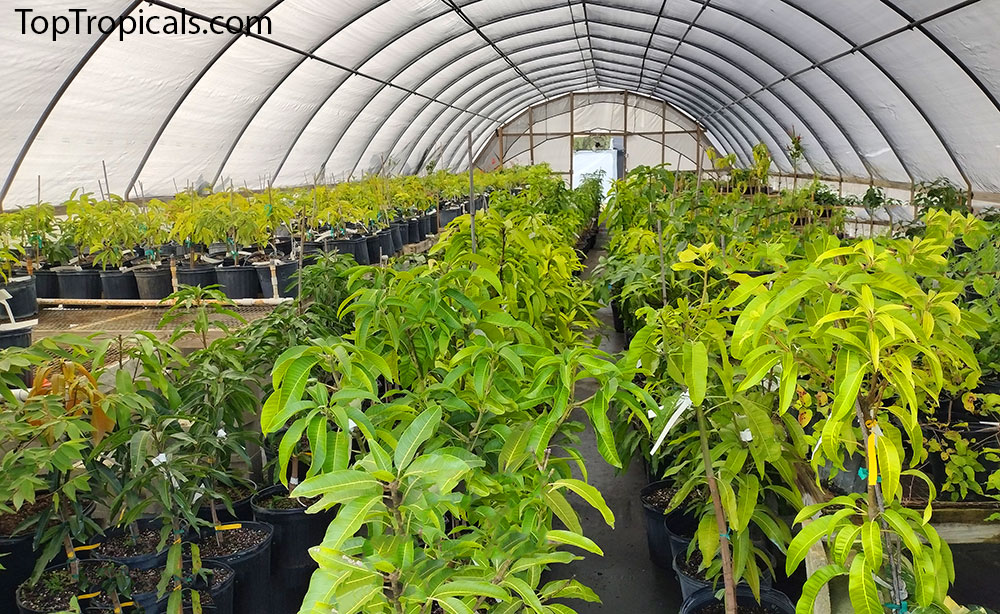
everything we could. We also moved cold sensitive species inside greenhouses.
All of our plants are looking great and happy!
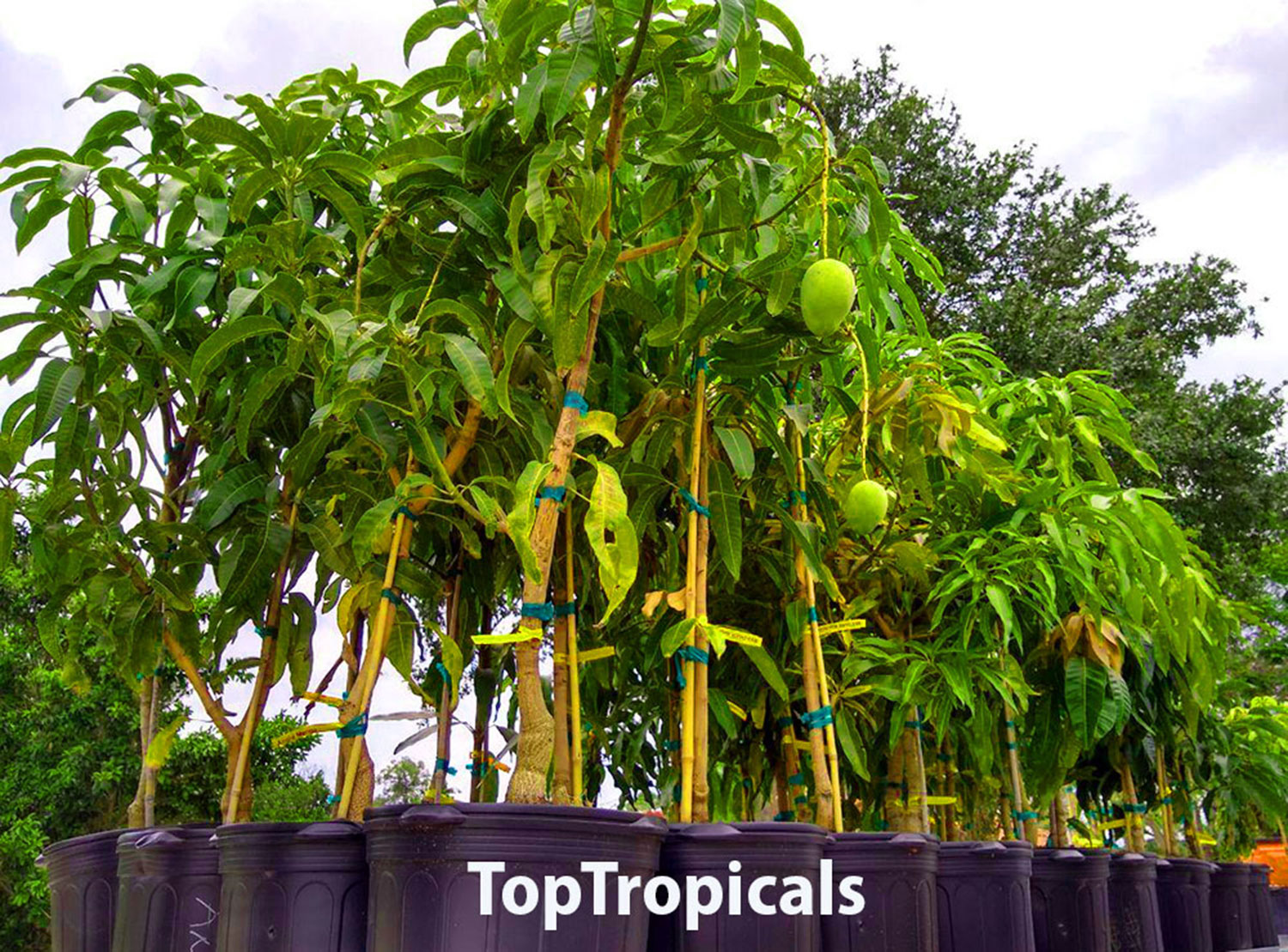
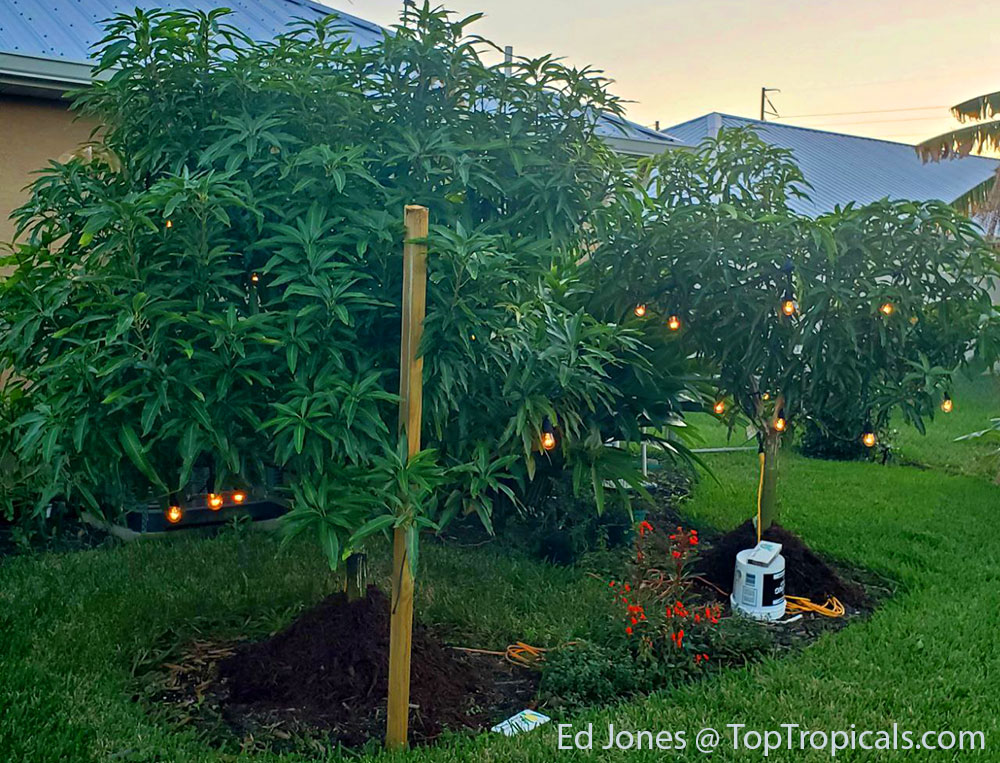
Photo above: Mulching mango trunks and using Christmas lights for
cold protection
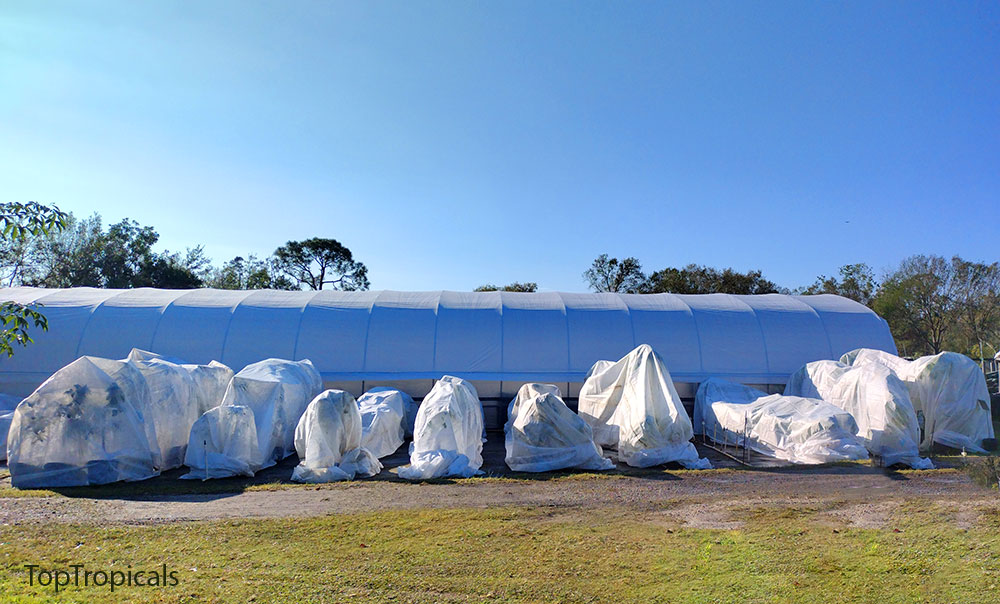
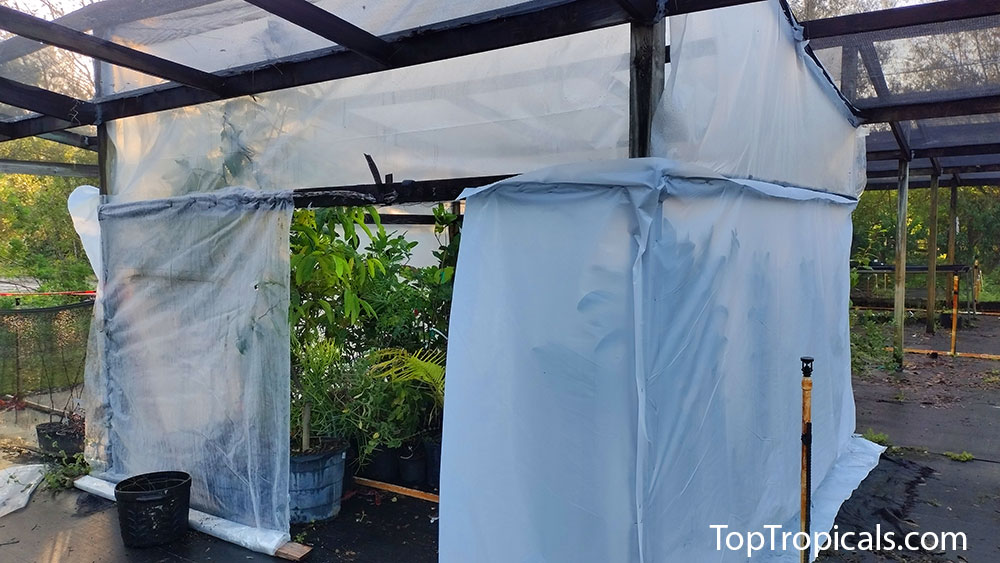
Photo above: Temporary wrapping of a section of a greenhouse with a
plastic or frost cloth protects from a windchill. It may also win you a few
degrees even without a heater. In this particular case, according to our temp
sensors, it was 30F outside, and 41F inside this "dome", no heaters used.
Sunshine Boosters:
Last chance to stock up at a lower price!
Sunshine
Boosters are natural, amino acid-based liquid fertilizers made with only
the highest quality ingredients. Starting in 2023, the pricing for Sunshine
Boosters will be adjusting to reflect the increasing cost of supplies. This is
your last chance to stock up on Sunshine Boosters before the end of the year!
Sunshine Boosters are safe to use year around, with every watering.
Don't miss out on this opportunity to get the best
value for your money!
Use discount for even better
deal:
22FOR22
for 22% off orders $220+
Min order $220. Offer expires 12-31-22
Date: 28 Sep 2016
Helping plants to survive winter:
SUNSHINE BOOSTERS - FROM SUNSHINE STATE
A magic plant hormone so wanted by gardeners, is finally here! When people purchase plants and trees either on-line, or from their local nursery, expectation and anticipation for their new find is high. Many times, however, disappointment is encountered due to a variety of reasons. These reasons include changes in light, temperature, water, soil conditions and transportation; just to name a few. So how can the stress on newly transported and transplanted plants be mitigated? Easy! There are plant stimulators able to reduce the shock encountered.
One such plant stimulator, produced at TT Laboratories is SUNSHINE, a revolutionary, broad spectrum, plant stress reliever. Extracted initially from plant pollen, SUNSHINE can bring back and keep the vigor to stressed plants in both the home and garden. Sunshine is indeed a plant stimulator on the cutting edge of plant care technology. Reasonably priced, and easy to use, SUNSHINE will be your plants' best friend, next to yourself, of course.
SUNSHINE will help your plants:
- recover from stress
- dramatically increase growth rate
- get profuse flowering and fruiting
- improve disease resistance, cold hardiness, and heat resistance
- promote seed germination and root cuttings easily
Great for indoor plants and improving cold tolerance!
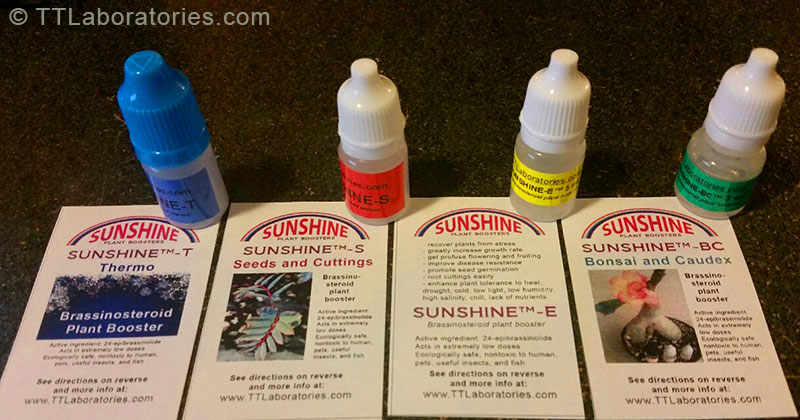
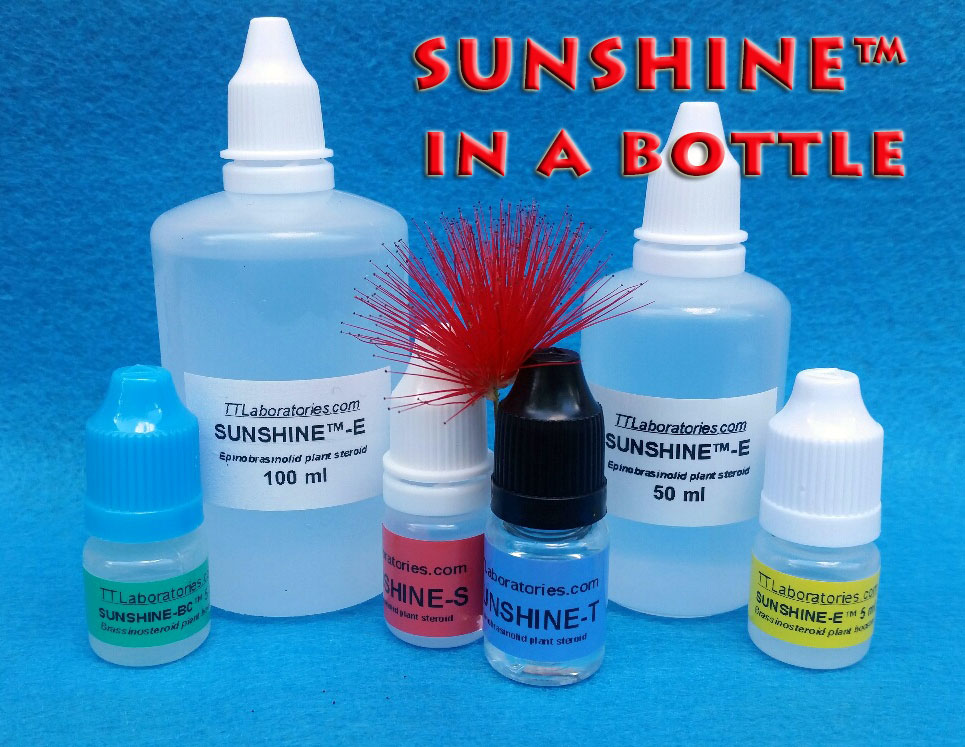
Line of products: SUNSHINE-E - general plant booster, growth stimulator and immune booster
SUNSHINE-BC - Bonsai and Caudex developer
SUNSHINE-S - seeds and cuttings pre-treatment
SUNSHINE-T - Thermo-protection for overwintering tropical plants
SUNSHINE-Micro - ultimate micro-element mix from TT Laboratories
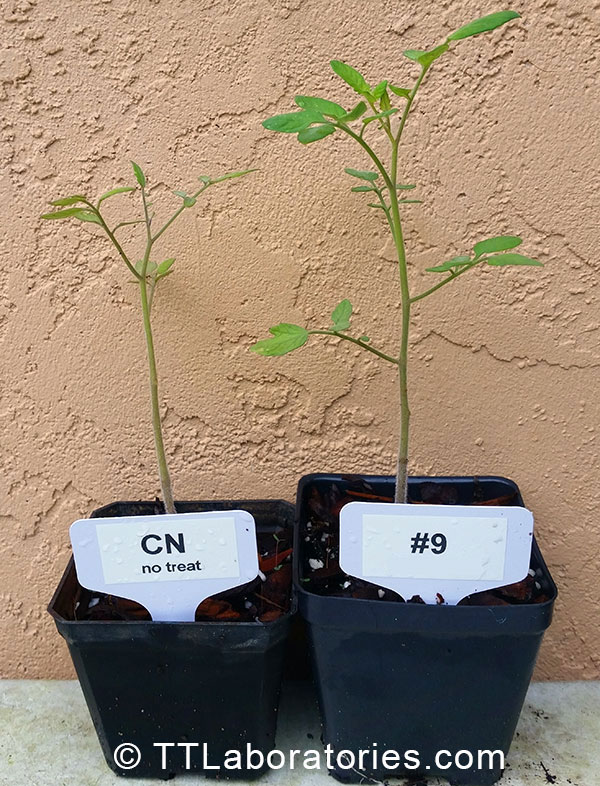
On the photo: Tomato seedlings, with and without Sunshine-E treatment; 1 week after treatment, 09-01-2016. Continue reading...
Q:
I have been using your new plant hormone SUNSHINE
for plants after shipping, and I must admit it does make
a big difference! They recover right away. I order
plants online very often, and usually it takes up to a
week or more until they start showing new growth. After
SUNSHINE treatments, they look fresh within a day or
two. My question would be, for improving cold tolerance,
what do you recommend? I live in Florida and it is still
warm here, should I start spraying my garden now or
should I wait until cold spells?
A:SUNSHINE
is very effective plant stimulant that helps tropical
plants survive different kinds of stress, including
cold, heat, drought, low light, etc. At TopTropicals
gardens and nursery, we have been using this hormone for
many years to protect our plants from unfavorable
conditions, and it saved us many rare tender species,
and lots of money!
The sooner in Fall you start treatments, the better.
Don't wait until cold spell. SUNSHINE works slowly and
in very low doses. The mechanism is actually about
boosting, building up the plant's own immune system. Low
doses once a week, even every other week will work just
fine, so you will need very little of the product. For
less than $5 you can help expensive rare plants to go
through winter painlessly. Recommended application is
only 2.5 ml/1 gal of water, to spray every 1-2 weeks
throughout winter period.
Start spraying your plants with SUNSHINE now, to help
them survive short winter days, build up insect
resistance (especially for plants indoors), and what is
most important, to remain strong through lower
temperatures. These are our suggestions:
- SUNSHINE-T
- thermo-protection booster. It is specially
formulated for winter protection of tropical plants. To
improve cold hardiness even more, spray 1-2 days prior
to cold with 5 ml/1 gal solution and after that,
continue applications with 2.5 ml/1 gal solution every
10-15 days throughout winter period.
- For large plant collections, and in-ground gardens in
subtropical areas, take advantage of very cost effective
bulk items 50
ml and 100
ml bottles of SUNSHINE.
- Don't forget that SUNSHINE is only a stimulant, and
not a plant food. While regular fertilizer should be
avoided during winter months, it is always beneficial to
apply microelements through foliar spray. During cooler
period, chances of chlorosis increase, because at low
temperatures iron is difficult so absorb by roots
especially in moist soil, hence iron deficiency! Our new
Iron supplement SUNSHINE-Super-Iron
microelement booster will help to avoid yellowing leaves
and to maintain your plants strong and healthy during
slow growth period. Ultra-potent, highly absorbable iron
mix, with chelated Iron with DTPA (instead of usual
EDTA) that is better soluble in hard water and more
effective for chlorosis. This mix contains both EDTA +
DTPA chelated iron in higher concentration than regular
micro-elements mixes.
See all SUNSHINE
booster products in our store. For advanced
information on SUNSHINE plant boosters, history of use,
formulation, and frequently asked questions, visit our
manufacturer's website TTLaboratories.com.
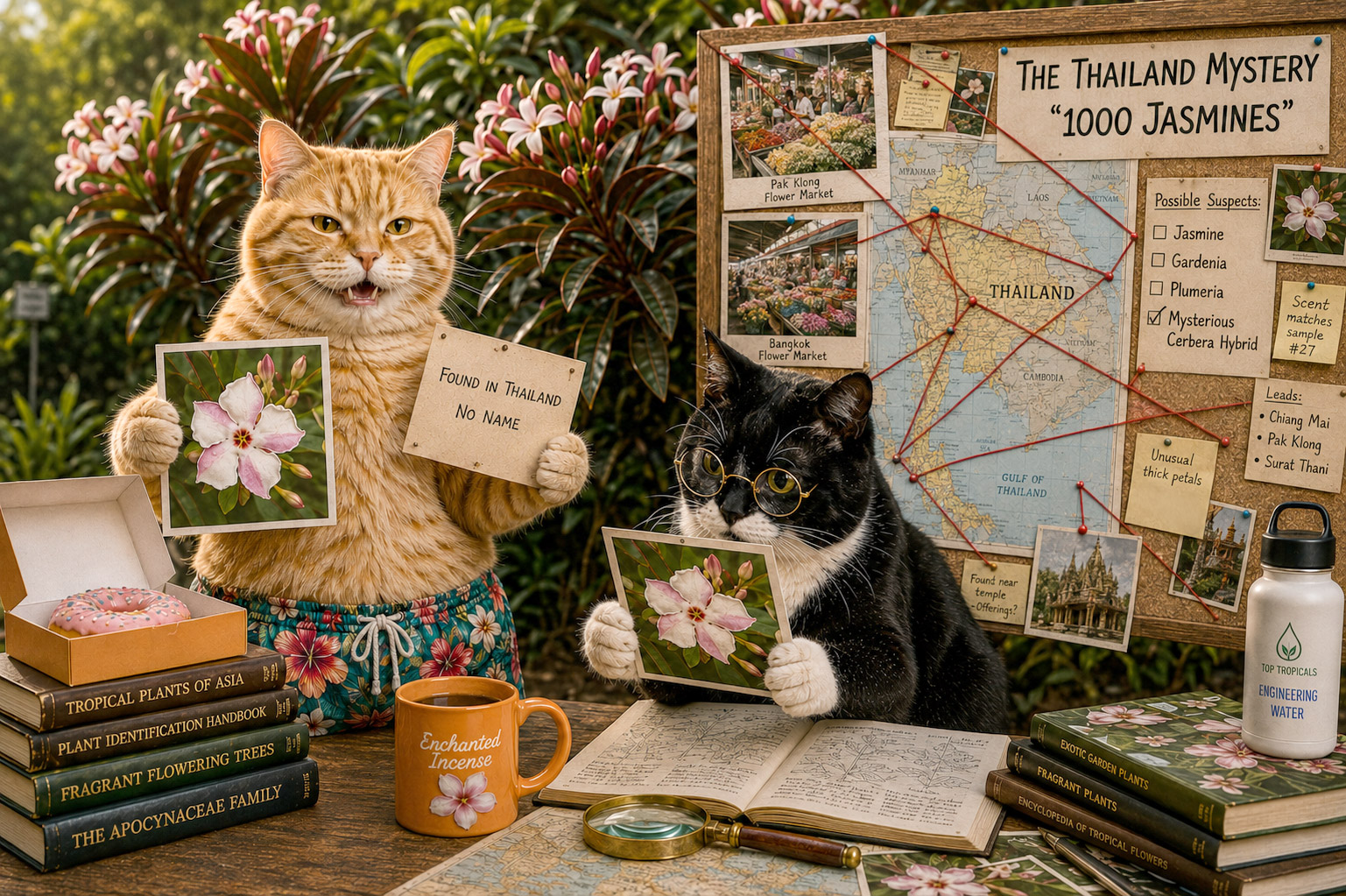
Sunshine: John said it smelled like a thousand
jasmines. Smokey: And somehow that's all the information he brought
back from Thailand. Sunshine: He brought a photo, too. Smokey: Excellent. We can begin our international manhunt.
Well, Smokey and Sunshine have closed the case and found the mystery
plant. The cork board is coming down, the magnifying glass is back in the
drawer, and the "Enchanted
Incense" mug is finally empty.
Now let's talk about the plant itself.
🌸 Some plants arrive with a label. Some arrive with a
story.
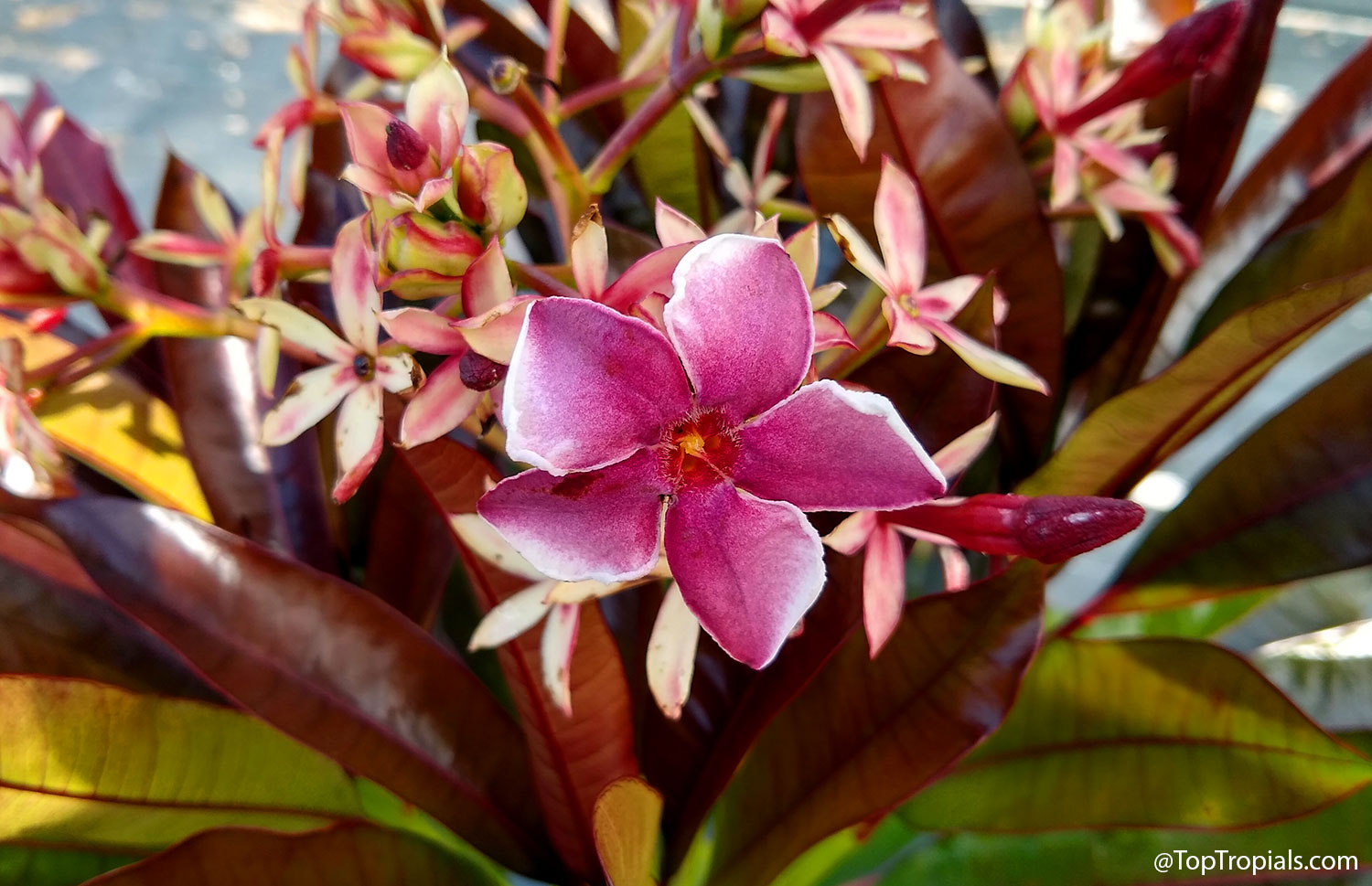
Cerbera x manghas - Enchanted Incense - produces some of the most
unusual
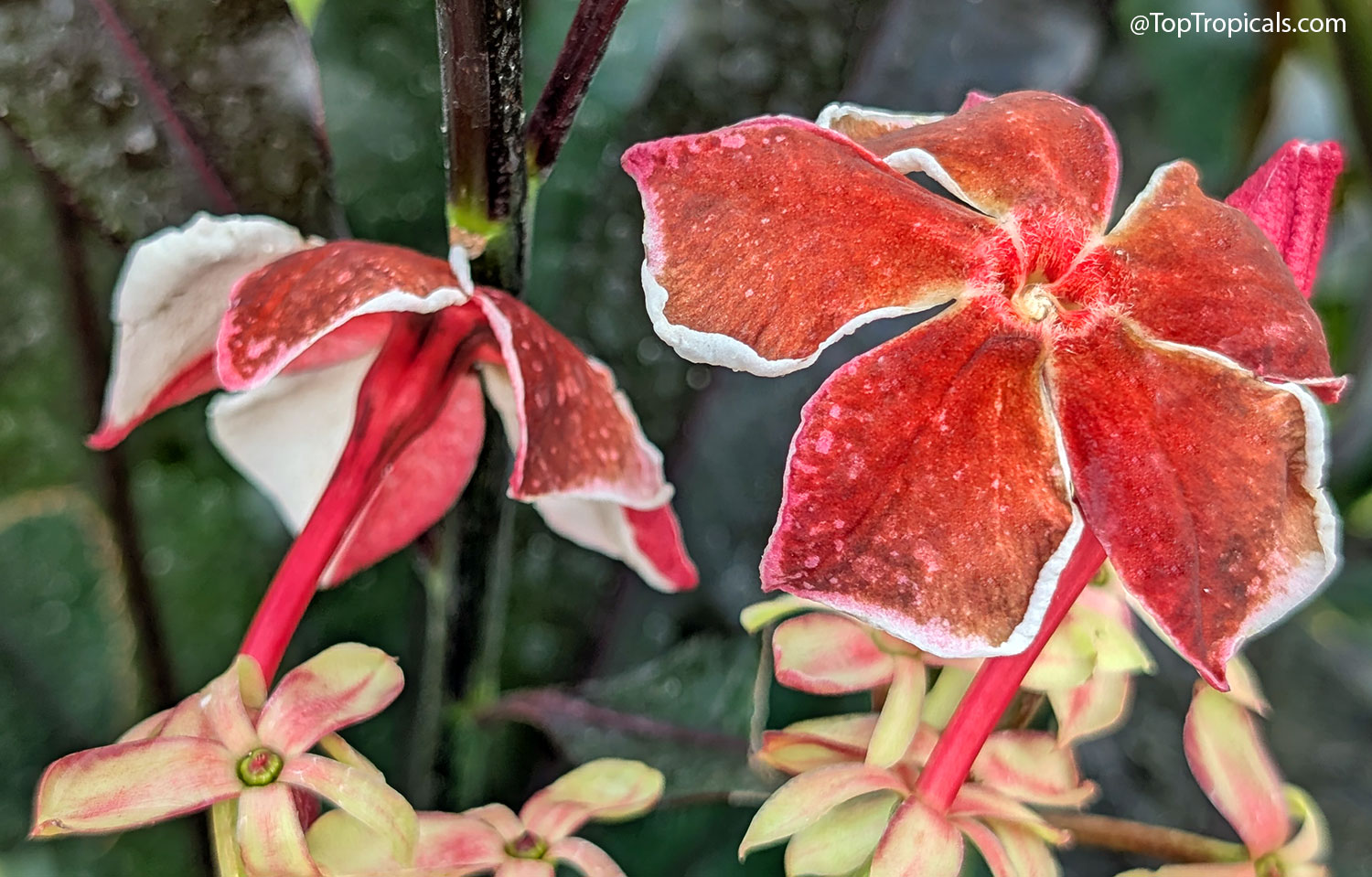
fragrant flowers in the tropical garden. Its velvety reddish blooms,
outlined in white and carried on vivid pink tubes, create an exotic display
that looks hand-painted.
When our good friend John Mood returned from a plant conference in
Thailand, he did not bring us a plant. He brought us a mystery.
John had spent decades growing and collecting rare tropical plants. When he
said he had found something special, we paid attention.
On a visit to Chatuchak
Market, one of the most famous plant markets in Asia,
something stopped him. Not the flowers. The fragrance.
"I found a plant that smells stronger than a thousand jasmines," John
told us.
That one sentence stayed with us for years.
He had photographs. He had his memory of that scent. What he did not have
was a name. No tag. No seller information. Just the photos and the certainty
that he had smelled something genuinely unusual.
So we started looking.
We showed the photographs around. We asked collectors. We compared flowers.
Every lead turned into another question. But eventually, after years of
searching on and off, we found it.
The mystery plant turned out to be an unusual Cerbera
unlike anything we had grown before.
Today we call it Enchanted Incense. Fragrance lovers recognized
immediately what John had recognized in that Bangkok market. This was not
just another pretty tropical flower.
🌸 The Plant
Even when
not in full bloom, Cerbera
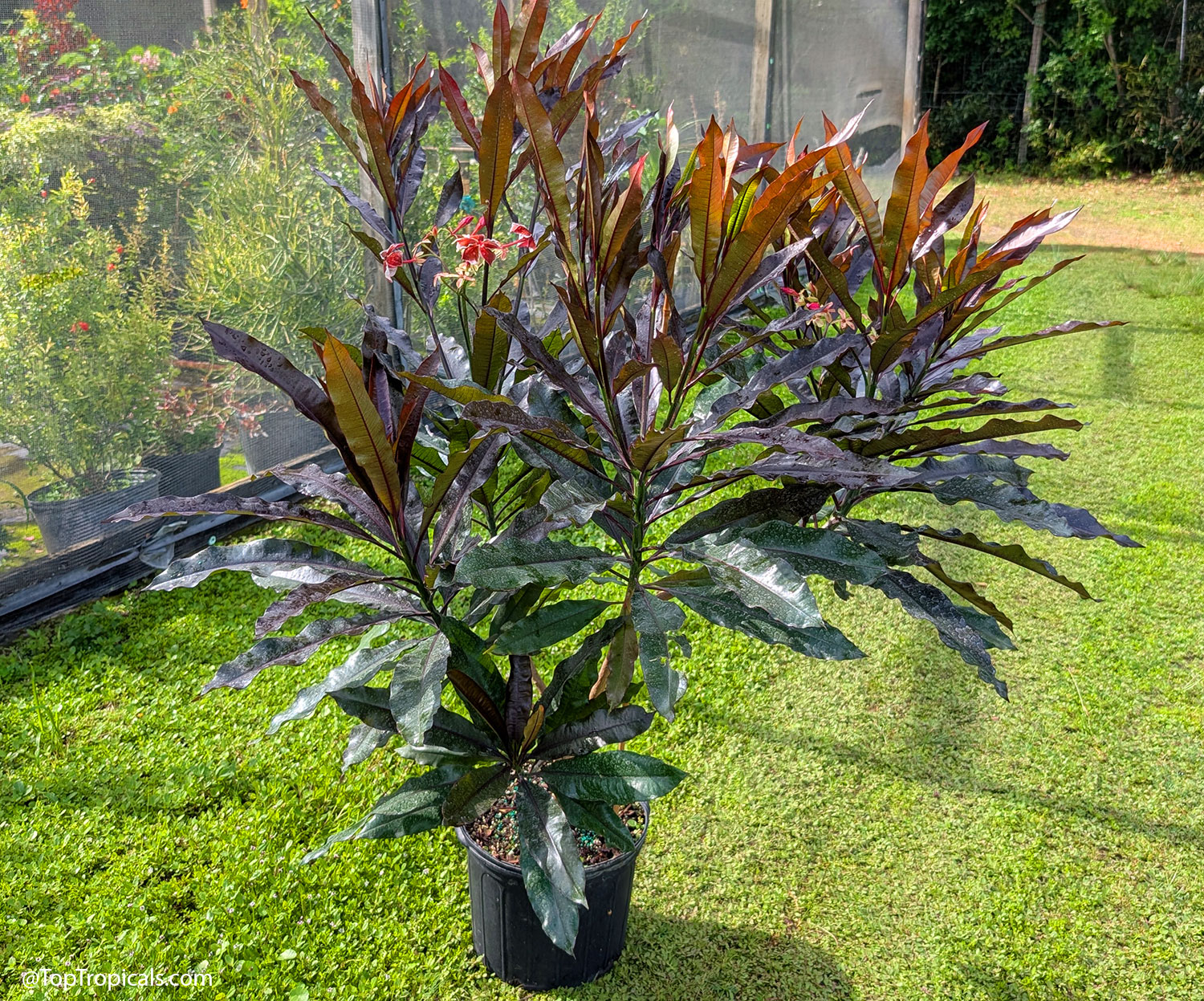
x manghas Enchanted Incense is a standout plant. Its glossy, deep
burgundy foliage and bronze new growth create a bold tropical presence,
while the unusual flowers add an extra layer of intrigue.
Visitors at our nursery still walk past it and stop. Not because they
noticed the plant. Because they noticed something in the air and could not
figure
out where it was coming from.
The flowers start soft pink and white, then deepen to rich red and auve as
they mature. They come in clusters, four to five inches across, and the
fragrance they produce does not stay close to the flower. It moves. It fills
the space around the plant. On a warm morning it can perfume an entire
patio.
The foliage is worth mentioning too. Deep green leaves with burgundy and
mauve tones that make it attractive even when it is not blooming. The growth
habit is slow and slightly weeping, similar to plumeria,
which is no coincidence since they are close
relatives. Unlike plumeria, Enchanted Incense stays evergreen in warm
climates.
It is a compact, slow-growing small tree that is happy in a container. That
makes it practical for gardeners in colder climates who need to bring it in
for winter, and for anyone who wants a fragrant plant near a seating area
rather than somewhere across the yard.
🌸 Why We Grow It
The
flowers of Cerbera
x manghas - Enchanted Incense - look otherworldly. Deep reddish petals,
bright pink
tubes, and contrasting white edges combine to create one of the most
distinctive fragrant blooms.
We grow thousands of plants, and most can be described in a sentence or
two.
This one cannot.
A large Enchanted Incense grows right outside our office. Every year it
reminds us why we
spent so much time searching for it.
Visitors stop beside it and ask the same question: "What is that
smell?"
They usually notice the fragrance before they notice the plant.
Some follow the scent across the nursery. Others stop in the middle of a
conversation and start looking around. Nearly
everyone ends up standing next to the tree trying to figure out where that
incredible fragrance is coming from.
In a world full of beautiful tropical plants, Enchanted Incense remains
one of the few that announces itself before you even see it.
Cerbera
x manghas -
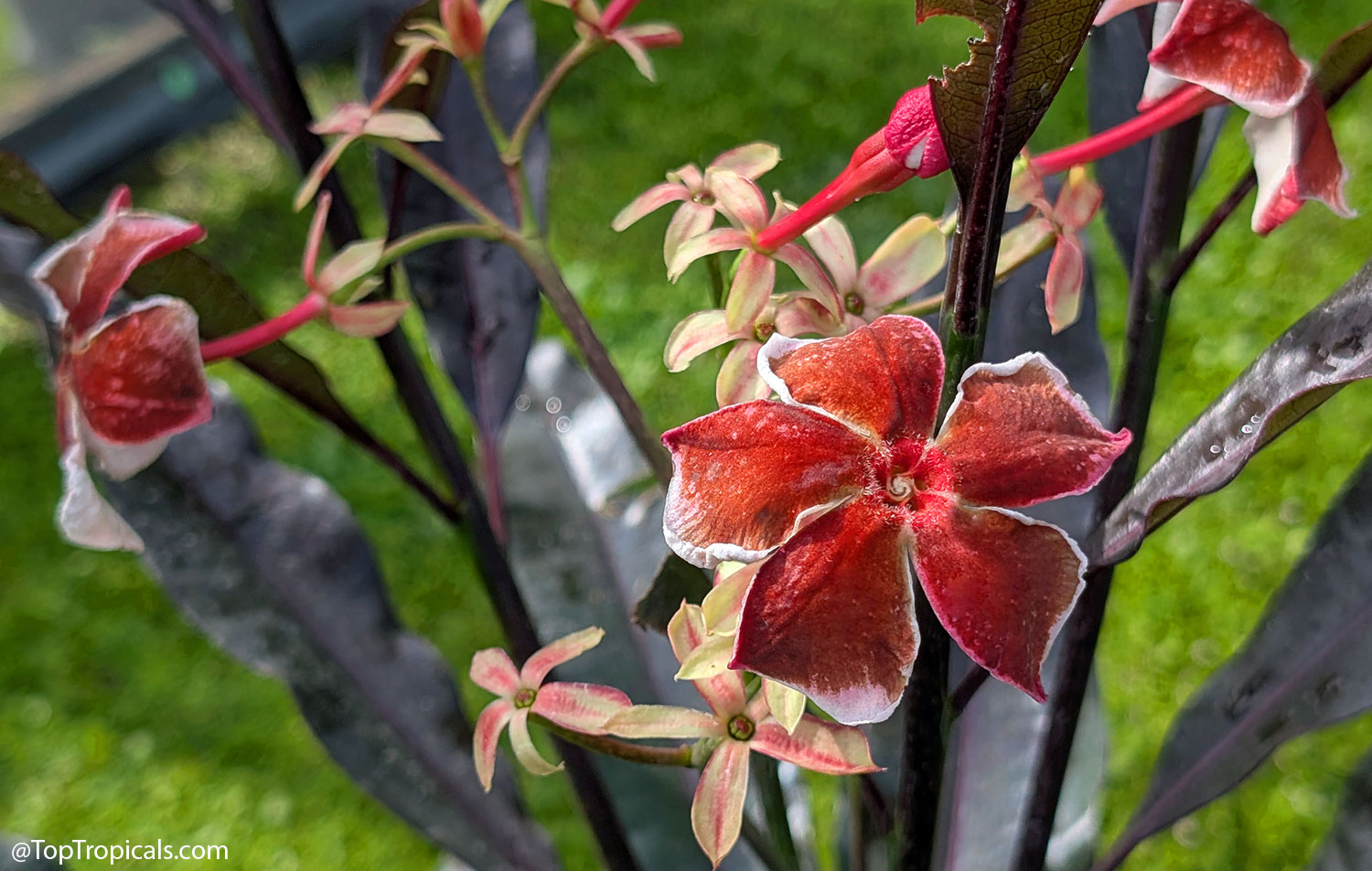
Enchanted Incense can display remarkable variation in flower color. This
form
combines soft rose-pink blooms with white-edged petals and rich burgundy
foliage, creating a striking contrast throughout the plant.
Light: Full sun is best (at least
six hours
daily). It will tolerate partial shade but blooms much more generously in
good
light.
Watering: Water regularly during
warm weather. In cool weather and winter, keep the soil on the drier side.
Overwatering when
temperatures are low is the most common mistake.
Soil: Use a well-draining mix. This
plant absolutely does not want wet feet.
Fertilizer: Feed with a
Green Magic
controlled-release fertilizer for flowering plants in spring, supplemented
with occasional liquid fertilizer through the summer. For non-stop blooms
without the risk of
salt build-up in containers, we highly recommend
Sunshine
Boosters™.
Read
our Guide to Sunshine Boosters™ and Green Magic fertilizer
Winter Care: Bring it indoors
when temperatures approach the mid-30s°F. The rootstock is fairly
tough,
but the foliage is not. Cold and wet conditions combined are the real risk.
One Last Thing
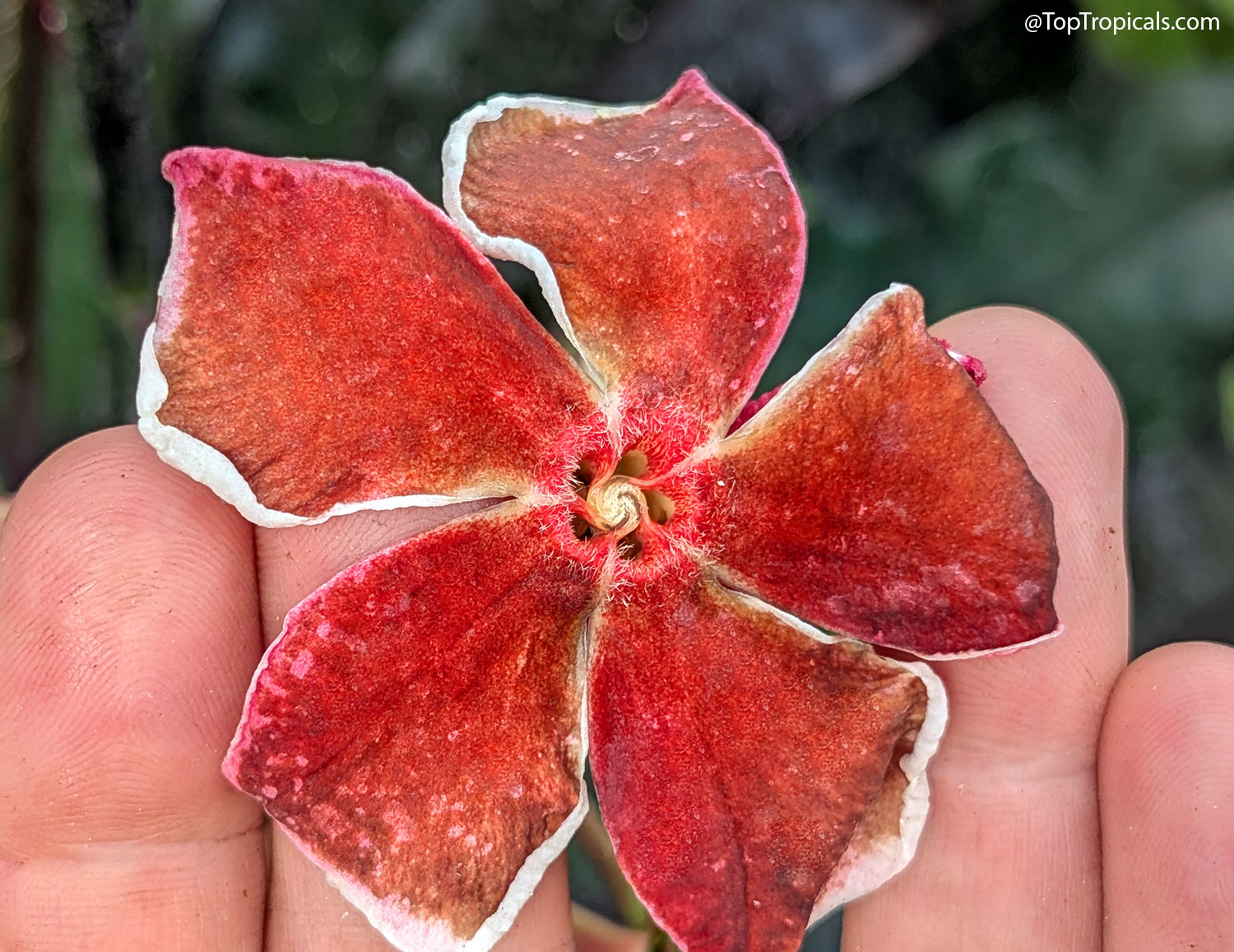
A closer
look reveals the remarkable details of Cerbera
x manghas - Enchanted Incense.
The velvety petals, crisp white edging, and fuzzy pink center give the
flower an appearance
unlike anything else in the garden. And then comes the scent...
John came back from Bangkok with a few photographs and a fragrance he
could not forget. It took us years to track down the plant behind that
memory. We have never regretted a single minute of the search.
Sunshine: So after all those years, what's the answer? Smokey: Stand next to the plant. Sunshine: That's it? Smokey: The fragrance explains the rest.
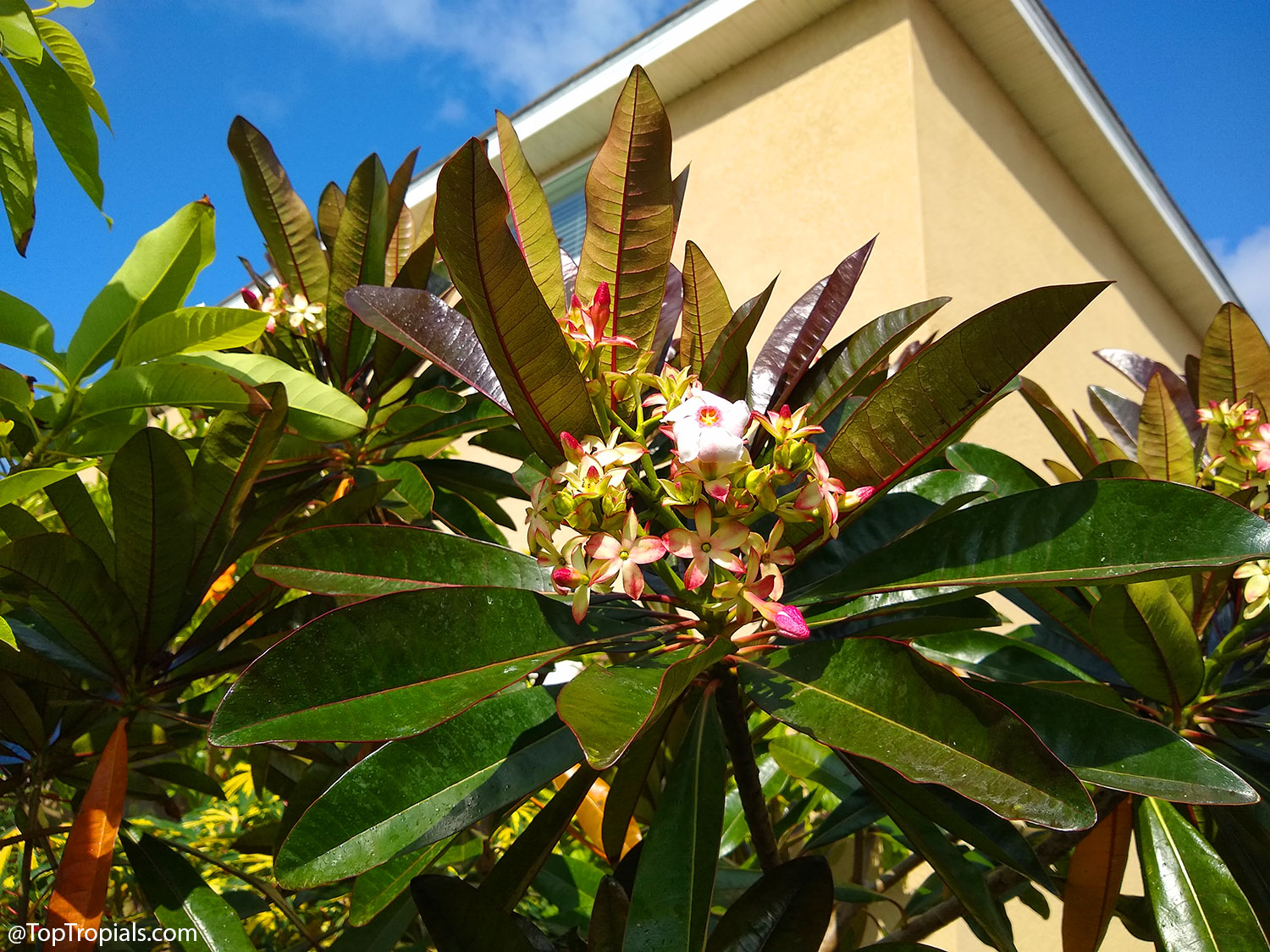
A closer
look reveals the remarkable details of Cerbera
x manghas - Enchanted Incense develops into an attractive small tree
with lush evergreen foliage and colorful new growth. In the
landscape, it combines year-round structure with clusters of bright
redding-pink fragrant flowers that stand out beautifully against the glossy
leaves.

 Growing Tips