Garden Blog - Top Tropicals

Date: 18 Feb 2026

⭐️ Choosing the Right Variety of Jasmine Sambac

By Tatiana Anderson, Horticulture Expert at Top Tropicals
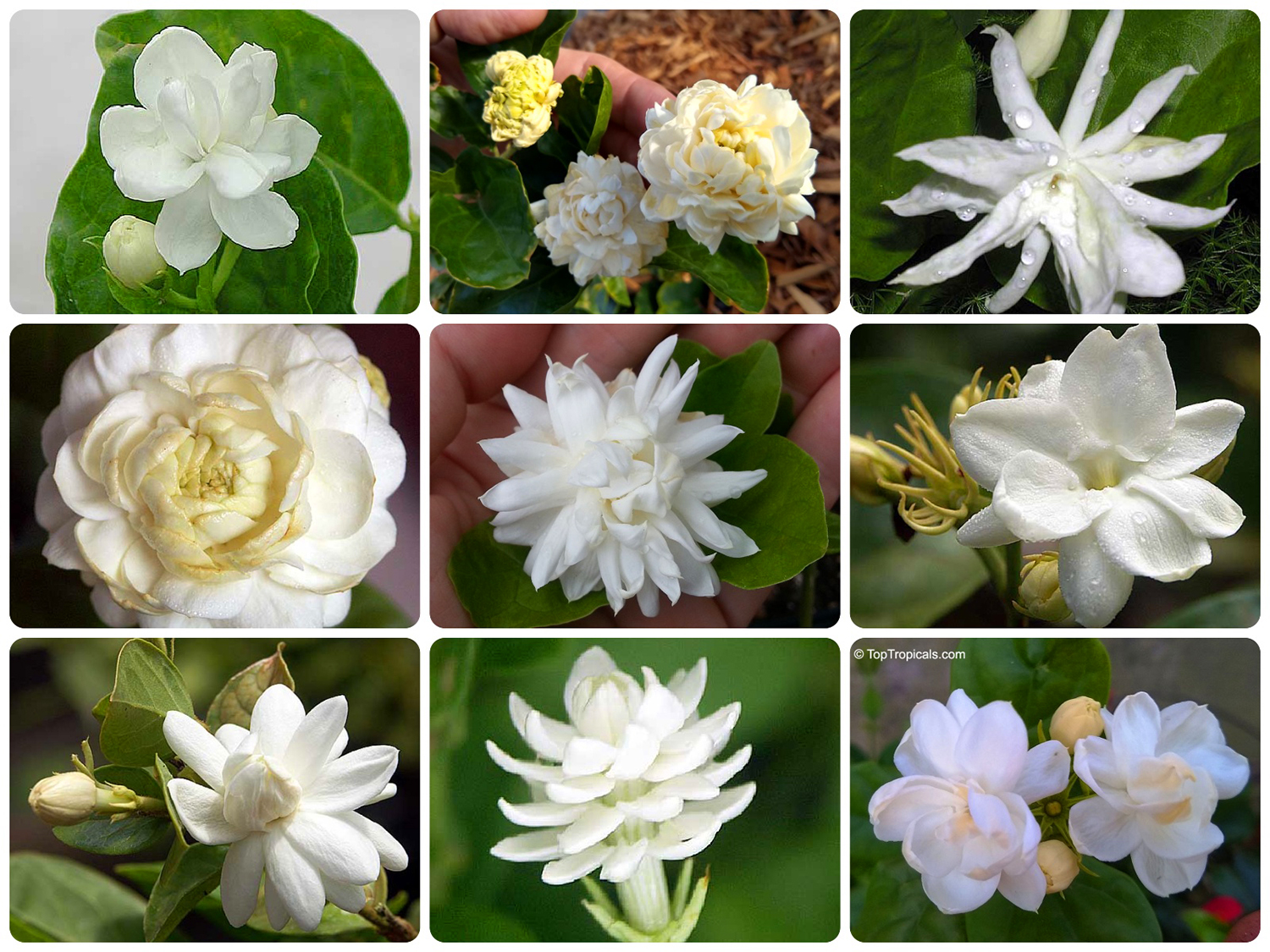
Jasmine  Sambac  varieties  collage  showing  single,  double,  and 
 multi-layered  white  fragrant  flowers  including  Belle  of  India,  Grand  Duke, 
 Arabian  Nights,  and  other 
 forms.

Jasmine Sambac varieties: Arabian Nights, Little Duke, Belle of India, Grand Duke, Duke Supreme, Maid of Orleans, Mysore Mulli, Malichat, Gundu Mallii

One of the reasons Jasmine Sambac is so fascinating is that it does not come in just one form. Each variety has its own personality.

If you want a compact patio plant, Arabian Nights or Little Duke are excellent choices. They stay tidy, bloom generously, and are easy to manage in containers.

If you prefer elegant, elongated petals and a refined look, Belle of India is a favorite. It can be grown as a small bush or trained lightly as a vine.

For those who love full, carnation-like double flowers, Grand Duke of Tuscany and Grand Duke Supreme are classic selections. They are vigorous and make impressive shrubs in warm climates.

If you need a stronger climber for fences or hedges, Maid of Orleans performs beautifully in full sun while Mysore Mulli prefers semi-shade.

Collectors often enjoy rare forms like Mali Chat or newer hybrids such as Gundu Malli, which combine traits from different lines.

How to Grow Jasmine Sambac Successfully

Sambac is not difficult, but it responds best to consistency.

Light: Full sun produces the most flowers. In very hot climates, light afternoon shade is acceptable. Indoors, place it in the brightest window available.

Soil: Use a well-draining potting mix such as Sunshine Abundance. Sambac does not like heavy, constantly wet soil.

Water: Water thoroughly, then allow the top layer to dry slightly before watering again. Reduce watering during cooler months.

Pruning: Light trimming after a bloom cycle encourages branching. More branches mean more flower buds.

Feeding: Sambac is a heavy bloomer, and fragrance takes energy. During active growth, feed regularly with a balanced fertilizer that supports flowering such as Green Magic (controlled release every 6 months) or liquid Sunshine Boosters Pikake (formulated especially for fragrant flowers) - with every watering. I prefer formulas slightly higher in potassium to encourage stronger bud formation and richer bloom cycles. Consistent feeding during warm months makes a visible difference in both flower count and intensity of scent.

With proper care, Jasmine Sambac will reward you not just with flowers, but with perfume that changes the atmosphere of your entire garden.
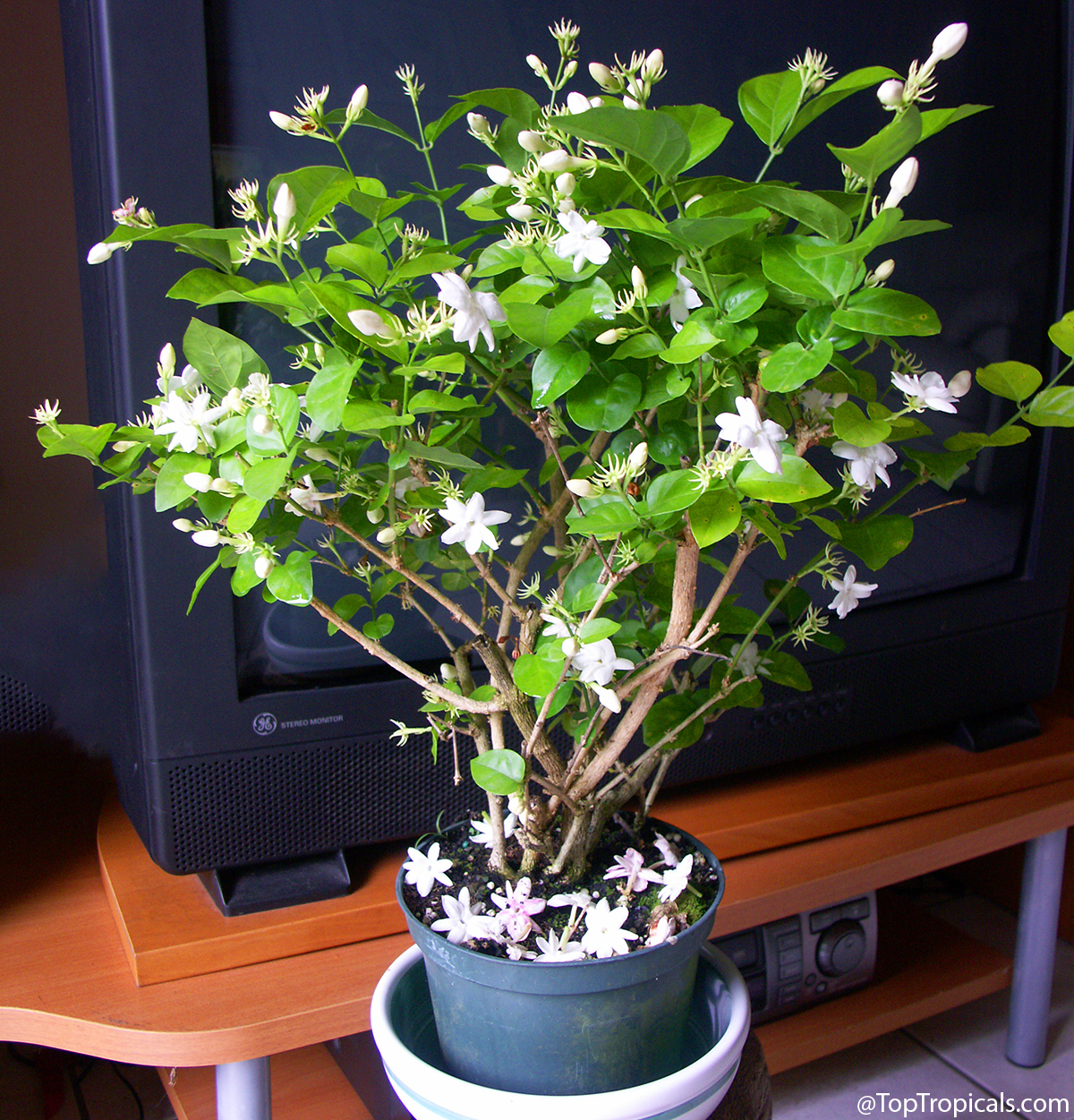
Jasmine  Sambac  Maid  of  Orleans  blooming  indoors  in  a  container  with 
 numerous  white  star-shaped  flowers  and  glossy  green 
 leaves.

Jasmine Sambac Maid of Orleans flowering indoors in a container under bright light.

❓Frequently Asked Questions About Jasmine Sambac

  • Does Jasmine Sambac need full sun?
    It flowers best in full sun. In very hot climates, light afternoon shade is acceptable. Indoors, give it the brightest window possible.
  • Can I grow it in a pot?
    Yes. Sambac performs beautifully in containers. Many gardeners prefer pots because it is easier to control size and move during cold weather.
  • How often does it bloom?
    With proper light and feeding, it blooms in cycles throughout the warm season. Consistency in care makes flowering more reliable.
  • Why is my plant not blooming?
    The most common reasons are insufficient light or irregular feeding. Increase light first, then review your fertilizing routine.
  • Is it difficult to grow indoors?
    Not if you provide strong light and good air circulation. Compact varieties adapt especially well.
  • Is it frost tolerant?
    No. Jasmine Sambac is tropical. Protect it from temperatures below 40F and bring it indoors before frost.

🌸 Year of the Horse Special – Jasmine Bonus

Celebrate 2026 with the fragrance of Jasmine plants. For a limited time, enjoy special savings when you grow one of the most wanted perfume plants in cultivation.
Jasmine Sale - 15% Off
Save 15% on all Jasmine plants. Discount is already applied in the online store - no code needed.
Offer valid through 02/28/2026.

🛒 Explore varieties of Sambac

Date: 16 Mar 2026

🌱 💪 Green Magic + SUNSHINE Boosters: A Complete System for Strong Plant Growth

By Tatiana Anderson, Horticulture Expert at Top Tropicals with Smokey & Sunshine help

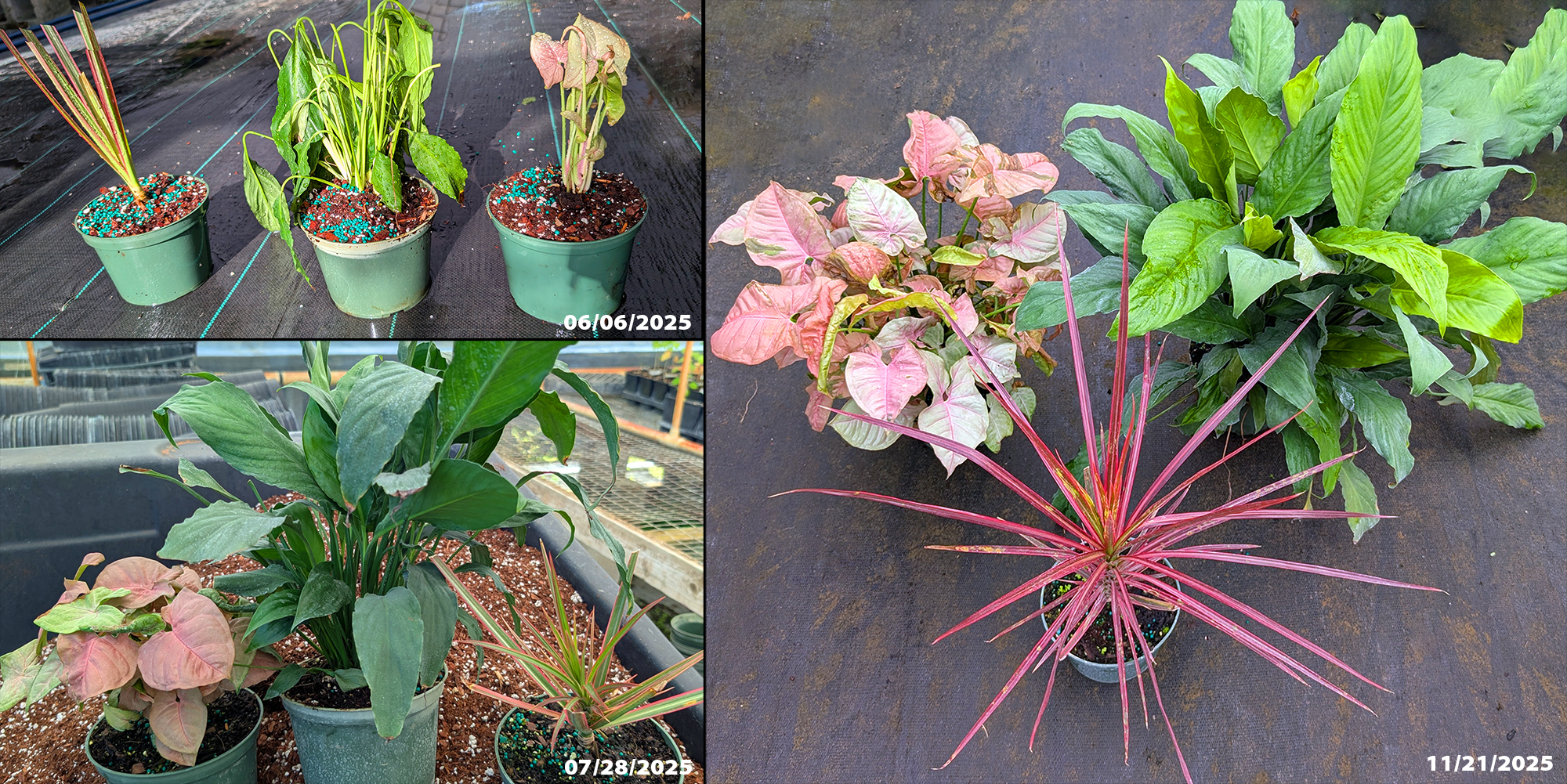
Nearly  dead  houseplants  (Dracaena,  Syngonium,  and  Spathiphyllum) 
 recovering  and  growing  vigorously  after  treatment  with  Green  Magic 
 fertilizer  and  Sunshine  Robusta  plant 
 booster.

Green Magic recovery test with SUNSHINE Robusta support: Dracaena, Syngonium, and Spathiphyllum revived from severe stress and growing vigorously.

☀️🌱 Sunshine Boosters: Complete Plant Nutrition

Sunshine Boosters provide complete plant nutrition, including Calcium and micronutrients that plants need for strong growth. Because nutrients are delivered in liquid form, plants can absorb them quickly and respond almost immediately.

The Practical Problem

Liquid feeding works well, but it requires frequent application. In real gardens, many growers simply do not have time to add liquid fertilizer with every watering.

Green Magic: The Foundation

Green Magic solves this problem by providing steady background nutrition through controlled-release fertilizer. It feeds plants gradually, so they continue receiving nutrients even between liquid feedings.

Why This Combination Works

Together, this system provides both complete nutrition and steady feeding. Sunshine Boosters supply fast nutrients and Calcium, while Green Magic maintains a stable nutrient supply between feedings.

✍️ How to Feed Your Plants

📅 Step 1 – Start of the Growing Season

  • Apply Green Magic around the root zone every 6 months.

    In ground:
    • Small Shrubs (1–3 feet): Use approximately 1/4 to 1/2 cup per plant
    • Established Trees: Use 1/2 lb to 1 lb of product per 1 inch of trunk diameter.
    • Small In-Ground Ornamentals: A common "spoon" rate is roughly 1 teaspoon per gallon of estimated root volume (or per sq. ft. of surface area).
    • Spread evenly around the dripline. Avoid piling the granules against the base or trunk of the plant. For best results, lightly rake the granules into the top 1–2 inches of soil.
    Container plants:
    • Apply 1 tea spoon per 1 gal of soil (mix in with soil) every 6 months during active growth period, or with every re-potting.
  • Water normally after application.
  • Adjustment for Temperature. Because Green Magic is temperature-controlled, adjust your rate if your local climate is extreme:
    • Cooler Climates (<60°F average): Increase the rate by 20% to ensure enough nutrients are released.
    • Hot Climates (> 80°F average): Decrease the rate by 20% to prevent over-releasing as the heat speeds up the process.

☀️🌿 Step 2 – Active Growing Season

  • Apply Sunshine Boosters during the growing season.
  • Regular feeding (maintenance): Mix with tap water according to the ratio on the label. For SUNSHINE Robusta use 25 ml (5 tsp)per gallon of water and spray leaves every 5-7 days during active growth.
  • Correction feeding ("medicine" dose): if plants show visible nutrient deficiencies, combine SUNSHINE Robusta with SUNSHINE Superfood and spray every 5–7 days until new growth appears healthy. All SUNSHINE Boosters products are compatible and can be mixed with water in the same sprayer.
  • Best time to spray: early morning or evening when temperatures are cooler and leaves can absorb nutrients efficiently.
  • Important: spray both the top and underside of leaves for maximum absorption.

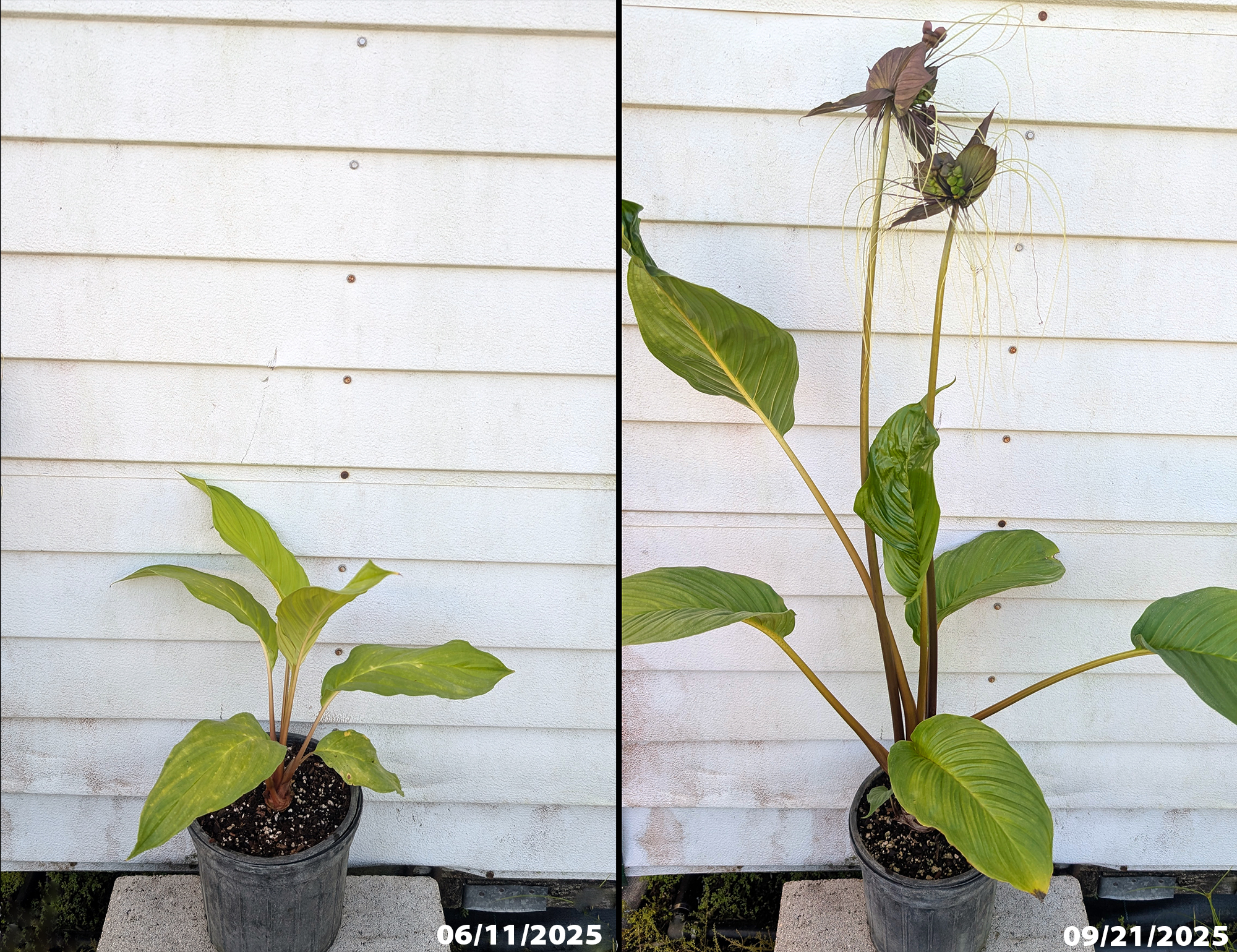
Tacca  plant  (bat  flower)  showing  strong  vegetative  growth  and  flower 
 bud  development  in  the  same  season  after  feeding  with  Green  Magic 
 fertilizer.

Tacca (bat flower) showing vigorous growth and producing flower buds in the same season after feeding with Green Magic.
Swipe left/right to see all data ↔️

📊 Seasonal feeding schedule with Green Magic and Sunshine Boosters.

Season Product Method Goal
Spring (March) Green Magic Soil Surface 6-month steady nutrient base.
Growing Season Sunshine Boosters Foliar (Every 5-7 days) Calcium & Bio-available growth power.
Late Summer Green Magic Soil Surface Replenish foundation for Fall.
Winter Sunshine Epi Foliar/Drench Cold tolerance and shipping recovery.

Quick Dose Reference

  • Green Magic: 1 teaspoon per 1 gallon of soil volume.
  • Sunshine Boosters: 25 ml (5 tsp) per 1 gallon of water.
  • Pro Tip: Always spray in the early morning or late evening to prevent leaf scorch and ensure maximum absorption through the stomata.

❓Frequently Asked Questions: Plant Nutrition & Fertilizer

General Fertilizer Concepts

Why is the "Spring Fertilizer Rush" a problem?
Most gardeners apply a large amount of traditional fertilizer once in March. This creates a "roller coaster" effect where plants get a sudden spike of nutrients followed by weeks of starvation. This leads to inconsistent growth and potential "fertilizer burn."

What is "fertilizer burn"?
Traditional fertilizers are made of soluble salts. When too many salts accumulate around the roots, they actually pull water out of the plant tissues (osmosis), dehydrating the plant and damaging sensitive root tips and leaf edges.

Is there a difference between "Slow-Release" and "Controlled-Release"?
Yes.

  • Slow-Release: Relies on natural factors like moisture and soil microbes to break down. It is often unpredictable.
  • Controlled-Release: Uses engineered polymer membranes (like Polyon) to release nutrients at a specific, predictable rate based primarily on temperature.

Green Magic & Temperature

How does temperature affect my fertilizer?
Most fertilizers are lab-tested at 75°F. In hot climates (90°F+), the nutrients release much faster. A "6-month" fertilizer might only last 3 months in the summer heat.

How should I adjust Green Magic for my local weather?

  • Cooler Climates (<60°F): Increase the application rate by 20%.
  • Hot Climates (> 80°F): Decrease the application rate by 20% to prevent over-releasing.

The Calcium Gap

Why doesn't Green Magic contain Calcium?
Calcium salts are highly soluble and can destabilize the polymer coating used in controlled-release granules. Therefore, most high-quality granules leave Calcium out. You can provide Calcium by using SUNSHINE Boosters

Why is Calcium so important for new growth?
Calcium is the "bone" of the plant, building strong cell walls. Unlike other nutrients, it is immobile—the plant cannot move it from old leaves to new ones. If you don't provide a constant supply, new leaves and fruit will emerge distorted or weak.

Advanced Science & Troubleshooting

What makes Sunshine Boosters "Bioavailable"?
Unlike most liquid fertilizers that use EDTA chelators, Sunshine Boosters are amino-acid based. They use organic acids and glycine to escort minerals into the plant, allowing it to incorporate nutrients into its proteins almost immediately.

Will these fertilizers affect the taste of my fruit?
No. Sunshine Boosters are made from pharmaceutical-grade components and contain no urea or harmful salts, ensuring your harvest (like Mangoes or Avocados) has a pure, natural flavor without a chemical aftertaste.

✨ Green Magic - 15% Off This Week

Give Your Plants a Strong Start This Spring
Green Magic - 15% OFF.

Build the foundation for the entire growing season with a steady, long-lasting nutrient base.

No coupon needed. The discount is automatically applied at checkout.
Offer valid through 03/21/2026. Discount applies to Green Magic products only. Not valid on previous purchases and cannot be combined with other promotions or discounts. Offer subject to change without notice.
Sunshine: So Green Magic feeds the plant for months. Does that mean I can forget about Sunshine Boosters?

Smokey: Not quite. Green Magic is the steady base diet. Sunshine Boosters are the weekly power drink during active growth.

Sunshine: Ah. Like my regular meals and donuts on top.

Smokey: Exactly. Plants eat slowly from Green Magic, and once a week they get a fresh boost.

Sunshine: Sprinkle once, then boosters every week. The plant grows, I drink coffee, and nobody forgets anything important.

Smokey: Except where you left the donuts.

Sunshine: Smokey... nobody forgets donuts. Ever

🛒 Feed your plants

✍️ Learn more about fertilizers

Date: 22 Sep 2025

🐲 The taste you will never forget

Dragon  fruit  collage  -  yellow,  red,  purple,  white  varieties

If you only know dragon fruit from the grocery store, you probably think it looks pretty but tastes bland. That is because most commercial fruit is picked early, shipped far, and loses its sweetness. The truth? Homegrown dragon fruit is juicy, sweet, and full of flavor. The best of all is the yellow variety, Palora (Selenicereus megalanthus), a cactus fruit from Ecuador that bursts with tropical taste.

🌵 Pitaya or Dragon fruit – what is the difference?

Both names describe the same climbing cactus. In Latin America it is called Pitaya, while Asia and English speakers say Dragon fruit. There are three main kinds:

Some hybrids give purple or magenta flesh. All are beautiful, all are easy to grow at home.

⚡️ Do red, white, and yellow taste different?

Yes. White types are mild and refreshing. Reds are sweeter and juicier. Yellows are the sweetest of all.

⚡️ Flowers from a fairy tale

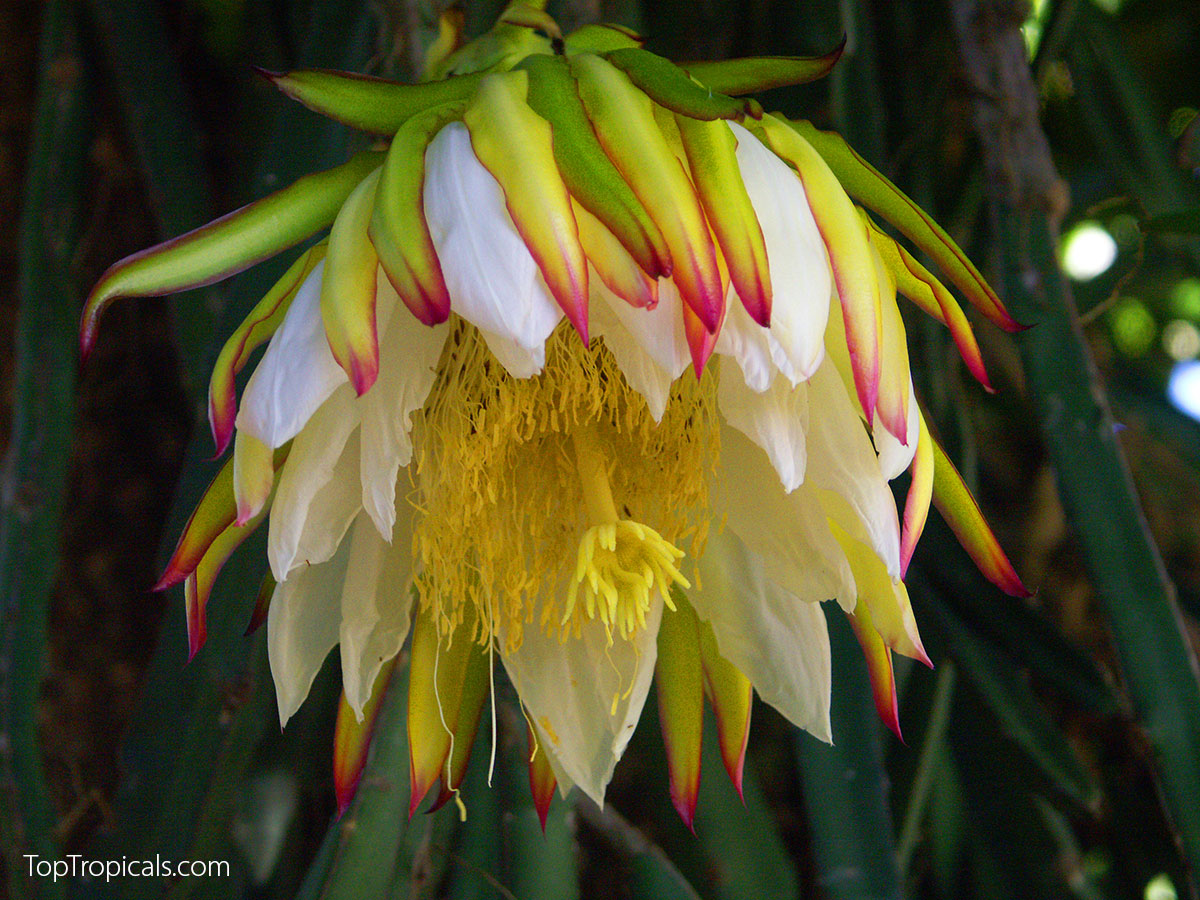
Close-up  of  a  blooming  dragon  fruit  pitaya  flower  with  white  petals  and
    yellow 
 center

Dragon fruit flowers are among the most spectacular in the plant world. They open at night, glowing under moonlight, with pale petals and a sweet fragrance. Each flower can be a foot wide. Seeing one bloom feels like stepping into another world.

⚡️ Top Dragon Fruit Health Benefits

  • High in fiber for digestion and gut health
  • Low in calories but full of vitamins
  • Great for weight management
  • Adds color and freshness to smoothies and salads

🍹 Dragon Fruit Smoothie recipe

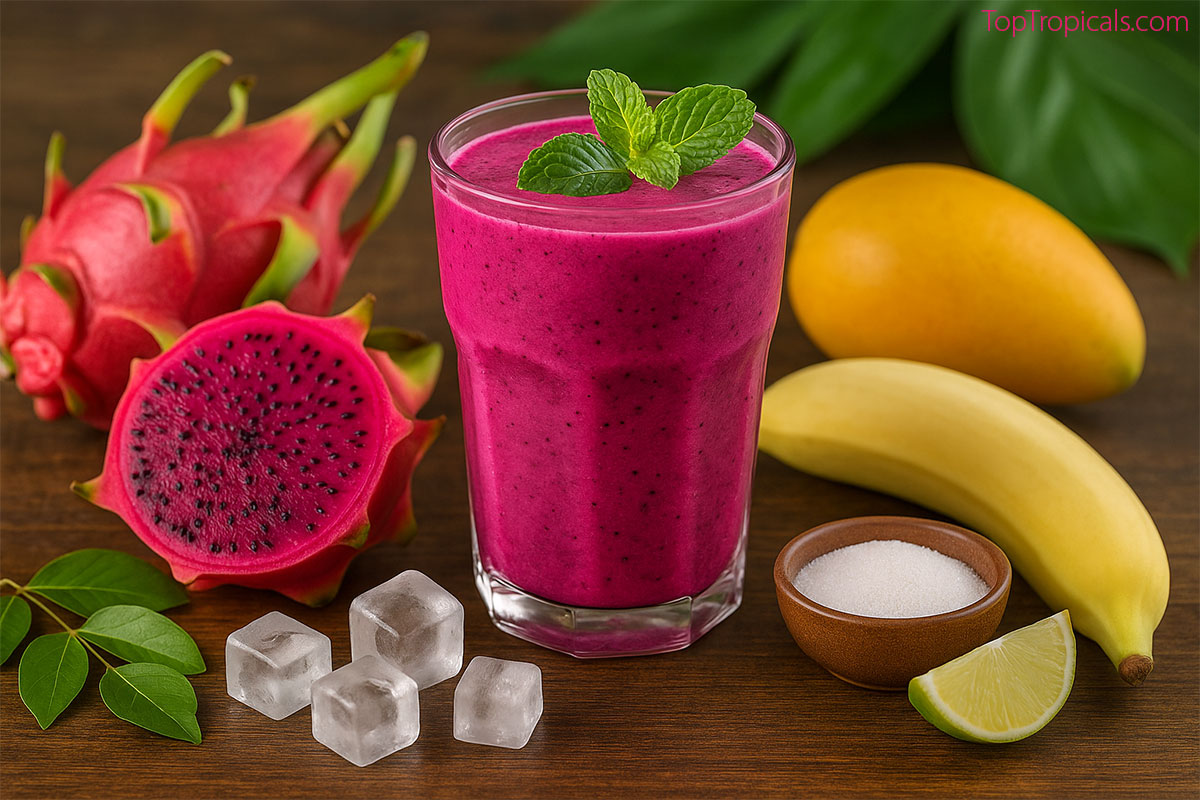
Glass  of  dragon  fruit  pitaya  smoothie  with  fresh  dragon  fruit,  banana, 
 mango,  lime,  sugar,  and  ice 
 cubes

Blend together:

  • 2 dragon fruits, peeled
  • 1/2 cup mango pulp
  • 1 banana
  • 1 cup milk of your choice
  • 2 tbsp sugar
  • 1/2 tsp lime juice
  • Ice cubes to taste

Top with mint for a refreshing tropical treat.

Watch Dragon Fruit short videos:

💲 Special Offer – 25% off Dragon Fruit Pitaya Plants!

Get 25% OFF Pitaya plants with code

DRAGON2025

Min order $100. Excluding S/H, valid online only, cannot be combined with other offers.

Hurry, offer expires September 29, 2025!

Explore Dragon Fruit varieties

Date: 28 Sep 2025

Guava: The Healthiest Fruit You Can Grow

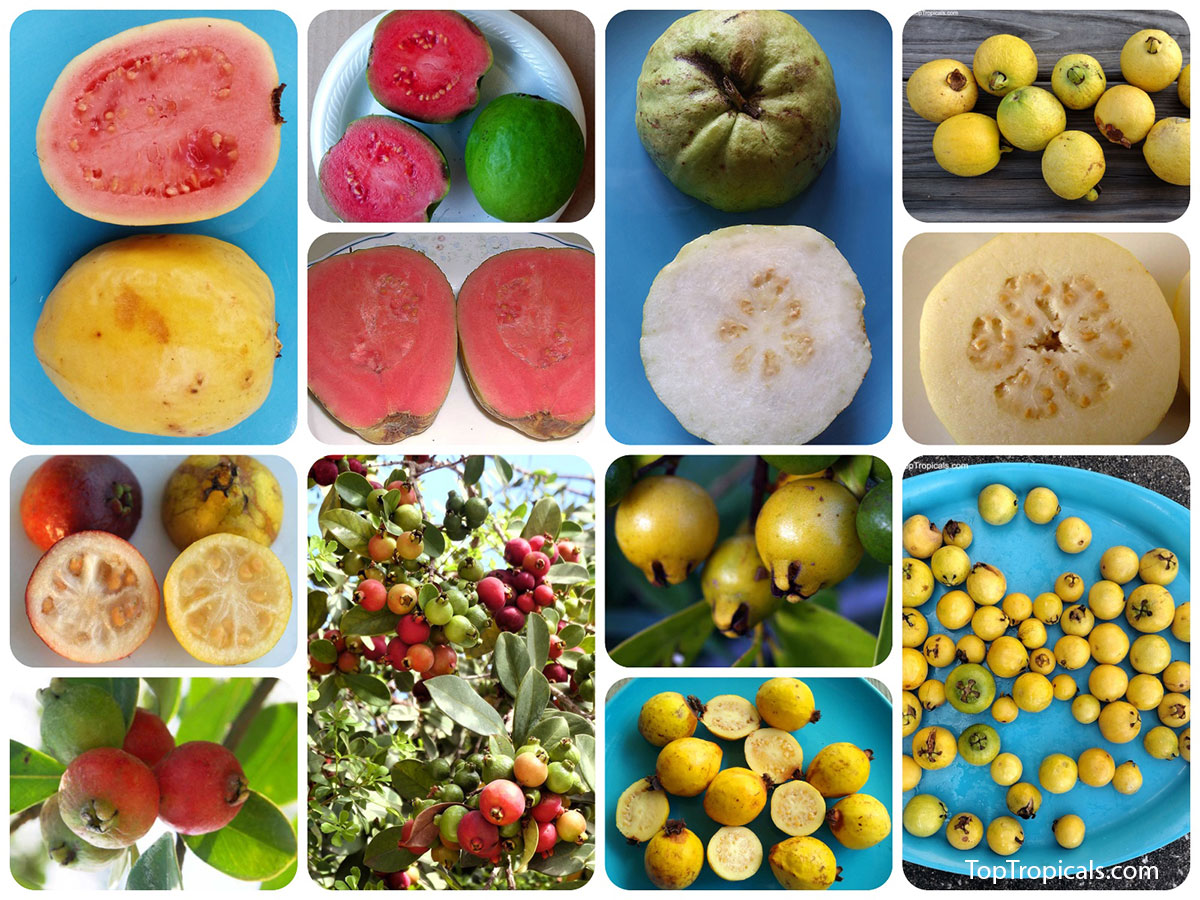
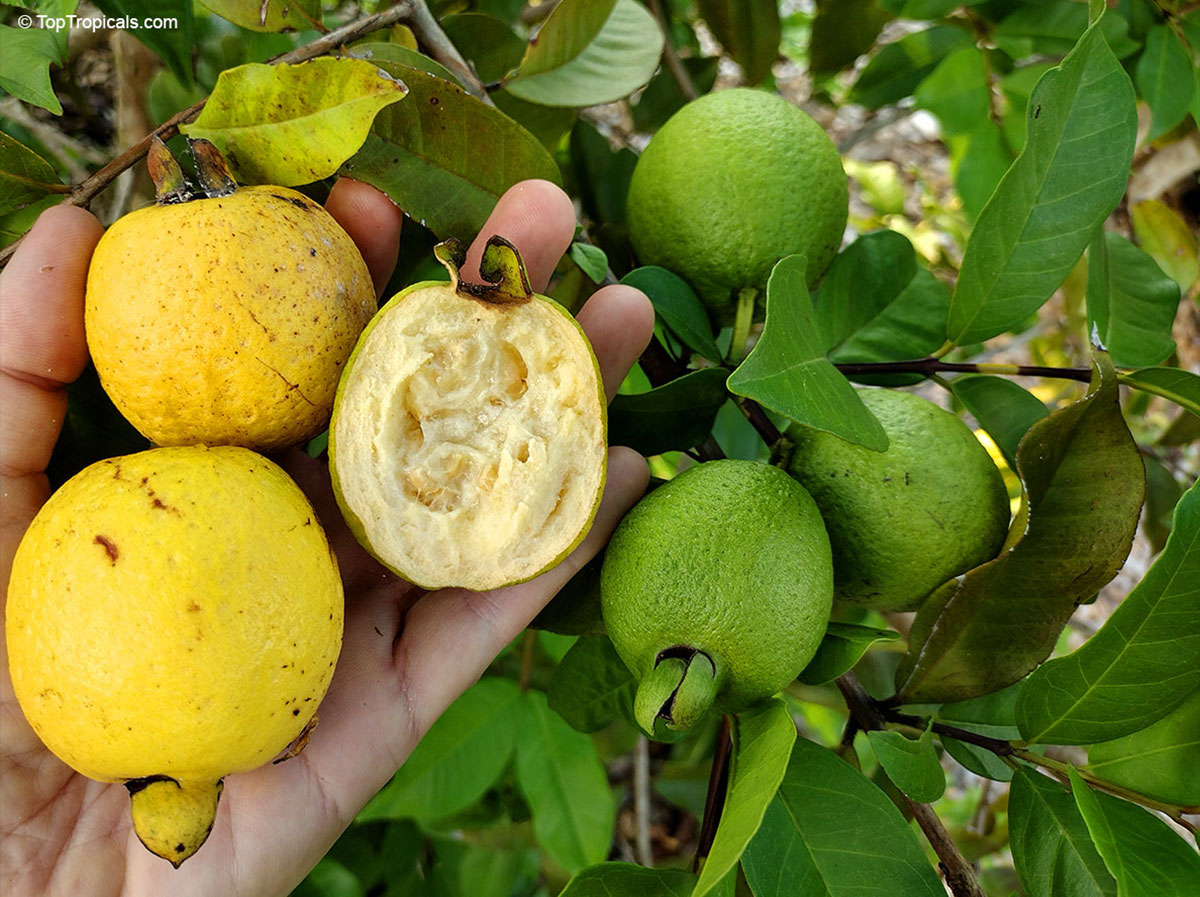
Collage  of  guava  varieties:  pink,  white,  Cas,  red  Cattley,  and  golden 
 Cattley  guavas,  shown  as  whole  fruits,  cut  sections,  and  clusters  on  the 
 tree.

Guava varieties: Pink flesh (upper left quarter), White flesh and Cas (upper right quarter), Red Cattley Guava (bottom left quarter) and Golden Cattley (bottom right quarter).

Let’s talk Guava. Few fruits check as many boxes: flavor, productivity, health, and adaptability. We’ve grown guava trees at Top Tropicals for years here in Florida, and it never fails to surprise people with how easy it is — and how quickly it rewards you.

🌿 Health Benefits

We know the first question:"Why guava in addition to all the other fruit trees I could plant?"Because guava is one of the healthiest tropical fruits you can eat and grow — and it produces faster than almost anything else.

  • Vitamin C powerhouse — guava has four times more vitamin C than oranges. One fruit covers your daily needs and then some.
  • Potassium and fiber — good for balancing blood pressure and keeping your heart strong.
  • Antioxidants like lycopene and vitamin C — these keep your skin glowing and help protect your cells from damage.
  • Dietary fiber — aids digestion and helps keep blood sugar steady.
  • Guava is a true"food as medicine"tree you can plant right in your backyard or in pot.

♥️ Our Favorite Varieties are Available Now

We currently have a DOZEN excellent guava varieties in stock selected by our plant expert Tatiana Anderson — something special for every garden. Our top picks are:

Pink Guavas

  • Barbie Pink – Yellow pear-shaped fruit with thick pink flesh, sweet and juicy. Cold hardy for a tropical fruit. The best seller.
  • Hong Kong – Large, round, smooth pink fruit. Sweet flavor, very few seeds, and very productive.
  • Tikal – Our top pick. Fast-growing, disease-resistant, and produces the sweetest pink guavas with very few seeds.

White Guavas

  • Indonesian White – Aromatic, classic white-fleshed guava with an excellent tropical flavor.
  • Kilo White – Giant fruit up to 2 lbs (1 kilo) each! Few seeds, creamy white flesh, and fruits even in containers.

Compact/Dwarf

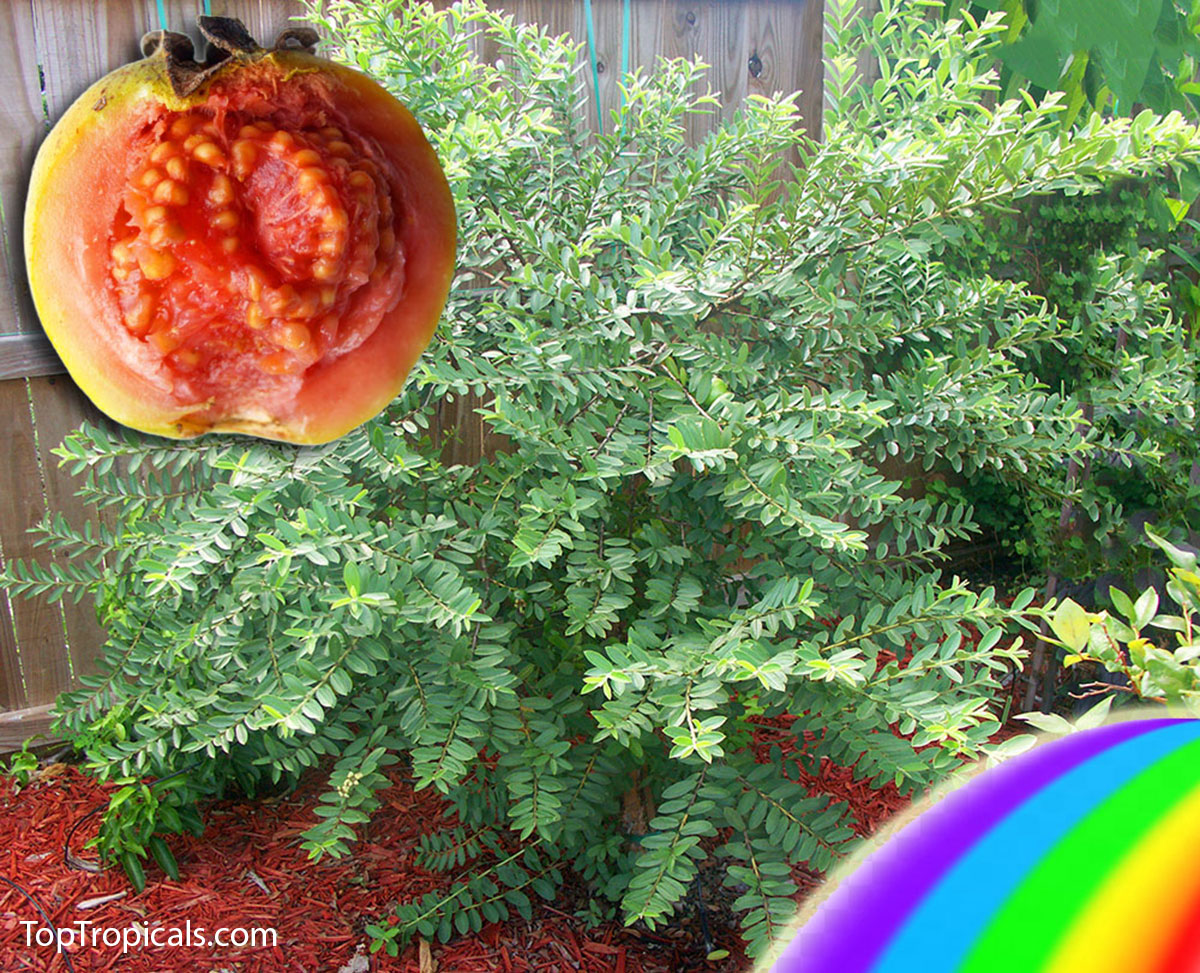
Dwarf  Guava  Hawaiian  Rainbow  tree  with  dense  green  foliage,  inset 
 showing  pink-fleshed  guava  fruit  with 
 seeds.

Dwarf Guava Hawaiian Rainbow

Specialty Varieties

Cas  Guava  fruits  on  tree,  with  ripe  yellow  and  unripe  green  fruit,  one 
 cut  open  to  show  pale  flesh.  Traditional  Costa  Rican  Agua  de  Cas 
 fruit.

Cas Guava with zero sugar for Costa Rican Agua de Cas drink

  • Cas Guava – Bold, tangy, almost zero sugar. The traditional Costa Rican Agua de Cas drink comes from this fruit. Cold hardy.
  • Hawaiian Gold, Yellow Strawberry Guava – The sweetest Strawberry Guava, golden fruit, great for fresh eating and drinks.
  • Brazilian Araca Pera – Rare hybrid used for Guava Wine in Brazil. Tart, concentrated juice makes excellent wine, sorbet, or jelly. Learn more...
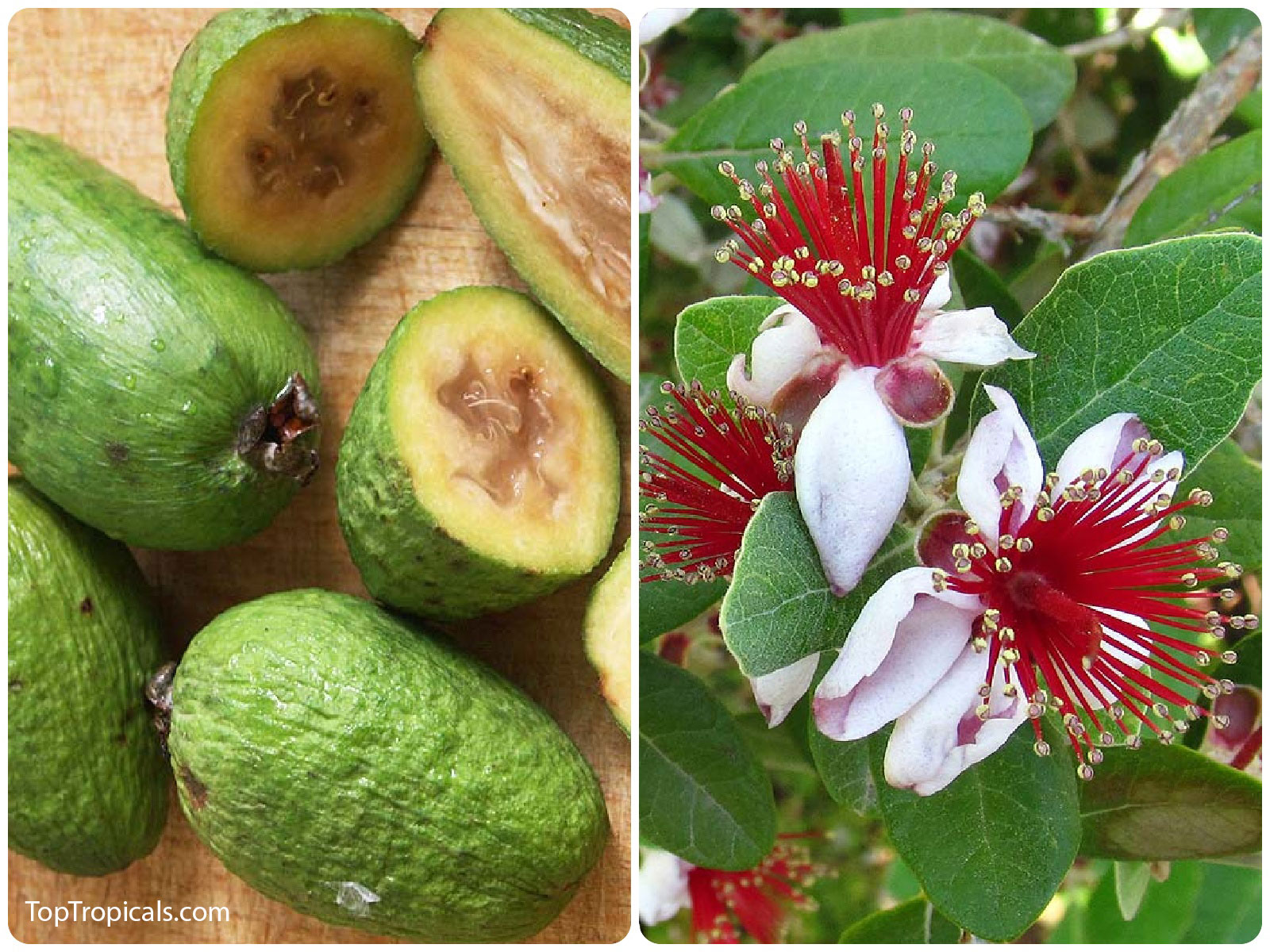
  • Pineapple Guava, Guavasteen – Feijoa sellowiana. Strongly perfumed fruit, best enjoyed when the pulp is mixed with sugar – like forest strawberries. Cold-hardy, tolerates freeze, and doubles as a great windbreak. Learn more...

Pineapple  Guava  (Feijoa  sellowiana)  fruit  and  flowers.  Green  oval  fruit
    with  soft  aromatic  flesh,  and  white-red  blossoms  with  long 
 stamens

Pineapple Guava, Guavasteen – Feijoa sellowiana

Every one of these thrives here in Florida or in warm climate. Some are better in pots, some as landscape trees, but all produce generously.

🎥 Watch short videos about Guava:

💲 Special Offer – 20% off Guava Fruit Plants!

Get 20% OFF already discounted Guava plants with code

GUAVA2025

Min order $100. Excluding S/H, valid online only, cannot be combined with other offers.

Hurry, offer expires October 02, 2025!

Explore Guava Fruit Plants

Date: 27 Oct 2025

Large Grafted Mango Trees - Plant Now Before Winter!

Smokey  the  tuxedo  cat  prepares  to  plant  a  huge  mango  while  Sunshine  the
    ginger  tabby  relaxes  in  a  reclining  chair  sipping  coffee  as  a  truck  with  a 
 boom  crane  unloads  the  mango  beside  an  excavator  and  a  pile  of  mulch  in  a 
 sunny  tropical 
 garden.

"Next Time We'll Specify - A TREE!" - Smokey and Sunshine Plant a Giant Mango

🌡️ Why plant now?

Fall is the perfect time to plant tropical fruit trees. The soil is still warm, the air is mild, and your trees can quietly build strong roots. By spring, they’ll already be settled and ready to grow fast.

Imagine walking outside next summer and picking your own mangoes from a tree you planted this fall!

🎥 Check out Mango Tree Videos

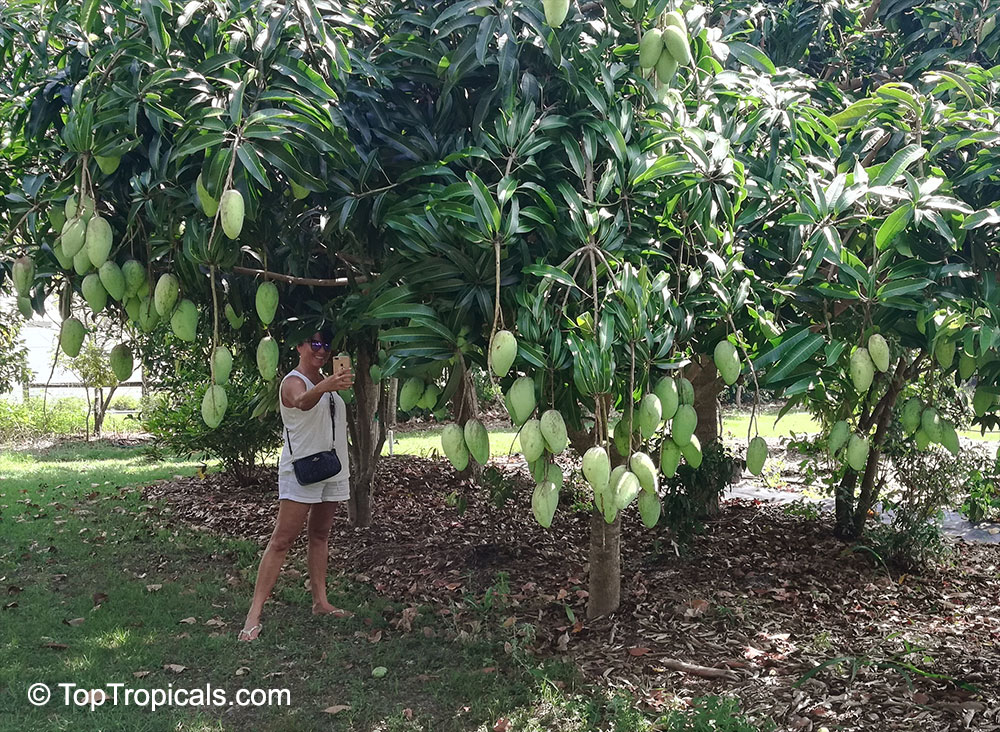
Large  Pim  Seng  Mun  Mango  tree  full  of  heavy  green  fruit.

💲 Special Offer – 20% off Large Mango Trees: 7-15 gal

Get 20% OFF large grafted Mango trees (7-25 gal) with code

MANGO2025

Min order 150 (excluding S/H), valid online only, cannot be combined with other offers.

Hurry, offer expires November 03, 2025!

👉 Explore Mango Varieties:

7 gal pots - shipped to you

15 gal pots: pick up or delivery

25 gal pots: pick up or delivery

All Mango sizes