Garden Blog - Top Tropicals

Date: 9 Mar 2026

Dont Wait Years: 8 Fruit Plants You Can Harvest the Same Season
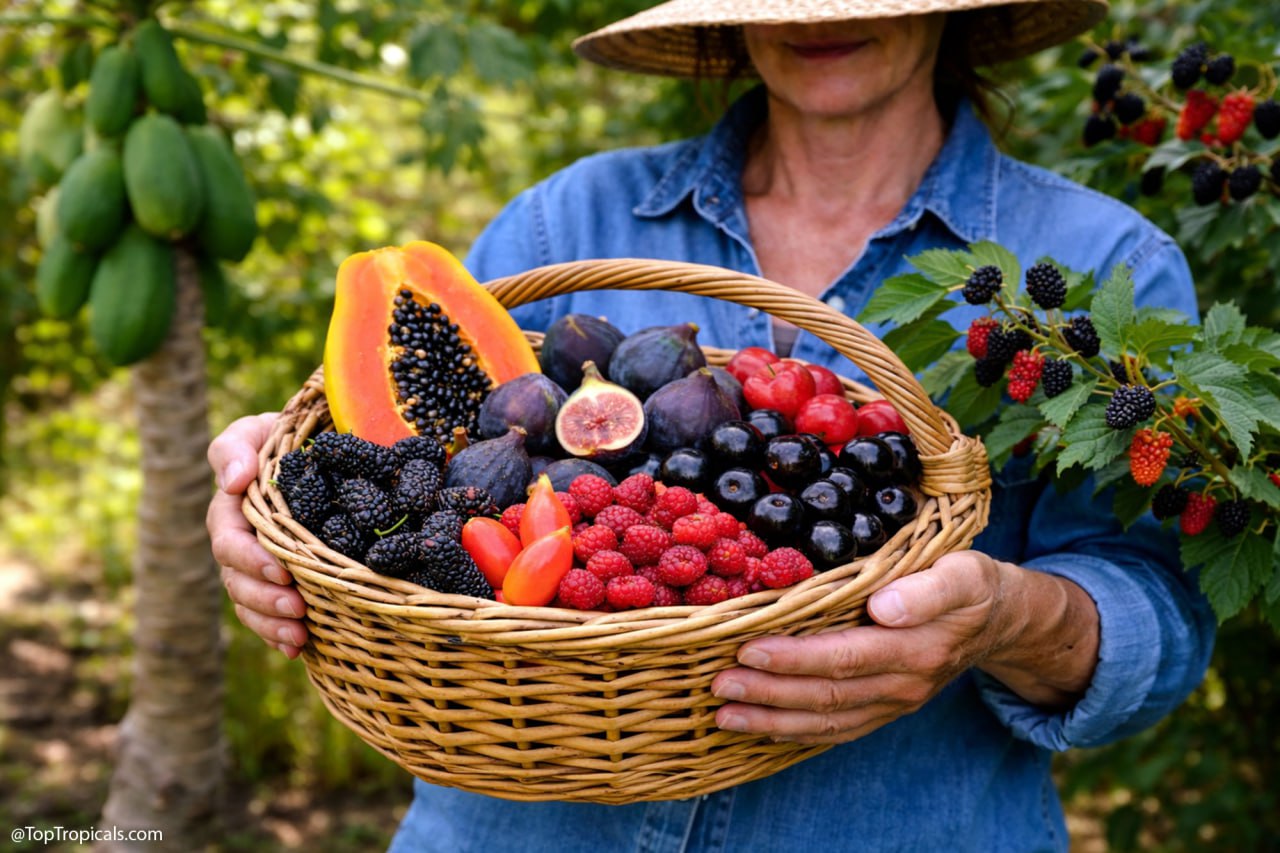
Don't wait years for fruit! Harvest papayas, berries, figs, and more in the very same season you plant them with these fast-growing varieties.

Don't wait years for fruit! Harvest papayas, berries, figs, and more in the very same season you plant them with these fast-growing varieties.

Don't Wait Years: 8 Fruit Plants You Can Harvest the Same Season 🍒

Growing fruit at home usually requires years of patience. Most gardeners view fruit trees as a long-term investment that may not pay off for a decade.
But you don't have to wait.
Certain tropical and subtropical plants are "fast-track" growers. In warm climates like Florida, choosing the right varieties means you can see flowers and fruit within months of planting - often in the very same season.
If you want a backyard harvest without the wait, here are the fastest-producing fruits you can plant today.
  • 🍓 1. Blackberry Jam Fruit (Randia formosa)


    A compact shrub perfect for containers. It produces star-shaped flowers and dark purple fruit that tastes exactly like blackberry preserves. Established plants often fruit in their first season.
  • 🍓 2. Peanut Butter Fruit (Bunchosia)


    This fast-growing large shrub produces orange pulp with the uncanny flavor and texture of peanut butter. Expect flowers and bright red berries within months of planting in warm conditions.
  • 🍓 3. Papaya (Carica papaya)


    The "giant herb" of the fruit world. Papayas are legendary for their speed, often flowering just months after planting and providing sweet, vitamin-rich fruit within the same year.
  • 🍓 4. Grumichama Cherry (Eugenia brasiliensis)


    A stunning Brazilian evergreen. Grafted plants can fruit the same season they are planted, offering glossy, dark cherries with a sweet, mild finish.
  • 🍓 5. Black Surinam Cherry (Eugenia uniflora var. Lolita)


    The 'Lolita' cultivar is a game-changer. It grows quickly as an edible hedge and produces nearly black, resin-free fruit that is significantly sweeter than the common red varieties.
  • 🍓 6. Mysore Raspberry and Tropical Blackberries (Rubus sp.)


    Unlike traditional berries that require chill hours, these Rubus species thrive in the heat. Their vigorous canes grow rapidly, often fruiting the same season they hit the soil.
  • 🍓 7. Everbearing Mulberry (Morus sp.)


    Mulberries are incredibly generous. Everbearing varieties produce sweet berries over an extended window and often begin fruiting the very first year they are planted.
  • 🍓 8. Fig Trees (Ficus carica)


    Figs are the champions of container gardening. They are highly drought-tolerant and famous for setting honey-sweet fruit even at a very young age—often just months after being established.


🏡 Where to plant them?
  • 👉 Tips for Faster Results


  • •  Start Large: Buy "nursery-established" plants rather than seeds.
  • •  Feed the Need: Use high-quality organic fertilizer to support rapid growth.
  • •  Sun is Fuel: Most of these varieties require at least 6-8 hours of direct sunlight to trigger flowering.


🛒 Plant these fruits now - some can produce within months

📷 Freshly picked tropical fruit bounty: don't wait years for fruit! Harvest papayas, berries, figs, and more in the very same season you plant them with these fast-growing varieties.

#Food_forest #How_to #Discover

🟢 Join 👉 TopTropicals
Date: 24 Jun 2018

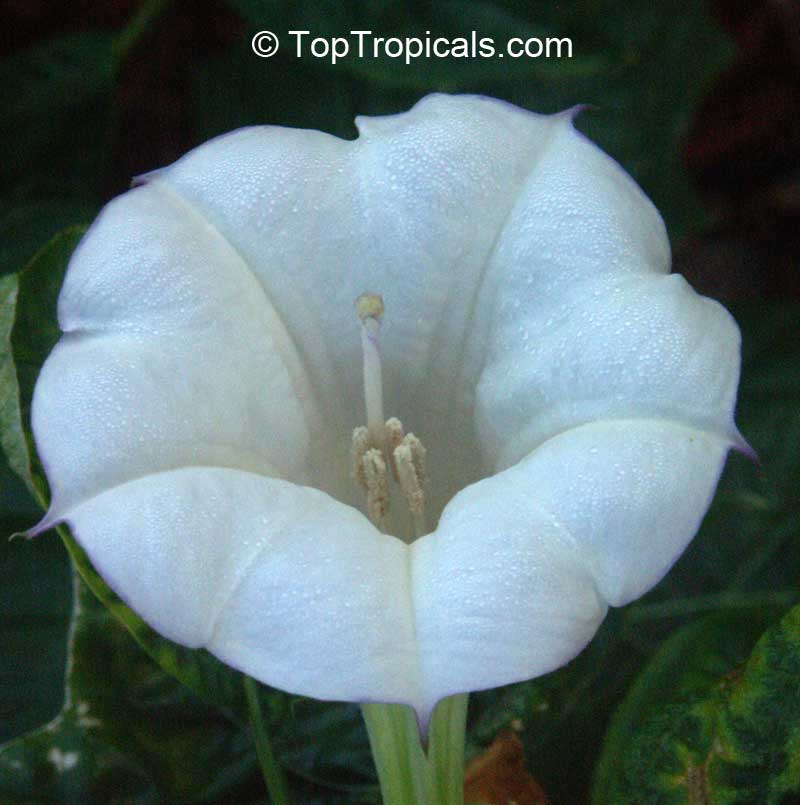
The Enchanting Datura

New article by Jane Jordan
"...Commonly known as the Devils trumpet, Datura has long been associated with witchcraft and voodoo rituals. Ideally suited for moon or night gardens, the blooms are fragrant and particularly so at night..." Continue reading...

5 important tips for successful growing Datura and Brugmansia;
1. Full sun
2. Use fertile soil that must be vewry well-drained. Plant in elevation
3. Ample water encourages fast growth, but never allow wet feet!
4. Fertilize heavily during hot season
5. Propagate Brugmansia with semi-woody cuttings, Datura - with seeds that have a long shelf live

Buy Datura and Brugmansia

Date: 9 May 2017

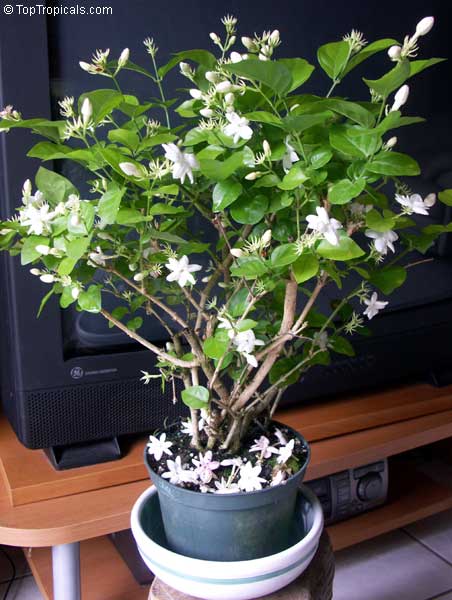
Secrets of flowering of Jasmine Sambac

Q: Q: My Jasmine sambac Maid of Orleans is growing very fast and produced lots of branches and dark green leaves, when will I see flowers? I only saw 2 or 3 flowers since since Spring. I is planted by East wall of the house. Should I use some special fertilizer perhaps?

A: Jasmine sambac is a tropical bush or vine that enjoys hot summers. Since it tolerates wide range of light conditions, it can be grown both in shade or sun; this is why it is highly recommended for indoor culture where light level is limited. Remember though that profuse blooming directly depends on the light level. Your Eastern exposure location may not be providing enough light for the flowering. Dark green leaves are also a sign of a filtered light sitution. Extra fertilizing may not help to induce flowering if the light is low, although it is always beneficial for a plant (it may just start producing even more leaves and branches). The ideal conditions for Sambac's flowering are - full sun all day long, high temperatures (upper 80's-90's, even over 100F is fine), and very good drainage. Some gardeners call Jasmine sambac "almost a succulent", referring to its low watering needs. To be exact, this plant requires regular watering, but will produce lots of flowers only providing perfect drainage. You may never see flowers if the plant has wet feet or water-logging occurs. If your summers are rainy (like in Florida), make sure your jasmine is planted with at least 4-5"elevation and not in a low/wet spot.

See Top Tropicals Video about jasmine Sambac:

Date: 18 Jan 2017

10 plants that can make you happy.
3D garden ideas.

3D garden ideas.
Q:
Can you make my yard bigger and prevent it from freezing?

A: Yes, we can make your backyard bigger by adding a 3rd dimension - trees as a upper level, shrubs as a second level, vines in between, low growing perennials below them. Add ground covers and potted plants as separate specimens in between in-ground planted trees and shrubs. One more separate dimension is orchids and other epiphytes that happily grow on the trees. This multi-level structure will allow you not only collect so many plants, but also maintain them in a natural environment, similar to how they grow in a wild.

As far as preventing from freezing - it depends. You can use greenhouse, cover plants, create microclimate under large canopies, etc. Some tropical plants are tolerant to light frost, once established. If it gets below freezing in your area for more than a few hours, and especially if you have numerous nights with frost throughout winter, we recommend to keep plants in pots (BTW, this way you save space and can collect even more!). Pots can be moved to protected area during cold nights. The more established the tree, the more chances to survive colder temperatures. You may also use propane heaters during cold nights.
We also use plant booster SUNSHINE boosters to increase plants cold tolerance.
Cold protection is a lengthy subject. Here is some more information on cold protection. Also, we recommend to check out our magazine Tropical Treasures (about pushing the limits of tropical gardening) for a detailed article on cold protection.
These are specific articles on Zone-Pushing in different issue #s regarding dealing with cold. See downloadable issues:
(#1) Growing Tropicals in Nontropical Climate, Three Freezing Nights in Southwest Florida
(#2) Temperature drops - an alert or a rehearsal?
(#5) Dealing with cold snaps, Cold hardy beauties
(#7) When winter is around the corner, Growing exotic Cordyline in colder climate
(#8) When the weather outside is frightful
(#9) Winter champions
(#11) Ready-for-winter checklist for in-ground plants
(#13) Winter checklist
(#18) Dealing with cold damaged plants
You may also order hard copies.
If temperatures drop below freezing in your area, remember to add Heat Pack to your order!


10 plants that will make you happy.

Everyone wants to be happy. Did you know that growing plants is not only fun but can also make you happy? In our new series we will introduce to you 10 plants for your tropical collection that will make you happy.
Visit our Facebook, YouTube Channel and stay happy!

Check out this video: 10 plants that will make you happy. Plant # 1 - Rose Apple.

Stay updated with TopTropicals Videos by subscribing to our channel at YouTube.com/TopTropicals

Date: 24 Oct 2016

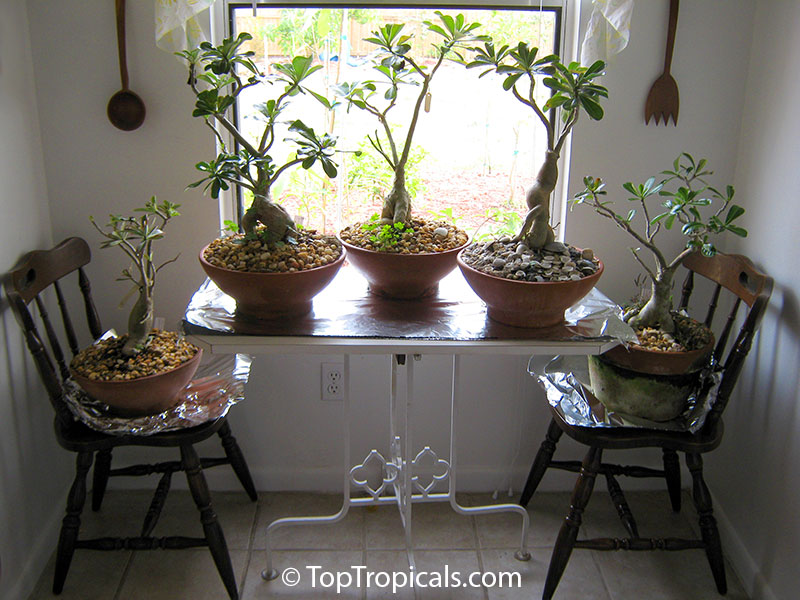
Overwintering Adeniums outside of tropics

Q: We bought several adenium plants from you. We are moving to the Denver area of Colorado. How can we make sure the plants survive? Should we use a green house?

A: Adeniums are perfect container plants, and house plants. They can be easily grown outside of tropical climate. During winter, Adeniums drop leaves and go into dormancy which makes it easy to keep these plants in a dormant stage in a warm location of your house, or possibly even in well-lit spot of garage (with a window), with temperatures above 50-60F.
Here in South Florida, during time of cold, when chances of freeze are high, we move our own Adenium collection into lanai, with plastic sheet protection around lanai.

In colder climates, Adeniums can be kept indoors as house plants during winter. There are some requirements/tips for you: