Garden Blog - Top Tropicals

Date: 26 Apr 2025

Fun Facts About the Guava Flower

Guava Flower

🌸 Fun Facts About the Guava Flower


🌸 Frilly and Fabulous - Guava flowers may be small, but they're packed with fluffy white stamens that give them a soft, powder-puff look.

🌸 Pollinator Magnet - Bees and butterflies love guava blooms, making them a great addition to a pollinator-friendly garden.

🌸 Scent-sational - The flowers have a light, pleasant fragrance that adds a touch of sweetness before the fruit even arrives.

🌸 Bloom to Fruit - Each flower can turn into a delicious guava fruit, making them both beautiful and productive.

🌸 Part of the Showy Family - Guava (Psidium) belongs to the Myrtaceae family, which also includes eye-catching bloomers like Eucalyptus, Bottlebrush (Callistemon), and the stunning Rose Apple (Syzygium).

📚 More from previous posts about: #Guava

🛒 Shop Guava Trees

#Food_Forest #Guava #Fun_facts

🔴 Join 👉 TopTropicals

Date: 29 Jun 2025

Pineapple Guava: fragrant fruit, beautiful blooms, and real health benefits

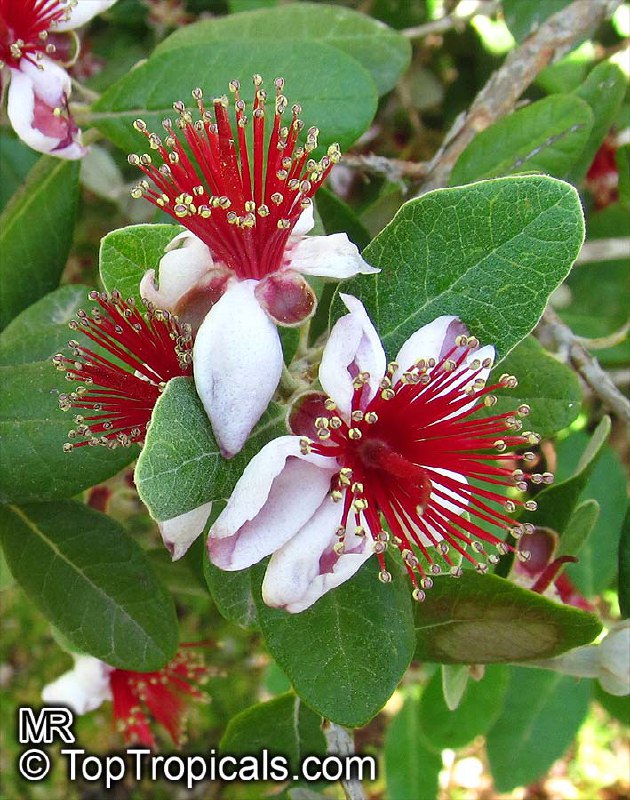
Pineapple Guava blooming

Pineapple Guava blooming

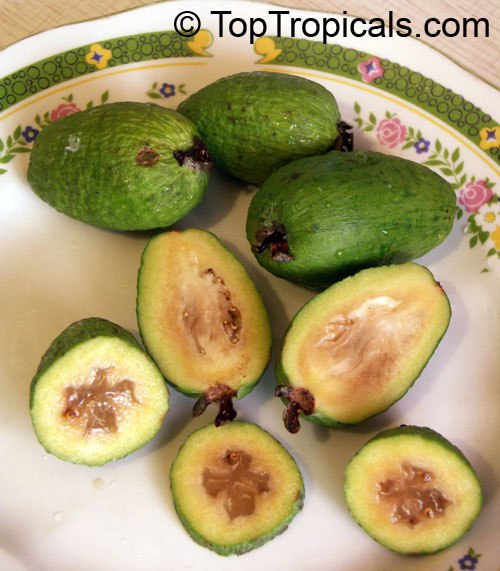
Pineapple guava fruit

Pineapple guava fruit

🍓 Pineapple Guava: fragrant fruit, beautiful blooms, and real health benefits

Feijoa sellowiana, also known as Pineapple Guava or Guavasteen, is an evergreen shrub or small tree that brings together beauty, fragrance, and edible rewards.

With its soft pink, edible flowers blooming in late spring and strongly scented fruit ripening in late summer to fall, it offers interest across multiple seasons.

The fruit is especially unique. When fresh fruit blended with a little sugar, many describe the flavor as forest strawberries with hints of mint or pineapple - some even say it reminds them of Juicy Fruit gum. The texture is smooth and slightly gritty, similar to a pear.

Nutritionally, Feijoa fruit is low in calories, high in fiber, and an excellent source of Vitamin C and antioxidants. You don’t need to guess when it's ready - the ripe fruit drops to the ground.

Pineapple Guava is easy to grow and adaptable. It tolerates drought, thrives in full sun or partial shade, and withstands heat as well as cold down to 10F. Whether planted in the ground or grown in a large patio container, it needs minimal care - just occasional watering and light feeding.

It also serves multiple purposes in the landscape: a dense, evergreen hedge for wind protection, a privacy screen, or a standalone ornamental that attracts birds and butterflies. It can be shaped into a small tree or kept compact depending on your space.

A beautiful, edible, and low-maintenance addition to the garden that earns its place year after year.

🛒Taste the fragrant forest-strawberry flavor - grow Pineapple Guava

📚 Learn more:


Why is it called Pineapple Guava? It tastes just like strawberries!
Flavor of Feijoa Superfood

#Edible_Forest #Guava #Discover

🟢 Join 👉 TopTropicals

Date: 25 Sep 2022

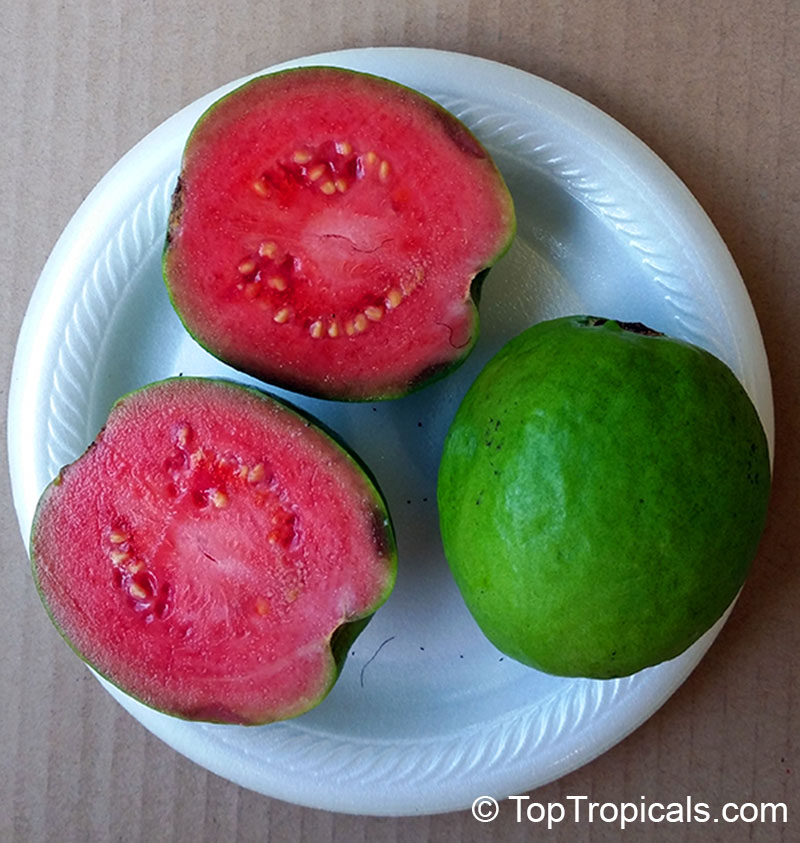
Guava, the easiest container fruit tree

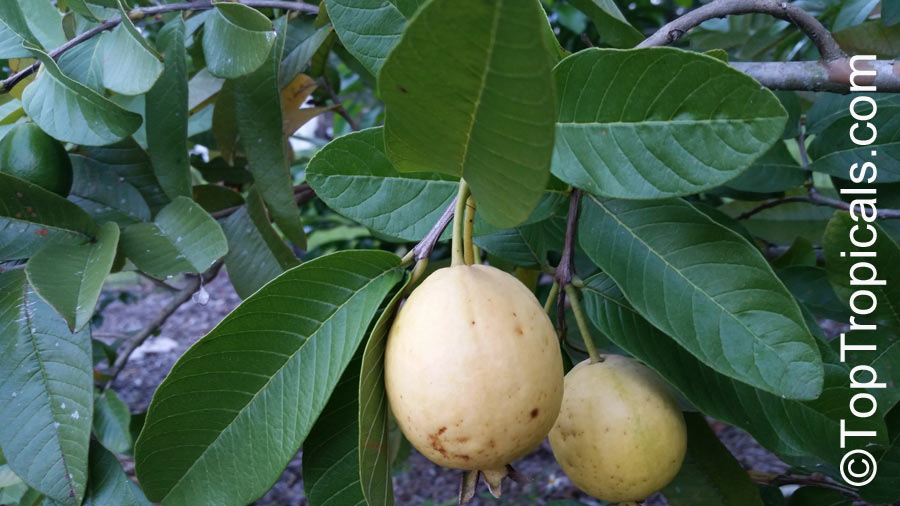
Guava  fruit  on  a  branch

Grow Your Own Food

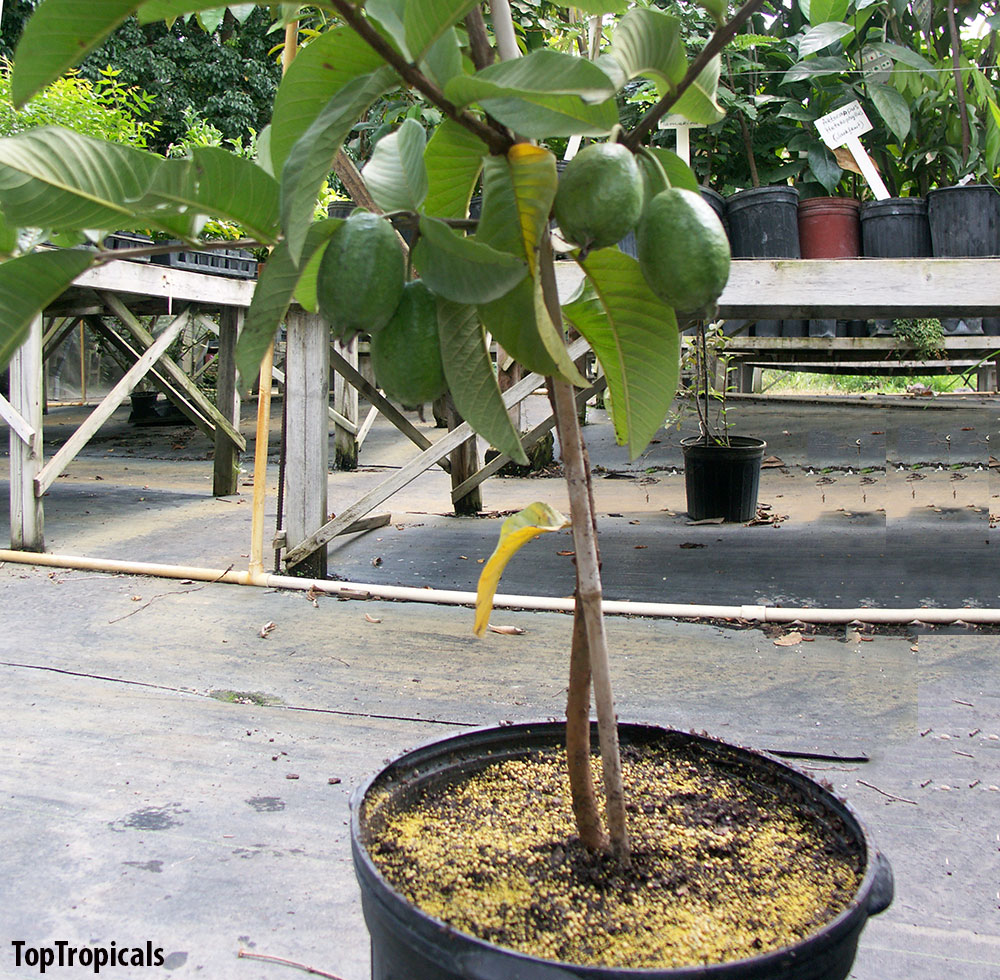
Guava is one of the most popular and well-known tropical fruit because it is so tasty, sweet, juicy and flavorful! Many people are familiar with it because of the large number of products made from this aromatic fruit. But very few people know that Guava tree culture is very easy and this plant can fruit in a pot right away. Guava tree start blooming and producing fruit as small as 1 gal pot size. It can be kept in compact shape, responds well to pruning, stays bushy and grows very fast. It is a perfect container fruit tree or a specimen for a tropical garden of any size.
Upon ripening, the fruit becomes soft and juicy. It may be eaten fresh, made into a juice or nectar contain fruit pulp, or made into preserves, jam, jelly, or paste. A distinctive, savory-fresh aroma of fruit is thermo-stable, thus survives processing. The guava is an excellent source of vitamins C and A.
The plant is relatively cold hardy. Our young trees, 3 months after being planted in the ground were exposed to a short period of freeze last winter (mid-20's) but they grew back without significant damage. Try to keep Guava cold-protected for the first winter, then it will be much hardier once established.
Guavas are fast growers and heavy feeders, and benefit from regular applications of fertilizer. Make sure to get some Sunshine Boosters fertilizer: Sunshine C-Cibus - Crop Booster, and feed them your round.

Guava  tree  fruiting  in  container

Guava  fruit

Date: 14 Nov 2018

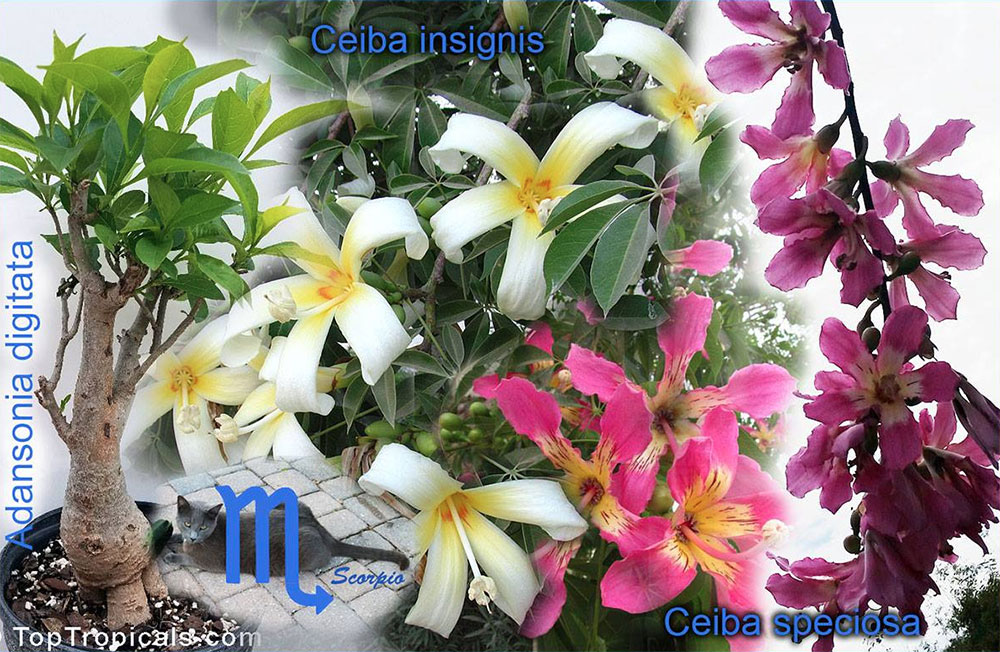
Plant Horoscope. Scorpio Zodiac lucky plants: Plants with thorns, red in color, and grow under adversity

TopTropicals.com

Scorpio - 10/23-11/21.
A WATER sign ruled by both Mars and Pluto.
Scorpio's plants are often found in remote places or on poor ground. They will likely have thorns, can be red in color, and grow under adversity. The good news is, most of these plants are nearly indestructible! This makes them desirable for every gardener.
The reproductive organs are ruled by Scorpio, so these are plants that balance the hormones, regulate the menstrual cycle, help with childbirth and pregnancy. Until this century, Scorpio was ruled by Mars, and the herbs associated with it had to do with the urogenital system and the colon. Many of the herbs related to Scorpio are cleansing and revitalizing. Now, astrologers assign Scorpio to Pluto, discovered in 1930 (Pluto is said by astrologers to be a higher octave of Mars). Physiologically, Scorpio involves the processes of catabolism and anabolism, the death and regeneration of body cells. Diseases of Scorpio are often involved with the slow buildup of toxic substances in the body (carcinogens, etc) or in the mind (anger, jealousy). Scorpio loves a spice with depth and complexity. Camphor Basil adds rich flavor to every dish it seasons, and its own aphrodisiac tendencies appeal to Scorpio's lusty nature.

Scorpio Zodiac lucky plants:
Ceiba, Baobab, Pistachio, Nutmeg, Thunbergia, Combretums, Dragon fruit, Medinilla, Camphor Basil, Oregano, Vanilla orchid, Hibiscus, Various cacti and succulents, Adenium, Honeysuckle, Peppers, Cordyline, Spider plant, Jasmine, Gooseberries, Wild indigo, Bougainvillea, Aloe vera, Raspberry , Palmetto, Horseradish tree, Camphor, Allspice and Bay Rum,Jujube, Sweet Mimosa, Agave, Milkweed, Hong Kong Orchid Tree, Pony Tail, Dwarf Poinciana, Bottlebrushes, Clusias, Crocosmia, Zig-Zag Cactus, Dracaena, Fire Bush, Hoyas, Jatropha , Kalanchoe, Sausage tree, Devils Backbone, Pereskia, Red Plumeria, Firecracker, Rattlebox, Rhoeo, Calendula, Geranium, Thistles, Mint , Sage, Catnip, Coriander, Sandalwood, Ginseng, Euphorbias, Acacias.

Date: 22 Oct 2016

Plant Horoscope. Scorpio Zodiac lucky plants: Nearly indestructible plants

Scorpio - 10/23-11/21. A WATER sign ruled by both Mars and Pluto.
Scorpio's plants are often found in remote places or on poor ground. They will likely have thorns, can be red in color, and grow under adversity. The good news is, most of these plants are nearly indestructible! This makes them desirable for every gardener.
The reproductive organs are ruled by Scorpio, so these are plants that balance the hormones, regulate the menstrual cycle, help with childbirth and pregnancy. Until this century, Scorpio was ruled by Mars, and the herbs associated with it had to do with the urogenital system and the colon. Many of the herbs related to Scorpio are cleansing and revitalizing. Now, astrologers assign Scorpio to Pluto, discovered in 1930 (Pluto is said by astrologers to be a higher octave of Mars). Physiologically, Scorpio involves the processes of catabolism and anabolism, the death and regeneration of body cells. Diseases of Scorpio are often involved with the slow buildup of toxic substances in the body (carcinogens, etc) or in the mind (anger, jealousy). Scorpio loves a spice with depth and complexity. Camphor Basil adds rich flavor to every dish it seasons, and its own aphrodisiac tendencies appeal to Scorpio's lusty nature.

Scorpio Zodiac lucky plants: Ceiba,  Baobab,  Pistachio,  Nutmeg, Black-eyed Susan Thunbergia, Combretums,  Dragon fruit,  Medinilla,  Camphor Basil,  Cuban Oregano, Vanilla orchid,  Hibiscus, Various  cacti and succulents,  Adenium, Honeysuckle,  Peppers,  Cordyline,  Spider plant,  Jasmine,  Gooseberries, Wild indigo,  Bougainvillea,  Aloe vera,  Raspberry,  Palmetto,  Horseradish tree,  Camphor,  Allspice and Bay Rum, Jujube,  Sweet Mimosa,  Agave, Milkweed,  Hong Kong Orchid Tree,  Pony Tail,  Dwarf Poinciana, Bottlebrushes,  Clusias,  Crocosmia,  Zig-Zag Cactus,  Dracaena,  Fire Bush,  Hoyas,  Jatropha,  Kalanchoe,  Sausage tree,  Devils Backbone, Pereskia, Red Plumeria,  Firecracker,  Rattlebox,  Rhoeo, Calendula, Geranium, Thistles, Mint, Sage, Catnip, Coriander, Sandalwood, Ginseng, Euphorbias, Acacias.

For other signs information, see full Plant Horoscope.