Date: 11 Jan 2021
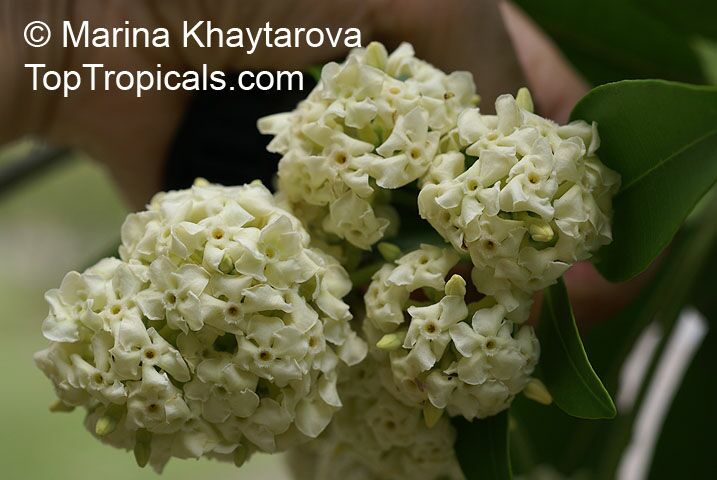
Alstonia scolaris - Indian Devil Tree
A Scholar's Award with intoxicating fragrance
By Alex Butova, the Witch of Herbs and Cats
...This fascinating rare plant with white, strongly perfumed flowers is
valued as a fast growing, impressive ornamental shade tree and is used to
serve as an alternative to quinine...
Popularly known as Devil Tree, as plant is believed to the devil's abode -
probably due to the intoxicating fragrance emitted by flowering trees,
especially at night.
The tree is of great cultural significance in the intellectual circle, as
traditionally its leaves were awarded to scholars and teachers during
convocation ceremonies by the Visva Bharati University (can't think of a better name
than Alstonia scholaris!). This tradition was started by Rabindranath
Tagore...
CONTINUE READING >>


Date: 13 Aug 2019
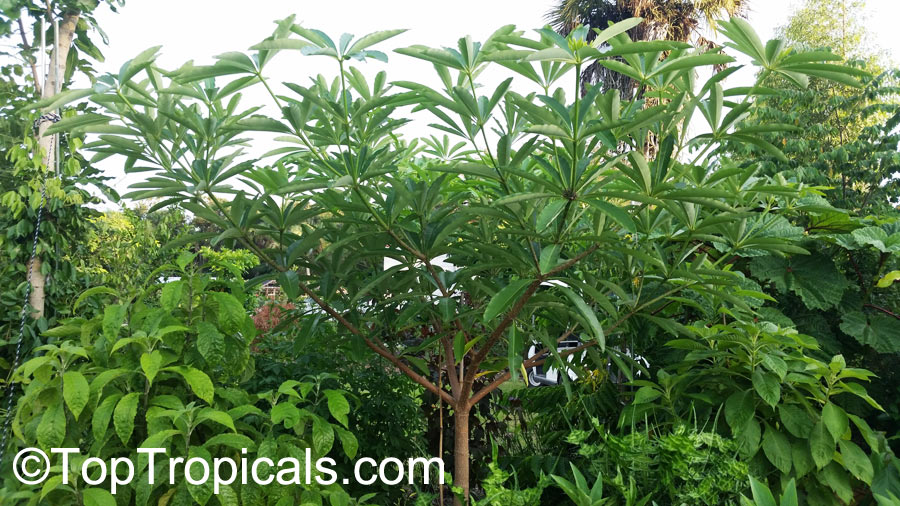
What are the most rare fruit trees?
Q: What is the rarest and unusual plant that you have? I want something special for my tropical fruit tree collection. I already have everything I could possibly get...
A: Are you sure you have everything? Check out our rare plant section, and look at these couple plants we just received... these won't last long, we have only a few!
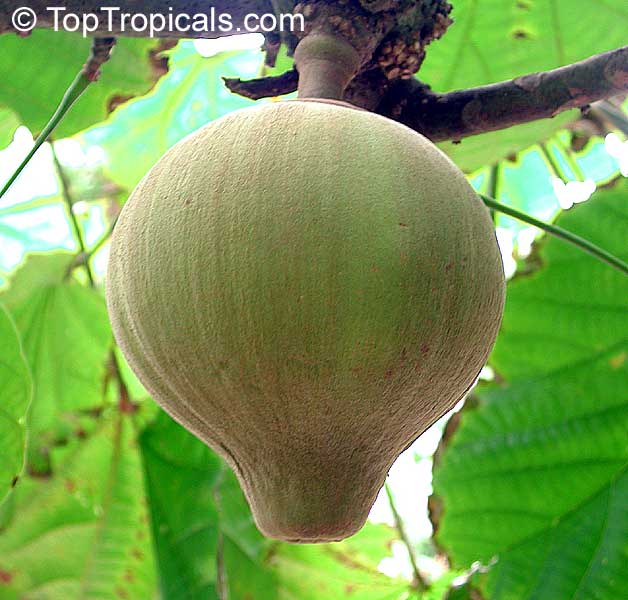
Quararibea cordata - Zapote Chupachupa, South American Sapote (with express shipping)
Chupa-chupa, Zapote, South American Sapote... One of the most amazing and showy tropical fruit trees with huge heart-shaped leaves, heart-shaped fruit, and fast-growing habit. The fruit has a bizarre shape like a large breast with a nipple, and the pulp is very tasty. For best performance, the tree needs full sun, rich soil, plenty of moisture and fertilizer.

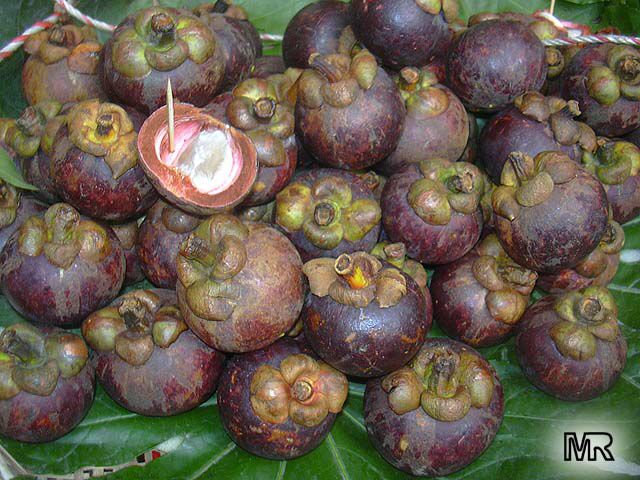
Garcinia mangostana - Mangosteen
Mangosteen... This delicious fruit has a thick, dark-red skin, inside which are creamy-white segments with a sweet, slightly tart flavor. Purported by many who have had the luxury of tasting it as being the best tasting fruit in the world.
Date: 19 Jul 2019
How to grow Soursop in a pot
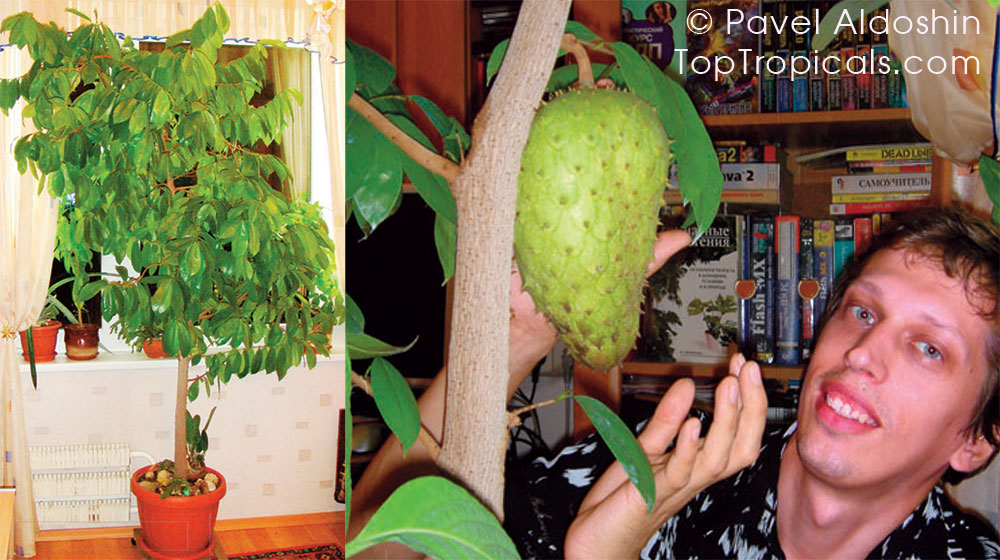
Q: Is it possible to grow soursop in a large pot for life?
A: Soursop, or Guanabana - Annona muricata - is actually one of those tropicals fruit trees that
can be easily cultivated in a container. Most plants of genus Annona have compact nature, and these fruit trees usually start
production at a young age, as early as 3 years from seed. Annona muricata
seedlings take a little longer to fruit, this is why we offer grafted trees, which can start producing right away.
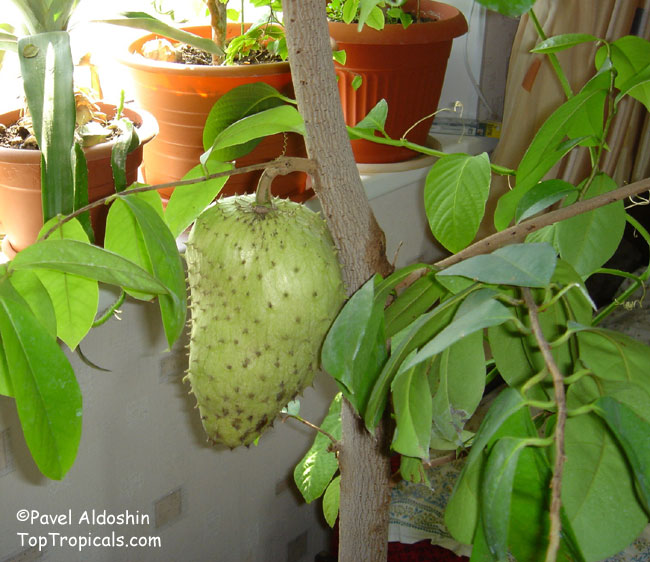
We have a very interesting article about growing Soursop in an
apartment. The article was written by an indoor gardener who lives in a very small
apartment in Moscow, Russia. He grew this tree from seed and after years of
cultivation fun, he finally got several large delicious fruit! It is an amazing
story. We have it published in our Tropical Treasures magazine, download the whole issue #7, get a hard copy, or you may download PDF file of the single article.
Recommended fertilizers and supplements:
Fruit Festival Plant Food - Super Crop Booster
Mango-Food - Smart Release Fruit Tree Booster
SUNSHINE-Honey - sugar booster

Date: 23 Apr 2019
Fruit tree size and production
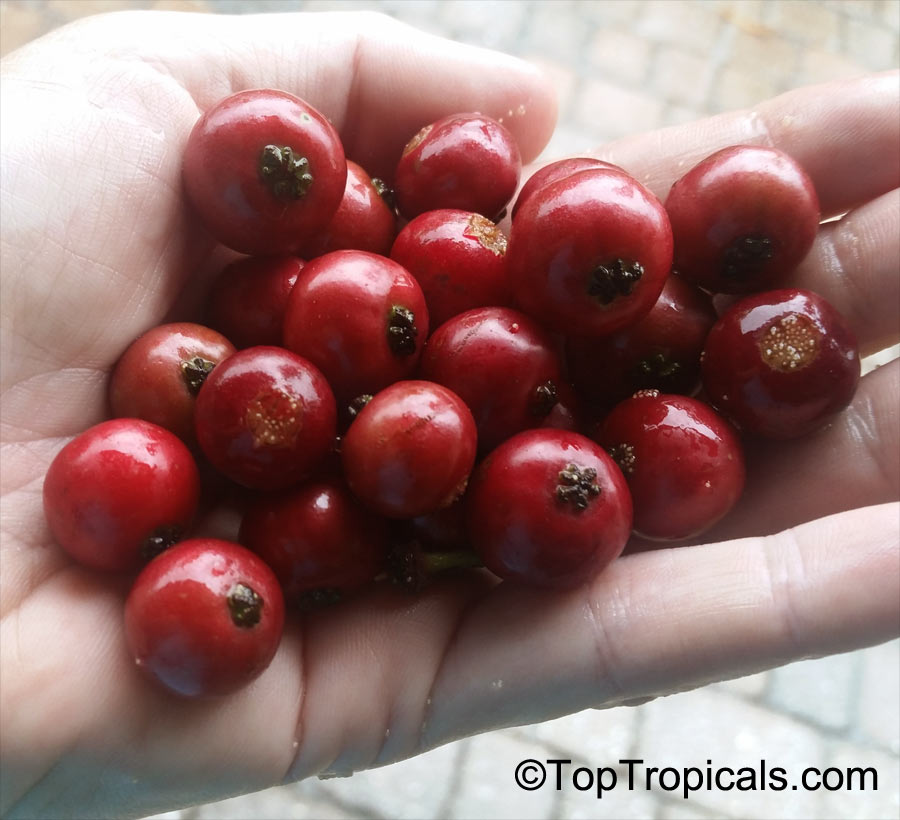
Q: I am interested in a Strawberry Tree... does this tree produce fruit while still small or do I have to wait until it is large before it produces? Should I fertilize it so it produces sooner? I ask because my garden is not large and I prefer to keep my fruit growing trees in a smaller size. Also, how big is the fruit and does it have a seed?
A: Strawberry Tree, Muntingia Calabura, is one of those fascinating fruit trees that starts
flowering and fruiting in small size. We have plants growing in 1 gal
containers that already have flowers. This tree is nearly year-round producer
providing warm conditions. It is a fast grower, although a compact tree when
mature, and can be trimmed to desirable size without affecting production.
Muntingia fruit is one of our favorites. It is super sweet and juicy,
and the seeds are tiny small, not bigger than the strawberry seeds, so you
don't have to spit them out. The fruit size normally about 1/2 inch, but we have
a tree in our garden that produces almost cherry-size fruit! See picture
above. The secret is, good watering and using fruit booster - SUNSHINE honey micro-element supplement. We also fertilize our fruit
trees using Fruit Festival and Mango-Food fertilizers.
Date: 11 Jul 2024
How to have fresh Papaya fruit year around
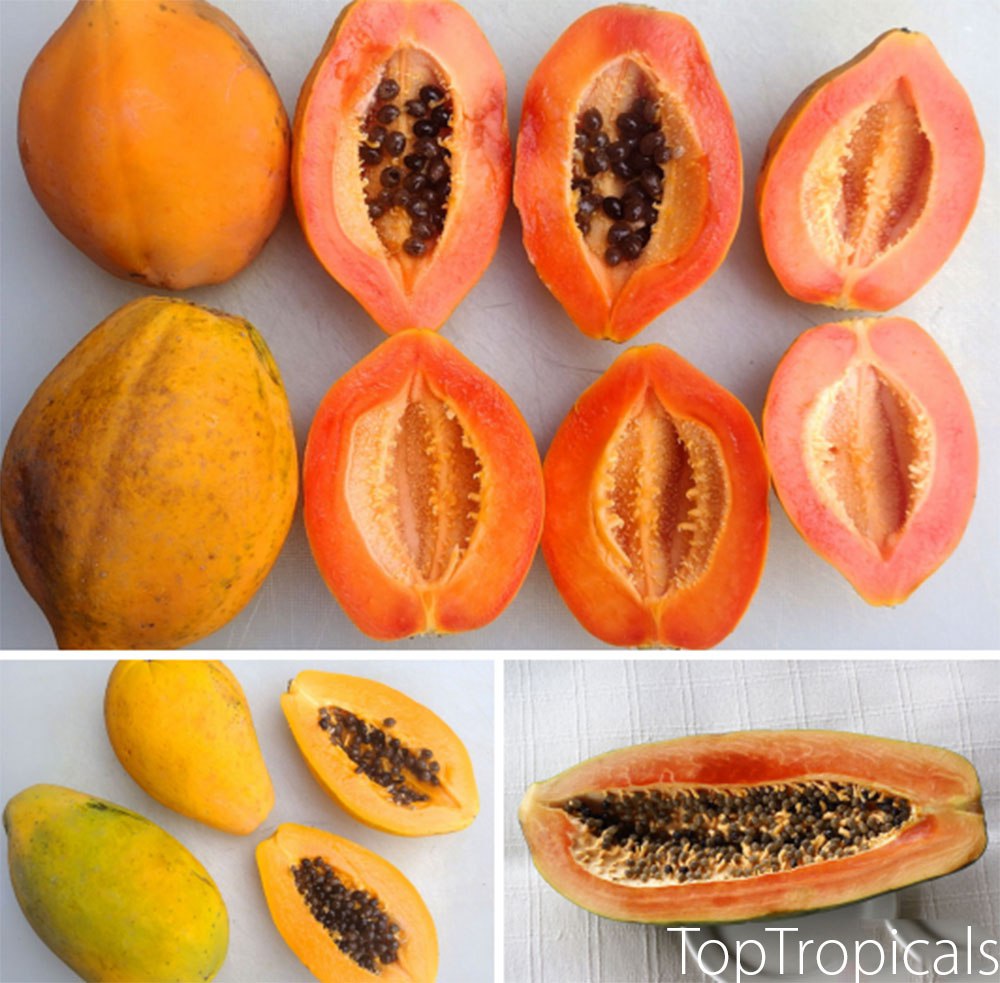
Papaya fruit: Waimanalo, Sunrise, Maradol
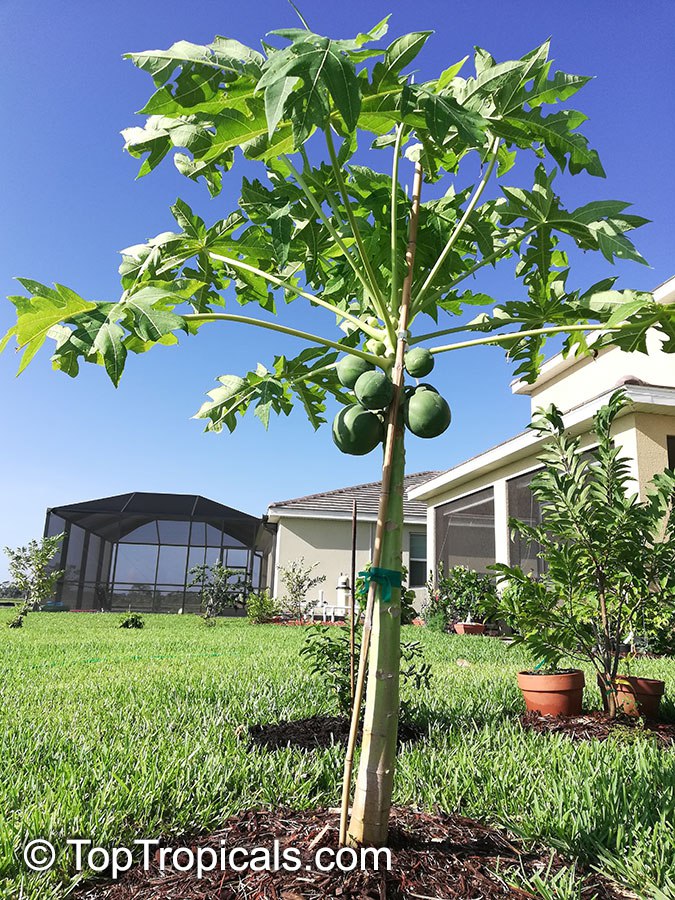
Papaya tree
🍊 How to have fresh Papaya fruit year around
- 🟠 Many people include Papaya fruit in their daily diet because of its healing properties for digestive system. You can eat Papaya fresh as a tasty dessert, add to salads ripe or green, use fruit and leaf wraps in cooking - possibilities are endless.
- 🟠 Buying papaya fruit from the store every day can become costly. So you can plant your own tree - Papayas are heavy producers. But like with many fruit trees, the question may arise:
❓ What to do with so many fruit at once, and where to get the fruit when it's out of season?
- 🟠 The answer is: plant several varieties. Different Papaya cultivars, similar to Mango and Avocado, have different crop seasons.
- 🟠 If you want to enjoy fresh delicious Papaya fruit year around, plant several Papaya varieties in your garden that have different ripening times. For example:
- 🟠 Papaya tree doesn't take any room in your garden: similar to a palm tree, all its leaves/crown is up high, so you can plant as many trees as you want in a very limited space and still use the room under Papaya tree for other plants.
Waimanalo - ripens from July to October and sporadically throughout the year.
Sunrise - ripens from January through September and sporadically throughout the year.
Maradol - ripens from August through March and sporadically throughout the year.
🛒 Limited time offer: Papaya collection - 3 trees for half price!
Shop Papaya varieties
📚 Learn more from previous posts:
The secret facts of Papaya's private life
Top 3 most wanted Papaya varieties
#Food_Forest
🏵 TopTropicals