Ordering plants in winter is often easier than people expect - and for
many plants, it is actually better. Lush foliage plants like philodendrons
and medinilla,
fine-leaved trees such as moringa, jacaranda,
and poinciana,
and even sensitive fruit trees like papaya, jackfruit
or starfruit
ship more safely in cool weather without
overheating stress.
Winter is also ideal for subtropical and cold-tolerant plants, dormant or
deciduous plants like plumeria and adenium, orchids - including ground
orchids and vanilla
orchids, and winter bloomers that flower their best right now. Winter
care is simple: water less, use gentle liquid amino-acid fertilizers like Sunshine
Boosters, and monitor insects.
In mild climates, many tropicals can be planted anytime, while
extra-tender plants can stay potted until spring. Winter is a
perfect time to bring tropical warmth indoors and enjoy greenery when you
need it most.
Holiday season in Florida means sunshine, green leaves, and cats on
patrol. On
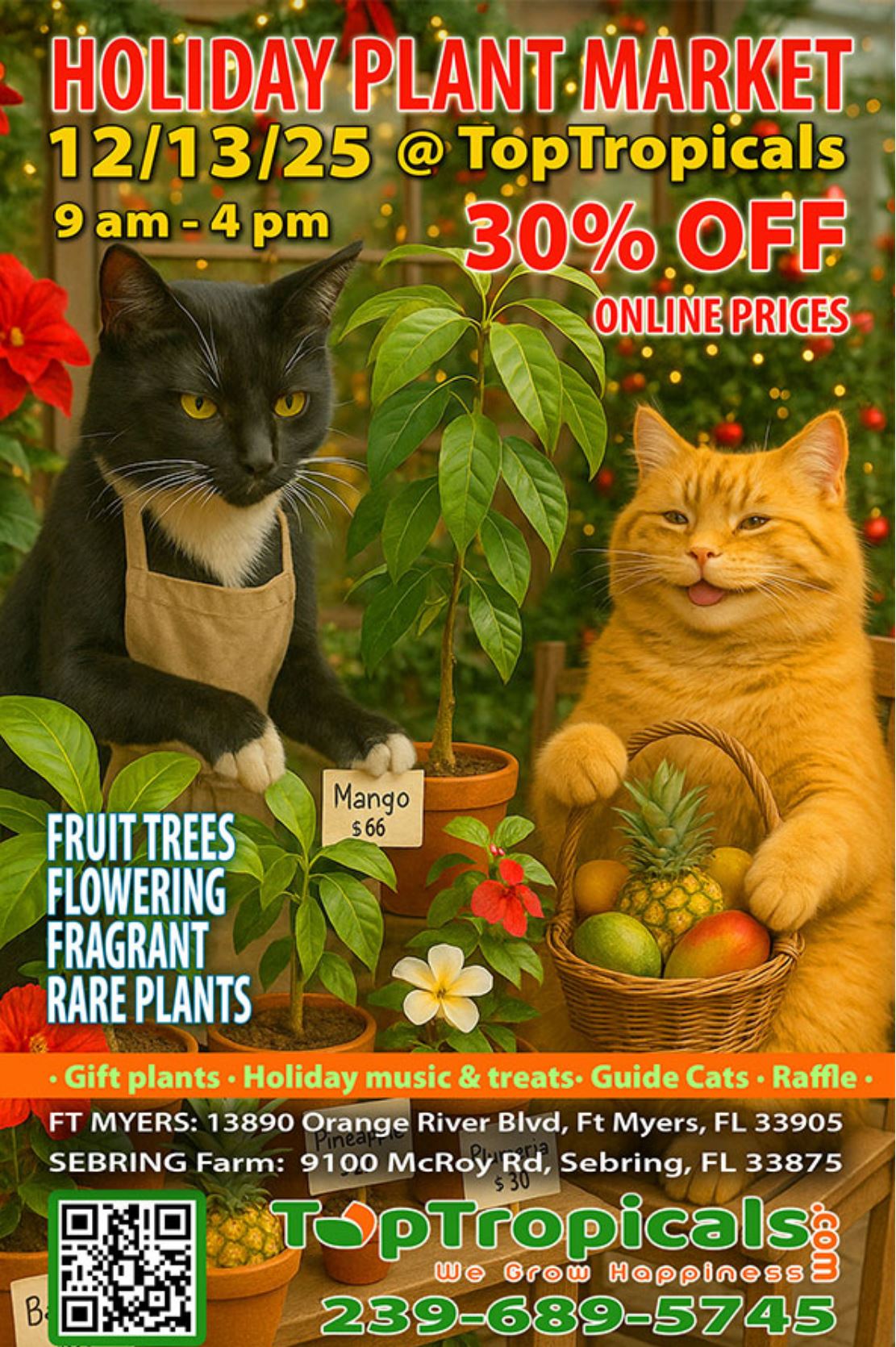
Saturday 12/13/25, our PeopleCats are hosting a special Holiday Plant Market
at TopTropicals,
9 am to 4 pm. This is not a regular nursery day. This is the one where you
grab a donut in one hand, a mango tree in the other, and try not to trip
over a cat giving you a tour.
We are bringing out the best plants we grew all year: big fruit trees
with real branches, flowering and fragrant beauties, rare collectors
plants, and vines that are ready to take off as soon as you get them home.
December is perfect planting weather in Florida, so while the rest of the
country is scraping frost from windshields, you can be
choosing which banana, mango, or jasmine will perfume your yard next
summer.
Holiday extras: 30% OFF online prices, free plant with purchase, 5 to 10
dollar specials, mini donuts and holiday treats, iced tea and citrus water,
tropical Christmas music, and
raffle prizes. If there is enough ripe fruit in the morning, we will set up
a
tasting table too. Our PeopleCats will be on duty all day, rearranging
plants,
checking on visitors, and occasionally allowing themselves to be petted
between tours.
Event discounts and specials are valid at both locations:
Save the date, tell a friend, and plan your plant hunting route now. Come
celebrate the holidays the Florida way: sunshine, rare fruit trees, happy
cats, and a car full of tropical
plants going home with you.
9 awesome accent plants and vines that love heat and dry conditions
☀️ 9 awesome accent plants and vines that love heat and dry conditions
The hardest spots aren’t for trees - they’re for everything else. The toughest areas are often smaller spaces - along walls, patios, containers, or rocky patches where soil dries out fast. This is where most plants fail quickly. These picks don’t just survive - they stand out. They bring texture, color, and structure - without needing constant watering or perfect soil.
Why containers are the toughest of all in heat
Growing in pots in hot, dry conditions is a different game. The soil heats up fast, roots can literally overheat, and moisture disappears much quicker than in the ground. If you’re using containers, protect the root zone - group pots together, tuck them into partial shade, or shield the container itself from direct sun. Choosing drought-tolerant plants helps, but don’t assume they can go totally without water - even tough plants in pots can dry out quickly, so check regularly and don’t let them go bone dry.
🔥 9 best smaller plants and vines for hot, dry spots
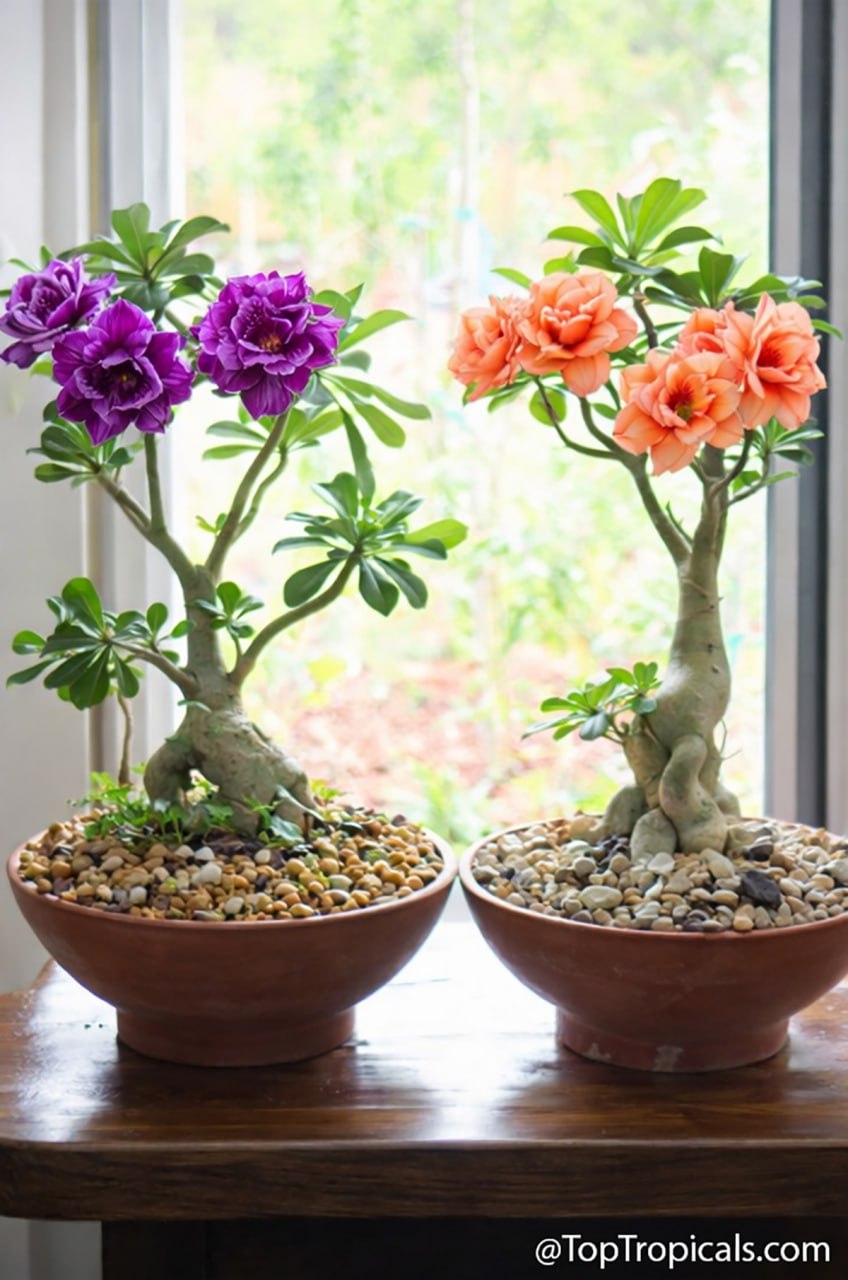
☀️ 1. Adenium - Desert Rose 📸
Stores water in its caudex and thrives in heat - one of the best flowering plants for dry conditions.
Adenium Plant Facts
Botanical name: Adenium sp. Also known as: Adenium, Desert Rose, Impala Lily
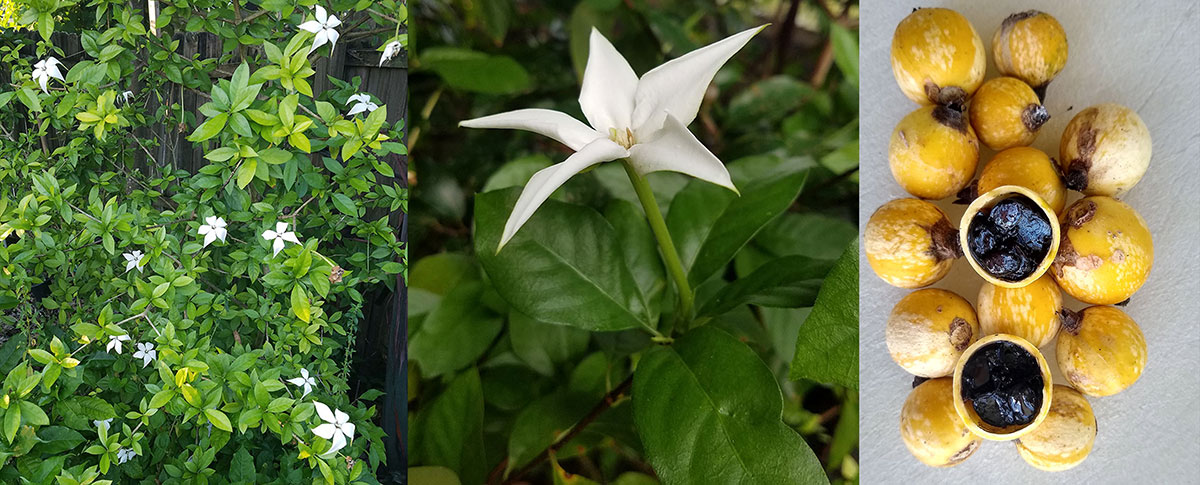
Randia formosa - Blackberry Jam Fruit Tree with Flowers and Ripe Fruit
You know how some plants just surprise you?
That's Randia formosa - the Blackberry
Jam Fruit Tree. At first, it just looks like a cute little gardenia-type
shrub. Glossy leaves, sweet white flowers. Nice enough. But then the fruit shows
up… and you crack one open and go, “Wait - this tastes like jam?!”
And not just any jam - like real, fresh blackberry jam. No sugar, no
cooking. Just soft black pulp inside this golden little fruit. It's weirdly
satisfying. One of those things you make everyone taste just to see their
face.
What's even cooler is how easy it is. This thing starts blooming and
fruiting when it's barely 2 feet tall. You can grow it in a pot on your porch,
or even inside if it gets enough light. And while most of your other plants
take the winter off, this one keeps going - flowers, fruit, the whole show.
If you've got a spot with filtered light and a little curiosity, it's
absolutely worth a try. Honestly, it's just… fun.
This rare South American evergreen shrub checks all the boxes: fragrant,
compact, easy, and edible.
✅ Grows in pots ✅ Indoors ✅ Small yards
Randia formosa – Blackberry Jam Fruit Tree – FAQ
What is Randia formosa?
Randia formosa,
also known as Blackberry Jam Fruit or Jasmin de Rosa, is a compact tropical
shrub that produces fragrant white flowers and small yellow fruits filled with
soft, black pulp that tastes remarkably like blackberry jam. It belongs to the Rubiaceae family, the same as Gardenia and Coffea.
Why gardeners love Randia
Delicious jam-flavored fruit – no sugar needed.
Compact grower – perfect for patios and indoor spaces.
Fast results – blooms and fruits within 1–1.5 years.
Big yield in a small pot – 25–30 fruits at once!
Fall–Winter performer – keeps going when others stop.
Kid favorite – fun to grow, fun to eat.
What does the fruit taste like?
The pulp inside the fruit tastes just like fresh blackberry jam - sweet,
tangy, and rich. It is edible fresh, without any processing or sweeteners,
and is loved by both kids and adults.
How big does the plant get?
In the ground, Randia formosa typically reaches 4 to 5 feet tall.
In containers, it usually stays smaller, around 3 to 4 feet, making it
perfect for small gardens, patios, or indoor growing.
How soon will it fruit?
Very quickly! This is one of the fastest fruiting tropicals. Plants begin to flower and produce fruit within two years from seed.
Еstablished plants in 3 gallon containers may begin fruiting at just 2 feet tall.
Does it need full sun?
No. It actually prefers filtered light or partial shade, especially in hot
climates. Leaves tend to look healthier and greener when grown in dappled light.
Can I grow Randia formosa indoors?
Yes! Its compact size and shade tolerance make it an excellent choice for bright indoor spaces. Just be sure to provide good air
circulation, high humidity if possible, and avoid cold drafts.
How cold-hardy is it?
Mature plants can tolerate temperatures down to about 26F for short period of time, but young plants are more
sensitive and should be protected from frost. It is best grown outdoors in USDA zones 9b and up or kept as a container plant that can be brought indoors in winter.
What kind of soil does it need?
Randia formosa requires acidic, well-draining soil. Avoid alkaline
soils, which may cause leaf chlorosis (yellowing with green veins).
How often should I water it?
Keep soil evenly moist but not soggy. It is sensitive to overwatering, especially in
cooler weather. During winter, reduce watering. Underwatering may cause sudden
leaf drop - but the plant usually recovers quickly once watered again.
What fertilizer does it need?
Yes. Use a slow-release fertilizer formulated for acid-loving plants.
Regular applications of micronutrients (especially iron and magnesium) help prevent chlorosis.
Foliar sprays can also be helpful. Apply Sunshine C-Cibus Booster or Green Magic controlled release fertilizer to keep your plant happy:
Blackberry Jam Fruit is a heavy feeder!
When does it flower and fruit?
This plant can bloom and fruit for several months, often from summer
through winter. It is known to bloom off-season, making it a fun and productive plant when others are dormant.
Are the flowers fragrant?
Yes, the white star-shaped tubular flowers have a light, sweet
fragrance, similar to gardenias but less intense. The flowers open at night.
Is it self-pollinating?
Yes. A single plant can set fruit on its own, although insect activity can improve fruit set.
Are there any common problems?
The most common issue is chlorosis, which shows up as yellowing
leaves with green veins - usually due to overwatering, poor drainage, or
alkaline soil. It's fixable with acidification and micronutrients. The plant may also drop leaves suddenly if underwatered but tends
to bounce back.
Is this plant related to Gardenia?
Yes. It is in the same plant family (Rubiaceae) as Gardenia and Coffee. That's why the flowers look similar and why it tolerates similar care needs.
Can it be used for bonsai or miniature tree styling?
Yes, due to its slow growth and branching habit, Randia formosa can be shaped into a miniature tree form and is quite attractive when trained.
Is it drought-tolerant?
Once established, it shows moderate drought tolerance. However, young plants need regular watering and are more vulnerable to drying out.
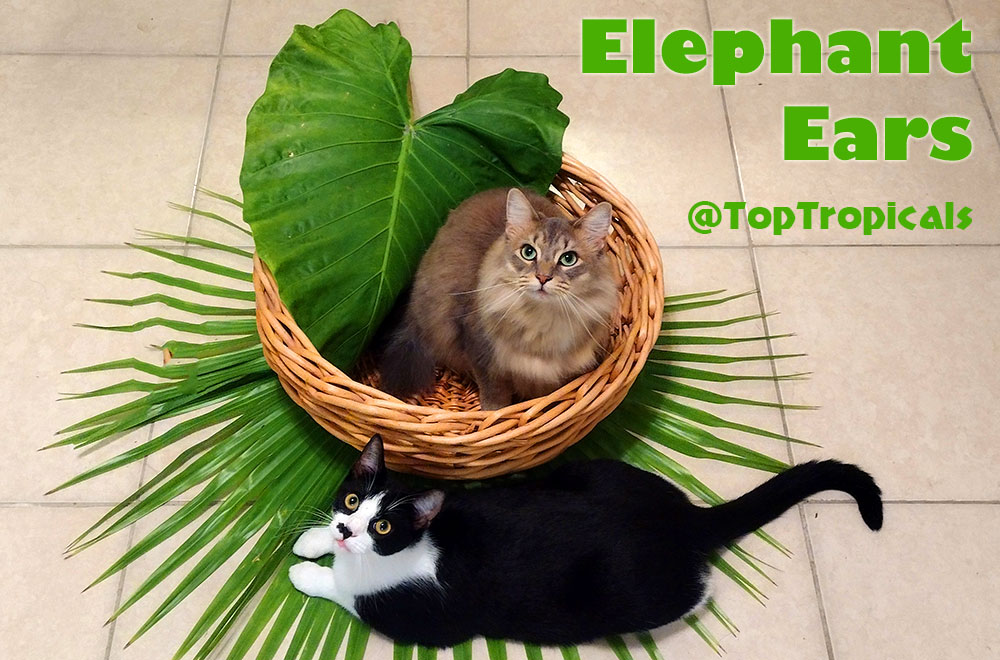
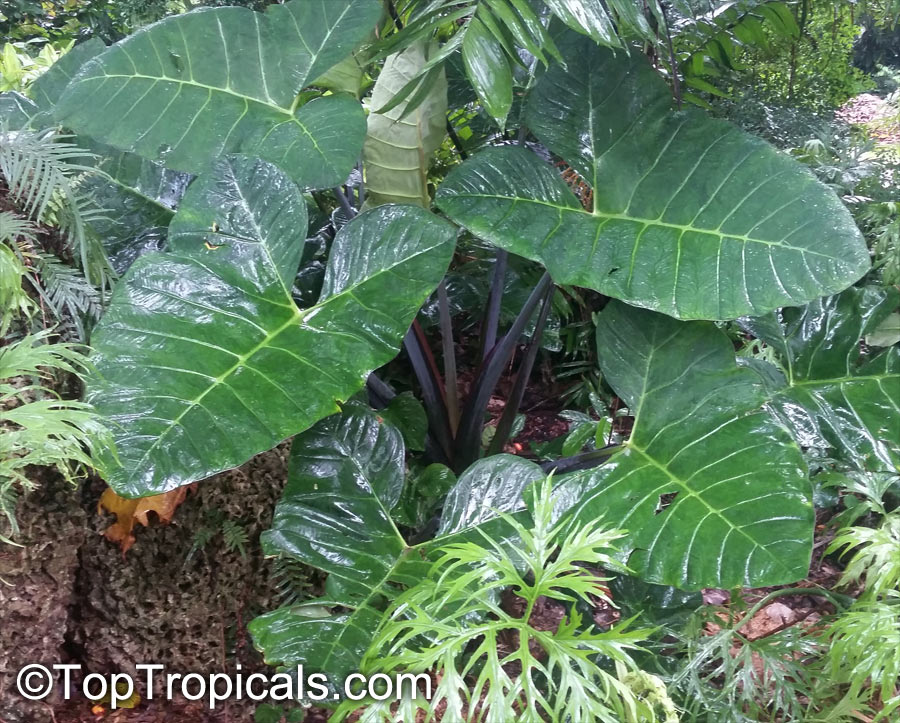
Q: What is the difference between Alocasia and
Colocasia? They both are called Elephant Ears...
A:Alocasia and Colocasia are exotic tropical-looking plants with large, arrow- or
heart-shaped leaves resembling elephant ears, hence the common name. They are
both members of the Araceae family and are often confused with each other due to their
similar appearance. The key differences between the two plants:
Leaf shape: The leaves of Alocasia are typically arrowhead-shaped
and have a more elongated appearance. The leaves of Colocasia, on the other
hand, are more heart-shaped and broader.
Leaf texture: Alocasia leaves have a smooth, glossy texture,
while Colocasia leaves are typically more matte and have a slightly rough
texture.
Stem color: The stems of Alocasia plants are typically green,
while the stems of Colocasia plants are usually purplish, dark or almost
black.
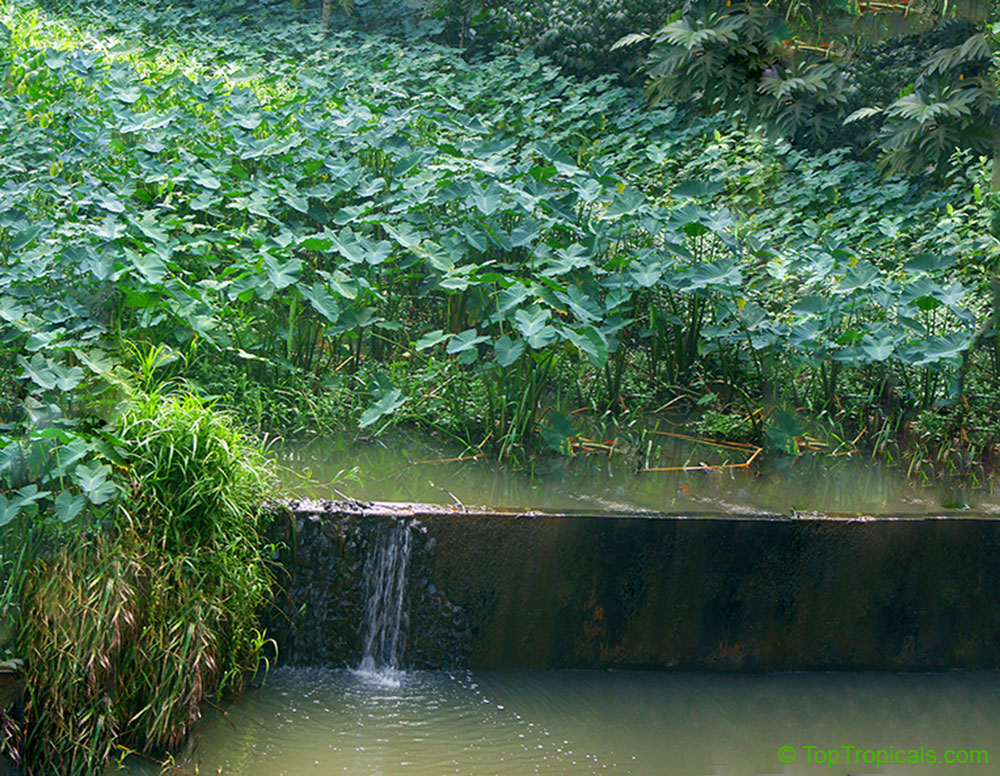
Growing conditions: Alocasia plants prefer bright, indirect light
and well-draining soil, prefering to stay on a dry side, while Colocasia
plants prefer partial to full shade and moist soil.
Hardiness: Colocasia plants are generally more cold-hardy than
Alocasia plants and can tolerate colder temperatures. Both Alocasia and
Colocasia may go dormant in Winter especially in cooler climates, and grow new
leaves in Spring.
Elephant Ears are absolutely gorgeous tropical plants. They add bold
texture, tropical flair, and thrive in filtered light, making it a unique and
low maintenance addition to any garden, especially shaded locations.