Garden Blog - Top Tropicals

Date: 24 Oct 2025

I got flowers on my mind!

Cat Bob

Cat Bob

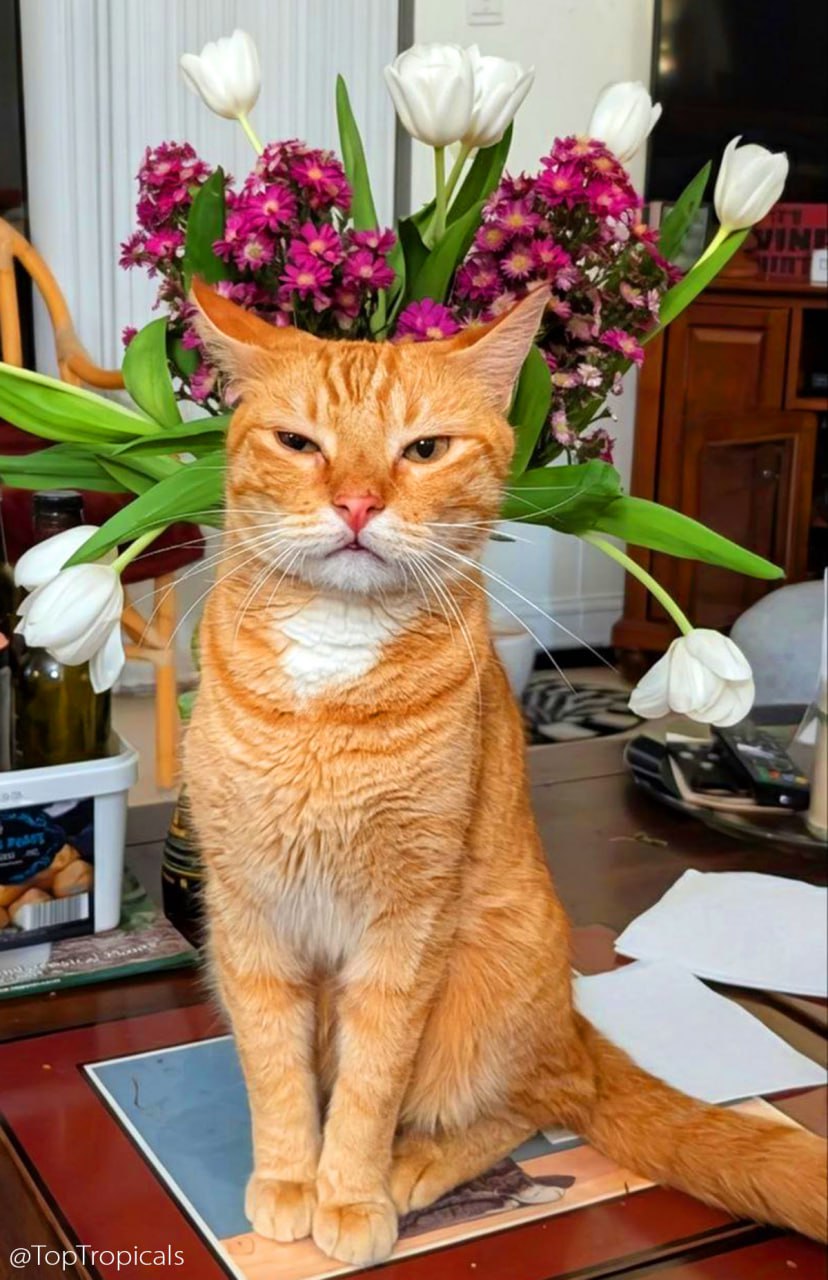
💐 I got flowers on my mind!

"I am the king of the jungle, just ruling the couch temporarily."


🐈📸 Cat Bob ruling TopTropicals PeopleCats.Garden.

#PeopleCats

🟢 Join 👉 TopTropicals

Date: 31 Jul 2025

Anthurium Collector Set

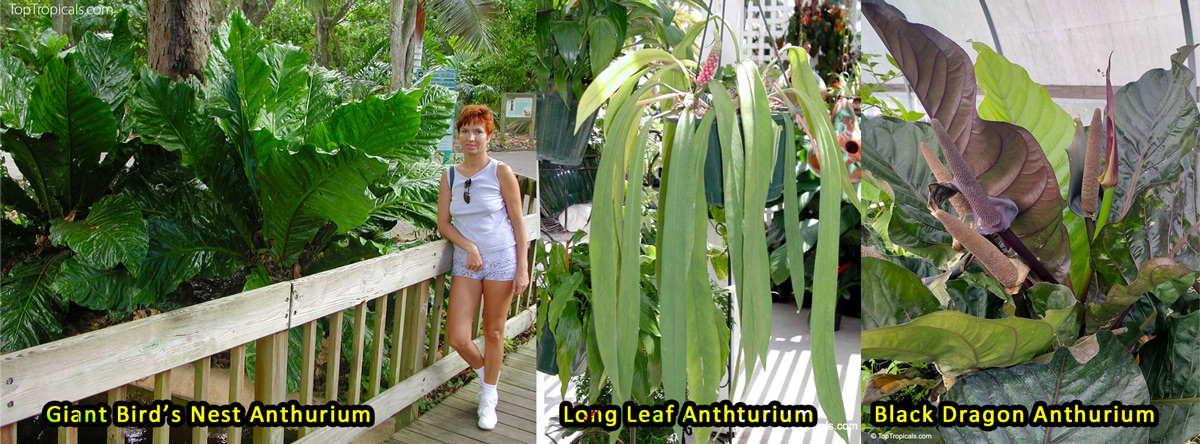
Giant  Bird's  Nest,  Long  Leaf,  and  Black  Dragon  Anthuriums  side  by 
 side,  showcasing  their  dramatic  foliage  and  size

These aren't your typical tropicals - they're collector-grade Anthuriums grown for foliage and texture. Each one brings something different, but they all thrive in the same kind of setting: shade or filtered light, warmth, and humidity. Perfect for growing in containers indoors or out.

Anthurium Black Dragon

This is the most dramatic of the trio. Upright, leathery leaves shift from dark green to nearly black depending on light. Instead of bright flowers, it produces a dark brown spadix and glowing red berries. A hybrid not found in the wild, it's grown from seed - no two are exactly alike.

  • Best for: Indoor focal plant, shaded patio, black ceramic pot
  • Height: 2–4 ft in container
  • Texture: Thick, architectural leaves
  • Highlight: Color shifts with light intensity

Grow Your Own Black Dragon

Read more about Black Dragon Anthurium

Anthurium hookeri – Giant Bird's Nest

This one's about scale. Broad, crinkled leaves with a cardboard-like texture form a bold rosette. It can get huge with time - up to 6 feet across. Perfect for gardeners who want the "instant jungle" look.

  • Best for: Shaded garden, large pots on porches
  • Height: Up to 5 ft; width even more
  • Texture: Wrinkled and leathery
  • Highlight: Bright red berries in maturity

Buy Giant Bird's Nest Anthurium

Read more about Giant Bird's Nest Anthurium

Anthurium vittariifolium – Long Leaf Anthurium

Graceful and rare, this species sends out narrow strap-like leaves that can reach 5–6 ft long. Ideal for hanging baskets or mounting. Bonus: it produces small pink fruit against deep green foliage.

  • Best for: Hanging displays, vertical planters, bright bathrooms
  • Height: Leaf length, not upright height - up to 6 ft
  • Texture: Smooth, ribbon-like
  • Highlight: Cascading growth and color contrast

Buy Long Leaf Anthurium

Read more about Long Leaf Anthurium

✅ How to Care for Anthuriums

  • Light: Bright, indirect light is best. Avoid direct sun, especially mid-day. These plants evolved in rainforest understory - think "dappled light under trees."
  • Water: Keep the soil lightly moist but not soggy. Let the top inch dry before watering. They hate wet feet.
  • Humidity: These are tropicals - they'll do fine in 50-60% humidity, but thrive at 70%+. Use pebble trays or place near other plants. Bathrooms with windows work great.
  • Soil: Use an airy mix: orchid bark + perlite + peat or coco coir. Drainage is key. Never use plain potting soil.
  • Fertilizer: Feed with SUNSHINE Robusta every 2–4 weeks during warm seasons. It's formulated for aroids and won't burn roots.
  • Potting: Use shallow, wide containers. Repot only every 2–3 years, or when roots crowd the pot. They don't like frequent disruption.
  • Temperature: Ideal: 65–85 F. Short dips to the 30s F are tolerated by mature plants, but avoid cold drafts.

Shop All Anthuriums

Date: 9 Aug 2025

Anthurium with leaves longer than you!

Anthurium vittariifolium- Long Leaf Anthurium

🍃 Anthurium with leaves longer than you!

  • 🌿 Ever seen an Anthurium with leaves longer than you are tall? Anthurium vittariifolium - Long Leaf Anthurium - is a true rainforest treasure from South America. Its strap-like leaves can reach an incredible 6 feet in length but stay only about 2 inches wide, creating elegant green ribbons that drape down like a waterfall.
  • 🌿 Grow it in a hanging basket and you’ll get a cascading curtain of foliage that instantly turns any space into a jungle hideaway.
  • 🌿 As if the leaves weren’t enough, this rare beauty produces clusters of bright pink berries that pop against the deep green leaves, adding an unexpected splash of color!
  • 🌿 It's rare, it's dramatic, and it's the kind of plant that makes people stop and ask, “What on earth is THAT?”


🛒 Grow the 6-foot leaf Anthurium

📚
Learn more:
#Nature_Wonders #Container_Garden #Shade_Garden
🟢 Join 👉 TopTropicals

Date: 12 May 2026

The strange tropical plant that eats bugs - and gardeners cant stop collecting

The strange tropical plant that eats bugs - and gardeners cant stop collecting The strange tropical plant that eats bugs - and gardeners cant stop collecting The strange tropical plant that eats bugs - and gardeners cant stop collecting

🐸 The strange tropical plant that eats bugs - and gardeners can't stop collecting


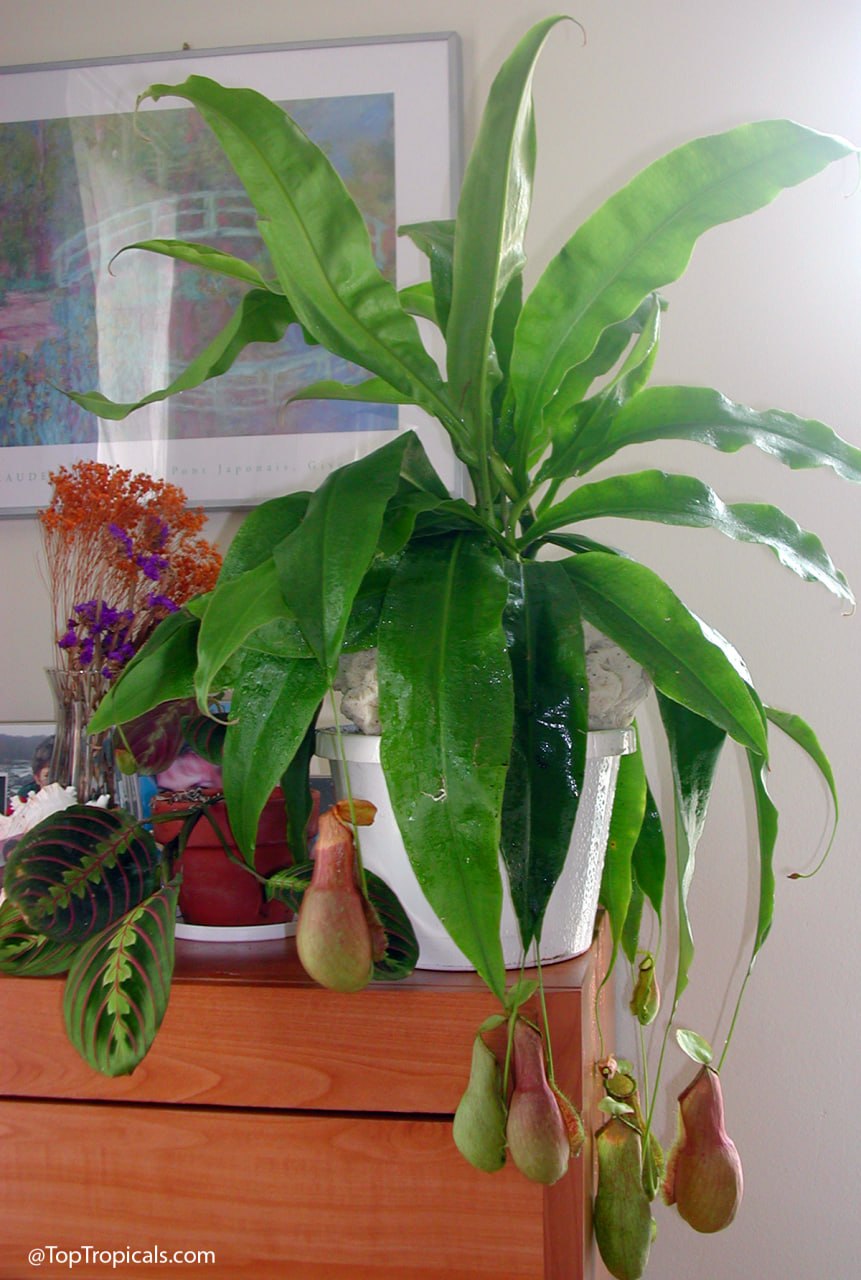
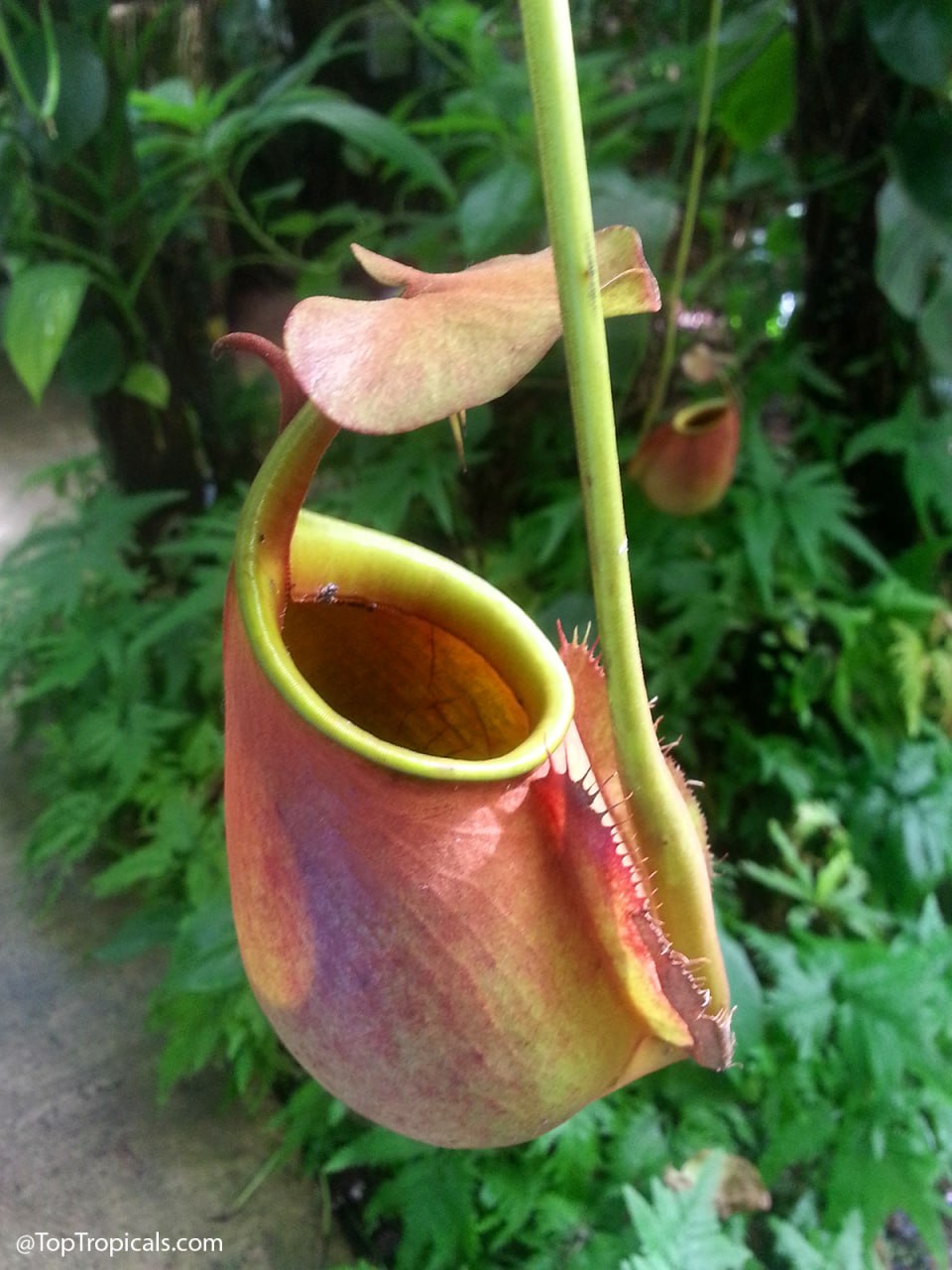
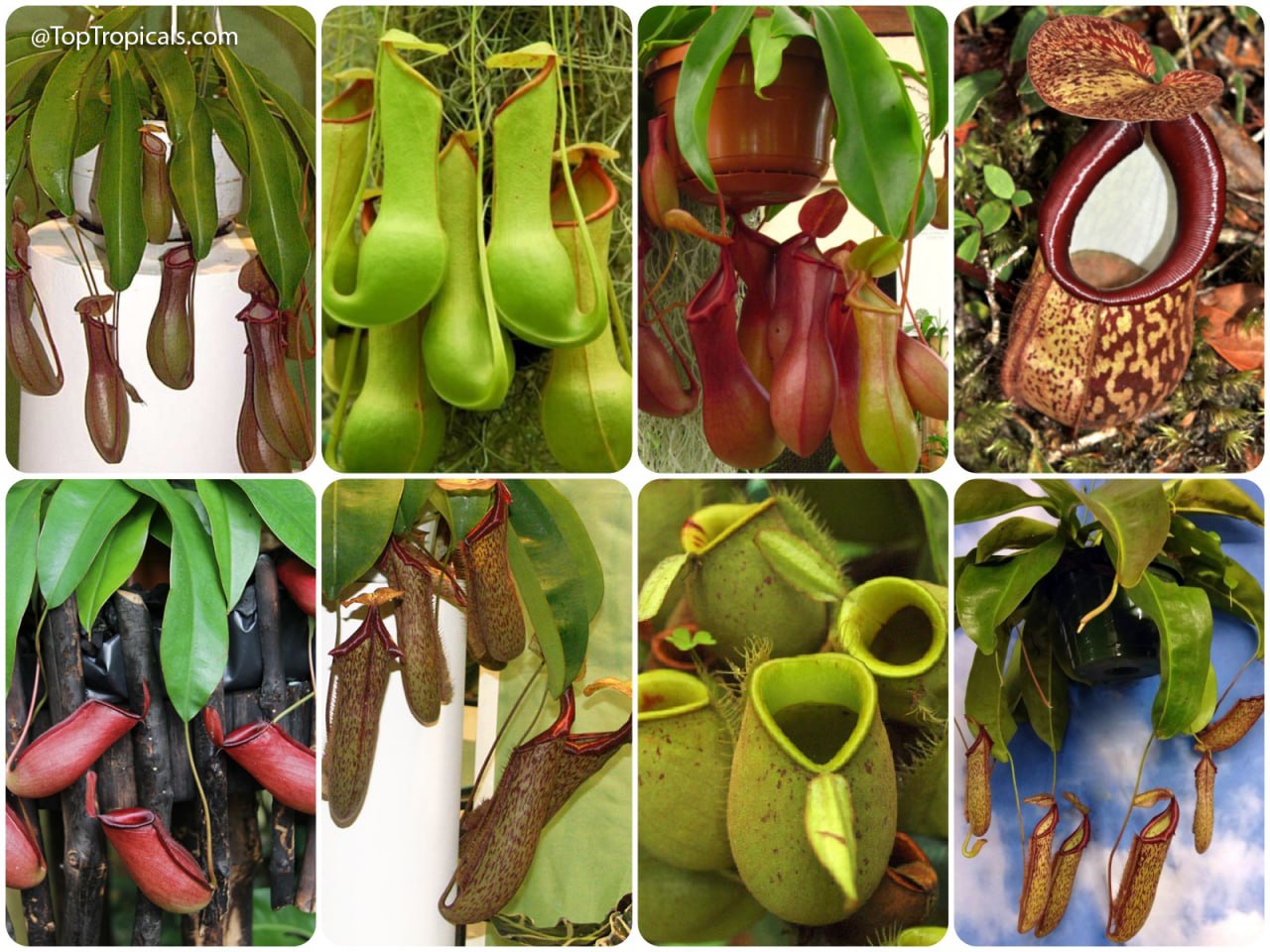
Nepenthes - tropical Pitcher Plants - look almost fake. Long vines and shiny leaves give way to colorful pitchers resembling exotic lanterns or sci-fi creatures. But these aren't flowers; they are sophisticated traps. Among the world's most fascinating carnivores, they lure insects into fluid-filled vessels to digest them for nutrients. Giant species can even trap small frogs or mice! 🐸🐭

  • 🐱 Why pitcher plants look so unreal


Pitchers are modified leaves designed to attract prey with vibrant colors and nectar. Many feature dramatic stripes or flared, sculpted rims. The diversity is immense: compact species fit on windowsills, while jungle giants produce foot-long traps. Some thrive in steamy lowlands, others in misty mountains. Their digestive fluid can even become sticky and elastic, making escape impossible.

  • 🐱 The plant that inspired engineering


These plants have inspired more than just gardeners. Their slippery surfaces led to "liquid-infused" materials used in anti-fogging and water-repelling tech. Engineers study them as nature’s original biological pitfall trap, a masterclass in biomimetic design.

  • 🐱 Why collectors become obsessed with Pitcher plants


What starts as a curiosity often becomes an obsession. With hundreds of species and hybrids, pitchers can resemble cobra heads, wine goblets, or alien pods. Under bright light, they develop stunning hues of burgundy, orange, or candy-stripes. Because of their popularity, ethical hobbyists emphasize buying nursery-propagated plants to protect wild populations from poaching.

  • 🐱 Surprisingly easier than people think


Despite their reputation, many hybrids thrive indoors with basic care. They need bright indirect light, high humidity, and excellent drainage. Crucially, they require mineral-free water (distilled or rainwater) and airy media like sphagnum moss. Regular potting soil or tap water can be fatal to these sensitive plants.

🐱 The pitchers are temporary - and that's normal


It is normal for old pitchers to dry up as the plant grows. Healthy Nepenthes constantly replace traps, often changing shape and color as they mature. This shape-shifting behavior makes them addictive to watch - one month it’s an ordinary vine, the next it’s a living rainforest documentary.

🛒 Ready to go carnivorous? Feed your curiosity - get one for your collection

📚 Learn more:

Winged Nepenthes Plant Facts

Nepenthes alata, Nepenthes graciliflora
Winged Nepenthes, Pitcher Plant
USDA Zone: 9-11
Vine or creeper plantSmall plant 2-5 ftSemi-shadeRegular waterEpiphyte plantUnusual color

#Container_Garden #Nature_Wonders

🟢 Join 👉 TopTropicals
Date: 6 Oct 2021

Top Tropicals Top House Plants

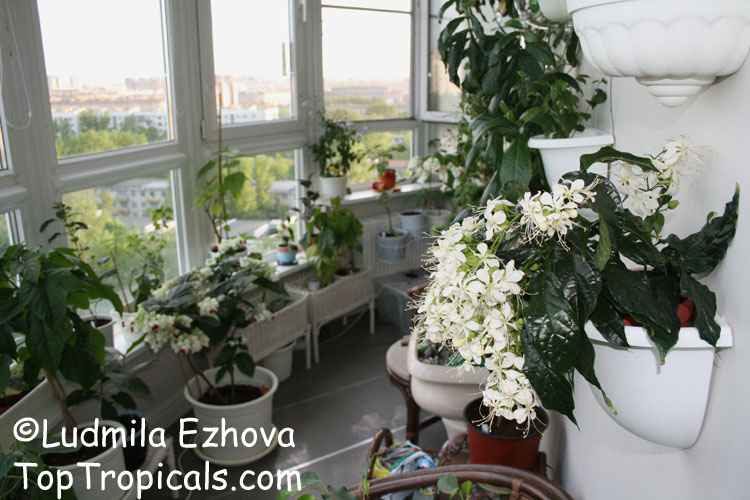
Photo above: Clerodendrum indoor garden of Ludmila Ezhova, St Petersburg, Russia.

Enjoy the Tropics Year round!
Bring them inside...

Q: I just discovered your amazing website and spent hours browsing your beautiful tropical plants! I wish I could have them all! But it's getting cold here (I live in Chicago area), too late? Can you recommend something of a small size, colorful, that I can easily overwinter indoors? Thanks for bringing this beauty into our lives!

A: Don't get discouraged even in colder climates. Yes, you can grow tropical plants indoors! Remember that all traditional houseplants are in fact tropical plants that grow in tropics in a wild habitat. Humans didn't invent them as indoor plants, they originally collected them from the rain forests and jungles! Most of tropical plants, including trees and fruit trees, can be grown in containers and even indoors. It's just a matter of space limitations and amount of time you are willing to spend caring of your exotic babies. Many gardeners up North are very successful with their tropical plant collections.
Below are a few suggestions of compact growing, easy species for your indoor collection. Enjoy the Tropics Year round!

See more plants well-suitable for indoor culture and our specials at the end of this newsletter.

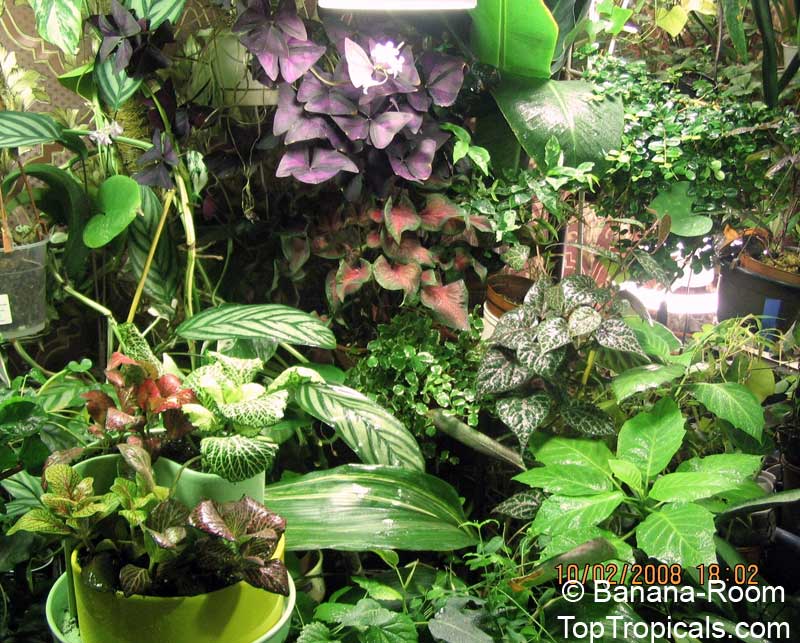
Photo above: small tropical indoor garden of Julia Nikolayeva, St Petersburg, Russia.