Garden Blog - Top Tropicals

Date: 16 Feb 2026

Yes, you can grow a mango tree on your patio - here is how to do it right
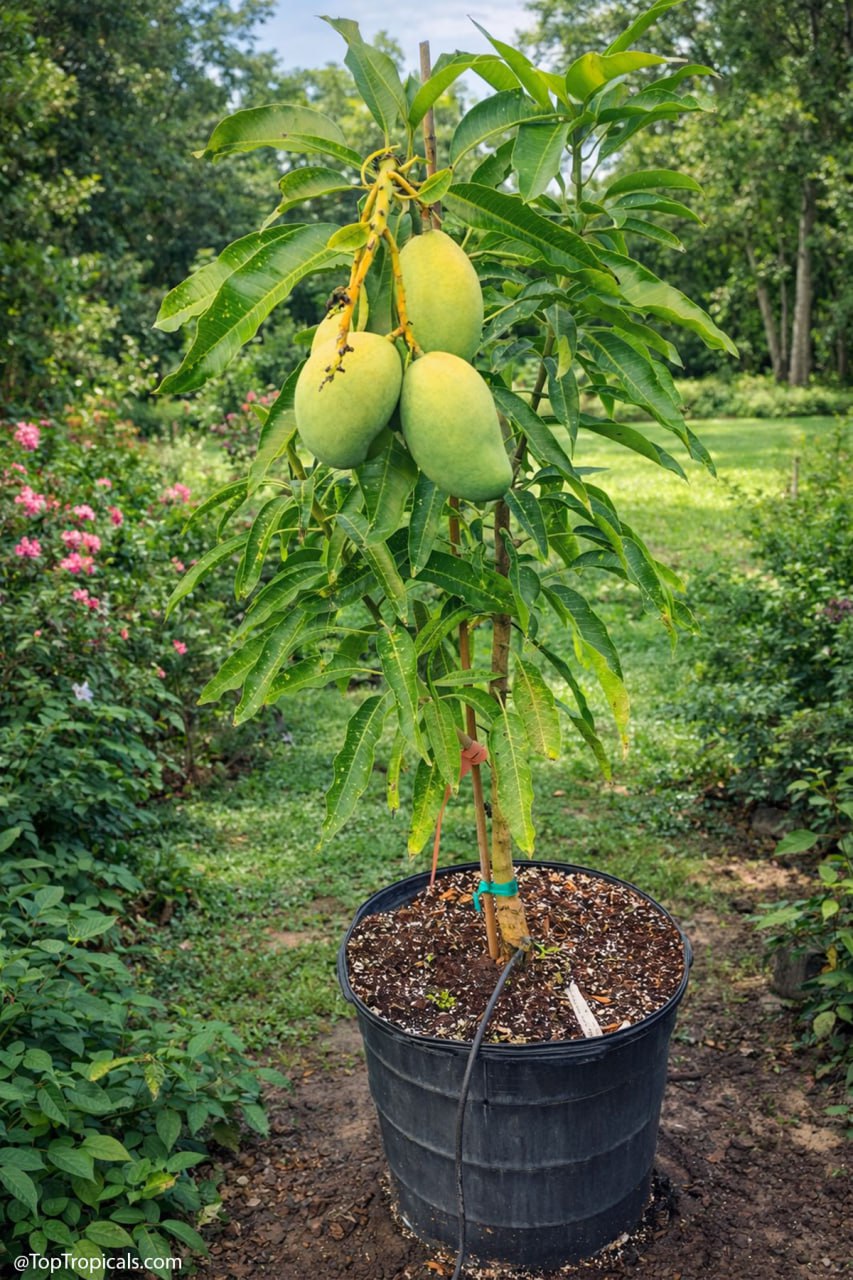
Mango fruiting in container

Mango fruiting in container

🥭 Yes, you can grow a container mango tree on your patio - here is how to do it right


Think you need a backyard orchard to grow mangoes? You don't. Mango trees grow very well in containers. Compact varieties, often called condo mangoes, stay naturally smaller and are well suited for pots, patios, and small yards. We grow and ship mango trees nationwide and have seen which varieties perform best in containers.

Mango Plant Facts

Botanical name: Mangifera indica
Also known as: Mango
USDA Zone: 9 - 11
Highligths Large tree taller than 20 ftSmall tree 10-20 ftFull sunWatering: Moderate. Water when top soil feels dryYellow, orange flowersPink flowersEdible plantSeaside, salt tolerant plant
Get personalized tips for your region


Growing mangoes in pots is also practical in cooler climates. The tree can be moved to protection during cold weather while still producing real fruit. Here is how to do it right.

🥭 Pick the right condo mango tree variety


Choose condo or semi-dwarf mango varieties that stay smaller and respond well to pruning. These mango trees usually stay 6 to 10 feet tall in containers with light pruning. Fruit size is full-size, just fewer than on large trees.

Good mango choices for pots include:
· Cogshall - compact and productive
· Pickering - naturally small and reliable
· Carrie - manageable size, great flavor
· Ice Cream - slow growing, narrow canopy
· Julie - classic Caribbean type
· more condo varieties...

🥭 Choose the right pot


Start small. Young mango trees do best in a 5- to 7-gallon pot. Oversized containers too early often cause overwatering and root issues.

Increase size gradually:
First pot: 5-7 gallons
Next size: 10-15 gallons
Mature container: 20-25 gallons

The pot must drain well. Mango roots dislike wet soil. Add holes if needed. Plastic, ceramic, and fabric pots all work.

🥭 Use fast-draining soil


Mango trees need air around their roots.
Use a loose, fast-draining mix, such as Abundance Professional Soilless Mix. Improve drainage with perlite, pine bark, or coarse sand. Avoid heavy or water-holding soils. Drainage matters more than fancy ingredients.

🥭 Water carefully


Mango trees prefer a wet-dry cycle.
Water deeply, then allow the top few inches of soil to dry before watering again. Always check with your finger first.
In warm weather, water once or twice a week. In winter, much less. Overwatering is the most common container mistake.

🥭 Give plenty of sun


Mango trees love sun and heat.
Place the pot in full sun with at least 8 hours daily. More sun improves growth and flowering.
If overwintered indoors, use the brightest window possible. Grow lights help, but outdoor sun is best when weather allows.

🥭 Fertilize lightly but consistently


Potted mango trees benefit from regular feeding during active growth.
Use a balanced mango or fruit tree fertilizer such as Sunshine Mango Tango (safe to use with every watering, year-around). Controlled-release fertilizer Green Magic (every 6 months) work well too. Avoid excess feeding, which promotes leaves over flowers.
If leaves pale, check watering first, then nutrition.

🥭 Prune to stay compact


Pruning is essential for mangoes in pots.
Light tipping and trimming control size, encourage branching, and increase flowering points. Keep the canopy open and balanced. Watch how simple tipping works in real life: .
Avoid heavy pruning before flowering. Most pruning is best right after harvest.

🥭 Protect from cold


Mango trees are tropical and cold-sensitive.
When temperatures drop below 40F, move the pot to protection or indoors. Young trees are especially vulnerable.
During winter, reduce watering and stop fertilizing. Growth slows and the tree rests.
When warm weather returns, reintroduce the tree to sun gradually to prevent leaf burn.

🥭 Final thoughts


Growing a mango tree in a pot is practical and rewarding. With the right variety, good drainage, full sun, and careful watering, a potted mango can thrive and fruit for years, even in small spaces.
Ready to start? Choose a compact mango variety.


🛒 Discover Condo Mango

📚 Learn more:
Mango in Plant Encyclopedia
Mango Tree for Zone 5: top 15 Condo Mango for growing in cold areas
How long does it take for a mango tree to bear fruit?
What are the Condo Mangos - a practical guide
Top 10 Dwarf "Condo" Mango, great for container culture
Yes, you can grow an avocado tree on your patio - here is how to do it right

Avocado Plant Facts

Botanical name: Persea americana, Persea gratissima
Also known as: Avocado, Alligator Pear, Aguacate, Abacate
USDA Zone: 9 - 11
Highligths Large tree taller than 20 ftSmall tree 10-20 ftFull sunWatering: Regular. Let topsoil dry slightlyEdible plantSubtropical plant. Mature plant cold hardy at least to 30s F for a short time
Get personalized tips for your region


#Food_Forest #How_to #Discover #Mango

🟢 Join 👉 TopTropicals
Date: 31 May 2026

🔮 The Search for Enchanted Incense

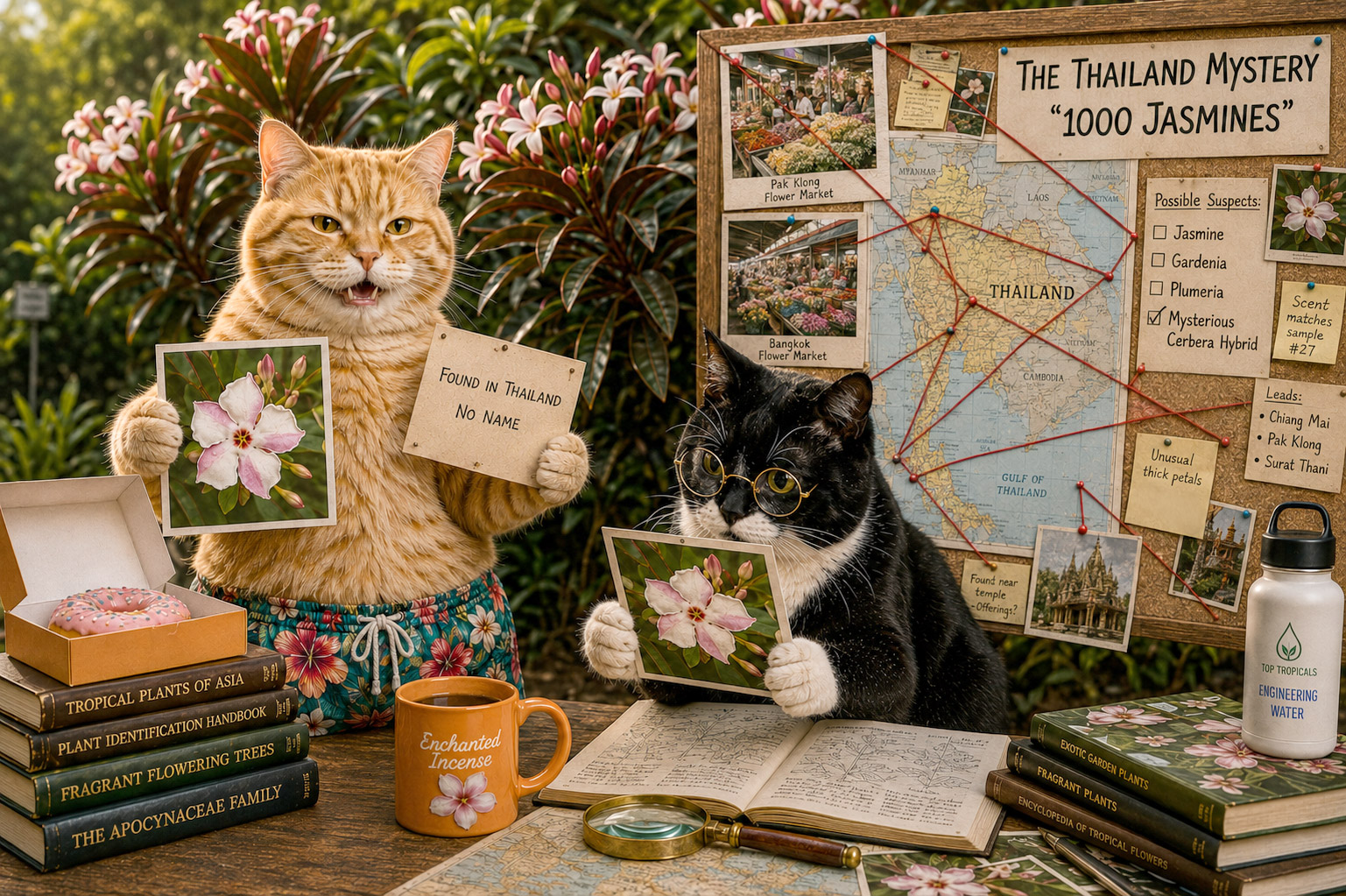
Smokey  and  Sunshine  investigate  the  mystery  of  Enchanted  Incense,  a 
 fragrant  Cerbera  hybrid  from  Thailand,  using  photos,  maps,  and  botanical 
 clues.
Sunshine: John said it smelled like a thousand jasmines.
Smokey: And somehow that's all the information he brought back from Thailand.
Sunshine: He brought a photo, too.
Smokey: Excellent. We can begin our international manhunt.

Well, Smokey and Sunshine have closed the case and found the mystery plant. The cork board is coming down, the magnifying glass is back in the drawer, and the "Enchanted Incense" mug is finally empty. Now let's talk about the plant itself.

🌸 Some plants arrive with a label. Some arrive with a story.

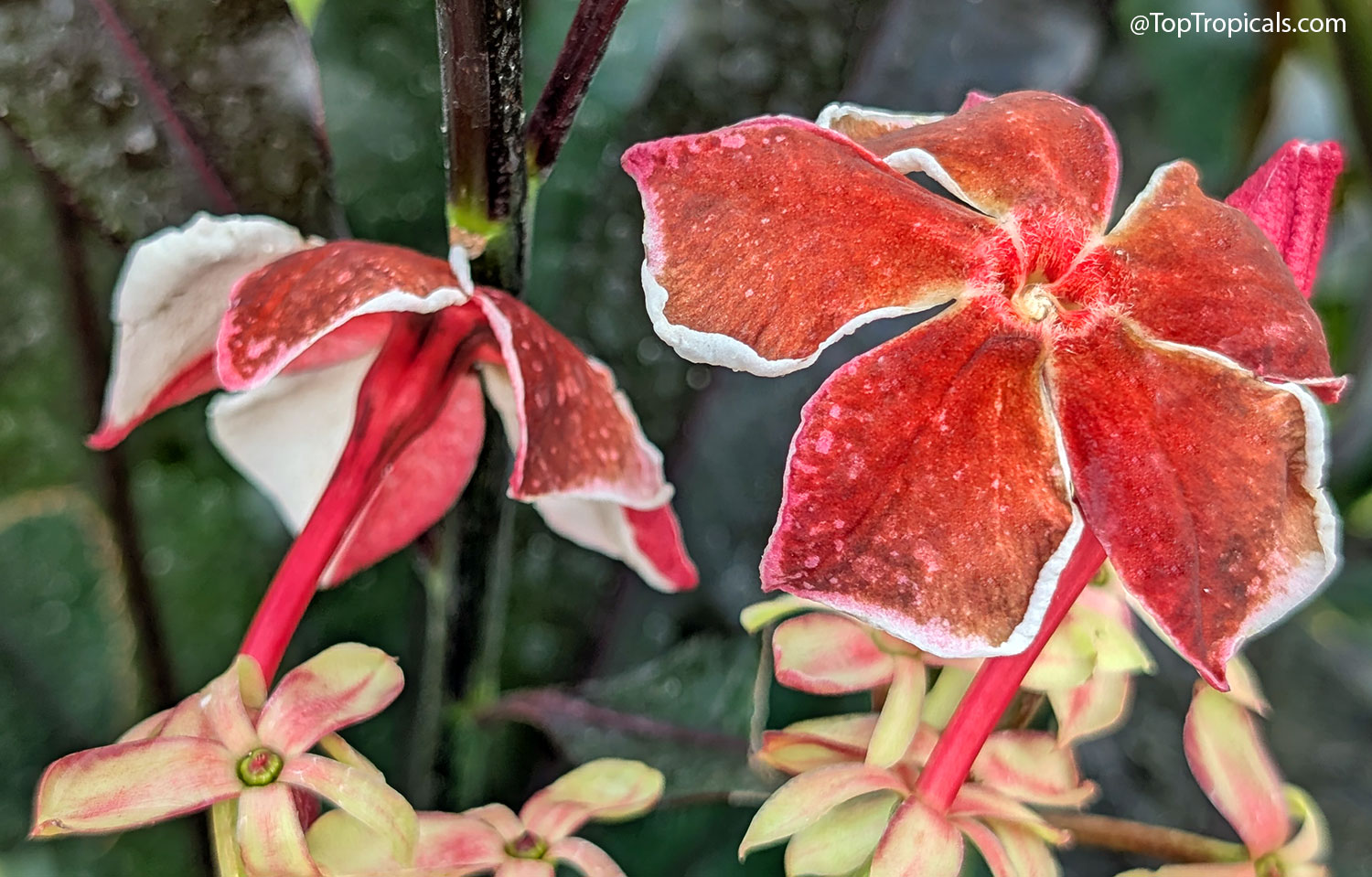
Close-up  of  Cerbera  x  manghas  Enchanted  Incense  flowers  showing  rich 
 reddish-brown  petals  with  soft  white  edges  and  bright  pink  flower  tubes.  The
    unusual  blooms  are  displayed  against  dark  foliage,  highlighting  their 
 exotic  shape  and  velvety  texture.

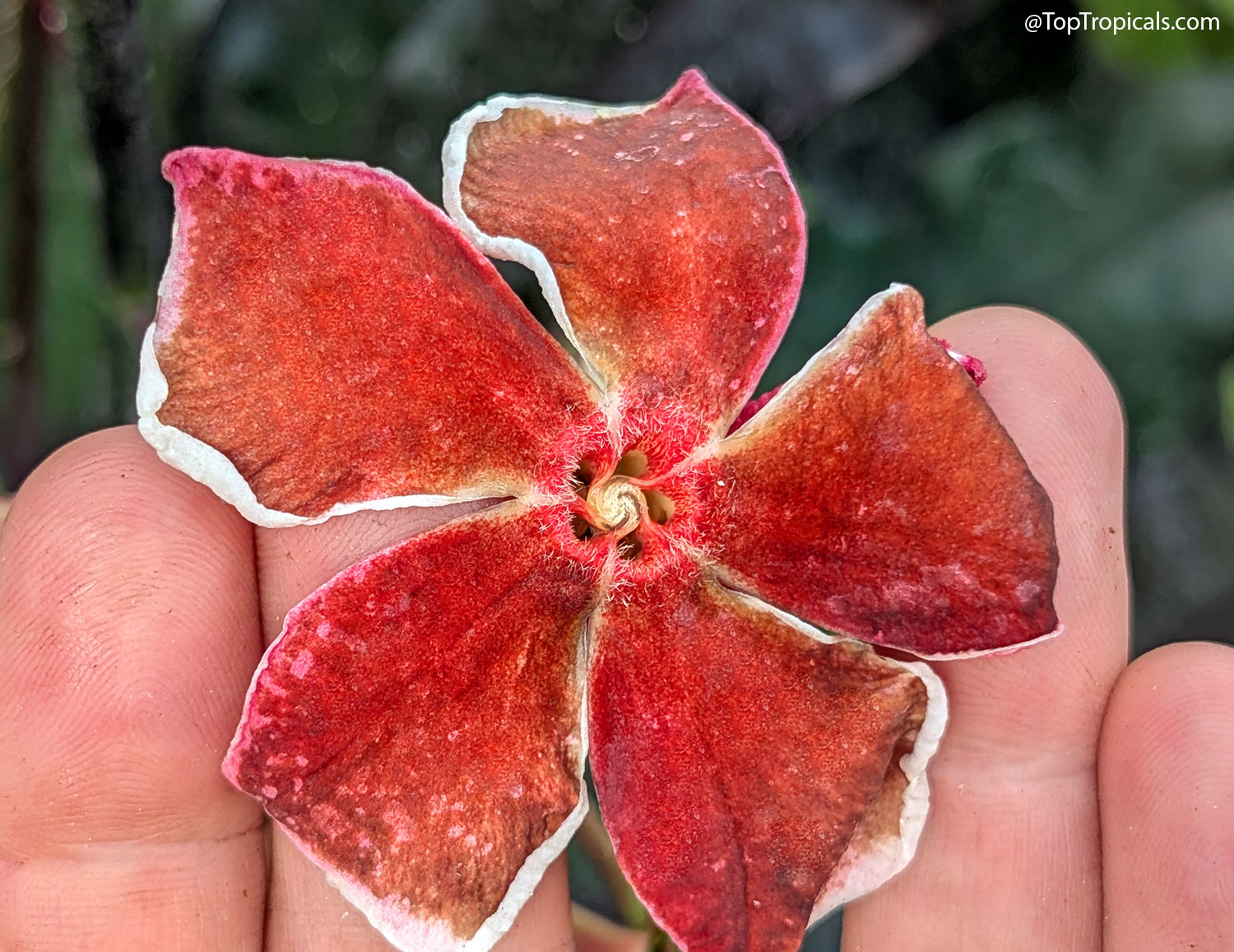
Cerbera x manghas - Enchanted Incense - produces some of the most unusual fragrant flowers in the tropical garden. Its velvety reddish blooms, outlined in white and carried on vivid pink tubes, create an exotic display that looks hand-painted.

When our good friend John Mood returned from a plant conference in Thailand, he did not bring us a plant. He brought us a mystery.

John had spent decades growing and collecting rare tropical plants. When he said he had found something special, we paid attention.

On a visit to Chatuchak Market, one of the most famous plant markets in Asia, something stopped him. Not the flowers. The fragrance.

"I found a plant that smells stronger than a thousand jasmines," John told us.

That one sentence stayed with us for years.

He had photographs. He had his memory of that scent. What he did not have was a name. No tag. No seller information. Just the photos and the certainty that he had smelled something genuinely unusual.

So we started looking.

We showed the photographs around. We asked collectors. We compared flowers. Every lead turned into another question. But eventually, after years of searching on and off, we found it.

The mystery plant turned out to be an unusual Cerbera unlike anything we had grown before. Today we call it Enchanted Incense. Fragrance lovers recognized immediately what John had recognized in that Bangkok market. This was not just another pretty tropical flower.

🌸 The Plant

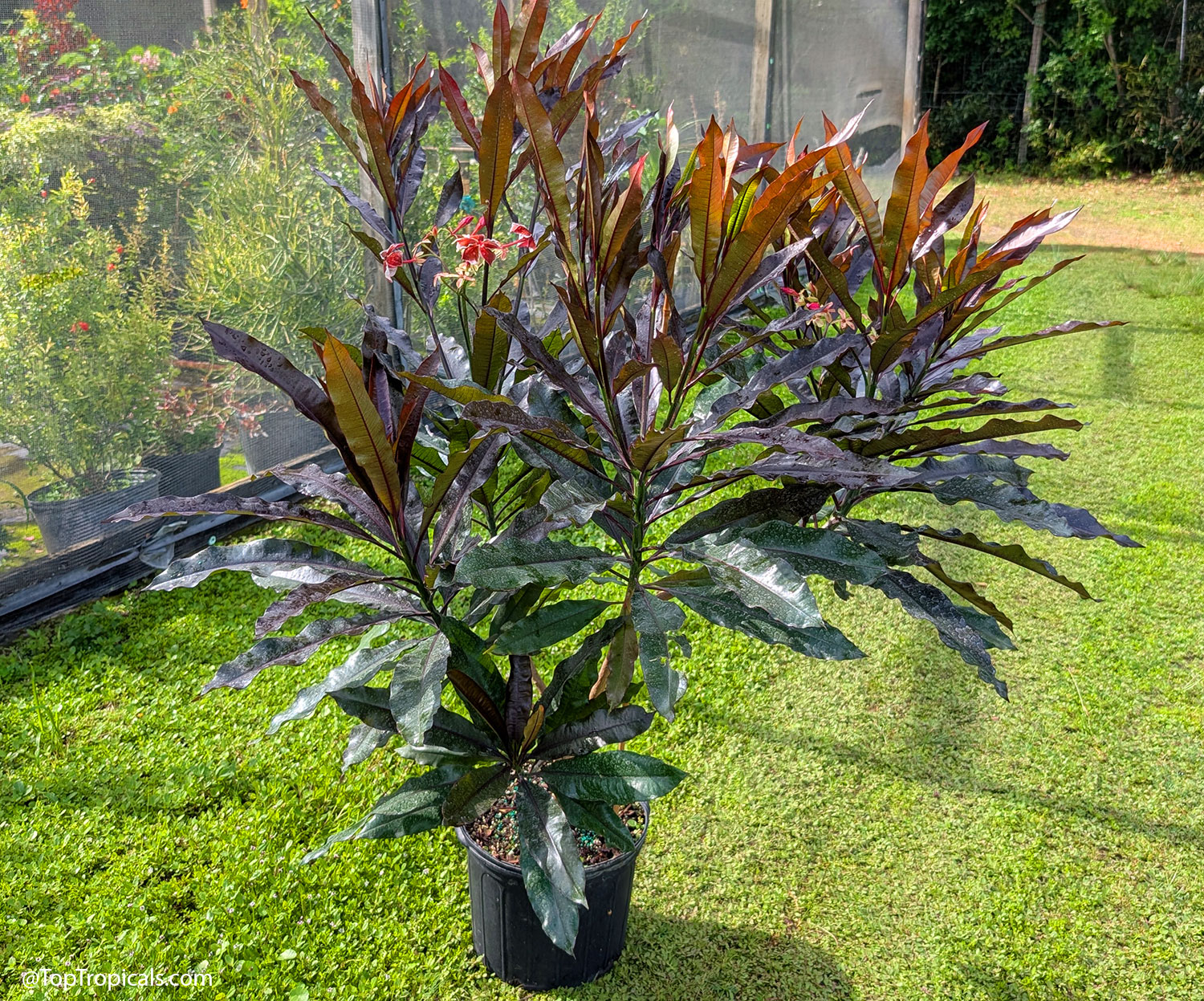
Full  view  of  Cerbera  x  manghas  Enchanted  Incense  growing  in  a  nursery 
 container,  displaying  dramatic  dark  burgundy  foliage  with  wavy-edged  leaves 
 and  clusters  of  unusual  reddish-pink  flowers.  New  growth  emerges  in  rich 
 bronze  tones,  creating  a  striking  tropical  appearance.

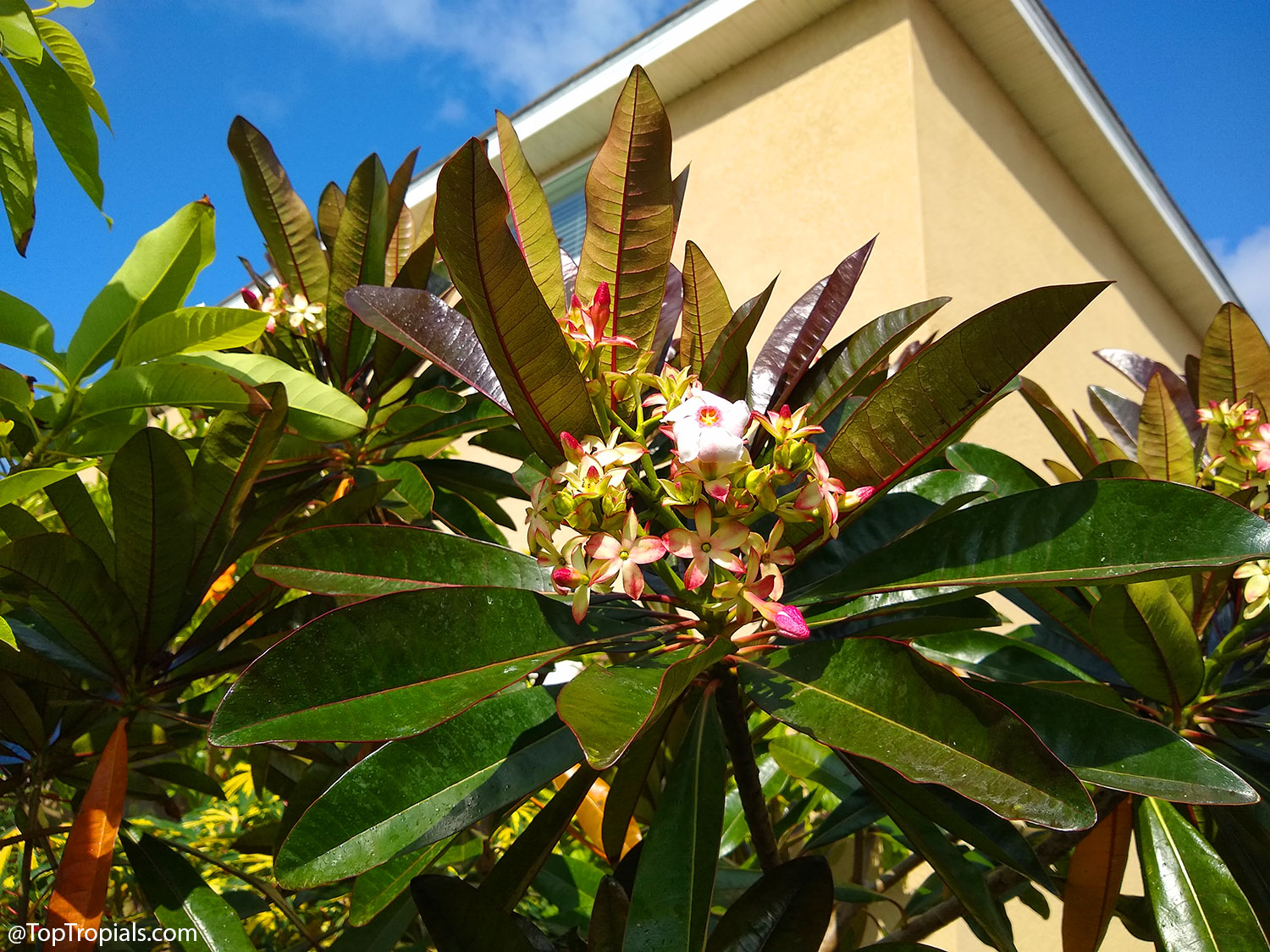
Even when not in full bloom, Cerbera x manghas Enchanted Incense is a standout plant. Its glossy, deep burgundy foliage and bronze new growth create a bold tropical presence, while the unusual flowers add an extra layer of intrigue.

Visitors at our nursery still walk past it and stop. Not because they noticed the plant. Because they noticed something in the air and could not figure out where it was coming from.

The flowers start soft pink and white, then deepen to rich red and auve as they mature. They come in clusters, four to five inches across, and the fragrance they produce does not stay close to the flower. It moves. It fills the space around the plant. On a warm morning it can perfume an entire patio.

The foliage is worth mentioning too. Deep green leaves with burgundy and mauve tones that make it attractive even when it is not blooming. The growth habit is slow and slightly weeping, similar to plumeria, which is no coincidence since they are close relatives. Unlike plumeria, Enchanted Incense stays evergreen in warm climates.

It is a compact, slow-growing small tree that is happy in a container. That makes it practical for gardeners in colder climates who need to bring it in for winter, and for anyone who wants a fragrant plant near a seating area rather than somewhere across the yard.

🌸 Why We Grow It

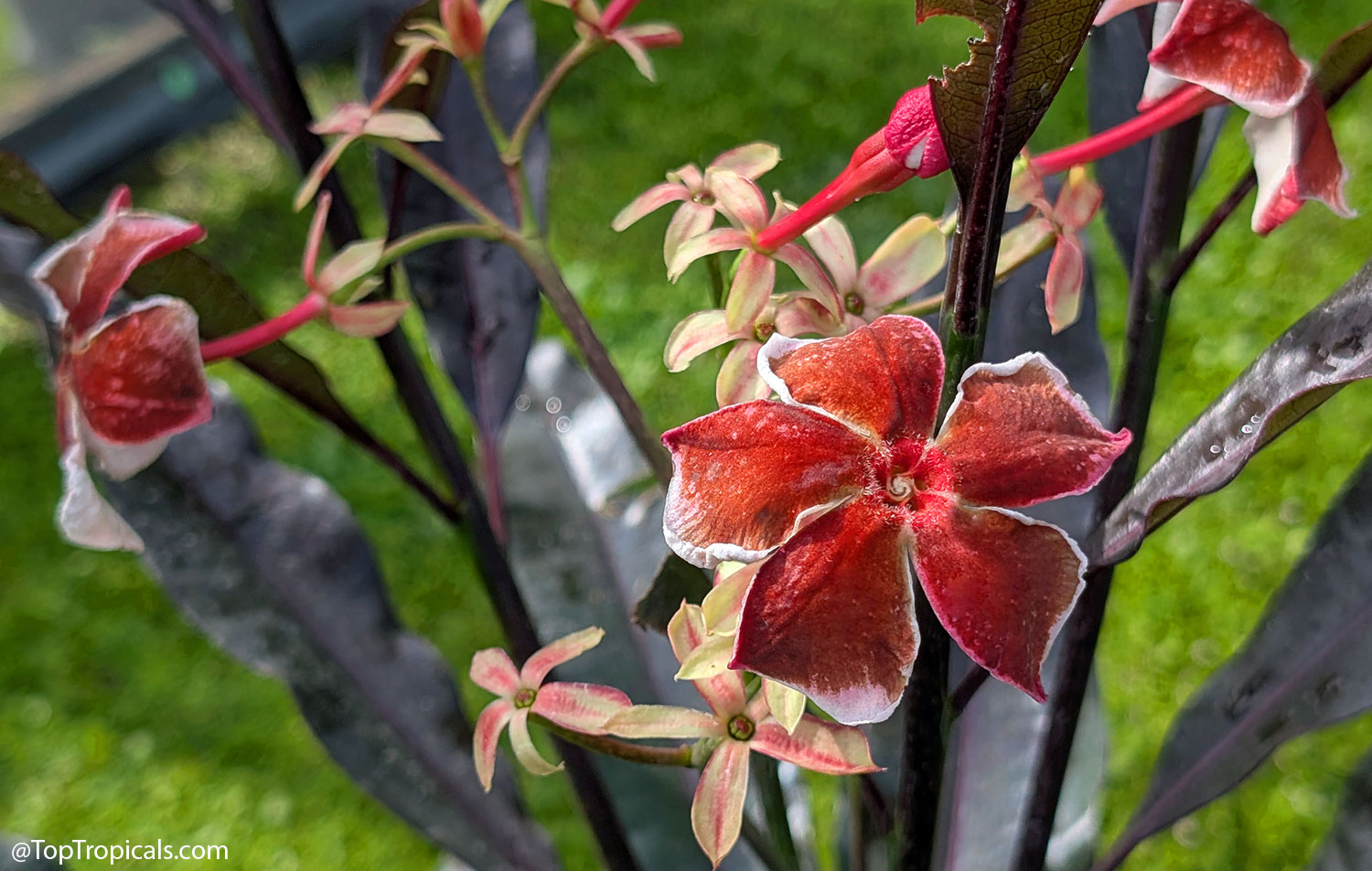
Close-up  of  Cerbera  x  manghas  Enchanted  Incense  flowers  nestled  among 
 dark  burgundy  foliage.  The  unusual  blooms  feature  velvety  reddish-brown 
 petals  edged  in  white,  emerging  from  vivid  pink  flower  tubes  and  surrounded 
 by  pale  star-shaped  calyces.

The flowers of Cerbera x manghas - Enchanted Incense - look otherworldly. Deep reddish petals, bright pink tubes, and contrasting white edges combine to create one of the most distinctive fragrant blooms.

We grow thousands of plants, and most can be described in a sentence or two.

This one cannot.

A large Enchanted Incense grows right outside our office. Every year it reminds us why we spent so much time searching for it.

Visitors stop beside it and ask the same question: "What is that smell?"

They usually notice the fragrance before they notice the plant.

Some follow the scent across the nursery. Others stop in the middle of a conversation and start looking around. Nearly everyone ends up standing next to the tree trying to figure out where that incredible fragrance is coming from.

In a world full of beautiful tropical plants, Enchanted Incense remains one of the few that announces itself before you even see it.

That is why we love growing it.

Feature Description
Common Name Enchanted Incense
Botanical Name Cerbera x manghas
Origin Thailand
Flowers White to soft pink, deepening to red and pink
Fragrance Exceptional, far-reaching
Container Friendly Yes
Cold Tolerance USDA Zones 9-11 (Low 30s°F with caution)
Growth Habit Slow, compact, slightly weeping

🛒 Add Enchanted Incense to your collection

Growing Tips

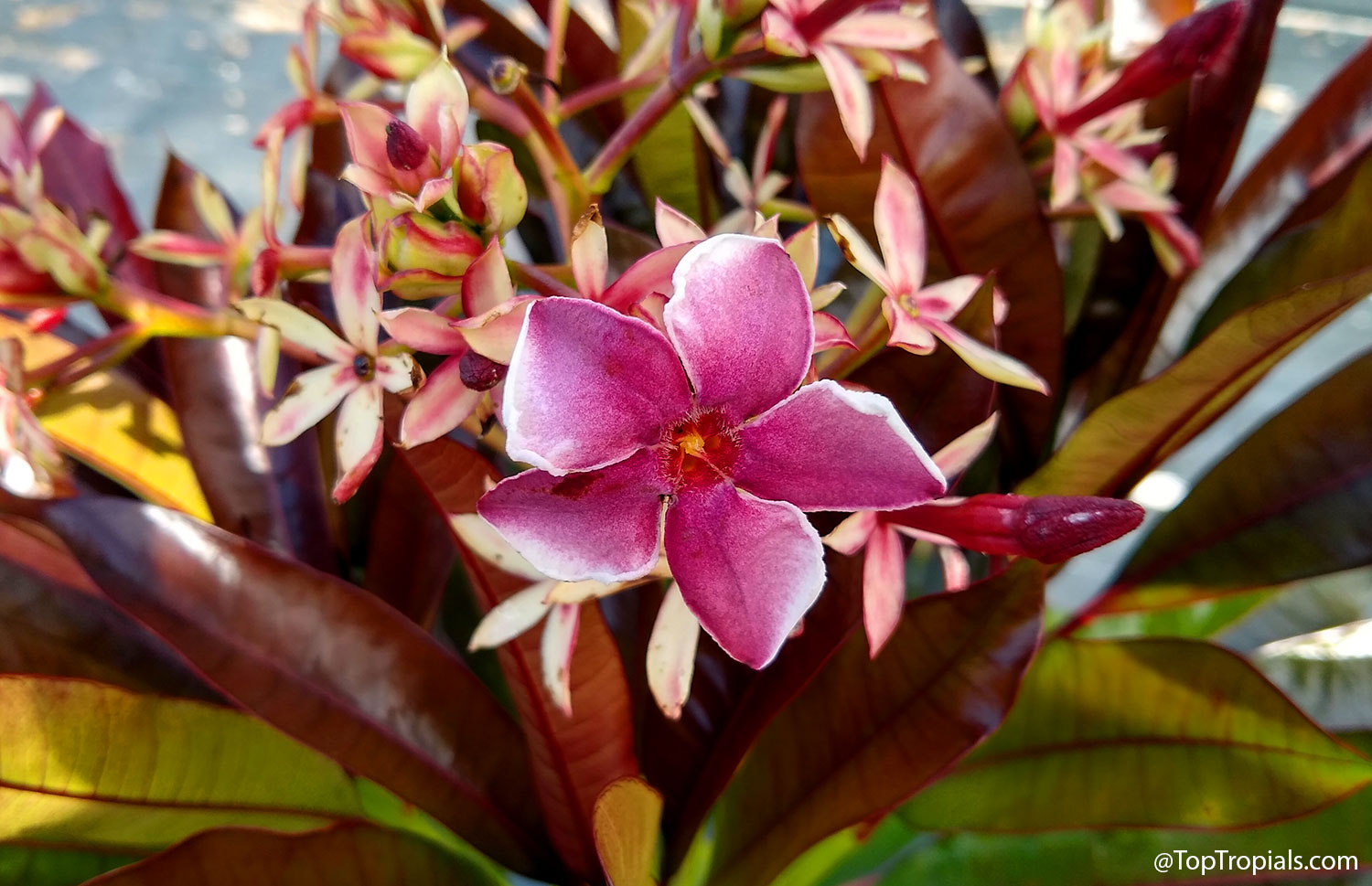
Close-up  of  a  pink-flowering  form  of  Cerbera  x  manghas  Enchanted 
 Incense,  featuring  velvety  rose-pink  petals  with  crisp  white  edges.  The 
 flower  is  surrounded  by  burgundy  foliage,  red  flower  buds,  and  pale  pink 
 star-shaped 
 calyces.

Cerbera x manghas - Enchanted Incense can display remarkable variation in flower color. This form combines soft rose-pink blooms with white-edged petals and rich burgundy foliage, creating a striking contrast throughout the plant.
  • Light: Full sun is best (at least six hours daily). It will tolerate partial shade but blooms much more generously in good light.
  • Watering: Water regularly during warm weather. In cool weather and winter, keep the soil on the drier side. Overwatering when temperatures are low is the most common mistake.
  • Soil: Use a well-draining mix. This plant absolutely does not want wet feet.
  • Fertilizer: Feed with a Green Magic controlled-release fertilizer for flowering plants in spring, supplemented with occasional liquid fertilizer through the summer. For non-stop blooms without the risk of salt build-up in containers, we highly recommend Sunshine Boosters™. Read our Guide to Sunshine Boosters™ and Green Magic fertilizer
  • Winter Care: Bring it indoors when temperatures approach the mid-30s°F. The rootstock is fairly tough, but the foliage is not. Cold and wet conditions combined are the real risk.

One Last Thing

Macro  close-up  of  a  Cerbera  x  manghas  Enchanted  Incense  flower  resting 
 against  a  person's  fingers  for  scale.  The  bloom  features 
 velvety  reddish-brown  petals  with  narrow  white  margins  and  a  fuzzy  bright 
 pink 
 center,  revealing  the  intricate  details  of  this  unusual  tropical  flower.

A closer look reveals the remarkable details of Cerbera x manghas - Enchanted Incense. The velvety petals, crisp white edging, and fuzzy pink center give the flower an appearance unlike anything else in the garden. And then comes the scent...

John came back from Bangkok with a few photographs and a fragrance he could not forget. It took us years to track down the plant behind that memory. We have never regretted a single minute of the search.

Sunshine: So after all those years, what's the answer?
Smokey: Stand next to the plant.
Sunshine: That's it?
Smokey: The fragrance explains the rest.

🛒 Grow Enchanted Incense

📚 Learn more from our Blog

Mature  Cerbera  x  manghas  Enchanted  Incense  growing  as  a  landscape  tree 
 beside  a  house.  The  plant  displays  glossy  dark  green  leaves,  bronze-toned 
 new  growth,  and  clusters  of  flowers  and  buds  against  a  bright  blue 
 sky.

A closer look reveals the remarkable details of Cerbera x manghas - Enchanted Incense develops into an attractive small tree with lush evergreen foliage and colorful new growth. In the landscape, it combines year-round structure with clusters of bright redding-pink fragrant flowers that stand out beautifully against the glossy leaves.

Date: 2 Mar 2026

Eugenia Cherries 🍒

By Tatiana Anderson, Horticulture Expert at Top Tropicals with Smokey & Sunshine help

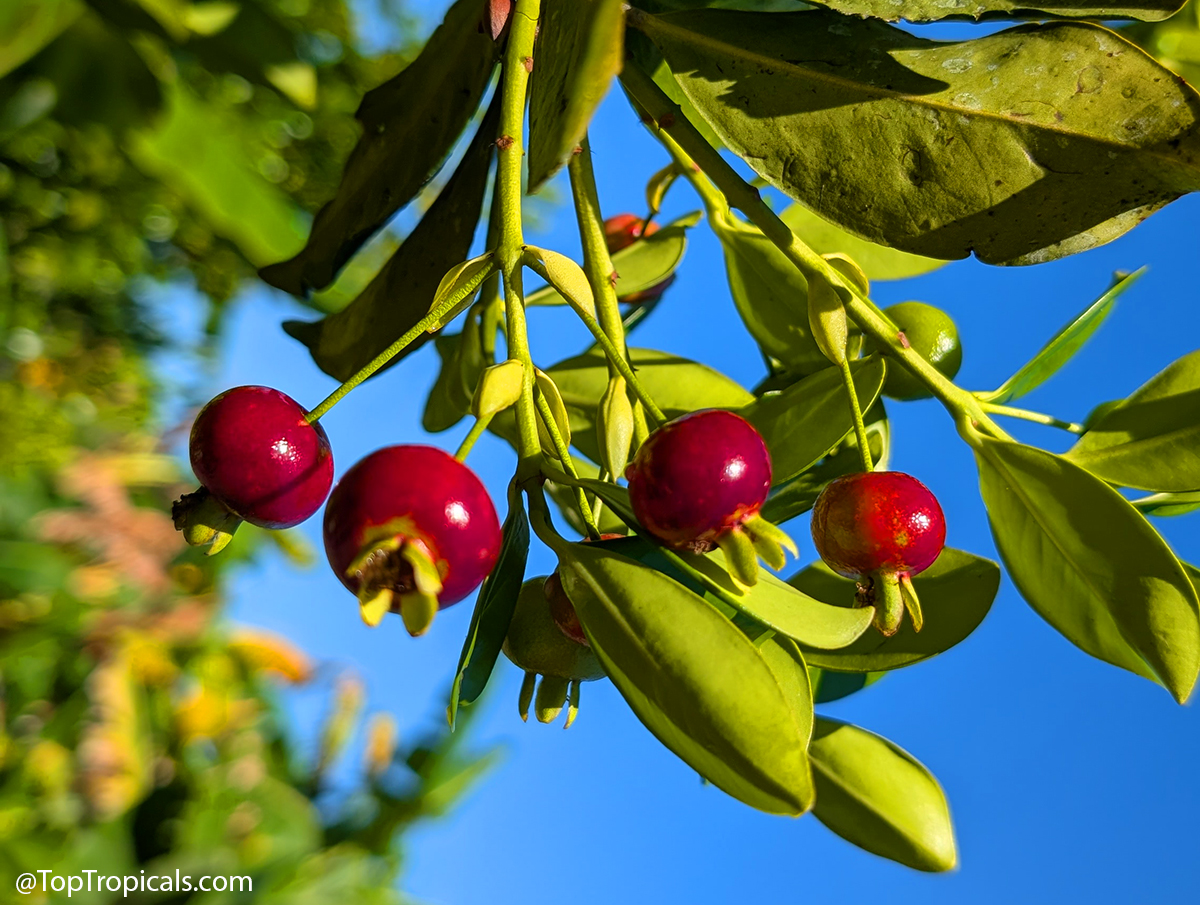
Eugenia brasiliensis - Grumichama fruit on the branch

Growing Eugenia Cherries (Cherry of the Rio Grande & Grumichama)

Cherry of the Rio Grande and Grumichama are compact, adaptable tropical fruit trees well suited to Southern landscapes. While forgiving, they perform best when planted correctly from the beginning.

Site and Planting

  • Drainage is essential. Avoid low areas where water collects. Plant on a slight mound if soil is heavy or clay-like.
  • Choose full sun for best flowering and fruit production. Partial shade is tolerated.
  • A south or southeast exposure near a wall improves cold resilience and reduces wind stress.
  • Dig a hole twice as wide as the container, but no deeper than the root ball.
  • Set the tree level with surrounding soil. Do not bury the trunk.

Water and Feeding

  • Water regularly during the first few months while roots establish.
  • Once established, trees tolerate short dry periods but fruit best with moderate, consistent moisture.
  • Feed lightly and consistenly. SUNSHINE Boosters Robusta liquid fertilizer is safe to use with with every watering. During hot season you may add controlled release Green Magic every 6 months. It is essential to apply micro elements: Sunshine Superfood micro nutrients complex

Cold Tolerance

  • Protect young trees during hard freezes.
  • Established Cherry of the Rio Grande can tolerate brief drops into the low 20s.
  • Established Grumichama tolerates temperatures into the upper 20s.

Harvest and Production

  • Cherry of the Rio Grande fruits from late spring into summer. Pick when fully dark and slightly soft.
  • Grumichama ripens quickly, often within four weeks after flowering. Pick when glossy and deep purple-black.
  • Both trees often begin fruiting within 2–3 years and increase production steadily with maturity.

Growing in Containers

  • Use at least a 10–20 gallon pot for long-term growth.
  • Ensure multiple drainage holes.
  • Use a high-quality, well-draining container mix. Avoid heavy garden soil. Top Tropicals Abundance soil-less mix is specially formulated for pot growing
  • Place in full sun for best fruiting.
  • Water deeply, then allow the top layer to dry slightly before watering again.
  • Move containers to a protected area during hard freezes.
  • Prune lightly to maintain shape and airflow.

Common Mistakes

  • Planting in poorly drained soil.
  • Overwatering and keeping soil constantly saturated.
  • Over-fertilizing with excessive nitrogen.
  • Planting too deep and burying the trunk.
  • Expecting heavy crops immediately instead of allowing time for maturity.
  • Skipping cold protection for young plants.

Learn more: Tropical Cherries – Eugenias

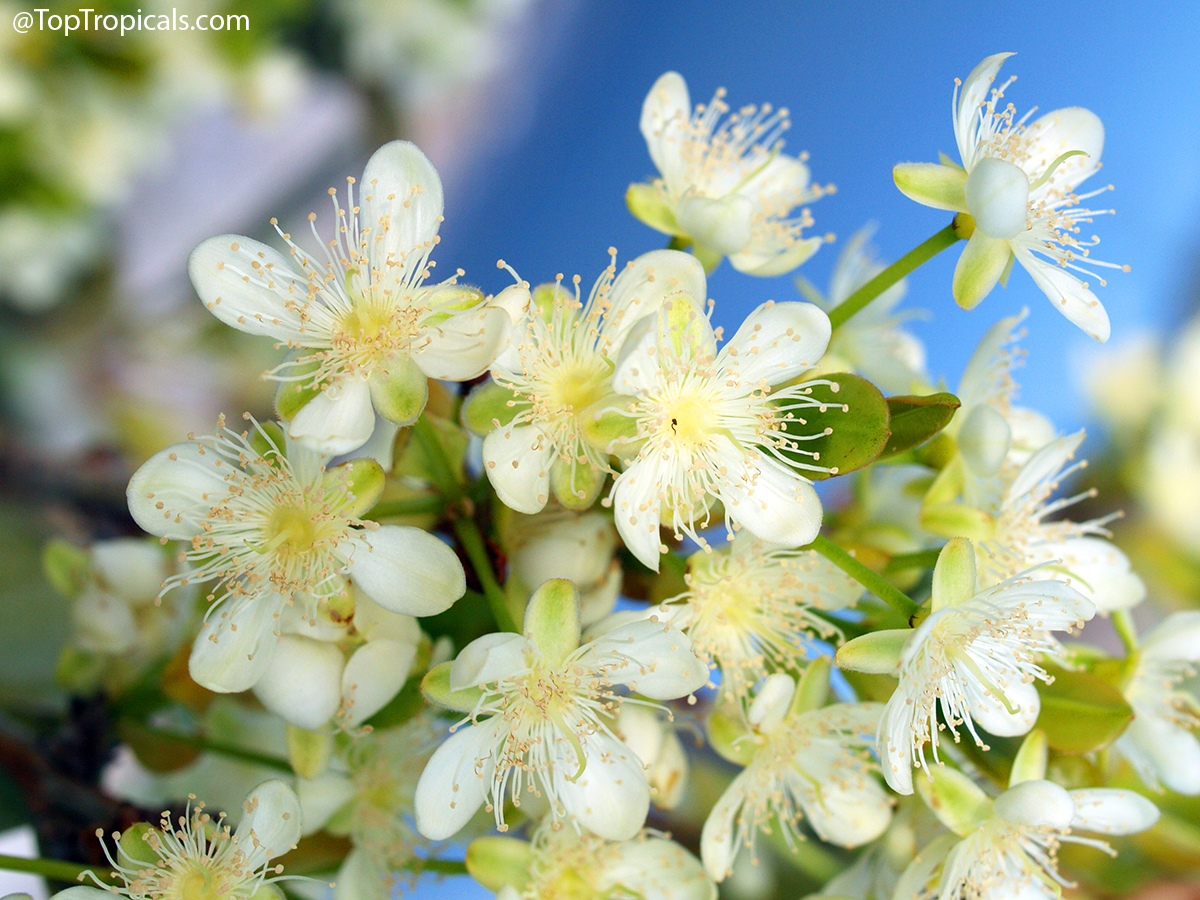
EGrumichama  flowers  (Eugenia  brasiliensis)  in  close-up  showing  white 
 petals  and  long 
 stamens

Eugenia brasiliensis - Grumichama flowers

❓Frequently Asked Questions: Eugenia cherries (FAQ)

  • Which one tastes better – Cherry of the Rio Grande or Grumichama?
    Cherry of the Rio Grande has a deeper, classic “sweet cherry” flavor with slight richness. Grumichama is softer, juicier, and often described as cherry with hints of grape and plum. Both are excellent fresh; Grumichama is especially popular for jam.
  • Which tree produces more fruit?
    Grumichama typically produces heavier crops once mature and can carry hundreds of fruits in a season. Cherry of the Rio Grande produces consistently but in slightly smaller volumes.
  • Do birds take all the fruit?
    Birds are attracted to both trees, especially Grumichama. Netting during peak ripening or harvesting promptly usually solves the issue.
  • Are these true "tropical" trees or subtropical?
    They are best described as subtropical tropicals. Unlike ultra-tender tropical fruits, Eugenia cherries tolerate occasional frost once established, making them more reliable in Southern landscapes.
  • Do they drop fruit messily?
    Fruit will fall if overripe, but the trees are compact and manageable. Regular harvesting prevents ground drop and keeps the area clean.
  • Can they be used for hedging or screening?
    Yes. Their dense evergreen foliage and upright growth make them suitable for edible hedges or privacy screens while still producing fruit.

Choosing between them is not about survival — both have proven resilient. It is about flavor preference, crop volume, and how you want to use the fruit in your kitchen and landscape.

Eugenia brasiliensis - Grumichama fruit close up

Eugenia aggregata (cv. Calycina), Cherry of the Rio Grande

🛒 Add Eugenia cherries to your garden

✍️ Top Ten Fruit Tree Winners of Florida 2026 Record Freeze

Date: 29 Dec 2024

Carefree Garden:
How easy is it to grow a Papaya tree?

Cat  eating  Papaya  fruit

Q: What is the easiest to grow fruit tree? It must tolerate, heat, rains, and hurricanes! I live in Florida.

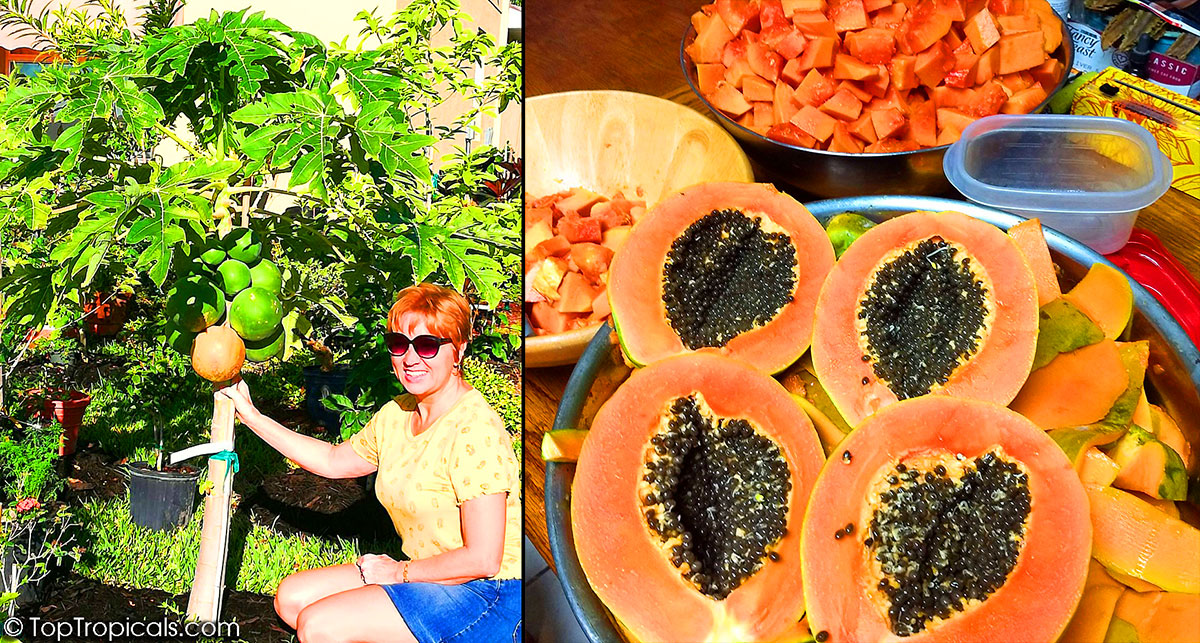
A: Papaya is the easiest to grow fruit tree. In our garden in Florida, newly planted Papaya trees survived several hurricanes, frosts, drought and heat, and keep producing year around!

We all enjoy eating Papaya fruit every day. It is great for digestion and is a perfect naturally sweet, healthy snack. Even our PeopleCats love Papaya. Check out this short video how our cat Cash is begging for his daily Papaya treat!

Cat  eating  Papaya  fruit

Why do we love Papaya? Fun facts about Papaya:

Not a tree: Papaya is technically a giant herb with a single, straight trunk that can grow up to 30 feet tall.

Gender flexible: Papaya plants can change their gender based on environmental conditions. This complex mechanism ensures better adaptability.

Cold and wind resistant: Papayas can withstand light freezes and strong winds, making them surprisingly hardy for a tropical plant.

Solo cultivars: These smaller, round or oval papayas are incredibly sweet and less susceptible to fruit flies.

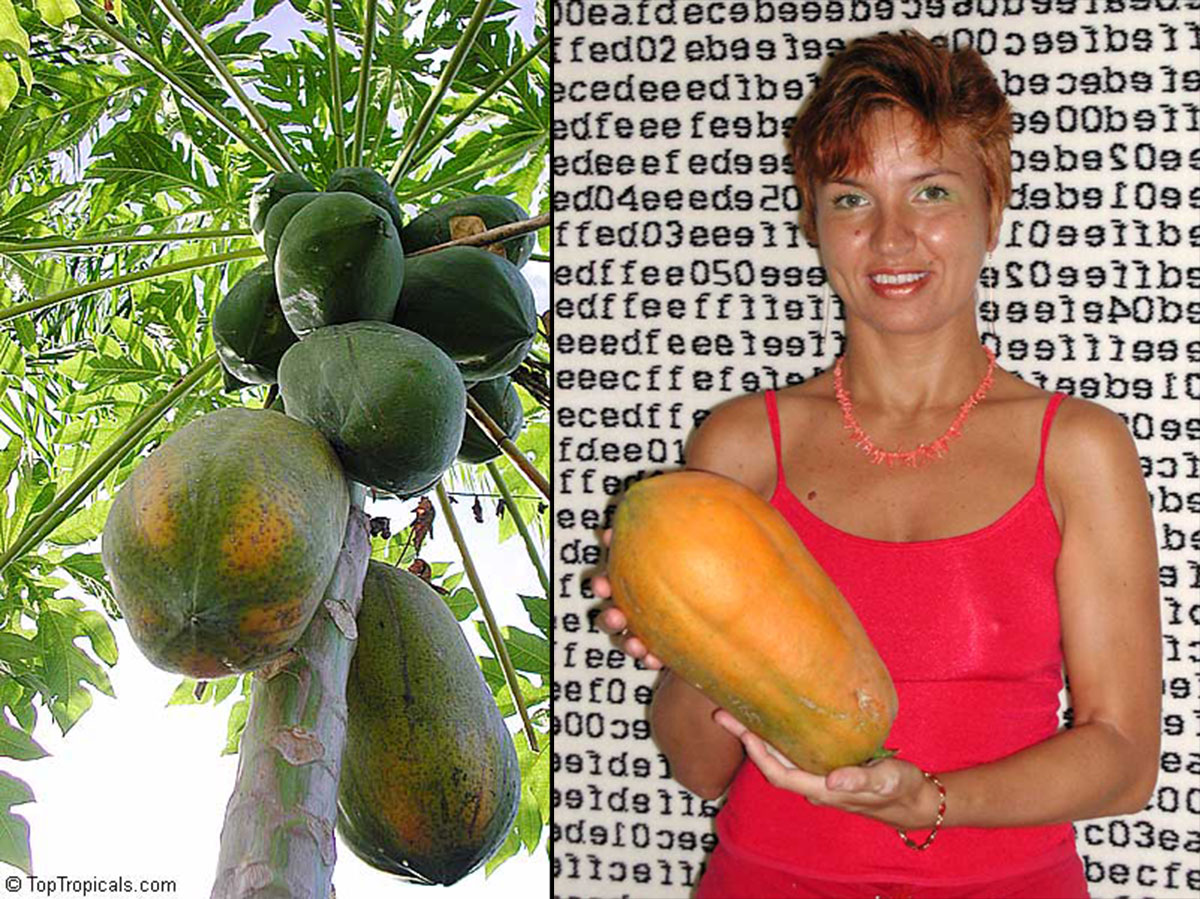
Papaya  tree  and  fruit

How to grow a Papaya Tree: Practical Guide

Papaya is one of the fastest fruiting plants to grow. Often starting production the same year from planting a seed, papayas are ideal for gardeners seeking quick rewards. Many dwarf varieties reach only 6-8 feet tall, yet produce large crops of full-sized fruit that are easy to harvest. Papaya trees are space-efficient, making it possible to plant multiple trees in even small gardens. Plant 2-3 different cultivars to enjoy year-round harvests of healthy, delicious fruit.

How Easy Are Papaya Trees to Grow?
Papaya trees are exceptionally easy to grow. Technically a large herbaceous plant rather than a true tree, they are resilient and adaptable. They can tolerate light freezes and even hurricane winds without significant damage. Additionally, many varieties are self-fertile, but planting multiple trees encourages better pollination and higher yields.

What Light Levels and Soil Types Are Ideal?
Papayas thrive in full sunlight, so choose a sunny spot in your garden or balcony. They prefer well-draining, fertile soil enriched with organic matter. Add compost or manure to improve soil quality and ensure healthy growth. Avoid waterlogged areas as papayas are sensitive to standing water.

How Much Watering Is Required?
Papayas need some watering to thrive, especially during the growing and fruiting seasons. Water deeply once or twice a week, depending on your climate, ensuring the soil remains moist but not waterlogged. Mulching around the base helps retain moisture and regulate soil temperature.

Growing Papayas in Containers
Papayas can be successfully grown in large containers, making them ideal for gardeners in cooler regions or those with limited space. Choose a container at least 7 gallons in size with good drainage. Use a rich, well-draining potting mix, and place the container in a sunny location. Select dwarf varieties to keep the plant manageable and productive.

Health Benefits of Papaya
Papaya is considered a superfood due to its high nutritional value. Rich in the enzyme papain, it aids digestion and promotes gut health. Papaya is also an excellent source of vitamins A, C, and E, as well as antioxidants that boost immunity and overall wellness. Additionally, papaya leaves can be used as wraps for cooking meats, naturally tenderizing them.

Papayas are a low-maintenance, high-reward addition to a Southern garden or greenhouse collection, whether in the ground or in a container. Their fast growth, year-round fruiting potential, and health benefits make them a must-have for gardeners and fruit enthusiasts alike.

Papaya  tree  and  fruit

Photo above: For small gardens, limited space, or container culture, choose dwarf varieties that remain compact and short (5-8 ft tall) while producing a tremendous amount of fruit! Most productive dwarf varieties: Red Vietnam, Lady Red, TR Hovey, Wan Deng. Semi-dwarf: Waimanalo, Sunrise.

Date: 2 Apr 2026

Skip the Egg Hunt - Start a Plant Hunt 🐰

Smokey  the  black-and-white  cat  with  glasses  sits  on  a  patio  taking 
 notes  while  Sunshine,  a  fluffy  orange  cat  wearing  bunny  ears,  holds  a  small 
 potted  mango  tree  with  light  yellow 
 flowers.
Sunshine: I went egg hunting. Found something better. Let’s grow it on the balcony. Mango-filled donuts, here I come.

Smokey: Finally. You’re thinking.

Read more about Smokey & Sunshine

Mango Plant Facts

Botanical name: Mangifera indica
Also known as: Mango
USDA Zone: 9 - 11
Highligths Large tree taller than 20 ftSmall tree 10-20 ftFull sunWatering: Moderate. Water when top soil feels dryYellow, orange flowersPink flowersEdible plantSeaside, salt tolerant plant
Get personalized tips for your region

Groundhog said long winter… and it sure felt like it. But now it is finally over, and balconies and patios are waking up again.

Easter is here, and with it comes that fresh start feeling - time to open the doors, bring plants back out, and start growing.

We made it through the cold. For northern gardeners, that is every year; for borderline zones, it is a reminder that freezes happen. That is exactly why growing in pots makes sense - you stay flexible.

Container growing is not just about pots - it is about choosing the right plants. The best options stay manageable, produce well, and handle being moved.

Let's look at what works. Start with plants that naturally stay compact and adapt well to containers. These are the ones that won’t outgrow your space and will reward you quickly. These are proven performers in containers - compact, productive, and easy to manage:

Blackberry Jam Fruit Plant Facts

Botanical name: Randia formosa, Mussaenda formosa, Randia mussaenda, Rosenbergiodendron formosum
Also known as: Blackberry Jam Fruit, Jasmin de rosa
USDA Zone: 9 - 11
Highligths Large shrub 5-10 ft tallSmall tree 10-20 ftSemi-shadeFull sunKeep soil moistWhite, off-white flowersEdible plantPlant attracts butterflies, hummingbirdsFragrant plantSubtropical plant. Mature plant cold hardy at least to 30s F for a short time
Get personalized tips for your region

Fig Tree Plant Facts

Botanical name: Ficus carica
Also known as: Fig Tree, Brevo
USDA Zone: 7 - 10
Highligths Plant used for bonsaiSmall tree 10-20 ftFull sunWatering: Moderate. Water when top soil feels dryOrnamental foliageEdible plantDeciduous plantSubtropical plant. Mature plant cold hardy at least to 30s F for a short timeFlood tolerant plantSeaside, salt tolerant plant
Get personalized tips for your region

Simple rule: if it stays compact and handles pruning, it works in a container.

Skip the egg hunt this year - go on a plant hunt instead. Start with one or two plants this Easter - not ten. Get them established, learn how they grow, and then expand.

Container basics (keep it simple):

  • Pot size: start with 3–7 gallon, upgrade as plant grows
  • Soil: fast-draining mix (never heavy garden soil)
  • Water: soak well, then let top inch dry
  • Feeding: consistent light feeding works better than heavy doses
  • Sun: most tropicals want full sun (6+ hours)

🐣 Browse our Easter Container Collection

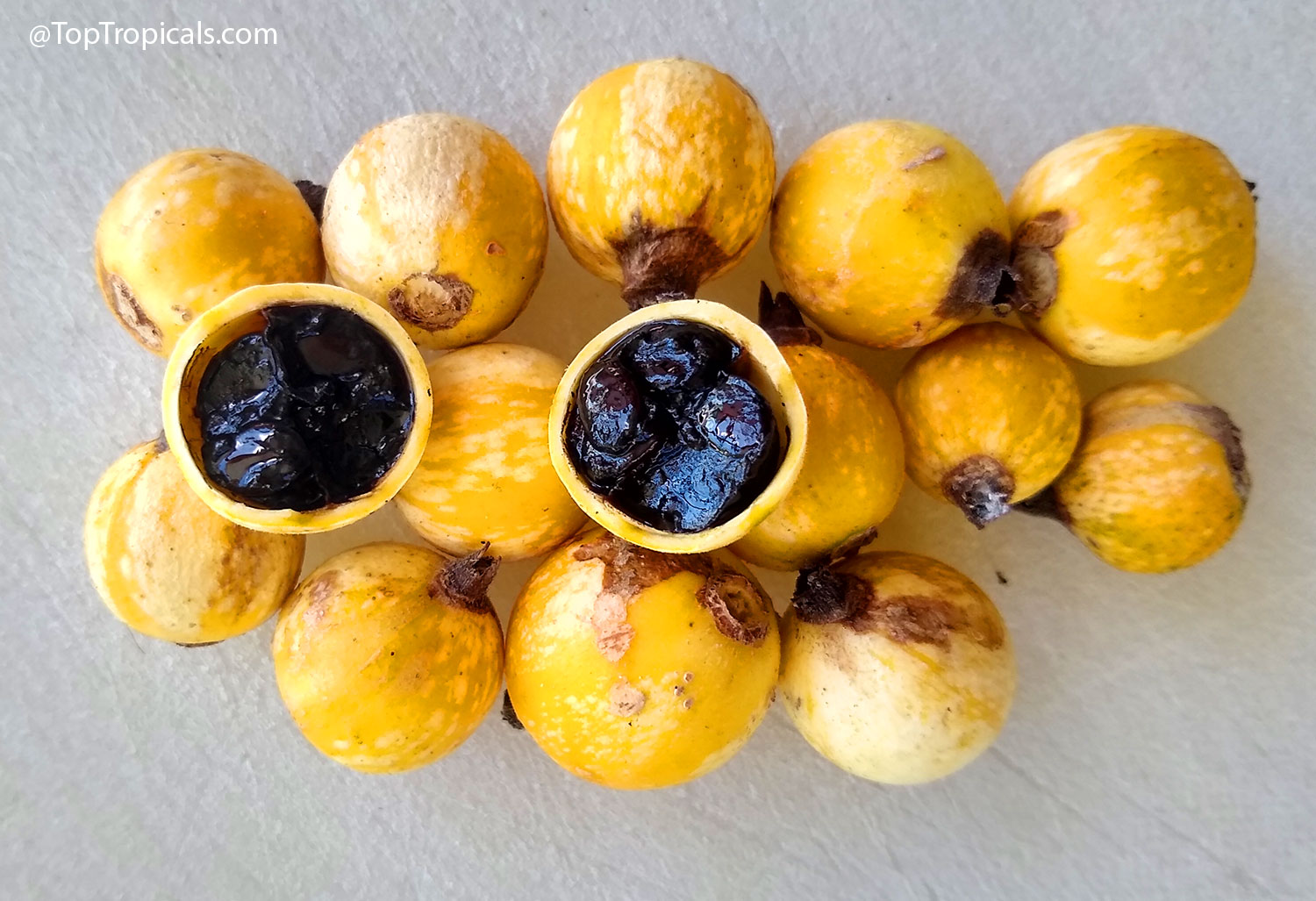
Randia  formosa  (Blackberry  Jam  Fruit)  showing  yellow  ripe  fruits,  some 
 cut  open  to  reveal  glossy  dark  pulp 
 inside.

Randia formosa - Blackberry Jam Fruit

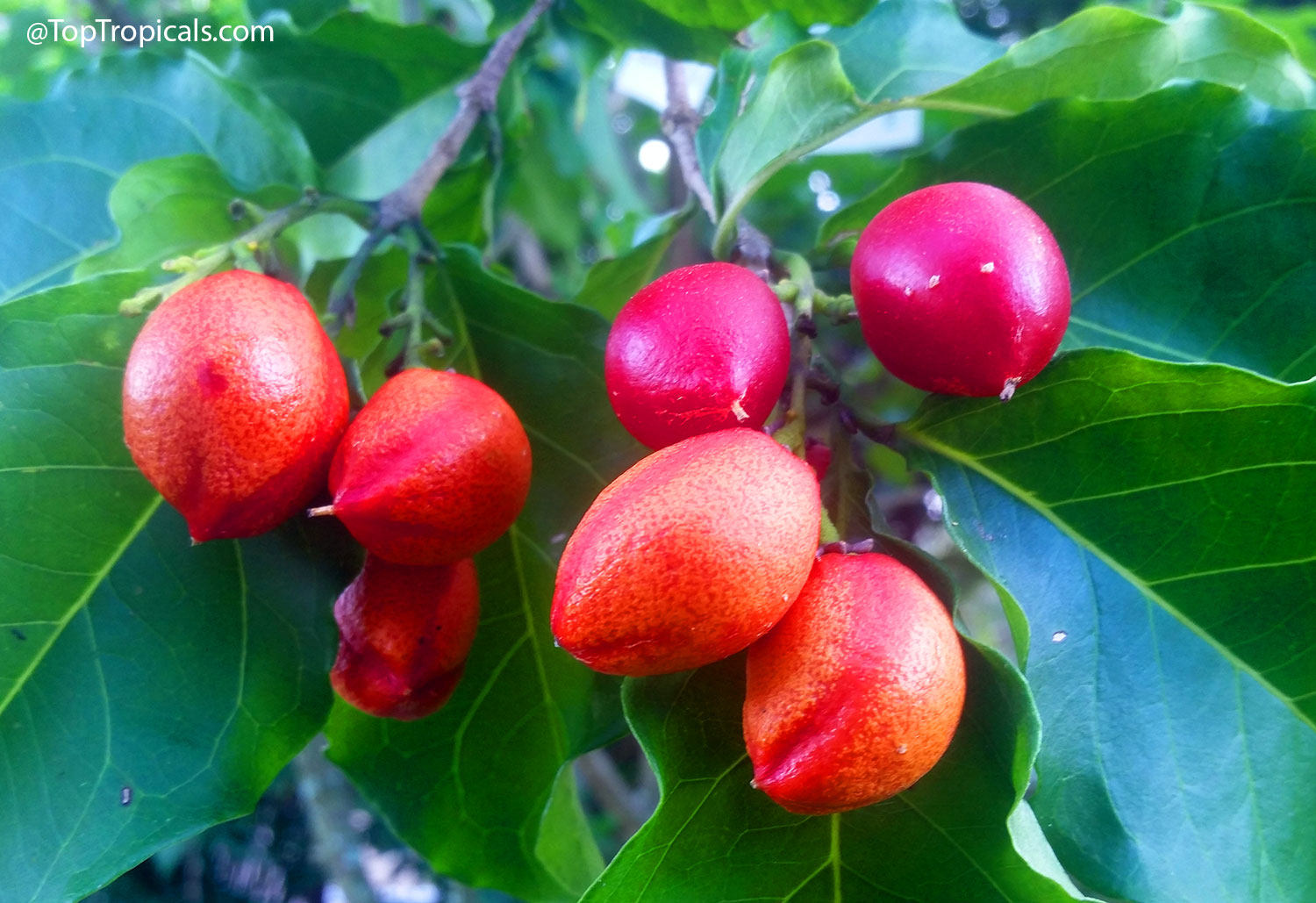
Bunchosia  argentea  (Peanut  Butter  Fruit)  showing  clusters  of  red  ripe 
 fruits  on  a  leafy 
 branch.

Bunchosia argentea - Peanut Butter Fruit

Peanut Butter Fruit Tree Plant Facts

Botanical name: Bunchosia argentea, Bunchosia armeniaca
Also known as: Peanut Butter Fruit Tree, Ciruela Del Monte
USDA Zone: 9 - 11
Highligths Large shrub 5-10 ft tallSmall tree 10-20 ftSemi-shadeFull sunWatering: Regular. Let topsoil dry slightlyYellow, orange flowersEdible plantSubtropical plant. Mature plant cold hardy at least to 30s F for a short time
Get personalized tips for your region

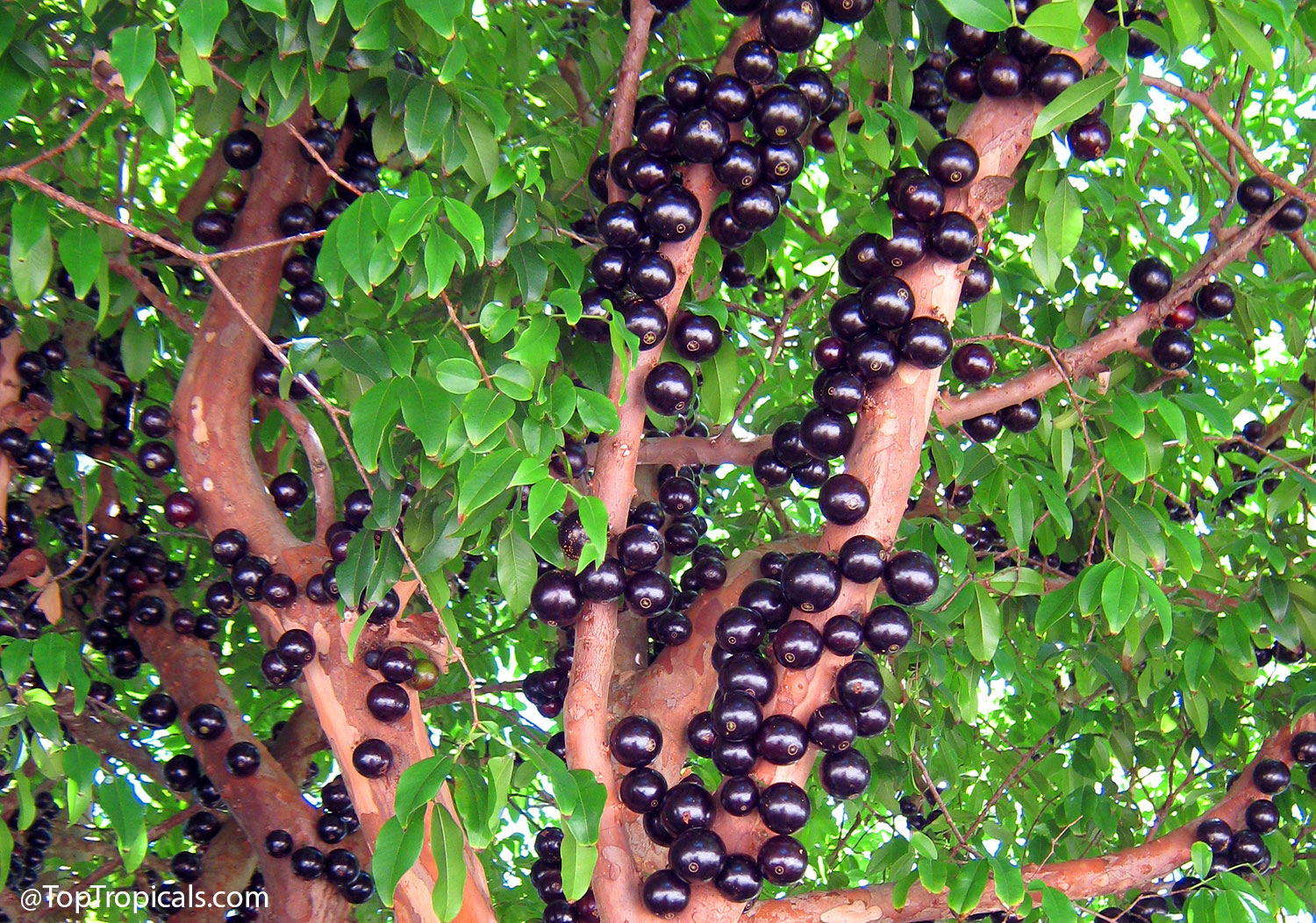
Myrciaria  cauliflora  (Jaboticaba)  tree  with  clusters  of  dark 
 purple-black  fruits  growing  directly  on  the 
 trunk.

Myrciaria cauliflora - Jaboticaba

Jaboticaba Plant Facts

Botanical name: Myrciaria cauliflora, Plinia cauliflora, Eugenia cauliflora
Also known as: Jaboticaba, Duhat
USDA Zone: 9 - 11
Highligths Plant used for bonsaiSmall tree 10-20 ftFull sunKeep soil moistEdible plantSubtropical plant. Mature plant cold hardy at least to 30s F for a short timeFlood tolerant plant
Get personalized tips for your region

Eugenia  brasiliensis  (Grumichama)  with  red  ripe  cherries  hanging  from  a
   branch  against  blue 
 sky.

Eugenia brazilensis - Grumichama and more Eugenia Cherries

Grumichama Plant Facts

Botanical name: Eugenia brasiliensis, Eugenia dombeyi
Also known as: Grumichama, Brazilian Cherry
USDA Zone: 9 - 11
Highligths Small tree 10-20 ftSemi-shadeFull sunWatering: Moderate. Water when top soil feels dryEdible plantSubtropical plant. Mature plant cold hardy at least to 30s F for a short timeSeaside, salt tolerant plant
Get personalized tips for your region