What tropical plants survived Floridas historic freeze without protection
Florida historic freeze
What tropical plants survived Florida's historic freeze without protection
In the first week of February 2026, arctic air pushed deep into Florida. For many areas, this was the coldest event in over a century.
We received one question over and over: How did your gardens do?
Top Tropicals Farm in Sebring, Florida is up and running - and this freeze became a real-world hardiness test for tropical and subtropical plants. Below is our initial field report after inspecting established plantings.
📊 Weather data - February 1-6, 2026
Sebring, Florida - 132 years of recorded observations
This was not a light frost. It was prolonged, windy, penetrating hard freeze.
🌡 Minimum temperature: 25F ❄️ Wind chill: 14F ⏳ Duration: 3 nights of 8-10 hour hard freeze ☀️ Daytime temperatures: around 50F for 7 days 🌀 Wind: sustained 20 mph, gusts 40-50 mph
Cold protection
In-ground trees: selected plants covered with frost cloth, especially
Mango Plant Facts
Botanical name: Mangifera indica Also known as: Mango
USDA Zone: 9 - 11
Highligths
mango and young
Avocado Plant Facts
Botanical name: Persea americana, Persea gratissima Also known as: Avocado, Alligator Pear, Aguacate, Abacate
USDA Zone: 9 - 11
Highligths
avocado trees. Tender container plants: moved into greenhouses with propane heat above 34F. Hardy container plants: frost cloth and wind protection only - no plastic Nutrition support: plants fertilized regularly during the growing season with Green Magic and Sunshine Boosters to maintain vigor and hardiness.
However, the plants listed below had no protection at all.
All were established trees 2-3 years in the ground.
The plants below had NO PROTECTION, established trees 2-3 years old
Botanical name: Psidium cattleyanum, Psidium littorale Also known as: Cattley Guava, Sand Plum, Strawberry Guava
USDA Zone: 9 - 11
Highligths
Eugenias (Grumichama, Rio Grande, Surinam and more)
Olive trees
Bay Leaf (Laurus nobilis)
Fig trees (Ficus carica)
Prunus sp - Peaches, Plums, Nectarines
Persimmons
Rubus (Blackberries) including Tropical Mysore Raspberry
Elderberry (Sambucus)
Yerba Mate - Ilex paraguariensis
Opuntia - Nopal Cactus, Prickly Pear
🌸 Flowering Trees and Shrubs:
Beaucarnea recurvata - Pony Tail
Ponytail Palm Plant Facts
Botanical name: Beaucarnea recurvata, Nolina recurvata Also known as: Ponytail Palm, Pony Tail, Bottle Palm, Nolina, Elephant-foot Tree
USDA Zone: 10 - 11
Highligths
Callistemon - Bottlebrush
Yucca
Tabebuias
Magnolia figo and Little Gem
Banana Magnolia Plant Facts
Botanical name: Magnolia figo, Michelia figo, Magnolia fuscata Also known as: Banana Magnolia, Banana Shrub, Port Wine Magnolia
USDA Zone: 7 - 10
Highligths
Calliandra tweedii - Red Powderpuff
Sophora tomentosa
Yellow Necklace Pod Plant Facts
Botanical name: Sophora tomentosa Also known as: Yellow Necklace Pod, Silverbush
USDA Zone: 8 - 11
Highligths
Galphimia gracillis - Thriallis
Thriallis Plant Facts
Botanical name: Galphimia gracillis, Galphimia gracilis, Galphimia glauca Also known as: Thriallis, Rain of Gold, Spray of Gold
USDA Zone: 9 - 11
Highligths
Acacia trees
Osmanthus fragrans
Tea Olive Plant Facts
Botanical name: Osmanthus fragrans, Olea fragrans, Olea ovalis, Osmanthus longibracteatus, Osmanthus macrocarpus Also known as: Tea Olive, Fragrant Olive, Sweet Olive, Kinmokusei in Japan
USDA Zone: 8 - 11
Highligths
Abutilon trees
Erythrina - several species
Monkey Ear tree - Enterolobium cyclocarpum
Bauhinia Orchid Trees - several species
Pseudobombax ellipticum - Shaving Brush Tree
Shaving Brush Tree Plant Facts
Botanical name: Pseudobombax ellipticum, Bombax ellipticum Also known as: Shaving Brush Tree
USDA Zone: 9 - 11
Highligths
Bulnesia arborea- Vera Wood
Vera Plant Facts
Botanical name: Bulnesia arborea Also known as: Vera, Verawood, Vera Wood, Maracaibo Lignum Vitae
USDA Zone: 10 - 12
Highligths
Caesalpinia mexicana, Mexican Bird of Paradise
Mexican Bird of Paradise Plant Facts
Botanical name: Caesalpinia mexicana Also known as: Mexican Bird of Paradise, Dwarf Poinciana
USDA Zone: 9 - 11
Highligths
Sansevieria - Snake Plant
Foxtail fern - Asparagus densiflorus
Lonicera - several varieties
Jacaranda tree
Eucalyptus
Plumbago Imperial Blue
Philodendron bipinnatum
Gardenias
Gingers (dormant rhizomes)
✳️ Minimal leaf damage only:
(These plants showed light cosmetic damage but no structural injury)
🍑 Tropical Fruit Trees and Edibles:
Glycosmis pentaphylla - Gin Berry
Ash sheora Plant Facts
Botanical name: Glycosmis pentaphylla, Limonia pentaphylla Also known as: Ash sheora, Orangeberry, Rum Berry, Gin Berry
USDA Zone: 9 - 10
Highligths
Black sapote tree Tamarind tree
Syzygiums: Rose Apple and Java Plum
🌸 Flowering Trees and Shrubs:
Pandora vine
Jasminum - several species
Stenocarpus sinuatus - Firewheel Tree
Firewheel Tree Plant Facts
Botanical name: Stenocarpus sinuatus Also known as: Firewheel Tree
USDA Zone: 9 - 11
Highligths
Xanthostemon
Quisqualis indica
Rangoon Creeper Plant Facts
Botanical name: Combretum indicum, Quisqualis indica Also known as: Rangoon Creeper, Burma Creeper, Chinese Honeysuckle
USDA Zone: 10 - 11
Highligths
Schotia tree
Eranthemum pulchellum - Blue Sage
Blue sage Plant Facts
Botanical name: Eranthemum pulchellum, Eranthemum nervosum Also known as: Blue sage, Blue eranthemum, Lead Flower
USDA Zone: 9 - 11
Highligths
Hiptage benghalensis - Helicopter Flower
Hiptage Plant Facts
Botanical name: Hiptage benghalensis, Hyptage bengalensis Also known as: Hiptage, Helicopter Flower
USDA Zone: 9 - 10
Highligths
🏡 What this means for Florida gardeners
This freeze was a stress test few gardens are prepared for. Yet many species handled 25F, wind, and multi-night freeze conditions without protection.
Choosing proven survivors, planting in smart microclimates, and maintaining strong plant health during the growing season makes a measurable difference.
More updates will follow as full recovery continues - but these early results already help define a stronger plant palette for future winters.
What fruit can reduce your blood pressure. Tropical fruit and plants that help keep blood pressure in balance
Tropical fruit that can reduce your blood pressure
❤️ Tropical fruit and plants that help keep blood pressure in balance.
Part 1: What fruit can reduce your blood pressure?
💲 You don’t need to spend $$$ on doctors and medications to stay healthy and young. By eating right and adding a few powerful plants and fruits to your diet, you can naturally keep your blood pressure in check. Plant them today and harvest your own medicine tomorrow! And don’t forget - gardening itself is therapeutic! It keeps you active, reduces stress, and helps your whole body stay in balance.
💚 Tropical fruit that help reduce blood pressure:
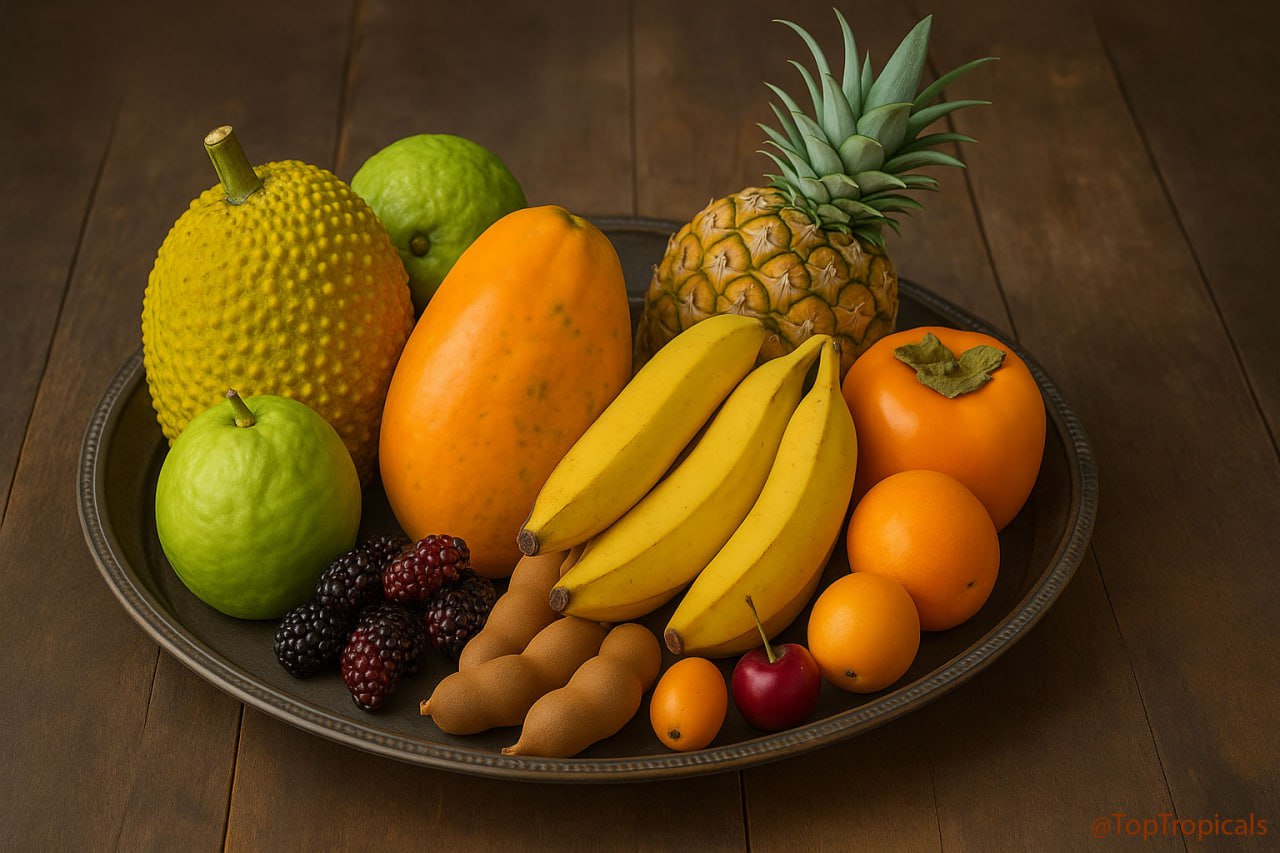
✅ Jackfruit (Artabotrys hexapetallus) - Contains potassium and magnesium, which help relax blood vessels and regulate blood pressure.
✅ Guava (Psidium sp.) - Rich in potassium and fiber, supports vascular health and may help lower blood pressure.
✅ Papaya (Carica papaya) - High in potassium and antioxidants, promoting healthy blood pressure.
✅ Banana (Musa sp.) - Well-known for its high potassium content, which helps counteract sodium and lower blood pressure.
✅ Pineapple (Ananas comosus) - Contains potassium and bromelain, which may support circulation and reduce inflammation.
✅ Persimmon - High in fiber and antioxidants, which can contribute to better heart and vascular function.
✅ Mulberry (Morus sp.) - Contains resveratrol and other antioxidants linked to heart health and blood pressure support.
✅Tamarind (Tamarindus indica) - Rich in potassium and fiber, may help regulate blood pressure and support arterial health.
✅ Loquat (Eriobotrya japonica) - Contains potassium, aiding in fluid balance and blood pressure control.
NEW
VIDEO:
ABC7 Fort Myers News:
Rare Tropical Fruit Trees at Top Tropicals
We received lots of orders from our customers for butterfly attracting plants after our recent
. We are glad you liked the
story and the plants!
Today's topic is on tropical fruit. Enjoy this quick tour and learn more about different
varieties of rare tropical fruit and what can be grown in your yard. We have
them all! And we can ship them to your door.
Stay updated with TopTropicals Videos by subscribing to our channel at
YouTube.com/TopTropicals
and get our latest video news of what is fruiting and blooming!
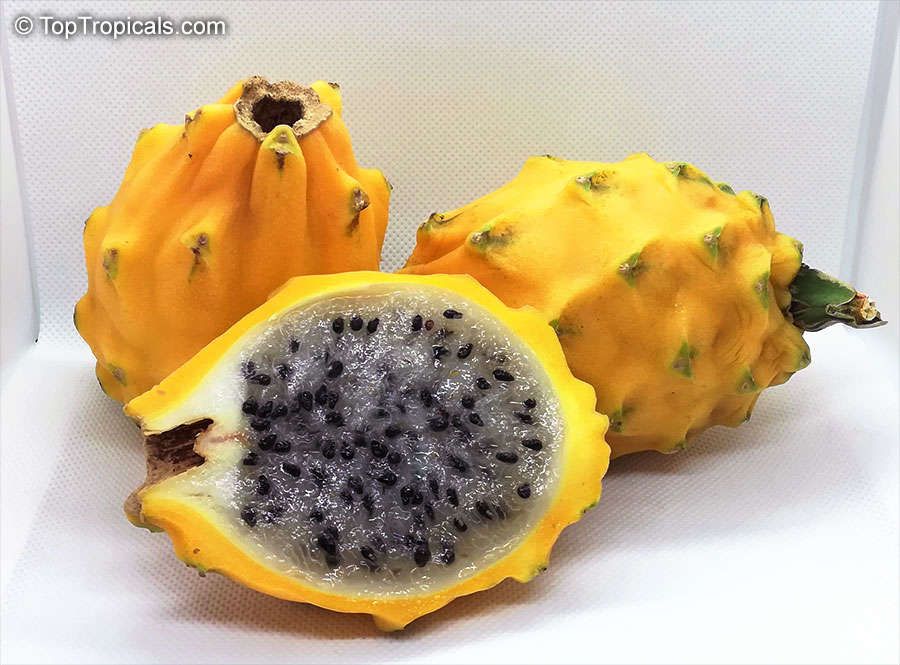
In the photo: Yellow Dragon Fruit, Selenicereus megalanthus, the sweetest and the most flavorful rare
Yellow Pitaya. The taste is said to be superior to most cactus fruits.
Q: Can you recommend trees which fruit are beneficial for balancing
blood pressure? I have limited space, so I want to be selective and grow a food
forest that truly supports my health.
A: You don't need to spend $$$ on doctors and medications to stay healthy and young. By eating right and adding a few
powerful plants and fruits to your diet, you can naturally keep your blood pressure
in check. If you plant them today - you can harvest your own medicine tomorrow. And don't forget - gardening itself is
therapeutic! It keeps you active, reduces stress, and helps your whole body stay in balance.
💚 Top ten tropical fruit that help reduce blood pressure:
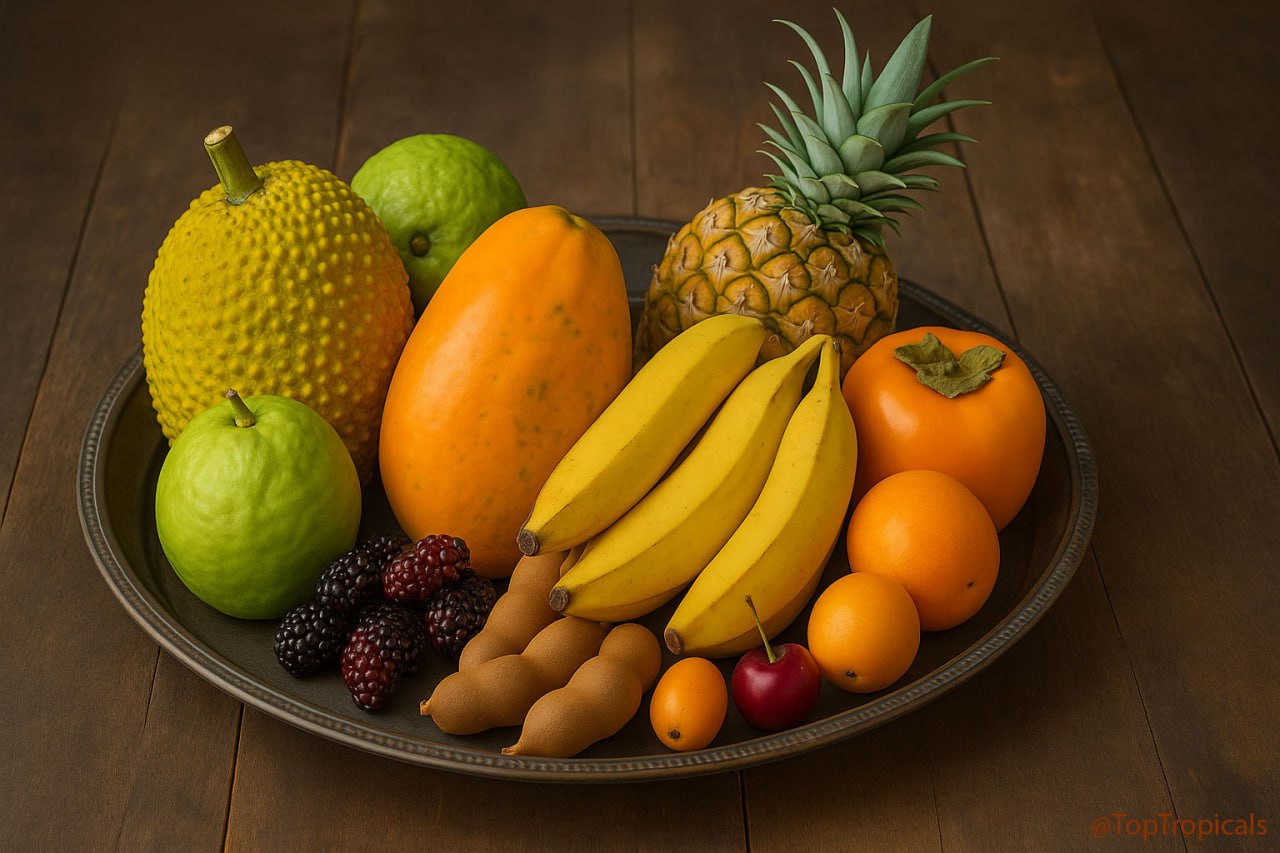
🍈 Jackfruit - Contains potassium and magnesium, which help relax blood
vessels and regulate blood pressure.
🍉 Guava - Rich in potassium and fiber, supports vascular
health and may help lower blood pressure.
🍊
Papaya - High in potassium and antioxidants, promoting healthy blood pressure.
🍌 Banana - Well-known for its high potassium content, which
helps counteract sodium and lower blood pressure.
🍍 Pineapple - Contains potassium and bromelain, which may support circulation and reduce inflammation.
🍅 Persimmon - High in fiber and antioxidants, which can contribute to
better heart and vascular function.
🍇 Mulberry - Contains resveratrol and other antioxidants linked to heart health and blood pressure support.
Tamarind - Rich in potassium and fiber, may help regulate blood pressure and support arterial health.
🍑 Loquat - Contains potassium, aiding in fluid balance and blood pressure control.