Q: I have been hunting for a rare and exotic edible to grow on my
property here in South Florida for some time now. I found an interesting
tree called Kwai Muk while browsing your website. I do not have a lot of space
left to plant but this tree seems to be smaller in size and also somewhat cold
and wind tolerant which is a bonus as far as I am concerned. It also sounds
like the fruit is exceptional. I would love to grow one. It is similar to
Jackfruit?
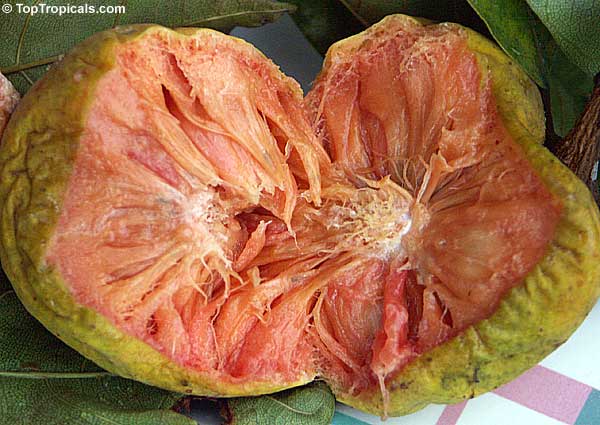
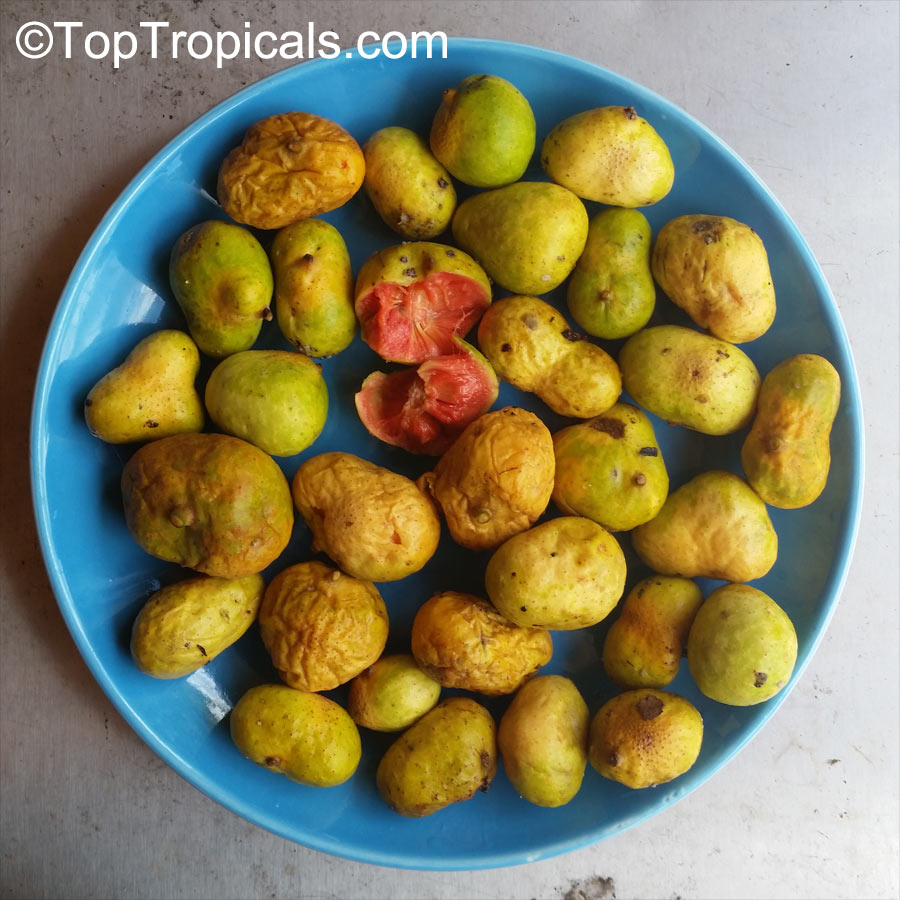
A: ...The piece de resistance of Kwai Muk is the excellent fruit it produces. Some people seem to think
it is some of the weirdest looking fruit out there! This may be true, but
what it lacks in appearance, it certainly makes up for in taste. It is called
sometimes "the ugliest and yet the best tasting fruit". The creamy pulp is
absolutely delicious and mostly eaten fresh. I have heard people say the flavor
reminds them of mango, apricot, jackfruit, fig, quava and strawberry. Sweet
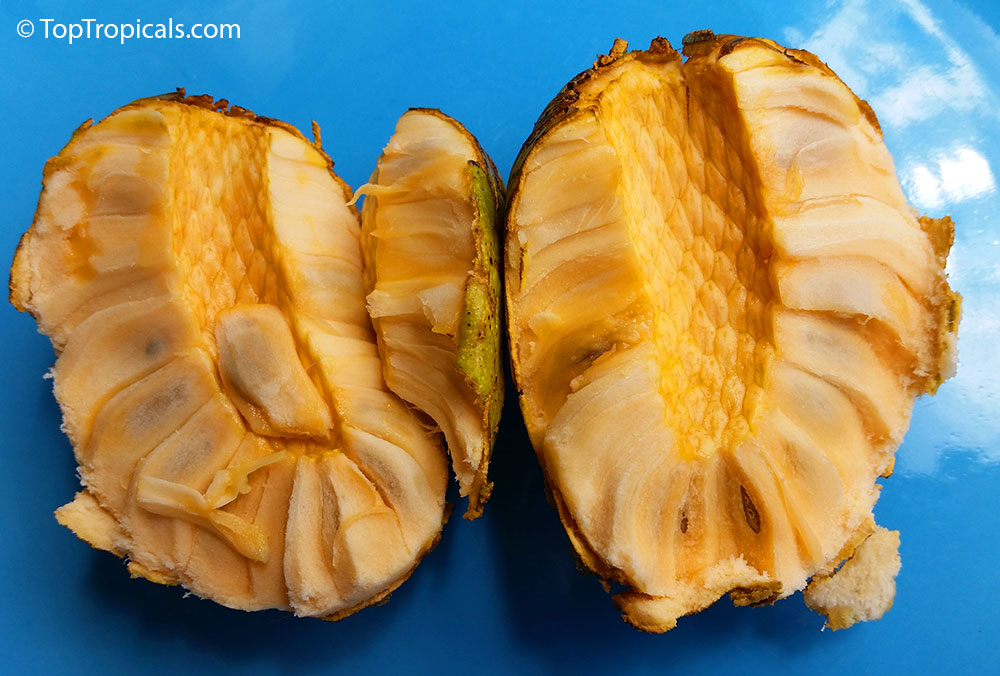
and tangy loveliness with a hint of sherbet. The fruit looks like mini
jackfruit on the inside but is about the size of a fig. The flesh inside also closely
resembles jackfruit....
Golden Sugar Apple and Jackedak Cheena
50% OFF and MORE!
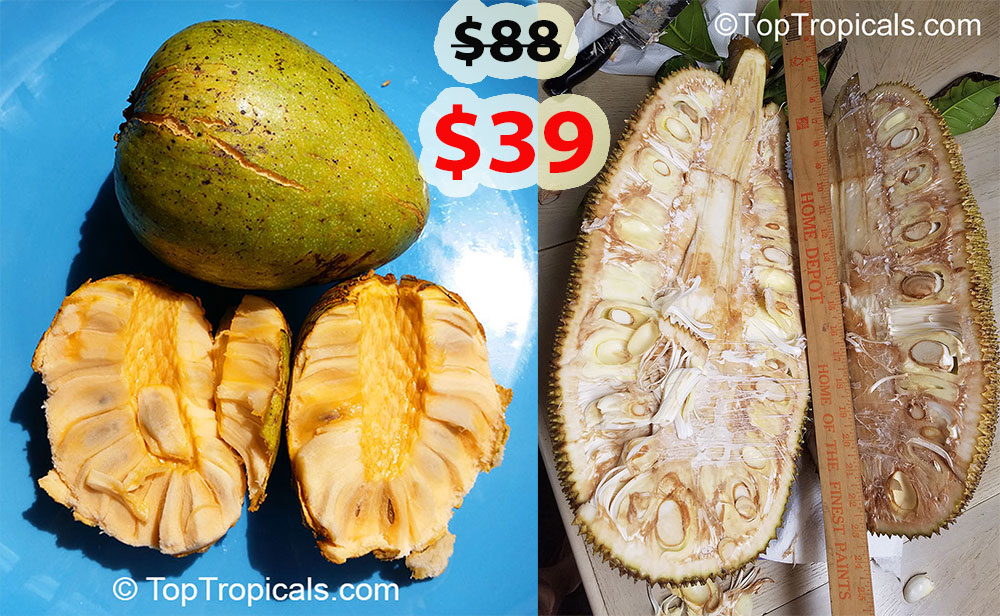
We've combined the exotic fruit of this rare Annona from Costa Rica - Golden
Sugar Apple with the sweet, crunchy and excellent flavor of the Jackedak Cheena. Both rare and unique plants can be yours at
considerable savings, but don't delay as there are limited quantities in
stock.
Rare Fruit Collection:
two Jackfruit-textured rare fruit!
For this Easy Sunday we have priced these at incredible savings:
The
Golden Sugar Apple regularly $39, is on Easy Sunday sale for only $19
The
Jackedak Cheena, regularly $49, is on Easy Sunday Sale for only $24
.
Combine the two for your own Rare Fruit Collection and save even more, only $39 for the set!
Jackedak Cheena
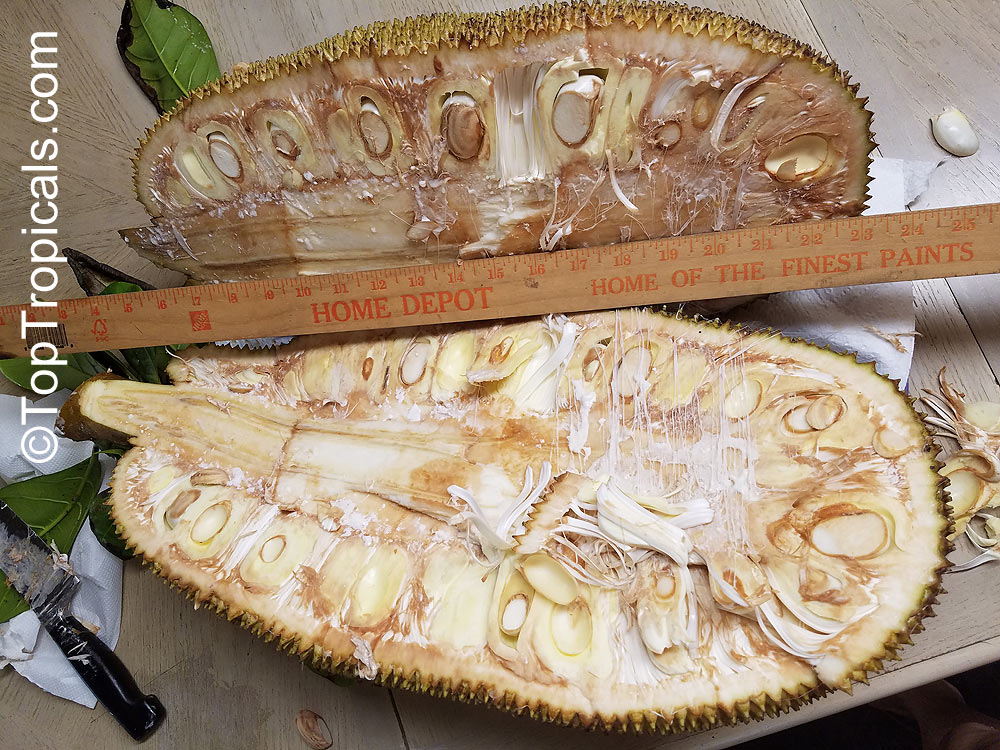
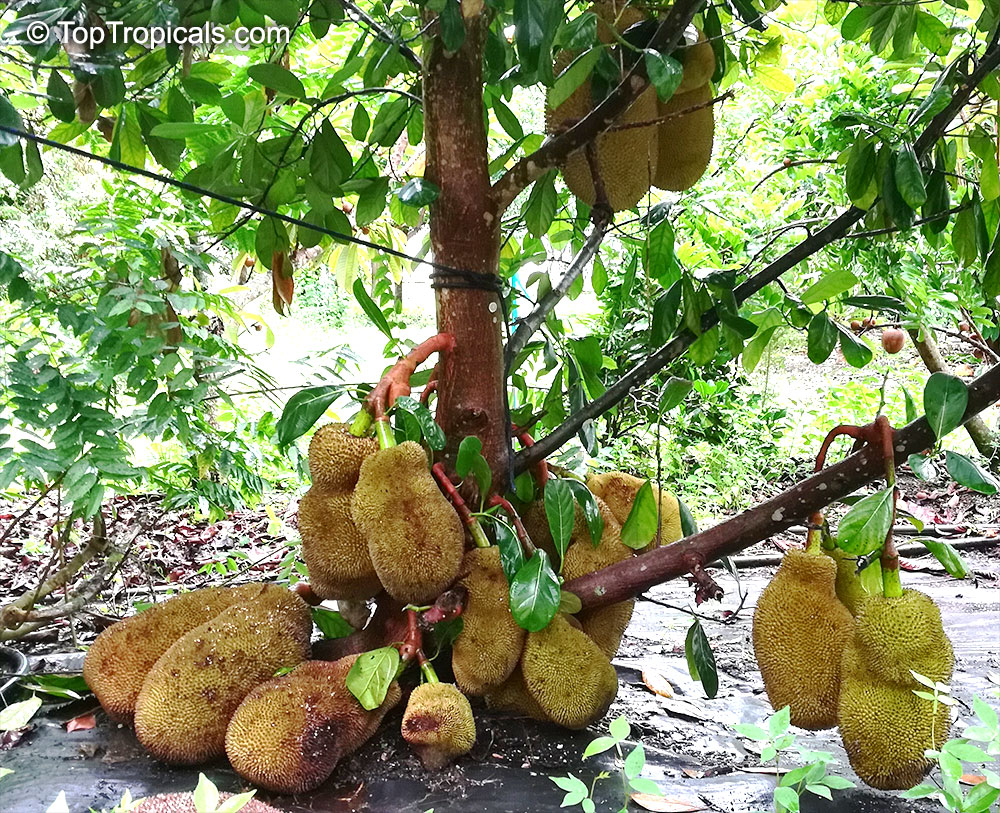
Artocarpus x integer (Jackfruit x Chempedak) - Jackedak Cheena has been
grown in TopTropicals garden from a seedling and fruited within 3 years from
planting. The fruit is the best we ever tasted! It is super sweet, crunchy, with
a rich, excellent flavor, with very little latex which makes it easy to
handle when cutting up. Our tree survived light frosts as well as 48 hours of 3 ft
flooding, with no damage! Cheena is a natural hybrid between Jackfruit and
Chempedak with low and spreading growth habit, can be maintained at 8 ft with
annual pruning.
Picture of 3 y.o. Cheena at Top Tropicals garden,
loaded with fruit:
Golden Sugar Apple
The
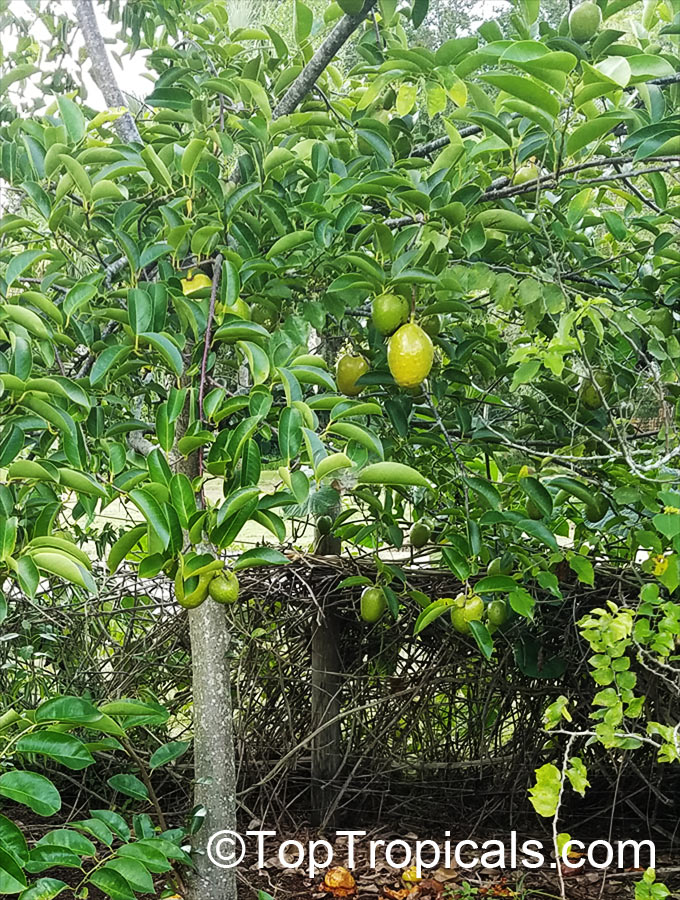
Golden Sugar Apple or Pineapple Annona originally was brought to us by our customer from Costa Rica. We believe it to be a natural hybrid between A. muricata and A.
glabra. It is a very ornamental small tree similar in growth habit to A. muricata, A. montana or Rollinia. Fast growing, forms nice bushy specimen. Fruit is very large, up to 1 lb, golden to orange when ripe, with strong Pineapple scent, and resembling Jackfruit in texture, with pineapple, papaya, apricot and melon overtones. The tree tolerates flooding and is cold hardy at least to upper
20's. Very interesting for rare fruit collectors as much more hardy and water
tolerant alternative to its sensitive relatives Soursop and Rollinia.
Picture of 3 y.o. tree full of fruit:
Remember, the Easy Sunday special has been extended through Wednesday, December 15th. Limited availability, hurry up! All orders
over $75 (excluding S&H) are eligible for 20% off!
For 20% off - use code YEAREND20
Min. order $75 (excluding S&H). Good through December 15th
Enjoy your Holiday Tropical Fruit!
Photo above: Jim is Holiday decorating with super-sweet tropical fruit balls - Pom-Poms!
Date: 10 Aug 2025
🌺 Back to School and Back to Planting – Cats in the Garden
Back to School, Back
to Planting – Why August Works for Tropicals
Planting Season Isn't Over Yet
August is still a good month for planting tropicals in warm climates.
The soil stays warm enough to push root growth, and late-summer weather gives plants time to settle in before winter. In drier areas, regular watering will keep them moving along just fine.
Tropicals in warm climates aren't usually harmed by cooler Winter weather, but as days get shorter, growth may slow down. This is why
planting in late Summer-Fall lets roots grow during this last warm stretch, so the plant enters winter already established.
By spring, those roots are ready to drive new shoots, flowers, and
fruit. There's no lost time to transplant shock - plants can get straight to
blooming and fruiting earlier in the season.
August Planting
FAQ
How can heat be prevented from harming new tropicals?
Water in the morning so plants start the day hydrated. Warm soil is good for root growth, but don't let it dry out.
How should new plants be protected from strong sun?
For the first couple of weeks, use a shade cloth or even a white bed sheet to soften midday sun and prevent leaf scorch.
What fertilizer works best for planting in summer heat?
Controlled-release types are best. We use professional grade Green Magic. You may pair it with Sunshine Boosters for steady, gentle feeding through the warm months.
Do Fruit Trees Increase Property Value? Tropical Plants That Pay Off
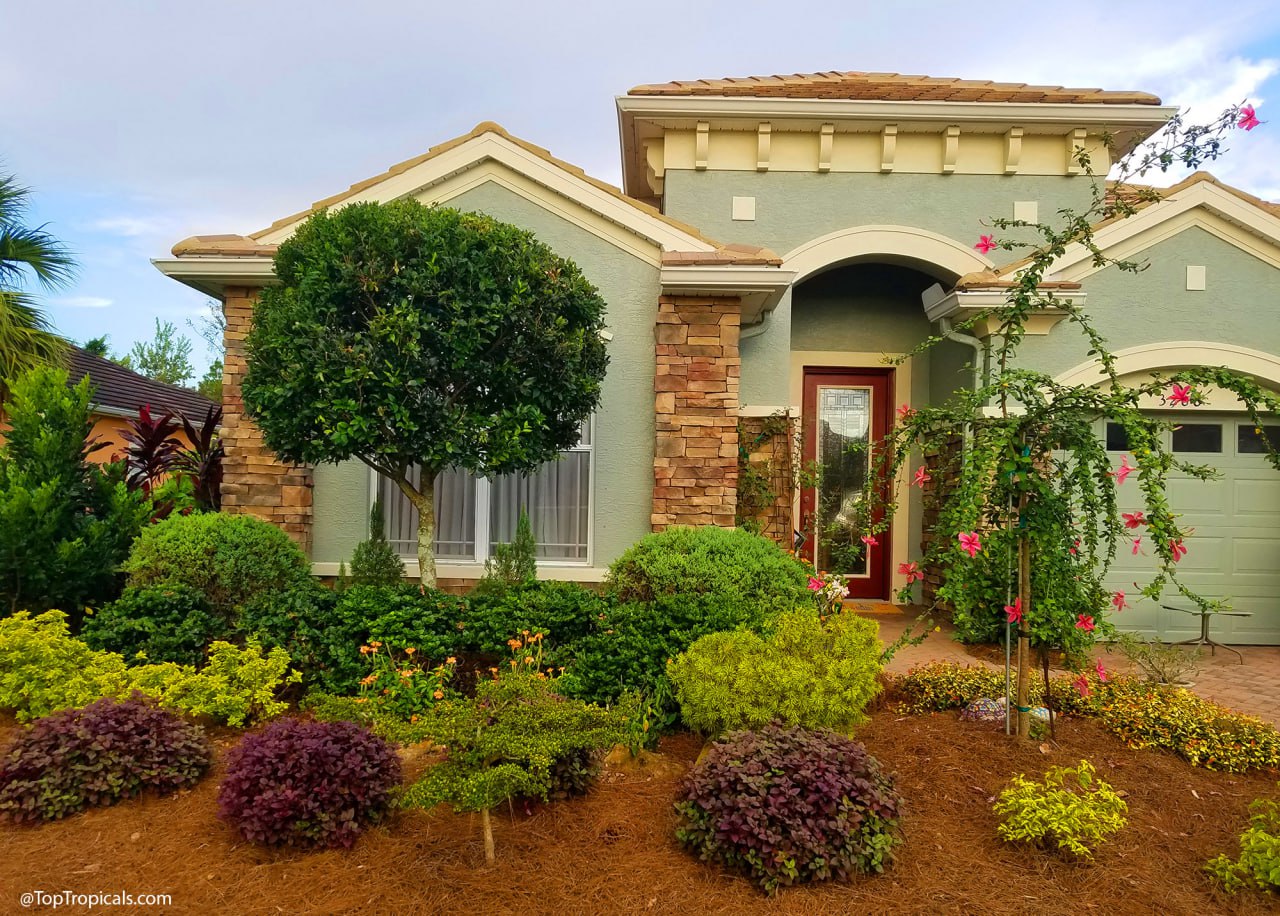
Yard with fruiting tropical trees
Landscaped yard in Florida
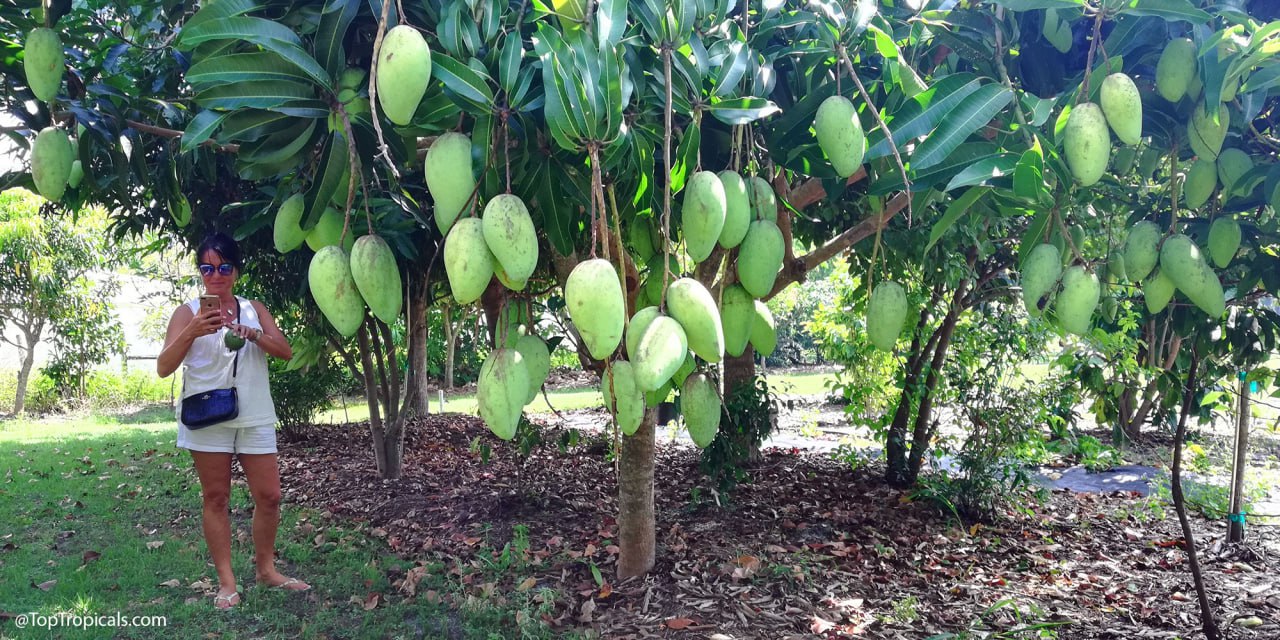
Mango tree fruiting in the garden
Do Fruit Trees Increase Property Value? Tropical Plants That Pay Off 🏡
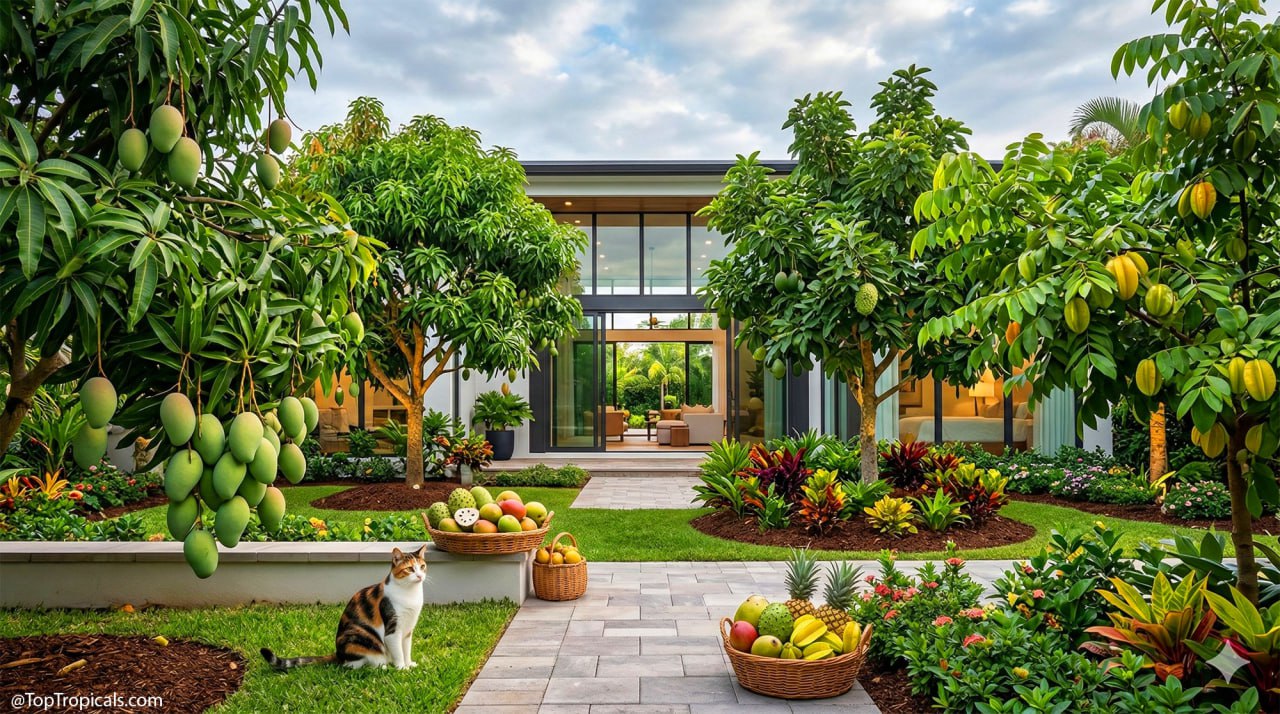
Can your backyard pay for itself? Learn which 12 tropical fruit trees real estate experts say are the smartest investment for your landscape. Discover how tropical fruit trees like mango and avocado add "edible equity" and curb appeal to your property, making it more desirable to future buyers. Turn your yard into a private paradise that lowers grocery bills and boosts home value.
In warm climates like Florida, a mango tree isn't just landscaping - it’s a food-producing asset. Mature tropical fruit trees offer "edible equity," saving homeowners hundreds in grocery bills while creating a unique, memorable aesthetic for buyers.
Mango Plant Facts
Botanical name: Mangifera indica Also known as: Mango
USDA Zone: 9 - 11
Highligths
🥭 1. Focus on "Instant Recognition" Favorites
Trees buyers already know and love provide the strongest ROI. They signal that the yard is already productive - something new builds can’t offer.
• Top Picks: Mango, Avocado, Papaya, Banana, Guava, and Loquat.
Avocado Plant Facts
Botanical name: Persea americana, Persea gratissima Also known as: Avocado, Alligator Pear, Aguacate, Abacate
USDA Zone: 9 - 11
Highligths
• The Value: A single mature avocado or mango tree can yield hundreds of pounds of fruit annually.
🥭 2. Create a "Memorable Discovery" with Exotic Varieties
Unusual fruits turn a standard yard into a tropical orchard, acting as a conversation piece during home tours.
• The Exotic List:Jackfruit, Sugar Apple, Soursop, Sapodilla, Ice Cream Bean, and Star Fruit.
🥭 3. Strategic Placement for Energy Savings
Large-canopy trees like jackfruit or mango do more than provide food; they act as natural insulation.
• Natural Cooling: Strategic planting reduces afternoon sun exposure and lowers AC costs. • Indoor/Outdoor Flow: Use trees to frame window views, block neighbors, and create private "outdoor rooms."
🥭 4. The Power of the "Mini Orchard"
A collection of 3–5 trees creates a stronger emotional pull than a lone plant. Buyers begin to visualize a lifestyle of smoothies and harvests.
• Winning Combos: Mango + Avocado + Papaya or Guava + Star Fruit + Banana.
🥭 5. Maintenance: Health Equals Value
Fruit trees only add value if they look manageable. A neglected tree suggests a neglected home.
• Pre-Sale Prep: Prune for tidiness, mulch the base, and clear fallen fruit. • Spacing Matters: Avoid overcrowding; ensure buyers can walk comfortably through the yard without feeling "closed in."
🥭 The Long-Term Play
Unlike decorative plants that may need frequent replacement, fruit trees appreciate over time. Because a mango tree takes years to reach peak production, the best time to plant for future resale value is now. By the time you list, your yard will offer shade, privacy, and a harvest that buyers find hard to resist.
🍑 What fruit and edibles can help with health issues and VITAMIN deficiencies
We've got a handy little cheat sheet to help you choose the right foods when you're low on vitamins or dealing with health issues.
Save it and give your body a tune-up!