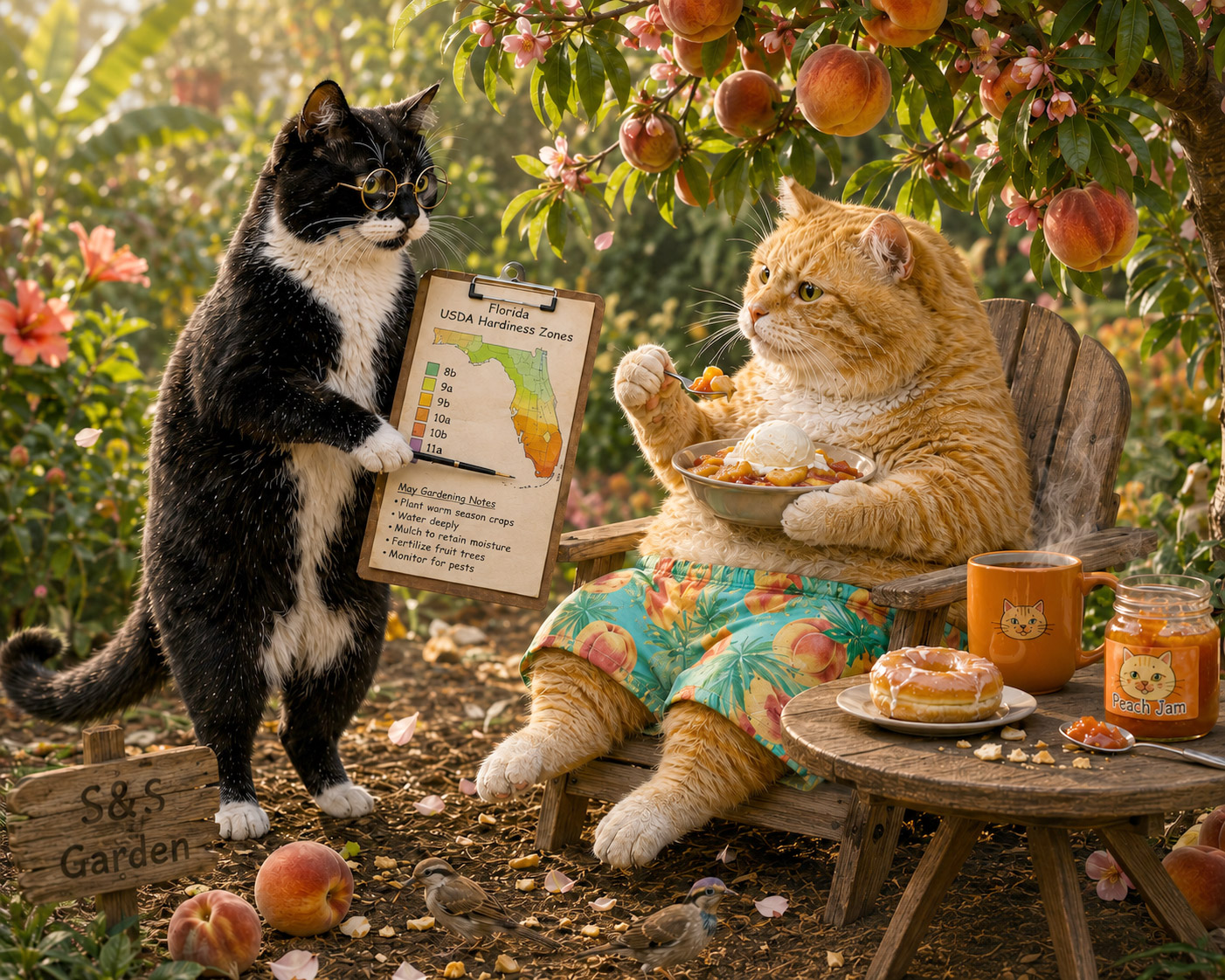
Sunshine: I love peach cobbler. Smokey, why are peaches on
the tree so early? Smokey: Low-chill peach varieties for Florida. They ripen
much sooner. Sunshine: I thought peaches were for Georgia. Smokey: Not if you plant low-chill peaches. And speaking
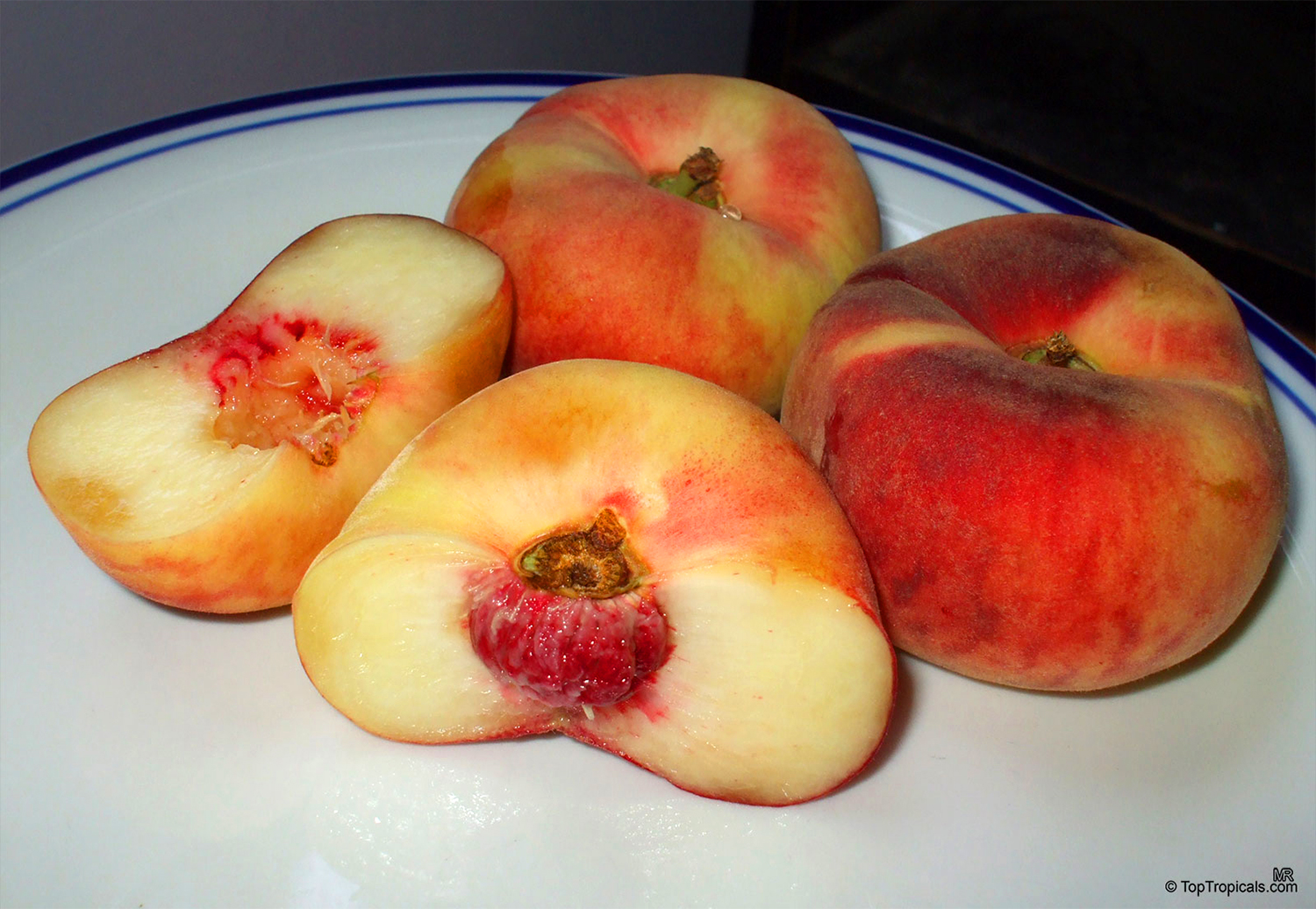
of peaches, do you know about donut peaches? Sunshine: Donut peaches? Finally, horticulture I can
understand.
Some fruits carry memories before you've even tasted them.
There's something about a peach still warm from the tree - the way it
gives a little when you pick it, the smell that hits you before you even
take a
bite. It makes you slow down. It makes summer feel like it actually meant to
show up.
Peach Plant Facts
Botanical name: Prunus persica, Amygdalus persica Also known as: Peach
USDA Zone: 5 - 10
Highligths
For Florida gardeners, that moment used to feel borrowed. Peaches were a
Georgia thing, a Carolina thing. You'd admire someone else's harvest and
quietly file it under not for us.
Low-chill peaches rewrote that story.
Here's the thing about regular peaches - they need cold. Not just a cool
night or two, but a real winter. We're talking 600 to 1,000 hours below 45F.
That's how they know to wake up in spring and actually fruit. South Florida
just doesn't deliver that. The trees will grow fine, look healthy even, and
then give you almost nothing come harvest time. Frustrating doesn't cover
it.
Low-chill varieties are different. They were bred specifically for
places like ours - warm winters, mild springs. Some only need 100 hours of
chill.
A hundred. That's a few cold fronts, not a season. And because they're
working with our climate instead of against it, they fruit reliably. Every
year.
They're not just a Florida trick either. Gardeners in coastal Texas,
southern Louisiana, southern California - anywhere in that Zone 8b to 10
range -
have been growing these successfully. If you've got warm winters and thought
peaches weren't for you, they probably just weren't the right peaches.
Flat peaches - sometimes called DONUT peaches - are
known
for their sweet white flesh, low acidity, and fun squashed shape.
Date: 1 May 2026
This changes how you feed your plants
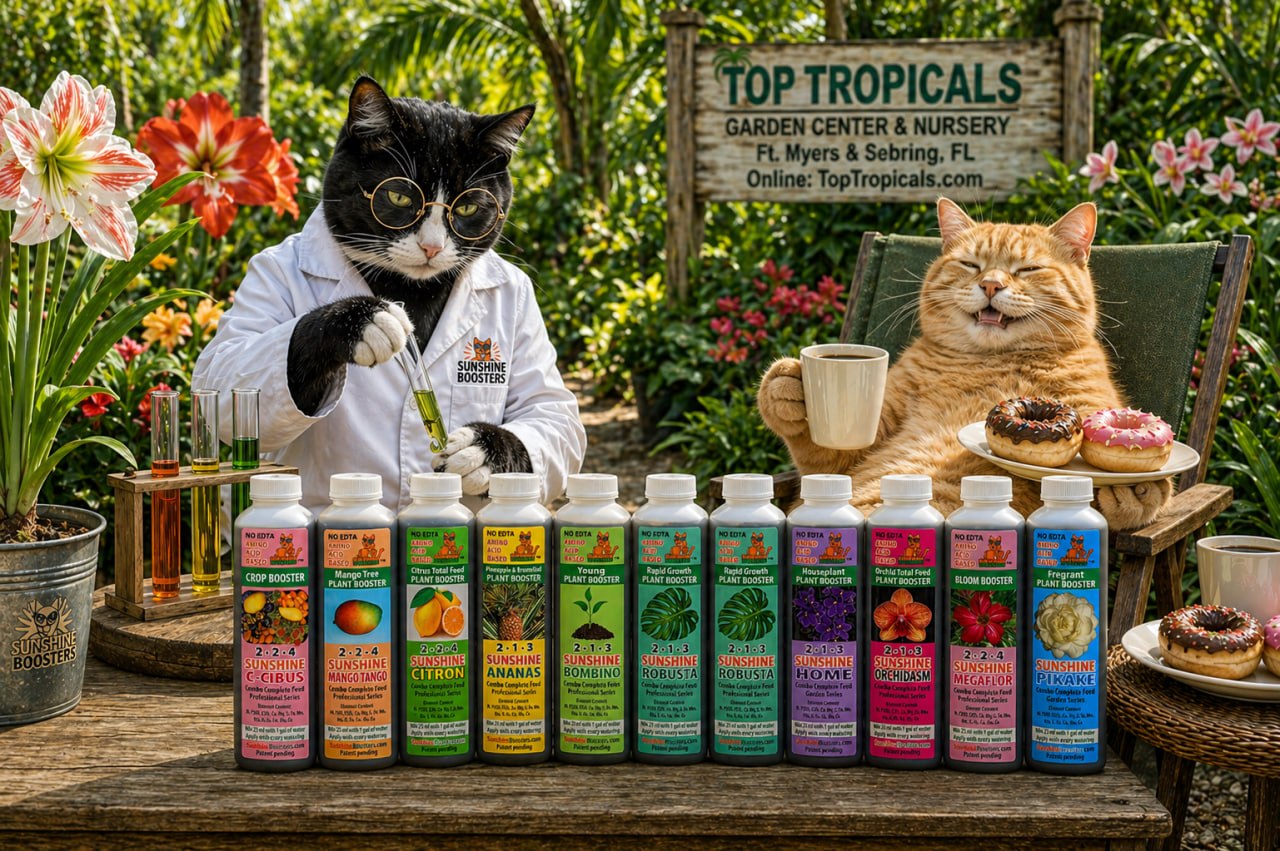
Smokey and Sunshine with Sunshine Boosters
This changes how you feed your plants
Stop messing with fertilizers - you’re probably feeding your plants wrong. Keep it simple. Let your plants do the work.
Most gardeners don’t have a plant problem - they have a fertilizer problem. If feeding your plants feels confusing, expensive, or inconsistent, there’s a reason. The way most fertilizers are designed doesn’t match how plants actually grow today. Here’s what’s really going on - and why a simpler system works better.
A simple way to feed your plants right
Feeding plants shouldn’t feel like a chemistry class. But somehow it always does. Too many products. Too many formulas. Too many schedules. And somehow - still not sure if you’re doing it right.
The truth is, growing healthy plants is simple. Good soil. Enough light. Proper care. And the right nutrients.
That last part is where most people get stuck.
Sunshine Boosters were made to fix exactly that. It’s a complete nutrition system that gives your plants what they actually need - without all the extra steps and guesswork.
What Sunshine Boosters are and how they work
So what is it, really? Sunshine Boosters is a new generation of plant nutrients based on amino acids. It includes the main nutrients plants need - nitrogen, phosphorus, and potassium - plus all the microelements, already balanced in one formula.
No extra bottles. No missing pieces.
It dissolves completely in water, so plants can take it in right away. No buildup in the soil, no leftovers sitting there doing nothing.
You just mix it with water and use it during regular watering. That’s it. It works through the roots, and even through the leaves if you spray it.
Instead of trying to manage a whole feeding system - you just feed and grow.
Less work, better plants.
Stay with us - this is just the start. We’ll break it down step by step so you really understand what your plants need and how to give it to them. More... Get your plants real food
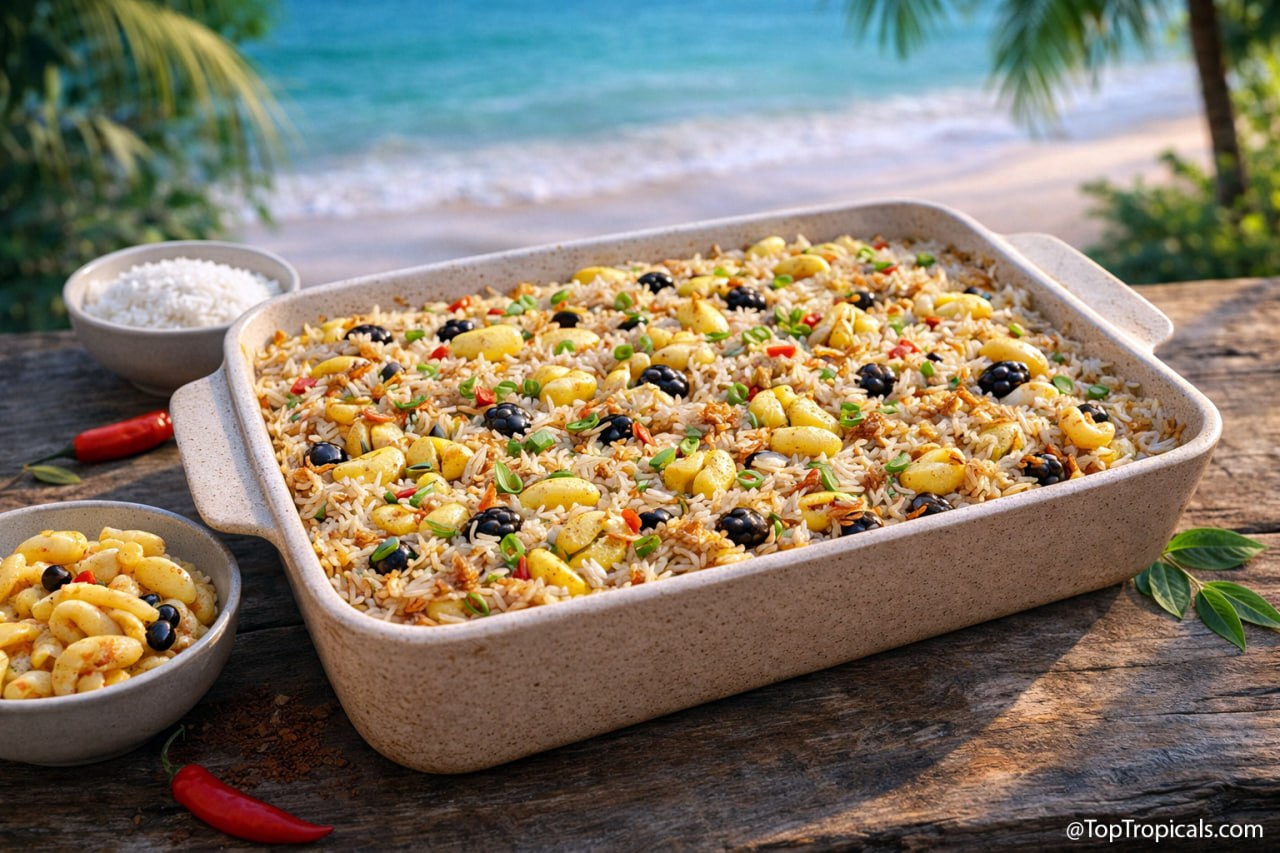
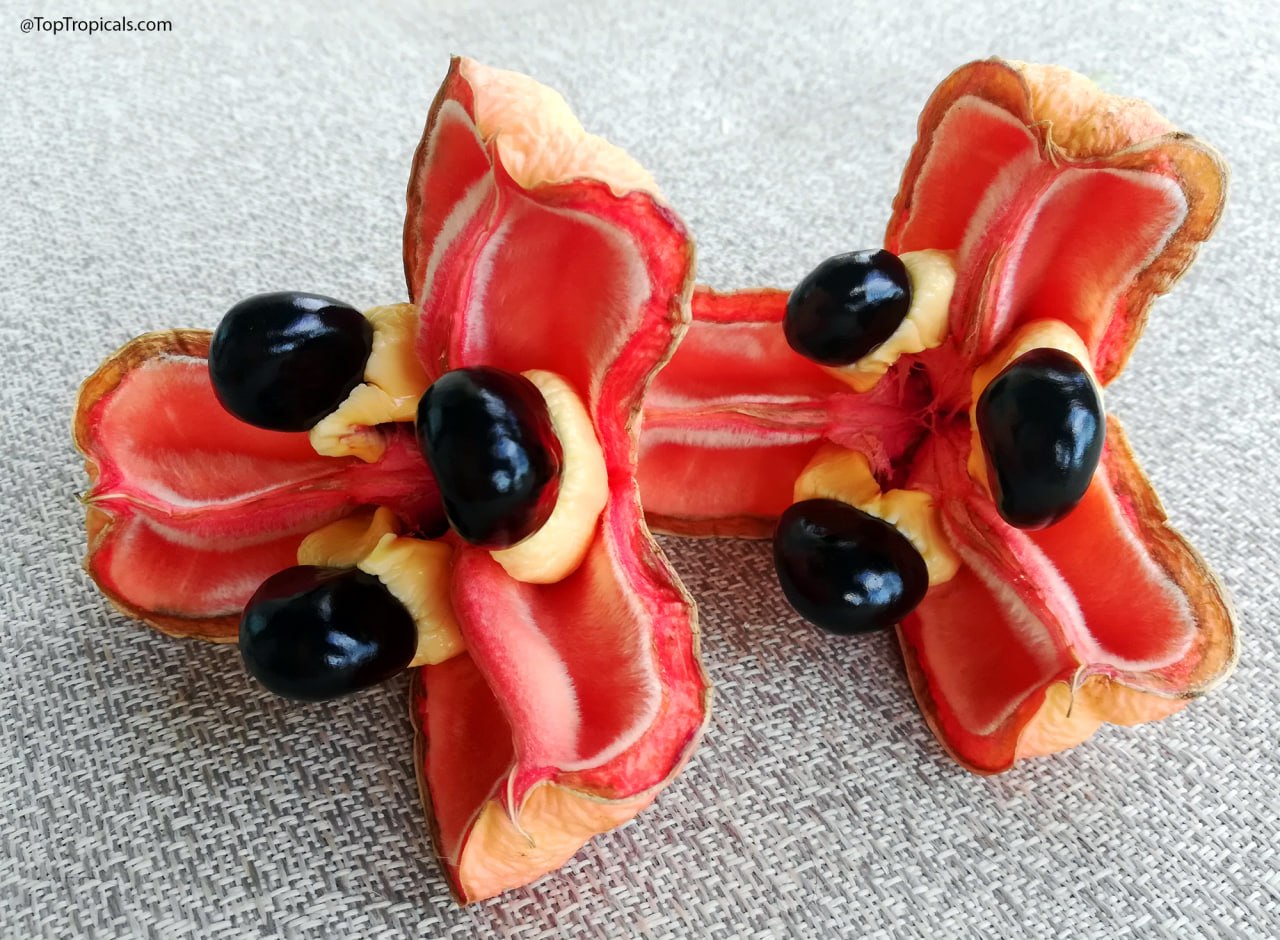
🔴Fold cooked ackee gently into warm, seasoned rice with a pinch of salt and a little oil or butter. 🔴Spread into a baking dish and bake until the top turns lightly crisp and golden. 🔴Scoop while warm - soft inside, slightly crisp on top, simple and satisfying.
🌿 About the plant:
When properly harvested and prepared, ackee has a mild, buttery texture often compared to scrambled eggs. It contains healthy fats and is a staple ingredient in Caribbean cooking.
🏡 In the garden:
Trees require consistent warmth and do not tolerate frost. Mature trees can produce generously in suitable climates with minimal intervention.
The Secret to a Sharper Mind Might Be Growing in Your Backyard
Harvesting tropical fruits
The Secret to a Sharper Mind Might Be Growing in Your Backyard
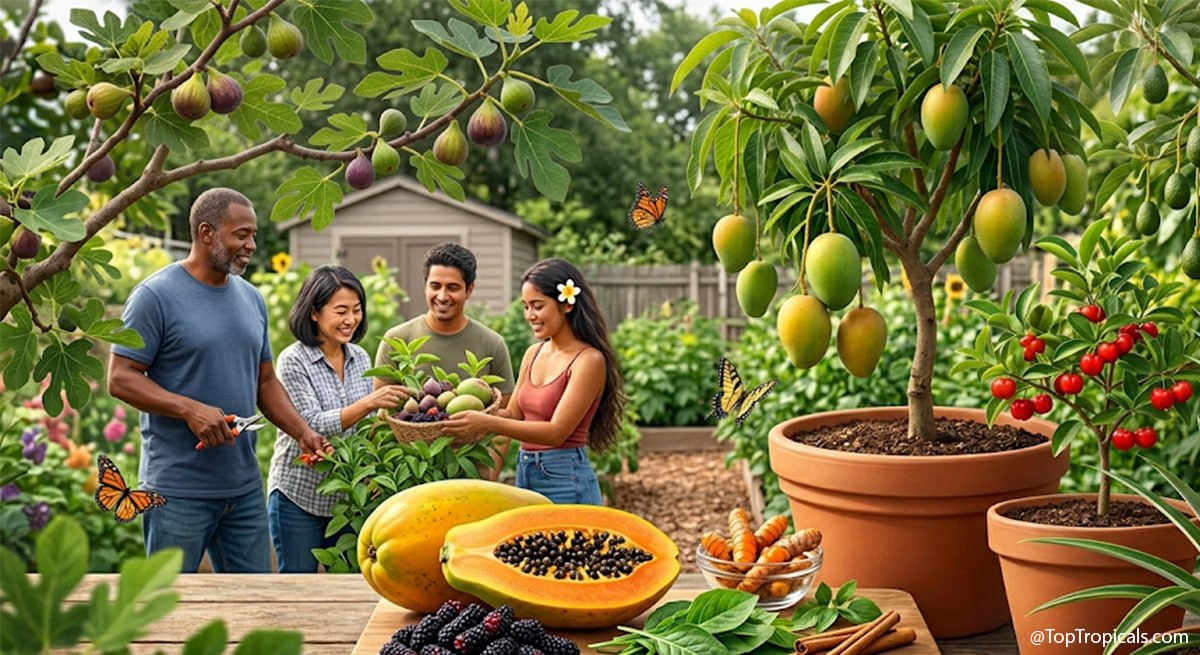
Your garden shed might hold a more powerful tool for brain health than your medicine cabinet. What if the best defense against cognitive decline isn’t found in a pill bottle - but right outside your door? While we often think of gardening as just a hobby, new research suggests that the combination of physical "zone-pushing" and harvesting your own nutrient-dense tropical fruit could be a literal life-saver for your brain.
🍒 What the Research Actually Says
A massive study recently published in the journal Neurology followed more than 92,000 people to see how diet impacts the mind. The findings were clear: the quality of the plant-based foods you eat plays a massive role in your risk of dementia. It isn't just about "eating your veggies" - it's about which ones you choose.
(The full study: Plant-Based Dietary Patterns and Risk of Alzheimer Disease and Related Dementias in the Multiethnic Cohort Study)
🍒 Why Growing Your Own Fruit Changes the Game
If you grow your own fruit, you quietly solve two problems at once. It turns a "diet plan" into a natural part of your day.
1. Effortless Nutrition
When a ripe mango, a handful of mulberries, or a fresh guava is hanging within arm's reach, you eat it. It replaces processed, sugary snacks without any "willpower" required. You are naturally moving toward the high-quality, whole-food diet the research supports.
Mango Plant Facts
Botanical name: Mangifera indica Also known as: Mango
USDA Zone: 9 - 11
Highligths
2. Functional Fitness
Gardening doesn't feel like a workout, but it is. Bending, pruning, carrying pots, and digging are all forms of functional movement. It’s steady, useful physical activity that supports your heart and brain while you’re focused on your plants.
3. The "Outdoor" Effect
Sunlight and fresh air are natural mood boosters. The mental focus required to manage tropical plants - especially when you’re protecting them from a surprise freeze - provides a level of mental engagement and stress relief that you just can't get from a treadmill.
🍒 What to plant if you are just starting
You don’t need a massive orchard to start investing in your brain health. One or two plants can shift your habits immediately.
Botanical name: Carica papaya Also known as: Papaya
USDA Zone: 9 - 11
Highligths
For Small Spaces:Dwarf Mango varieties and Cherries (Eugenias or Acerola), Pineapples thrive in containers and provide massive doses of antioxidants.
Pineapple Plant Facts
Botanical name: Ananas comosus Also known as: Pineapple, Pina
USDA Zone: 9 - 11
Highligths
For the "Zone Pusher":Figs and cold-hardy Avocados offer healthy fats and fiber that are essential for long-term health.
Fig Tree Plant Facts
Botanical name: Ficus carica Also known as: Fig Tree, Brevo
USDA Zone: 7 - 10
Highligths
Avocado Plant Facts
Botanical name: Persea americana, Persea gratissima Also known as: Avocado, Alligator Pear, Aguacate, Abacate
USDA Zone: 9 - 11
Highligths
🍒 Start Small, Start Now
The research makes one thing clear: improving your food quality matters, and you can see results no matter your age. Planting a fruit tree changes what you eat, how you move, and how often you step outside.
That’s more than just gardening - that’s a lifestyle shift your brain will thank you for.
🍒 FAQ
Does fruit really support brain health?
Yes. Diets rich in whole, high-quality plant foods are linked to a lower risk of dementia, especially when they replace processed snacks and added sugars.
Is gardening enough to count as exercise?
Absolutely. Regular gardening provides steady, functional movement that improves circulation and supports overall physical health.
Is it too late for me to start?
No. The study showed that even participants who improved their diet quality in their 60s and 70s saw a measurable reduction in dementia risk.
7 best exotic dwarf trees for maximum impact in small tropical landscapes 🏡
For a yard that feels like a tropical escape but doesn't have the space for a massive jungle, these seven selections from TopTropicals are game-changers, chosen for their compact size, high "curb appeal," and unique tropical flair.
1. Dwarf Pink Princess Silk Floss Tree (Ceiba hybrid)
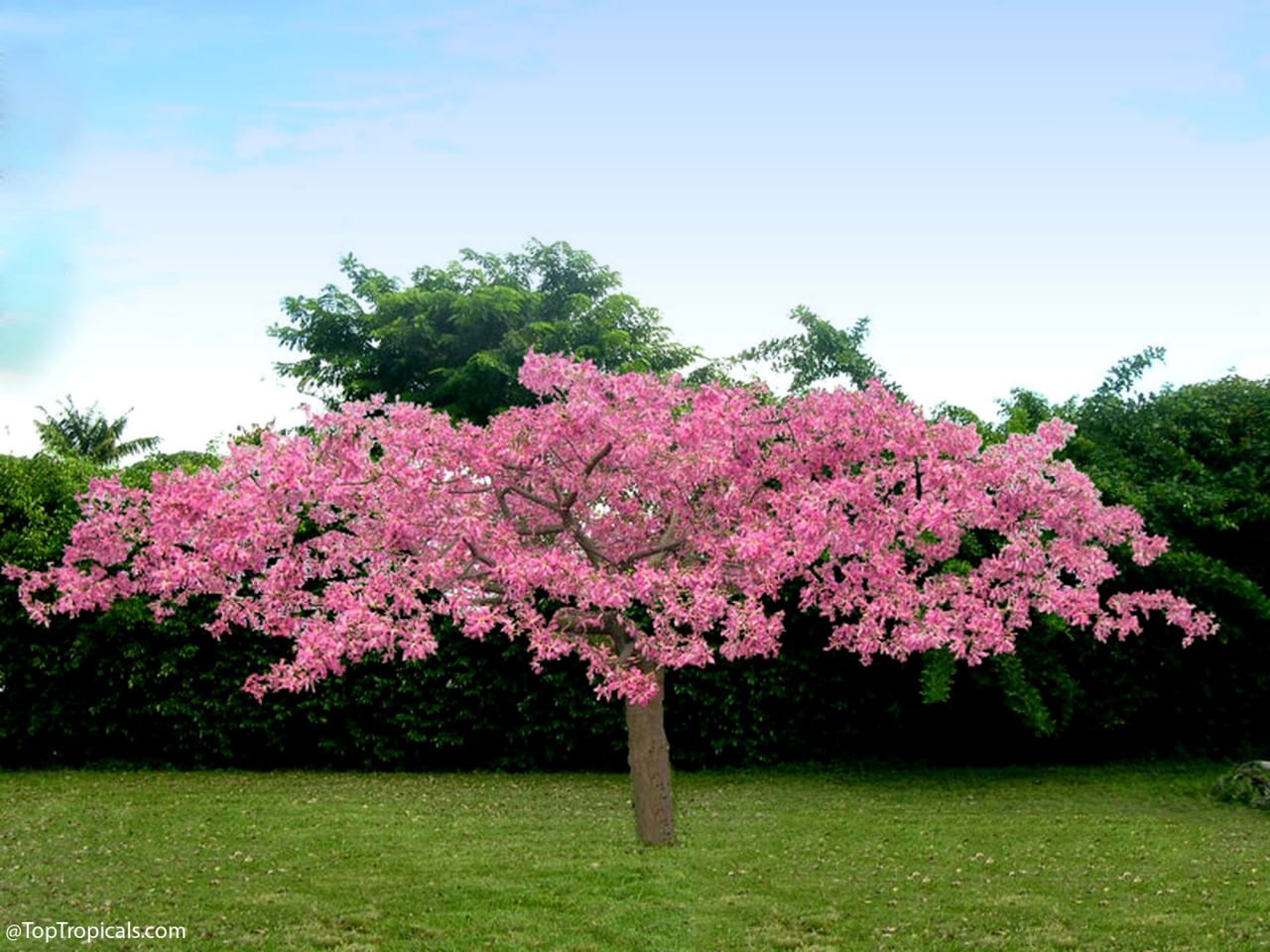
🌳 A spectacular grafted hybrid of the famous Silk Floss tree, but in a much smaller package: a unique, often "fat" or bottle-shaped trunk and large, showy pink flowers with white centers. 🏡 Unlike the standard Ceiba which can become a giant, the 'Pink Princess' is grafted to stay compact (usually under 10 - 12 feet), allowing you to enjoy those exotic, orchid-like blooms even in a tiny garden.
Ceiba Plant Facts
Botanical name: Ceiba sp. Also known as: Ceiba, Floss Silk Tree, Kapok Tree
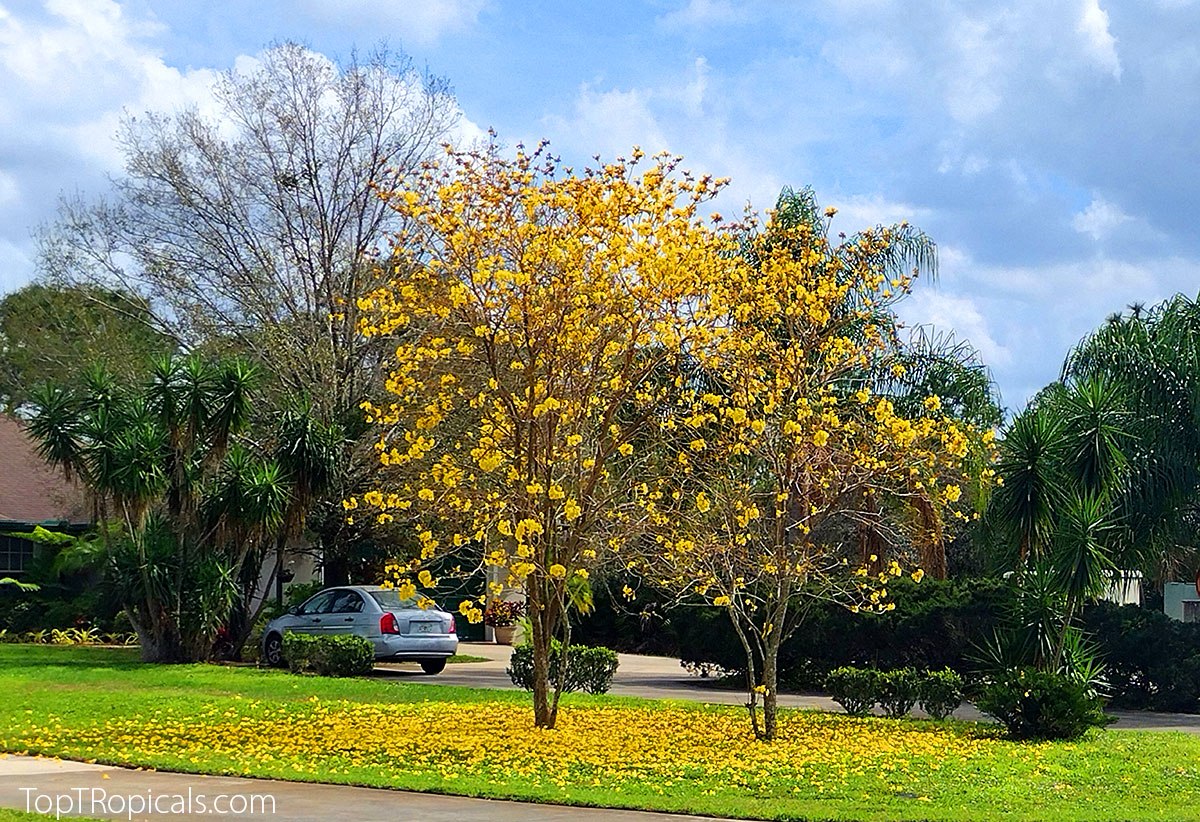
🌳 Known as the "Golden Trumpet Tree," this dwarf selection puts on one of the most brilliant displays in the plant kingdom. Before the leaves emerge in spring, the entire tree is covered in bright, trumpet-shaped yellow flowers. 🏡 This specific dwarf form stays much smaller and more manageable than the standard Tabebuias seen on city streets. Its silver-green foliage and rounded canopy make it an ideal "specimen" tree that acts as a focal point for your front yard.
Dwarf Golden Tabebuia Plant Facts
Botanical name: Handroanthus chrysotrichus, Tabebuia chrysotricha, Tabebuia chrysantha Also known as: Dwarf Golden Tabebuia
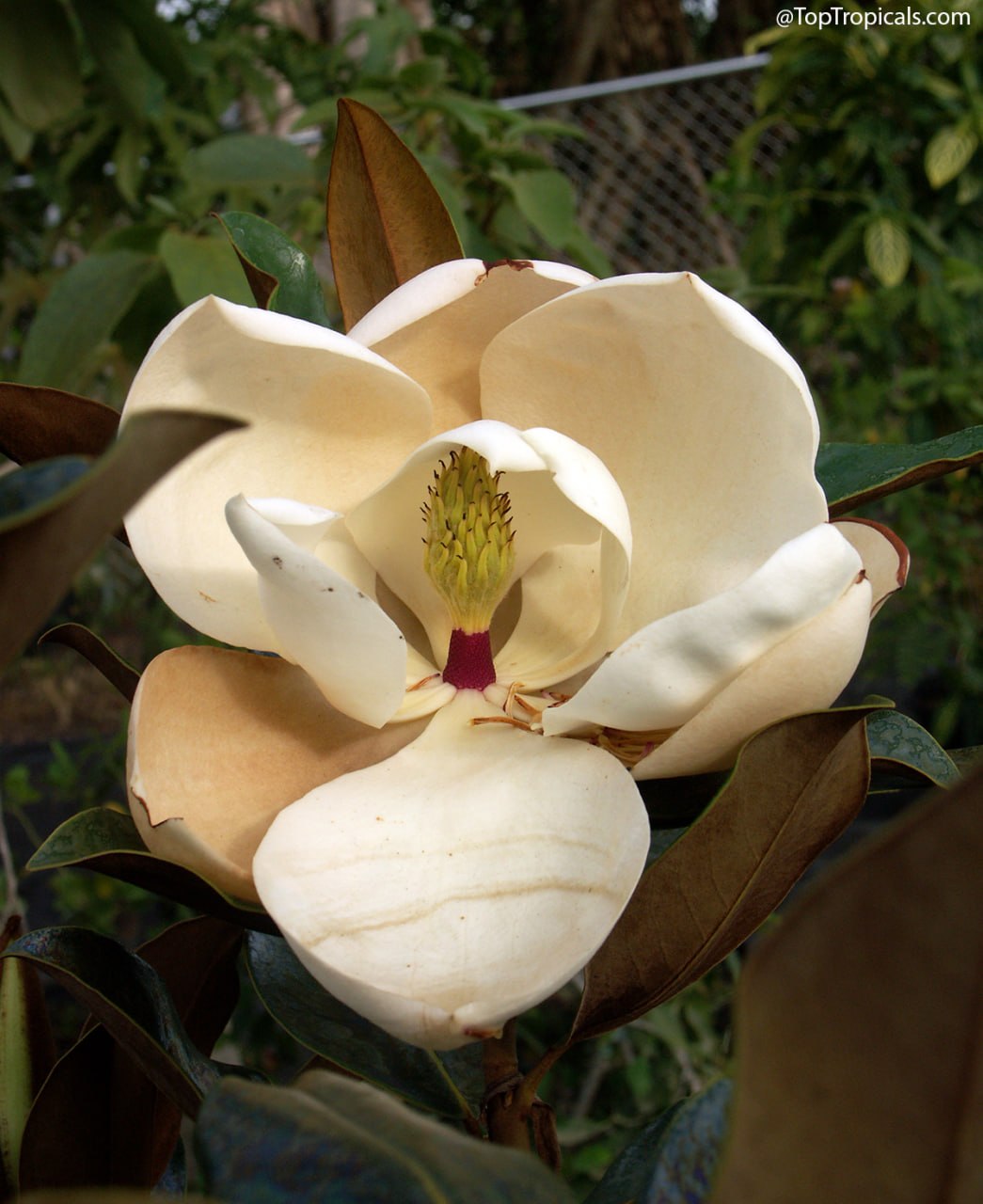
3. Little Gem Southern Magnolia (Magnolia grandiflora)
🌳 All the elegance of a classic Southern Magnolia but in a miniaturized version. It has the iconic waxy white, lemon-scented flowers and glossy leaves with fuzzy bronze undersides. 🏡 'Little Gem' is narrow and columnar, typically reaching only 15-20 feet (half the size of the standard species). It starts blooming at a very young age, so you don't have to wait years for those famous fragrant flowers.
Southern Magnolia Plant Facts
Botanical name: Magnolia grandiflora Also known as: Southern Magnolia, Bull Bay
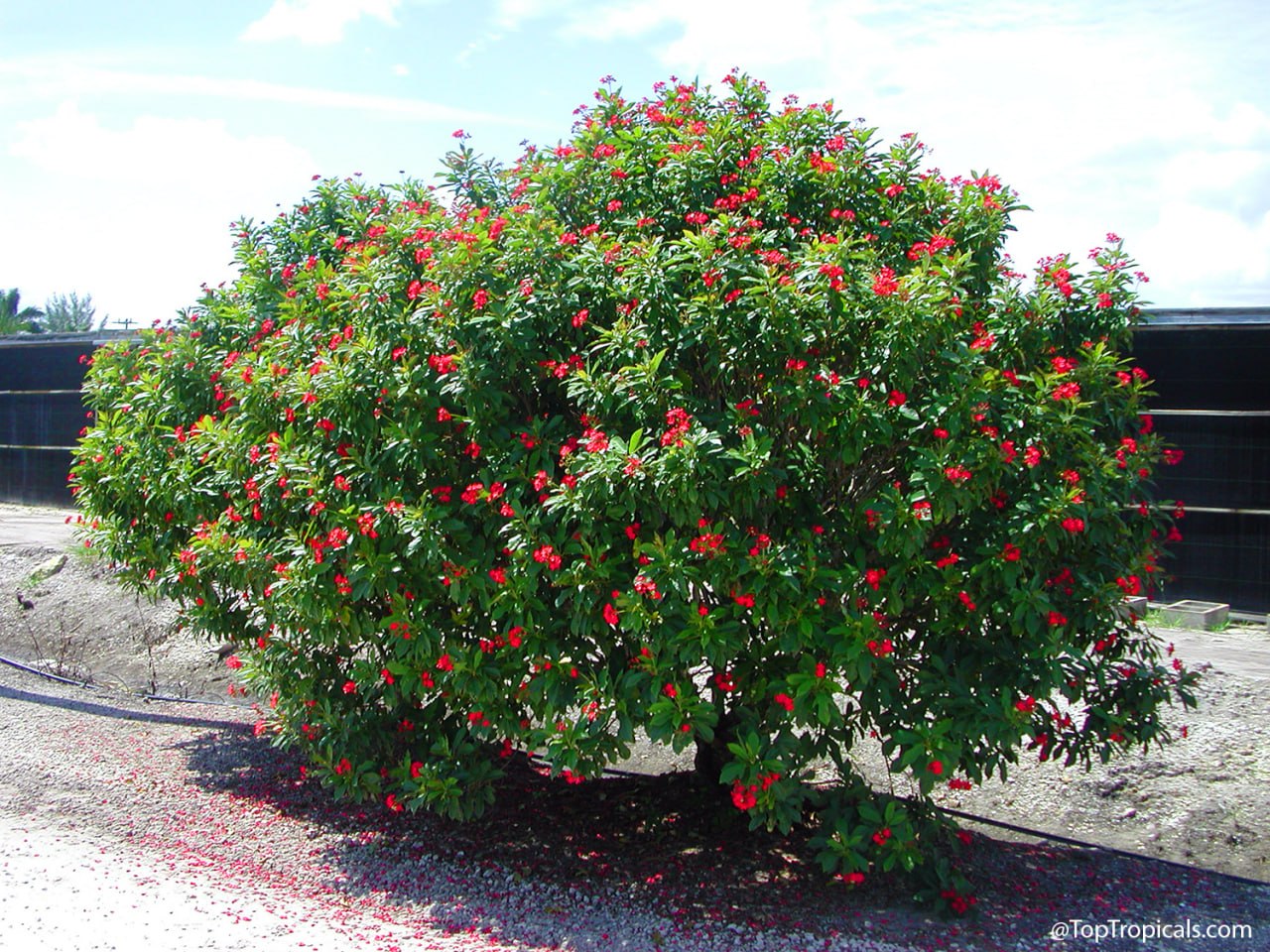
🌳 This "ever-blooming" small tree is a butterfly magnet. It features clusters of bright, cherry-red star flowers against glossy, fiddle-shaped leaves. 🏡 The Compacta variety is specifically bred to stay bushy and small. It blooms almost 365 days a year in warm climates, providing a constant splash of red that draws in hummingbirds and pollinators.
Peregrina Plant Facts
Botanical name: Jatropha integerrima, Jatropha pandurata Also known as: Peregrina, Spicy Jatropha, Coral Plant, Physic Nut
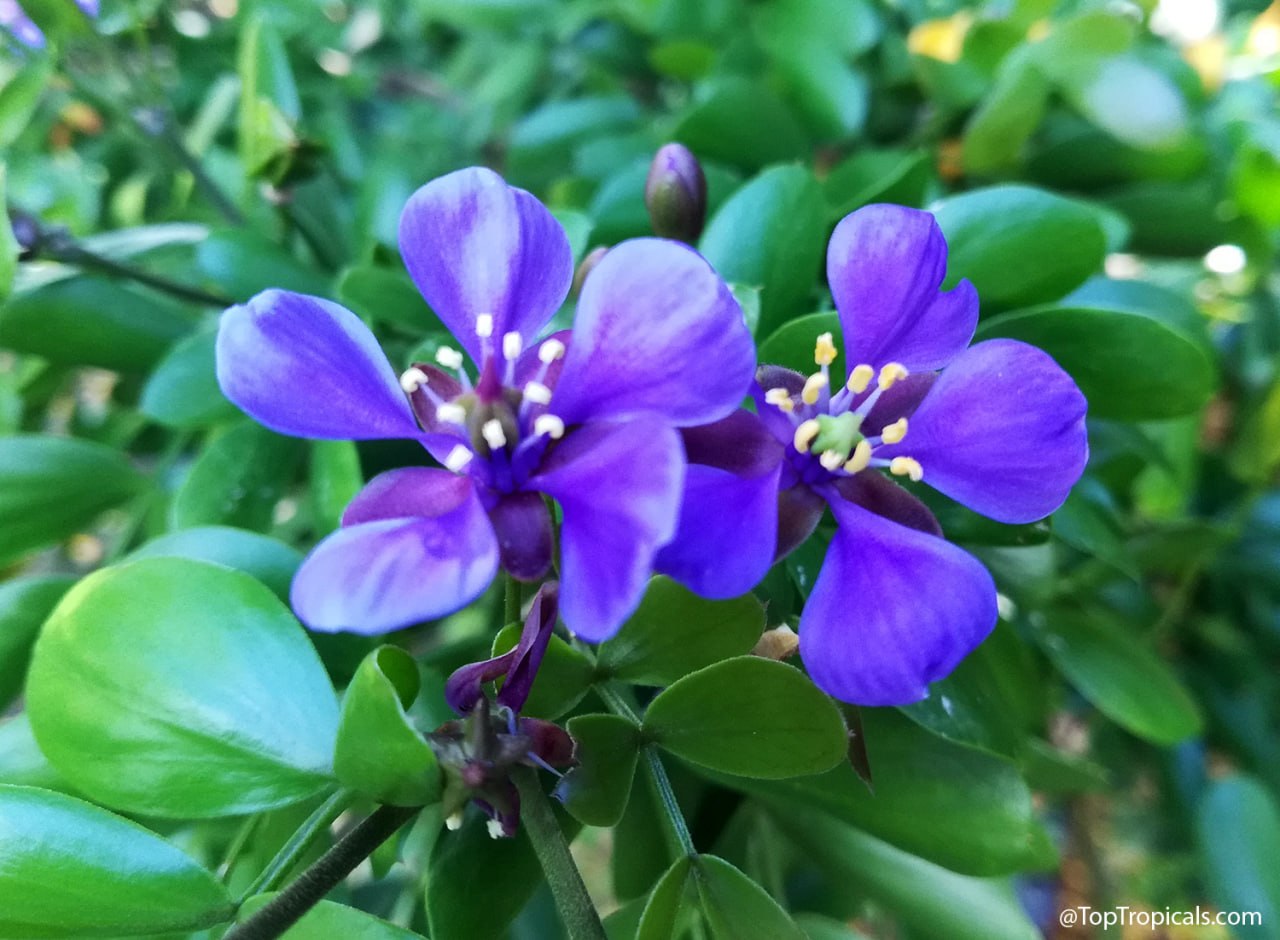
🌳 Known as the "Wood of Life," this is one of the slowest-growing trees in the world. It has fine-textured, dark green foliage and produce stunning, small blue flowers that fade to white, followed by bright orange seed pods. 🏡 Because it grows so slowly, it will never outgrow its space. It is extremely hardy, salt-tolerant, and hurricane-resistant, making it a "plant it and forget it" heirloom tree for coastal or small urban lots.
Lignum Vitae Plant Facts
Botanical name: Guaiacum sanctum Also known as: Lignum Vitae, Tree of Life, Gaiac tree
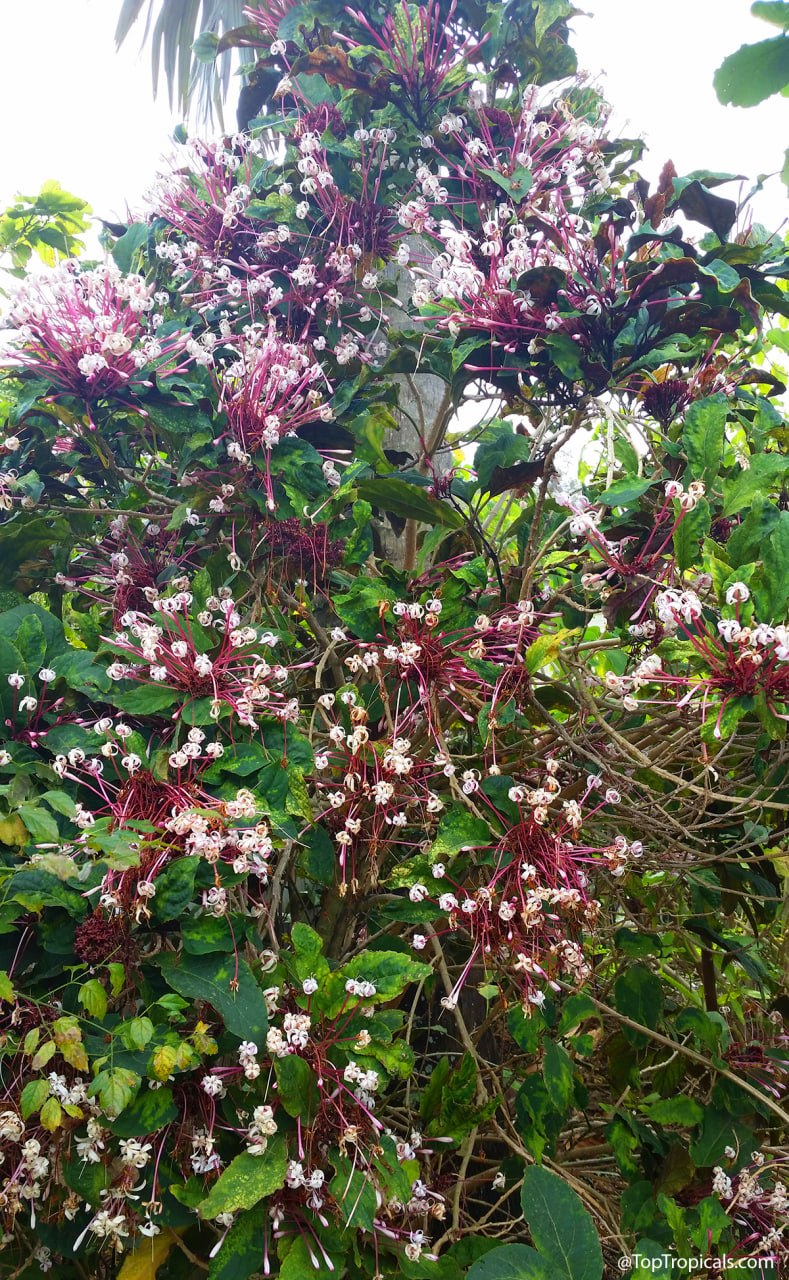
🌳 A visual firework display. The leaves are deep green on top and rich purple underneath. In late winter, it produces massive, 8-inch wide clusters of tubular pink-and-white flowers that look like an exploding star. 🏡 It is easily pruned to a single-trunk tree form. The purple foliage provides "curb appeal" year-round, while the winter blooms provide a much-needed pop of color when other plants are dormant.
Winter Starburst Plant Facts
Botanical name: Clerodendrum quadriloculare Also known as: Winter Starburst, Fireworks, Clerodendron
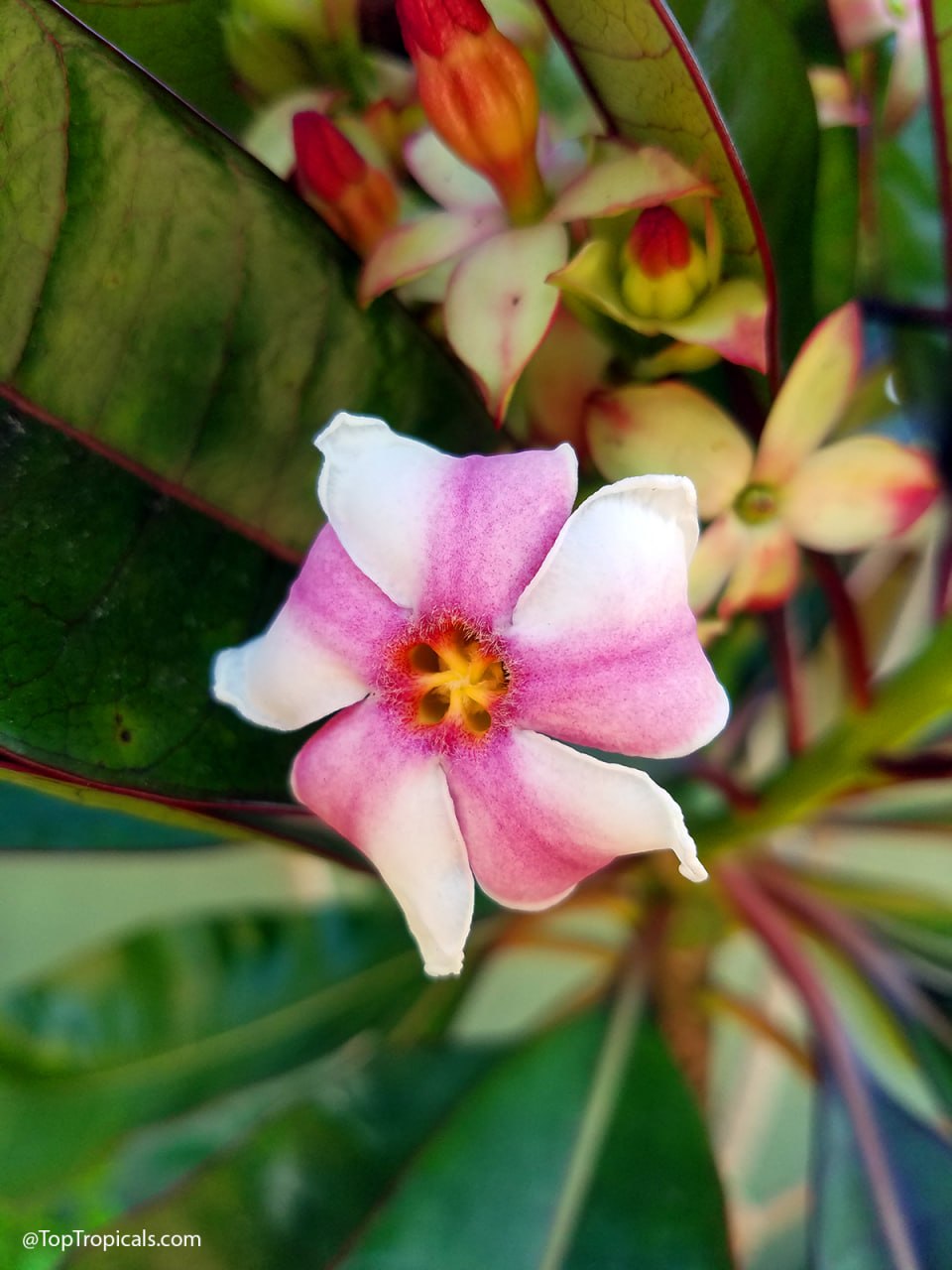
🌳 This is a rare, small evergreen tree with glossy, dark green leaves and clusters of highly fragrant, star-shaped white flowers with a red "eye." 🏡 It has an naturally architectural, upright habit. The fragrance is incredible - sweet and heavy - making it a perfect "sensory" tree to plant near a patio where you can enjoy the scent on summer evenings.
👉 more