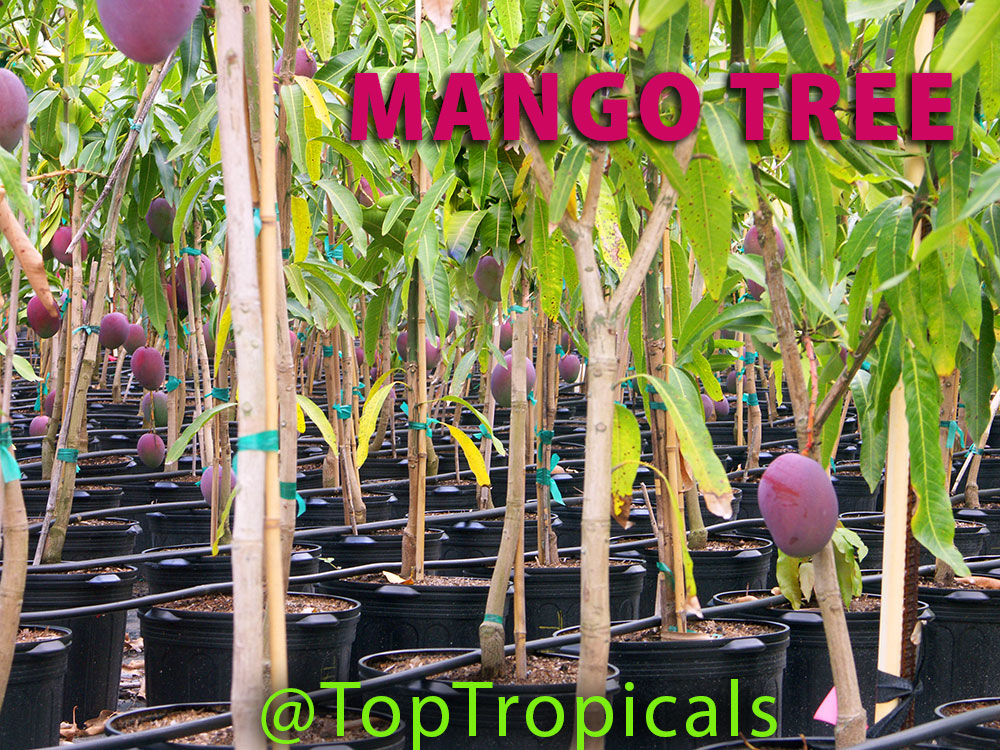
Q: I bought a Mango tree from you last month and planted it soon
after it arrived. When is the best time to fertilize it? (I am in Florida)
A: We always recommend to wait on fertilizing until the plant is
well established. If you planted your tree a month ago and it is doing well,
showing new growth, then this is the time to start giving it some food.
For a mango tree, we recommend using 2 fertilizers - water-soluble and
granulated:
Fruit Festival Plant Food
Mango-Food Remember micro-elements that are essential for healthy and vigorous
growth:
SUNSHINESuperFood - plant booster
In Florida, this is the best time right now for fertilizing - while we
still have a few months of nice warm weather - active growth period. This will
help you Mango tree to establish well before winter rest.
Date: 20 Jul 2018
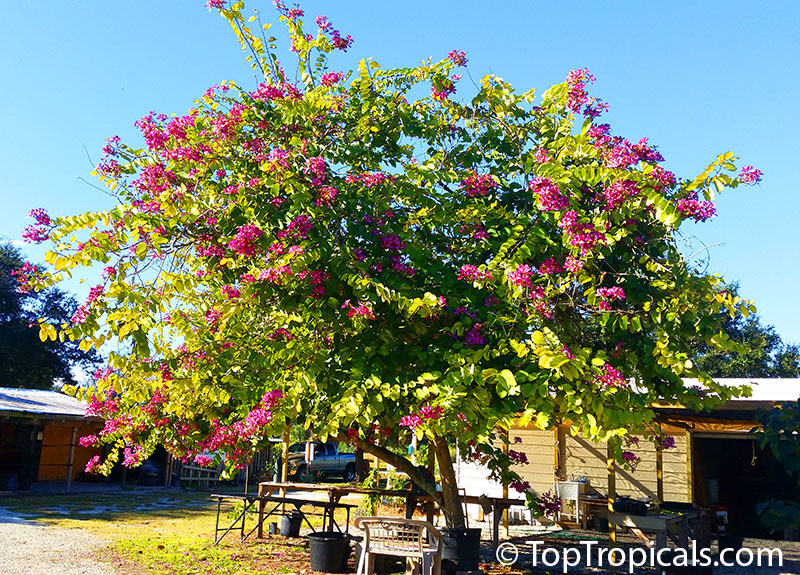
How to get shade quickly... and stay away from oaks
Q: I just
moved from Tennessee into a new house in Florida and there are no trees on
the property, the yard is brutal hot. What can I plant so I have some shade
real quick? I like Florida shady oaks, how long will they take to grow?
A: First
of all, do not rush into oak solution. Oaks are beautiful shade trees, however
they have at least 2 problems:
a) Oaks are slow growers and unless you are willing to wait some 20
years... you won't get that desirable shade that quickly.
b) We have hurricanes in Florida... sometimes. A hurricane can damage
any tree, however with oaks it may be the worse case scenario - the branches
of those giant trees are huge, hard and heavy and in unfortunate situation
when you need to remove or trim a broken tree, it may cost you... a few thousand
dollars.
These are solutions that are more economical and practical:
2) Do it right. Even if you are planting a smaller tree, 1-3 gal
size, it may become a nice shade tree within 2-3 years and start providing
your driveway with desirable shade. The keys for fast growth are -
a) Good soil. Dig as big hole as possible and fill it with good
rich soil containing compost. See planting instructions PDF.
b) Water. Do not rely on sprinklers and rains. Water your tree
daily for the first week, then at least twice a week for another month. After
that, irrigation system will be enough.
c) Fertilizer. Put a few handfuls of fertilizer in a planting hole. Then fertilize once a month during warm
season. Apply micro elements for even better results and faster growth.
3) Ask experts.Contact our office for advice. We will suggest the most
suitable shade tree for your yard based on features of your property: location,
soil, exposure, etc.
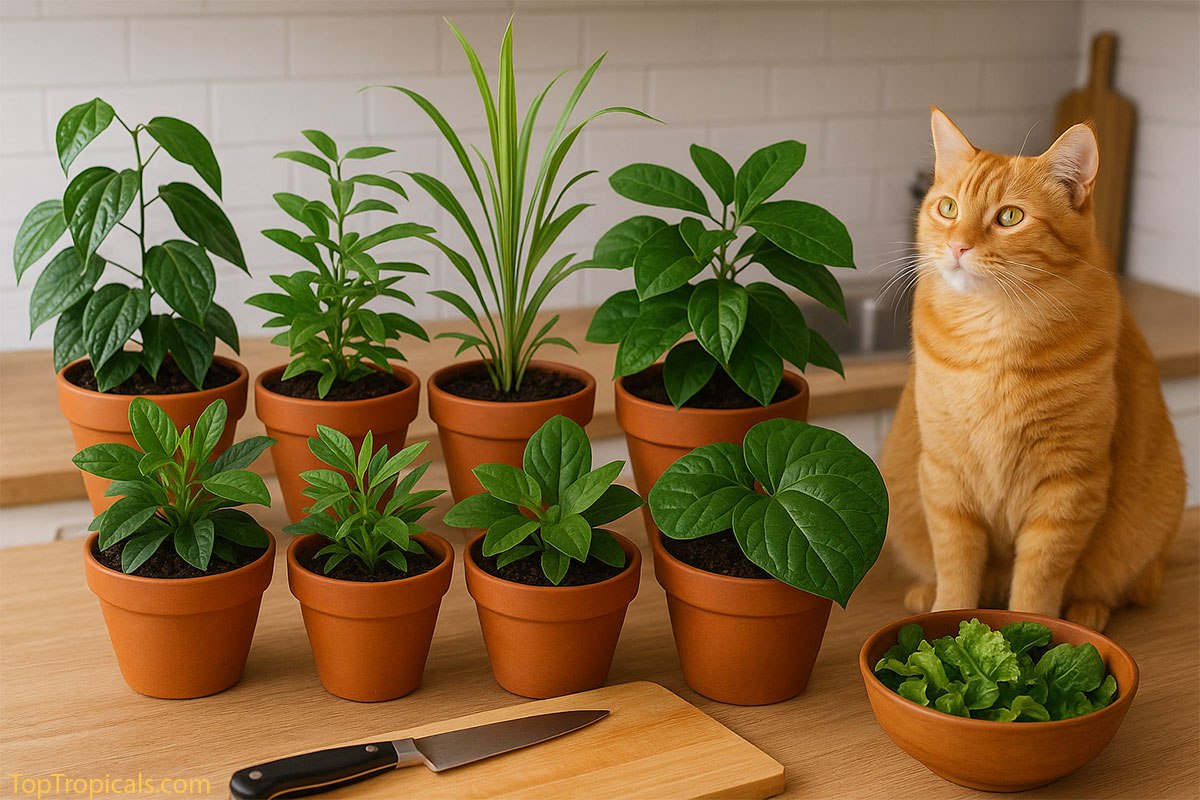
9 tropical vegetables to grow indoors, or how to have garden-fresh produce all year
9 tropical vegetables to grow indoors
🌱 9 tropical vegetables to grow indoors, or how to have garden-fresh produce all year
Cold weather does not have to mean the end of homegrown food. According to Southern Living, vegetables like lettuce, carrots, and radishes can be grown indoors during winter. The downside is that most of these are annuals - you harvest once, then start over.
Tropical vegetables work differently. Many are perennial, long-living plants that grow well in containers and keep producing for years. Grow them indoors year-round, move them outside in summer for extra sun and growth, then bring them back indoors before cold weather. With enough light and regular care, these plants can provide fresh harvests in every season.
✅ Tips for growing tropical vegetables indoors
📍Place plants near a bright window or supplement with grow lights for steady growth 📍Use containers with good drainage and quality potting mix 📍Keep plants away from cold drafts and heating vents 📍Rotate pots and prune regularly to encourage fresh, tender growth 📍Feed regularly with natural Sunshine Boosters - they are formulated for edibles
✅ Tropical vegetables to grow indoors
🌿 Gynura procubens - Longevity Spinach, Cholesterol spinach - a fast-growing leafy green often called a superfood. The tender leaves are used fresh or lightly cooked and can be harvested repeatedly. This plant stays compact, handles containers easily, and regrows quickly after cutting.
🌿 Sauropus androgynus - Katuk, Tropical Asparagus. One of Southeast Asia’s most popular leafy vegetables. Katuk produces edible shoots and leaves that are cooked in soups and stews. It grows well indoors and rewards regular harvesting with constant new growth.
🌿 Cymbopogon citratus - Lemon grass: a tough, productive plant that adapts well to container growing. The stalks and leaves are used for teas, soups, and flavoring. Indoors, it grows more slowly but stays productive, especially when moved outdoors in summer.
🌿 Lippia dulcis - Aztec Sweet Herb, Sweetleaf: a low-growing herb with naturally sweet leaves. The foliage can be eaten fresh or used as a sugar substitute in teas and desserts. It stays compact, tolerates pruning, and performs well in pots indoors.
🌿Piper sarmentosum - Vietnamese Pepper, Lalot: grown for its aromatic, edible leaves rather than peppercorns. The leaves are eaten fresh, cooked, or used as food wraps. This plant stays manageable indoors with light pruning.
🌿Piper nigrum - Black Pepper: the true black pepper vine. Grows well indoors as a container vine with support. It prefers warm temperatures, steady moisture, and bright filtered light.
🌿 Piper auritum - Root Beer Plant, False Kava-Kava: close relative of Piper methysticum (Kava-Kava) known for its large, fragrant leaves with a spicy, root beer-like aroma. The leaves are used for wrapping foods and flavoring dishes. Best grown indoors with room for its bold foliage.
🌿 Piper betle - Betel leaf: a traditional edible and medicinal leaf used widely in Asia. The glossy leaves are harvested continuously and used fresh or as wraps. This vine grows well indoors with warmth, humidity, and a small trellis.
🌿Piper longum - Indian Long Pepper, Pippali, Bengal Pepper: A tropical pepper relative grown for its elongated spice fruits and edible leaves. Slower to fruit indoors but easy to maintain as a leafy spice plant in containers with bright light and regular feeding.
Tropical vegetables make indoor gardening more rewarding because they do not stop after one harvest. With containers, light, and basic care, these plants can become long-term food producers that move seamlessly between indoors and outdoors - keeping fresh flavors within reach all year.
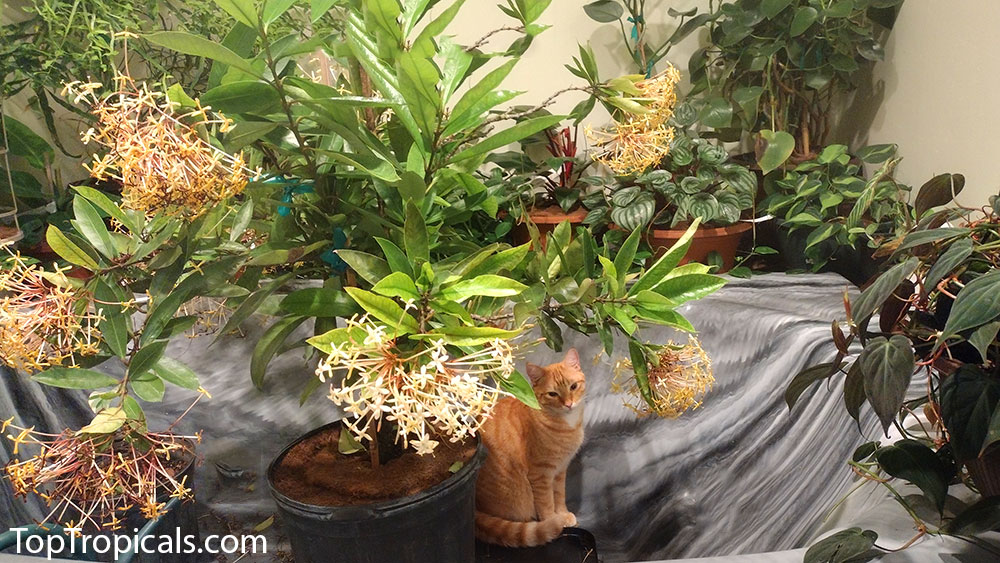
Q: When is the best time to repot tropical
plants?
A: Repotting tropical plants is vital for their
overall health and growth. The best time to repot them is during the Spring
through early Summer, when they start active growth.
Start by selecting a well-draining soil mix that consists of equal parts
potting soil, peat moss, and perlite. Gather the necessary supplies,
including a slightly larger pot, the soil mix, and a good fertilizer
Carefully remove the plant from its current pot, trim any damaged
branches, and place it in the new pot with fresh soil mix. Be sure to position the
plant with the growth point slightly above the soil level. Water the plant
thoroughly but avoid overwatering. After repotting, find an appropriate
location with suitable lighting conditions for your plant. Monitor the moisture
levels and water when the top inch of the soil feels dry.
Additionally, apply the appropriate Sunshine Boosters fertilizer
according to the instructions on the packaging. Use Sunshine Boosters fertilizers for specific plant needs (Robusta for foliage, Megaflor for flowering, Ananas for pineapples, etc.). It is safe to apply Sunshine Boosters all
year around. Keep a close eye on the plant for any signs of stress or issues
and adjust your care routine as needed. Help the plant to cope with stress
by spraying with solution of Sunshine Epi.
Enjoy the beauty of your thriving indoor tropical
garden!
NEW VIDEO Interview: Sunshine Boosters Fertilizer works Magic for Plants
In this video our customer Kareem is sharing his experience with using Sunshine Boosters fertilizers.
How to grow bigger plants faster?
What fertilizer is organic and safe for edibles, pets and insects?
How to make your fruit and veggies juicier, sweeter and more flavorful?
What is the most efficient and economical fertilizer?
How much fertilizer to use, for how long, and when to start?
Find out now!
Stay updated with TopTropicals Videos by subscribing to our channel at
YouTube.com/TopTropicals
and get our latest video news of what is fruiting and blooming!