Garden Blog - Top Tropicals

Date: 16 Jun 2023

10 tips how to care of tropical garden
during hot Summer
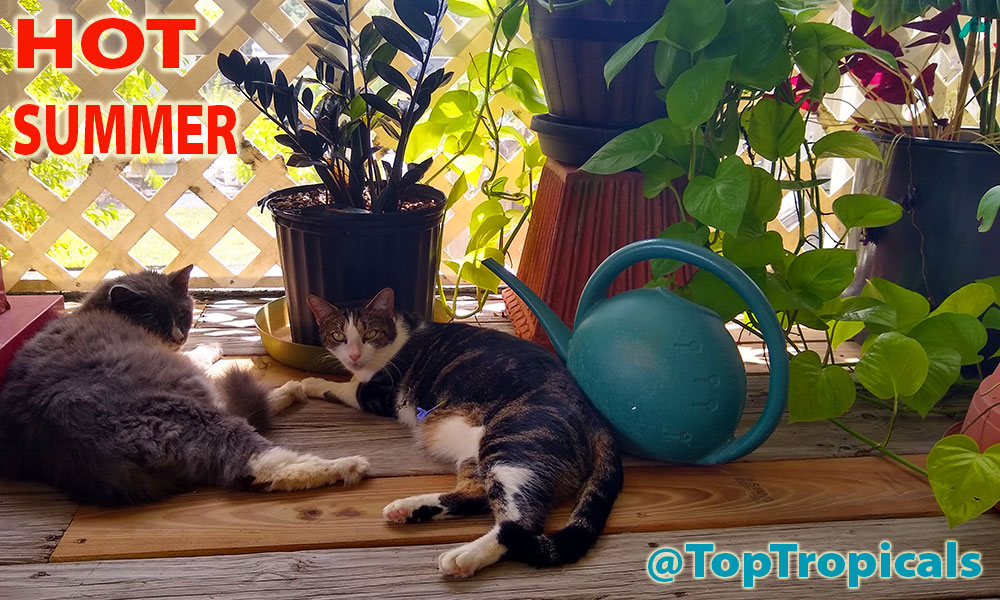
Cats  in  shade  of  tropical  plants

Q: Do you have any special recommendations how to take care of plants during hot season, to reduce heat strees?

A: Tropical plants prefer temperatures of 70-90F, except for heat-adapted desert plants. High temperatures above 90F can cause slowed metabolism and signs of stress like wilting, yellowing, and leaf drop. Hot and humid conditions attract pests and fungal diseases. To keep your plants stress-free and healthy, during Summer:

1. Monitor temperature and signs of stress.
2. Provide shade to regulate heat exposure: use shade cloth or simply a sheet of fabric as needed to protect lush foliage from burns.
3. Choose heat-tolerant plant varieties.
4. Plant in groups and levels, with trees protecting smaller shade loving plants (see companion planting).
5. Water deeply in the morning or evening to prevent evaporation.
6. Mulch to conserve moisture and regulate soil temperature.
7. Air: ensure good air circulation.
8. Trim damaged foliage and crowded branches.
9. Fertilize: use appropriate fertilization to improve plant heat tolerance. Remember, plants need lots of food during active growth period.
10. Remove weeds, pests, and diseases promptly.
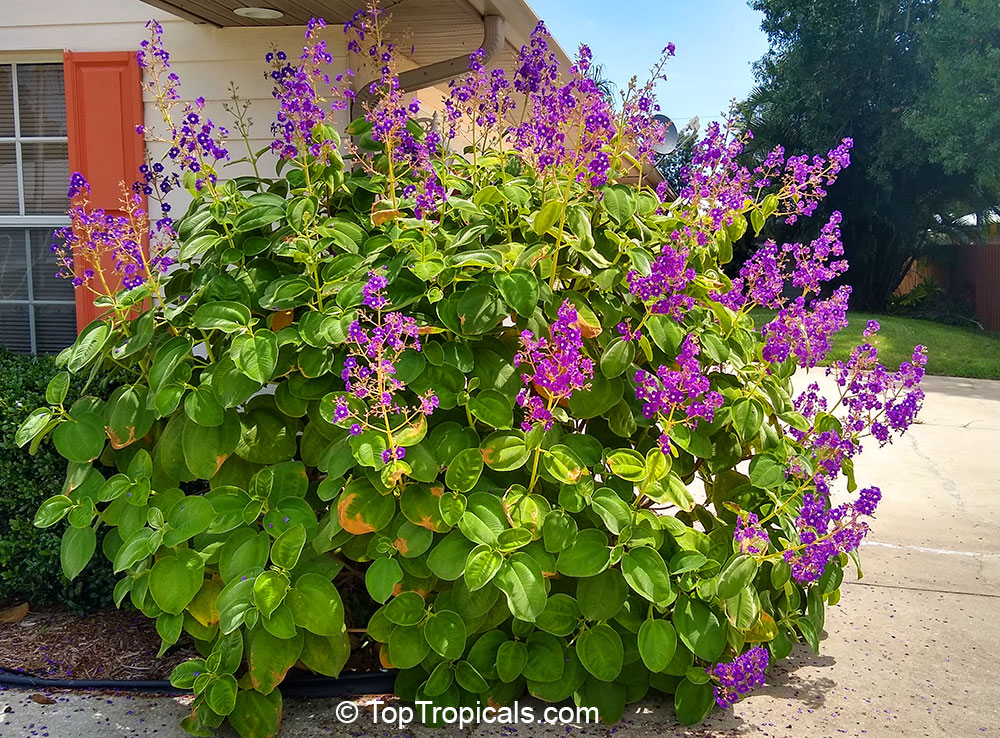
Tibouchina  multiflora  (grandifolia)  -  Glory  bush,  Quaresmeira

In the photo: Tibouchina multiflora (grandifolia) - Glory bush, Quaresmeira, one of the most impressive flowering plants for tropical gardens, with impressive, large velvet leaves and beautiful purple flowers. It blooms in both sun or shade!
Date: 2 Jun 2022

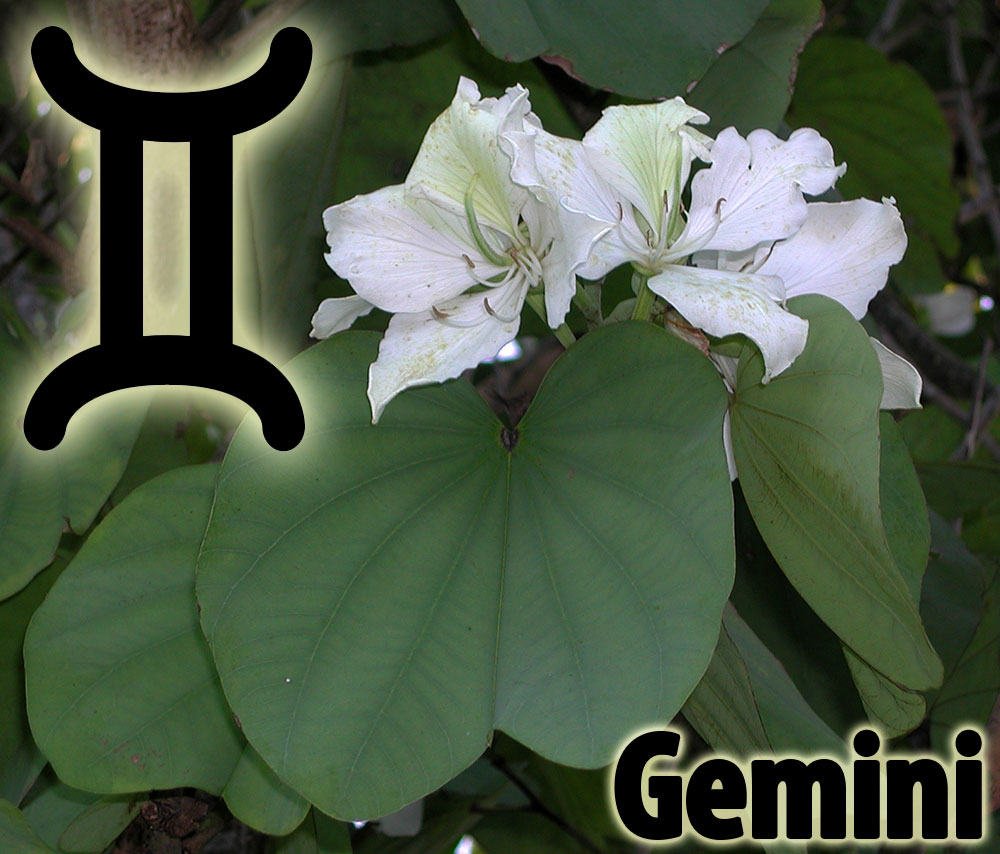
Plant Horoscope - Gemini

What is your lucky Zodiac plant?

Plant  Horoscope  -  Gemini

By Alex Butova, the Witch of Herbs and Cats

... Gemini are very fond of plants, especially flowers. They are able to devote their lives to favorite plants, selecting new varieties, planting gardens, parks and arboretums. In addition, the planet-ruler Mercury gives them with business ability - Gemini are excellent flower merchants of any level: from flower growers who sell their plants to everyone, to wholesalers who supply their delicate fragrant goods around the world. In their house, Gemini do not keep too many plants, they have enough of those that grow outside in their nursery and garden. However, among those who nevertheless became piece of the family (exactly this way Gemini perceive their house plants), preference is given to graceful forms, pubescent and curly, like Farfugium, Monstrous epyphyllum, often carved leaves (Monstera) and plants with aroma. All these properties not only improve the physical well-being of Gemini, but also helps save the spiritual and mental balance of their contradictory but all while tender and romantic nature. Gemini don't care about common spices, they love unusual plants and especially those with a sweet scent. Their favorite aroma is rose and similar, like fragrances of Clerodendrums, Jasmines, Gardenias, Plumeria, and Brunfelsia. At critical moments sweet scents awaken them into the life!..

Date: 6 Oct 2021

Top Tropicals Top House Plants

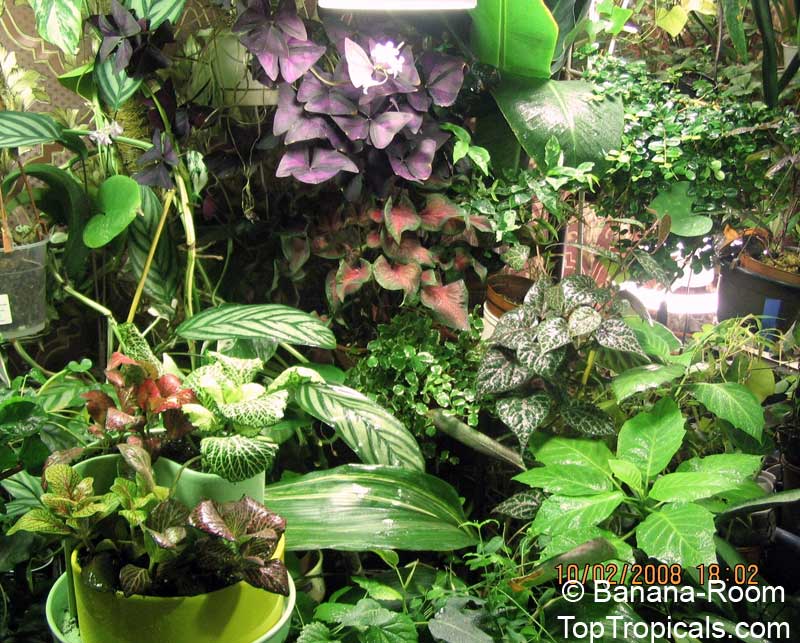
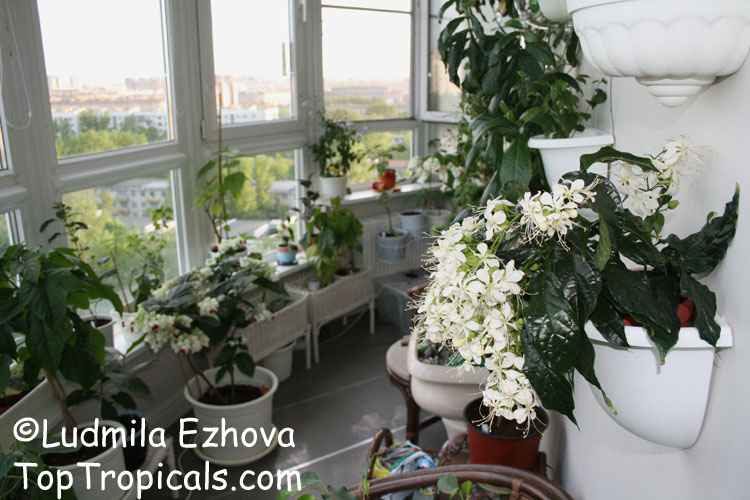
Photo above: Clerodendrum indoor garden of Ludmila Ezhova, St Petersburg, Russia.

Enjoy the Tropics Year round!
Bring them inside...

Q: I just discovered your amazing website and spent hours browsing your beautiful tropical plants! I wish I could have them all! But it's getting cold here (I live in Chicago area), too late? Can you recommend something of a small size, colorful, that I can easily overwinter indoors? Thanks for bringing this beauty into our lives!

A: Don't get discouraged even in colder climates. Yes, you can grow tropical plants indoors! Remember that all traditional houseplants are in fact tropical plants that grow in tropics in a wild habitat. Humans didn't invent them as indoor plants, they originally collected them from the rain forests and jungles! Most of tropical plants, including trees and fruit trees, can be grown in containers and even indoors. It's just a matter of space limitations and amount of time you are willing to spend caring of your exotic babies. Many gardeners up North are very successful with their tropical plant collections.
Below are a few suggestions of compact growing, easy species for your indoor collection. Enjoy the Tropics Year round!

See more plants well-suitable for indoor culture and our specials at the end of this newsletter.

Photo above: small tropical indoor garden of Julia Nikolayeva, St Petersburg, Russia.

Date: 24 Nov 2020

Healthy Plants: Q&A from Mr Booster

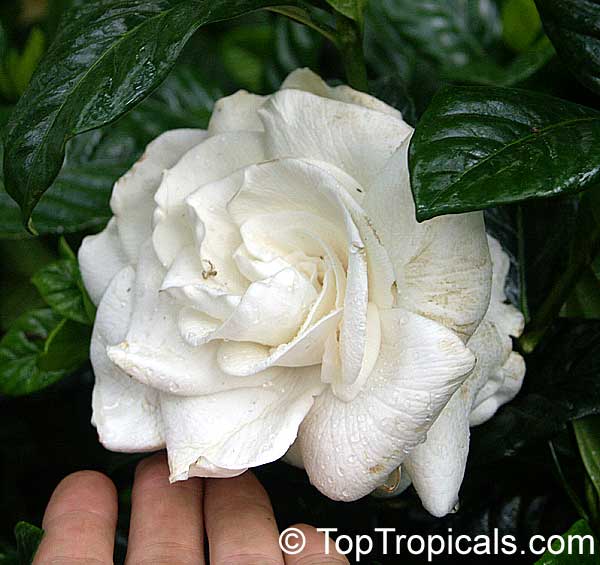
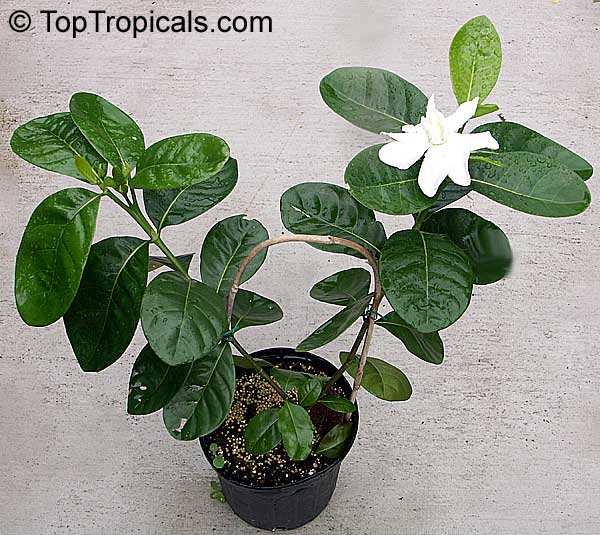
How not to kill gardenias?

Q: I have tried to grow gardenia in pots for years and never keep them alive. When i look on camellia websites they say fertilize potted plants twice a year. I'm confused as I tend to kill them with kindness haha. Also, if our tap water has high cal/mag and that stops the gardenia getting other nutrients why would I make up the feed with tap water? So confusing and online is mixed messages...

A: Gardenias are not the easiest plants to grow, however, they are easier in pots than in the ground: they prefer acidic soils, and in many areas soils are alkaline. The most important factor is balanced and sufficient nutrients. In the ground, plants have no limits to reach out to different elements by spreading their root system. In a pot, once all the good stuff is consumed, plants start suffering nutrient deficiency. This is why a balanced feeding program is important.

Generally speaking, Cal/Mag in tap water cannot be bad, because they are essential elements, good for plants (in proper amounts). However, just Cal/Mag is not enough. This is why you need a balanced liquid fertilizer for plants that prefer acidic soil. Excessive Cal/Mag alone can create nutrient lock up, especially if they are chelated with EDTA like in dry fertilizers, which are not fully accessible for plants.
We recommend natural, Amino-Acid based fertilizers that are completely consumed by a plant and are safe to use with EVERY watering, even in Winter. They are scientifically formulated and cover all plant needs. For your gardenias, you should use SUNSHINE Pikake - Fragrant Flower Booster.
Another important factor is proper watering. Gardenias like regular water but don't like wet feet = well drained potting mix is a must, similar to Abundance professional growing mix.

Date: 5 Sep 2019

How to get Jasmines to flower

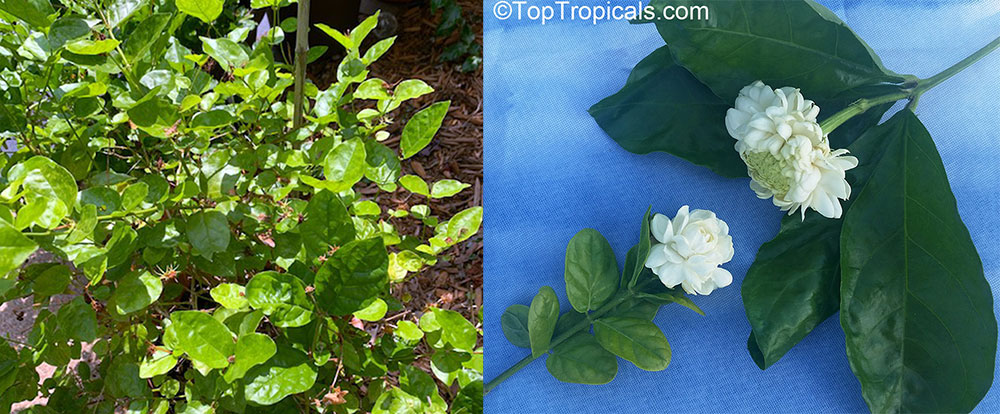
Q: On the picture, these are a few of the jasmine plants that I have from Top Tropicals. I have bought so many plants from you over the years, not just jasmine. I have several varieties of jasmine. They were all doing very well. However this year I didn't get a single flower. There are a lot of buds... But before the buds open they become brown and withered. I bought fertilizer from you. Fertilized the plants once a month like I always do. I water the plants once a week. I repotted the plants hoping that would take care of this problem. Some of the jasmine plants I pruned... the plants came back vigorous growth with a lot of buds... BUT it is the same problem! Please help.

A: One of the possible reasons why they have flower issues is - maybe they don't have enough sunlight. They need to be in full sun all day long for profuse blooming and proper flower forming. However since the buds are forming, there may be just enough light. In this case, dropping buds may be a sign of overwatering.

Important steps - how to make Jasmine Sambac flower:

1. Soil. Use only well-drained soil

2. Water. Keep plants on a dry side and never over water. If the top of the soil is still moist, do not water.

3. Sun. Keep in full sun all day long. The more sun, the more flowers.

4. Bloom booster. Use Flower booster fertilizers:
Pink N Good Daily Plant Food - Flower Booster
Fragrant Plant Special booster, this 90-day Smart-Release container plant food:
Plumeria Top Dress - Smart-Release Booster
Do not use fertilizers with high Nitrogen (1st number in NPK formula) - those will promote more leaves instead of flowers.

5. Micro-elements. Use Apply micro-elements, they will help the plant to develop healthy and long-lasting flowers:
SUNSHINE SuperFood - plant booster

Here is more information on growing Jasmine