Garden Blog - Top Tropicals

Date: 26 Feb 2025

When does Sapodilla start fruiting and what is the best variety

Sapodilla or Brown Sugar fruit, fruiting trees

🔥 When does Sapodilla start fruiting and what is the best variety

  • Sapodilla or Brown Sugar fruit, is one of the most favorite tropical fruit trees. It produces juicy, brown-sugar-sweet fruit. The tree is compact, easy in cultivation and starts producing in small size.
  • Grafted and air-layered trees start fruiting right away.
  • Hasya - extra large, football-shaped fruit native to Mexico where it is the number one commercial cultivar grown. The fruit has a reddish hue throughout the pulp. The tree is a large upright grower, and it is a prolific producer.
  • Ripens from November to June.
  • Makok - the best producer, the fruit is long, pointed, and one of the best tasting in the world. It is native to Thailand. The tree is a small compact grower, perfect for limited spaces.
  • Ripens from May to November.
  • Molix is a football shaped large fruit native to Mexico. Similar to Hasya, darker brown, the tree has curly leaves. The pulp is exceptionally sweet with a fine pear texture.
  • Ripens from February to May.
  • Oxkutzcab (or Ox) - "gigantic sapodilla" - is originally from Oxkutzcab (Yucatan). Extremely large (up to 28 oz), roundish fruit with speckled, light-colored skin. Heavily productive tree.
  • Ripens from May to September.
  • Silas Woods is an outstanding variety with dwarf growth habit and adapts well to a container. Highly productive, producing year round, providing bright light and warmth. The branches often require support as they get very heavy loaded with fruits. The best variety for small yards and container culture.
  • Thai Browny that we mentioned in earlier post, was brought by TopTropicals from Thailand in 2005. Fruit is oval, medium size, and very sweet. The tree is a heavy producer.


🛍 Shop Sapodilla varieties

#Food_Forest

🔴 Join 👉 TopTropicals

Date: 5 May 2025

Is the Sausage Tree from Africa edible?

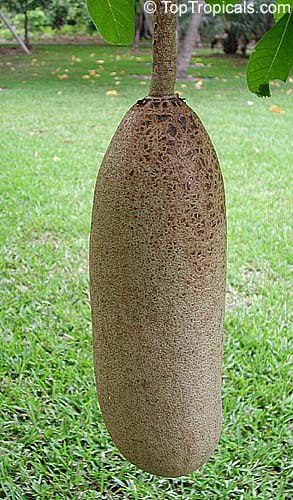
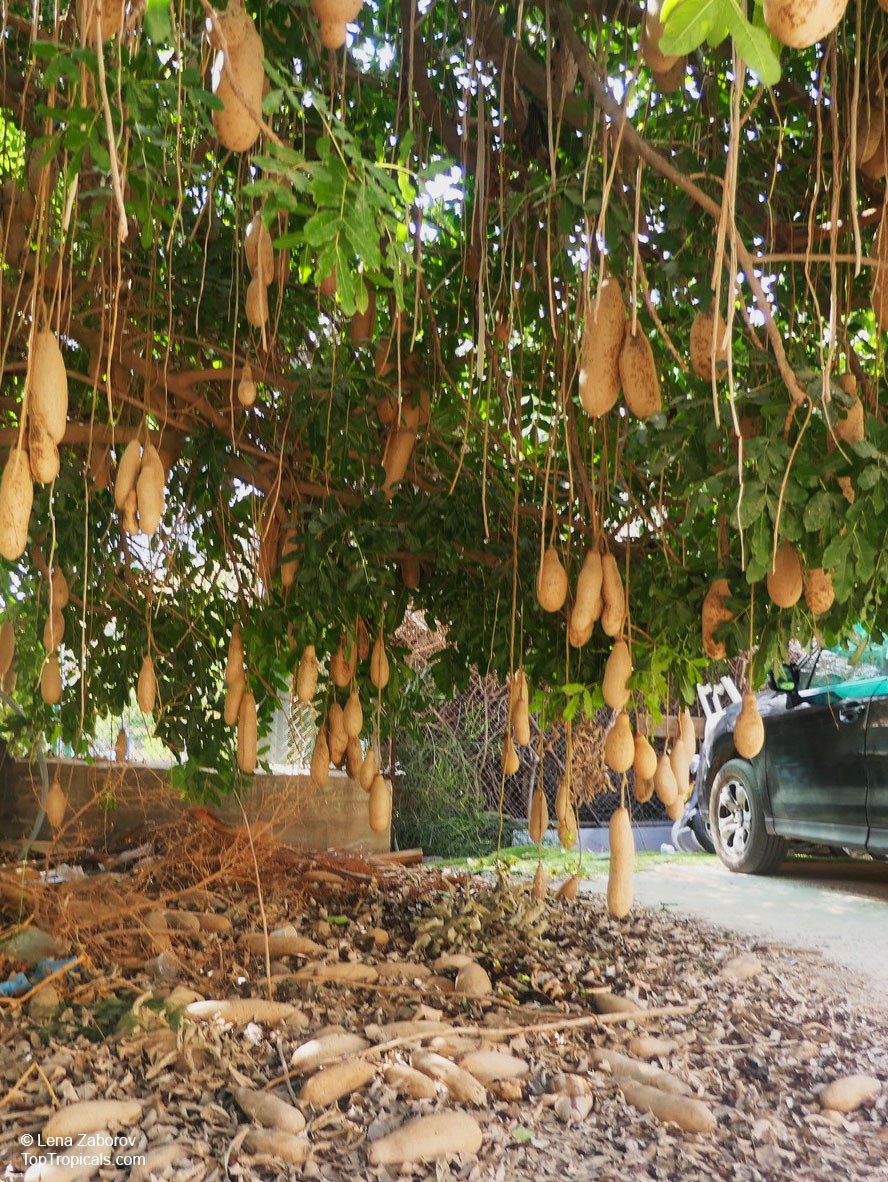
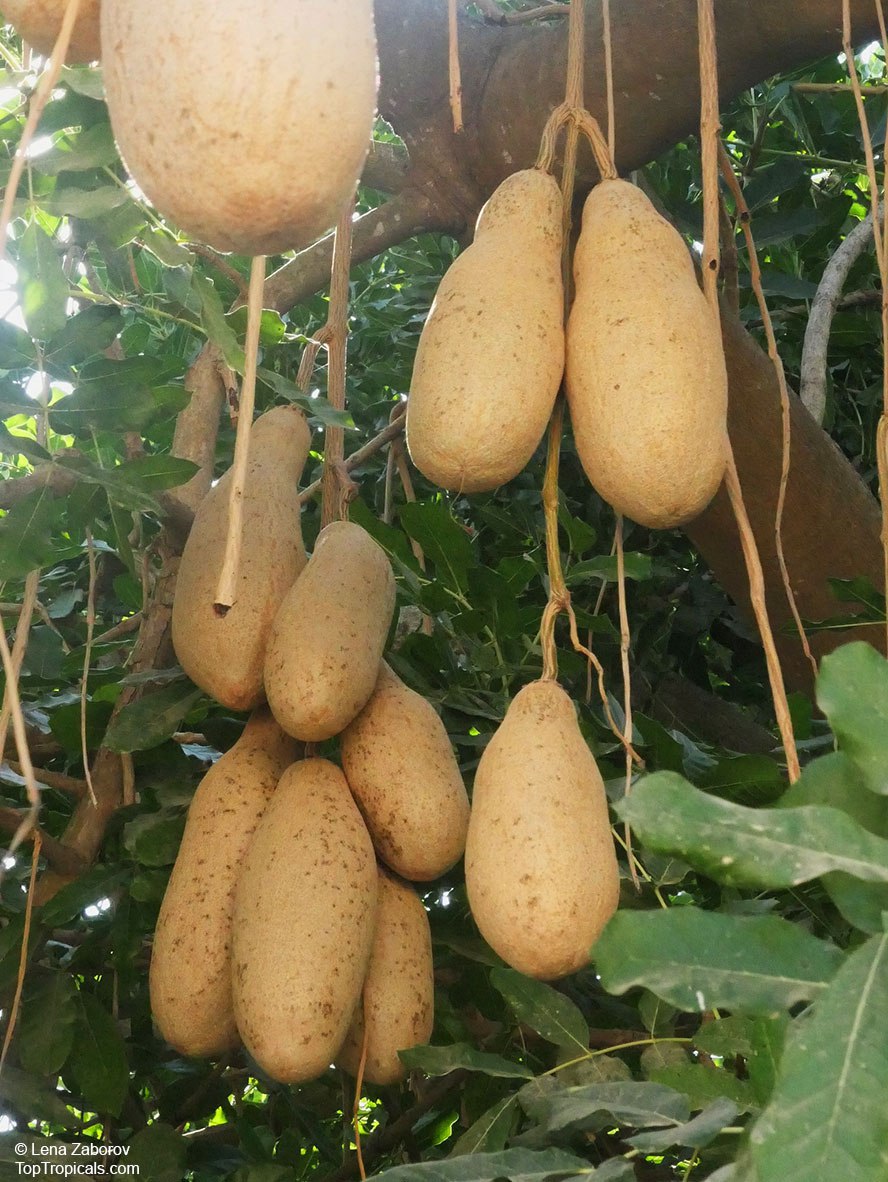
Sausage Tree - Kigelia pinnata, fruit

Sausage Tree - Kigelia pinnata, fruit

Sausage Tree - Kigelia pinnata, fruit

Sausage Tree - Kigelia pinnata, fruit

Sausage Tree - Kigelia pinnata

Sausage Tree - Kigelia pinnata

Sausage Tree - Kigelia pinnata, fruit

Sausage Tree - Kigelia pinnata, fruit

🌭 Is the Sausage Tree from Africa edible?


Despite the tempting name, the sausages that grow on the Sausage Tree don't actually taste like the sausages you're thinking of, but... in a nutshell, they are still edible! Let's dive into the details...
  • 🌭The Sausage Tree (Kigelia pinnata, also known as Kigelia africana) is a striking tropical tree native to sub-Saharan Africa, renowned for its large, sausage-shaped fruits that can grow up to 2 feet long and weigh up to 15 pounds.
  • 🌭While the Sausage Tree's fruit is technically edible, it is toxic when raw. To safely consume the fruit, it must undergo specific processing methods:

  • Drying: The fruit is dried thoroughly to reduce toxicity.
    Roasting or Baking: These methods help neutralize harmful compounds.
    Fermentation: In some cultures, the fruit is fermented, often with sugarcane juice or honey, to create traditional beverages like muratina in Kenya.
  • 🌭Even with these preparations, caution is advised. It's essential to consult with local experts or traditional practitioners before attempting to consume Sausage Tree fruit.
  • 🌭Various parts of the tree, including the fruit, bark, and leaves, have been used to treat ailments such as ulcers, skin infections.
  • 🌭In some African cultures, the fruit is associated with fertility and is used in rituals. The tree's presence is often considered auspicious.
  • 🌭Although the Sausage Tree might not be winning any awards for your dinner table, it's definitely a showstopper in the yard. Think of it as the ultimate conversation starter and the weirdest, most fascinating collectible you'll ever grow!


🛒 Grab your Sausage Tree now - impress your guests!

📚 Learn more about Sausage Tree:


Meet the tree everyone's talking about: sausages growing on a tree!

#Nature_Wonders #Trees #Discover

🏵 TopTropicals

Date: 21 Aug 2025

One bite, your whole day of vitamin C: Barbados Cherry that outdoes oranges!

Malpighia glabra - Barbados Cherry, Acerola

🍒 One bite, your whole day of vitamin C: Barbados Cherry that outdoes oranges!

  • 🍒 Malpighia glabra - Barbados Cherry, or Acerola has 65 times more vitamin C than an orange! Just a single berry-sized fruit can provide your entire daily vitamin C needs, along with vitamins A, B1, B2, B3, carotenoids, and bioflavonoids. In short, this little cherry is one of the most powerful antioxidant fruits in the world.
  • 🍒 But it isn’t just about nutrition. Barbados Cherry is a compact, fast-growing shrub or small tree that starts fruiting young, often within its first year. It produces crops several times a year, and the bright red cherries are as beautiful as they are useful. The fruit is tangy-sweet and makes excellent juices, smoothies, jams, and jellies. It also freezes well without losing its vitamin content.
  • 🍒 Gardeners love this plant not only for its fruit but also for how easy it is to grow. Unlike many tropicals, it tolerates alkaline soils, is drought-resistant once established, and can handle light freezes. That makes it a surprisingly tough choice for a tropical fruit tree. Birds enjoy the fruit too, so planting one is also a gift to your local wildlife.
  • 🍒 It's also a beauty in the garden, covered in pretty pink flowers and bright red fruit, often both at the same time.
  • 🍒 If you are short on space, the dwarf variety Nana is a perfect choice. With tiny leaves, compact growth, and smaller fruit, it works well in containers, borders, or even as a bonsai. It's both ornamental and productive.
  • 🍒 Whether you want a reliable vitamin boost, a wildlife-friendly garden addition, or just a cheerful little tree with bright red fruit, Barbados Cherry has you covered.


📚 Learn more from previous posts:

🛒 Add this vitamin C tree to your garden

#Food_Forest #Discover #Remedies

🔴 Join 👉 TopTropicals

Date: 14 Sep 2025

Banned Jamaican fruit: why you never see fresh Akee in U.S. stores?

Akee (Blighia sapida)

⛔️ Banned Jamaican fruit: why you never see fresh Akee in U.S. stores?


Did you know that fresh Akee (Blighia sapida) is restricted for import into the U.S.?
That's the bad news.
The good news: you can grow your own Akee tree and enjoy this famous fruit right in your backyard!

The reason it's restricted is because unripe Akee (Ackee) contains toxins. Only when the pods split open naturally is the fruit safe to eat, after cooking (video). That’s why it's hard to import fresh – but easy to grow and handle at home once you know the trick.

Plenty of people love this fruit (it's actually a vegetable). It's the national fruit of Jamaica, and a must-have in the classic dish Akee and saltfish. Planting your own tree means you never have to miss out.

⛔️ Why grow Akee?

  • ✔️Fresh fruit that you simply can’t buy in U.S. stores.
  • ✔️You decide when it's ripe and safe, straight from the pod.
  • ✔️A taste of Jamaica in your own garden - both food and culture in one tree.

So don't wait for the fruit that never arrives at the port. Plant your own Akee tree and enjoy the harvest tomorrow!

🛒 Plant your own Akee (Achee) tree


📚 Learn more:
New Christmas ornaments? Ackee monster fruit!
📱 How to cook perfect Akee

#Food_Forest

🟢 Join 👉 TopTropicals

Date: 18 Apr 2023

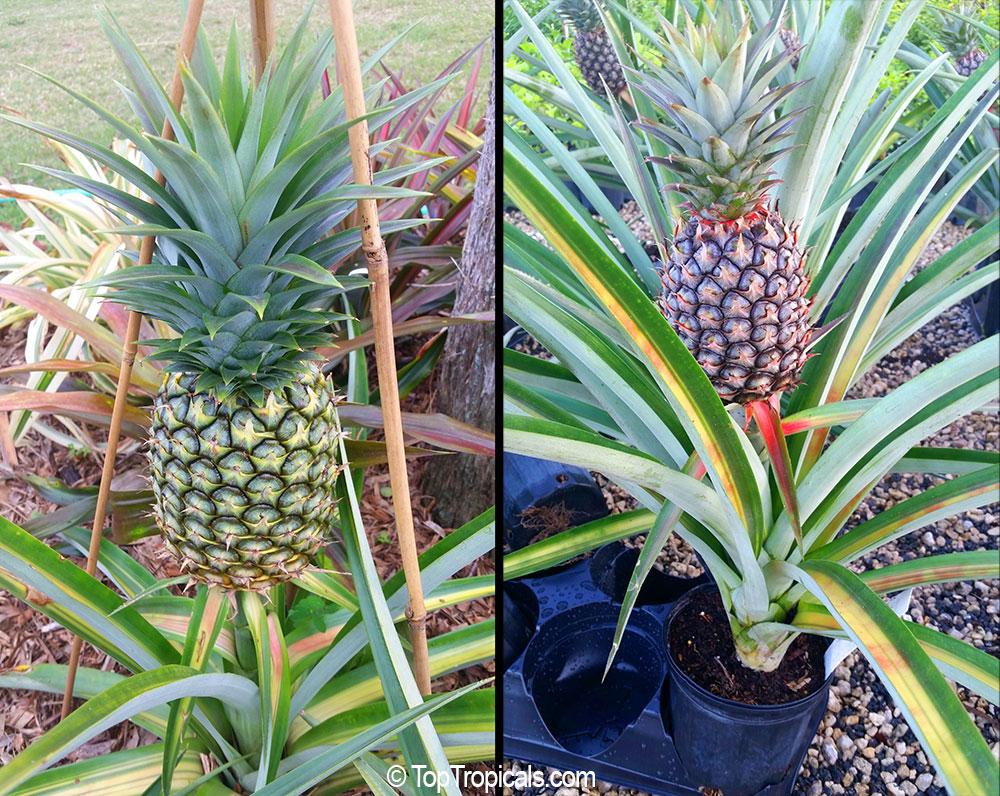
Five benefits of growing your own Pineapple

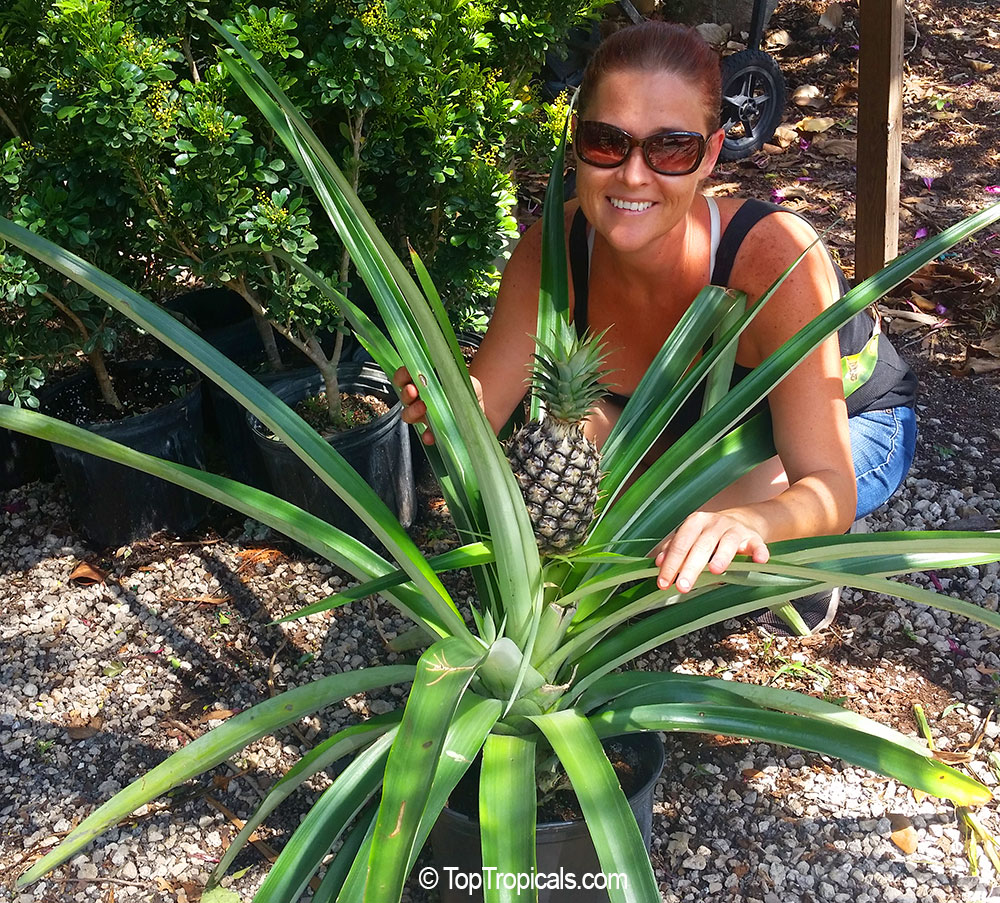
Pineapple  plant  with  a  fruit  and  a  beautiful  girl  Kristi

Q: Can I grow my own pineapple fruit?

A: Growing a Pineapple plant - Ananas comosus - is a fun and rewarding experience that offers both visual and practical benefits:

1. Fresh, homegrown fruit: One of the main benefits of growing a pineapple plant is that you can enjoy the fruits of your labor by harvesting fresh, delicious pineapples right from your own backyard.

2. Aesthetic appeal: Pineapple plants are visually appealing with their long, spiky green leaves and bright, vibrant fruits. They can add a tropical, exotic touch to any garden or indoor space.

3. Low maintenance: Pineapple plants are relatively easy to grow and require minimal maintenance. They can tolerate a variety of soil and light conditions and don't require frequent watering or fertilization.

4. Health benefits: Pineapple fruit is rich in vitamins, minerals, and antioxidants that can provide a range of health benefits, including improved digestion, boosted immunity, and reduced inflammation. It is recommended to eat a slice of a pineapple after every meal to keep healthy digestive system.

5. Collectable varieties: The pineapple plant can be easily propagated by cutting off the top of a pineapple fruit. However, for those seeking excellent quality, it is recommended to choose superior hybrids from professional growers. Become the proud owner of "The King of Fruits" collection! It takes up minimal space and provides fresh fruit throughout the year.

Read more about Pineapple: The most luscious Hospitality Fruit - Pineapple.

Remember to add Sunshine Ananas fertilizer to your purchase for a long lasting Pineapple crop season.

Pineapple  fruit  growing  on  plants