Garden Blog - Top Tropicals

Date: 25 Feb 2021

Healthy Plants: Q&A from Mr Booster

Dragon Fruit Magic Tricks

Q: I purchased two sweet red pitayas, that arrived and were planted on May 28, 2020, they were damaged but not serious. my question is this one pitaya is a beautiful green, and has grown 6or 8 "already, the other is bigger and is a grayish green and has not shown any sign of growth at all in six weeks, how long do I wait before I throw it out and buy another?

A: Being a cactus, sometimes Pitaya slows down its growth waiting for more favorable conditions. If one of your plants doesn't show any new growth, just give a it some more time and make sure the plant stays happy. To make pitaya happy, provide the following:
- Water. Unlike most cacti, Pitaya prefers regular watering (but not a wet soil). Make sure it is planted in well-drained media. Do not water again if soil remains moist, wait until it dries out on the surface. During hot weather, Pitaya enjoys light daily watering.
- Light. Unlike most cacti, Pitaya benefits from a filtered light especially while establishing. Try to create a temporary shade over the plant until it starts active growth (if grown in the ground), or move the pot in filtered light. Dull color or dry spots are signs of sun burn. Once the plant shows new growth, you may remove sun protection, or move the pot gradually into the full sun.
- Food. Pitayas are heavy feeders. Use the following fertilizer:
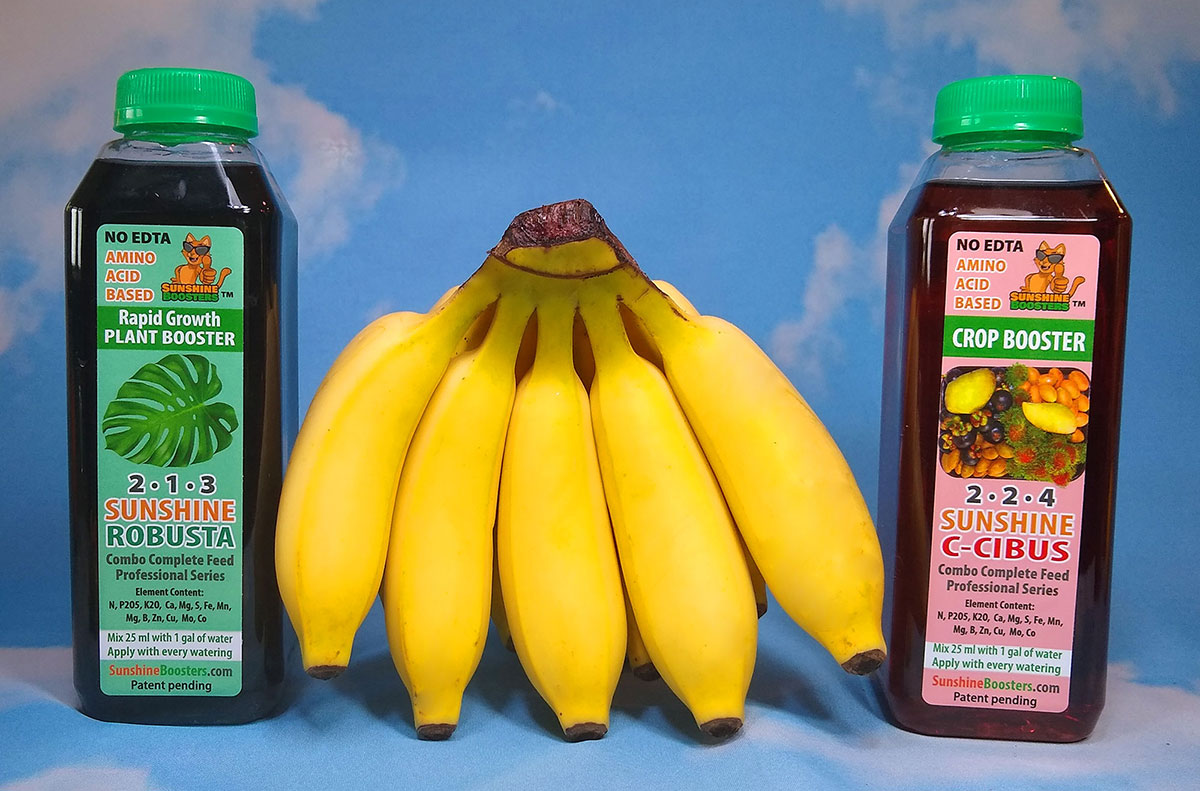
SUNSHINE C-Cibus - Crop Nutrition Booster

Q: I've been growing dragon fruit cuttings from Okinawa, Thailand and Vietnam for several years in pots and cannot get them to fruit. Any fertilizer suggestions? I live in Northern Virginia so I bring the massive pots in the garage under lights and a heater for the winter but back outside once the temperature warms up.

A: There is a little trick to get Dragon fruit to flowering and fruiting. This plant likes flowering when it is attached to a strong support. In commercial plantations, they use special trellises/frames made out of logs, but you can make one yourself using simple materials.
See article: Do-It-Yourself Support Structure for Dragon Fruit.
And of course, don't forget a special plant food for tropical fruit - Sunshine C-Cibus.
You can successfully get your Dragon fruits to fruit in pots, providing bright light in Summer. In Winter, keep the plants on a dry side to give them some rest and a chance to hibernate before the next fruiting season.

Date: 15 Oct 2020

Healthy Plants. Q&A from Mr Booster: Fertilizing Mango trees in Winter

Q: I'm living in Maryland growing zone 7A and would like some info on when to fertilize my potted mango trees. I ordered your Sunshine Mango Tango 2-2-4. All your mango trees are in pots.

A: You can start using this fertilizer right away, any time of the year, and every time you water your plants.
Sunshine Mango Tango, as well as other Sunshine boosters, is an amino-acid based liquid fertilizer that is scientifically developed for daily plant needs in all necessary nutrients. This means, you may use this fertilizer with every watering, including winter period.
Traditional fertilizers (both granulated and soluble, EDTA-chelated) can only be used during hot months while plants grow actively, and must be limited or not used at all during cooler months, to avoid nutrient lock up in soil (which basically means "building up unused elements"). With Liquid Sunshine Boosters, it is safe to add them every time you water your tree.
During cooler weather and when plant metabolism slows down, a tree will consume less water (as well as food), and you will automatically reduce watering, to keep over-wintering plants on a dry side. This means, less fertilizer too. This allows you to control elements intake naturally, like you control water amount just as much as the plant needs.

Date: 10 Oct 2020

Healthy Plants: Q&A from Mr Booster

How to keep bugs away naturally?

Q: I started moving my tropical plant collection indoors as it's getting colder... And all of a sudden, I noticed bugs on leaves! I know for sure all my plants were bug-free when I kept the pots outside in my lanai. What happened? And how can I keep them clean and healthy without using any harsh chemicals? I have many edibles and herbs that I use in my cooking and prefer to stay away from insecticides. Any suggestions?

A: It is very common when healthy looking plants, once moved indoors for the winter, get insect infestations. The main reason is change of environment that puts a plant into stress and makes it susceptible to parasites and diseases. Just think about what a plant is missing, a whole combination of necessary conditions that provided a good life:
- Bring light -> light level reduced, so beneficial UV spectrum is gone
- Air circulation -> less wind = more bugs thriving
- Warm temperature -> from upper 80's in summer to 70's in your AC room
- Air humidity -> although humid air is believed to be causing some issues (for example fungus), however, reducing humidity overall puts a plant into stress and makes it more vulnerable.

Many gardener prefer to avoid chemicals, especially when it comes to treating edible plants and indoor collections. The solution to your problems is - Organic Solution!

SUNSHINE NoBug - Natural Plant Protector.
Shampoo for Plants - for both indoors and garden

SUNSHINE NoBug - is a natural solution to keep your plants healthy and bug-free without harsh chemicals. It is great for organic gardening and edibles, eco-safe and non-toxic for humans and pets. It kills, repels and prevents: spider-mites, mealybugs, whiteflies, aphids and many more. No wait time required - spray and play! And it smells like jasmine, forget stinky insecticides!
How does it work? Just look at these ingredients: Kosher Glycerine, Organic Coconut Oil, Organic Palm Oil, Oat Protein, Organic Soap, Horticultural Oil, Jasmine Oil, Water. Yum! But bugs hate it - they suffocate in it! This is why your plants will have NO BUGS with NoBug, that's it!

Directions are simple:

- Mix 100 ml (3-4 oz) with 1 qt (32 oz) of water, or 500 ml (16 oz) in 1 gal of water - for larger applications
- Spray foliage to drip point, including underneath leaves.
- Repeat the treatment in 7 days.
- As a preventive care, spray leaves once a month to keep insects away.
- You may use a paper towel saturated with this solution to wipe the leaves and remove residue from insects.
- Store at room temperature.

This poor Pepper plant was tossed into garbage can by a neighbor... it looked hopeless, infested with mealybugs. We saved it with NoBug ! In 2 days it perked up, and after 4 weeks its healthy and fruiting!

Date: 25 May 2024

Whats wrong with your water? (Dont do this to your irrigation system)

Whats wrong with your water? (Dont do this to your irrigation system)

🎥 What's wrong with your water? (Don't do this to your irrigation system)


☔️ Your hose or rain water brings your plants a drink, but not a plant food! Adding composted manure to your irrigation is just not the right solution... Instead, you should make a solution of scientifically formulated liquid plant food - Sunshine Boosters.

  • 💧All Sunshine Boosters are compatible and can be mixed all in one watering-can right before use.

  • 💧They can be used with every watering, year around including winter time

  • 💧Different formulas designed for different plant types: fruiting, flowering, foliage plants, etc., plus additional supplements of microelements and biostimulants.

  • 💧Sunshine Boosters have a full spectrum of essential elements. Amino-acids provide total consumption, so nutrients do not build up in soil even with daily applications.


🛒 Shop Sunshine Boosters 💦

#Fertilizers

🏵 TopTropicals

Date: 22 Sep 2024

Which fertilizer to use: Organic or Inorganic?

Sunshine Boosters

Sunshine Boosters

Inorganic fertilizers

Inorganic fertilizers

Cow

Cow

💩 Which fertilizer to use: Organic or Inorganic?


ℹ️ Fertilizers help plants grow. They give plants nutrients they need. There are two types of fertilizers:

🐮 Organic Fertilizers:

  • · Made from natural materials: compost, manure, plant waste.
  • · Good for the soil and environment.
  • · Release nutrients slowly, which helps plants over time.


Inorganic Fertilizers:

  • · Made from chemicals in factories.
  • · Can give plants quick nutrients.
  • · Might harm the soil and environment over time.


⏺Pros of Organic Fertilizers:
  • · Better for the health of the soil.
  • · Helps good microorganisms live in the soil.
  • · Safer for pets and kids.


🔴 Cons of Inorganic Fertilizers:

  • · Can cause pollution.
  • · Might make soil unhealthy if used too much.


🟢 Sunshine Boosters is your ultimate solution:

  • based on organic fertilizers (organic amino-acids).
  • help plants grow strong and healthy without harming the environment.
  • make the soil better, support friendly bugs, and are safe for everyone.
  • Using Sunshine Boosters means you’re taking care of your plants and the planet!


📚 Learn more, with charts:


Organic or inorganic fertilizers, which is best?

🛒 Shop Sunshine Boosters

#Fertilizers

🔴 Join 👉 TopTropicals