Date: 26 Mar 2016
Growing Exotic Adeniums
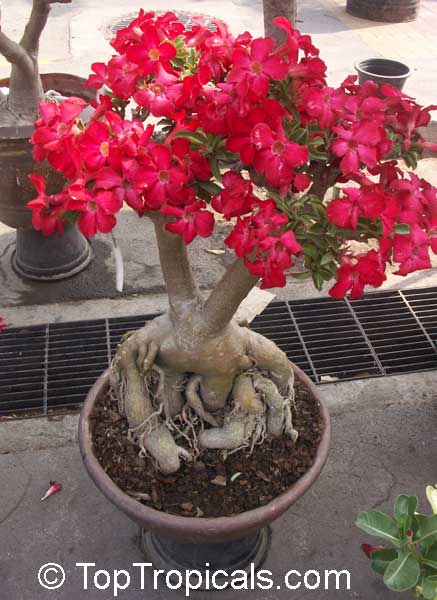
Exotic varieties of Desert Roses. Adeniums have many spectacular hybrids. The basic culture is very similar to orchids. A small pot with excellent drainage is a must. Adeniums do not like both over-watering or drying-out. There is a secret how to create a large swollen caudex: raise the plant a bit every time you re-pot it, so that the upper part of roots will be a little exposed. The plant will form more roots that will go down.
To make your plant develop a large swollen base/trunk, you'll need a good quality fertilizer. Fertilizer requirement for swelling up trunks is also used to increase flowering. It shouldn't be too high in nitrogen, the middle number should be the highest (similar to 10-50-10). Never apply fertilizer directly on roots and do not liquid feed when a plant is thirsty: always water first slightly to avoid root burn and leaf drop. Do not wet leaves. Adeniums need lots of light for heavy flowering.
Most hybrids and species start blooming in the spring when the conditions are warm and days get longer, and continue blooming through the fall and winter in warmer climates. Adeniums like a neutral to hard water. Acidic water tends to sour the soil too fast and may cause root rot. Water plants preferably in the early morning, and allow them to drink up throughout the day. Watering can be done daily to every few days. Never allow your plants to sit in a saucer of water, but don't let them to dry out too often - this causes adeniums to go into early dormancy.
Planting instructions for bare-rooted succulent plants. Position the plant in a pot, size of root system. Use only well-drained soil with high content of Perlite and/or sand (cactus mix can be used), water once and keep in warm (75-80F) place in filtered light. Do not water again until soil dries on surface. Once the plant is established and starts growing new leaves (may take a few weeks), gradually move it into brighter light. Then you can start fertilizing it.
Date: 2 Apr 2026
Stop Fixing Your Soil: 15 Bulletproof Fruit Trees for Tough Ground
Not everyone starts with a lush, loamy paradise. In many parts of Florida and the South, "soil" is just a polite word for sand, limestone rock, or depleted clay.
The biggest mistake new gardeners make? Spending hundreds of dollars on soil amendments before they ever put a tree in the ground.
The secret the pros know: You don't need to change your land to fit your plants; you need to choose plants that love your land. Some of the most delicious fruits actually thrive on neglect - and a few even produce better fruit when the soil is "poor."
🌳 The "Big 5" Toughest Fruit Trees
If your yard is a dry, sandy lot or a rocky outcrop, start with these. They are the ultimate "survivors."
Jujube, Chinese Date (Ziziphus jujuba): Arguably the toughest fruit tree on earth. It laughs at drought, poor soil, and neglect. The fruit is crisp like an apple when fresh and sweet like a date when dried.
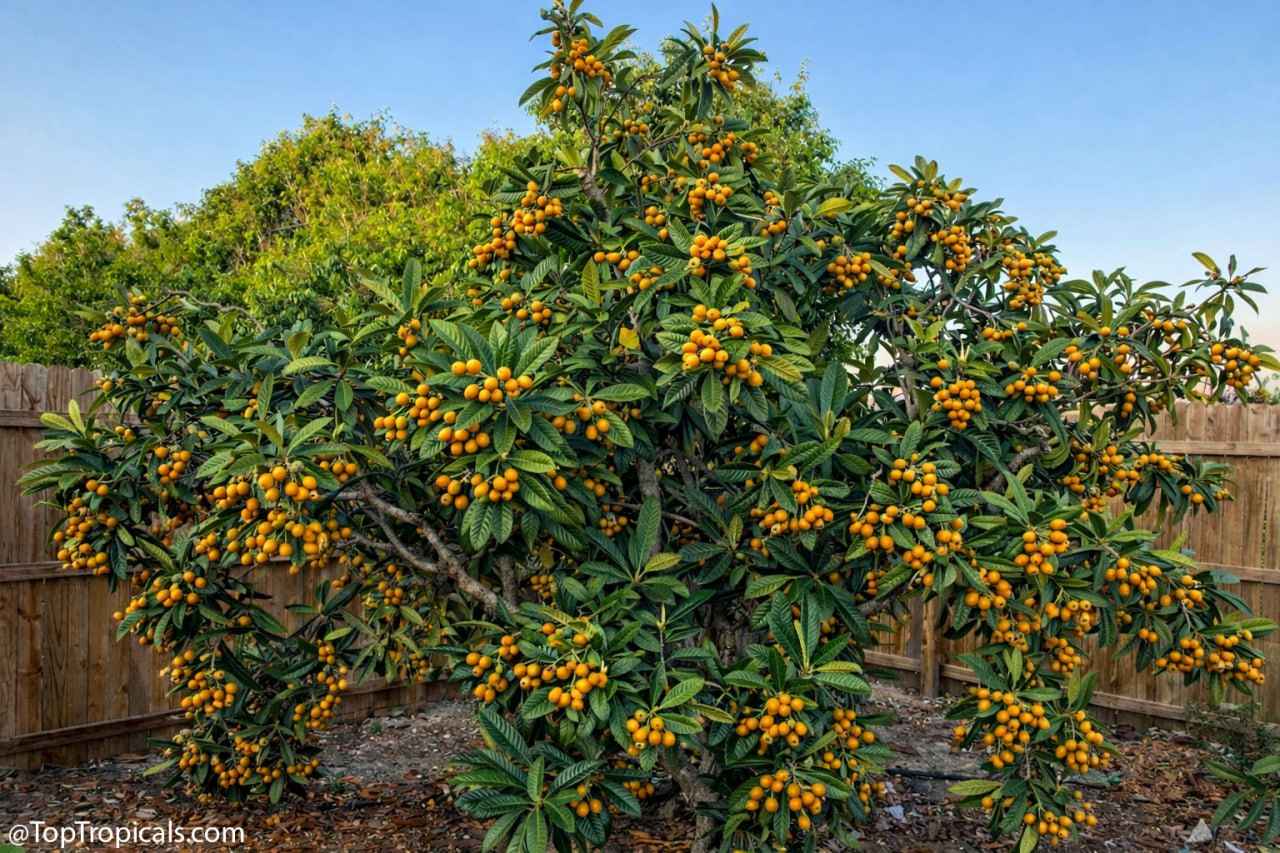
Loquat (Eriobotrya japonica): A Southern staple. It’s evergreen, beautiful, and produces honey-sweet fruit in early spring when nothing else is ripe.
Mulberry (Morus alba): If you can’t grow a Mulberry, you might be gardening on the moon. It grows in sand, clay, or sidewalk cracks with equal enthusiasm.
Fig (Ficus carica): Figs actually prefer not to be pampered. In overly rich soil, they grow lots of leaves but little fruit. Give them well-drained, mediocre soil and they’ll thrive.
Pomegranate (Punica granatum): These trees are "stress-lovers." Rocky, alkaline soil is no problem, and a bit of soil stress often results in a higher sugar content in the fruit.
🌳 Tropical Flavors That Don't Need "Perfect" Dirt
You don’t need a rainforest to grow tropical treats. These species are surprisingly resilient once they get their roots established.
🌟 The Sand-Lovers:
Mango (Mangifera indica): While young trees need a little babying, a mature Mango is incredibly drought-tolerant and handles Florida’s sandy "sugar sand" like a champ.
Sapodilla (Manilkara sapota): A rugged, wind-resistant tree that produces fruit tasting like brown sugar and pear. It is a top-tier choice for coastal or sandy areas.
Tamarind (Tamarindus indica): It’s slow-growing but patient. Once it’s in, it’s there for a century, regardless of soil quality.
🌟 The Low-Maintenance Stars
Longan (Euphoria longana): If you’ve struggled with finicky Lychee trees, try Longan. It’s more cold-hardy and much less picky about its soil.
Citrus: While they need regular feeding (fertilizer), Citrus trees are naturally adapted to the sandy ridges of the South.
🌟 The "Quick-Win" Berry & Shrub Layer
If you want fruit this year, don’t wait for a tree to mature. Add these hardy producers to your edges. And here is why it works:
Dragon Fruit (Hylocereus undatus). It’s a cactus! It literally prefers poor, fast-draining soil over rich potting mixes.
Barbados Cherry (Malpighia glabra). A vitamin C powerhouse that handles low-nutrient soil with ease.
Grumichama (Eugenia brasiliensis). Slower grower, but steady and tolerant once established.
Surinam Cherry (Eugenia uniflora). Virtually indestructible. Often used as a hedge because it grows so vigorously in poor soil.
Pineapple Guava (Feijoa sellowiana). A beautiful silver-leafed shrub that is salt-tolerant and drought-resistant.
🌳 The Strategy: "Plant First, Improve Later"
In the South, the "dig a $100 hole for a $10 tree" rule doesn't always apply. Trying to completely re-engineer your soil often leads to drainage issues (the "bathtub effect").
Try this instead:
1. Select a species naturally adapted to your pH and texture.
2. Plant it at the correct height (never too deep!).
3. Mulch heavily with wood chips. This improves the soil from the top down over time, mimicking a natural forest floor.
🛒 Shop Fruit Trees and Mango
📚 Learn more:
- · Loquat, Sapodilla, Mulberry, Eugenia, Tamarind - in Plant Encyclopedia
- · 10 best fruit trees to grow in Florida and Southern landscapes
#Food_Forest #How_to #Discover
🟢 Join 👉 TopTropicals
Date: 22 Sep 2025
When do I get the fruit from my Dragon Fruit?
Dragon fruit varieties
🍉 When do I get the fruit from my Dragon Fruit?
- 🌵Dragon Fruit (Pitaya) is one of the most rewarding exotic fruits to grow. Sweet pulp, striking looks, and plenty of health benefits make it a favorite. You'll see it in three main types: white-fleshed (Hylocereus undatus), red-fleshed (Hylocereus costaricensis), and yellow-skinned (Hylocereus, or Selenicereus megalanthus).
- 🌵Don't want to wait years for fruit? Here’s the good news: unlike many tropical trees that test your patience, dragon fruit is a fast-fruiting, easy-going cactus. With the right care, you can harvest in just 1-2 years from a cutting - or even the same season if you plant a well-established specimen.
🌵 How to get Dragon Fruit faster
- Give it strong support - trellis, fence, or post. This cactus loves to climb.
- Full sun and good drainage - sandy or well-draining soil works best.
- Smart watering - water deeply in hot weather, then let the soil dry. Dragon fruit loves water during active summer growth, but remember it's still a cactus - don’t keep soil soggy.
- Pollination matters - flowers open at night. Some varieties are self-fertile, but planting a few different types boosts fruit set. This is why it helps to keep several varieties close together.
- Feed well - use organic liquid fertilizers like Sunshine Boosters C-Cibus with every watering, or Green Magic controlled-release fertilizer every 6 months.
With these steps, dragon fruit quickly rewards you with flowers, followed by colorful, delicious fruit. Few exotics are this easy - or this fast!
🛒 Start your fast-growing Dragon Fruit production
📚 Learn more:
- · Pitaya vs Dragon fruit - what is the difference and how to grow it. Varieties.
- · The secret to abundant dragon fruit harvests
- · How to grow Dragon Fruit from a cutting - Quick Guide
- · How to grow Dragon Fruit 📱
- · Planting your own Dragon Fruit plantation
- · Do-It-Yourself Support Structure for Dragon Fruit
- · Grow Your Own Exotic Dragon Fruit Garden
- · Top 10 fruit you'll ever need for your health benefits: Dragon fruit
- · What does Dragon Fruit Flower look like?
- · Why you need to grow your own dragon fruit
- · Do red, white and yellow Dragon fruit taste differently?
- · What to do with a lot of Dragon Fruit
#Food_Forest #How_to #Dragon_Fruit
🟢 Join 👉 TopTropicals
Date: 24 Sep 2025
Green Magic effect: before and after
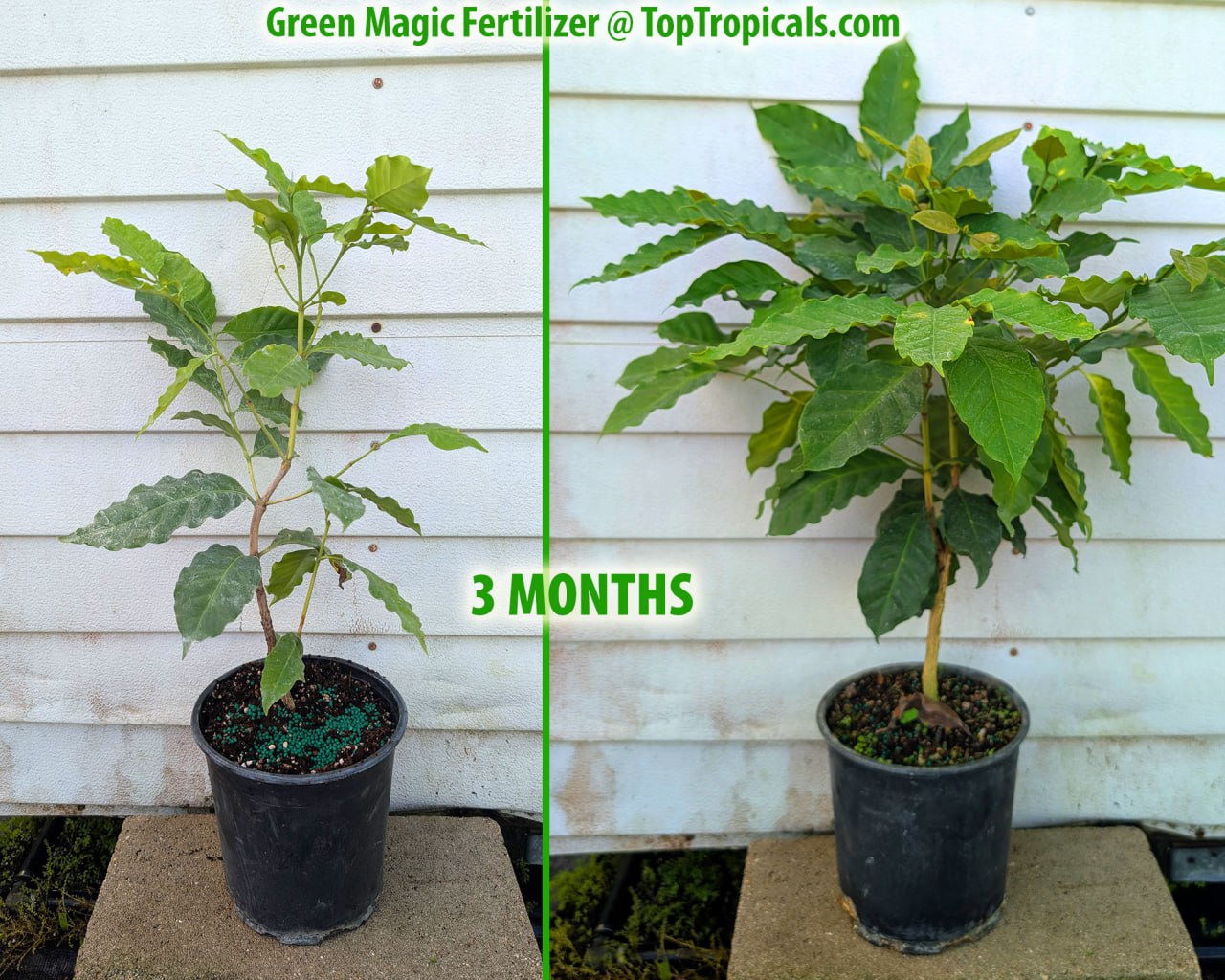
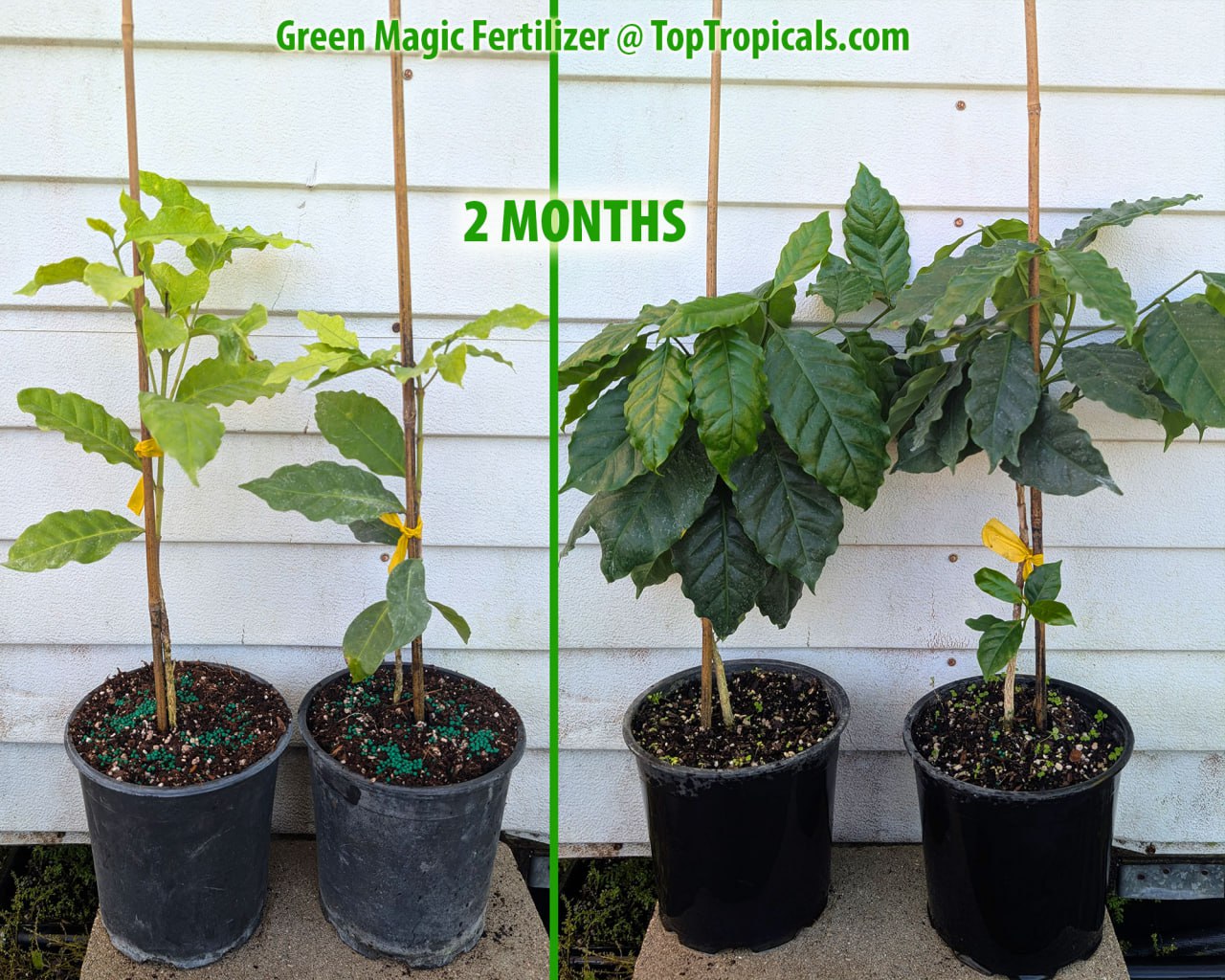
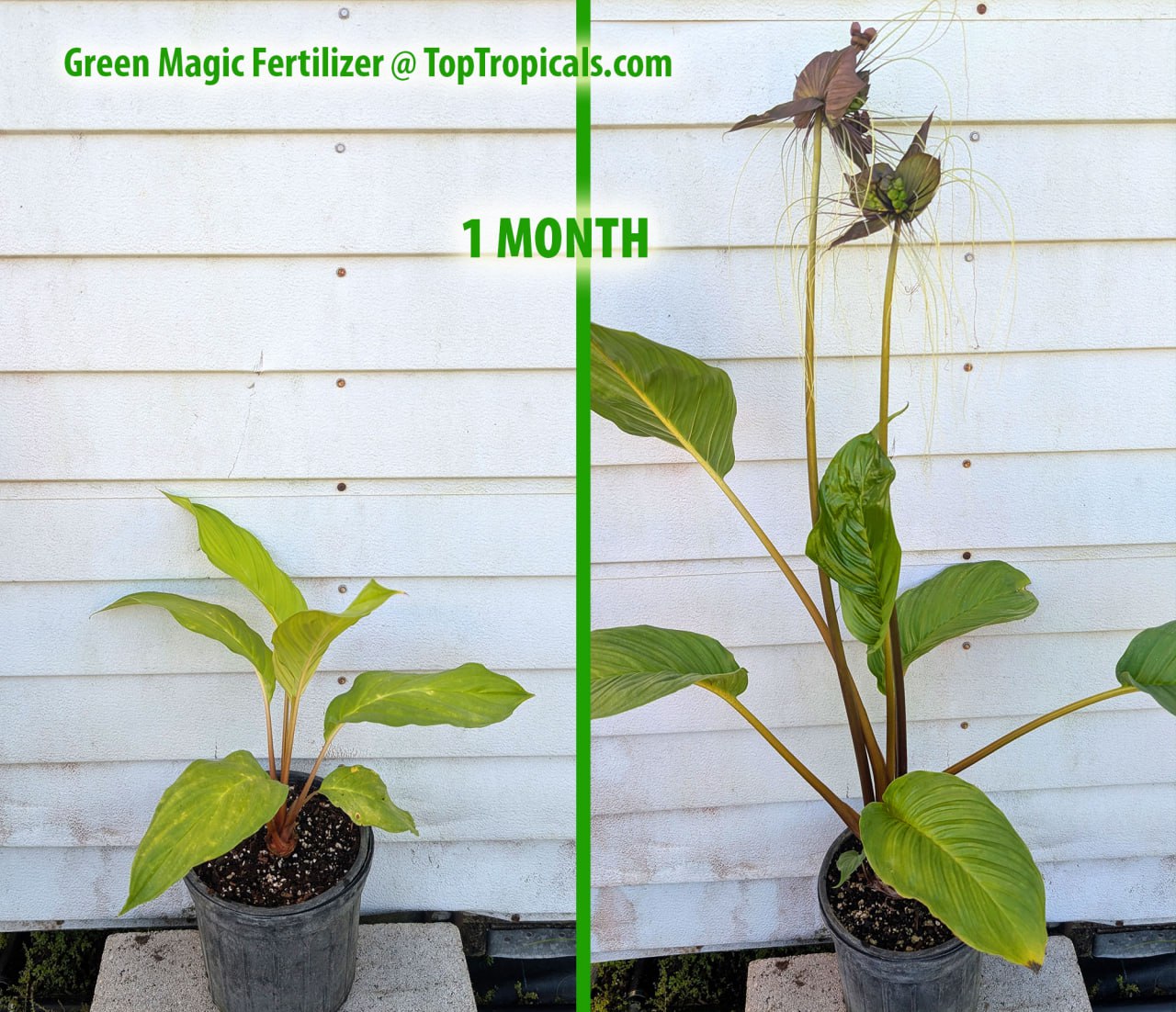
🌳 Green Magic effect: before and after
Green Magic test results: before and after application.
Are you still thinking? Try it out! (Sample here)
#Fertilizers #How_to
🟢 Join 👉 TopTropicals
Date: 25 Feb 2024
Avocado pollinating and crops
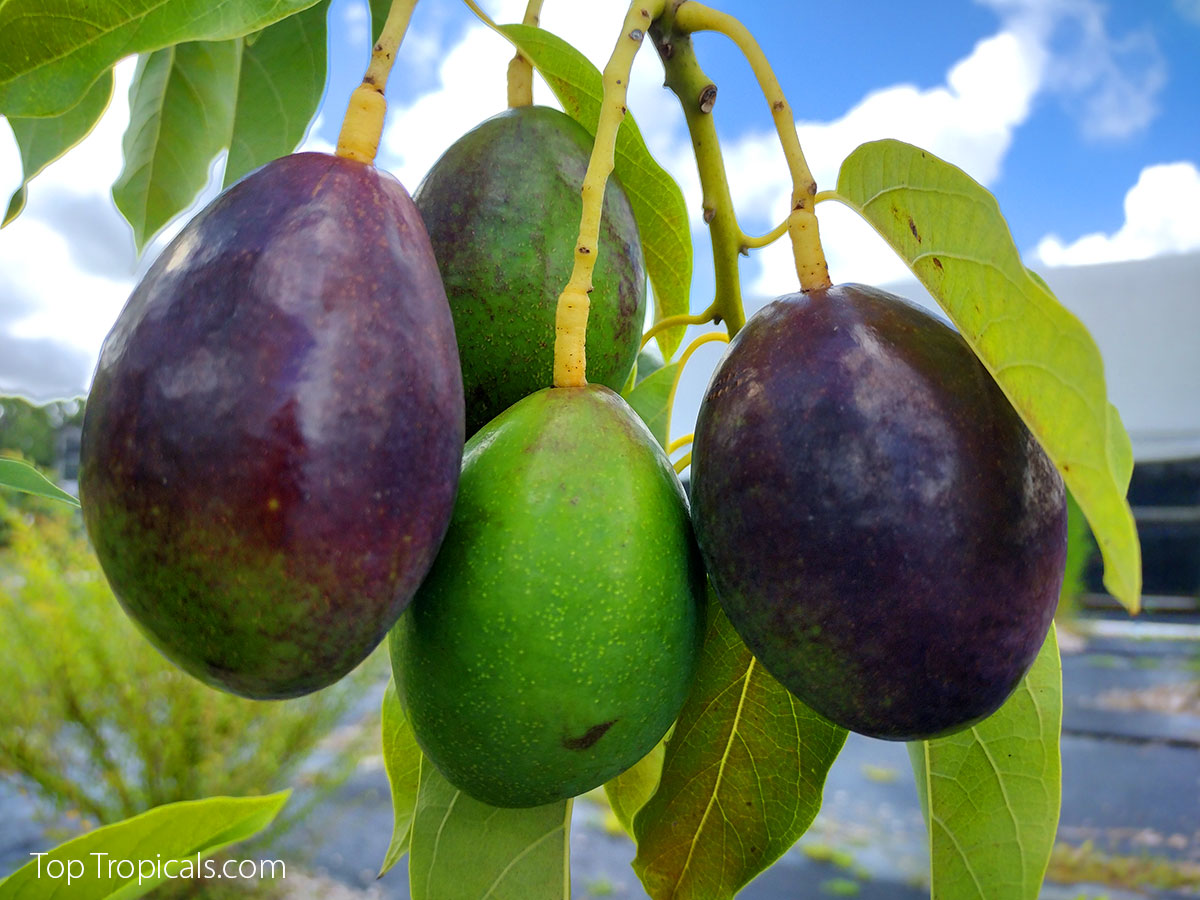
Photo above: Avocado Joey - very buttery fruit, cold hardy variety.
Q: I bought an anise leaf-scented avocado from you, and it is finally quite large and doing great. I live in California, the coldest temperatures we seem to get in some winters is around 25 to 28F, and it never lasts long. The tree might get a bit of frost nipping on the new growth, but it has done very well. It has flowered profusely for the last two years but hasn't set any fruit. What variety you might recommend to help with pollinating?
A: We are glad your avocado is doing great. Anise is one of our favorite varieties, with the wonderful smell of leaves and tasty fruit.
Cold hardiness and flower quality
It is true that cold damage may affect avocado production, especially in setting fruit. To improve the tree's cold hardiness, make sure to provide balanced plant food, especially during the season of active growth. For our avocado trees, we use Sunshine C-Cibus year-round.
If you prefer to use dry (granulated, slow-release) fertilizers, make sure they contain micronutrients, or apply Sunshine Superfood microelement complex once a month.
To improve flower quality (including the ability to set fruit), we recommend a special micronutrient supplement called Sunshine Honey. It contains Boron and Molybdenum - elements that are responsible for setting fruit and for developing fruit (meaning not dropping at the early stage of development).
Cross-pollination and crop
In general, every avocado tree is self-fertile, meaning it can produce some fruit with its own pollen and doesn't necessarily require a second tree for pollination. So even if you don't do anything, sooner or later your tree will set fruit. However, it is also true that the amount of fruit and crop reliability depends on pollination factors. One type of avocado classification is by flowering and pollination behavior - type A or B.
When both types of trees are grown in proximity to each other, their overlapping flowering patterns significantly enhance the chances of cross-pollination. This can lead to improved fruit set and higher yield, making it especially important for commercial production and, to a lesser extent, for home growers.
Therefore, it's advisable to plant different varieties of avocado in your garden - the more, the merrier! The greater the diversity of avocado trees with overlapping flowering periods, the better your crop is likely to be. If you're growing an avocado tree without other avocados nearby, it becomes helpful to have more than one tree with different flowering patterns (A and B) to increase yield in your garden.
Anise Avocado is type B. So to increase your crop, you may consider planting type A variety from the list: Bernecker, Black Prince, Catalina, Choquette, Day, Donnie, Fantastic, Florida Hass, Lila, Loretta, Lula, Mexicola, Mexicola Grande, Red Russell, Reed, Russell, Simmonds, Ulala , Waldin .
To learn more about avocado types, fruit characteristics, cold hardiness and much more, refer to our Avocado Variety Guide - a page with very convenient interactive chart allowing you to quickly sort types of avocado by requirements of your choice (just click on column header to sort data). You may also buy a Book or download a PDF.
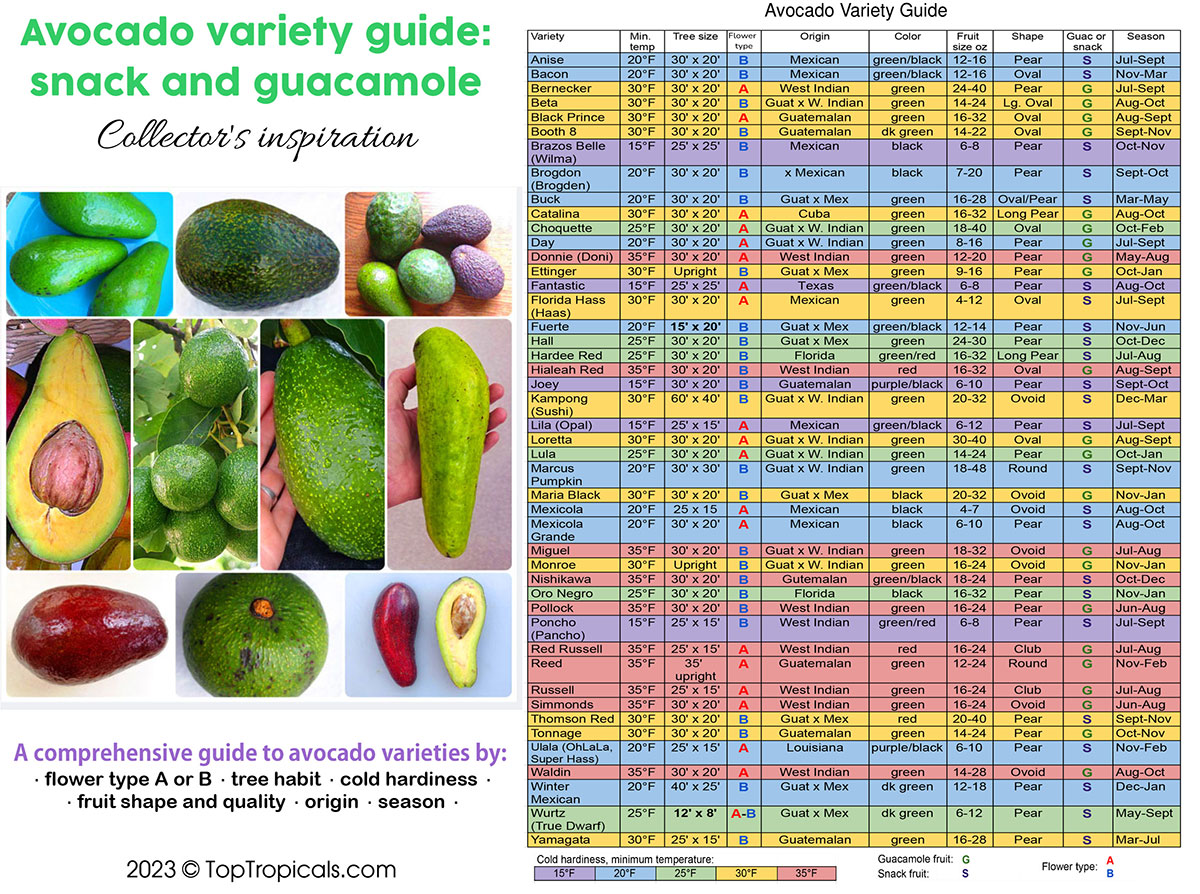
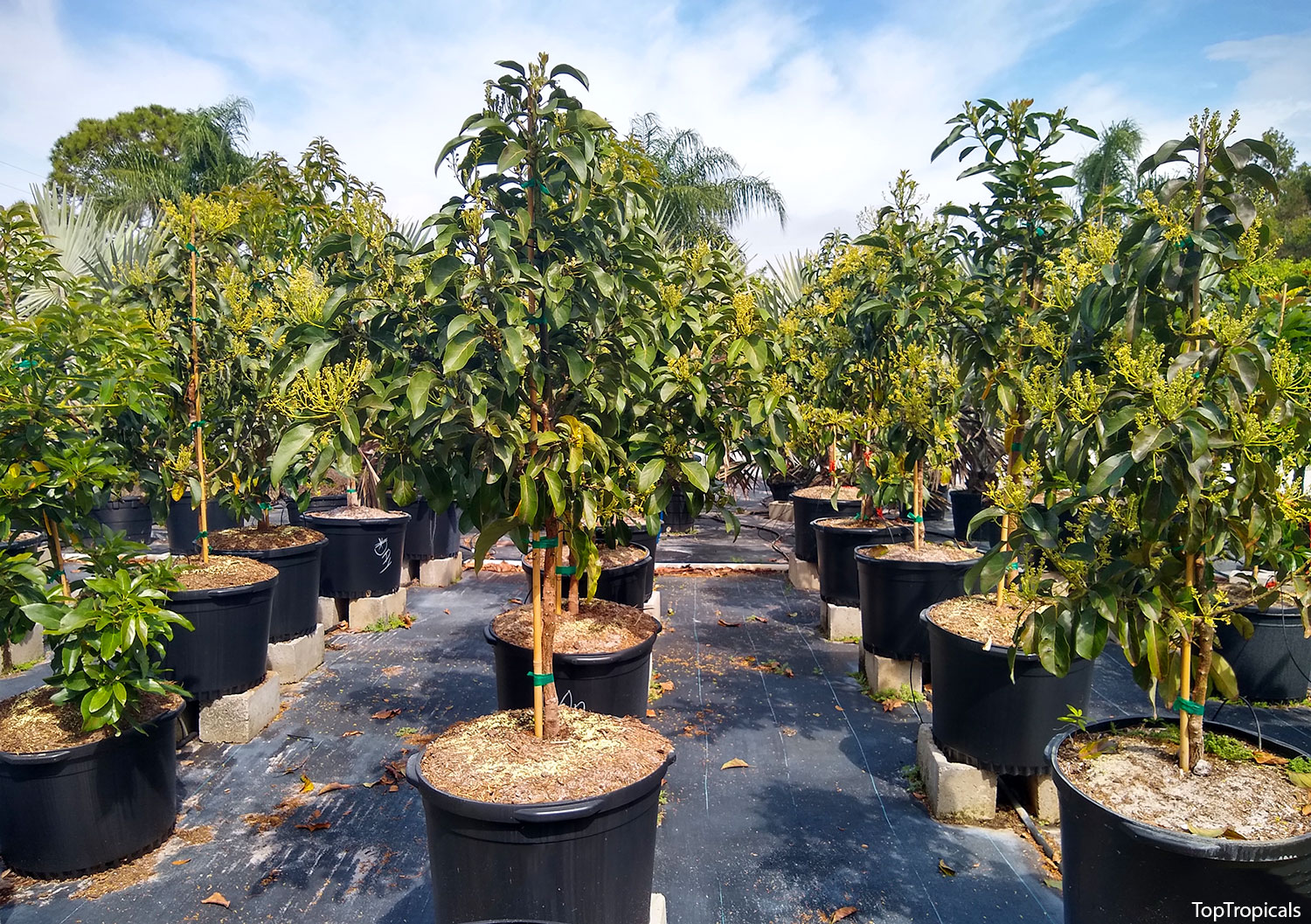
Photo above: 15 gal Avocado trees for local pick up. Delivery and installation available!