Date: 17 Jun 2022
Mango trees: how to deal with cold weather
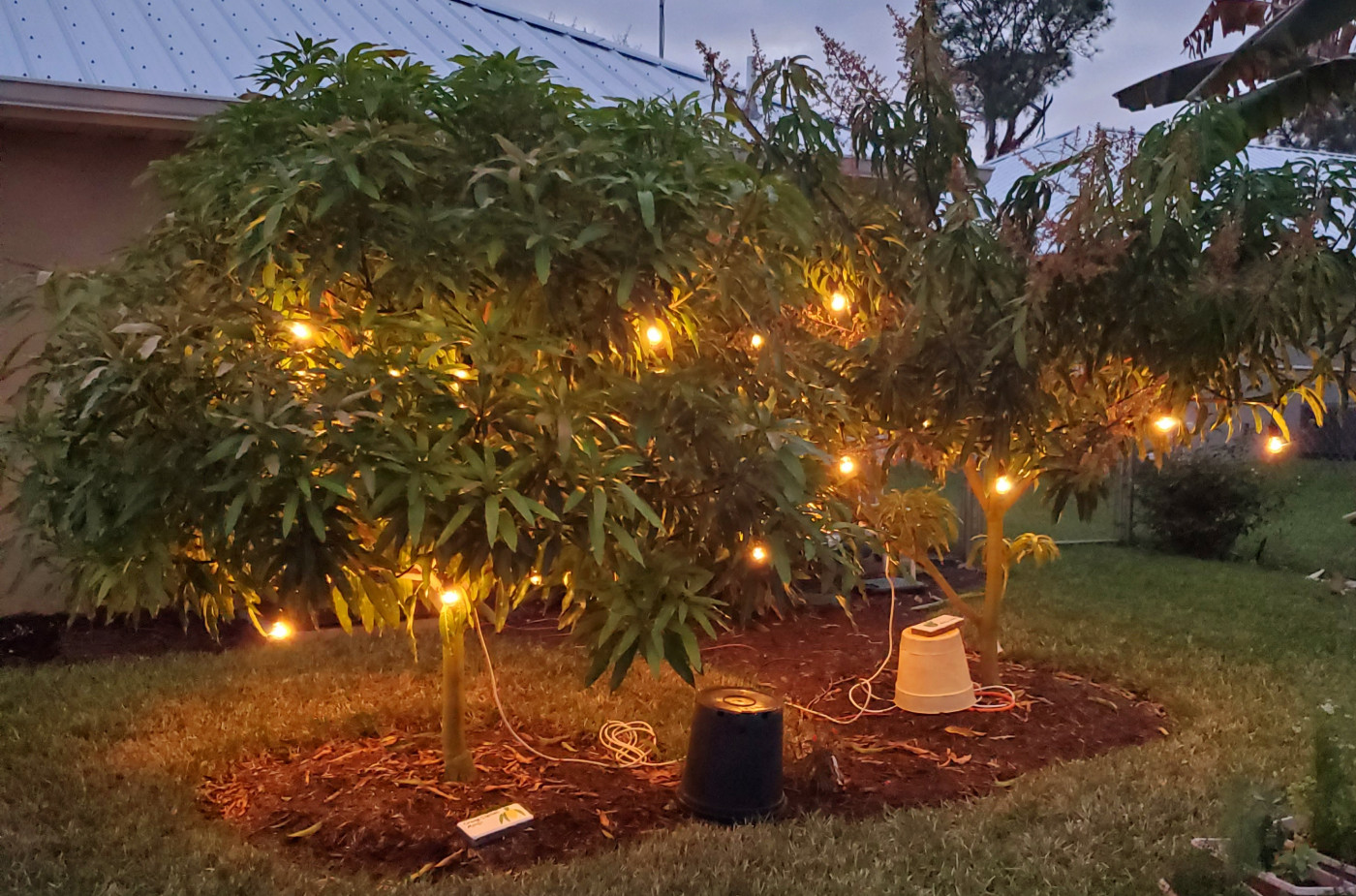
By Ed Jones, the Mango guy
...Well, you did it didn't you? You love fresh mangoes, don't you?
Wouldn't it be great to be able to pick your own mango fresh off a tree in
your back yard?
So you bought a mango tree hoping to do just that. You are in USDA growing
zone 10 or 11 aren't you? If so, you should have no problems with weather
extremes other than possibly an occasional frost in zone 10A. If you can cover
your tree, you will not likely see any damage. But what if you are a little
further north and you have decided to try your luck on the magnificent mango
fruit tree? Mangoes are a tropical fruit tree best grown in tropical zones with
temperatures that stay above 40F. If you are in zone 9A or 9B, you may still
have luck growing a mango tree...
Date: 24 Jul 2019
Perfect small tree for a pool area
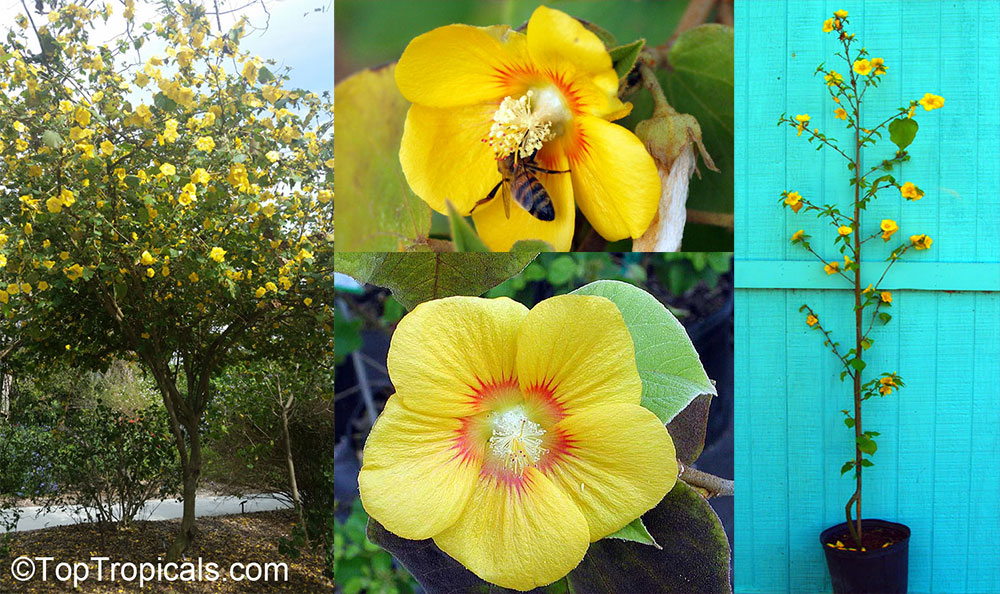
Q: I need a tree for a space that is close to a pool and I don't want a tree that is shedding leaves all year long. I don't want it too big either. The canary tree caught my attention but I need to know if it is a tree that is dropping leaves all year. If it does then can you recommend another tree? I live in Fort Lauderdale.
A: Canary tree is a good choice. It is free-flowering pretty little tree. It is evergreen and doesn't shed leaves too much especially in your area with mild winter. However, keep in mind that every plant sheds leaves. Even evergreen trees replace old leaves with new ones. Some trees more than others. Flowers also have a seasonal drop. You may check the full list of compact flowering trees suitable for small spaces.
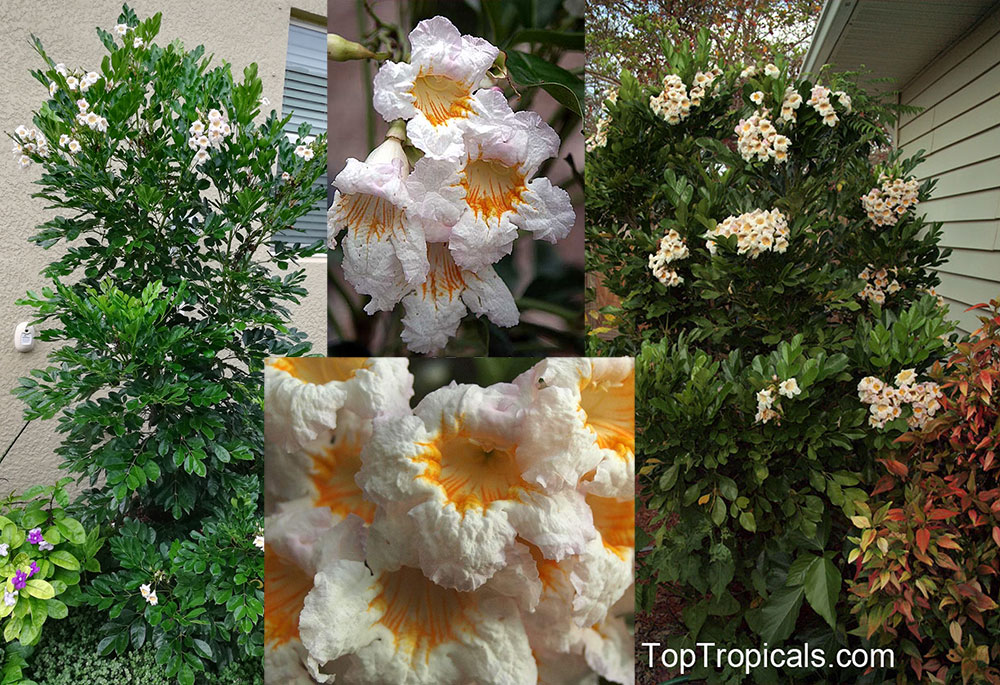
Another great choice is a Dwarf Tree Jasmine, Radermachera - also a free-flowering tree with rose-fragrant flowers and large, architectural leaves that hardly ever drop. It has very dense yet compact columnar shape, and is one of the greatest trees for smaller landscapes.
Recommended fertilizers and supplements:
Pink N Good Daily Plant Food - Flower Booster
Tropical Allure - Smart-Release Booster
SUNSHINE SuperFood - plant booster

Date: 22 Mar 2017
Condo Mango
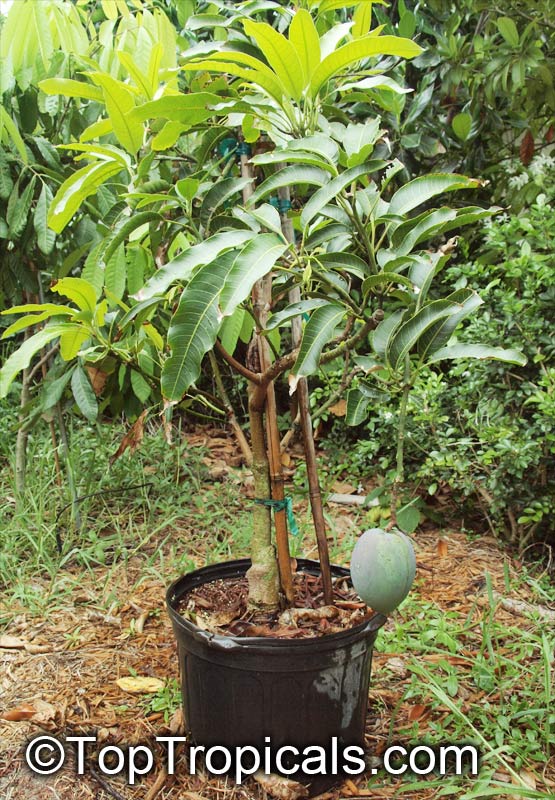
Q: I was curious about indoor fruiting mango trees. I live in upstate New York and was thinking about trying to grow an indoor tree for fruit. I have a small heated greenhouse. Is there a variety that can be grown from seed that would suit my purposes and if not what is the most economical way I could obtain a cutting or small grafted plant? I keep my greenhouse around 60F in the winter and have no supplemental lighting. Are there any varieties that may work in a sunroom or other well lit indoor location?
A:
There are many dwarf varieties of mango suitable for container culture. They
are called "condo mangoes".
The most popular condo varieties are: Carrie, Cogshall, Cushman, Fairchild,
Graham, Ice Cream, Julie
, Mallika, Nam Doc Mai,
Pickering. You may read more about them in our online
catalog. You may also look into variety
Lancetilla which is also a compact tree, and produces one of the biggest size
fruit, up to 5 pounds. If you want some rare variety that hardly anyone else has -
try Baptiste, an exotic Haitian dessert
mango.
Your greenhouse should work for the winter time. Mango trees can take
as low as mid 40s during winter and even lower as long as that cold is
occasional. If you keep the temperature around 60, this should work well for over
wintering. Just make sure to reduce watering to a minimum, because cool
temperatures, low light and wet soil - is a bad combination for tropical plants,
especially for mango trees which prefer to be kept on a dry side.
Many indoor gardeners have fruiting mango trees in their collection. However,
keep in mind that the most important requirement for a mango is full sun.
While you may over winter the plant for a few months in a low light conditions,
in order for it to flower and produce fruit it needs lots of light. If moving
the tree into full sun your yard during the summer is possible, this would
be the best solution.
We always recommend
SUNSHINE boosters for both over wintering tropical plants in colder
climates, and for indoor gardening. SUNSHINE applications will help your tree to
cope with cool temperatures and low light conditions. This will also
dramatically increase flowering and fruiting performance. Another important factor for
keeping your container plant healthy is quality of your potting soil. We
offer a special
professional mix that contains lots of good stuff: coconut fiber, peat moss, pine
bark, and perlite. Fertilizing potted plants
is also very important during the warm season, because this is the only way
for them to get nutrients (which in the ground can be reached by spreading
root system).
As far as seedlings vs. grafting - the only way to
have a nicely fruiting mango tree is to plant a grafted variety. Seedlings start
producing only after 8-15 years, and the quality of such fruit may be
questionable. Only grafted plants can guarantee the desired taste of a variety.
Besides, grafted mangoes start producing immediately - you may see fruit forming
on plants as small as 3 ft, in 3 gal containers. However, during the first
1-2 years you will need to remove extra fruit and leave only 1-2 fruit so the
plant doesn't get exhausted and has enough energy to establish strong root
system.
For fun stories about growing mango, check out our Radio
Show recording YO Tango Mango!
Date: 18 Apr 2024
How to water a new Mango tree?
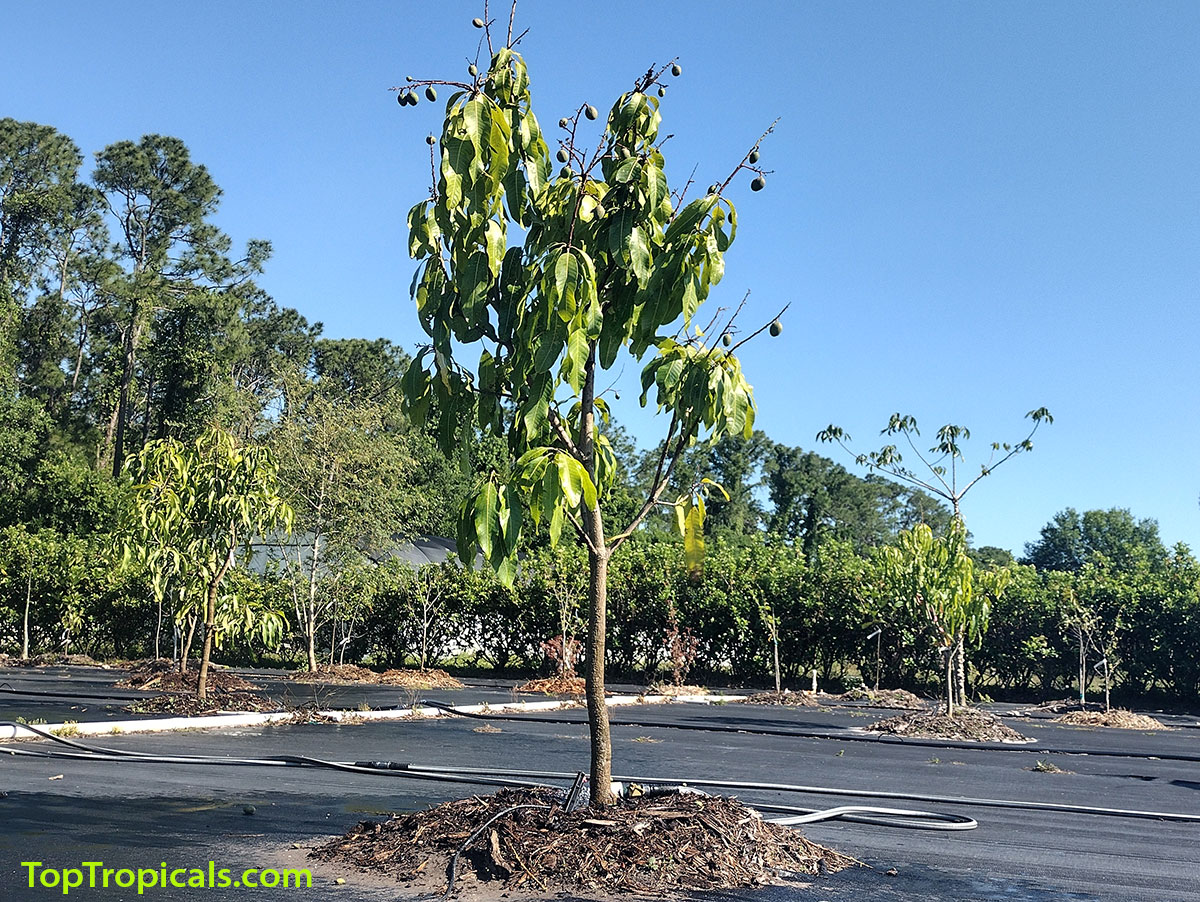
Q: I got a large mango tree from your garden center recently, planted in the ground, but noticed the corners of the leaves turning brown. It was full of little fruit when I planted it but now they are falling off... I wonder how much should I water the mango tree? We have lawn sprinkler system that runs daily, is this enough?
A: Generally speaking, never rely solely on your sprinkler system when planting a new tree, especially during the first week or even several weeks if you have no rain. By rain, we mean a nice downpour. Here in Florida, we usually have a hot and dry spring, and while springtime is great for starting new trees, additional hose-watering becomes essential for establishing them during the first months.
Dry leaves are a signal of under-watering. Make sure to hand water your mango tree every day for at least the first week after planting. Even if you have an individual sprinkler for the tree, ensure that the soil around the rootball receives enough water, not only around the trunk. Surprisingly, the bigger the tree, the more it may suffer from a lack of water, and sprinkler watering does not saturate the large root system, sometimes only reaching around the trunk. Big tree means lots of leaves and branches - they all get thirsty!
Mangos are pretty drought-tolerant trees, but only once established. They even benefit from hot, drier air (means less leaf fungus). However, young trees require regular irrigation until they start growing new leaves and branches.
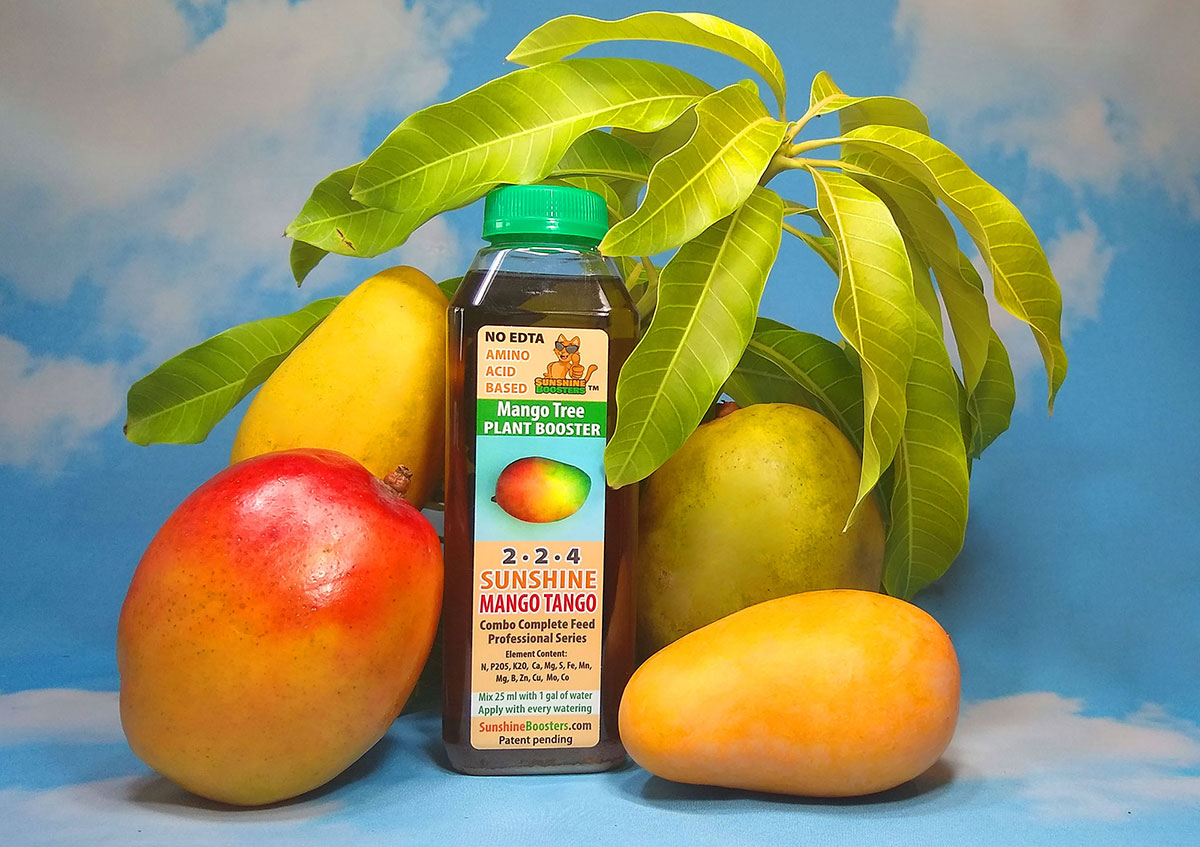
Note that fertilizing your Mango tree is especially important during the spring and summer seasons - the period of active growth. This ensures that the tree takes the best advantage of nutrients with a faster metabolism encouraged by high temperatures. Give your tree a chance to build up lots of energy for the cooler winter as well as for the next flowering and crop season. To ensure a strong tree and reliable crop with no fruit drop, apply Sunshine Mango Tango liquid fertilizer with every watering and watch your mango tree become a Champ!
Date: 22 Feb 2023
Benefits of growing your own tropical fruit
"The fruit of the mango tree is no longer forbidden.
Indeed, it has been recommended to me by the physicians as an antidote to the
plague."
- Louis IX, King of France -
Q: Why do you want to grow your own tropical fruit tree?
A: Growing your own tropical fruit tree can have many benefits. Here are a few reasons why someone might choose to grow their own tropical fruit tree:
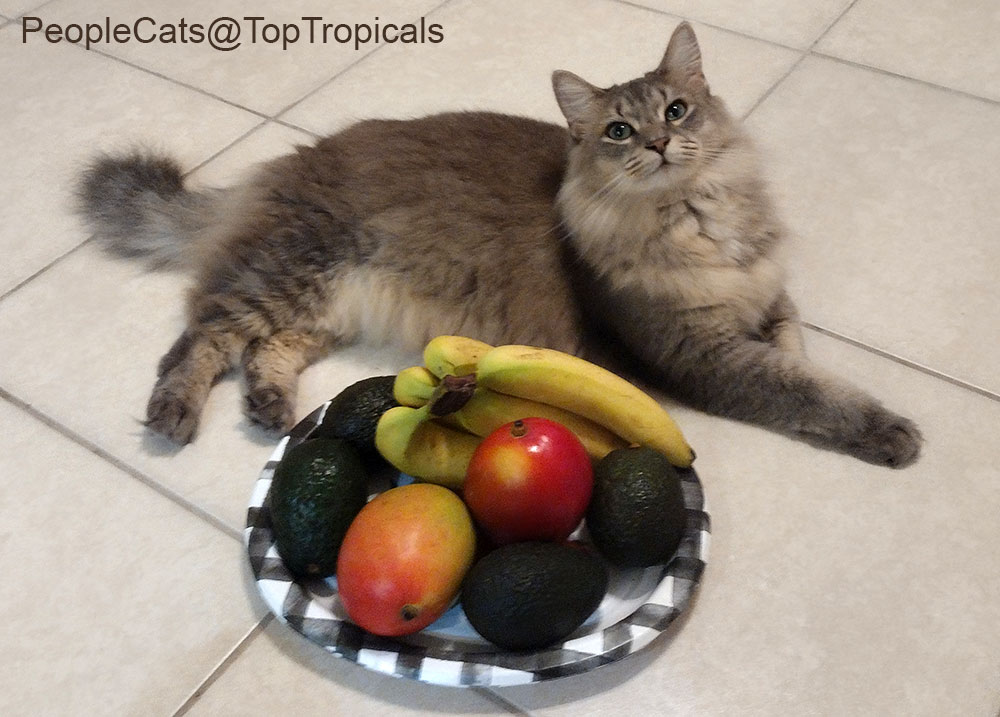
1. Fresh, flavorful fruit: When you grow your own tropical fruit tree, you have access to fresh, flavorful fruit that you may not be able to find at your local grocery store. Tropical fruit, like avocado, mangoes, papayas, and passionfruit, jackfruit, Dragon Fruit, Annona have a short shelf life, and the fruit you find at the store may have been harvested weeks ago. When you grow your own fruit tree, you can pick the fruit when it's fully ripe and enjoy it at its peak flavor. Besides, some rare fruit like Akee or Sapodilla simply never offered from the store.
2. Environmental benefits: Growing your own fruit trees can have environmental benefits. Trees absorb carbon dioxide from the air and release oxygen, which can help reduce your carbon footprint. Additionally, growing your own fruit trees reduces the need to transport fruit long distances, which can help reduce greenhouse gas emissions.
3. Cost savings: Depending on where you live and the availability of tropical fruit, growing your own fruit tree can be a cost-effective way to enjoy your favorite tropical fruits.
4. Gardening and outdoor hobby: Growing a fruit tree can be a fulfilling and rewarding outdoor hobby. It can also be a great way to teach children about where their food comes from and the importance of taking care of the environment.
Overall, growing your own tropical fruit tree can be a great way to enjoy fresh, flavorful fruit, reduce your carbon footprint, save money, and enjoy a fulfilling outdoor hobby.
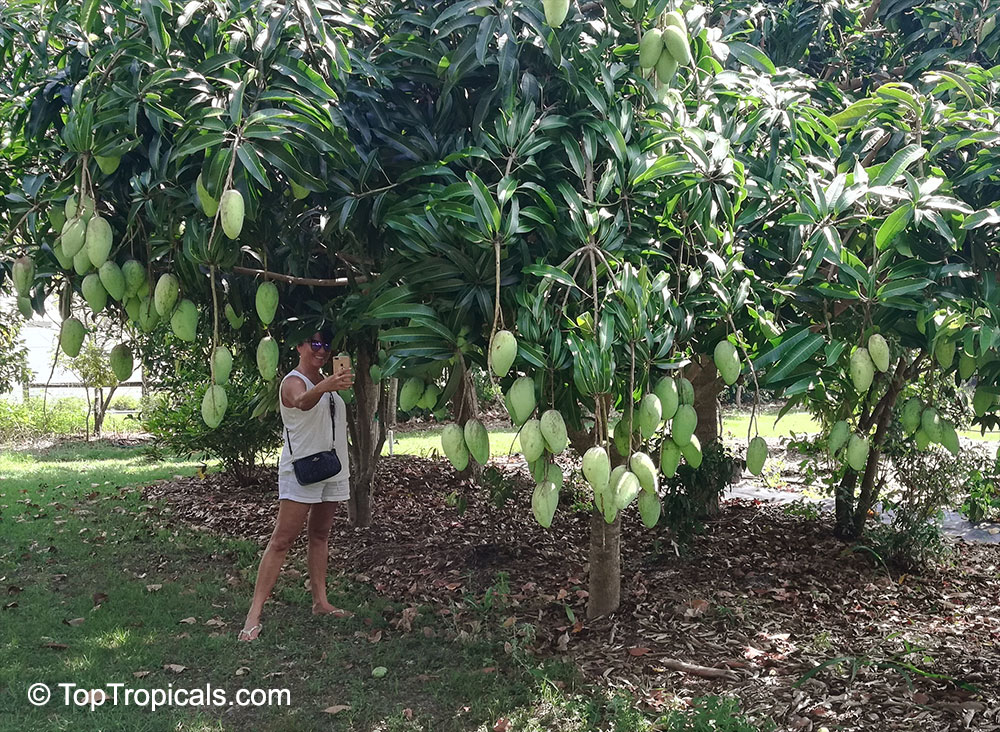
In the photo: Mango