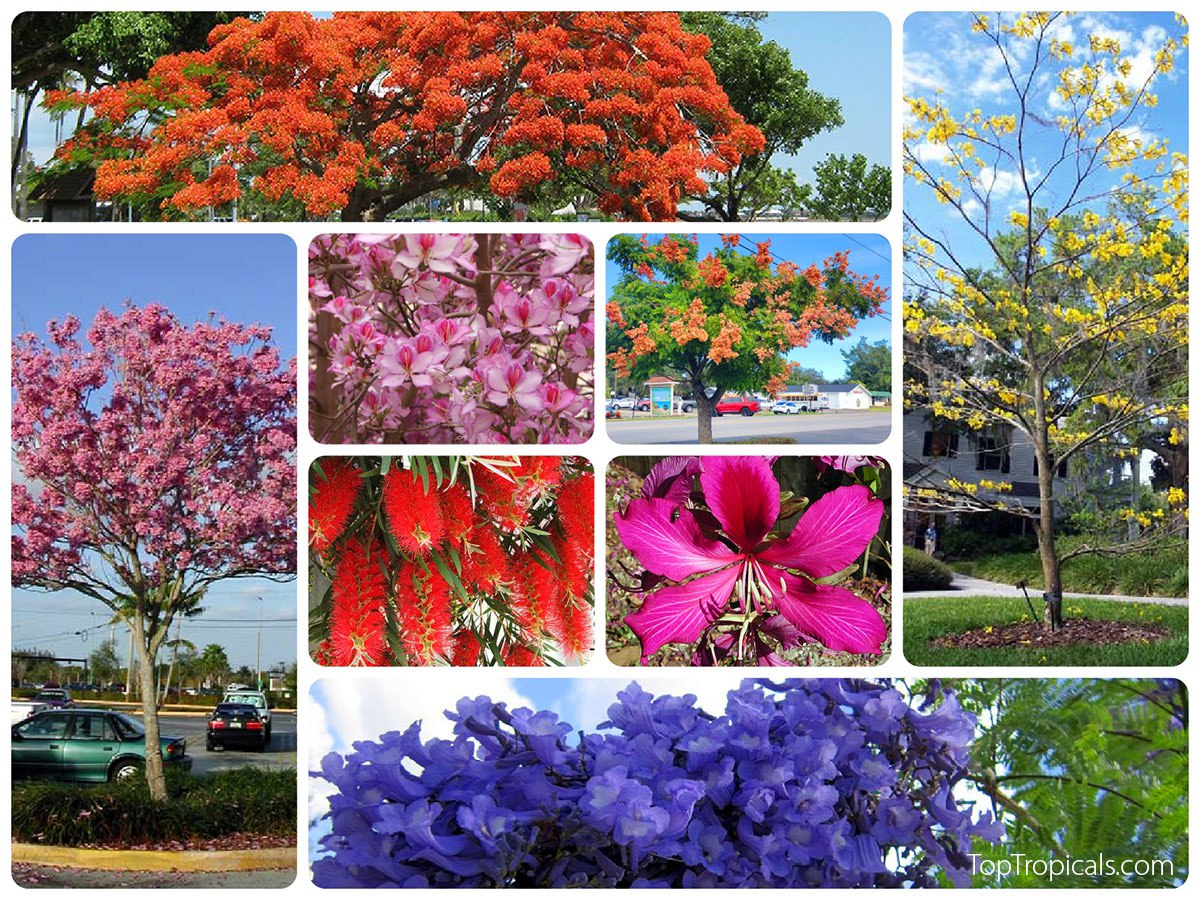
The diva of tropical trees. Huge red-orange flowers blanket the branches
from late winter through summer. If you’ve ever seen one in full
bloom, you know — it stops traffic.
Best in large yards or open spaces, but young ones do great in big pots for
a few years.
🛒 Shop Tatiana: “If you want a tree that makes
people
say ‘wow,’ this is it.”
Tabebuia chrysotricha – Dwarf Golden Tabebuia
Small tree, big drama. It turns solid gold just before new leaves
appear.
Blooms while completely bare — a stunning contrast of yellow on brown
wood.
Perfect for patios, courtyards, and containers. Handles cool nights down to
the mid-20s F.
Bright, cheerful, and forgiving — the kind of tree that always looks
like it’s celebrating. 🛒
Shop
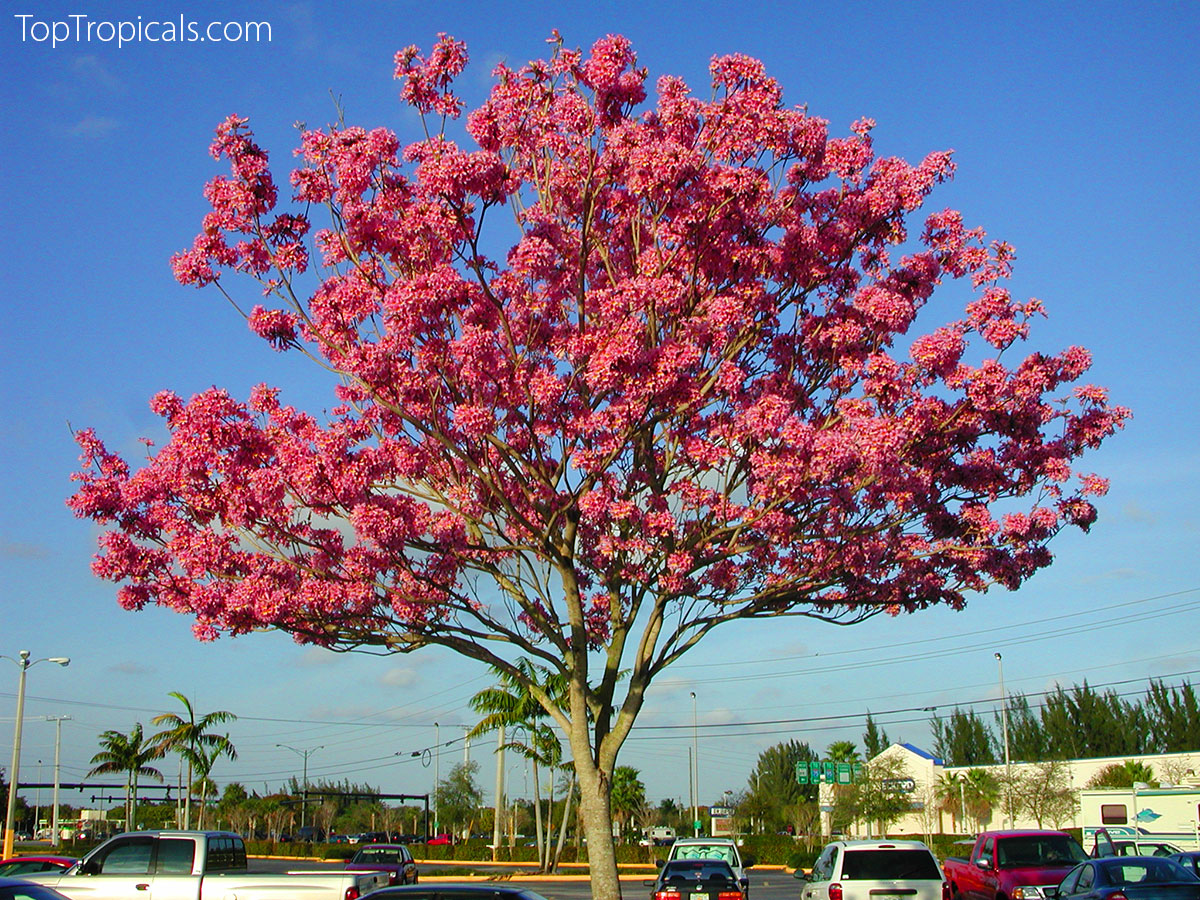
The Florida “cherry blossom.” Pink-lavender flowers smother
the branches each winter, often before any leaves return.
Thrives in sandy soil, tolerates drought, and grows beautifully in large
planters or pots indoors near a sunny window.
Ideal for seasonal residents or anyone who wants color when everything else
is asleep. 🛒
Shop
Jacaranda mimosifolia
If color had music, this would be jazz.
Soft, fern-like leaves and cascades of violet-blue trumpet flowers —
airy, elegant, unforgettable.
Outdoors, it makes a graceful shade tree; in containers, it stays compact
with regular pruning.
Jacarandas reward patience — they bloom bigger each year. 🛒
Shop
Koelreuteria paniculata – Golden Rain Tree
A favorite for its surprises — golden blooms in summer, pink paper
lantern pods in fall, and bronze leaves before rest.
Fast-growing, tough, and easy. Loves full sun and moderate water.
Great for open lawns or patio tubs. The kind of tree that gives you
something new to look at every month. 🛒
Shop
Callistemon citrinus – Bottlebrush Tree
The hummingbird magnet.
Bright red, brush-shaped flowers bloom several times a year —
sometimes even in cool weather.
The dwarf form, ‘Little John,’ stays about 4 feet tall, perfect
for pots or small borders.
Trim lightly after flowering to keep it compact and colorful. 🛒
Shop Tatiana: “If you’ve never grown a
tropical tree before — start here. It’s the friendliest
one.”
Bauhinia variegata – Pink Butterfly Tree
Graceful, fragrant, and forgiving.
Its pink-lavender orchid-like flowers open from late winter through spring,
filling the garden with color and pollinators.
It’s fast-growing, drought-tolerant, and excellent for both ground
and pots.
Even the buds are edible — a fun bonus for adventurous gardeners. 🛒
Shop
Bauhinia blakeana – Hong Kong Orchid Tree
The queen of them all.
Huge magenta-purple blooms that last for months, from fall through spring.
Fragrant, clean (no messy seed pods), and perfect for patios or large
decorative containers.
Give it sun, a little water, and it will reward you with bloom after bloom.
🛒 Shop Tatiana: “It’s the one tree that never lets winter
win.”
A note on grafted Hong Kong Orchid Trees:
Most Hong Kong Orchid Trees are grafted, and that’s actually a big
advantage.
Because they don’t grow from seed, grafted plants mature faster and
begin blooming while still small — sometimes within the first year.
That makes them perfect for patio pots or small gardens where space is
limited.
Bringing the Tropics Home
Whether your garden faces the Gulf or your window faces the snow, these
trees let you live in color year-round.
Plant them outdoors in warm zones or grow them in pots indoors — they
adapt, they bloom, they brighten every corner.
Gardening isn’t about waiting for spring — it’s about
finding joy in every season.
And when a tree blooms in January, that joy feels twice as sweet.
Yes! Smaller species like Bottlebrush ‘Little John,’ Dwarf
Tabebuias,
and many
Bauhinias bloom beautifully in pots with bright light or grow lamps.
Q: Do they lose their leaves in winter?
Some, like Tabebuias
and Jacarandas,
drop leaves right before blooming — it’s normal
and part of their charm. Others, like Bottlebrush,
stay evergreen.
Q: What fertilizer works best?
We use Sunshine
Boosters — gentle, balanced, and perfect for tropicals.
Feed every 2–3 weeks during active growth.
Q: How do I know when to water?
Touch the soil! If it’s dry an inch or two down, water deeply.
Overwatering is the main mistake with tropicals.
Q: Can they handle frost?
A quick dip into the upper 20s F is fine for most mature trees. Cover
young ones or move containers under shelter if colder.
Q: Which are best for beginners?
Start with Bottlebrush ‘Little John’ or Golden Tabebuia
— compact, colorful, and nearly foolproof.
Q: When will they bloom?
Usually within few years if they get enough sun and warmth. Grafted
plants blooms much sooner
Q: Which of these trees are best for pot
growing?
For patios, balconies, or indoor sunrooms, choose the compact or grafted
types:
By Tatiana Anderson, Horticulture Expert at Top
Tropicals with Smokey & Sunshine help
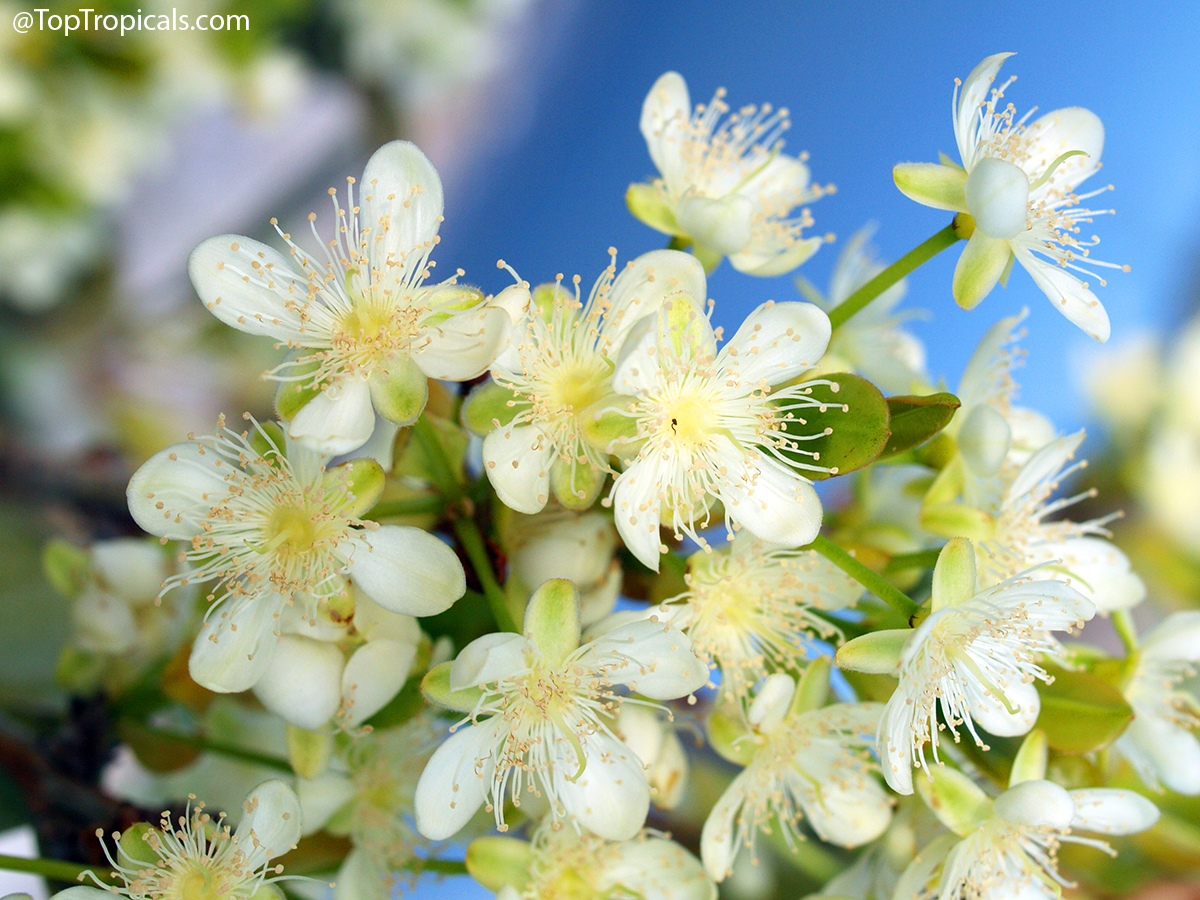
Eugenia brasiliensis - Grumichama fruit on the branch
Growing Eugenia Cherries (Cherry of the Rio Grande & Grumichama)
Cherry of the Rio Grande and Grumichama are compact, adaptable tropical
fruit trees well suited to Southern landscapes. While forgiving, they
perform
best when planted correctly from the beginning.
Site and Planting
Drainage is essential. Avoid low areas where water collects. Plant on
a slight mound if soil is heavy or clay-like.
Choose full sun for best flowering and fruit production. Partial shade
is tolerated.
A south or southeast exposure near a wall improves cold resilience and
reduces wind stress.
Dig a hole twice as wide as the container, but no deeper than the root
ball.
Set the tree level with surrounding soil. Do not bury the trunk.
Water and Feeding
Water regularly during the first few months while roots establish.
Once established, trees tolerate short dry periods but fruit best with
moderate, consistent moisture.
Established Cherry of the Rio Grande can tolerate brief drops into the
low 20s.
Established Grumichama tolerates temperatures into the upper 20s.
Harvest and Production
Cherry of the Rio Grande fruits from late spring into summer. Pick
when fully dark and slightly soft.
Grumichama ripens quickly, often within four weeks after flowering.
Pick when glossy and deep purple-black.
Both trees often begin fruiting within 2–3 years and increase
production steadily with maturity.
Growing in Containers
Use at least a 10–20 gallon pot for long-term growth.
Ensure multiple drainage holes.
Use a high-quality, well-draining container mix. Avoid heavy garden
soil. Top Tropicals Abundance soil-less mix is specially formulated for pot
growing
Place in full sun for best fruiting.
Water deeply, then allow the top layer to dry slightly before watering
again.
Move containers to a protected area during hard freezes.
Prune lightly to maintain shape and airflow.
Common Mistakes
Planting in poorly drained soil.
Overwatering and keeping soil constantly saturated.
Over-fertilizing with excessive nitrogen.
Planting too deep and burying the trunk.
Expecting heavy crops immediately instead of allowing time for
maturity.
Which one tastes better – Cherry of the Rio Grande or
Grumichama?
Cherry of the Rio Grande has a deeper, classic “sweet cherry”
flavor with slight richness. Grumichama is softer, juicier, and often
described as cherry with hints of grape and plum. Both are excellent fresh;
Grumichama is especially popular for jam.
Which tree produces more fruit?
Grumichama typically produces heavier crops once mature and can carry
hundreds of fruits in a season. Cherry of the Rio Grande produces
consistently but
in slightly smaller volumes.
Do birds take all the fruit?
Birds are attracted to both trees, especially Grumichama. Netting during
peak ripening or harvesting promptly usually solves the issue.
Are these true "tropical" trees or subtropical?
They are best described as subtropical tropicals. Unlike ultra-tender
tropical fruits, Eugenia cherries tolerate occasional frost once
established,
making them more reliable in Southern landscapes.
Do they drop fruit messily?
Fruit will fall if overripe, but the trees are compact and manageable.
Regular harvesting prevents ground drop and keeps the area clean.
Can they be used for hedging or screening?
Yes. Their dense evergreen foliage and upright growth make them suitable
for edible hedges or privacy screens while still producing fruit.
Choosing between them is not about survival — both have proven
resilient. It is about flavor preference, crop volume, and how you want to
use
the fruit in your kitchen and landscape.
Eugenia brasiliensis - Grumichama fruit close up
Eugenia aggregata (cv. Calycina), Cherry of the Rio Grande
The Secret to a Sharper Mind Might Be Growing in Your Backyard
Harvesting tropical fruits
The Secret to a Sharper Mind Might Be Growing in Your Backyard
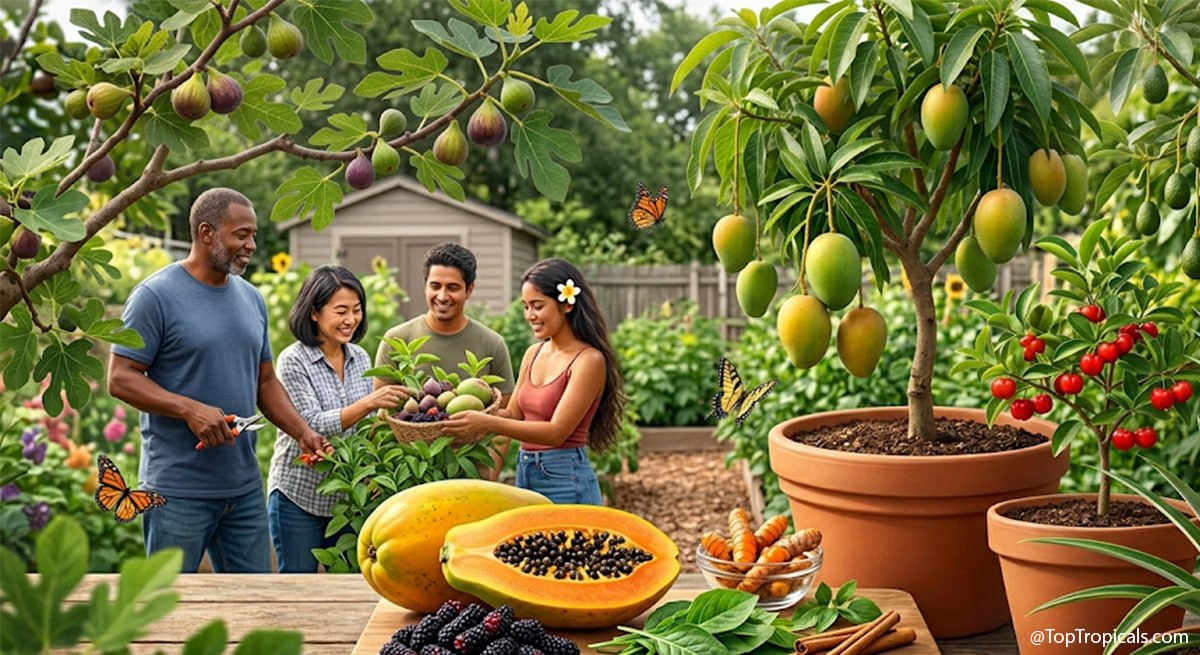
Your garden shed might hold a more powerful tool for brain health than your medicine cabinet. What if the best defense against cognitive decline isn’t found in a pill bottle - but right outside your door? While we often think of gardening as just a hobby, new research suggests that the combination of physical "zone-pushing" and harvesting your own nutrient-dense tropical fruit could be a literal life-saver for your brain.
🍒 What the Research Actually Says
A massive study recently published in the journal Neurology followed more than 92,000 people to see how diet impacts the mind. The findings were clear: the quality of the plant-based foods you eat plays a massive role in your risk of dementia. It isn't just about "eating your veggies" - it's about which ones you choose.
(The full study: Plant-Based Dietary Patterns and Risk of Alzheimer Disease and Related Dementias in the Multiethnic Cohort Study)
🍒 Why Growing Your Own Fruit Changes the Game
If you grow your own fruit, you quietly solve two problems at once. It turns a "diet plan" into a natural part of your day.
1. Effortless Nutrition
When a ripe mango, a handful of mulberries, or a fresh guava is hanging within arm's reach, you eat it. It replaces processed, sugary snacks without any "willpower" required. You are naturally moving toward the high-quality, whole-food diet the research supports.
2. Functional Fitness
Gardening doesn't feel like a workout, but it is. Bending, pruning, carrying pots, and digging are all forms of functional movement. It’s steady, useful physical activity that supports your heart and brain while you’re focused on your plants.
3. The "Outdoor" Effect
Sunlight and fresh air are natural mood boosters. The mental focus required to manage tropical plants - especially when you’re protecting them from a surprise freeze - provides a level of mental engagement and stress relief that you just can't get from a treadmill.
🍒 What to plant if you are just starting
You don’t need a massive orchard to start investing in your brain health. One or two plants can shift your habits immediately.
For Fast Results:Papaya and Mulberries produce fruit quickly and are incredibly easy to manage. Turmeric (curcuma), leafy greens (Longevity spinach, Katuk) and Cinnamon proved instant harvest. For Small Spaces:Dwarf Mango varieties and Cherries (Eugenias or Acerola), Pineapples thrive in containers and provide massive doses of antioxidants. For the "Zone Pusher":Figs and cold-hardy Avocados offer healthy fats and fiber that are essential for long-term health.
🍒 Start Small, Start Now
The research makes one thing clear: improving your food quality matters, and you can see results no matter your age. Planting a fruit tree changes what you eat, how you move, and how often you step outside.
That’s more than just gardening - that’s a lifestyle shift your brain will thank you for.
🍒 FAQ
Does fruit really support brain health?
Yes. Diets rich in whole, high-quality plant foods are linked to a lower risk of dementia, especially when they replace processed snacks and added sugars.
Is gardening enough to count as exercise?
Absolutely. Regular gardening provides steady, functional movement that improves circulation and supports overall physical health.
Is it too late for me to start?
No. The study showed that even participants who improved their diet quality in their 60s and 70s saw a measurable reduction in dementia risk.
9 tough trees for hot, dry spots that actually thrive
☀️ 9 tough trees for hot, dry spots that actually thrive
Why that one brutal spot in your yard never works? There’s always that one place - blazing sun, sandy or rocky soil, dries out fast, and everything you plant there struggles. In Florida, Arizona, and California, this isn’t rare - it’s the norm. The good news? Some trees don’t just tolerate it - they prefer it. Once established, these picks handle heat, drought, and neglect far better than typical landscape plants. What makes these trees different? These are survivors. Many store water, have deep root systems, or evolved in dry climates. Translation - less watering, fewer losses, and a lot less frustration.
🔥 9 best trees for hot, dry spots
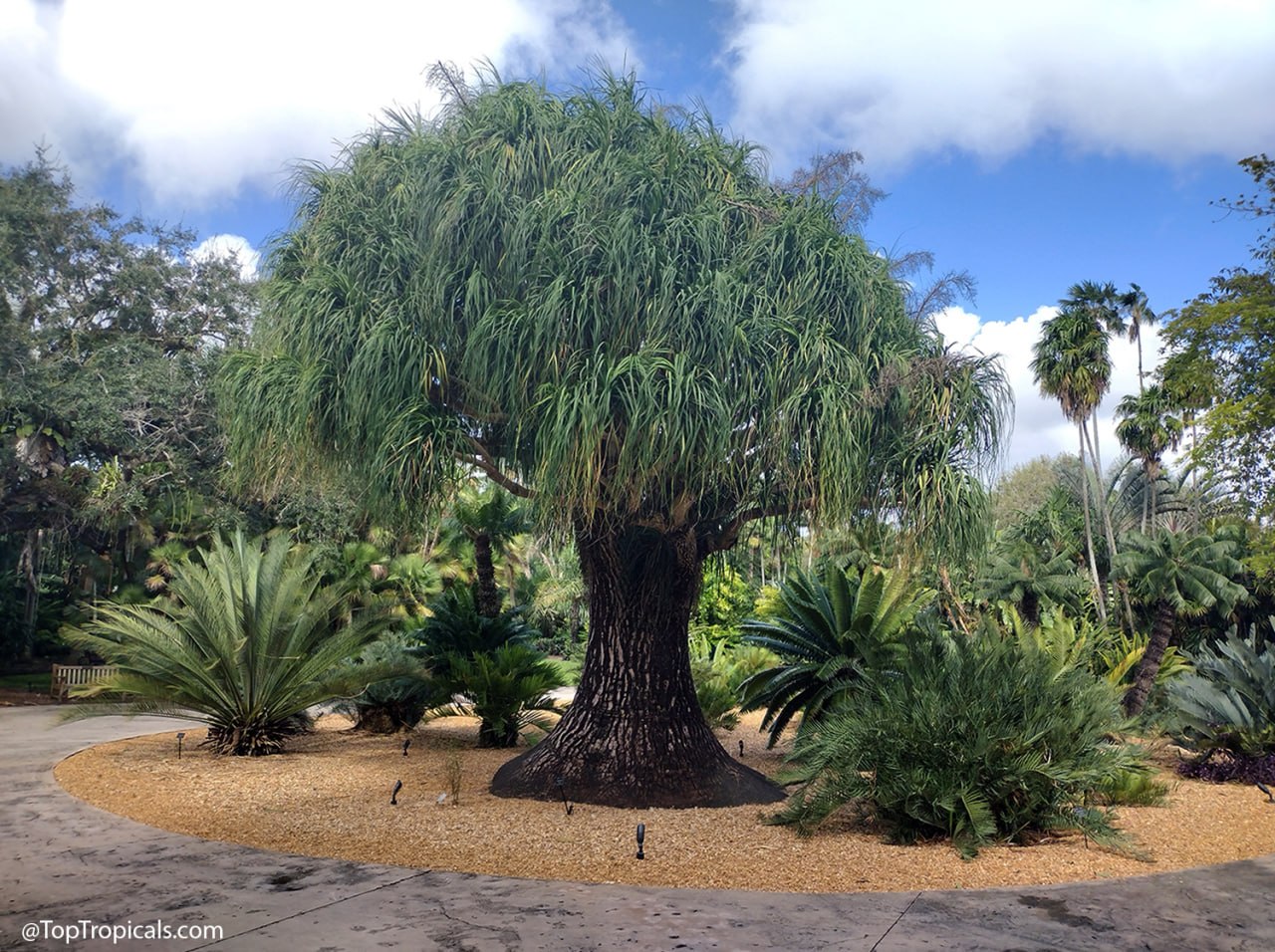
☀️ 1. Pony Tail Palm - Beaucarnea recurvata 📸
Not a true palm - it stores water in its showy, swollen trunk, making it incredibly drought tolerant and perfect for harsh, dry areas.
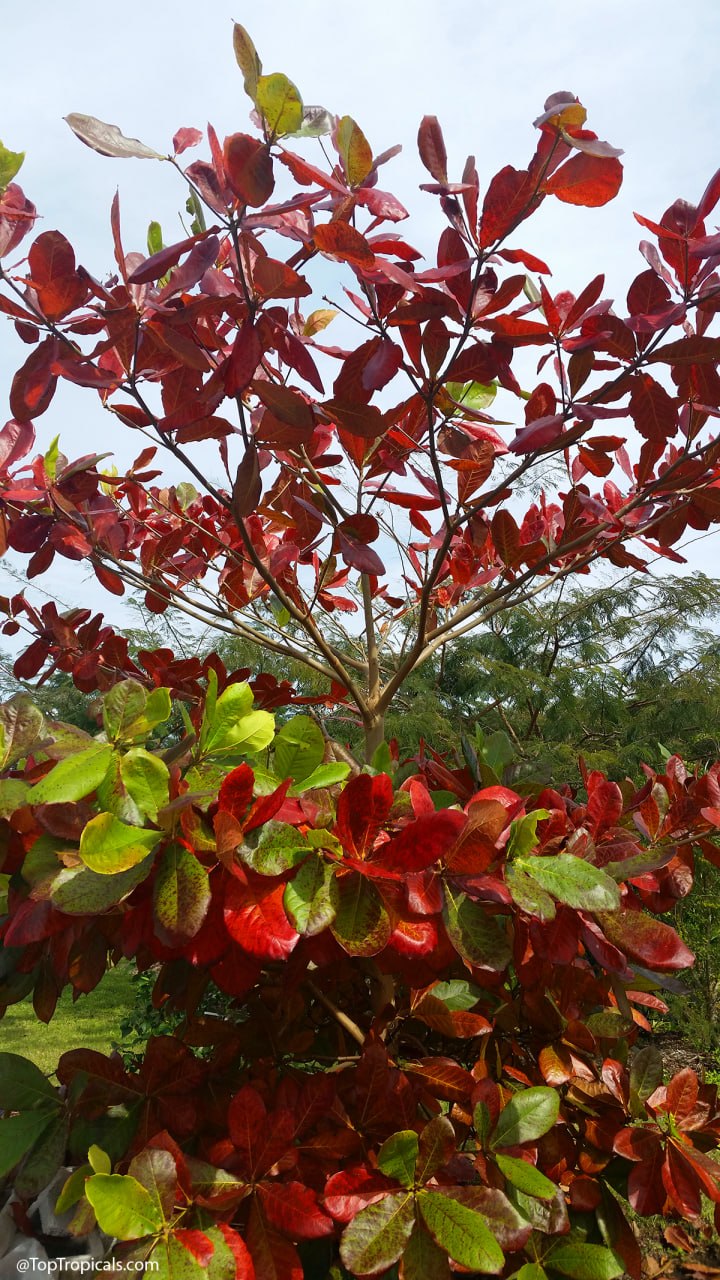
☀️ 9. Tropical Almond - Terminalia catappa 📸 A classic coastal shade tree that thrives in heat, wind, and dry sandy soil once established. Its broad, layered canopy provides excellent shade, and the large leaves turn striking shades of red and orange before dropping - a rare bonus color show for hot-climate landscapes. Plus almond nuts as extra bonus!
Tropical Almond Plant Facts
Terminalia catappa Tropical Almond, Badamier, Java Almond, Indian Almond, Malabar Almond, Singapore Almond, Ketapang, Huu Kwang, Pacific Almond
💕 Why is this shrub everywhere in Southern landscapes?
🌸 Nonstop blooms
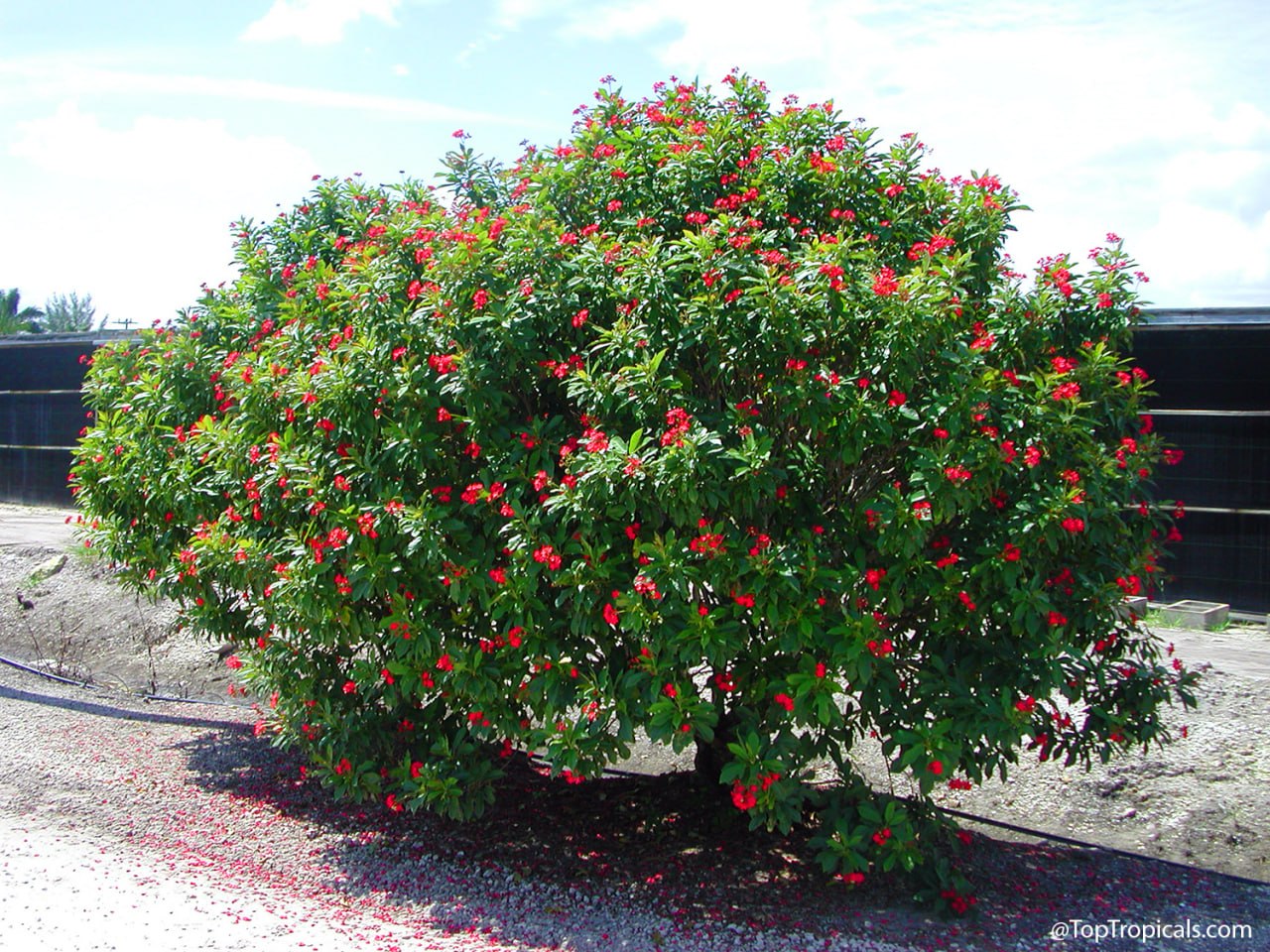
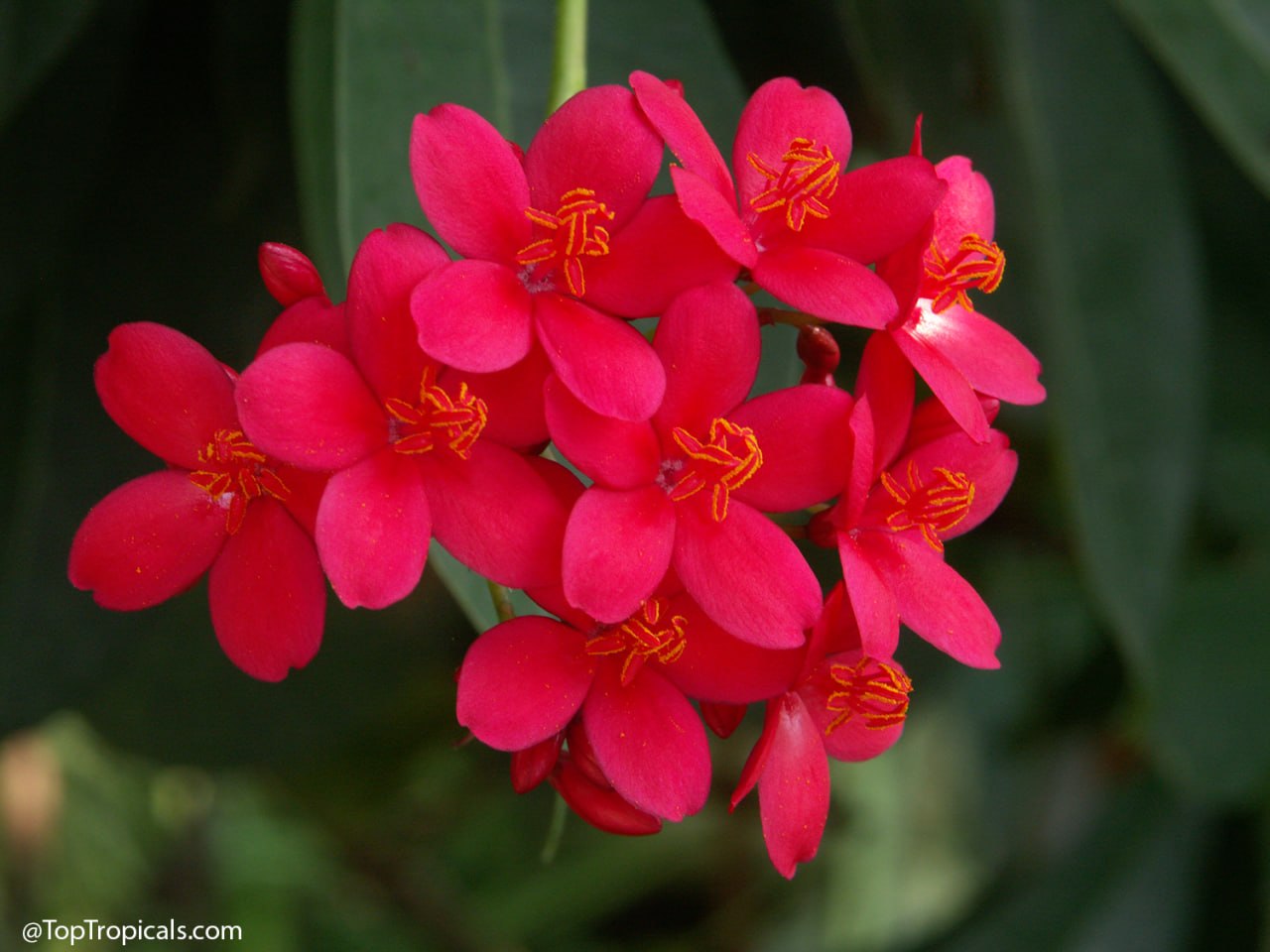
One look at Jatropha integerrima compacta - Peregrina and the answer becomes pretty obvious. This compact tropical shrub or a dwarf tree blooms almost nonstop with clusters of bright scarlet star-shaped flowers that butterflies can't seem to resist. In warm climates, it keeps adding color when many other plants take a break.
🌸 Compact size, big impact
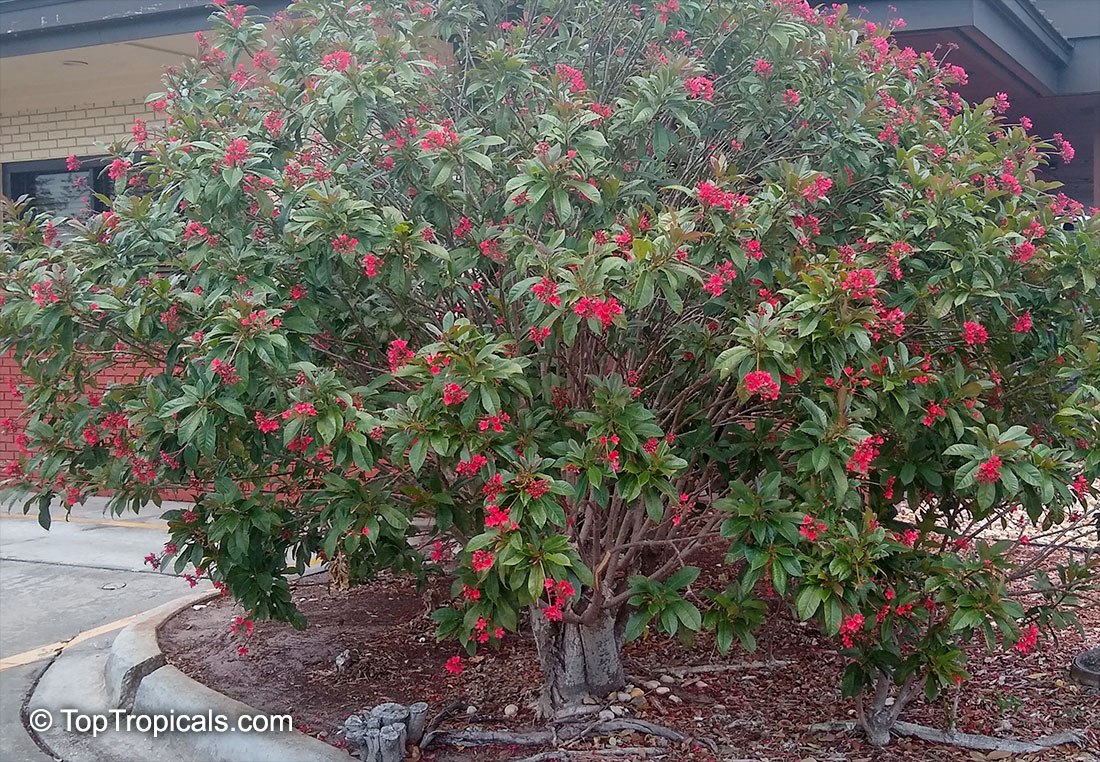
Compacta stays smaller and fuller than the regular Peregrina, which makes it especially popular for foundation plantings, pool areas, patios, and smaller gardens where oversized shrubs become a headache. The glossy green leaves stay attractive year round, giving it a clean, lush look even when it's between bloom cycles.
🌸 Surprisingly low maintenance
Another reason gardeners love it - this plant is surprisingly easygoing. It tolerates many soil types as long as drainage is good, handles heat well, and can be pruned almost anytime because it flowers on new growth. Want a tidy shrub? Trim it. Want a small tropical tree shape? It can do that too.
🌸 A Southern landscape favorite
For Southern gardeners looking for reliable color without constant fuss, Peregrina has quietly become one of those "plant it and enjoy it" landscape favorites.