Garden Blog - Top Tropicals

Date: 24 Jun 2018

TopTropicals

Fruitful Fruit and SuperFood...

Q: I have a large fruit garden here in Florida with many mango trees, avocadoes, guavas, and other tropical fruit. Last year hurricane Irma and flooding killed a few avocado trees, but mangos and guavas survived OK, but the sad part is, very few flowers this year and almost no fruit setting. I noticed on your website your Superfood and Sunshine-Honey boosters that supposedly help fruiting? But I am afraid it is too late now as your instructions say first application must be in early Spring? I wish I discovered earlier that my trees wouldn't want to fruit this year...

A: First of all, it is never late to give the food! You may start applications of SUNSHINE products at any time of the year. The best results will be achieved once you treat your plants on regular basis throughout the whole year cycle of metabolism.
Couple weeks ago we started harvesting our 2 guava trees. These two are the same variety (Variegated Honeymoon), planted within 20 ft from each other and growing in the same conditions. The only difference was, one was treated with SUNSHINE-Honey and SUNSHINE-SuperFood, and another one didn't get any treats in order to have a control plant.
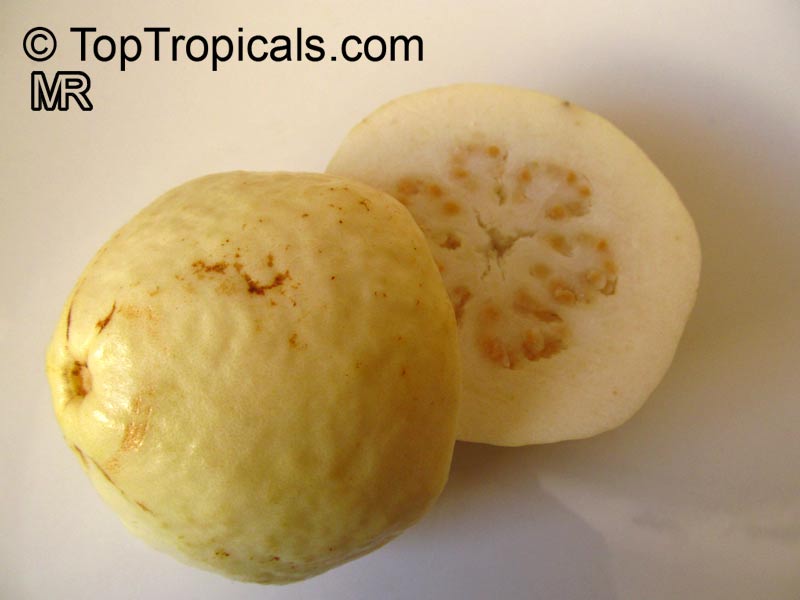
Results are very interesting, see the picture. Both trees were heavily covered with fruit. However the one with treatments developed fruit that is much larger, much sweeter and juicier, and the most interestingly - with less seeds, almost no seeds!
To answer your question: yes, you can start feeding your fruit trees right now. It is still a Springtime. Many mango varieties have late season; even early varieties may delay their fruiting if flowering triggered by miscro-elements. Guavas have very long season and most varieties can have multiple crops throughout Summer-Fall.
Here is a simple and affordable feeding schedule to help your fruit garden recover from last year hurricane stress, and establish reliable production:
1) SUNSHINE-E - for boosting metabolism - once a month
2) SUNSHINE-Honey - for bringing sugars to the heart of the tree and boosting fruit sweetness and quality - now and in 2 weeks
3) SUNSHINE-SuperFood - for overall health, recovering from hurricane and fixing root damage from flood - now and every 2 weeks throughout warm season.
4) You may apply regular balanced fertilizer NPK as usual (we apply once a month, a handful per in-ground tree)
It's that simple. Just try and watch your trees produce again!

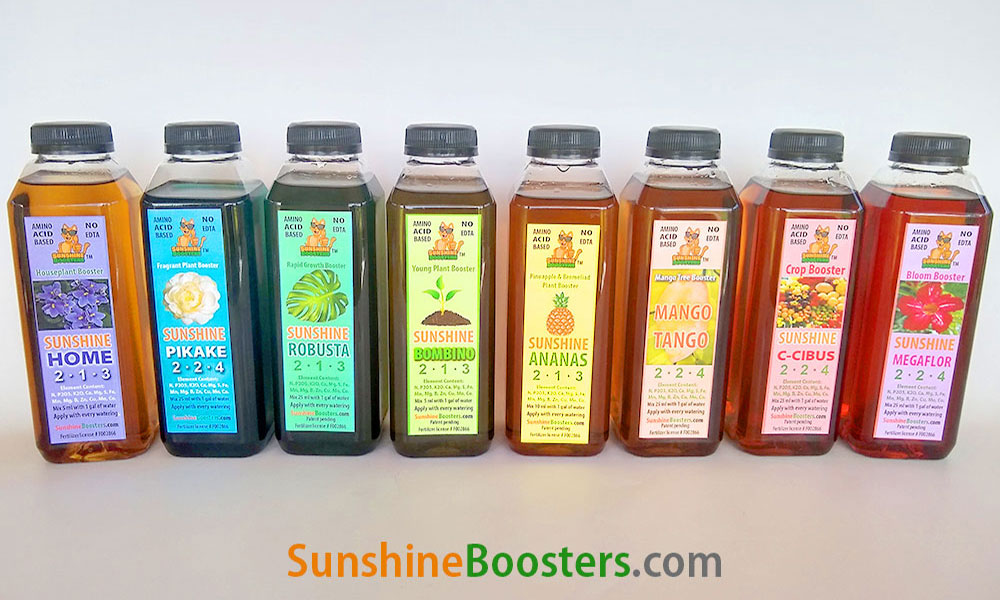
Check out all SUNSHINE boosters... We offer FREE shipping on them, so you can make your plants happy!

Date: 8 Jul 2020

Grafted fruit trees for Hawaiian gardens

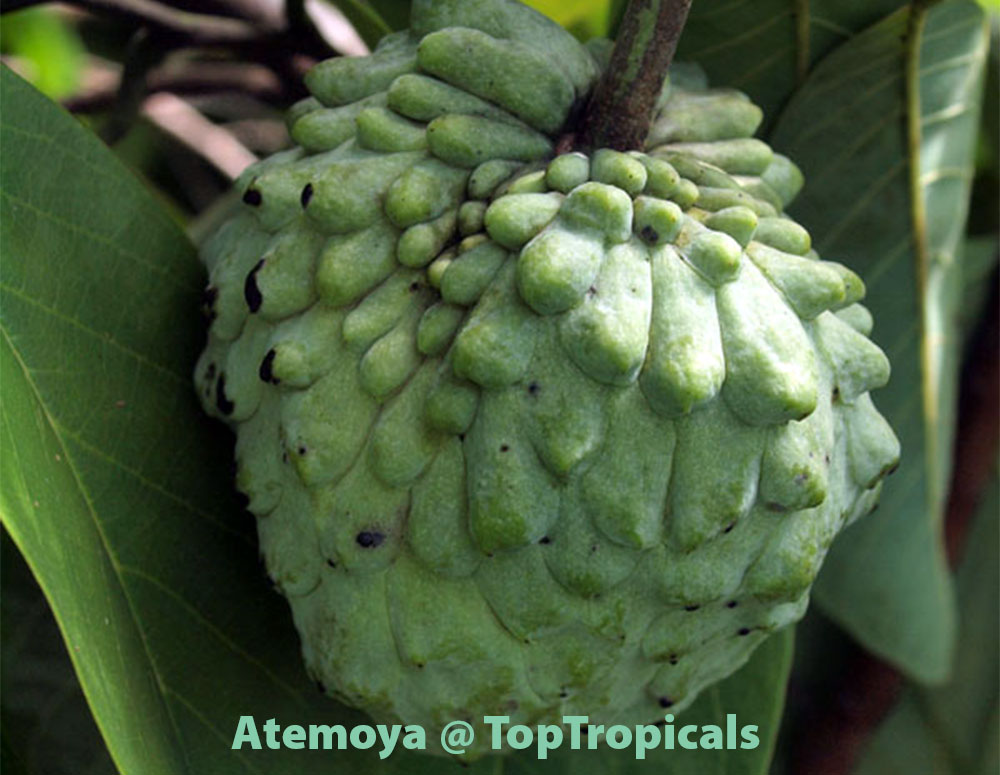
In the photo: Atemoya, one of the Annonas - fruit lover favorites.

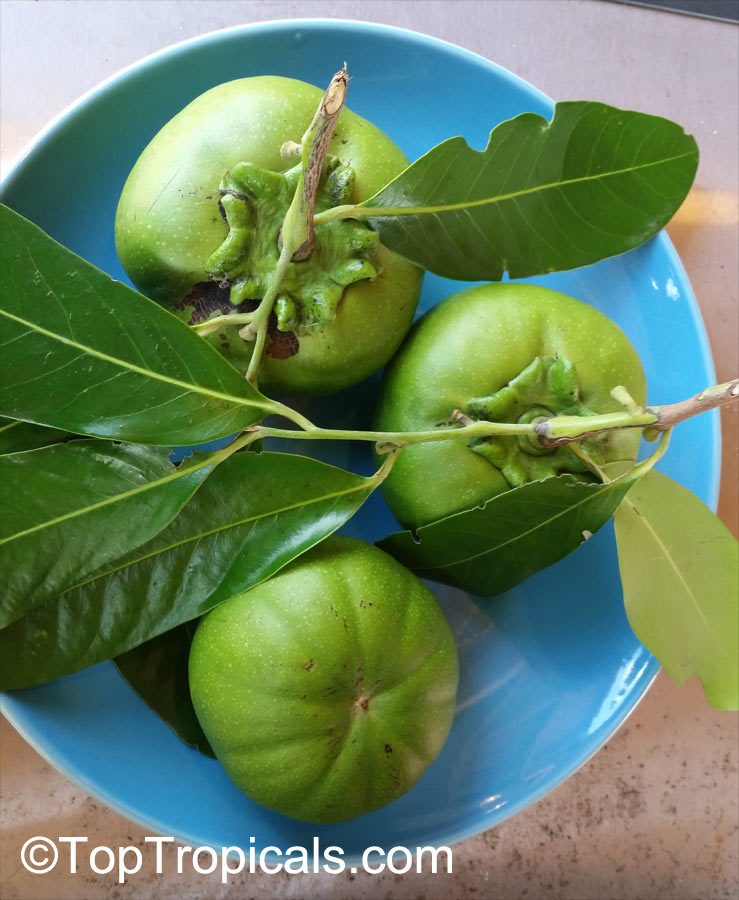
Q: Aloha guys, I purchased a Diospyros digyna - Black Sapote grafted var. Black Beauty from you and am checking to make sure it will fruit by itself and not need both sexes. Also checking to see if the grafted atemoya I bought from you will fruit at sea level (where I'm at) or if I should give it to a friend who is above 1,000 so it will fruit? My grafted Maimi soursop is thriving! Looking at getting a grafted jackfruit from you all next.

A: Black sapote Black Beauty does not need a second plant to produce fruit. Grafted trees should be flowering and setting fruit right away, or sometimes on the second year.
Atemoya does not require high elevation for fruiting. It is a hybrid Annona squamosa x Annona cherimola (A. cherimola species prefers higher elevation) so Atemoya is usually is happy at sea level.
Congratulations with your Soursop! It should be really happy in your location.

As for grafted Jackfruits, this is the list of varieties we usually carry. Since many of them are very rare, they sell out quickly once we get new arrivals. If you are looking for a specific variety, I strongly recommend to add it to your wishlist (click on "Notify me when available") and you will receive email from us as soon as we have it in stock, so you will be the first one to know about it!

Our favorite Jackfruit varieties (and also hot sellers)

Black Gold
Borneo Red
Crispy
Dang Rasimi

We also suggest to get a Kwai Muk (while we still have it!) - the most delicious fruit, and it should do well in Hawaii.

In the photo: Black Sapote

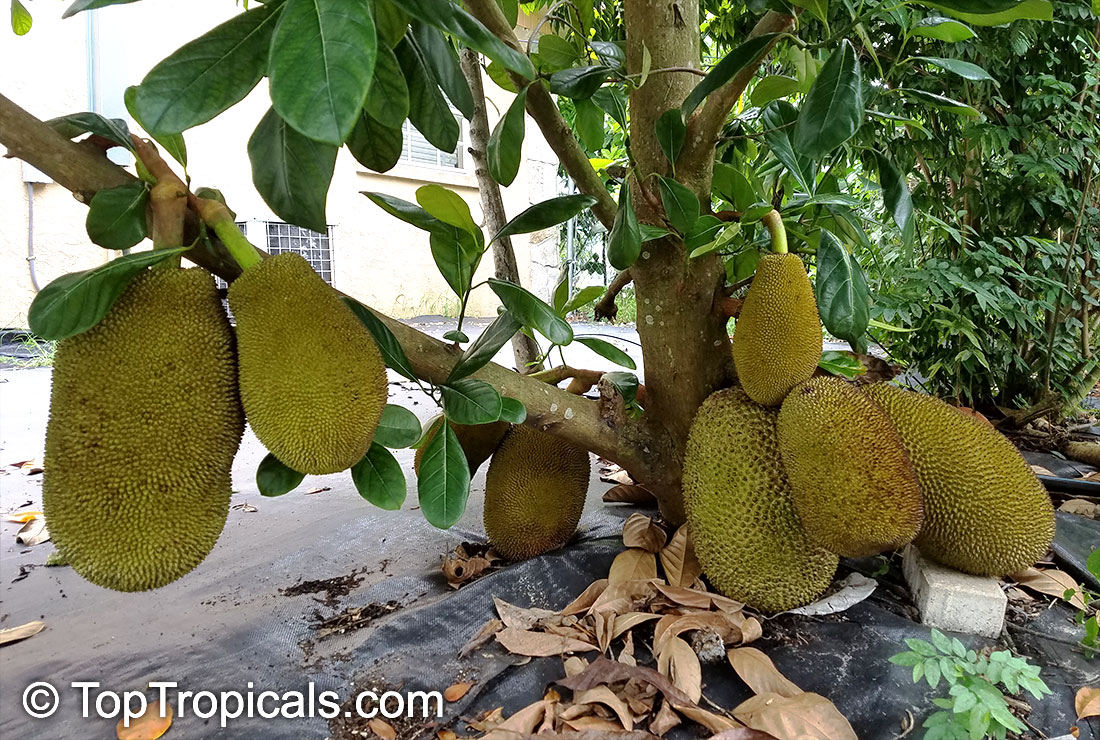
In the photo: Jackfruit at TopTropicals Garden in Ft Myers, FL

Date: 2 May 2020

Which fertilizer is right?

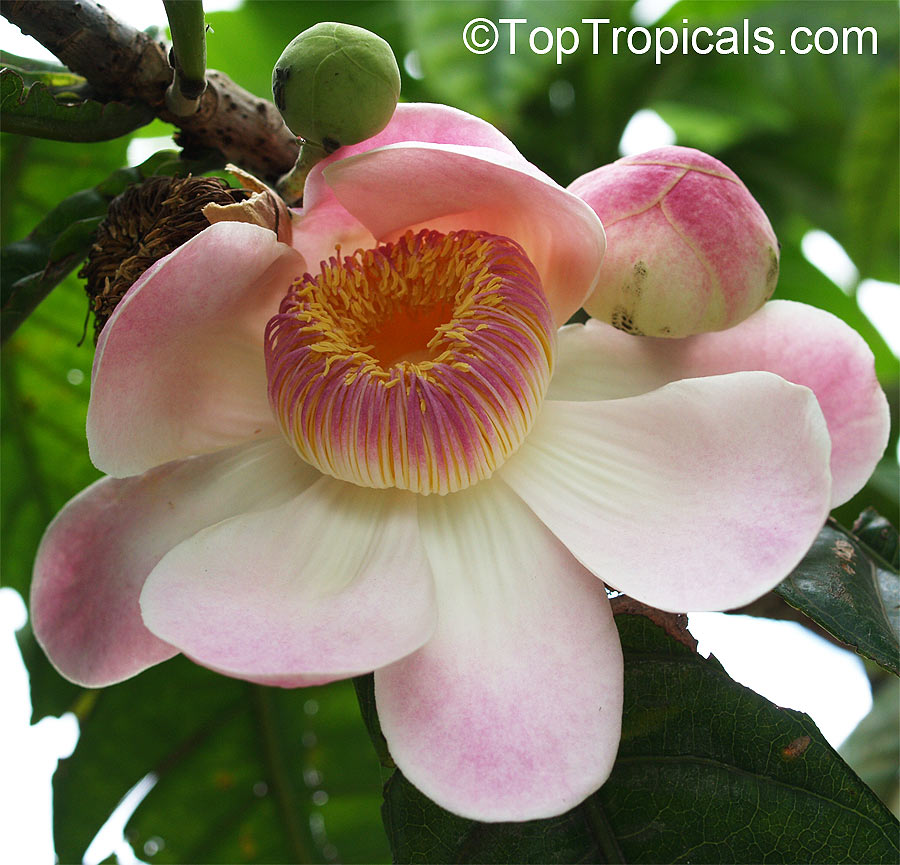
Q: I need some advice on which fertilizer(s) would be perfect for my C​annonball tree and its cousin Heaven's Lotus (Gustavia augusta). ​I also have fruit trees... soursops, mango, etc. and a collection of flowers including pua keni keni, plumeria, bougainvillea, etc. I am wondering if you can recommend a custom fertilizing regimen for my garden (especially the cannonball and the gustavia since they are young).

A: It is a perfect time now to fertilize your plants as they start active growth. We have suggestions on fertilizing programs for your trees. You will find here our recommendations for:

1. Young trees
2. Flowering trees
3. Fragrant plants
4. In-ground grown fruit trees... CONTINUE READING >>

Date: 23 Oct 2019

Best tasting white guava

Q: What's your best tasting white guava?

A: Our favorite white Guava is Viet Nam variety that is also very rare and hard to find. The fruit is very large, up to 6"in diameter, the pulp is very sweet and somewhat crunchy. The seeds are small which makes it more pleasurable to eat out of hand.
Another great feature of this variety, it stays compact and branches do not get leggy, unlike most guavas. It can be easily grown in a container, trimmed to the desired size and it will produce fruit under proper care.

Another cool variety is Indonesian, it also has a large round fruit and very few seeds to compare with others.

And last but not least, if you prefer soft fruit to crunchy, the Peruvian variety is a great choice. The fruit is pear-shaped.

Remember to provide plant food for good production, especially if grown in a container.

Fruit Festival Plant Food - Super Crop Booster
Mango-Food - Smart Release Fruit Tree Booster
SUNSHINE C-Cibus - Crop Nutrition Booster

Date: 3 Aug 2019

Grafted or seedling?

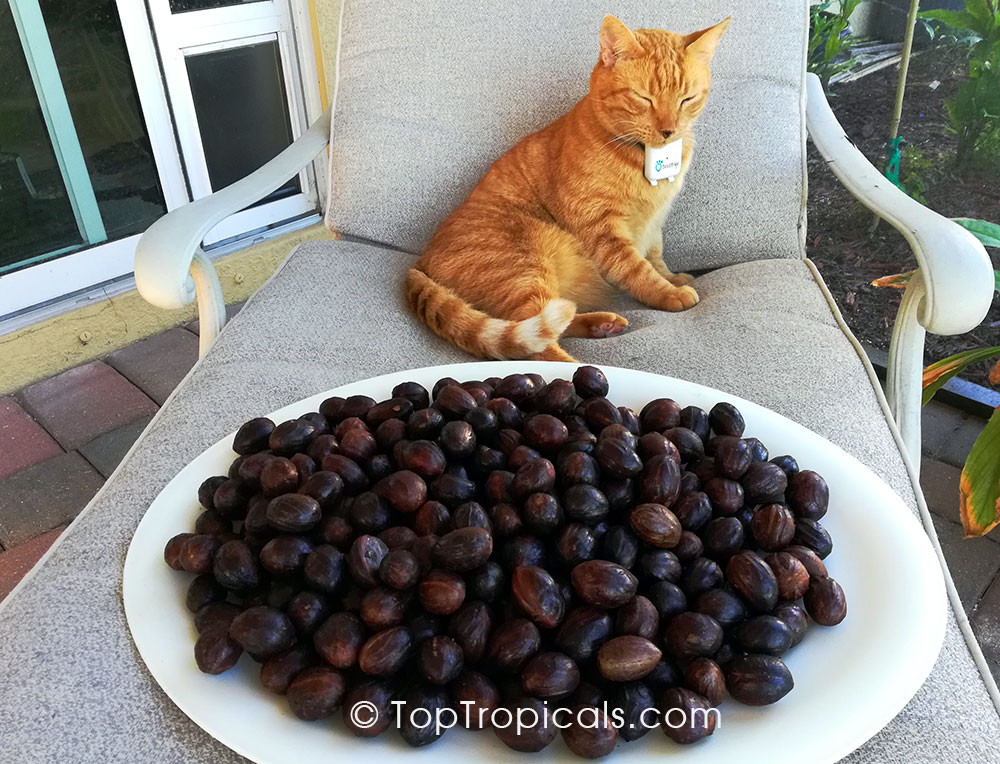
Photo: Mr Barcy meditating before planting Nutmeg seeds

Q: I planted an avocado seed and it sprouted quickly, it has been only a couple months and I already have a small plant. How soon will it produce fruit? Can I grow other tropical fruit from seed?

A: Unfortunately, some fruit trees, including varieties of avocado, mango, lychee, as well as apples and peaches - must be either grafted or air-layered in order to produce, for 2 main reasons:
- seedlings may take a very long time until fruiting, up to 10-15 years
- seedling gives no guarantee on the quality of the fruit or variety
These fruit trees should be propagated as "clones" - both grafted material or cuttings are actually copies of the mother plant and will keep the same fruit qualities. Grafted trees usually start producing immediately.
However there is a number of fruit trees that come true from seed, and take a very short time to start flowering. Jackfruit, Annonas (Sugar Apple, Guanabana, etc), Papaya, Icecream Bean, Eugenias start producing at a young age (3-4 years from seed).

Recommended fertilizers for fruit trees:

Fruit Festival Plant Food - Super Crop Booster
Mango-Food - Smart Release Fruit Tree Booster
SUNSHINE-Honey - for sweeter fruit
SUNSHINE SuperFood - microelement supplement