Dragon Fruit Plant Care – Tips
from the Garden Expert
Dragon fruit is one of those plants that look exotic but are surprisingly
easy once you know the basics. Here is what works best in the garden:
Soil: They hate wet feet. A sandy, fast-draining soilless-mix
is
your friend. If water sits around the roots, rot comes fast.
Watering: Deep watering is better than frequent sips. Let the
soil dry between
waterings. In rainy season they cope well, but in pots you need to be
careful.
Sunlight: Full sun is great, but in very hot places a touch of
afternoon shade keeps them happy.
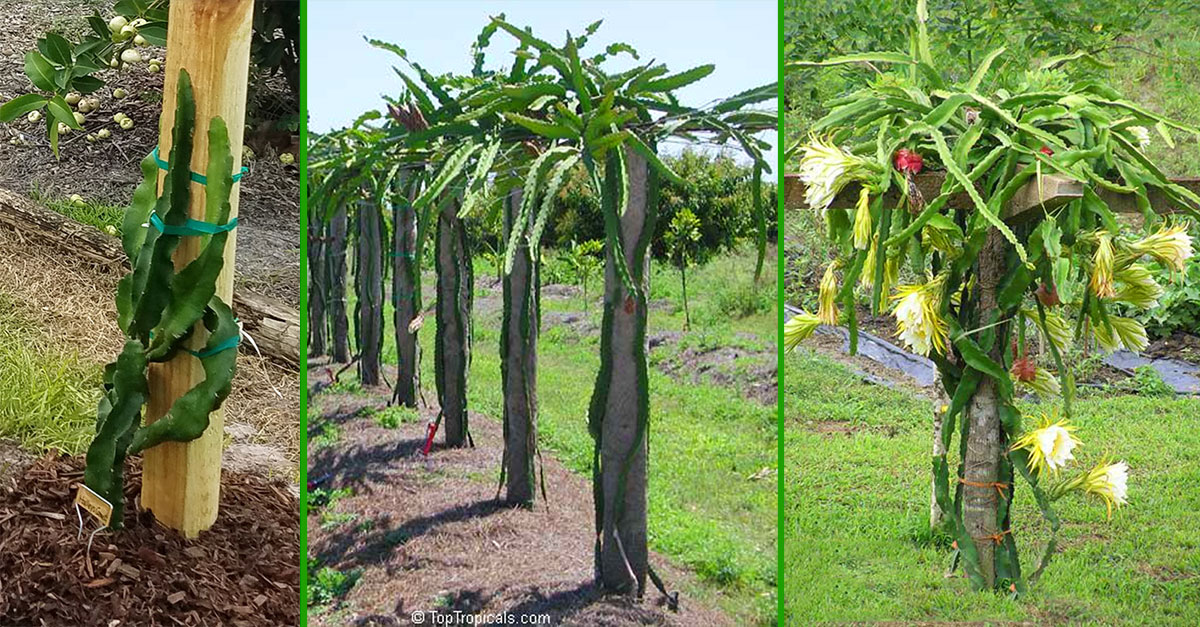
Support: They are natural climbers. A wooden post, concrete pole,
or trellis will give them something to grab and makes harvest easier.
Fertilizer: Feed lightly but often. A gentle liquid like Sunshine
C-Cibus liquid booster with every watering, or Green
Magic controlled release fertilizer
every 5-6 months. It encourages strong roots, lush growth, and lots of
flowers.
Pruning: Trim off tangled or weak stems. This guides energy into
strong branches that will flower and fruit.
Think of it as training a cactus vine into a small tree. Once it settles
in, it almost takes care of itself — and pays back with fruit you
can’t buy in stores.
🌱 Dragon Fruit
Plant Care – Outdoors and Indoors
Outdoors: Dragon fruit thrives in USDA Zones 10–11
year-round. In warm
regions like Florida, Texas, California, and Hawaii, you can grow it outside
in the ground. Give it fast-draining soil, full sun with a little afternoon
shade in the hottest months, and
a sturdy trellis or post to climb. Deep watering with drying periods in
between keeps roots healthy. A yearly pruning shapes the plant and boosts
flowering.
Indoors or Patio Pots: Gardeners in cooler zones can still enjoy
dragon fruit in containers. Use a large pot with sandy, well-draining mix or
soilless-mix
and a pole for support. Place the pot in the brightest
spot — a greenhouse, sunroom, or patio that gets 6+ hours of light
daily.
Move pots inside when temperatures drop below 40F. Even indoors, a healthy
plant can bloom and fruit if it has enough light and warmth.
❓
Dragon Fruit FAQ
How soon will a dragon fruit start producing?
Cuttings can flower and fruit in as little as 2–3
years. Seed-grown plants take longer, often 4–6 years. Large developed
specimens can start flowering and fruiting within a year or even the same
season.
Do I need more than one plant for pollination?
Some varieties are self-fertile, others need a second plant
for cross-pollination. Even self-fertile types usually set more fruit with a
partner nearby.
How big do they get?
In the ground, dragon fruit can climb 15–20 ft if you
let it. With pruning and a trellis, you can keep it shaped like a small
tree, 6–8 ft tall.
Can I grow it in a pot?
Yes. A large container with sandy mix or soilless-mix
and a pole for climbing works well. Indoors it will need
bright light or a grow lamp.
What does a dragon fruit taste like?
Sweet and juicy, like a blend of blackberry and raspberry.
Varieties differ: flesh can be white, pink, deep red, or purple, wrapped in
skins of red, pink, or yellow. White flesh is mild and refreshing, red flesh
is sweeter, and yellow flesh is the sweetest with a honey-pineapple flavor.
What zones can I grow dragon fruit outside?
USDA Zones 10–11 are best for year-round outdoor
planting. In cooler areas, grow it in containers and bring inside for
winter.
How often should I water?
Deep water, then let the soil dry. Too much water causes
root rot. Think “desert cactus with a taste for rain.”
Is dragon fruit easy to grow?
Yes. Pitayas grow like cactus trees on strong supports, but
they are easy to care for — little water, sun or semi-shade, and they
thrive.
How long do they live?
A healthy dragon fruit cactus can produce for 10 years or
more with proper care.
What are the health benefits?
Dragon fruit is high in fiber, supports digestion, and is
low in calories. It is rich in antioxidants and vitamin C, making it good
for immunity and overall wellness. Many gardeners enjoy it as a healthy
snack or in smoothies.
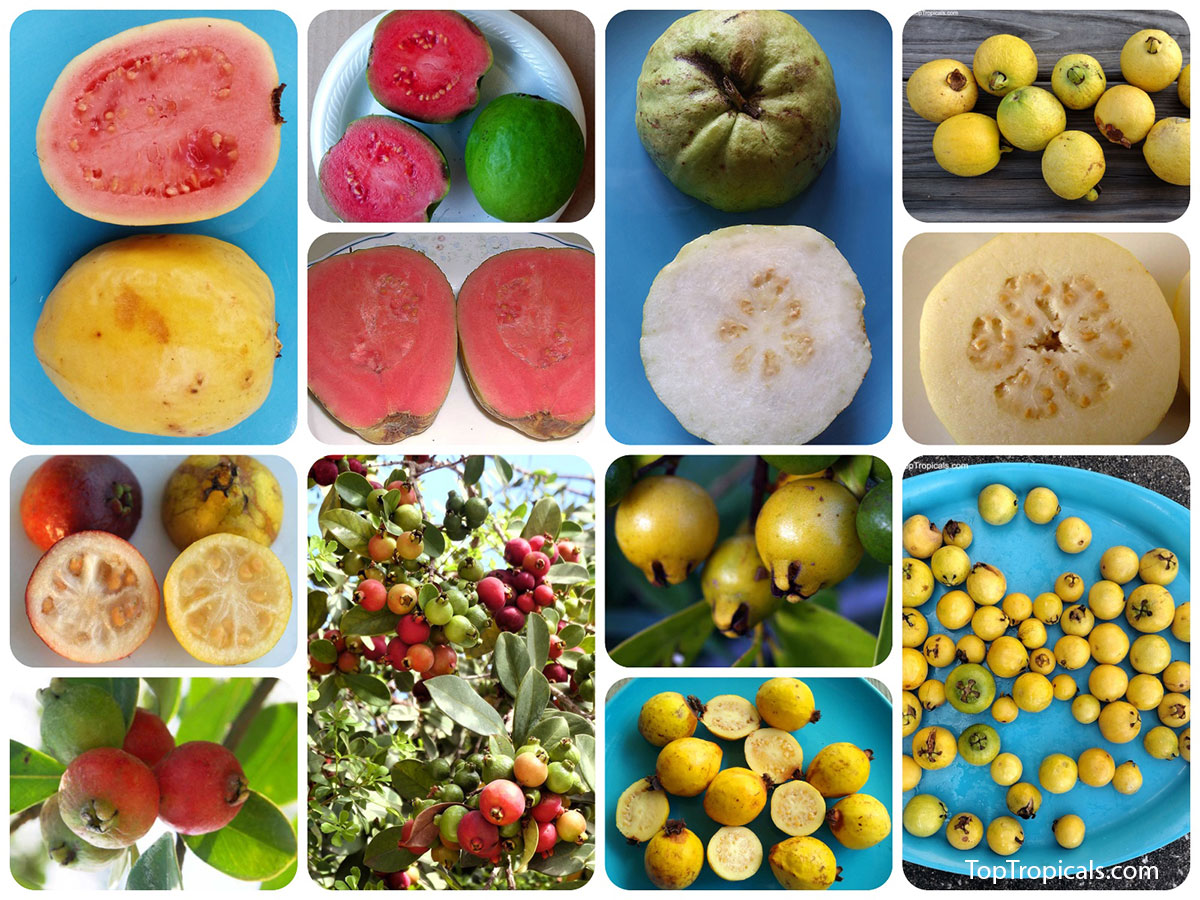
Guava varieties: Pink flesh (upper left quarter), White flesh and Cas
(upper right quarter), Red Cattley Guava (bottom left quarter) and Golden
Cattley (bottom right quarter).
Let’s talk Guava. Few fruits check as many boxes: flavor,
productivity, health, and adaptability. We’ve grown guava trees at Top
Tropicals for years here in Florida, and it never fails to surprise people
with how
easy it is — and how quickly it rewards you.
🌿 Health Benefits
We know the first question:"Why guava in addition to all the other
fruit trees I could plant?"Because guava is one of the healthiest tropical
fruits you can eat and grow — and it produces faster than almost
anything
else.
Vitamin C powerhouse — guava has four times more vitamin C than
oranges. One fruit covers your daily needs and then some.
Potassium and fiber — good for balancing blood pressure and
keeping your heart strong.
Antioxidants like lycopene and vitamin C — these keep your skin
glowing and help protect your cells from damage.
Dietary fiber — aids digestion and helps keep blood sugar
steady.
Guava is a true"food as medicine"tree you can plant right in your
backyard or in pot.
♥️ Our Favorite Varieties are Available Now
We currently have a DOZEN excellent guava varieties in stock selected by
our plant expert Tatiana Anderson — something special for every
garden. Our top picks are:
Pink Guavas
Barbie Pink
– Yellow pear-shaped fruit with thick pink flesh, sweet and juicy.
Cold
hardy for a tropical fruit. The best seller.
Hong Kong
– Large, round, smooth pink fruit. Sweet flavor, very few seeds, and
very
productive.
Tikal
– Our top pick. Fast-growing, disease-resistant, and produces the
sweetest
pink guavas with very few seeds.
White Guavas
Indonesian White
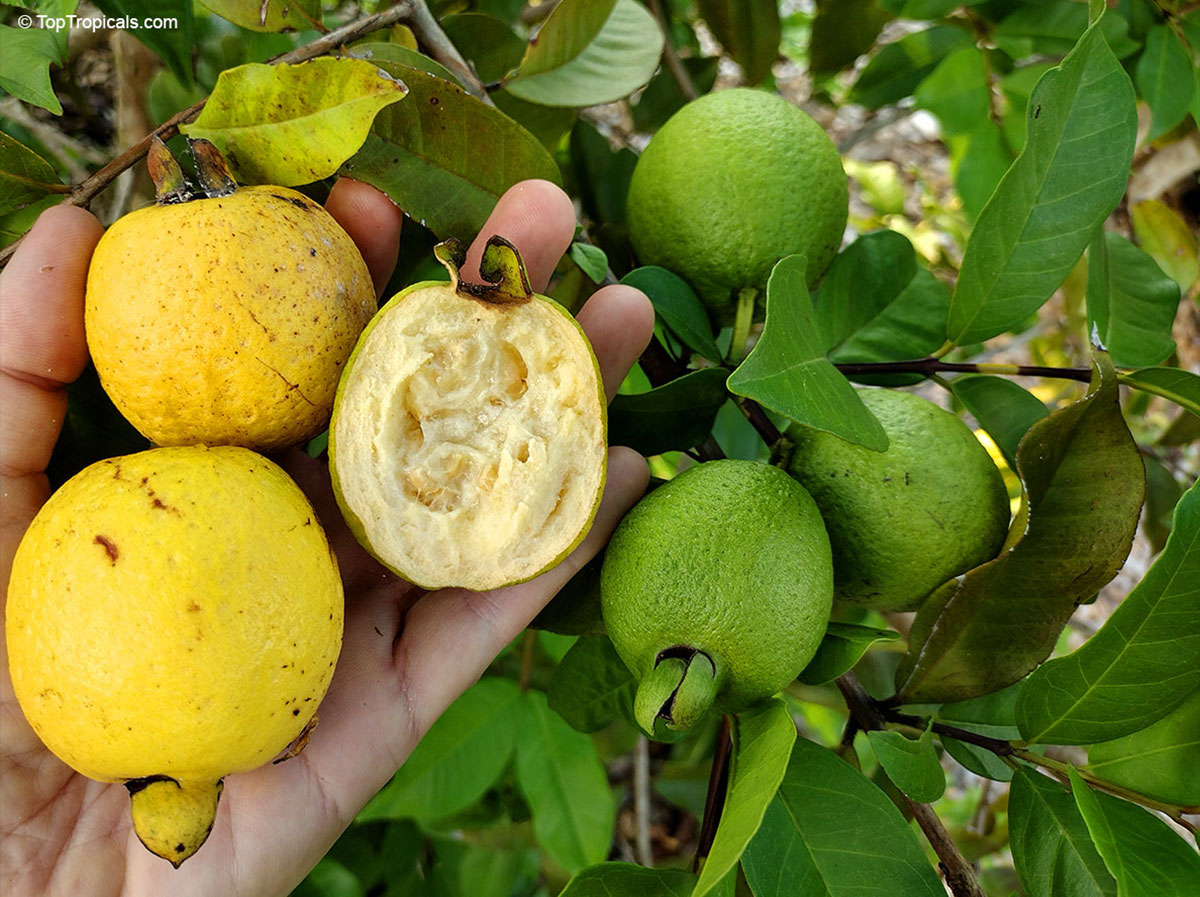
– Aromatic, classic white-fleshed guava with an excellent
tropical flavor.
Kilo White
– Giant fruit up to 2 lbs (1 kilo) each! Few seeds, creamy white
flesh,
and fruits even in containers.
Brazilian Araca
Pera – Rare hybrid used for Guava Wine in Brazil. Tart,
concentrated juice makes excellent wine, sorbet, or jelly. Learn more...
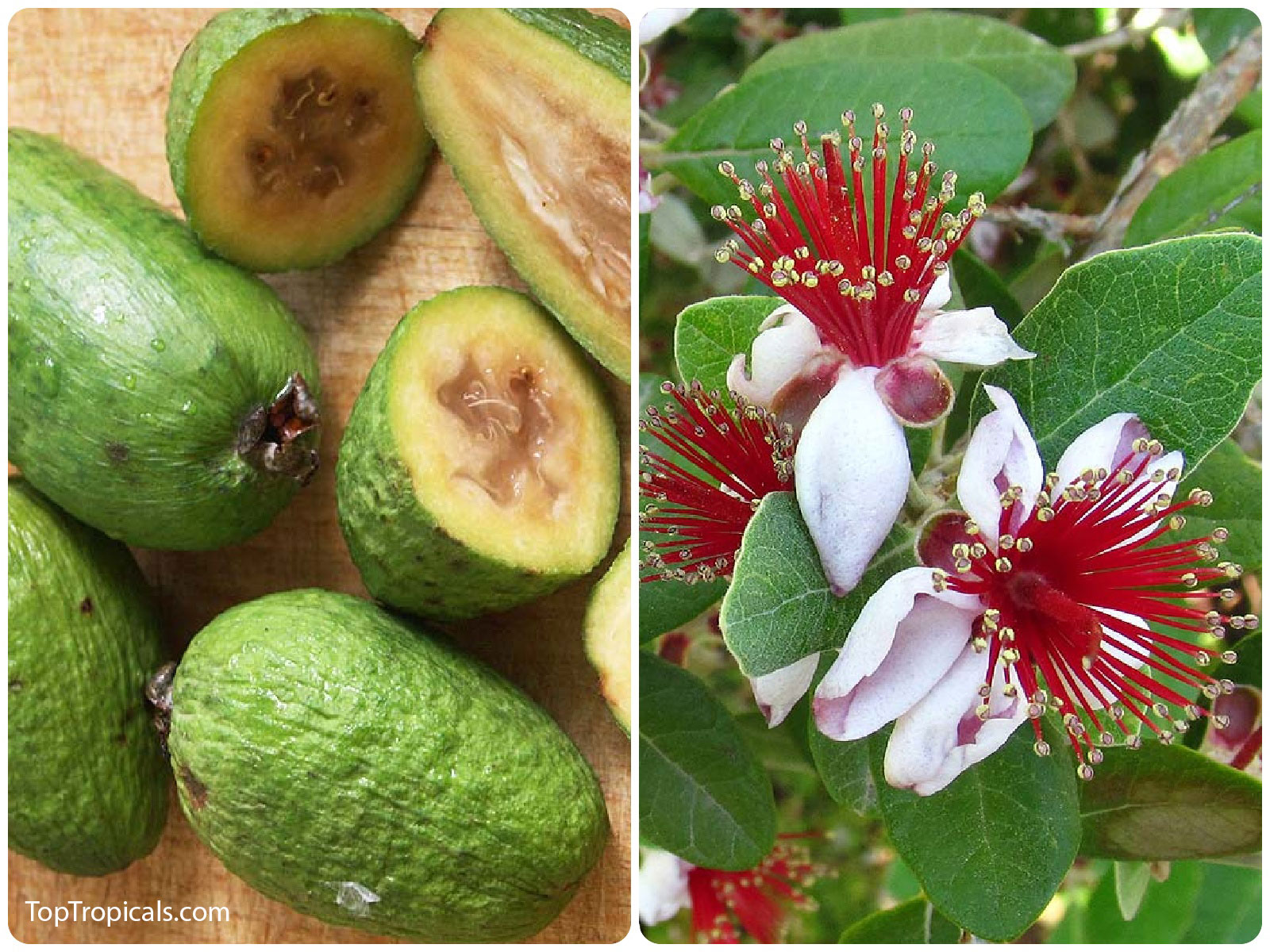
Pineapple Guava,
Guavasteen – Feijoa sellowiana. Strongly perfumed fruit, best
enjoyed when the pulp is mixed with sugar – like forest strawberries.
Cold-hardy, tolerates freeze, and doubles as a great windbreak. Learn more...
Stop Fixing Your Soil: 15 Bulletproof Fruit Trees for Tough Ground
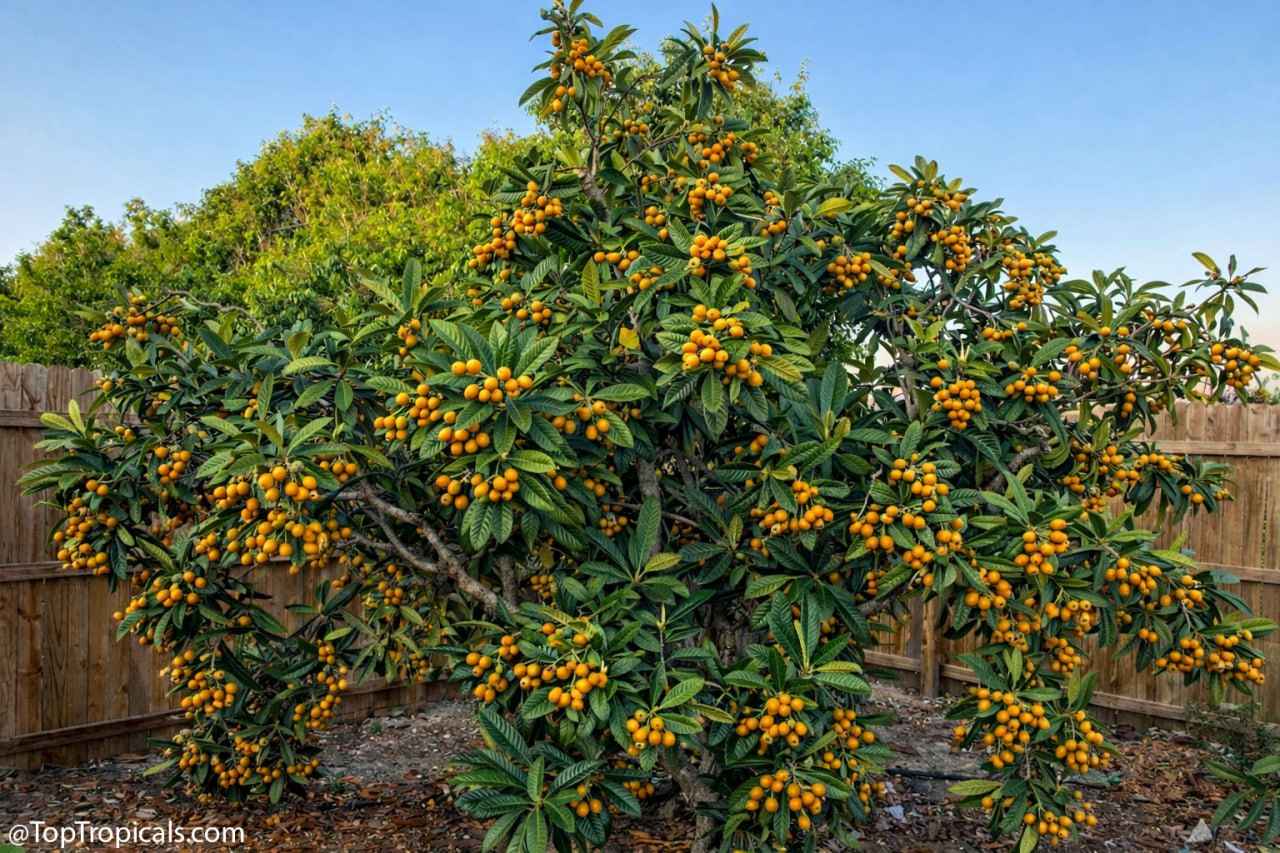
Loquat (Eriobotrya japonica) fruiting
Stop Fixing Your Soil: 15 "Bulletproof" Fruit Trees for Tough Ground 💩
Not everyone starts with a lush, loamy paradise. In many parts of Florida and the South, "soil" is just a polite word for sand, limestone rock, or depleted clay.
The biggest mistake new gardeners make? Spending hundreds of dollars on soil amendments before they ever put a tree in the ground.
The secret the pros know: You don't need to change your land to fit your plants; you need to choose plants that love your land. Some of the most delicious fruits actually thrive on neglect - and a few even produce better fruit when the soil is "poor."
🌳 The "Big 5" Toughest Fruit Trees
If your yard is a dry, sandy lot or a rocky outcrop, start with these. They are the ultimate "survivors."
Jujube, Chinese Date (Ziziphus jujuba): Arguably the toughest fruit tree on earth. It laughs at drought, poor soil, and neglect. The fruit is crisp like an apple when fresh and sweet like a date when dried.
Loquat (Eriobotrya japonica): A Southern staple. It’s evergreen, beautiful, and produces honey-sweet fruit in early spring when nothing else is ripe.
Mulberry (Morus alba): If you can’t grow a Mulberry, you might be gardening on the moon. It grows in sand, clay, or sidewalk cracks with equal enthusiasm.
Fig (Ficus carica): Figs actually prefer not to be pampered. In overly rich soil, they grow lots of leaves but little fruit. Give them well-drained, mediocre soil and they’ll thrive.
Pomegranate (Punica granatum): These trees are "stress-lovers." Rocky, alkaline soil is no problem, and a bit of soil stress often results in a higher sugar content in the fruit.
Pomegranate Plant Facts
Botanical name: Punica granatum Also known as: Pomegranate, Granada, Grenade, Pomegranate, Granada, Anar, Granaatappel, Pomo Granato, Romeira, Melo Grano
USDA Zone: 8 - 11
Highligths
🌳 Tropical Flavors That Don't Need "Perfect" Dirt
You don’t need a rainforest to grow tropical treats. These species are surprisingly resilient once they get their roots established.
🌟 The Sand-Lovers:
Mango (Mangifera indica): While young trees need a little babying, a mature Mango is incredibly drought-tolerant and handles Florida’s sandy "sugar sand" like a champ.
Mango Plant Facts
Botanical name: Mangifera indica Also known as: Mango
USDA Zone: 9 - 11
Highligths
Sapodilla (Manilkara sapota): A rugged, wind-resistant tree that produces fruit tasting like brown sugar and pear. It is a top-tier choice for coastal or sandy areas.
Tamarind (Tamarindus indica): It’s slow-growing but patient. Once it’s in, it’s there for a century, regardless of soil quality.
🌟 The Low-Maintenance Stars
Longan (Euphoria longana): If you’ve struggled with finicky Lychee trees, try Longan. It’s more cold-hardy and much less picky about its soil.
Citrus: While they need regular feeding (fertilizer), Citrus trees are naturally adapted to the sandy ridges of the South.
🌟 The "Quick-Win" Berry & Shrub Layer
If you want fruit this year, don’t wait for a tree to mature. Add these hardy producers to your edges. And here is why it works:
Dragon Fruit (Hylocereus undatus). It’s a cactus! It literally prefers poor, fast-draining soil over rich potting mixes.
Barbados Cherry (Malpighia glabra). A vitamin C powerhouse that handles low-nutrient soil with ease.
Grumichama (Eugenia brasiliensis). Slower grower, but steady and tolerant once established.
Surinam Cherry (Eugenia uniflora). Virtually indestructible. Often used as a hedge because it grows so vigorously in poor soil.
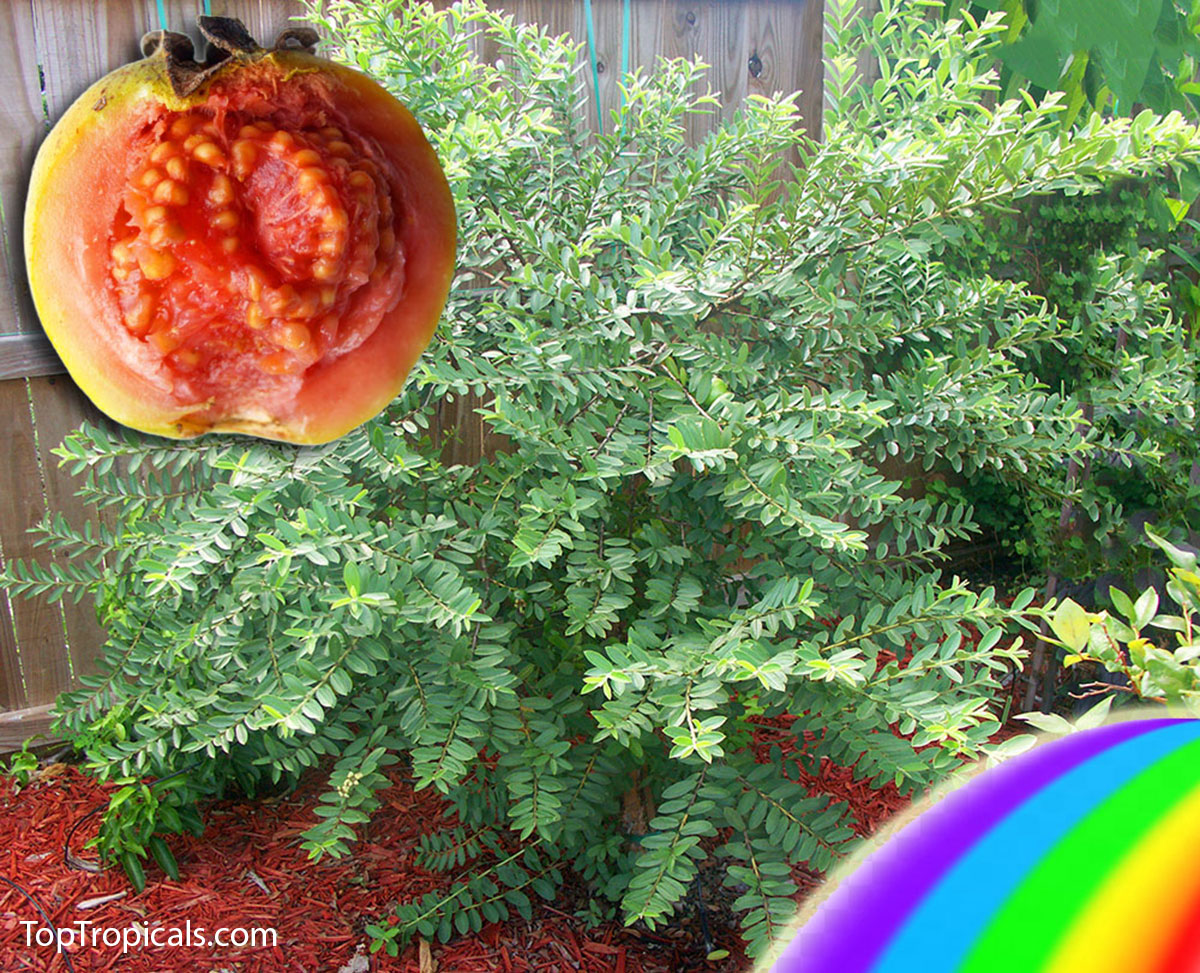
Pineapple Guava (Feijoa sellowiana). A beautiful silver-leafed shrub that is salt-tolerant and drought-resistant.
🌳 The Strategy: "Plant First, Improve Later"
In the South, the "dig a $100 hole for a $10 tree" rule doesn't always apply. Trying to completely re-engineer your soil often leads to drainage issues (the "bathtub effect").
Try this instead:
1. Select a species naturally adapted to your pH and texture.
2. Plant it at the correct height (never too deep!).
3. Mulch heavily with wood chips. This improves the soil from the top down over time, mimicking a natural forest floor.


 Dragon