Garden Blog - Top Tropicals

Date: 25 Jan 2021

Healthy Plants: Q&A from Mr Booster

How to get Canistel tree to produce
without dropping flowers and fruit
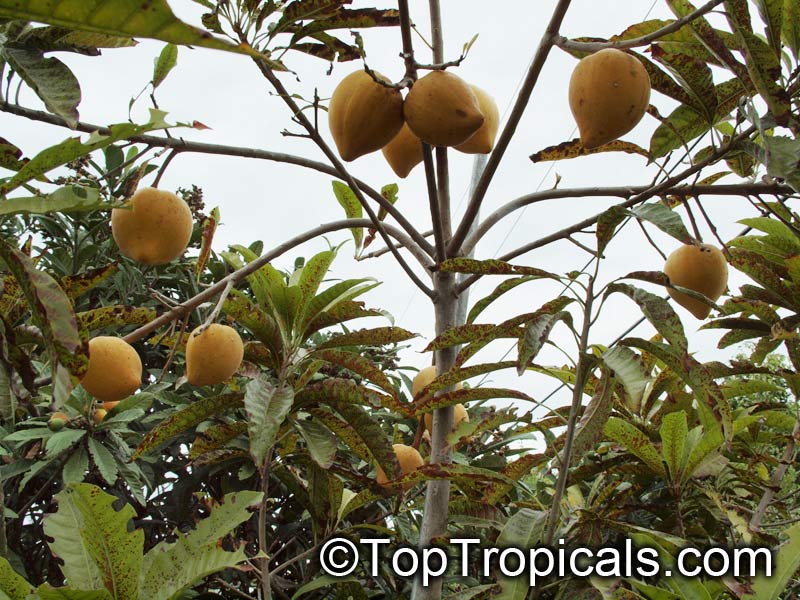
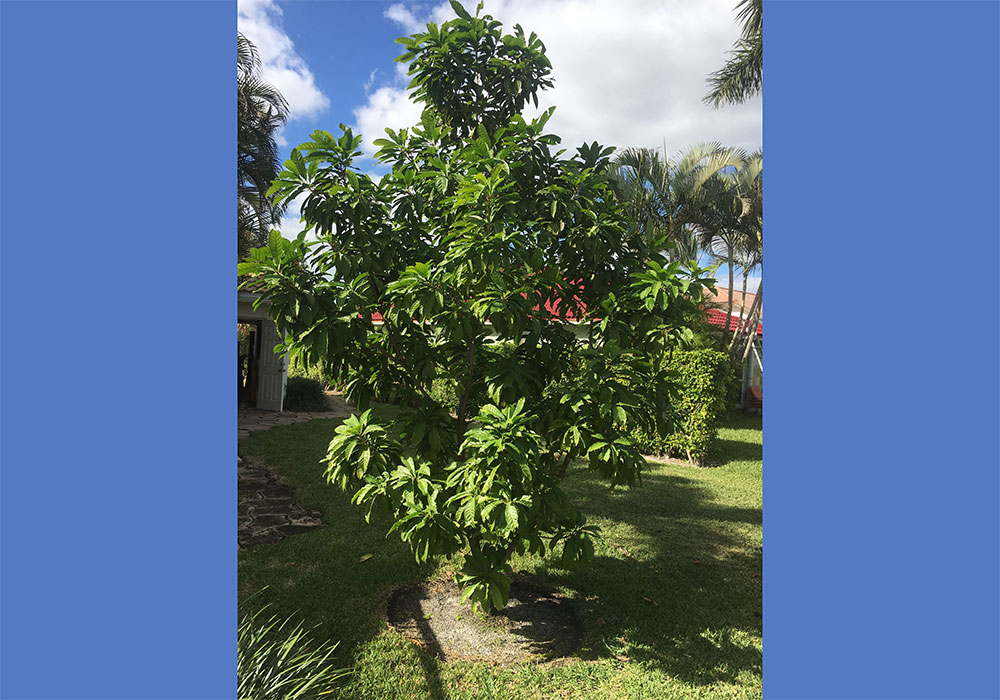
Q: My Canistel tree is 3 1/2 years old and is growing very well, see the picture below. It gets hundreds of pea sized "berries" but then they fall off. No canistel fruit. What's wrong?

A: You have such a nice looking tree, it is a shame you can't get any fruit to ripen.
In our experience, Pouteria trees dropping fruit prematurely is a very common problem. There may be one of the following reasons, or a combination of them:
- Cold winters may affect production, and while Canistel is generally pretty hardy tropical plant that can easily withstand short periods of chill, the fruit may never form properly if it had a cold winter.
- Lack of water. Canistel tree is pretty drought tolerant, but for the proper production cycle it needs regular irrigation. Especially during hot summer.
- The tree may be not strong enough; young trees drop fruit very often when they don't have enough "fruiting energy" built up in their system.
Your tree looks well established and vigorous, however, flower/fruit drop is often a sign of insufficient nutrients of particular kind, usually Boron (B) and/or Molybdenum (Mo): either when a tree is too young and not strong enough, or because of poor soils and lack of necessary elements.

Here is what can be done, considering you live in a warm, frost-free climate.

1. Provide regular fertilizing program. We recommend liquid fertilizers Sunshine Boosters that are safe to use with every watering and year around. It is beneficial to switch plants from traditional "slow-release" fertilizer to the liquid one because it makes a huge difference in plant growth and flower/fruit quality and quantity. See also:
- Why liquid fertilizers are better than dry
- Article about benefits of liquid fertilizers.

Use this plant food for your Canistel tree:
SUNSHINE C-Cibus - Crop Nutrition Booster

2. Apply micro-element remedies that are very effective for improving fruit production, especially when flower or fruit drop occurs:

SUNSHINE Honey - promotes more efficient blossoming and pollination, makes flowers bigger and reduces bud drop.
SUNSHINE SuperFood - improves plant vigor and quality and size of flowers These are all natural, eco-friendly supplements that work great for fruit trees and other edibles.

Date: 22 Apr 2026

When Mango Ripens on the Tree, Everything Changes

Smokey  and  Sunshine  enjoying  fresh  homegrown  mango  harvest  in  garden
Sunshine: Never understood the passion for mango. I tried store mangoes. I really tried. Just disappointment. So this is what real mango is supposed to taste like?

Smokey: Now you know.

There is a moment when a mango is perfectly ripe — soft to the touch, warm from the sun, fragrant before you even cut it open. The skin gives way, and suddenly there is color, juice, and a sweetness that feels almost unreal. Not sugary, but deep and layered, like something that took its time to become what it is. In that moment, it feels less like fruit and more like something truly given, exactly as it should be.

What you find in most supermarkets is something else entirely. Picked early so it can survive shipping, it never gets the chance to finish ripening process. It softens, it turns yellow, but the depth never comes. The flavor stays thin, and the texture often turns fibrous — strings in the flesh that get stuck in your teeth instead of melting away. That fiber is not an accident. It helps the fruit stay firm enough to handle transport without damage. It looks like a mango, but it never becomes one.

The only way to close that gap is simple — let the fruit ripe where it belongs. On the tree. When you grow your own mango, you control that moment. You pick it when it is actually ready, not when it has to survive a truck ride across the country. And that one difference is everything you taste.

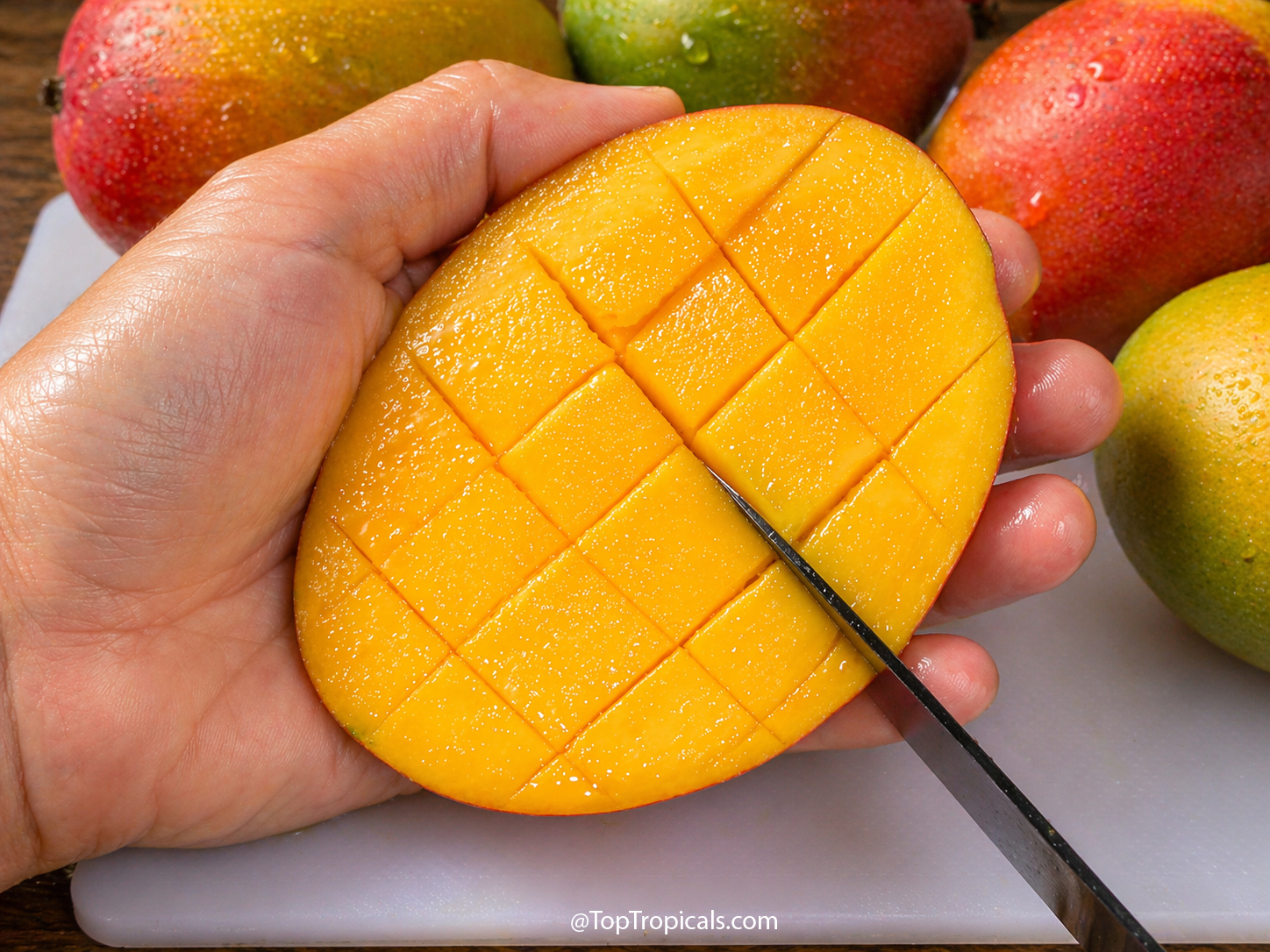
Close-up  of  a  hand  holding  a  mango  cheek  while  scoring  the  bright 
 orange  flesh  into  a  grid  pattern  with  a  knife,  with  whole  mangoes  in  the 
 background.

Scoring a mango cheek into cubes - the easiest way to prepare clean, ready-to-eat pieces.

📚 Learn more about mango varieties

🛒 Shop Mango Trees

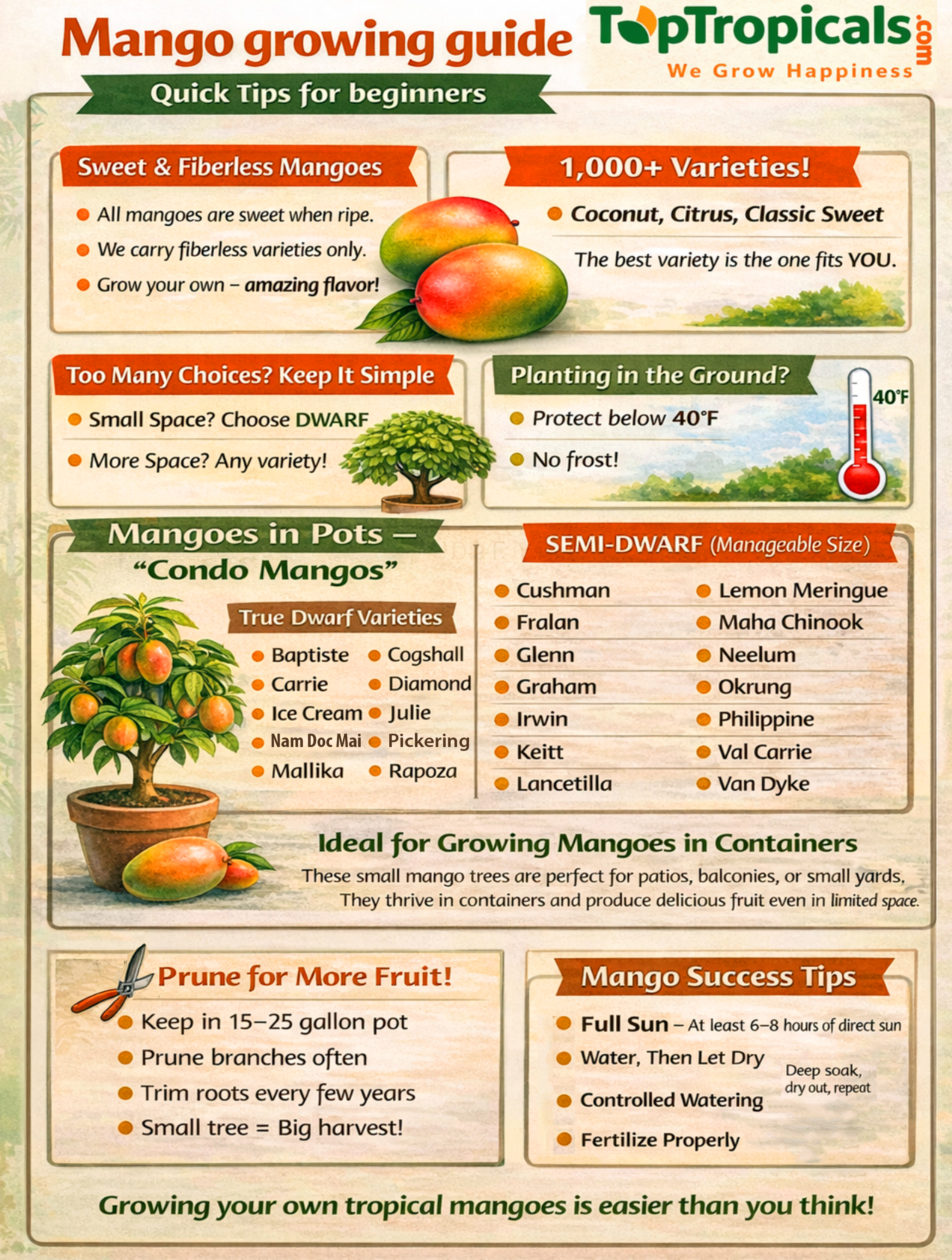
Educational  infographic  titled  mango  growing  guide  showing  beginner 
 tips  for  growing  mango  trees,  including  sweet  fiberless  varieties,  dwarf  and
    semi-dwarf  options  for  containers,  planting  tips,  pruning  advice,  watering,
    sunlight,  and  fertilizing  recommendations,  with  illustrated  mango  trees  and
    fruit.

Quick beginner guide to growing mango trees - from choosing the right variety to pruning, watering, and container growing tips.

Date: 6 Dec 2024

What are the best varieties of Lychee Tree?

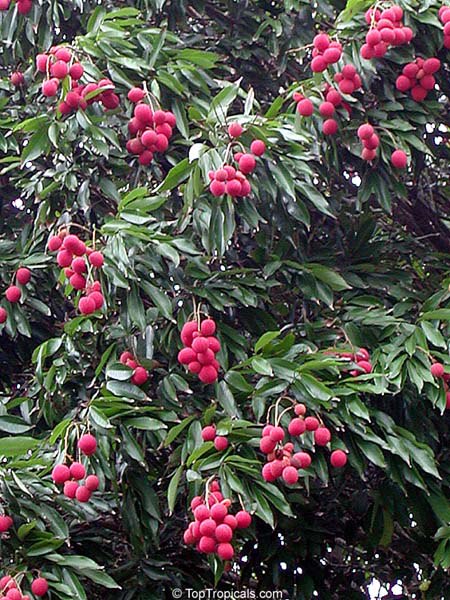
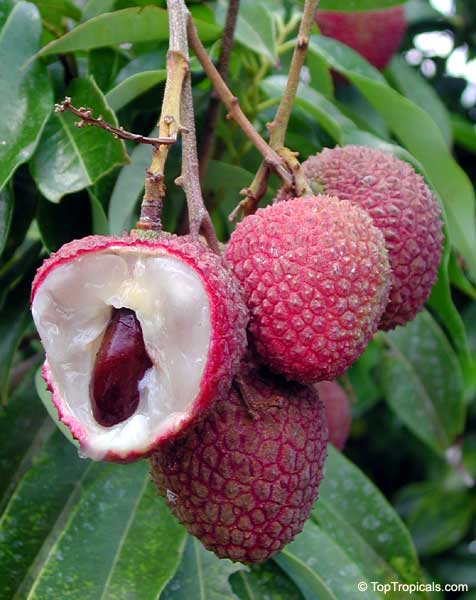
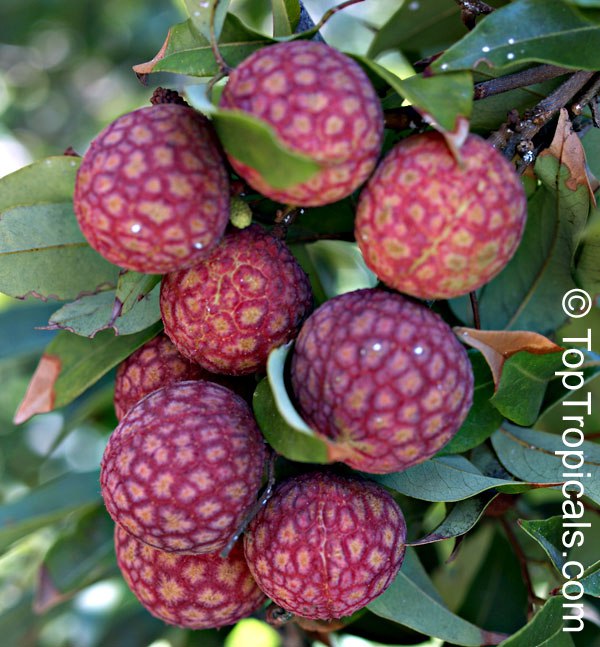
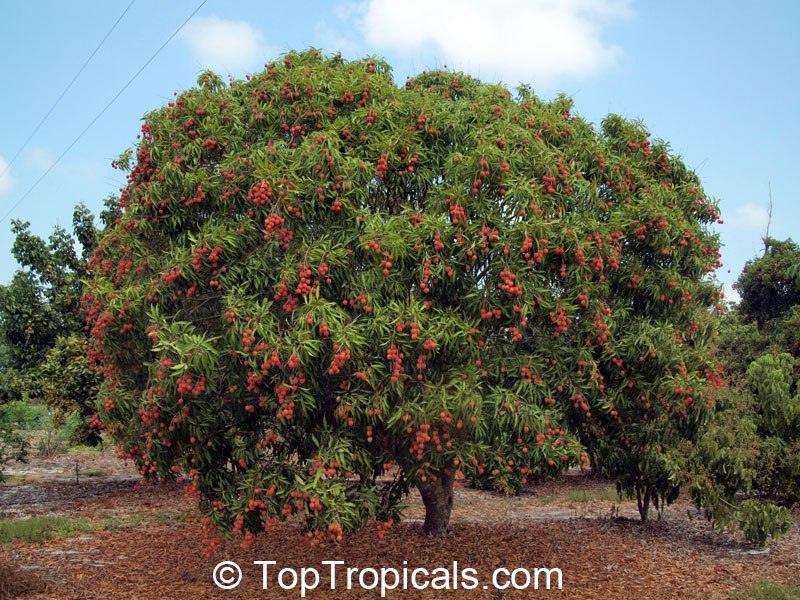
Lychee (Litchi sinensis) - fruit on a tree

Lychee (Litchi sinensis) - fruit on a tree

Lychee (Litchi sinensis) - fruit

Lychee (Litchi sinensis) - fruit

Lychee (Litchi sinensis) - fruit

Lychee (Litchi sinensis) - fruit

Lychee (Litchi sinensis) - tree

Lychee (Litchi sinensis) - tree

💖 What are the best varieties of Lychee Tree?

  • 🍓 The three most popular Lychee varieties are Brewster, Mauritius, and Sweetheart (sometimes referred to as Hak Ip). Brewster and Mauritius are the most reliable producers and are commonly used commercially, while Sweetheart is more of a backyard specialty. Although it produces fewer fruits, the fruit are significantly larger than other varieties.
  • 🍓 Brewster: Medium to large, round fruit and a sweet, slightly tart flavor, Brewster is highly productive and ideal for fresh eating.
  • Mauritius: Medium to large, round fruit with thick skin. It has a sweet, delicate flavor and is one of the earliest varieties to ripen.
    Choose Brewster or Mauritius if you want a reliable producer with an average fruit size.
  • 🍓 Sweetheart: True to its name, Sweetheart is prized for its exceptional sweetness. It has the largest fruit of all varieties, with a thick rind and juicy, flavorful interior.
  • Some growers consider Hak Ip to be just another trade name for Sweetheart, although it is sometimes marketed as a separate variety.
    Opt for Sweetheart if you prefer larger fruit but don't mind a smaller harvest.
  • 🍓 Keep in mind that Lychee trees typically produce every other year, with heavy crop years alternating with low production years or no fruit at all.


📚 Learn more from previous post:


What is the best fruit in the world? How to grow your own Lychee tree.

🛒 Shop Lychee varieties

#Food_Forest

🔴 Join 👉 TopTropicals

Date: 7 May 2025

Why you should grow a Pitanga tree

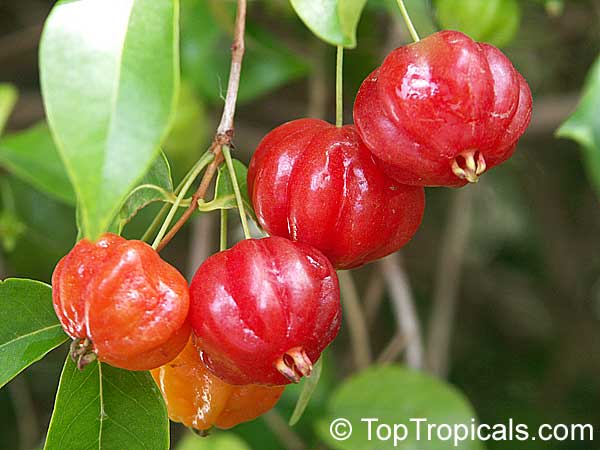
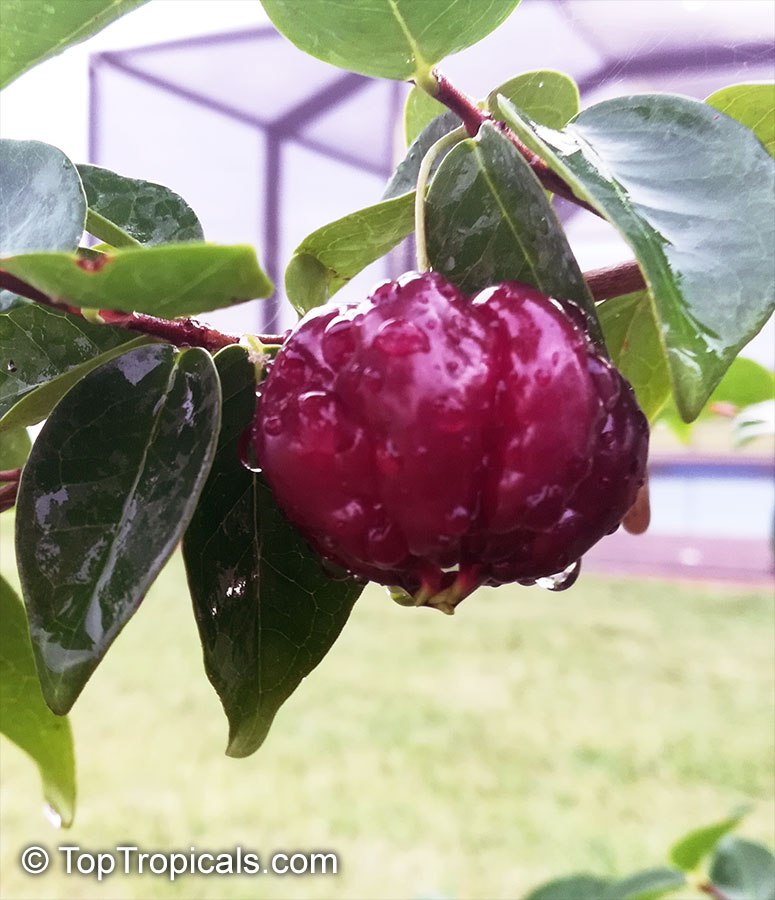
Eugenia uniflora - Surinam cherry, Brazilian cherry, Pitanga tree - fruit

Eugenia uniflora - Surinam cherry, Brazilian cherry, Pitanga tree - fruit

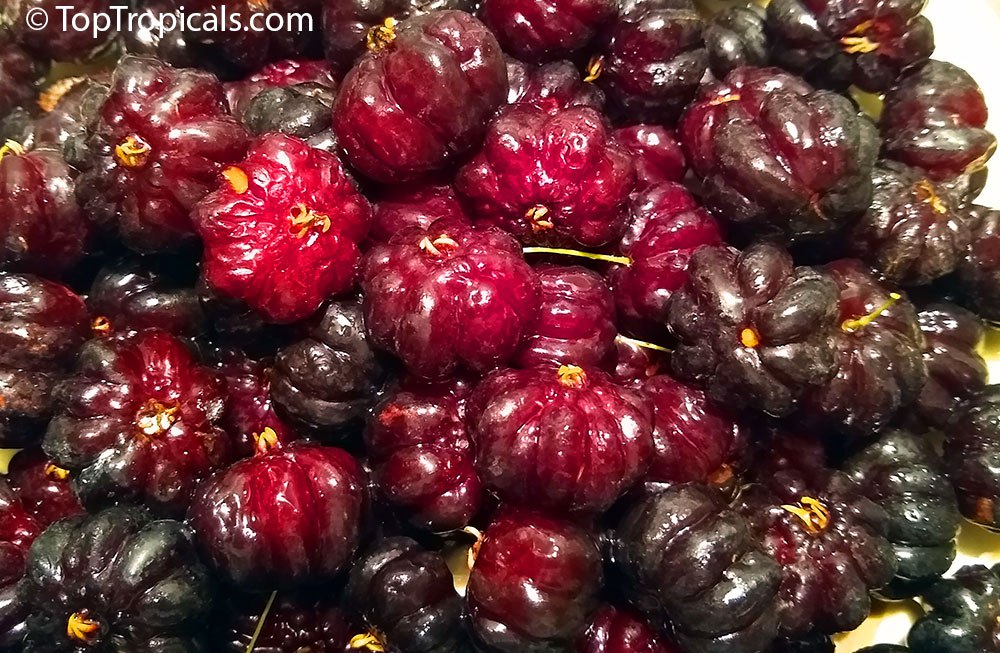
Eugenia uniflora - Surinam cherry, Brazilian cherry, Pitanga tree - fruit var. Lolita

Eugenia uniflora - Surinam cherry, Brazilian cherry, Pitanga tree - fruit var. Lolita

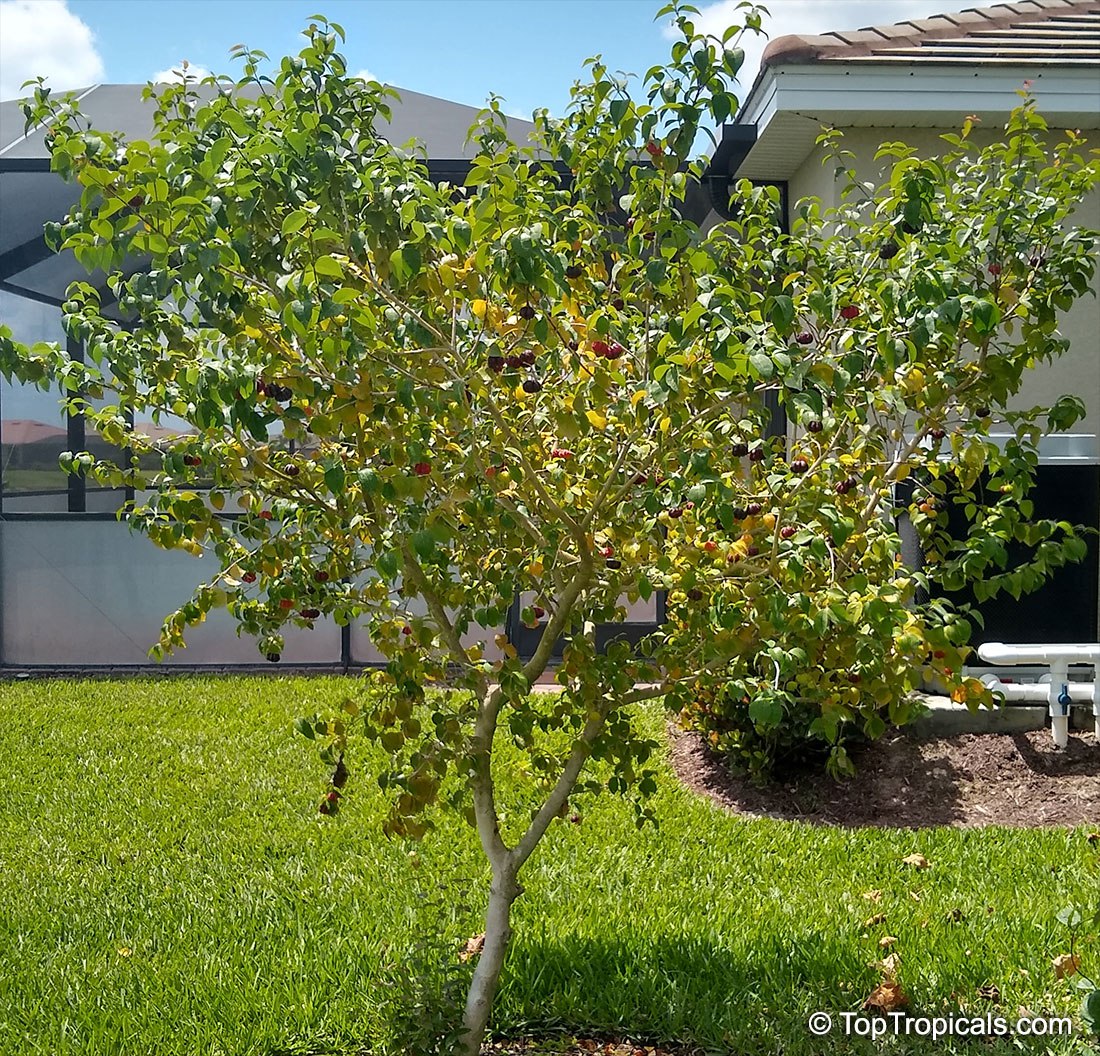
Eugenia uniflora - Surinam cherry, Brazilian cherry, Pitanga tree

Eugenia uniflora - Surinam cherry, Brazilian cherry, Pitanga tree

Eugenia uniflora - Surinam cherry, Brazilian cherry, Pitanga tree - fruit var. Lolita

Eugenia uniflora - Surinam cherry, Brazilian cherry, Pitanga tree - fruit var. Lolita

🍒 Why you should grow a Eugenia uniflora), also known as Surinam cherry or Brazilian cherry


Pitanga (Eugenia uniflora), also known as Surinam cherry or Brazilian cherry, is a tropical fruit that's as tasty as it is healthy. This small tree or bush brings beauty to your yard and benefits to your body. With shiny leaves, fragrant white flowers, and bright red or dark maroon fruit, it's an easy-to-grow plant that also happens to be a nutritional powerhouse.

❓ So, why plant Pitanga?

  • 🍒 Pitanga is packed with vitamins. Pitanga is loaded with vitamin C for glowing skin and a strong immune system, and vitamin A for healthy eyes.
  • 🍒 Pitanga is full of antioxidants. Especially the dark fruits, which are rich in plant compounds like lycopene and beta-carotene that may protect your cells and reduce inflammation.
  • 🍒 Pitanga has healing power. Traditional medicine has used it for heartburn, stomach issues, and even respiratory conditions. Lab studies show it may help fight bacteria and fungi too.
  • 🍒 Pitanga might fight cancer. Early research suggests pitanga extracts may slow cancer cell growth.
  • 🍒 Pitanga tastes like summer. When fully ripe, the juicy fruit has a sweet-tart flavor - great in salads, desserts, jams, and even cocktails. Pitanga var. Black Star, or Lolita has exceptional flavor, larger sweeter fruit than regular red-fruit variety.


⚠️ Bonus: It grows fast, stays evergreen, and makes a great natural privacy screen or edible hedge.

If you're looking for a tropical fruit tree that’s both beautiful and beneficial, Pitanga is a smart choice. Just make sure to pick the fruit when fully ripe - and prepare to fall in love with this cherry that's not quite a cherry!

🛒 Start growing Health today - add Pitanga to your Food Forest

📚 More about Lolita Cherry from previous posts:


#Food_Forest #Remedies #Hedges_with_benefits #Discover

🔴 Join 👉 TopTropicals

Date: 7 Jun 2025

From seed to fruit. How to grow Loquat from seeds, step-by-step guide. Part 2: after germination

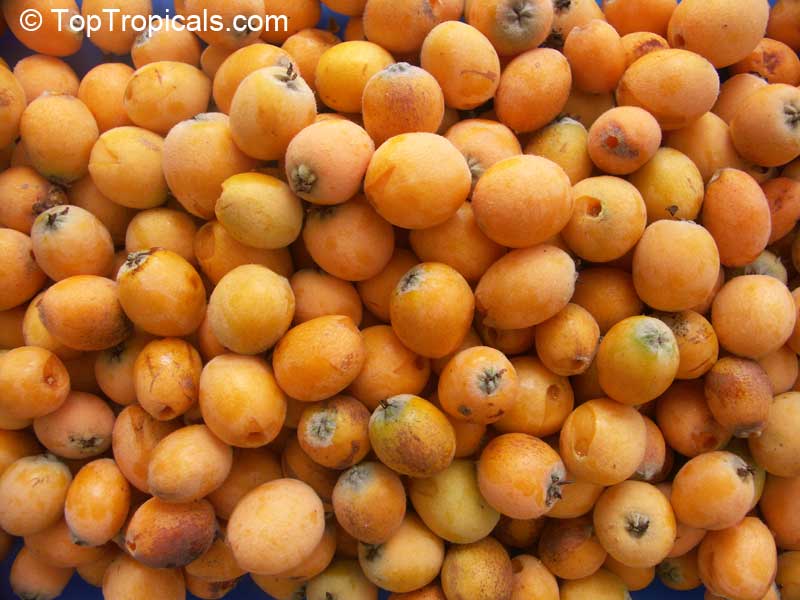
Loquat tree (Eriobotrya japonica) - fruit

Loquat tree (Eriobotrya japonica) - fruit

✍️ From seed to fruit. How to grow Loquat from seeds, step-by-step guide. Part 2: after germination


Continued from previous posts⤴️
  • 🍑 4. Transplanting Seedlings


  • When to Transplant: Once seedlings reach about 2-4” (5-10 cm) in height.
  • Transplanting and fertilizing: Move each seedling to its own pot and add controlled release fertilizer (Green Magic is the best), or use liquid balanced fertilizer Sunshine Boosters after 1-2 weeks once the seedlings establish.
  • Watering. Keep soil in a pot slightly moist but not soggy
  • Temperature. Keep seedling warm - above 70F (21C), and protect from extreme heat over 90F (35C) . For small plants, avoid freezing temperatures during winter. As the seedlings get bigger, they get higher drought-, heat- and cold tolerance. Established Loquat trees (2-3 years and older) may take light freezing temperatures.
  • Planting in the ground. You can plant the seedling in the ground when it reaches 2-3 ft tall (50-100 cm) in frost-free areas. During chill winter nights, young seedlings can be cold protected until established.


🍑 5. Sunlight Requirements

  • Light Exposure: Loquat established seedlings thrive in full sun but can tolerate partial shade. Start seedlings in bright shade and protect from afternoon hot sun to avoid leaf burn. Once seedlings are established and new growth appears (2-4 weeks), gradually move them to full sun.
  • Why adequate sunlight (full sun) is important:
- promotes healthy growth
- helps to avoid fungus and insect problems
- is critical for future flowering and fruit production

🍑 6. Fruit production

  • Loquat seedlings start producing seed within 3-4 years from seed, providing adequate sunlight, warm temperatures and regular irrigation.
  • Grafted Loquats start producing right away or the next year
  • Fruit will develop over the winter and ripen from March through May depending on location


🛒 Shop Loquat Trees and enjoy fresh fruit benefits

📚 Learn more:


🎥 YouTube video about Loquat
📁 Overlooked fruit: tasty Loquat recipes (PDF)

#Food_Forest #Loquat

🔴 Join 👉 TopTropicals