This Father's Day, celebrate with a food forest - don't just mow, grow! Plant something meaningful
that will not only bring joy today but also provide delicious fruit,
edibles, and fragrant
blooms for years to come. Whether you're a father or celebrating one, this
is the perfect day to plant and nurture a garden that will thrive, just like
the love you share with your family. Plant today to enjoy the fruits of your
labor tomorrow!
Use the code below to save 15% on your entire order:
Join our local event:
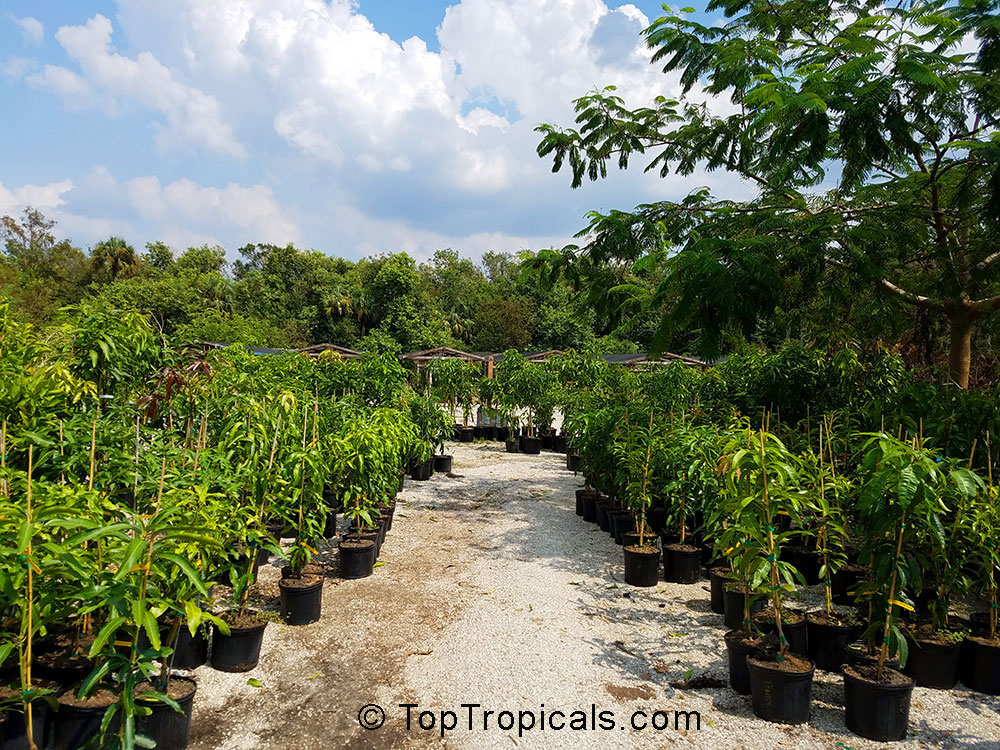
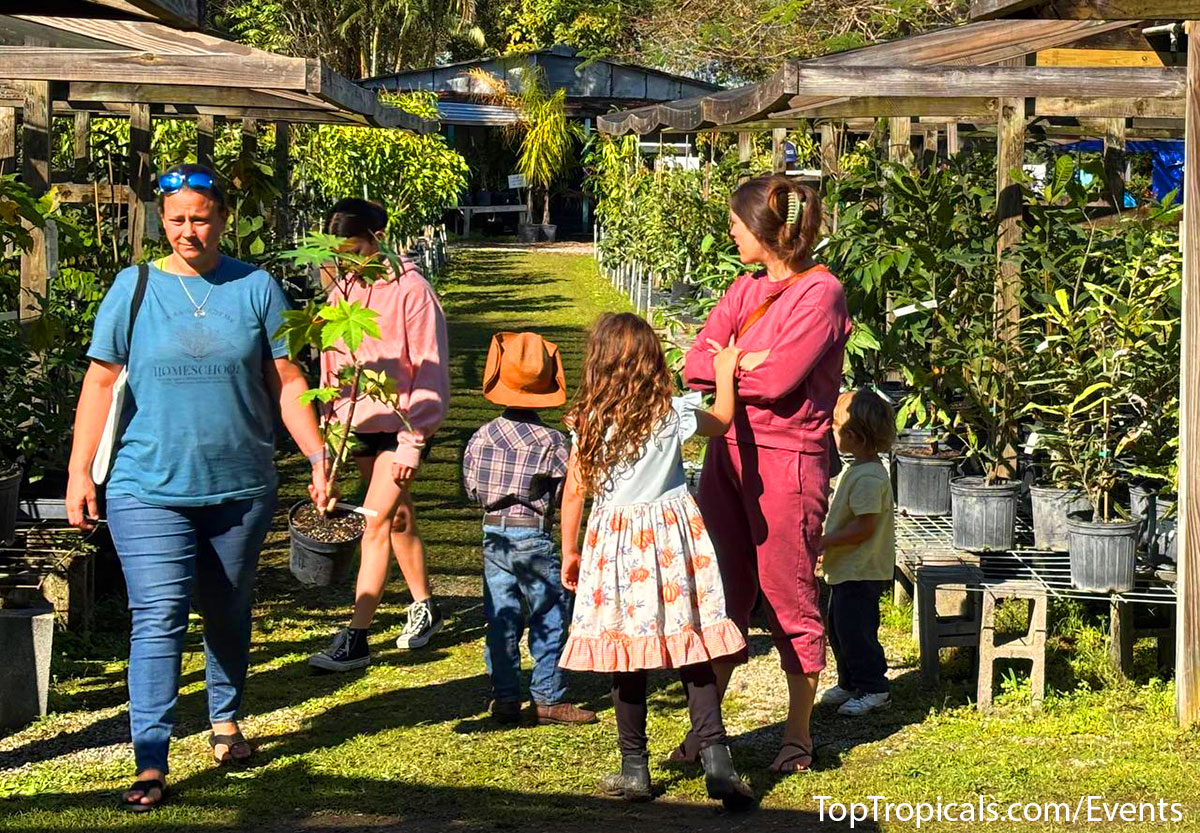
June 14, 2025 - Father's Day Plant Market, 9 am - 4 pm
Join us on Saturday June 14 for Father's Day Plant Market
- Kids, bring your dads and surprise them with the gift of a tree! Let them
pick any tree they like and plant it together.
- Fathers, bring your kids and teach them how to connect with nature - show
them how to plant a tree and grow something lasting!
Stroll through our lush gardens, meet the friendly PeopleCats, and enjoy a fun day for the whole family. Our team will
help you choose the perfect plants for your space and guide you every step of
the way.
Event Highlights:
30% OFF online prices
FREE plant with any purchase (including Guava)
Gift bags for first 25 customers with $50+ order
$5-10 specials
$10-20 Large
Banana Trees - many varieties!
Exciting raffle prizes Green
Magic fertilizer FREE samples
Live music by the Famous Hand Pan Lady!
The best time to plant a fruit tree was 20 years ago - here is why you need to plant it now
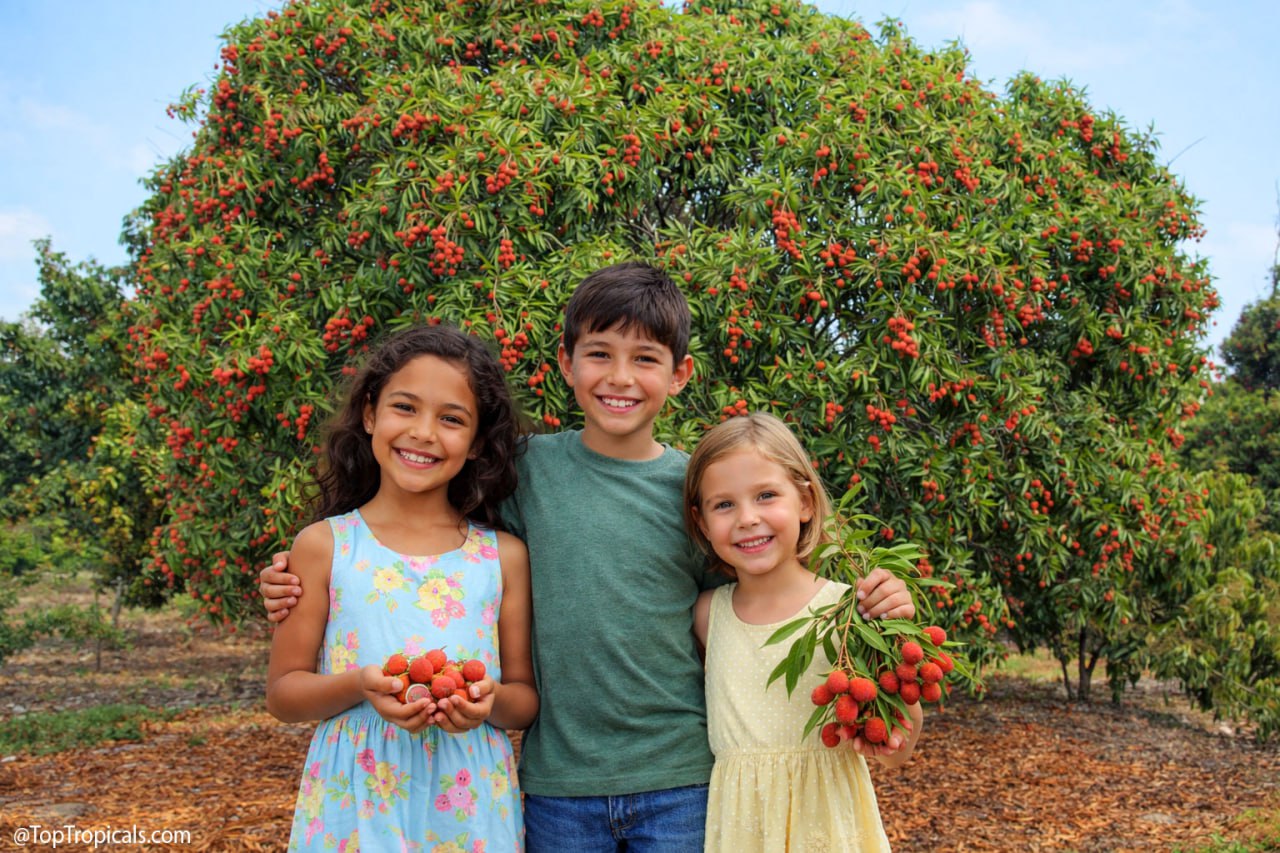
Litchi chinensis - Smiles under the Lychee tree
🍑 The best time to plant a fruit tree was 20 years ago - here is why you need to plant it now
They say the best time to plant a fruit tree was 20 years ago.
The second best time is today.
A fruit tree is not a seasonal purchase. It is not a decoration. It is a decision that stretches far beyond you.
When you plant a mango, an avocado, a loquat, a lychee tree - you are not just planting for this summer. You are planting for children who will climb that tree. For neighbors who will ask for a basket of fruit. For someone who may live in your house long after you are gone.
Mango Plant Facts
Botanical name: Mangifera indica Also known as: Mango
USDA Zone: 9 - 11
Highligths
Avocado Plant Facts
Botanical name: Persea americana, Persea gratissima Also known as: Avocado, Alligator Pear, Aguacate, Abacate
USDA Zone: 9 - 11
Highligths
Fruit trees are quiet investments in the future.
Unlike annual crops that come and go, a tree deepens its roots every year. Many fruit trees - especially mangoes - can live for decades, even a century. They outlive trends, owners, renovations, even mortgages. They stand there, steady, producing.
Even if you sell the house, the tree remains.
The next family will walk into the yard and discover fruit hanging overhead. Imagine buying a home and realizing someone before you planted abundance!
That is a gift.
In many parts of the world, mango trees are called generational crops. One farmer plants them. His children harvest them. His grandchildren sell the fruit. A single decision continues to feed and support a family long after the planter is gone.
There is something deeply grounding about that.
We live in a fast world. Quick returns. Quick moves. Quick upgrades.
A fruit tree moves at a different pace. It asks for patience. It rewards consistency. It teaches you to think long term.
Planting a fruit tree says:
I believe in tomorrow.
I believe this land will matter.
I believe someone will stand here after me.
And even if you never taste the fullest harvest, someone will.
Passing fruit trees through generations is more than horticulture - it is legacy. It is continuity. It is resilience. It is saying that this space, this soil, this home will keep giving.
So plant it now.
Plant it for your children.
Plant it for the next homeowner.
Plant it for shade you may never sit under.
Plant it for fruit you may never pick.
Because one day, someone will walk into that yard, look up, and thank the person who thought ahead.
Let that person be you.
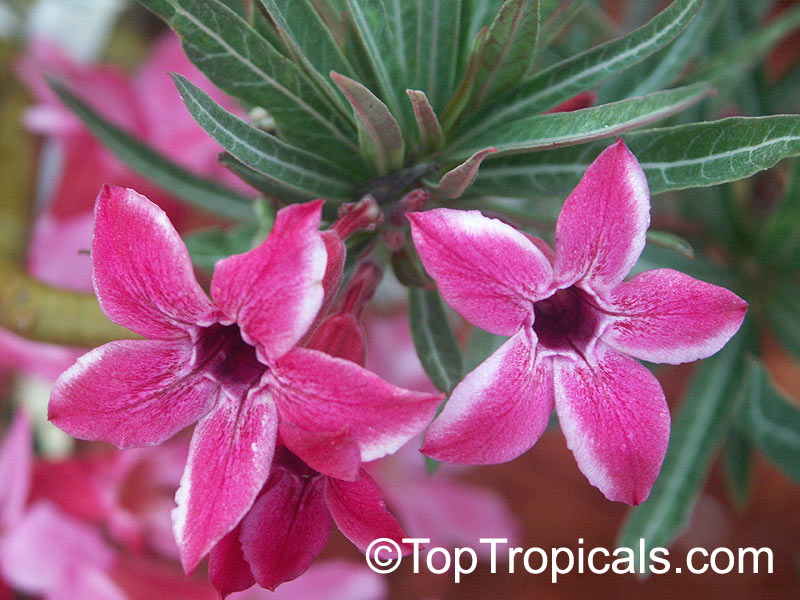
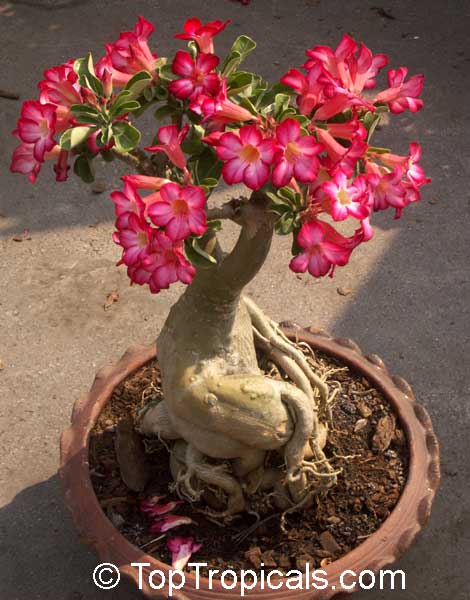
Q: I am looking forward to my three desert roses I just ordered from you and I am wondering how to take
care of them, especially during winter time. Should I put the pots in full sun
or shade? What kind of soil do they like? How often should I water them? When
it gets cooler, should I bring them inside? We do have occasional frost here
during winter.
A: Here are a few tips for your desert roses:
1. When received Adenium from mail-order, unpack carefully; branches are
fragile. Plant in well-drained potting mix. Cactus mix will do, but we
recommend special Adenium mix. If using regular acidic peat-based potting mix, you may
add sea-shells on top of soil to neutralize acidity: adeniums prefer alkaline
soils. Using clay pots is beneficial. Water once and do not water again until
soil gets dry. Place in bright shade until new leaves sprout, then the plant
can be moved to full sun.
2. Adenium is a succulent, but not a cactus. It needs watering, however
let soil dry before waterings. Reduce watering during cool season and
discontinue when plant gets dormant (drops all leaves in winter).
3. Bright light is the best for profuse flowering. However, adeniums
look much healthier in slightly filtered light rather than in all-day full
sun.
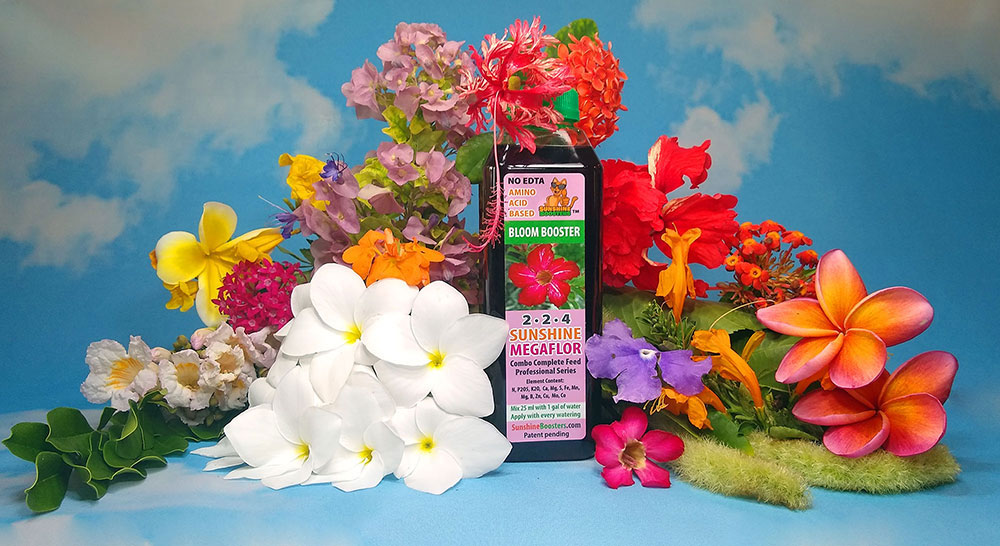
4. Fertilize and spray leaves with liquid fertilizer SUNSHINE Megaflor - Nutrition Bloom Booster. Phosphorous is responsible
both for flowering and caudex development. Avoid caudex, spray over foliage
only. Dry fertilizer can be used only during hot months.
5. Watch for spider mites during hot and dry season.
6. Give plants a break during winter dormant season. Keep in bright
shade and reduce watering to 1-2 per month or stop watering if temperature is
below 65F.
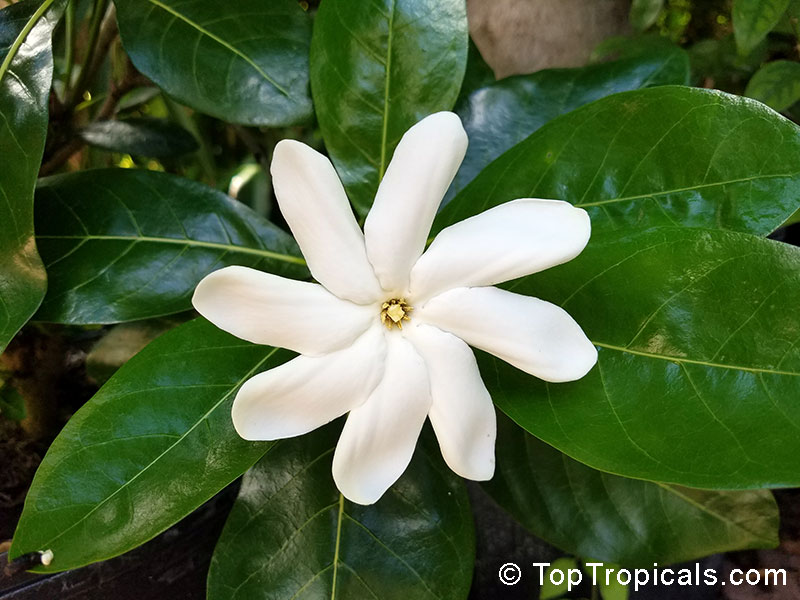
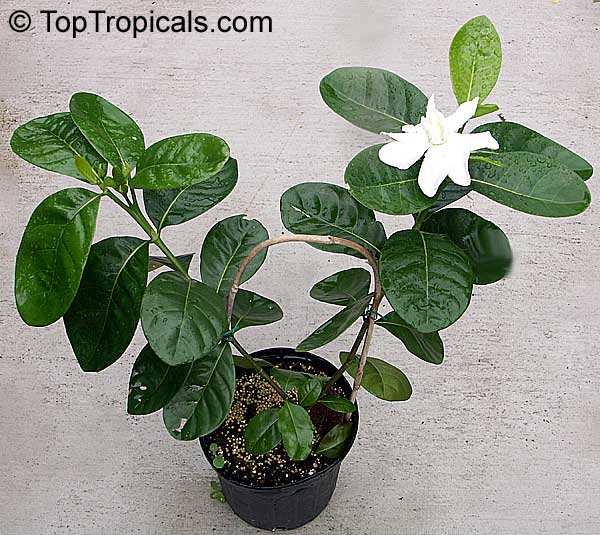
Q: I am interested in your Tahitian Gardenia and I would love to try and grow this plant in a
large container/fabric pot. The soil here where I live is terrible as it's hard rock, clay, and sand! So I'm not sure if amending the soil would help to plant in the ground? Can you tell me if this will do okay in a container or best in ground? I live here in Las Vegas, NV (zone 9a). Any information would be great to help me make a this decision, I love the selection of cool tropical plants you offer! Also my daughter does Tahitian/Polynesian dance and this would be a cool "topping on the cake" if she could have a live Tiare flower in her performances.
A:Tahitian Gardenia will be doing best if grown in container in your
area. In its natural habitat, it grows full sun but also it enjoys mild weather
conditions and high air humidity. All gardenias prefer acidic soils. In your
area, if planted in the ground, it may be exposed to some harsh conditions:
too high temperatures, too hot sun, dry air, and as you mentioned - heavy clay
and sandy soil. You can enjoy this plant grown in container, which can be
moved as needed away from too much sun during summer months. Use well-drained potting mix. Use plastic pot, do not use fabric or clay
pots - soil will dry out too quickly.
Also remember to fertilize this plant on regular basis with a liquid
fertilizer SUNSHINE Pikake - Fragrant Flower Booster.
Grow gardenia in full sun or semi-shade during the hottest months. You may
spray it with pure water if the air too dry and hot. Enjoy your Tropical
Beauty and good luck!
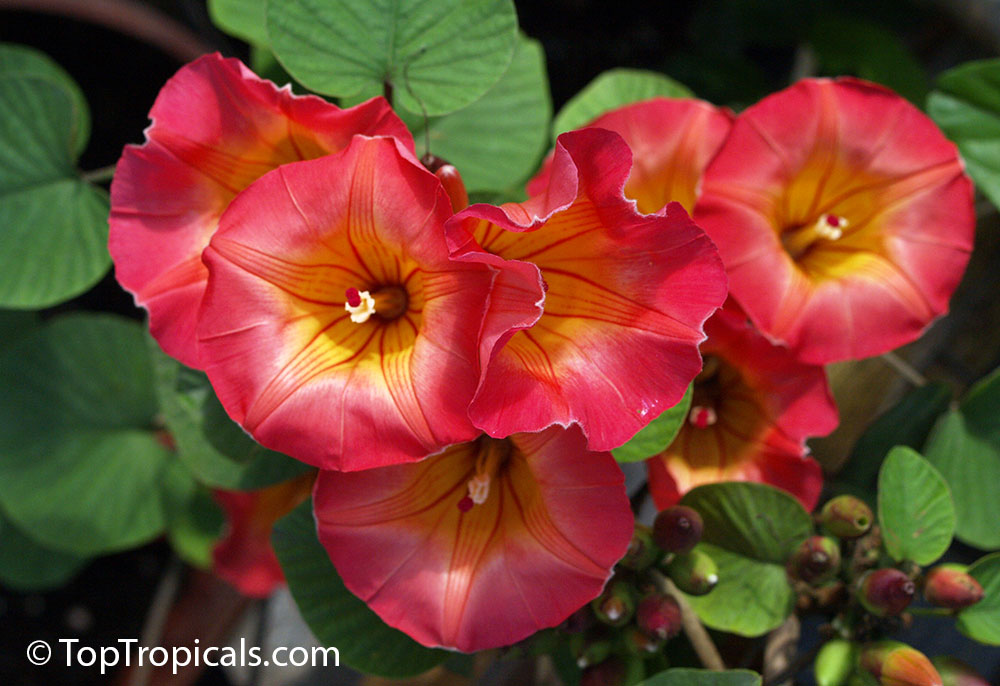
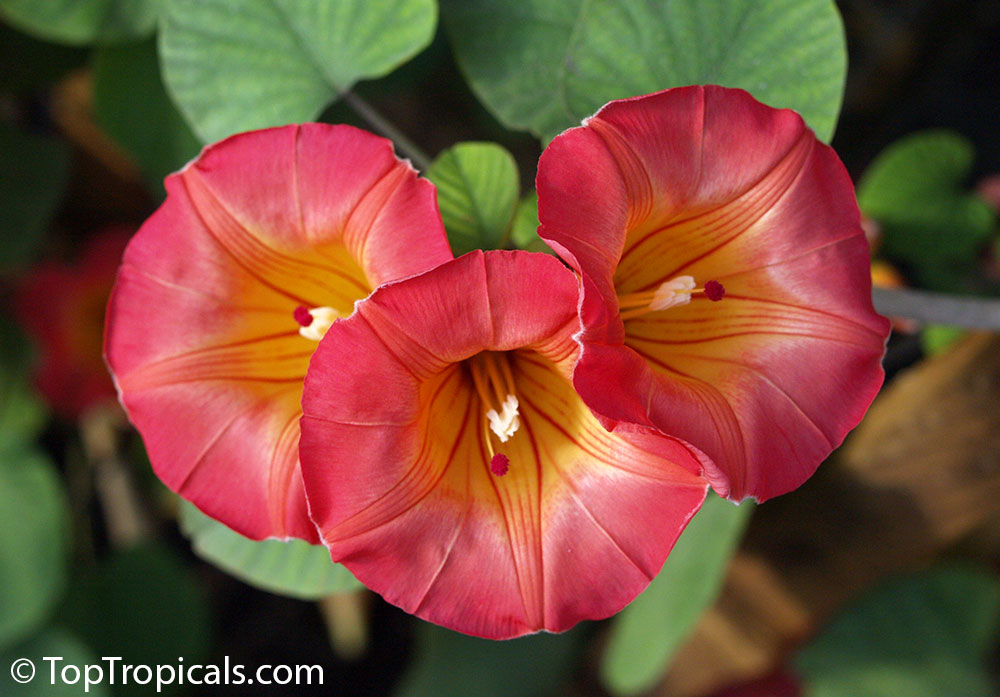
Encouraging blooms on the Hawaiian Sunset Bell Vine
Q: Please can you advise how to encourage the Stictocardia beraviensis the Hawaiian Sunset Bell
vine blooms? Mine is all beautiful leaves and full sun in Miami.
A: Providing full sun, Stictocardia blooms profusely. In your area, it
should be happy and thriving. However, keep in mind that these flowers can be seasonal (meaning, not ever-blooming). The good
news it, Hawaiian Sunset Bell usually blooms several times a year on and off. In our garden, we have a large plant growing in
the ground and covering a whole fence; we see flowers 3 times a year:
- Early Spring
- Summer (sporadically)
- Late Fall to early Winter
Make sure to provide proper fertilizer to encourage blooms. It is especially important if
you grow this plant in container (where nutrients are very limited). We suggest the following fertilizer for your
Stictocardia: