Garden Blog - Top Tropicals

Date: 9 Jan 2026

Mango Tree for Zone 5: top 15 Condo Mango for growing in cold areas

Mango Tree for Zone 5

🥭 Mango Tree for Zone 5: top 15 Condo Mango for growing in cold areas

  • 🥭 Can you grow a mango tree in Zone 5? Short answer - yes! The trick is - containers!
  • Mango trees are tropical plants but they do great in pots when you choose the right varieties.
  • 🥭 Compact types stay short, respond well to pruning, and produce in containers.
  • You can grow them on a patio, balcony, even move them indoors in your condo for winter. That is why they are called condo mangoes!
    During warm months, they live outside.
    When cold weather hits, they come inside.
  • 🥭 With good light, proper watering, fertilizing, and some patience, these trees can reward you with real mangoes. Not a farm harvest, but enough to enjoy and share.


🏆 Most popular Condo Mango varieties:


Baptiste
Carrie
Cogshall
Diamond
Fairchild
Ice Cream
Julie
Keitt
Lancetilla
Lemon Meringue
Mallika
Nam Doc Mai
Okrung
Pickering
Venus

🛒 Discover Condo Mango

📚 Learn more:
#Food_Forest #How_to #Discover #Mango

🟢 Join 👉 TopTropicals
Date: 10 Apr 2025

Pre-hurricane season tips: how to protect your trees from winds

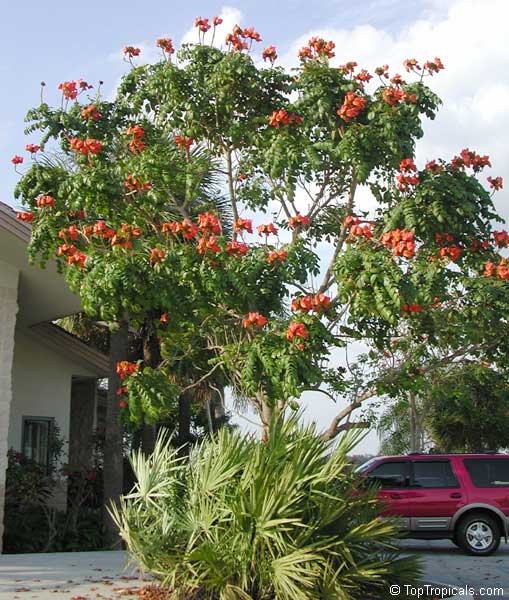
Spathodea campanulata - African Tulip Tree

Spathodea campanulata - African Tulip Tree

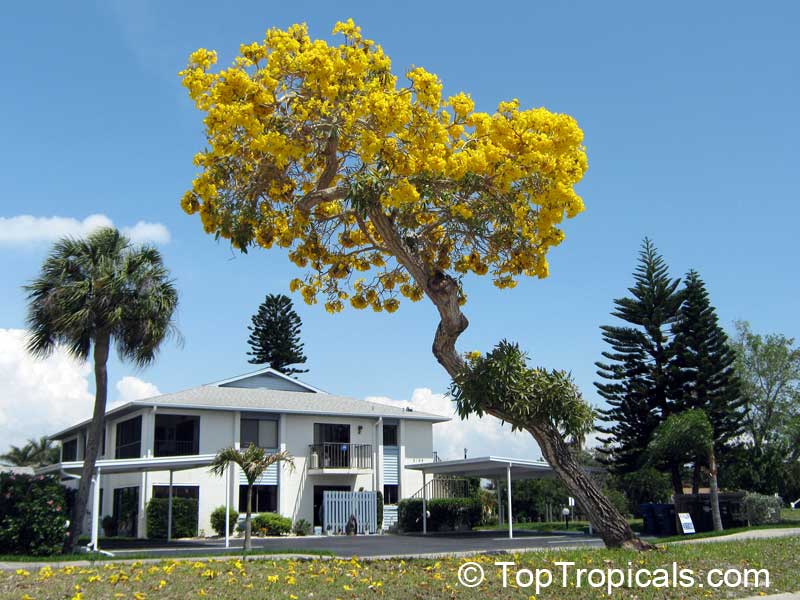
Tabebuia caraiba - Yellow trumpet tree crooked with wind

Tabebuia caraiba - Yellow trumpet tree crooked with wind

🌪 Pre-hurricane season tips: how to protect your trees from winds


Some trees like mango have deep roots and handle wind well. Others - like our favorites Spathodea campanulata - African Tulip Tree or Tabebuia caraiba - Yellow trumpet tree (in the photos) - need extra care. You've likely seen crooked Tabebuias in South Florida or lost a bushy Tulip Tree to strong winds. Their wide crowns act like sails in a storm.

💨 To help your trees withstand wind damage:

  • ✅ Stake young trees with strong support - use a tripod-style setup (three bamboo sticks or boards secured around the tree for balance from all sides)
  • ✅ Check and adjust supports every 6 months
  • ✅ Trim long or rubbing branches - they break first
  • ✅ Add extra support if a storm is coming (larger trees benefit from sturdy tripod-style bracing with boards)
  • ✅ Lighten bushy growth, less sail = more survival

💡 Some remove all leaves from plumeria before a hurricane - it works!
💡 We pruned our Tulip Tree and Ceiba - and they withstood Hurricane Milton while others fell
  • ✅ If a tree falls, stand it up ASAP and support it. Trim broken branches - they’ll remind you what needed pruning before, not after!
  • ✅ Trees protected young, grow strong for life.


🛒 Grab your beautiful Tulip Tree and Tabebuia Tree today - support them early for strength and beauty later!

📚 Learn more:


Everyone loves these tulips growing on a tree

#How_to #Trees #Discover

🔴 Join 👉 TopTropicals

Date: 19 Jul 2025

☀️ When tropical plant takes a Summer break

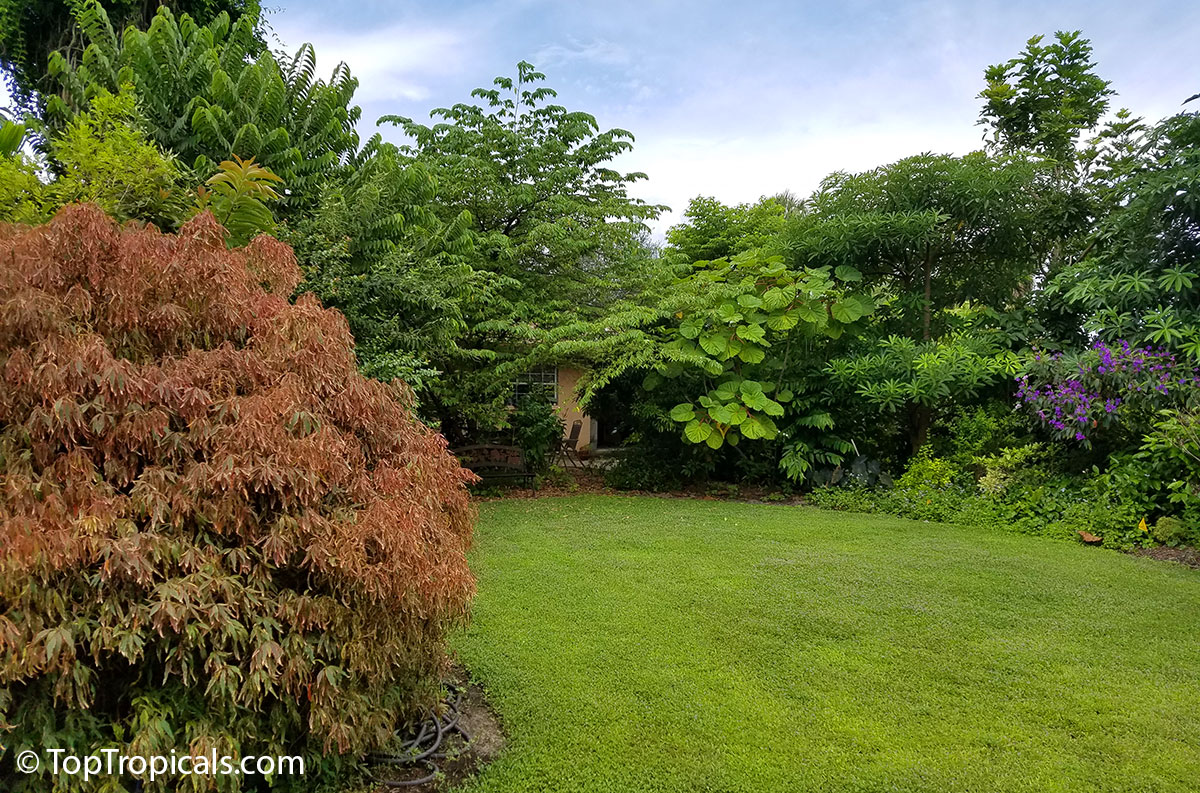
Tropical  landscape

Why your plants might stop growing in mid-Summer
and what to do about it

Q: Why some tropical plants stop growing when it gets too hot? Aren't they supposed to like the heat? Should I use more fertilizer during hot Summer?

You've been watching your tropical tree thrive all spring. New leaves, steady growth, maybe even a flower or two. Then July hits, and… nothing. The heat cranks up, and your once-busy plant just sits there. No new shoots, no blooms, not even a twitch. If it feels like your plant ghosted you - but don't worry! It's not dying. It's just hot!

Q: What happens to tropical plants when it gets extremely hot?

When the heat hits, plants hit pause. In the peak of summer, especially with temperatures above 90F, many tropical and subtropical plants go into heat survival mode. Growth above ground may slow down or stop entirely. It's not because you forgot to water or skipped a fertilizer dose - it's just too hot. The plant's energy shifts underground, where roots may still be growing. Think of it like a tropical version of a siesta - less margarita, more mulch. This stage might last a few weeks or longer, depending on how intense the heat gets. But the important thing is: it's normal.

Q: What NOT to do?

  • Don't drown it in extra water. That leads to root rot.
  • Don't dump dry fertilizer on it. That can burn the roots or just get flushed away. Use controlled release or liquid fertilizer dozed proportionaly to the plant's water usage.
  • Don't prune aggressively, hoping to jolt it awake.

None of that helps - in fact, it can make things worse.

Q: What you CAN do?

  • Water deeply in the early morning, and let the soil dry a bit between waterings.
  • Add mulch to help keep the root zone cool and reduce evaporation.
  • Provide temporary shade for potted plants or young trees.
  • Hold off on pruning or heavy feeding until you see new growth.

Just like you wouldn't run a marathon in a heatwave, your plant needs a break too.

Q: Why you shouldn't fertilize stressed plants with dry fertilizer?

Fertilizing seems like the obvious solution when a plant stalls, but in the heat of summer, it can backfire. When temperatures soar, roots slow down, and absorption becomes inefficient. You might pour in nutrients, but your plant can't use them - and what's worse, any tender new growth that does emerge can get scorched or sunburned before it has a chance to harden.

Feeding a plant with strong fertilizers during a heatwave is like telling someone to sprint in a sauna. It's not just unhelpful - it's risky. That's why you need a fertilizer that’s engineered for hot weather - not just any slow-release formula.

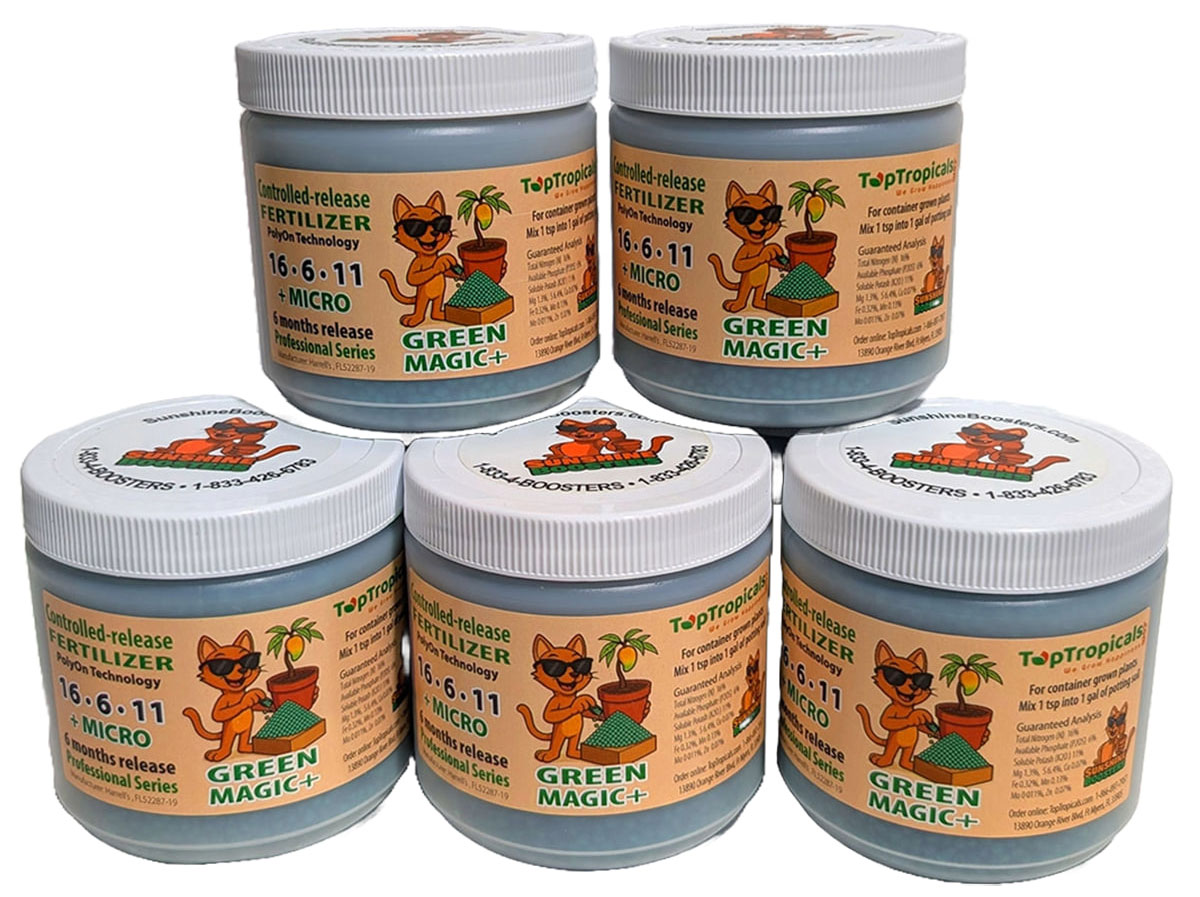
Liquid Sunshine Boosters mild formulas are safe to use year around. Controlled release fertilizer like Green Magic are safe as well, just make sure to follow directions and dosage.


Q: Why Green Magic fertilizer works in heat better that Osmocote?

Green  Magic  controlled  release  fertilizer

Not all slow-release fertilizers are built for hot summer. Some popular brands might seem like a good choice - but they’re optimized for soil temperatures around 70-75F. That's a mild Spring day in the South, but in real-world Florida or Arizona heat? Not even close.

Here's the problem: Osmocote releases nutrients based on moisture, not temperature. When it's hot and humid - or worse, when you water heavily - it can dump too many nutrients at once. That nutrient surge can:

  • Burn your plant's roots
  • Force tender new growth that gets fried in the heat
  • Leach straight out of the pot, wasting both fertilizer and money

It's unpredictable, especially in containers that heat up faster than ground soil. What you think is "slow-release" can behave more like a fertilizer bomb.

Green-Magic, by contrast, uses a temperature-sensitive polyurethane coating that responds gradually and consistently as the soil warms. That means:

  • No sudden nutrient spikes
  • No wasted runoff
  • And no risk of heat-triggered burn

It's designed to feed steadily and predictably - even when temps hit 90F and stay there. For potted tropical plants, that kind of control is the difference between stressed and thriving.

Q: How does Sunshine Boosters help with daily plant recovery in summer?

Once your plant begins to show signs of life again - maybe a new bud, or evening perkiness - it's safe to resume feeding. But skip the salts, and reach for something gentler: Sunshine Boosters.

These amino-acid based liquid fertilizers are designed for daily use, even in containers during the hottest days. They enhance nutrient uptake, even when roots are stressed or sluggish. Unlike synthetic chelators like EDTA, Sunshine Boosters won't bind nutrients or burn root system. They stay gentle, available, and effective. Learn more from this short video.

Use SUNSHINE Robusta for foliage support, or Ca-Support PRO for strong structure and recovery. It's like hydration and nutrition in one - perfect for tropical plants fighting through summer heat.

Q: How can I help my plants during extreme heat?

Don't fight the heat - work with it. If your tree looks stalled this summer, don't panic. It's following a rhythm older than all of us. Support it with smart watering, the right fertilizer combo, and a little patience. Before long, you'll see buds again - and know your plant made it through the heat.


Shop fertilizers and garden supplies


Read more plant care tips in Garden Blog

Date: 26 Mar 2020

PeopleCats ruling TopTropicals Kitchen. Healthy Treats for Humans

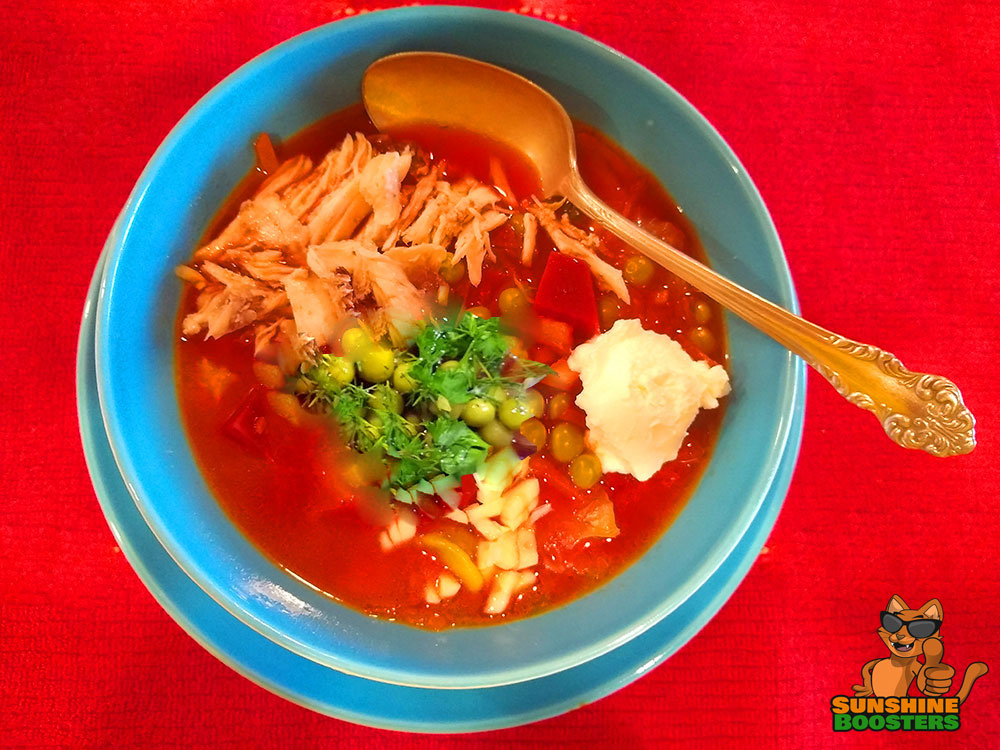
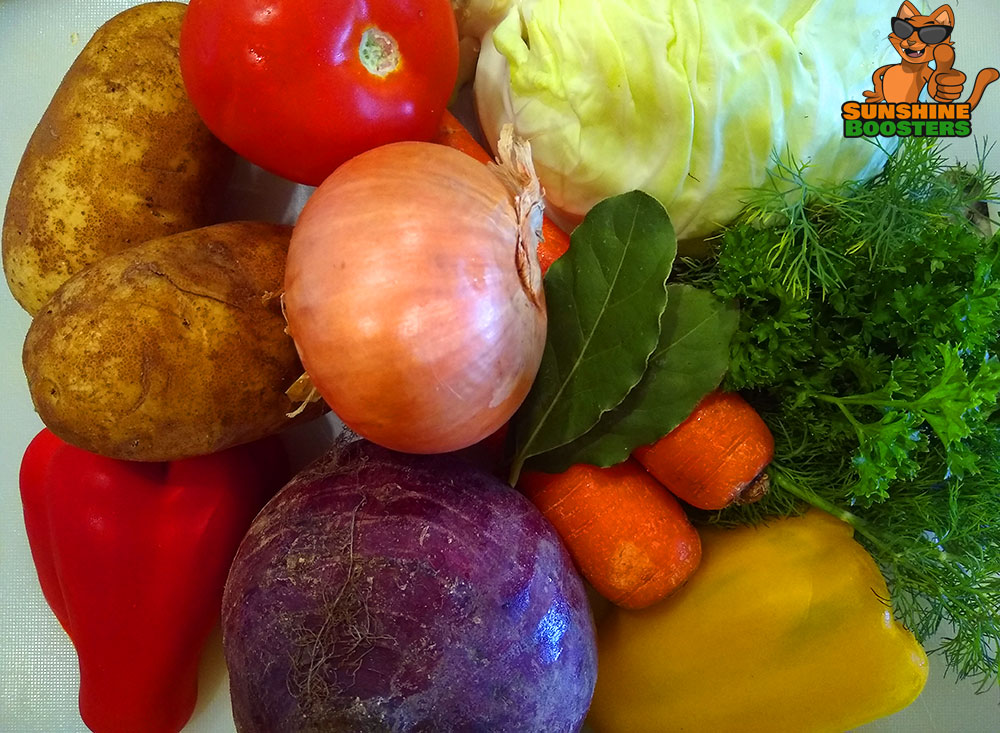
TREAT OF THE DAY: The Secret Health Booster: the Real Russian Borsh

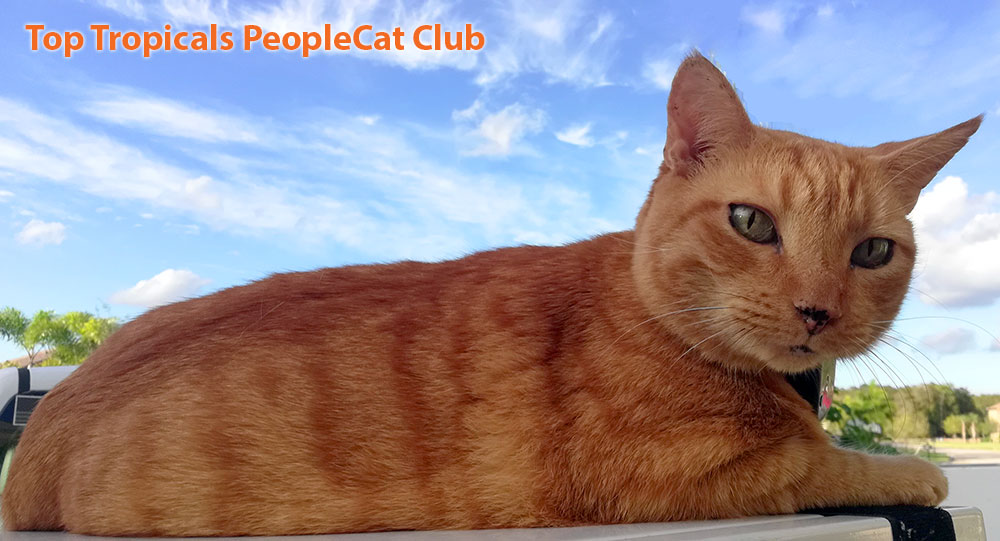
While PeopleCats continue ruling our gardens, getting their daily treats and helping us to survive, they suggested we share some special treats for humans, besides exotic plants and plant boosters...
It is - our favorite Russian Borsh that we make for our TopTropicals International team! It is the most delicious and healthy meal ever invented, for both adults and kids. It boosts your energy, makes you feel warm, wealthy, and happy!

This soup, along with Russian Vodka, is the secret of Russians' Survival Mode - how to stay healthy, strong, tough, and resistant to any virus.

The recipe of the Real Russian Borsh involves very simple, inexpensive, and easy to find ingredients. However, making it right takes a little bit of time (which we sure have now!), since Russians like to make things complicated and from scratch... they use whole foods!
Take your time and enjoy the process - it is a part of this secret recipe. At the end, you will be rewarded with a healthy, tasty meal for the whole family for the whole week! And, it is only $2 per serving!

And remember, it is spelled Borsh (not Borscht!), according to the real Russians.

CONTINUE READING >>

Please tell us how you liked it! :)

TopTropicals PeopleCat Club

Thank you everybody for supporting us in helping PeopleCat Community! Donations accepted from our website. Thank you and God bless you and your pets!

Date: 15 Mar 2019

Save Coffee from extinct!

TopTropicals.com

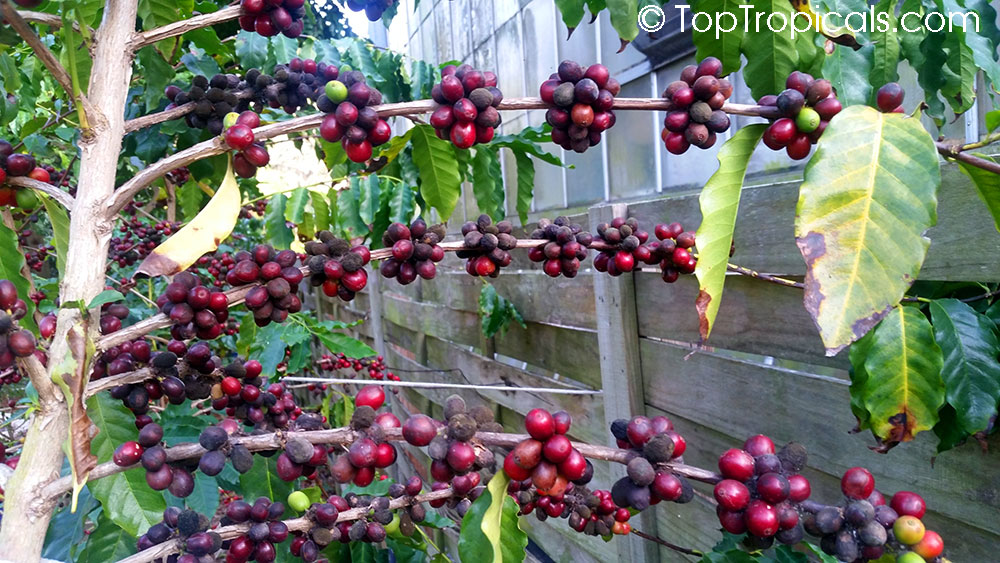
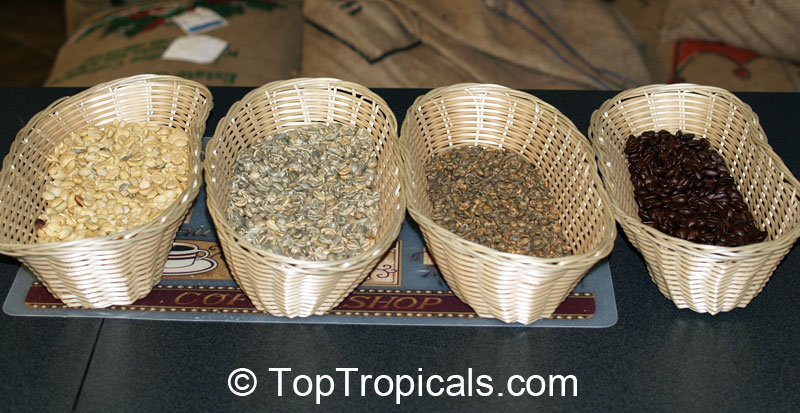
The most popular kind of coffee for commercial production, Coffea arabica, is already on the endangered species list. According to research, Coffea arabica plant could become extinct in as little as 60 years.

Coffee requires a forest habitat for its survival. With so much deforestation going on around the world, wild coffee species are being impacted at an alarming rate. Coffee plants grow in very specific natural habitats, so rising temperatures and increased rainfall brought by climate change can make coffee impossible to grow in places the plants once thrived.

Read the whole article

See video: Top Tropicals Showcase: Coffee plant

To reserve a cup of coffee for yourself and your children, plant the Coffee tree now!

TopTropicals.com