Garden Blog - Top Tropicals

Date: 16 May 2024

When Bigger means Better
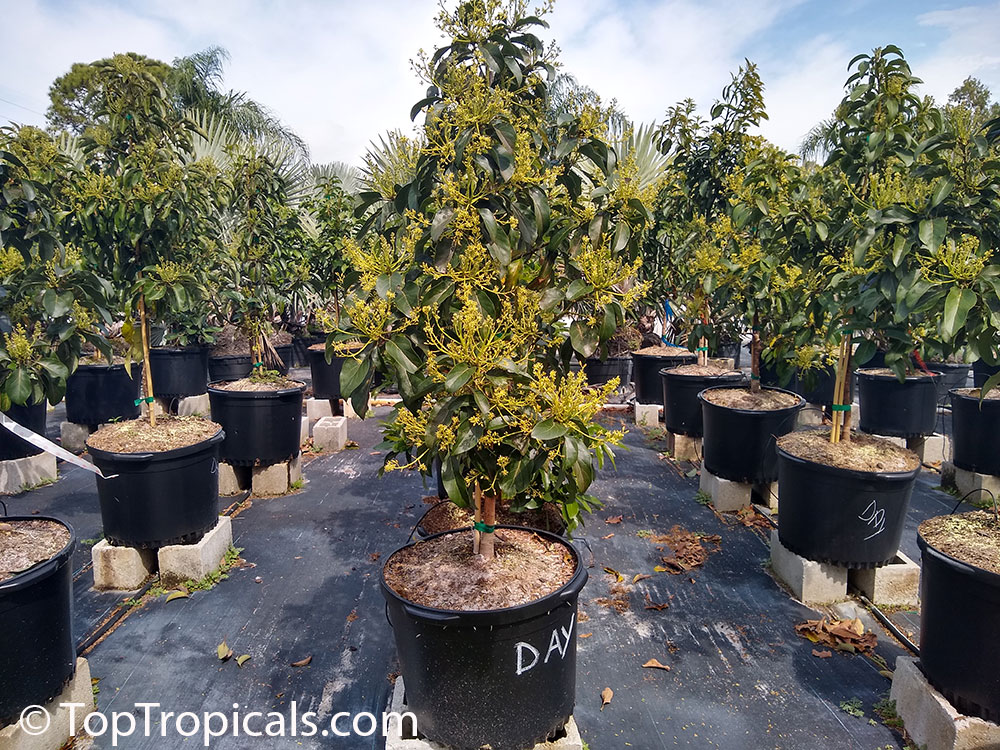
Large  Avocado  trees  in  containers

Everybody loves shopping online nowadays, and plants are no exception. Buying plants by mail order is not uncommon anymore; it only takes one click, and luckily, there are many sources - from big shopping malls like Amazon to small backyard nurseries that sell their seedlings on eBay or Facebook - all delivered to your door. But plants are alive... So when doing your online plant shopping, you must ensure that you fully enjoy your experience and are happy with a healthy plant that a) doesn't die; b) recovers quickly; and c) starts growing fast, so you can see flowers and fruit as soon as possible.

The rule of thumb for shipping plants: bigger plants undergo shipping better, experience less stress, less leaf drop, and recover quicker than plants with smaller root systems. So when it comes to buying plants online, the bigger, the better. Unfortunately, many mail-order plant sources may sell you a tiny twig that has very few chances of surviving. Shipping is very expensive today, so shipping a bigger size plant may cost more than the plant itself.

Below is a piece of advice on how to make the best plant selection for your garden...
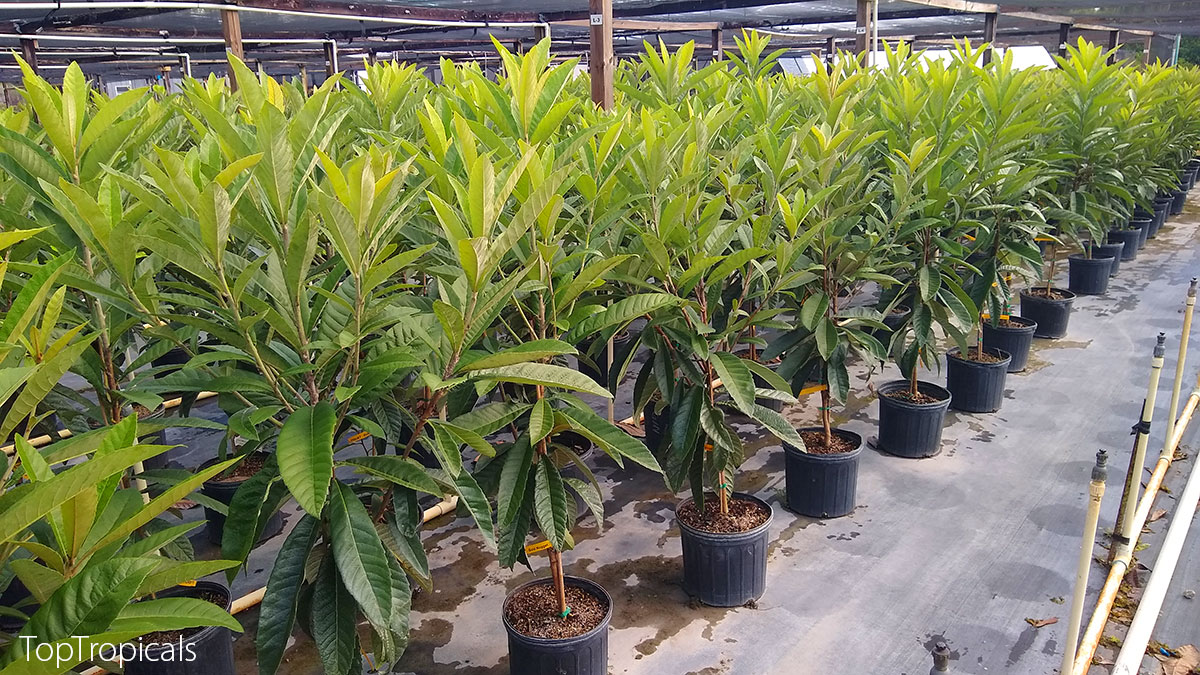
Loquat  trees  in  containers

Photo above: Loquat trees in 3 gal containers.

5 important rules on how to buy trees online

1. Find a source with bigger plants. Check reviews, ask friends for recommendations, inquire from the company about the size of their plants and how they pack their plants for shipping.
TopTropicals offers well-established, strong plants with developed root system, in container sizes 1, 3, 7, 15 gallon, directly from a tropical Florida growing farm. Our unique plant-packing techniques are state of the art!

2. Price not always reflects the size and quality of the plant
TopTropicals offers many deals, discounts and sales, while still providing the biggest and strongest plants grown in real tropical conditions.

3. Most fruit trees must be grafted to produce good fruit. Make sure you are not purchasing a seedling when it comes to Mango, Avocado, Peaches and some other trees with named varieties that don't come true to seed.
TopTropicals offers only grafted - Mango, Avocado and a large number of other tropical cultivars.

4. Pick up when possible from the nursery your ordered from, or get a delivery, instead of shipping the plants. A drive to the nursery will save you more time and money in the future, plus you can hand-pick the biggest and healthiest specimens.
TopTropicals is open 7 days a week for your convenience. Visit our Ft Myers Garden Center or Sebring Farm to select the biggest plants.

5. Take advantage of X-Large size plant material if you live outside the tropical zone and are trying to zone-push your tropical garden. Bigger plants will establish faster and have more chances to survive cold winters. Again, it will save you money in a long run (although bigger plants may be more expensive, but their survival rate is much higher when it comes to cold nights).
TopTropicals offers X-Large flowering and fruiting trees (7-15-25 gallons), and most of the varieties you see in our online store can be custom-ordered in big sizes. Delivery and installation available.
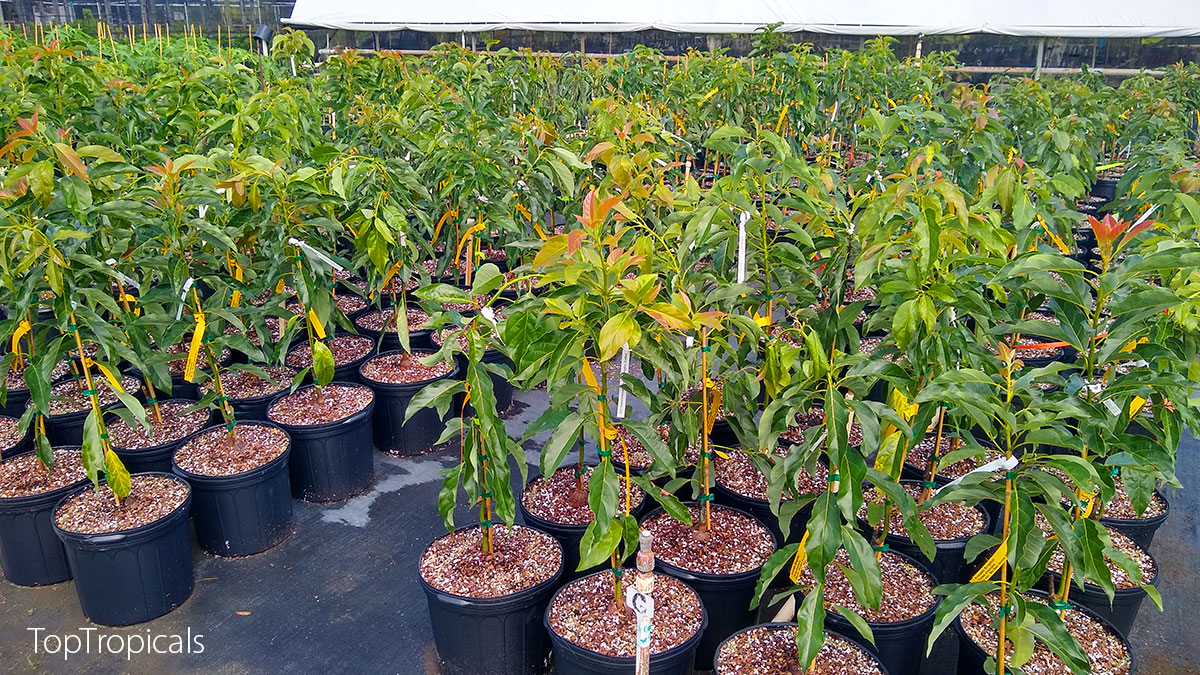
Avocado  trees  in  containers

Photo above: Avocado trees in 7 gal containers.
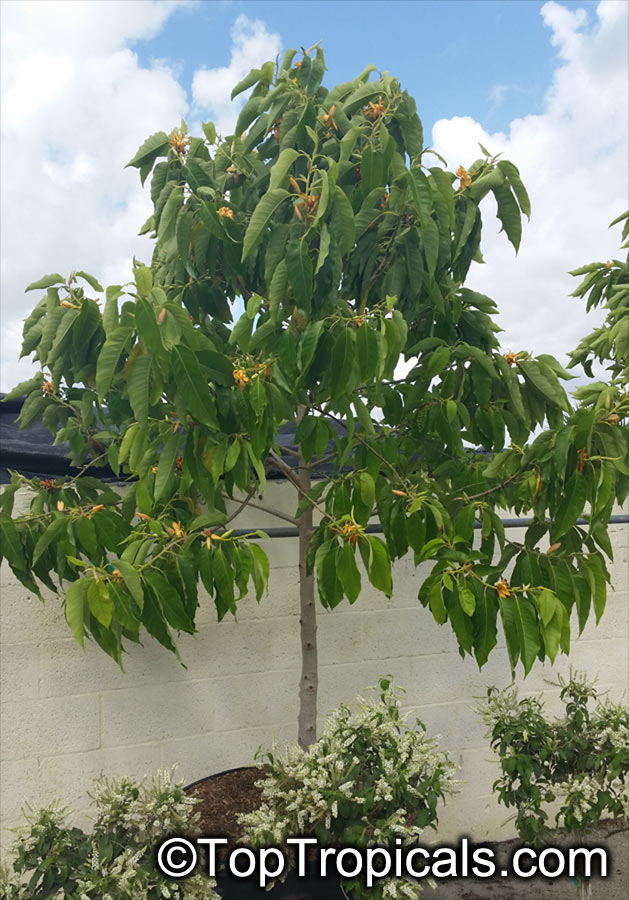
Large  Champaka  tree  in  container

Photo above: Magnolia champaca - Joy Perfume Tree in 25 gal container.
Date: 24 Jun 2025

🌞 How to help your plants survive a hot summer

Father's  Day  Event  at  Top  Tropicals,  Cat  at  checkout

Q: It's getting so hot that my plants stay droopy all day, how much water is enough water? Any advice how to help them to survive this heat?

A: Yes, it's official - summer has cranked up the heat, and your garden knows it. Blame it on the dreaded heat dome - a big ol' pressure lid in the sky that traps hot air like a pressure cooker. Basically, it's summer's version of putting your plants in an oven - without the cookies... But don't panic! With a little extra care (and water), you can help your leafy friends make it through the sizzle without going crispy. Here's how to beat the heat in your garden:

Eight rules during summer heat

1. Water early, and generously. Morning is the magic hour. Before the sun gets too intense, give your plants a slow, deep drink - like a spa treatment before a big day. Watering in the middle of the day? Bad idea. It's like pouring water on a hot frying pan - evaporates fast, and can even scorch leaves.

2. Mulch like you mean it. A nice 2-3 inch blanket of mulch keeps your plants' roots cool and the moisture locked in. Think of it as sunscreen and air conditioning for the soil. Pine straw, bark chips, shredded leaves - whatever you've got, pile it on.

3. Give them some shade. If your plants are looking like they're sunbathing without sunscreen, help them out. Use old sheets, umbrellas, shade cloth - whatever works. Even a light shade can make a big difference. New plants, veggies, and shade lovers like philodendrons will thank you.

4. Put down the pruners. Right now, your plants are in survival mode. Pruning in extreme heat can stress them out more. Let them ride out the heat wave before giving them a trim.

5. Don't move in this heat. If you're thinking of transplanting that poor little tree - hold that shovel. Moving plants during extreme heat is like moving house during a heatwave - everyone ends up grumpy. Wait until cooler weather rolls back in.

6. Pamper your potted plants. Pots heat up fast and dry out even faster. Move your container plants to shadier spots and check their soil often - don't let it go bone dry. They can't dig deeper for water, so you're their lifeline.

7. Know the signs of heat stress:
- Droopy in the day, perky at night? Normal. They're just hot, not dying. Keep watching.
- Crispy edges or curling leaves? They're too dry. Deep water, mulch, shade.
- Still wilted the next morning? That's a red flag. Time to step up the TLC - soak thoroughly and shield from the sun.

8. Don't forget about yourself! If your plants are feeling the heat, you probably are too. So wear a hat, slap on sunscreen, hydrate, and do your gardening early or late in the day.

Need help planning your garden's heatwave strategy? We're here for you, 7 days a week. Reach out to the Top Tropicals team and we'll get your plants through summer with style!

Stay cool and grow on,
Kristi V. - your Tropical Plant Expert
🌴

Date: 19 Jul 2025

🔥 Too hot to function?
20% off QUALITY fertilizers

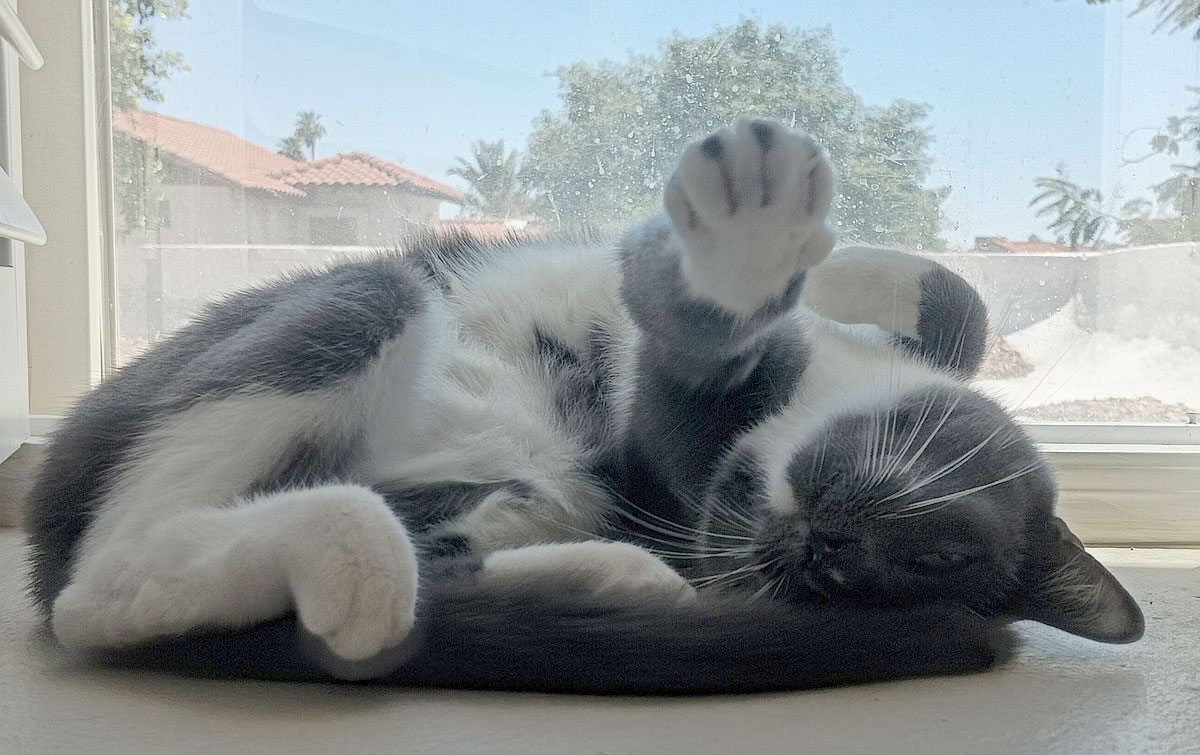
Macaron  the  tuxedo  cat  lying  lazily  on  his  side  in  a  sunny  windowsill,  one  paw  raised  mid-stretch  as  he  naps  through  the  summer 
 heat.

When it gets this hot, even Macaron the cat gives up on pretending to care. He flops sideways, paw in the air like he's surrendering to the sun, and doesn't move for hours. Your plants? They’re doing the same.

That's not neglect. It's survival.

If your tropical plant suddenly stopped growing, it's not mad at you - it's on summer strike. And the worst thing you can do is try to push it with a shovel of cheap dry fertilizer.

In our next column we will tell you how to save plants from heat stress, root burn, or just plain summer sulking. Macaron's Paw of Approval 🐾.

While you're at it - give your plants the gentle support they actually need - and save!

Use code FERTI20 to save 20% on fertilizers and garden supplies!

No minimum order. Offer Ends July 24, 2025.

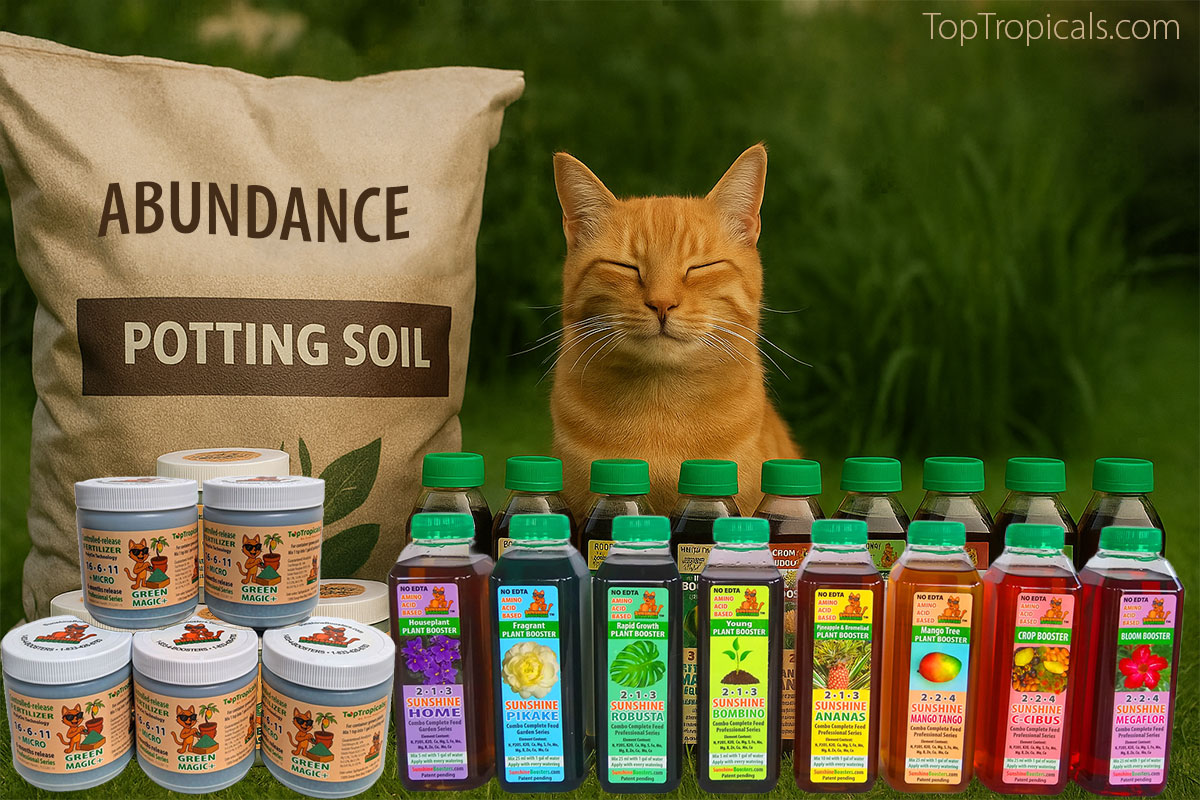
Shop fertilizers and garden supplies Orange  cat  with  garden  supplies  and  fertilizers

Date: 2 Mar 2026

Eugenia Cherries 🍒

By Tatiana Anderson, Horticulture Expert at Top Tropicals with Smokey & Sunshine help

Eugenia brasiliensis - Grumichama fruit on the branch

Growing Eugenia Cherries (Cherry of the Rio Grande & Grumichama)

Cherry of the Rio Grande and Grumichama are compact, adaptable tropical fruit trees well suited to Southern landscapes. While forgiving, they perform best when planted correctly from the beginning.

Site and Planting

  • Drainage is essential. Avoid low areas where water collects. Plant on a slight mound if soil is heavy or clay-like.
  • Choose full sun for best flowering and fruit production. Partial shade is tolerated.
  • A south or southeast exposure near a wall improves cold resilience and reduces wind stress.
  • Dig a hole twice as wide as the container, but no deeper than the root ball.
  • Set the tree level with surrounding soil. Do not bury the trunk.

Water and Feeding

  • Water regularly during the first few months while roots establish.
  • Once established, trees tolerate short dry periods but fruit best with moderate, consistent moisture.
  • Feed lightly and consistenly. SUNSHINE Boosters Robusta liquid fertilizer is safe to use with with every watering. During hot season you may add controlled release Green Magic every 6 months. It is essential to apply micro elements: Sunshine Superfood micro nutrients complex

Cold Tolerance

  • Protect young trees during hard freezes.
  • Established Cherry of the Rio Grande can tolerate brief drops into the low 20s.
  • Established Grumichama tolerates temperatures into the upper 20s.

Harvest and Production

  • Cherry of the Rio Grande fruits from late spring into summer. Pick when fully dark and slightly soft.
  • Grumichama ripens quickly, often within four weeks after flowering. Pick when glossy and deep purple-black.
  • Both trees often begin fruiting within 2–3 years and increase production steadily with maturity.

Growing in Containers

  • Use at least a 10–20 gallon pot for long-term growth.
  • Ensure multiple drainage holes.
  • Use a high-quality, well-draining container mix. Avoid heavy garden soil. Top Tropicals Abundance soil-less mix is specially formulated for pot growing
  • Place in full sun for best fruiting.
  • Water deeply, then allow the top layer to dry slightly before watering again.
  • Move containers to a protected area during hard freezes.
  • Prune lightly to maintain shape and airflow.

Common Mistakes

  • Planting in poorly drained soil.
  • Overwatering and keeping soil constantly saturated.
  • Over-fertilizing with excessive nitrogen.
  • Planting too deep and burying the trunk.
  • Expecting heavy crops immediately instead of allowing time for maturity.
  • Skipping cold protection for young plants.

Learn more: Tropical Cherries – Eugenias

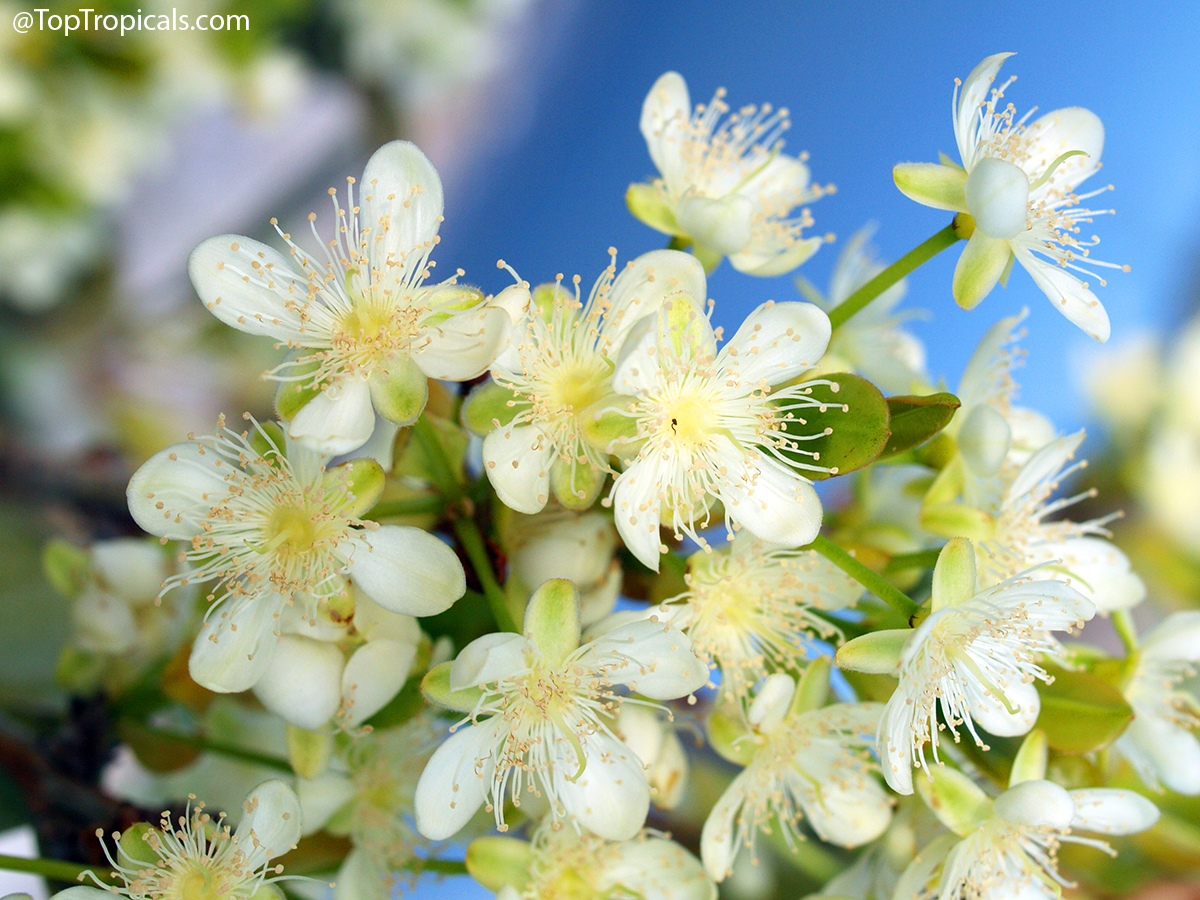
EGrumichama  flowers  (Eugenia  brasiliensis)  in  close-up  showing  white 
 petals  and  long 
 stamens

Eugenia brasiliensis - Grumichama flowers

❓Frequently Asked Questions: Eugenia cherries (FAQ)

  • Which one tastes better – Cherry of the Rio Grande or Grumichama?
    Cherry of the Rio Grande has a deeper, classic “sweet cherry” flavor with slight richness. Grumichama is softer, juicier, and often described as cherry with hints of grape and plum. Both are excellent fresh; Grumichama is especially popular for jam.
  • Which tree produces more fruit?
    Grumichama typically produces heavier crops once mature and can carry hundreds of fruits in a season. Cherry of the Rio Grande produces consistently but in slightly smaller volumes.
  • Do birds take all the fruit?
    Birds are attracted to both trees, especially Grumichama. Netting during peak ripening or harvesting promptly usually solves the issue.
  • Are these true "tropical" trees or subtropical?
    They are best described as subtropical tropicals. Unlike ultra-tender tropical fruits, Eugenia cherries tolerate occasional frost once established, making them more reliable in Southern landscapes.
  • Do they drop fruit messily?
    Fruit will fall if overripe, but the trees are compact and manageable. Regular harvesting prevents ground drop and keeps the area clean.
  • Can they be used for hedging or screening?
    Yes. Their dense evergreen foliage and upright growth make them suitable for edible hedges or privacy screens while still producing fruit.

Choosing between them is not about survival — both have proven resilient. It is about flavor preference, crop volume, and how you want to use the fruit in your kitchen and landscape.

Eugenia brasiliensis - Grumichama fruit close up

Eugenia aggregata (cv. Calycina), Cherry of the Rio Grande

🛒 Add Eugenia cherries to your garden

✍️ Top Ten Fruit Tree Winners of Florida 2026 Record Freeze

Date: 12 Mar 2026

❄️Cold-Hardy Avocados and Fruit Trees

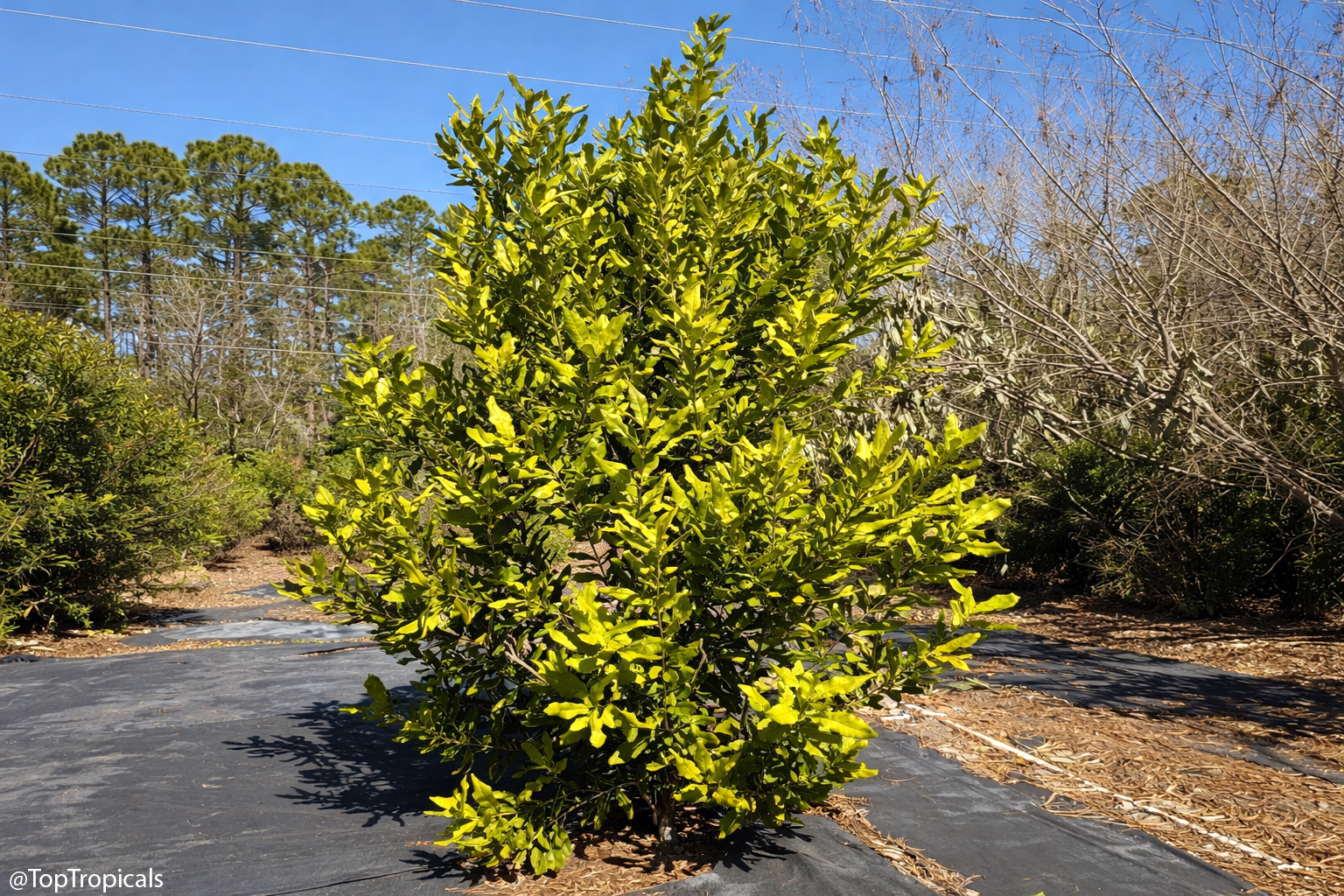
Three  year  old  macadamia  tree  after  three  nights  of  25F  hard  freeze  in 
 February  2026,  showing  healthy  foliage.

3 year old macadamia tree after 3 nights of hard freeze in February 2026 - standing strong.

Earlier in early February we had a rough stretch at the B-Farm in Sebring. Three nights around 25°F with steady wind. Weather like that quickly shows which plants actually belong in Zone 9 and which ones only look good on paper.

Once things warmed up and we could see the real results, a few clear winners stood out. All of the macadamias handled the cold surprisingly well. The grumichamas stayed solid. And the cold-hardy avocado varieties again proved why gardeners rely on them in borderline climates.

Instead of listing every tropical plant that might survive a freeze, we decided to keep things practical and focus on the ones that actually went through this cold spell and that we currently have in stock.

If you garden in USDA Zone 8b-9, these are the kinds of trees that make winter a lot less stressful.

📖Read the full article: 2026 Freeze Guide: Cold-Hardy Avocados and Fruit Trees.


📚 Learn more:

Add Cold Hardy Avocado Tree to your garden