Garden Blog - Top Tropicals

Date: 20 Apr 2016

5 secrets of propagation

How to propagate rare plants? It is exciting and fascinating process - to be a Creator of a rare plant collection. Sometimes when you have a rare plant, you baby it and wish you could have at least two of the kind, just in case you lose one to weather conditions or an accident... If you lose one, it hurts! Plant collectors know the feeling - it is always a good idea to propagate a few more of the rare kind. Here at Top Tropicals we know that feeling too, and we want you to keep your baby plants alive and thriving, multiply them, share with others, and make our planet better - one plant at a time! Know your different plants, and different ways of their propagation. Ready for the secrets revealed?

1. Seeds. The most popular way and in most cases the most reliable. Also, a seedling has a strong, vertical root system (cuttings or air layers have shallow roots). However growing from seed is the only sexual method of propagation (vs other methods - asexual, or cloning), which means, some varieties don't come true from seed. Similar to a baby born from two parents, blonde mother and brunette father, can have either light or dark hair... or even red, genetically provided by the great-grand father! The most important factors of success when growing from seed are - well-drained germination mix (check out our Seed Germination Mix #3), and a combination of perfect temperature (high temperature 80-90F induces germination, but some species like it cooler!) and mix moisture level (can't stay soggy).

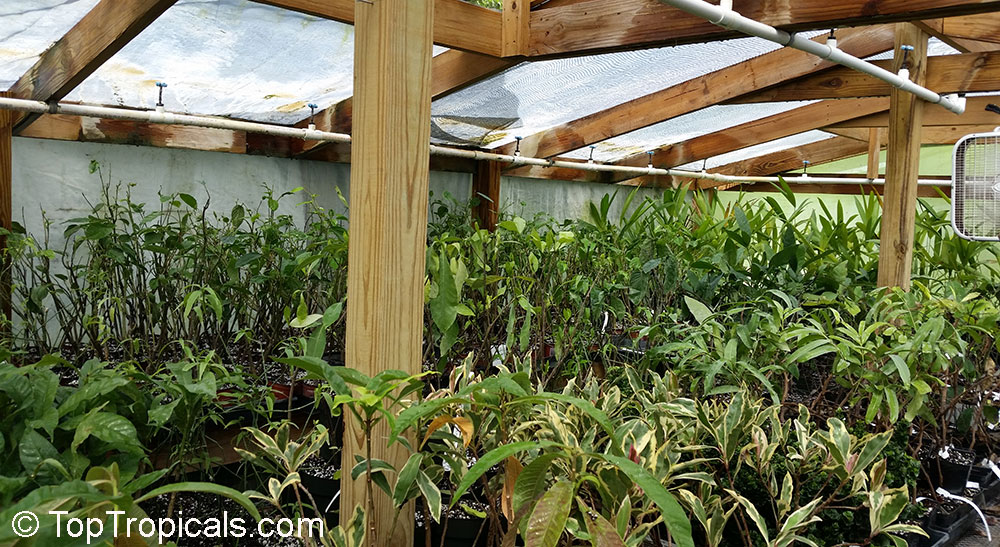
2. Cuttings. In most cases, works great as long as you know the secret for this method: clean (sterile) soil mix (check out our Propagation Mix #2), warm temperatures and very high air humidity (not moist soil, but humid air!). Mist house works well (see picture) with periodically controlled foggers (5-20 sec of fog every 5 to 20 min during light time - depending on species, and temperature), but simple clear plastic bag over a pot or tray works as well! Large leaves should be trimmed in half, or more, to eliminate extra evaporation, and soil should be only slightly moist, not soggy. Remember to use rooting hormone that not only improves rooting but keeps away fungus problems. You are welcomed to visit mist house in our facility, we will be happy to share experience.

3. Air Layers. From our experience, key to success with this method is patience. Most air layers take a few months to set root. Keep sphagnum moss moist, and create air layers only during active growth season - Sprint through Summer. Use rooting hormone.

4. Grafting. This method requires the most skills and experience but is not as difficult as it sounds. Plants can be grafted withing the same genus (e.g. one Gardenia sp. on another Gardenia sp.). There are many grafting manuals on internet. Try once, and you will get addicted to grafting! In many cases it is the most effective method. Especially when seeds not available and cuttings don't work with the species, while grafting works much faster than air-layering. The main secret in grafting is using the right type of graft, which comes with experience. Another important thing is keeping grafting parts and tools clean/sterile. Treat/clean surfaces with anti-fungicides horticultural soap (Example: Abound anti-fungal, Green Shield soap) and use rooting hormone.

5. Root divisions. All gardeners know that some plants are best to propagate by rhizome/root divisions, like Gingers, Heliconias, or Iris. And not everyone knows that some fruiting and flowering trees don't mind to reproduce by root divisions. For example, Jujube - Ziziphus jujuba, and Strawberry tree - Muntingia calabura, readily produce root suckers. Watch out for them and don't let them go to waist when spraying weeds. All time favorites, fragrant Clerodendrums also like this easy method of reproduction, especially C. bungei, C. philippinum, and many others.

Check out our Growing supplies section for professional soil mixes and drainage components that are so important in your propagation success. At Top Tropicals, we often use Coconut Coir for propagation. Good luck in your growing, and remember - if you propagated a few extra collectibles, Top Tropicals may trade or buy from you!

Date: 3 Mar 2020

Tu BiShvat - New Year for Trees

By Alex Butova

Tu BiShvat is the Israeli Arbor Day, and it is often referred to by that name in international media. Ecological organizations have adopted the holiday to further environmental-awareness programs. The modern practices and interpretations of Tu BiShvat often revolve around the earth and environment. This holiday is a celebration of nature and appreciation for creating the natural world. In Israel, Tu BiShvat is celebrated as an agricultural holiday. The 15th of Tu BiShvat was celebrated this year on February 10, 2020. This day marked the beginning of a new year for trees. This day marks the season in which the earliest-blooming trees emerge from their winter sleep and begin a new fruit-bearing cycle. Often the date of Tu BiShvat is used for determining the age of fruit baring trees and therefore establishes their birth dates. Therefore, Tu BiShvat is the "birthday" of trees!

The traditions and customs of Tu BiShvat vary, however, the most common include planting trees and gathering with family and friends for a meal. It is celebrated by eating fruit, particularly the kinds that praise the bounty of the Holy Land: grapes, figs, pomegranates, almonds, dates, olives and others. It reminds people that "a man is a tree of the field", and reflects on the lessons we can derive from the botanical analogue.

Check out fruit trees and nuts:

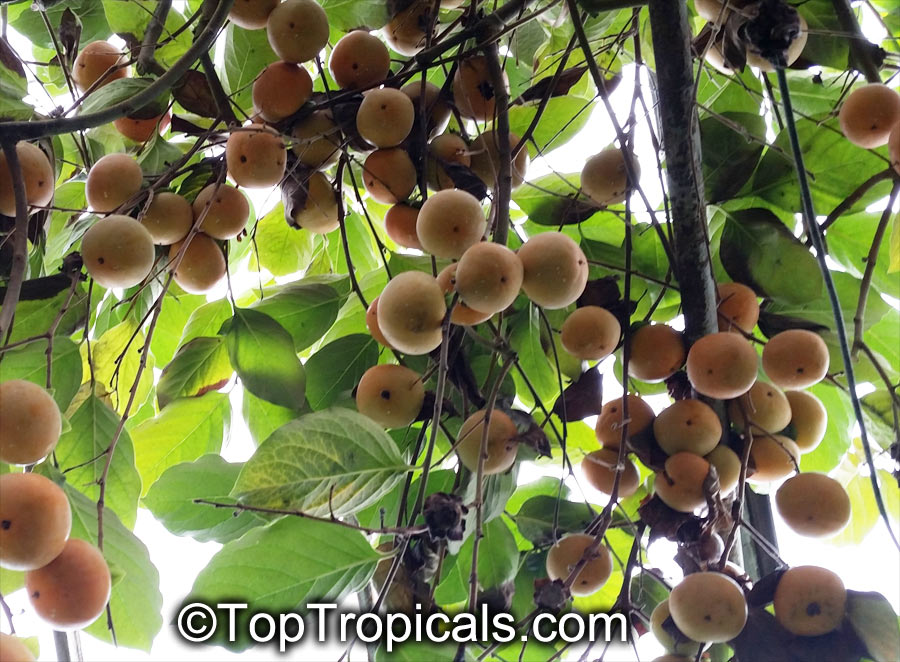
Persimmon tree

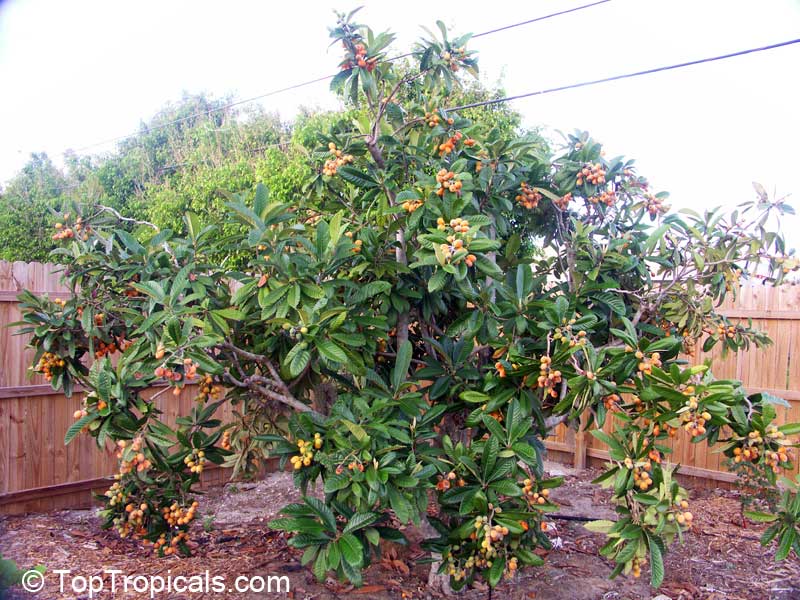
Loquat tree

Date: 14 Jul 2018

How to grow a Dragon Fruit

TopTropicals

Q: I want to grow a Dragon Fruit. Should I use cuttings or seed? What varieties do you recommend? How difficult it is to grow? How soon does it start flowering and fruiting?

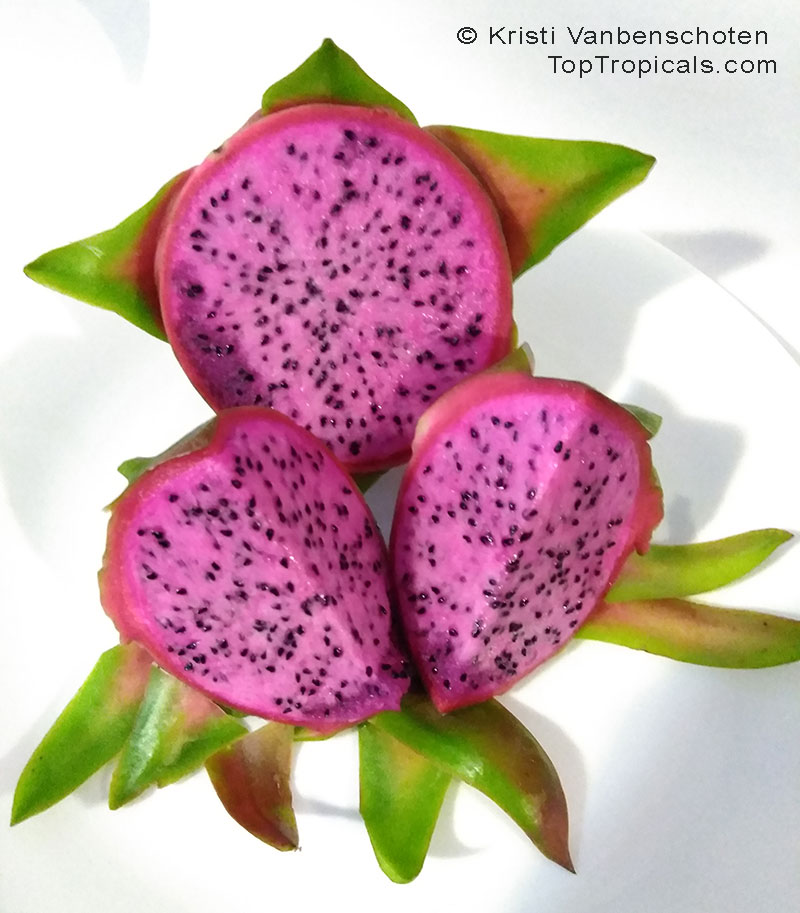
A: Dragon Fruit, or Pitaya is a highly prized, vining, fruit bearing cactus, extremely unusual terrestrial/epiphytic plant. It has magnificent flowers, stunningly beautiful fruit with an intense color, curious shape, and a delicious taste. The night blooming white flowers can be up to 14 inches in length. The fruit is most often eaten chilled and cut in half so the flesh may be spooned out. The juice is used in frozen drinks and it is in a new Tropicana Twister flavor. It is a must have for any collector or gardener with the flair for the unusual.
It takes 2-3 years for seedlings to fruit, besides the variety pay not come true to seed. We grow our plants from cuttings that are easy to root. We offer many selected varieties, most of them self-pollinating. The plants are ready to flower and fruit this year, or the next year.
Dragon Fruit Cactus is easy to grow, doesn't need much other than strong support, full sun, well-drained soil - adenium soil mix works great - and fertilizer during hot months, and SUNSHINE-Honey applications for growing sweeter fruit. For larger fruit bud thinning is recommended.

Check out Dragon Fruit varieties

Date: 24 Jun 2018

TopTropicals

Fruitful Fruit and SuperFood...

Q: I have a large fruit garden here in Florida with many mango trees, avocadoes, guavas, and other tropical fruit. Last year hurricane Irma and flooding killed a few avocado trees, but mangos and guavas survived OK, but the sad part is, very few flowers this year and almost no fruit setting. I noticed on your website your Superfood and Sunshine-Honey boosters that supposedly help fruiting? But I am afraid it is too late now as your instructions say first application must be in early Spring? I wish I discovered earlier that my trees wouldn't want to fruit this year...

A: First of all, it is never late to give the food! You may start applications of SUNSHINE products at any time of the year. The best results will be achieved once you treat your plants on regular basis throughout the whole year cycle of metabolism.
Couple weeks ago we started harvesting our 2 guava trees. These two are the same variety (Variegated Honeymoon), planted within 20 ft from each other and growing in the same conditions. The only difference was, one was treated with SUNSHINE-Honey and SUNSHINE-SuperFood, and another one didn't get any treats in order to have a control plant.
Results are very interesting, see the picture. Both trees were heavily covered with fruit. However the one with treatments developed fruit that is much larger, much sweeter and juicier, and the most interestingly - with less seeds, almost no seeds!
To answer your question: yes, you can start feeding your fruit trees right now. It is still a Springtime. Many mango varieties have late season; even early varieties may delay their fruiting if flowering triggered by miscro-elements. Guavas have very long season and most varieties can have multiple crops throughout Summer-Fall.
Here is a simple and affordable feeding schedule to help your fruit garden recover from last year hurricane stress, and establish reliable production:
1) SUNSHINE-E - for boosting metabolism - once a month
2) SUNSHINE-Honey - for bringing sugars to the heart of the tree and boosting fruit sweetness and quality - now and in 2 weeks
3) SUNSHINE-SuperFood - for overall health, recovering from hurricane and fixing root damage from flood - now and every 2 weeks throughout warm season.
4) You may apply regular balanced fertilizer NPK as usual (we apply once a month, a handful per in-ground tree)
It's that simple. Just try and watch your trees produce again!

Check out all SUNSHINE boosters... We offer FREE shipping on them, so you can make your plants happy!

Date: 23 Jan 2025

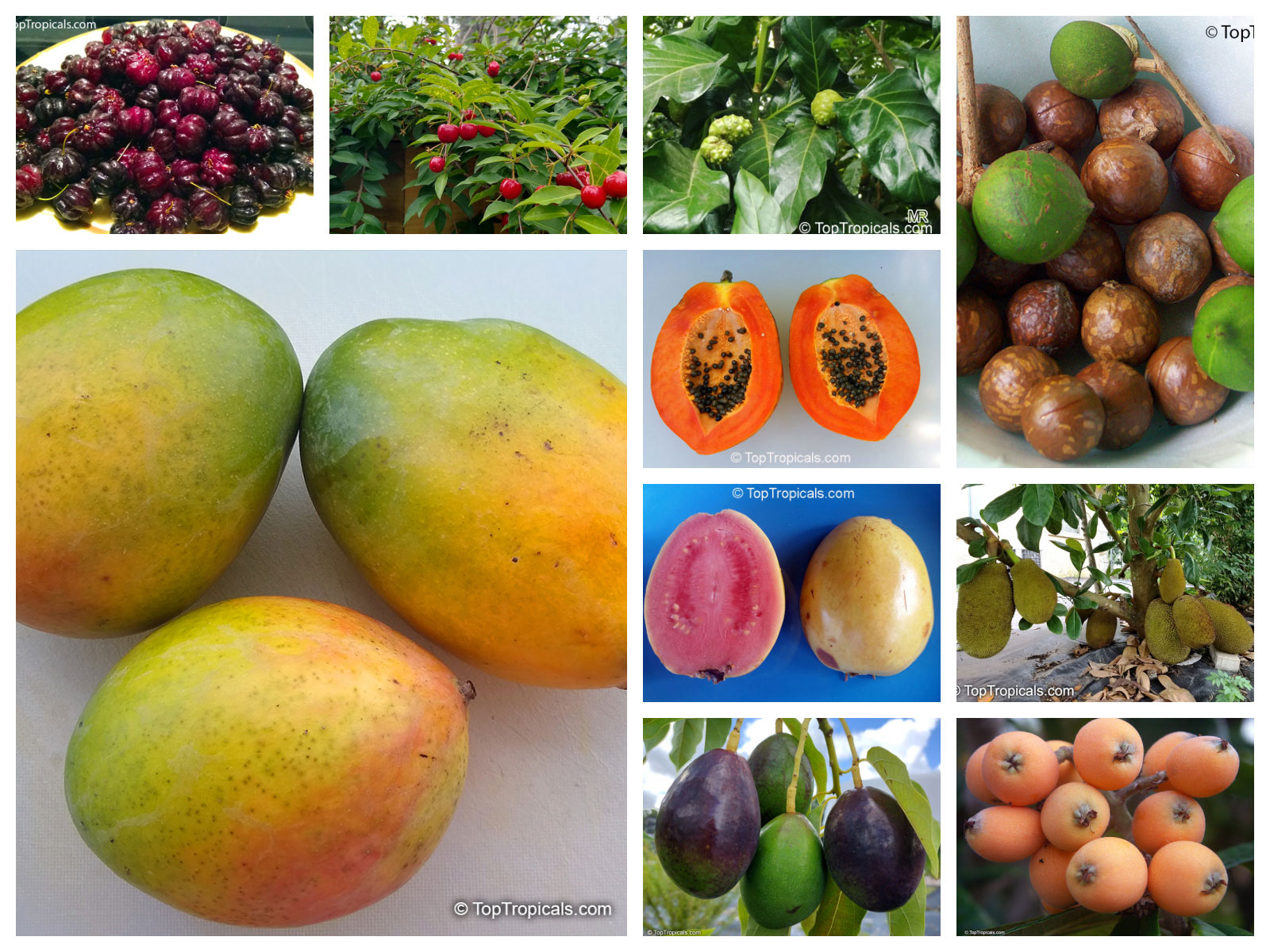
Discover 10 best fruit trees to grow
in Florida and Southern landscapes

10  best  fruit  trees  to  grow  in  Florida,  collage

Q: We recently moved into our new home in Florida, and the property is a great size - 5 acres - but it currently has no trees, just a few palms. I'm looking to plant some productive fruit trees to start building our own Food Forest. What fruit trees would you recommend as a good starting point?

A: With five acres of space, you have a fantastic opportunity to create a fruitful garden that can provide for your family for many years to come. Below are our top recommendations for must-have, easy-to-grow fruit trees that thrive in Florida's climate, grow quickly, and start producing right away.

1. Mango Tree
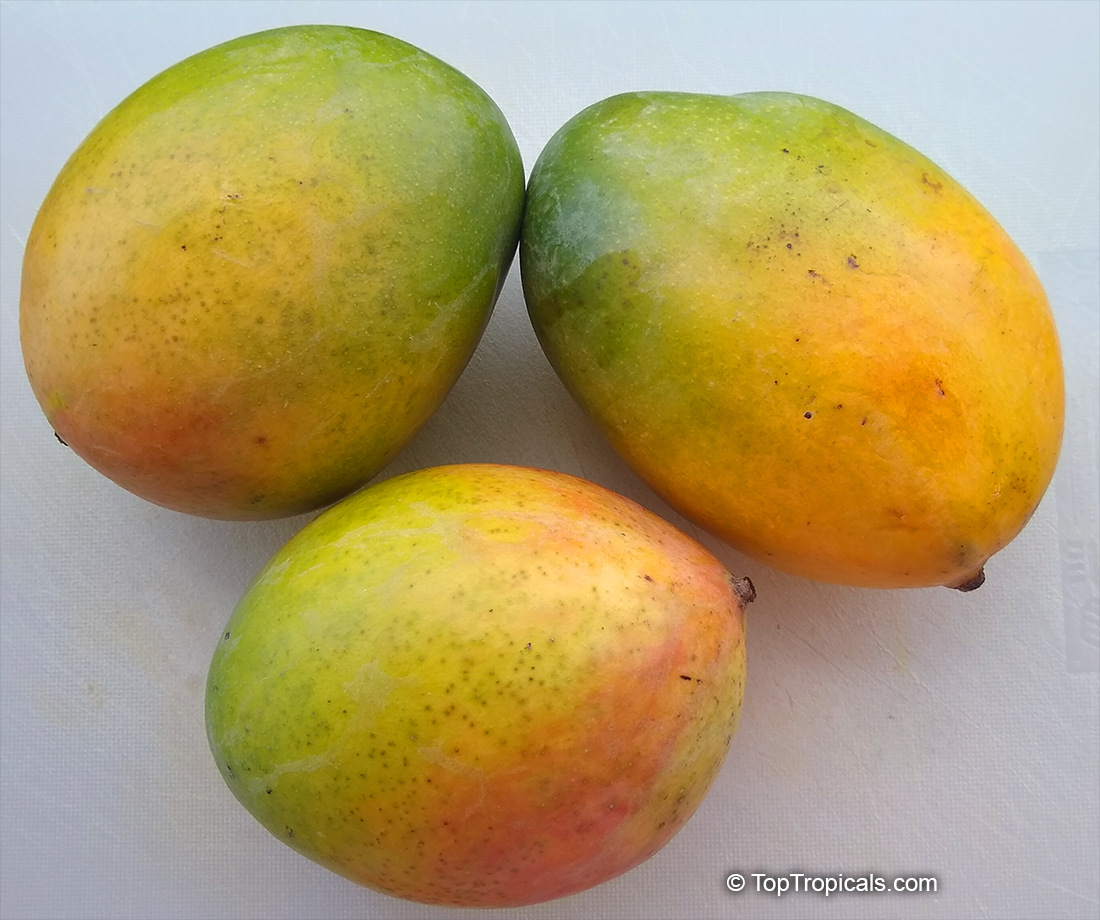
Mango  fruit

Mango trees (Mangifera indica) are a must-have for any Florida garden, embodying the essence of the Sunshine State with their delicious and nutritious fruit packed with vitamins and fiber. These fast-growing, low-maintenance trees thrive with minimal water and are heat-tolerant. Grafted varieties produce high-quality, fiberless fruit in just 2-3 years, while dwarf "condo" mangoes are perfect for smaller spaces or containers. While young trees need frost protection, mature trees handle cold better. Grafted mangoes offer rich taste that you won't find in commercially grown, fibrous varieties, ensuring a sweet and vibrant harvest from your own garden.

2. Avocado Tree
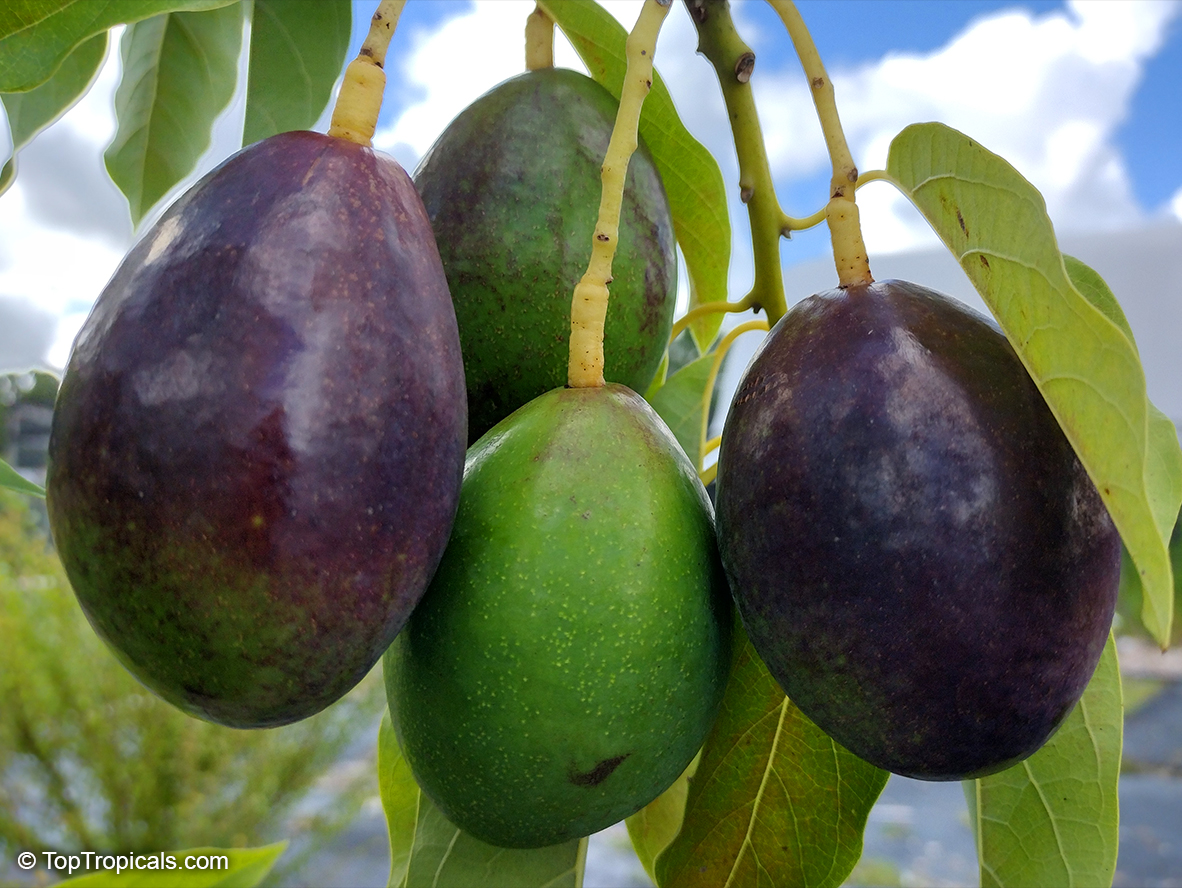
Avocado  fruit

The Avocado tree (Persea americana) is an essential addition to any tropical or subtropical garden. Known for its health benefits and superfood status, it's a favorite fruit that's not only productive but also a beautiful ornamental tree. Some avocado varieties are more cold-tolerant than mango trees, with the ability to survive temperatures below 25F. While many enjoy growing avocado from seed, only grafted trees guarantee quality fruit and immediate production, as seedlings can take 7-8 years to bear fruit. To successfully grow avocado, ensure good drainage by planting on a raised mound (4-6 inches) and keep the soil consistently moist. There are also compact varieties like Wurtz and Fuerte that thrive in containers or small spaces, making them ideal for patios and small gardens.

3. Tropical Cherries
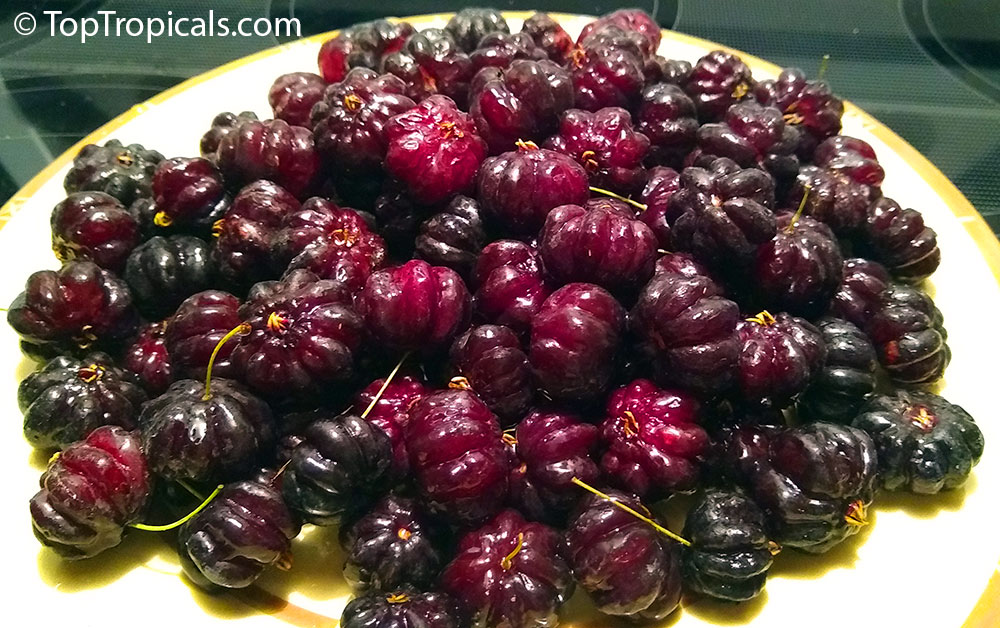
Eugenia  Lolita  cherry  fruit

Tropical cherries, such as Cherry of the Rio Grande (Eugenia aggregata), Grumichama (Eugenia brazilensis), Pitomba (Eugenia luschnathiana), and Black Surinam Cherry (Eugenia uniflora var. Lolita), are popular and easy-to-grow fruit trees that offer fast growth and excellent fruit production. These compact, versatile trees thrive in both the ground and containers, starting to produce fruit almost immediately. Eugenias are low-maintenance, requiring minimal water, thriving in various soil types, and being pest-free. They are heat-tolerant and can endure cool winters, surviving light frosts. Birds love the fruit, but don't worry - there will always be plenty for everyone.

4. Barbados Cherry Tree
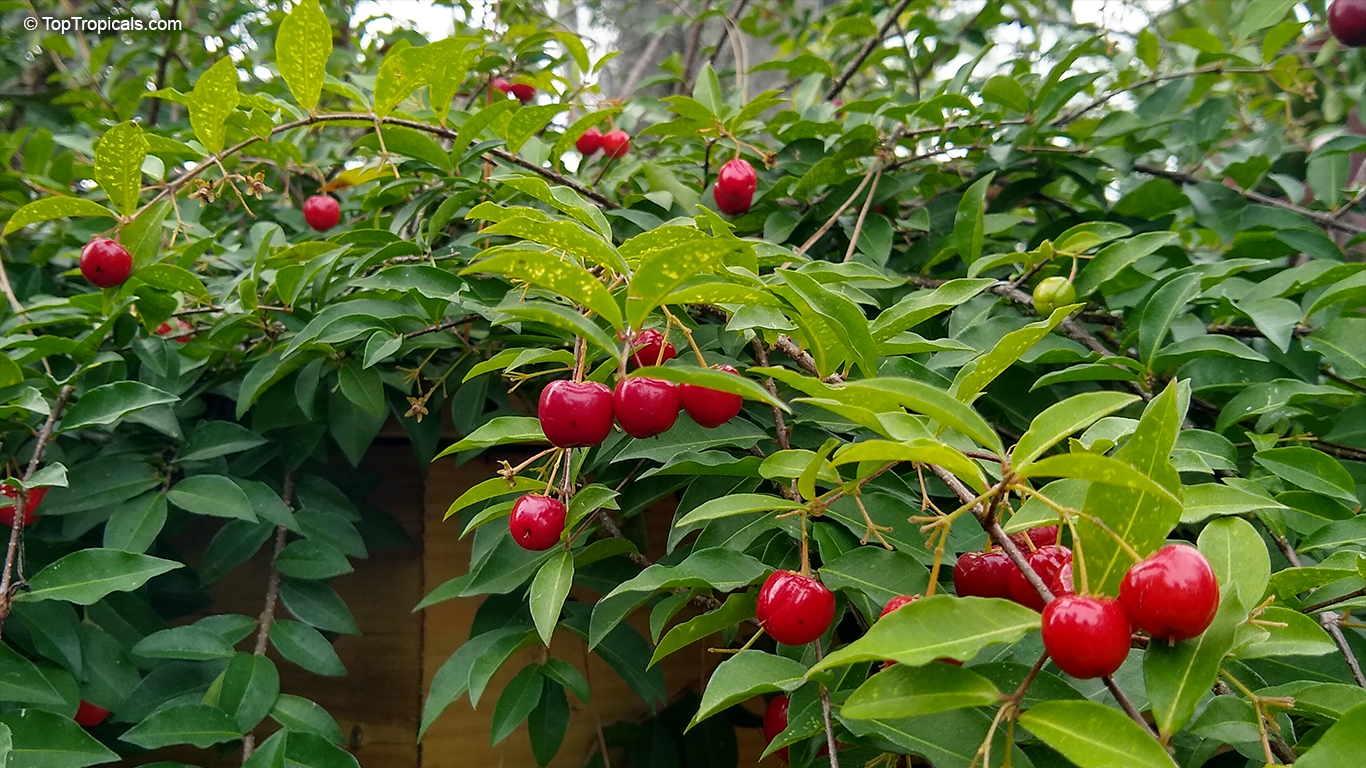
Malpighia  Barbados  cherry  fruit  on  a  branch

Barbados Cherry (Malpighia glabra), also known as Acerola, is a tropical cherry renowned for having the highest vitamin C content of any fruit. This nutrient-packed fruit is perfect for jellies, jams, and freezing without losing its vitamin C. The Barbados Cherry is a fast-growing, dense shrub that fruits multiple times a year, providing abundant harvests for gardeners seeking quick results. It thrives in alkaline soil, tolerates drought, and is relatively cold-hardy, withstanding light freezes. Birds love the fruit, making it a great addition to wildlife-friendly gardens. The dwarf variety, Nana, with its small leaves and fruit, is perfect for containers, borders, or even bonsai, adding ornamental value to any space.

5. Noni Tree
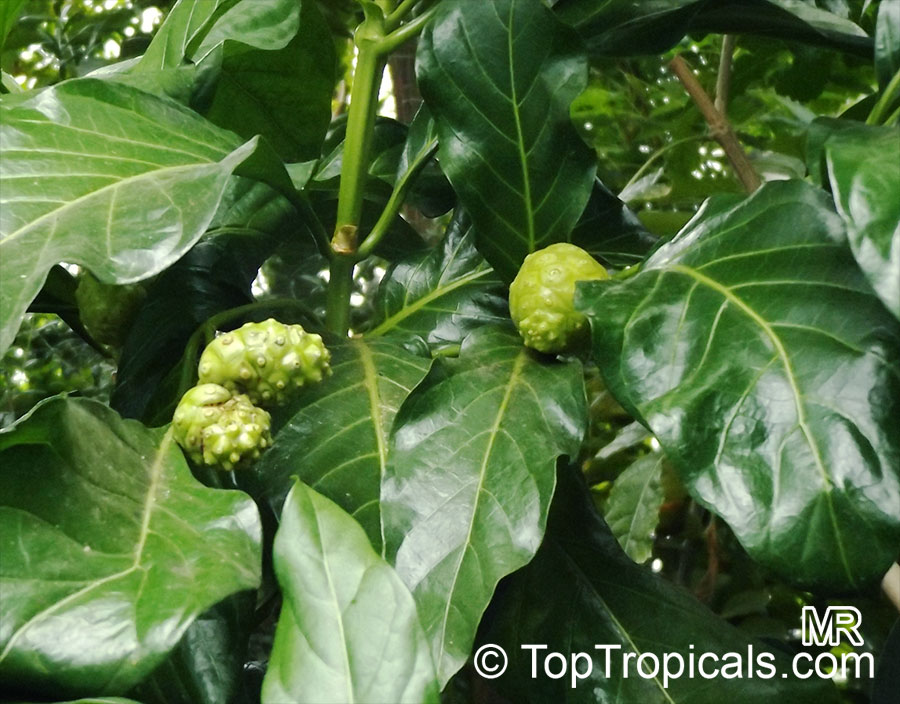
Morinda  Noni  fruit  on  a 


branch

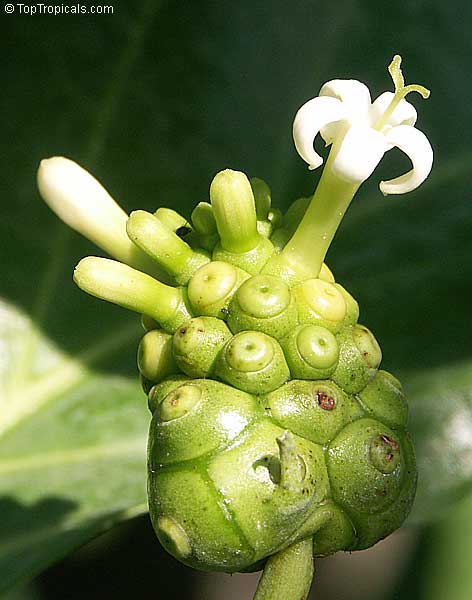
The Noni Tree (Morinda citrifolia) is a top superfood plant that makes a fantastic addition to any Southern garden. Known for its numerous medicinal benefits, Noni fruit offers anti-inflammatory properties, relief from arthritis, and support for conditions like diabetes, metabolism, and weight loss. It's even believed to help fight cancer. Noni trees grow quickly and begin producing fruit within 2 years from seed. This tough, resilient plant thrives in poor soil, endures summer heat, and withstands drought conditions. Despite its tropical appearance, Noni is surprisingly cold-hardy, recovering well after leaf damage in cooler weather. In addition to its health benefits, the Noni tree has ornamental value, with large, waxy leaves and unique fruit, where the flower appears to grow directly on the fruit!

6. Macadamia Nut Tree
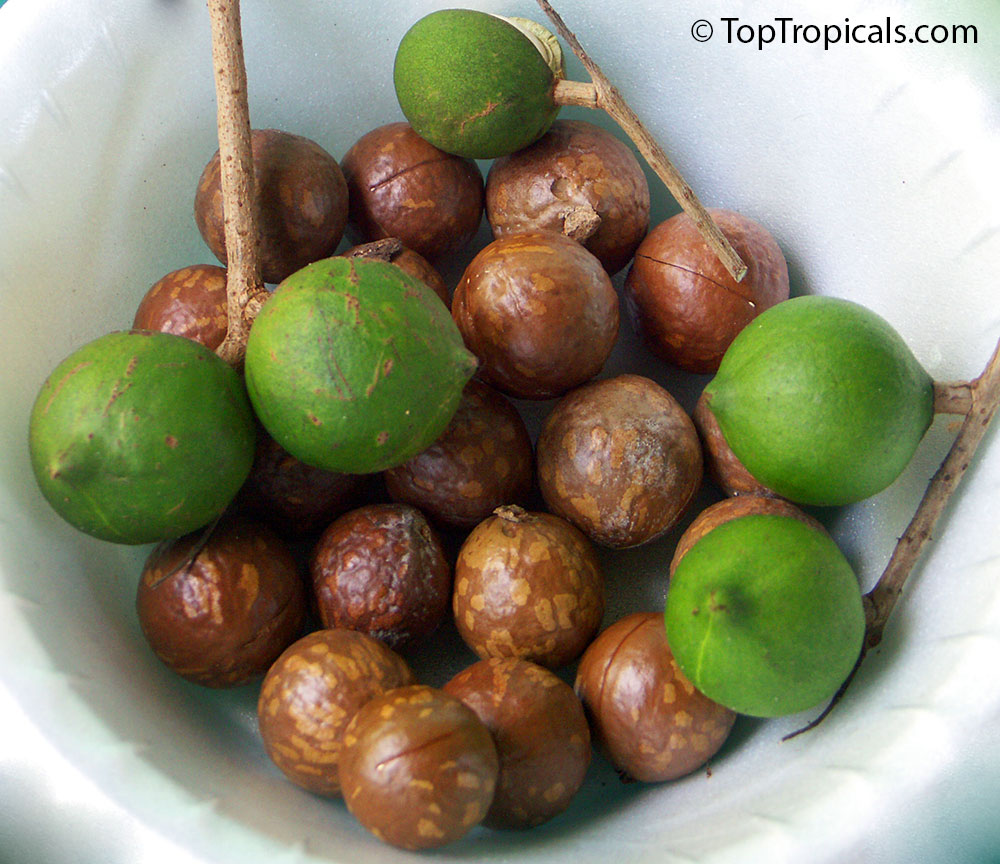
Macadamia  nuts  on  a  plate

The Macadamia Nut Tree (Macadamia integrifolia) is a fantastic addition to any garden, allowing you to grow these delicious, high price tag, nutrient-rich nuts right at home. These trees are cold-hardy, grow quickly, and thrive in all Florida soil types. Once established, they are productive and can tolerate both flooding and drought. Older trees can survive colder winters, while young trees need protection from temperatures below 25-26F. Macadamia trees like plenty of water and a special fertilizer program, including liquid fertilizers and microelements, to ensure healthy root development and optimal production. Aside from being rich in healthy fats, vitamins, and minerals, macadamia nuts offer numerous health benefits, such as improved digestion, heart health, weight management, and blood sugar control. They are also packed with tocotrienols - antioxidants which may protect against cancer and brain diseases.

7. Papaya Tree
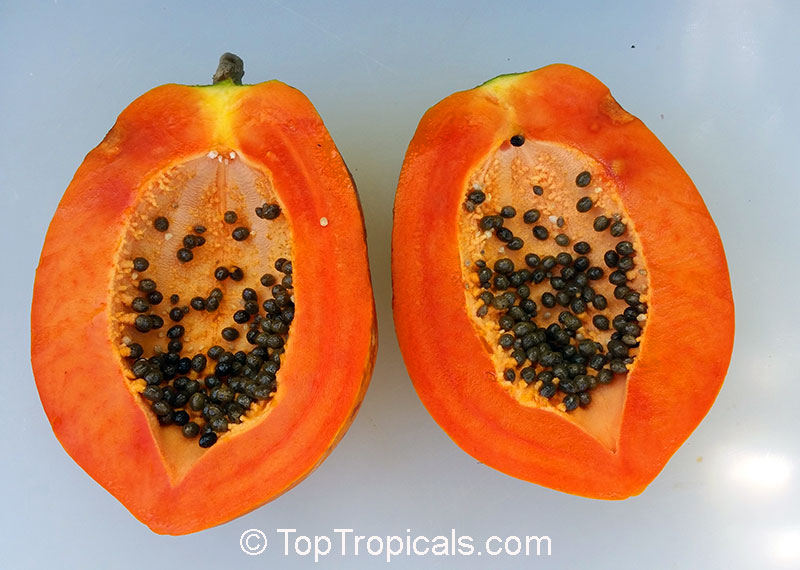
Papaya  fruit  with  seeds

Papaya trees (Carica papaya) are resilient, easy to grow, and produce fruit year-round. Rich in papain, a digestive enzyme, papayas are a superfood that promotes gut health. These fast-growing trees often begin producing fruit within the same year they're planted, providing quick rewards for gardeners. Many varieties, especially dwarf papayas, are space-efficient, reaching only 6-8 feet tall while still yielding large crops, making them perfect for small gardens. Surprisingly hardy for a tropical plant, papayas can withstand light freezes and strong winds (tested in hurricanes!). While they are self-fertile, planting 2-3 different cultivars improves pollination and increases yields. "Solo" cultivars, with their smaller, round or oval fruits, are sweet and less susceptible to fruit flies.

8. Guava Tree
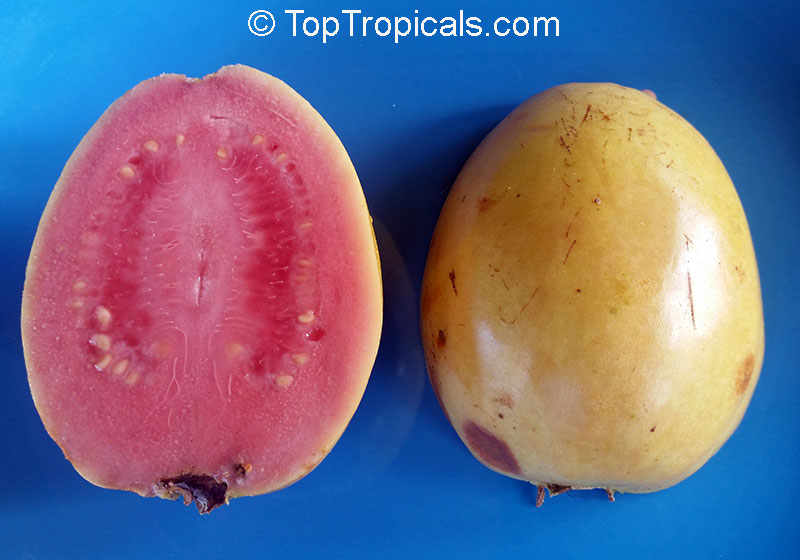
Pink  Guava  fruit

Guava trees are beloved for their flavorful fruit, commonly used in juices, drinks, and desserts. Popular varieties include Tropical Guava (Psidium guajava), Cattley Guava (Psidium littorale), Cas Guava (Psidium friedrichsthalianum), and Pineapple Guava (Feijoa sellowiana). Despite their tropical nature, guavas are surprisingly cold-hardy, suitable for cooler climates and occasional frost. These trees thrive in moist conditions and can tolerate some flooding, while their compact growth makes them easy to maintain at any height or shape. Guavas are fast-fruiting, often producing fruit within a year of planting, and even some varieties in 1 gal containers. The dwarf Nana variety is perfect for container culture, producing full-sized fruit in a compact form. Guava trees are mostly pest-resistant, though mealybugs may require occasional treatment with neem oil in humid, rainy areas. Planting multiple guava trees ensures a continuous supply of fresh, juicy fruit and delicious guava juice for everyone to enjoy.

9. Jackfruit Tree
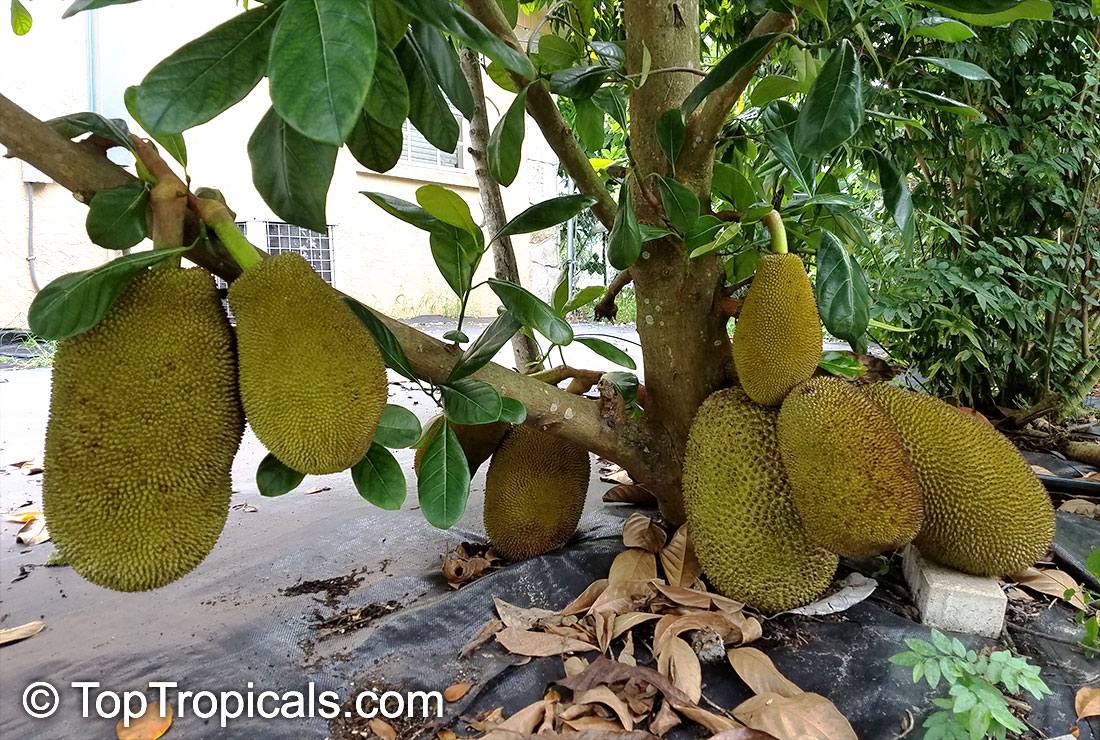
Jackfruit  fruit  at  the  base  of  the  tree

The Jackfruit tree (Artocarpus heterophyllus) is a striking, fast-growing tree known for producing the largest fruit grown on a tree, making it a showstopper in any garden. Nutrient-packed and often used as a meat substitute in South Asian cuisine, Jackfruit is also delicious in curries, chutneys, and as dehydrated chips. These trees grow quickly, have large waxy leaves, and can be maintained at a compact height of 7-8 feet, making them ideal for smaller spaces and easier cold protection. Despite being a tropical species, Jackfruit trees are relatively cold-tolerant and can survive light frost (although on the account of production volume), with established trees being more hardy than seedlings. Jackfruit trees begin producing fruit within 3-4 years from seed, and varieties come true to seed, eliminating the need for grafting, though it can be done for specific varieties.

10. Loquat Tree
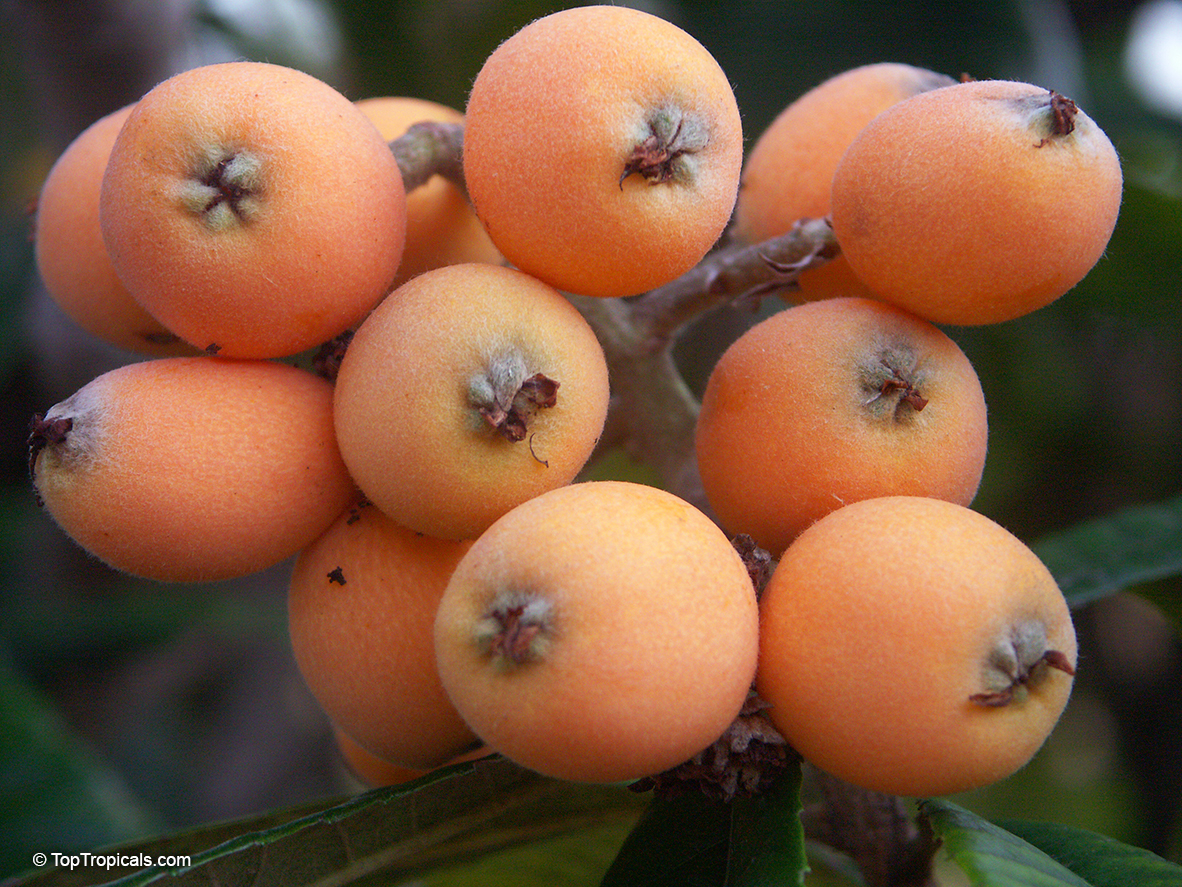
Loquat  fruit  on  a  branch

The Loquat tree (Eriobotrya japonica) is a fast-growing, drought-tolerant, and highly cold-hardy tropical fruit tree that thrives in Florida gardens. Loquats are heavy producers, with juicy, aromatic fruit that ripens from early spring to early summer, offering a delicious apricot-like flavor. This compact tree is perfect for small gardens, beginners, and those with limited space. Loquats are undemanding, thriving in any soil and withstanding summer heat, winter cold, heavy rains, and occasional flooding. Nutrient-rich, they are high in sugar, acids, vitamins B and C, minerals, and pectin. Loquats are versatile, enjoyed fresh or used in fruit salads, jams, jellies, chutneys, pies, sauces, and even wine-making, and they are often used as a natural sweetener.