"Life is not measured by the number of breaths we
take,
but by the moments that take our breath away."
- Maya Angelou -
"...Remember, spend some time with your loved ones, because they
are not going to be around forever... ...Remember, say a kind word to someone who looks up to you in awe,
because that little person soon will grow up and leave your side... ...Remember to give a warm hug to the one next to you, because that
is the only treasure you can give with your heart and it doesn't cost a
cent... ...Remember to say"I love you"to your partner and your loved ones,
but most of all - mean it. A kiss and an embrace will mend hurt when
it comes from deep inside of you... ...Remember to hold hands and cherish the moment for someday that
person will not be there again. Give time to love, give time to speak, and give
time to share the precious thoughts in your mind... ...And always remember, life is not measured by the number of
breaths we take, but by the moments that take our breath away."
(A Life message from George Carlin after he lost his wife)
1. Throw out nonessential numbers, including age, weight and height. Let the doctor worry about them. That is why you pay them. 2. Keep only cheerful friends. The grouches pull you down. 3. Keep learning. Learn more about the computer, crafts, gardening. Never let the brain idle. "An idle mind is the devil's workshop." And the devil's name is Alzheimer's. 4. Enjoy the simple things. 5. Laugh often, long and loud. Laugh until you gasp for breath. 6. The tears happen. Endure, grieve, and move on. The only person who is with us our entire life, is ourselves. Be ALIVE while you are alive. 7. Surround yourself with what you love, whether it's family, pets, keepsakes, music, plants, hobbies. Your home is your refuge. 8. Cherish your health. If it is good, preserve it. If it is unstable, improve it. If it is beyond what you can improve, get help. 9. Don't take guilt trips. Take a trip to the mall, to the next county, to a foreign country, but NOT to where the guilt is. 10. Tell the people you love that you love them, at every opportunity.
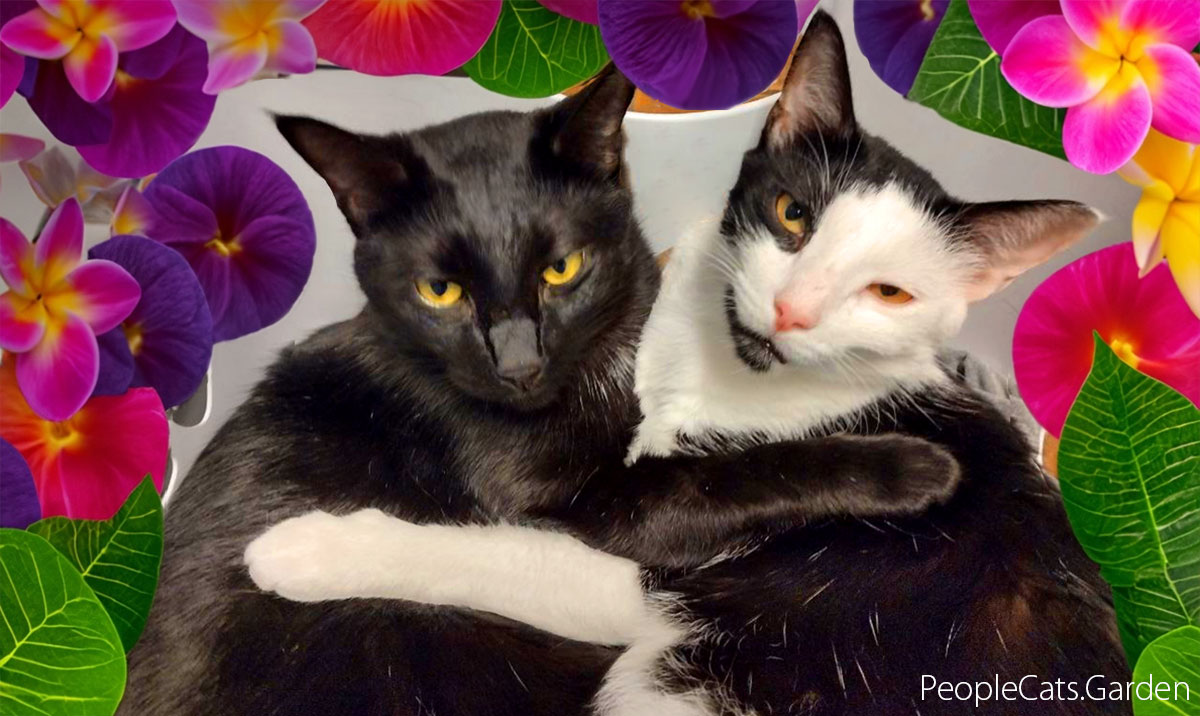
Smokey and Sunshine Wrap Up the Garden with Frost Cloth Before the
Chill.
Smokey: "Thermometer says 45. Time to wrap the bananas!"
Sunshine: "You wrap the bananas. I’ll guard the mulch… from this
sunny spot."
Smokey: "Teamwork, Sunshine. Teamwork."
🌡️ Cold nights are coming - but your
tropicals do not need to shiver!
Even in sunny Florida and other warm zones, one cold snap
can undo months of growth. Preparation is everything. Tropical plants can
handle a lot, but they dislike surprises. Let’s make sure
your garden stays safe, strong, and happy all winter long.
Tips from Tatiana Anderson, Top Tropicals Plant
Expert
👉 Group and Check Your Plants
You already know which plants are in pots and which are in the ground.
What matters now is prioritizing by cold sensitivity.
Identify the tender tropicals – papaya, banana, plumeria, adenium,
heliconia – and decide which ones get covered first when temperatures
drop.
Keep frost cloths or old sheets near those areas, ready to grab fast. If
your garden is large,
label protection zones or mark plants that always need extra care. The goal
is to have a plan, not a panic, when the cold alert hits.
Once you know your priorities, you can plan the rest of your protection
strategy.
👉 Feed and Mulch
Stop using high-nitrogen fertilizers by late fall. They push soft new growth
that freezes easily.
Add compost around the base of your plants and top with 3 to 4 inches of
mulch. Mulch acts like a blanket: it keeps warmth in, protects the roots,
and keeps soil moisture steady. Just make sure the soil drains well; cold
and soggy soil leads to root rot. In raised beds, check that water flows
away easily.
After you feed and mulch, it is time to look at how your local zone changes
the game.
👉 Zone-by-Zone Tips
Moving Tropical Plants Indoors for Winter Protection
Zone 10: You are lucky! This is mostly a maintenance season.
Watch for root rot after heavy rain, trim lightly if needed, and protect
tender young trees during surprise chills. Keep some frost cloth ready just
in case.
Zone 9: This is the main action zone. Nights can dip into the
30s. Deep-water your trees once before cold nights to insulate the roots.
Apply heavy mulch, and have frost protection ready to go. If you grow
tropical fruit like mango or guava, consider wrapping young trunks in burlap
or foam pipe insulation.
Zone 8: This is where tropical gardening becomes creative. Stick
to cold-hardy tropicals such as loquat, guava, or cold-hardy avocado
varieties. Use portable greenhouses, wrap trunks, and move smaller plants
indoors or to a heated porch when frost threatens.
Now that the garden beds are set, let’s look at your pots and
containers – your most mobile plants.
👉 Container and Patio Plants
Potted plants are the easiest to protect but also the quickest to freeze.
Start reducing watering now so roots do not stay too wet in cooler weather.
Before moving them, check for insects hiding under leaves or in the soil.
Group your pots close to a wall for reflected heat and wind protection.
If you plan to bring them indoors, do it gradually. Move them closer to the
house for a few days before bringing them all the way inside to help them
adjust to lower light and humidity.
When the chill starts, many gardeners rush to move everything inside at once
– but a smooth transition works much better.
👉 Indoor Plants
When bringing plants inside, give them a good rinse to remove dust and bugs,
and flush the soil to wash out salts from summer fertilizing. Keep
them separate from your houseplants for a week to make sure no pests come
along. Expect some leaf drop – it is normal as they adjust to lower
light. Give them bright light near a window, and cut watering by about half
until spring. Avoid misting too much; good airflow matters more than
humidity during winter.
Many tropicals, like hibiscus, brugmansia, and crotons, may look tired for a
while, but they will bounce back quickly once days get longer.
👉 Timing Is Everything
The key is to prepare before the first cold warning. Check your weather app
regularly once nights start dropping into the 50s. Keep covers, mulch, and
supplies ready so you are not running outside at midnight with a flashlight
and a frozen hose. Have your frost cloths labeled by plant group and stored
in an easy spot. A little organization now saves a lot of stress later.
Many tropicals, like hibiscus, brugmansia, and crotons, may look tired for a
while, but they will bounce back quickly once days get longer.
Remember: the goal is to help your plants rest safely. Many gardeners prune
or fertilize too late in the season – we will talk about why that can
be risky next week."— says Tatiana Anderson, Top Tropicals Plant
Expert
Coming next mail-list: The best gadgets for cold protection (lights,
heaters, frost covers) and what NOT to do in winter.
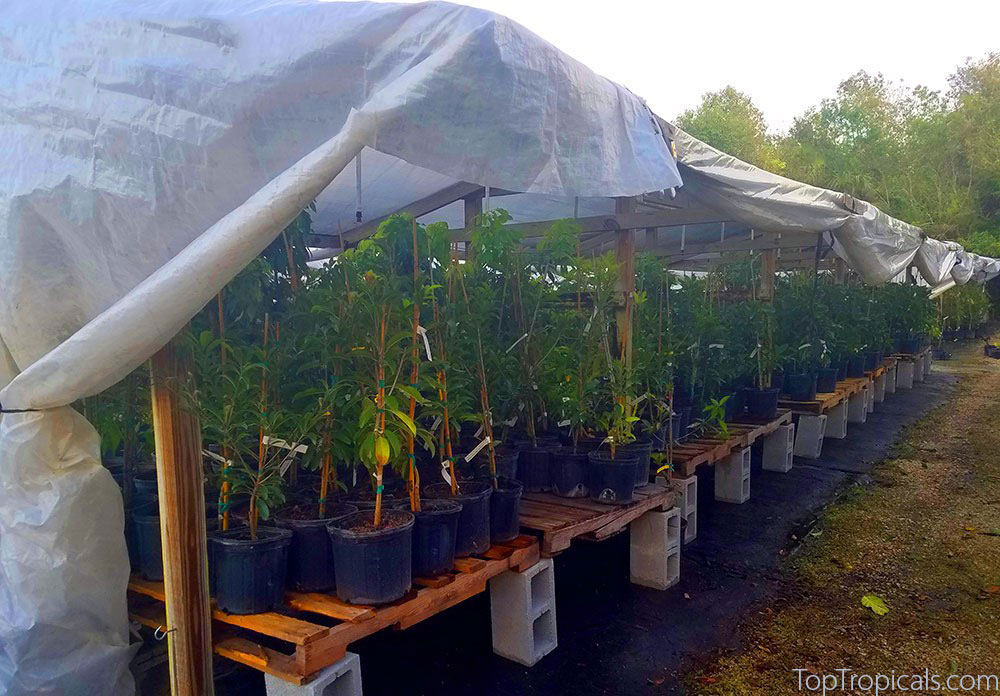
Protecting Tropical Plants with Frost Covers at Top Tropicals
Nursery
Date: 7 May 2026
3 Best Trees for a Fast-Fruit Garden
3 Best Trees for a "Fast-Fruit" Garden 🍒
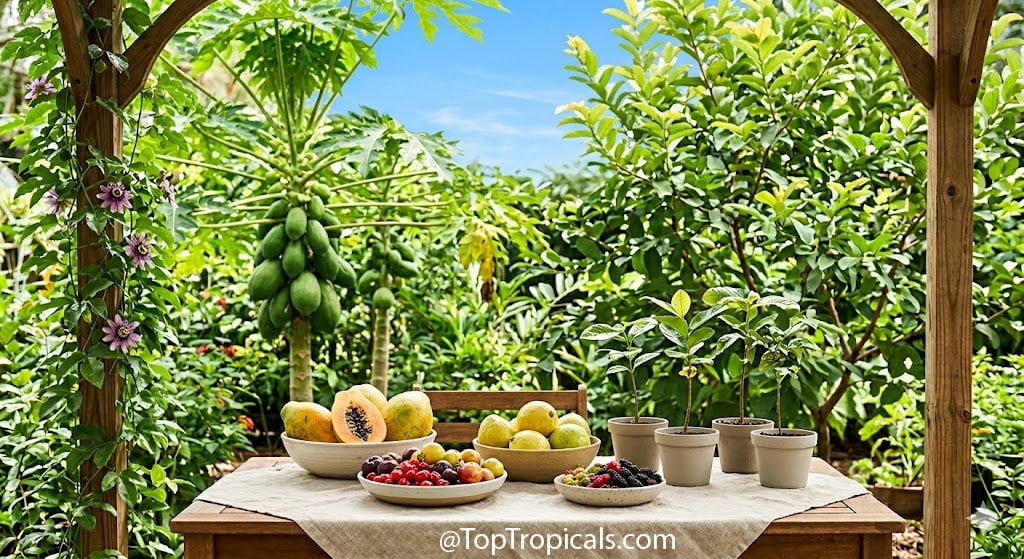
Want fruit without the wait? These tropical powerhouses deliver a "fast-food" garden in record time.
🍓 The Top 3 Speed Demons
1. The Favorite: Papaya🍊 If you want speed, Papaya is king. It can go from a small seedling to heavy fruit in 6-10 months. It behaves more like a giant herb than a tree: it is fast, has shallow roots, and is incredibly responsive to water and fertilizer. In warm climates, it is a plant it and watch it go legend. More details
2. The Reliable: Guava🍉 Guava is the most forgiving fruit tree you can own. It handles heat, poor soil, and the occasional week of neglect without missing a beat. Most varieties begin producing in just 1-2 years, staying compact enough for small yards or large pots. More details
3. The Surprise: Eugenias 🍒 This family (including Surinam Cherry, Grumichama, Cherry of the Rio Grande, and Pitomba) often flies under the radar. They look like ornamental shrubs, but they establish quickly and can fruit within year two. They handle pruning beautifully, making them perfect for edible hedges. More details
🍓 The Fast-Fruit Honor Roll
🍓Ultra-Fast (Under 1 Year) Papaya and Banana: The heavyweight champions of speed. Strawberry Tree (Muntingia calabura): Non-stop cotton candy berries. Grafted Favorites: High-quality Mango, Avocado, Peach, Nectarine, and Persimmon.
Mango Plant Facts
Botanical name: Mangifera indica Also known as: Mango
USDA Zone: 9 - 11
Highligths
Avocado Plant Facts
Botanical name: Persea americana, Persea gratissima Also known as: Avocado, Alligator Pear, Aguacate, Abacate
USDA Zone: 9 - 11
Highligths
Peach Plant Facts
Botanical name: Prunus persica, Amygdalus persica Also known as: Peach
USDA Zone: 5 - 10
Highligths
🍓Very Fast (1-2 Years) The Berries: Mulberry (especially Everbearing), Fig, and Barbados Cherry. The Exotics: Strawberry Guava, Loquat, and the curious Peanut Butter Tree (Bunchosia). The Sweet Treats: Blackberry Jam Fruit (Randia formosa).
🍓Tropical Staples (2-3 Years) Starfruit (Carambola): A heavy producer that looks stunning in the garden. Annona Family: Sweet Sugar Apples and creamy Atemoyas. Macadamia Nut: A long-term investment that starts surprisingly early.
🍓Fast Climbers and Bush Fruit Passionfruit: Will cover a fence and fruit in a single season. Berries: Mysore Raspberry and classic Blackberries for quick returns.
Botanical name: Mangifera indica Also known as: Mango
USDA Zone: 9 - 11
Highligths
All mango trees are naturally vigorous and, if planted in the ground, they all can grow into full-size trees reaching 15-20 ft or more. The term "Condo Mango" refers to varieties with a more compact growth habit that can be kept small in containers with light pruning. In a pot, their size is controlled by root space and regular trimming, allowing them to stay manageable and productive for many years. Here is how:
🥭 Condo mango = mango trees that stay compact in containers with light pruning.
✔️ In ground: 15–20+ ft ✔️ In pots: keep them 6–8 ft
🥭 Best pot sizes
· 3-7 gal - starter (3–6 months) · 7-5 gal - young tree (1–2 years) · 15-25 gal - ideal long-term · 25-40 gal - faster growth, more pruning
👉 Smaller pot = easier care 👉 Bigger pot = more growth + more work
🥭 Best mango types for containers
True dwarf (easiest)
Minimal pruning, perfect patio trees
· Keep tree 6–8 ft with pruning · Use fast-draining soil (critical) · Full sun = fruit · Feed regularly - Green Magic + Mango Tango · Repot or root-prune every few years
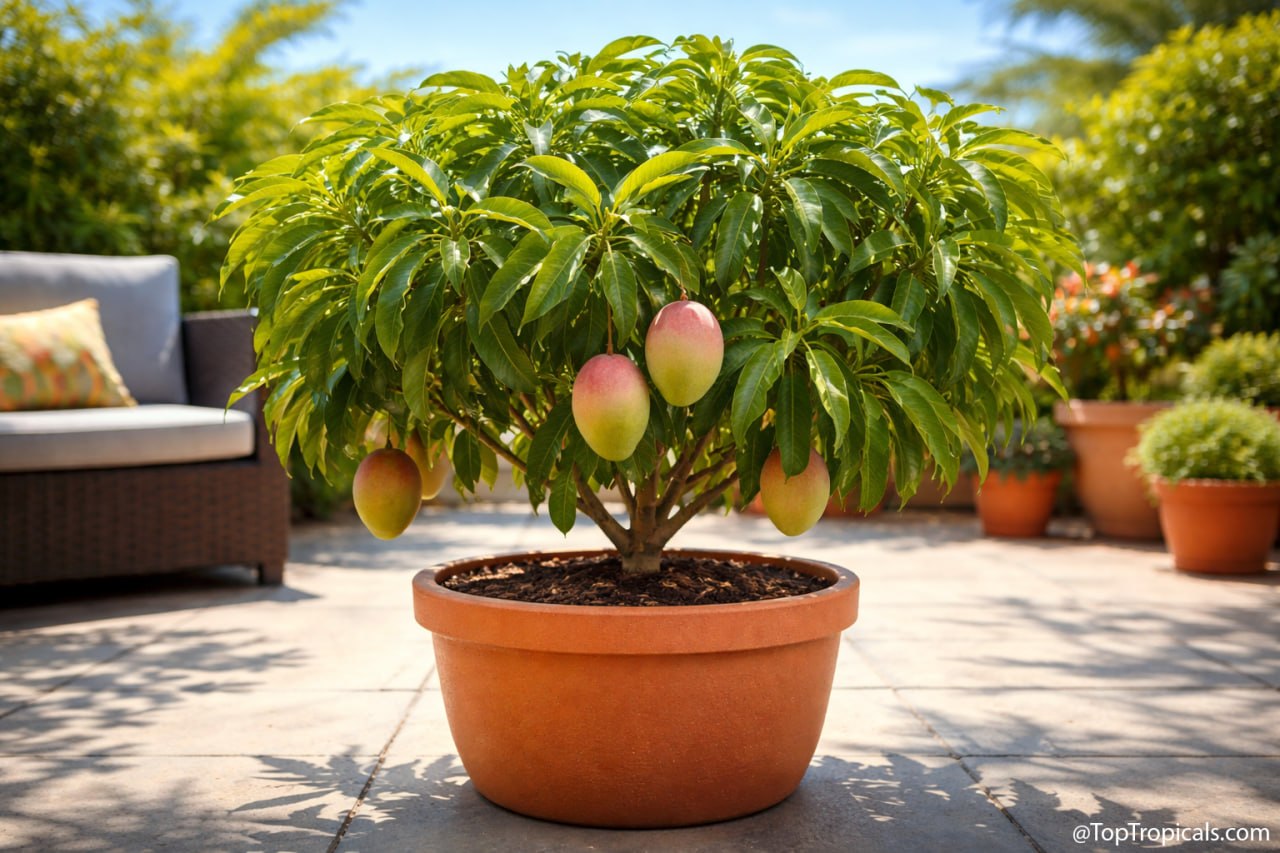
Yes, you can grow a mango tree on your patio - here is how to do it right
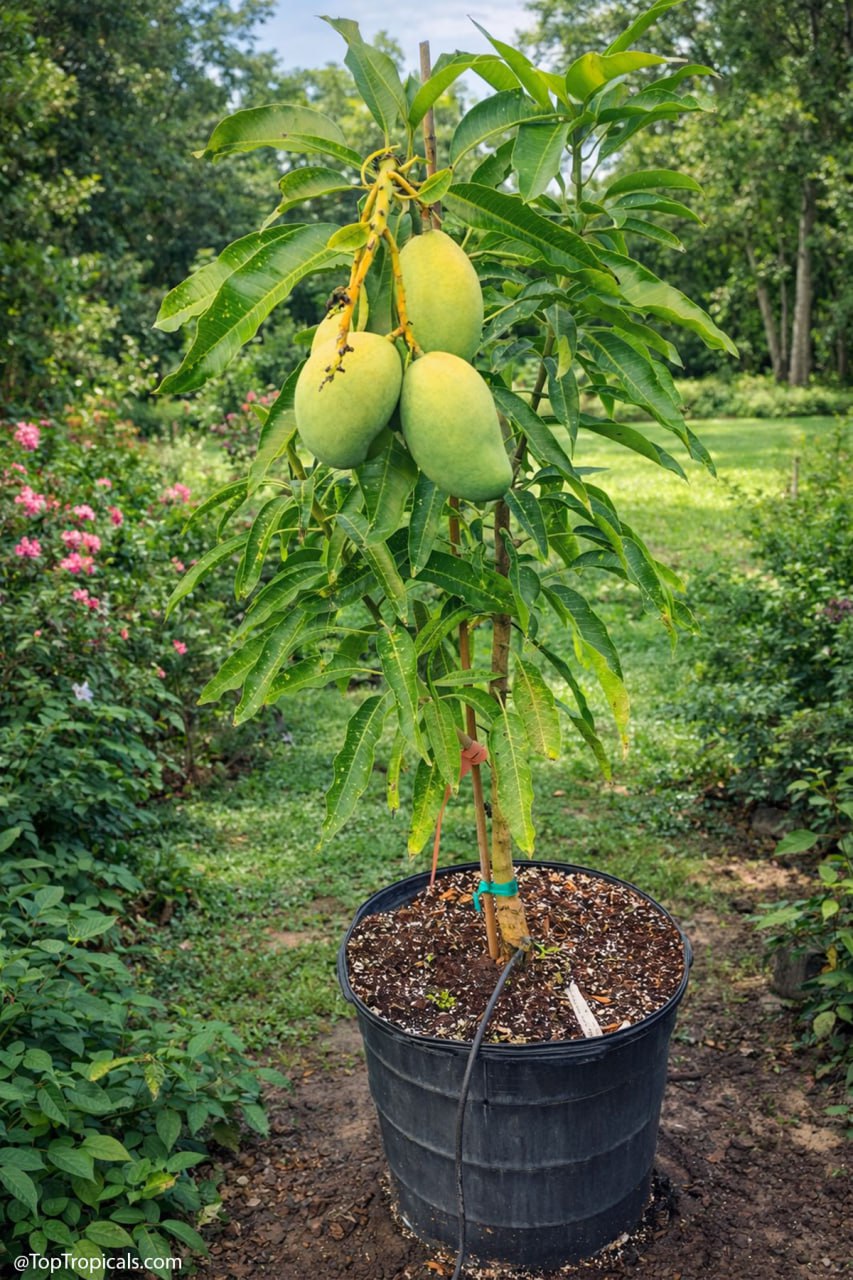
Mango fruiting in container
🥭 Yes, you can grow a container mango tree on your patio - here is how to do it right
Think you need a backyard orchard to grow mangoes? You don't. Mango trees grow very well in containers. Compact varieties, often called condo mangoes, stay naturally smaller and are well suited for pots, patios, and small yards. We grow and ship mango trees nationwide and have seen which varieties perform best in containers.
Mango Plant Facts
Botanical name: Mangifera indica Also known as: Mango
USDA Zone: 9 - 11
Highligths
Growing mangoes in pots is also practical in cooler climates. The tree can be moved to protection during cold weather while still producing real fruit. Here is how to do it right.
🥭 Pick the right condo mango tree variety
Choose condo or semi-dwarf mango varieties that stay smaller and respond well to pruning. These mango trees usually stay 6 to 10 feet tall in containers with light pruning. Fruit size is full-size, just fewer than on large trees.
Good mango choices for pots include:
· Cogshall - compact and productive
· Pickering - naturally small and reliable
· Carrie - manageable size, great flavor
· Ice Cream - slow growing, narrow canopy
· Julie - classic Caribbean type
· more condo varieties...
🥭 Choose the right pot
Start small. Young mango trees do best in a 5- to 7-gallon pot. Oversized containers too early often cause overwatering and root issues.
Increase size gradually:
First pot: 5-7 gallons
Next size: 10-15 gallons
Mature container: 20-25 gallons
The pot must drain well. Mango roots dislike wet soil. Add holes if needed. Plastic, ceramic, and fabric pots all work.
🥭 Use fast-draining soil
Mango trees need air around their roots.
Use a loose, fast-draining mix, such as Abundance Professional Soilless Mix. Improve drainage with perlite, pine bark, or coarse sand. Avoid heavy or water-holding soils. Drainage matters more than fancy ingredients.
🥭 Water carefully
Mango trees prefer a wet-dry cycle.
Water deeply, then allow the top few inches of soil to dry before watering again. Always check with your finger first.
In warm weather, water once or twice a week. In winter, much less. Overwatering is the most common container mistake.
🥭 Give plenty of sun
Mango trees love sun and heat.
Place the pot in full sun with at least 8 hours daily. More sun improves growth and flowering.
If overwintered indoors, use the brightest window possible. Grow lights help, but outdoor sun is best when weather allows.
🥭 Fertilize lightly but consistently
Potted mango trees benefit from regular feeding during active growth.
Use a balanced mango or fruit tree fertilizer such as Sunshine Mango Tango (safe to use with every watering, year-around). Controlled-release fertilizer Green Magic (every 6 months) work well too. Avoid excess feeding, which promotes leaves over flowers.
If leaves pale, check watering first, then nutrition.
🥭 Prune to stay compact
Pruning is essential for mangoes in pots.
Light tipping and trimming control size, encourage branching, and increase flowering points. Keep the canopy open and balanced. Watch how simple tipping works in real life: .
Avoid heavy pruning before flowering. Most pruning is best right after harvest.
🥭 Protect from cold
Mango trees are tropical and cold-sensitive.
When temperatures drop below 40F, move the pot to protection or indoors. Young trees are especially vulnerable.
During winter, reduce watering and stop fertilizing. Growth slows and the tree rests.
When warm weather returns, reintroduce the tree to sun gradually to prevent leaf burn.
🥭 Final thoughts
Growing a mango tree in a pot is practical and rewarding. With the right variety, good drainage, full sun, and careful watering, a potted mango can thrive and fruit for years, even in small spaces.
Ready to start? Choose a compact mango variety.