🎄 Holiday Plant Market:
Saturday, Dec 13, 2025, 9:00 AM to 4:00 PM 🎉
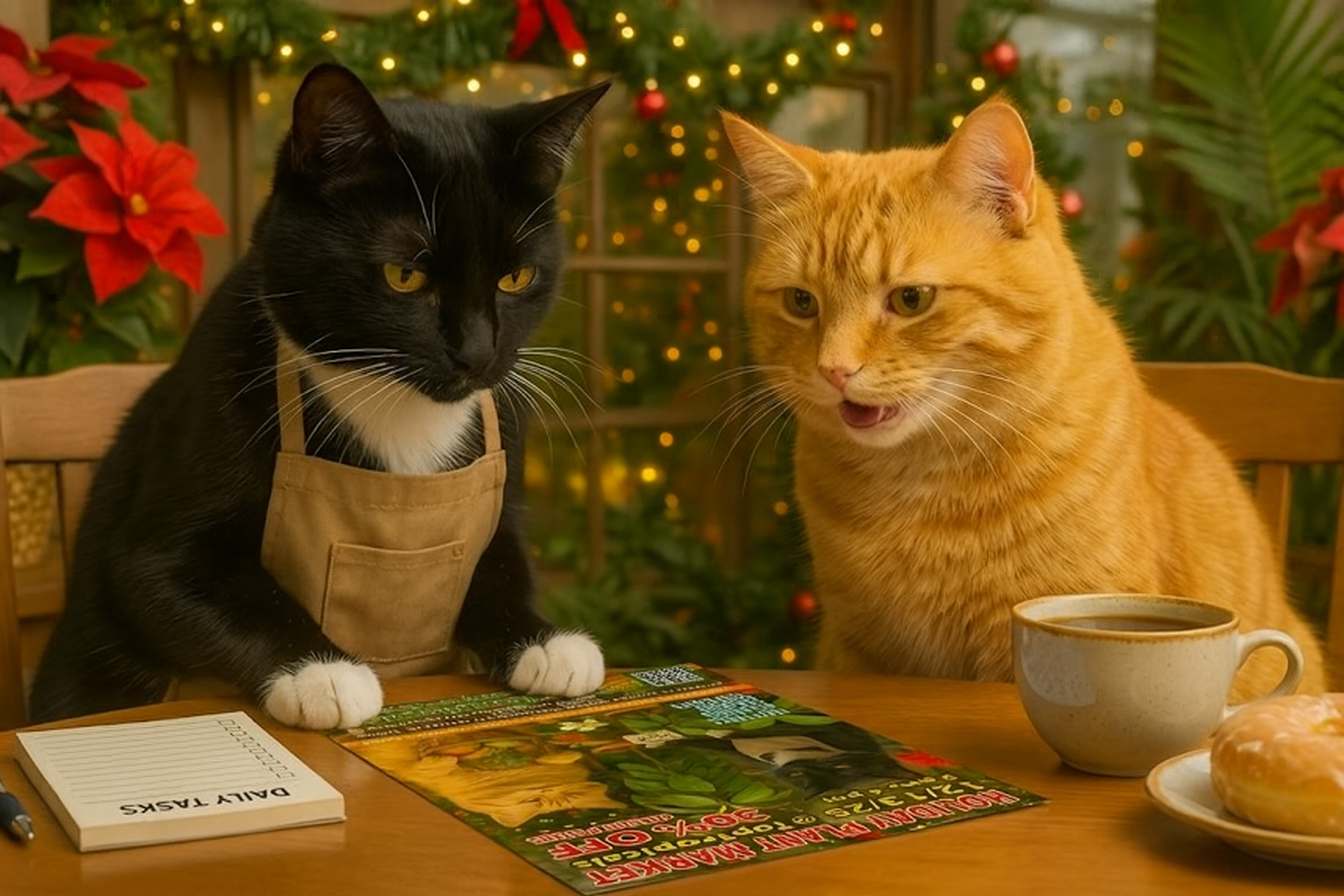
Smokey: We invited people, so we need to be prepared for the crowd.
Sunshine: I am prepared. I saw yummy donuts on the flyer.
Smokey: Of course you did, genius. You are responsible for donuts
and coffee.
It is almost here. Our big end-of-season Plant Day. All year we grow the
rare and unusual plants that will be featured at this event, and Saturday is
the day they finally meet their new homes. The garden turns into a small
holiday escape: fresh air, bright colors, music, snacks, and the PeopleCats
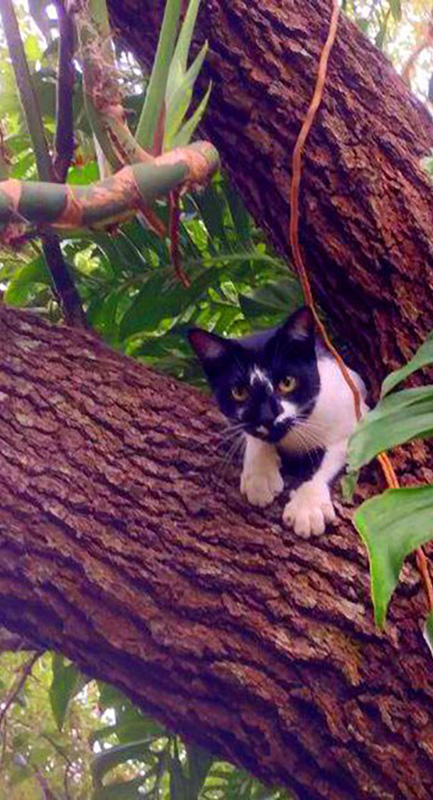
greeting everyone like they have known you for years.
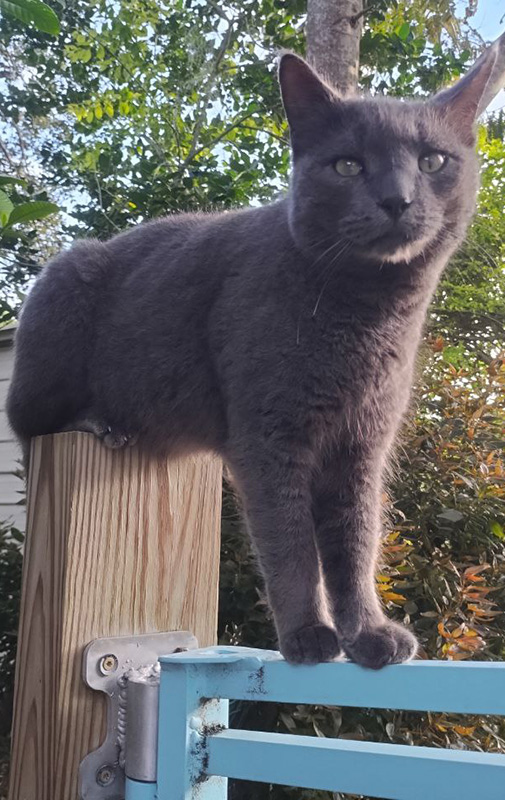
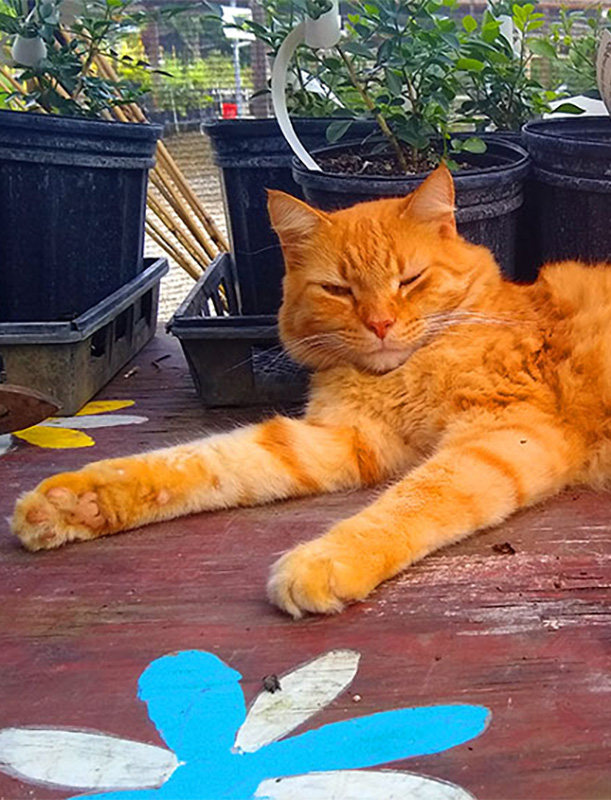
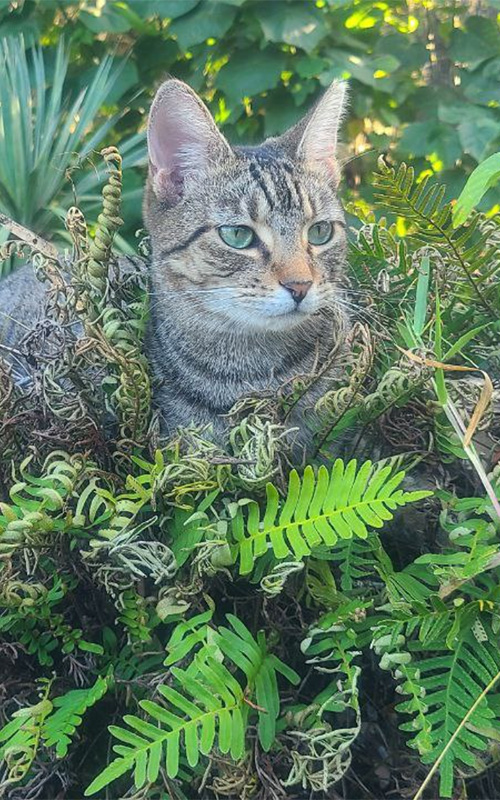
Meet PeopleCats crew in charge
King
Sushi
Snitch
Paisley
Persephone
Loki
Why you should come
It is December in Florida - warm breeze, sunshine, and perfect planting
weather. While the rest of the country is scraping frost off windshields,
you're
choosing which banana tree to take home. Come enjoy a colorful Saturday
surrounded by plants, music, snacks, and friendly PeopleCats. This is your
holiday escape, your plant-hunting adventure, and your chance to bring home
something amazing before the season ends.
Not Local?
Not everyone is lucky enough to live close by. For our online customers,
here is 20% for online orders:
EVENT2025
Valid for online orders only. Minimum order $120 (excluding shipping and
handling). Cannot be combined with any other discounts, coupon codes,
automatic promotions, or special offers. Not valid on previous purchases.
One use
per customer. Code must be entered at checkout. Offer valid through the end
of
Sunday, 12/14/2025
🔮 When the World Around Becomes Too
Gray: Plant a Tree. Eat a Donut. Keep going.
Sunshine: Smokey, what do we do when the world around
becomes too gray? Smokey: Plant a tree. Sunshine: And if that does not help? Smokey: Plant another one. Sunshine: And eat a donut. Smokey: Not strictly necessary, but statistically
beneficial.
If you have been feeling a little worn down lately, you are not
alone.
You already know about the headlines. We do not need to list them. You
have probably seen them today before breakfast.
We are not here to pretend that is not happening. It is happening. And
it is a lot.
But here is the thing we keep coming back to, the thing that has been true
for as long as people have had hands and a patch of ground: when the world
feels out of control, you can still plant something.
Gardening is not an escape. It is an answer. When you put a tree in the
ground, you are making a quiet statement. You are saying that you expect
there to be a future. That you intend to be in it. That shade and fruit and
flowers still matter, and you are going to make sure they exist in your
corner of
the world.
That is not naive. That is courageous in the most ordinary and
underrated way.
One tree, planted this season, might give you fruit in a few years. It
might give butterflies somewhere to stop. It might give a bird a place to
nest. It will almost certainly give you something to look at on a hard day
that
reminds you the world still contains beauty, and that you put some of it
there.
And if one tree does not quite do it? Plant another one.
Dostoevsky said beauty will save the world. We think a mango fruiting in
your backyard counts. So does a Magnolia opening on a quiet morning.
Do not skip the donut.
A donut is a small, simple, completely unnecessary thing. That is
exactly the point. It is not productive. It does not solve anything. It is
just
good, and sometimes that is the whole reason. In a world that constantly
demands
you be useful and informed and concerned, eating a donut is a quiet act of
being human. You are allowed to enjoy a small thing on a hard day. You do
not
have to earn it.
Rest a little. Then go put something in the ground. Anything that will
grow and flower and remind you that beautiful things are still happening
whether the headlines mention them or not.
We just finished harvesting loquats
and mulberries,
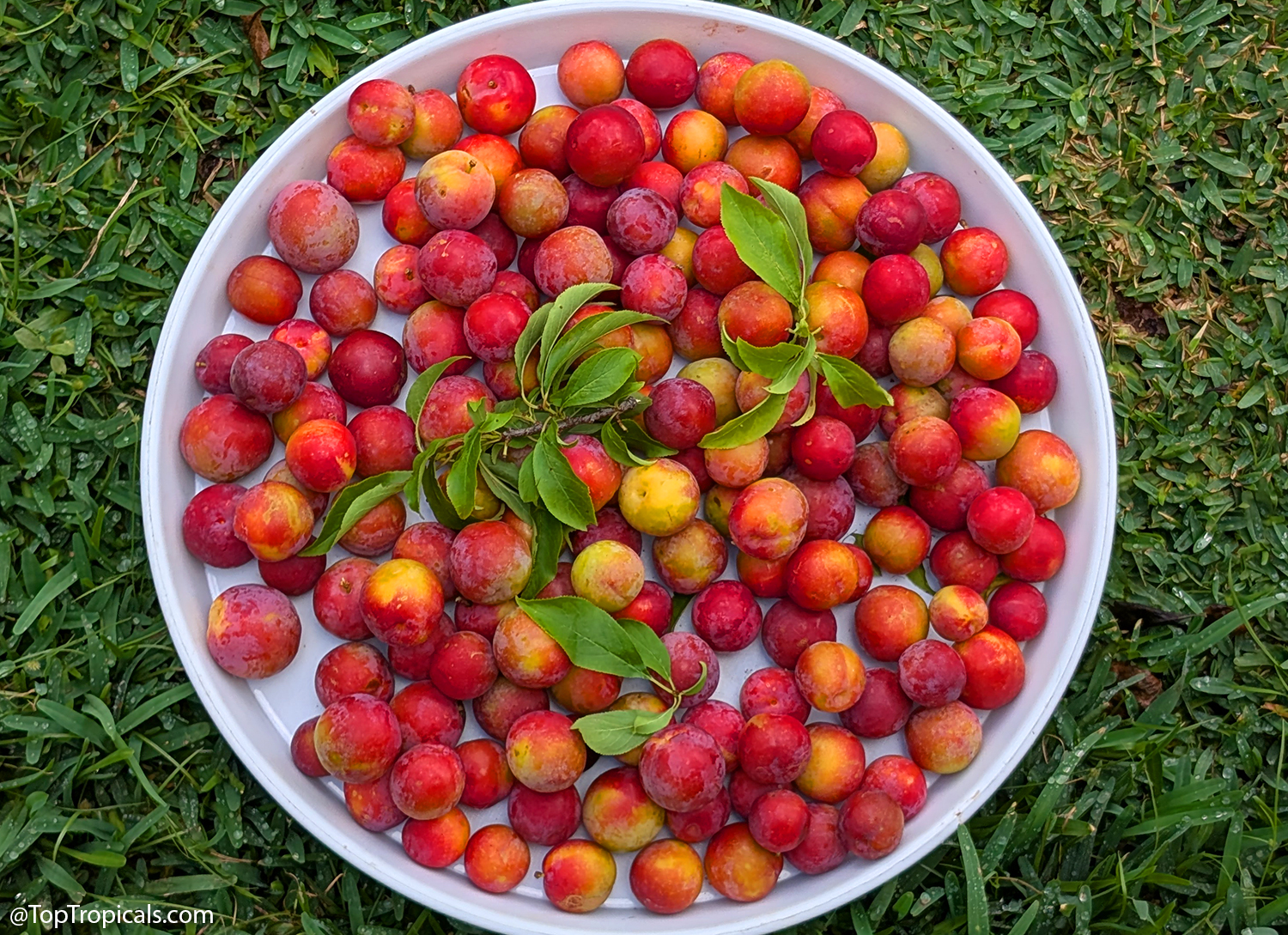
and now another wave is coming in - low chill plums,
peaches, and nectarines fresh from the garden. This is one of
the most rewarding times of the year, when every season brings the fruit of
your labor and all that work finally turns into something sweet.
13 tropical flowers to plant in spring to attract pollinators year around
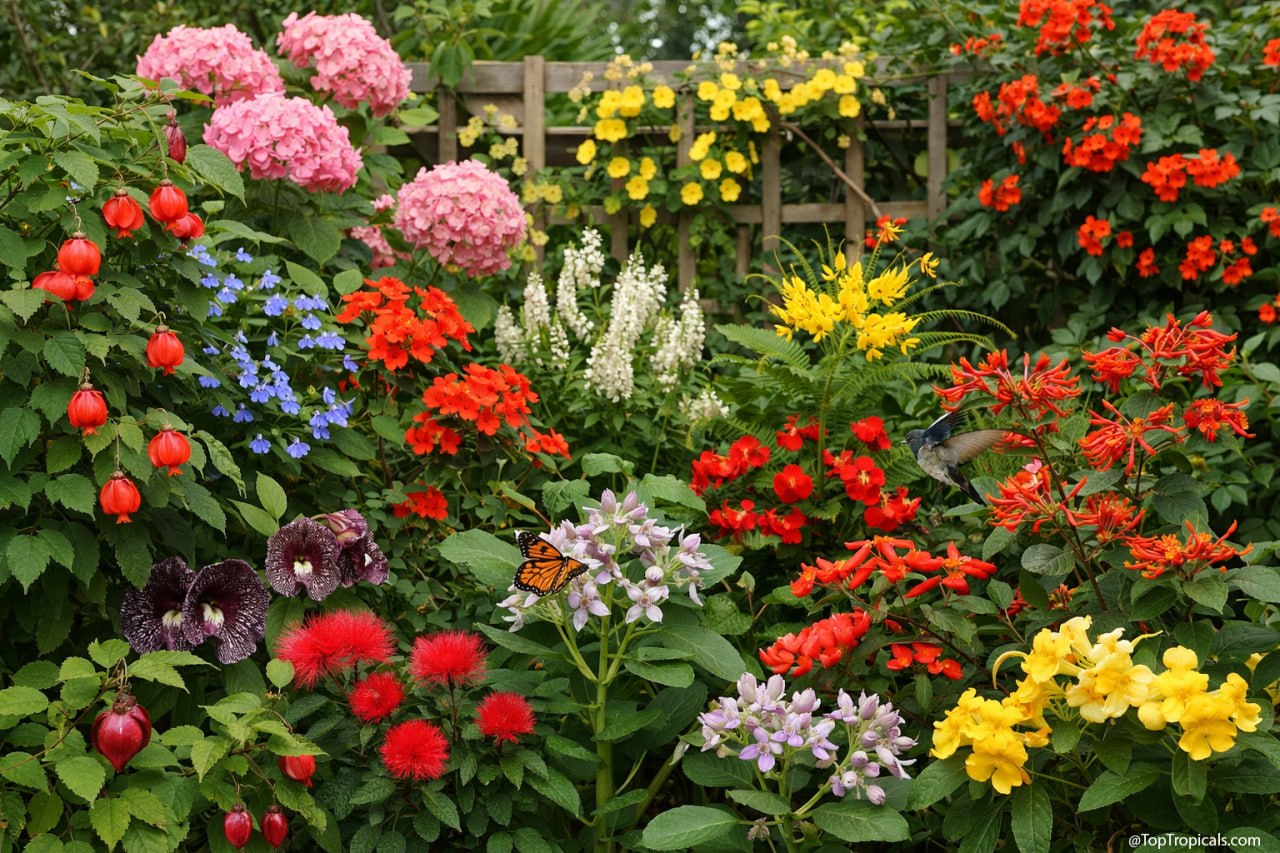
13 tropical flowers to plant in spring to attract pollinators year around: Abutilon Fireball (Abutilon darwinii x striatum), Almond Bush (Aloysia virgata), Calico Flower (Aristolochia littoralis), Pride of De Kaap (Bauhinia galpinii), Mexican Bird of Paradise (Caesalpinia mexicana), Red Tassel Flower (Calliandra tweedii With Love), Giant Milkweed (Calotropis gigantea), Blue Butterfly (Clerodendrum ugandense), Tropical Hydrangea (Dombeya wallichii), Fire Bush (Hamelia patens), Butterfly Orchid
13 tropical flowers to plant in spring to attract pollinators year around
Spring is when everything wakes up - and if you plant smart now, your garden can stay alive with butterflies, bees, and hummingbirds all year long. The key is mixing tropical bloomers that flower in waves, not all at once. These plants don’t just look good - they keep pollinators coming back season after season, turning your yard into a living, moving ecosystem.
1. Abutilon Fireball (Abutilon darwinii x striatum)
Bell-shaped flowers in warm red and orange tones hang like little lanterns. Very cold hardy, blooms on and off through the year, especially in mild climates. A steady nectar source for hummingbirds. More 👉
2. Almond Bush (Aloysia virgata)
Light, airy clusters of tiny white flowers with a strong almond scent. Bees absolutely cover this plant when it’s in bloom. Flowers repeatedly through warm months. More 👉
Sweet Almond Bush Plant Facts
Botanical name: Aloysia virgata Also known as: Sweet Almond Bush, Incense Bush
USDA Zone: 9 - 11
Highligths
3. Calico Flower (Aristolochia littoralis)
One of the most unusual flowers you can grow - patterned like fabric. More importantly, it’s a host plant for butterflies, giving them a place to lay eggs. More 👉
Elegant Dutchmans Pipe Plant Facts
Botanical name: Aristolochia littoralis, Aristolochia elegans Also known as: Elegant Dutchmans Pipe, Calico Flower
USDA Zone: 9 - 12
Highligths
4. Pride of De Kaap (Bauhinia galpinii)
Bright orange-red blooms cover this shrub for months. Tough, fast-growing, and constantly visited by butterflies and bees. More 👉
Pride of De Kaap Plant Facts
Botanical name: Bauhinia galpinii, Bauhinia punctata Also known as: Pride of De Kaap, Nasturtium Bauhinia
USDA Zone: 9 - 11
Highligths
5. Mexican Bird of Paradise (Caesalpinia mexicana)
Sunny yellow flowers with a light fragrance. Handles heat, freeze, and poor soil easily. A reliable nectar plant for bees and butterflies. More 👉
Mexican Bird of Paradise Plant Facts
Botanical name: Caesalpinia mexicana Also known as: Mexican Bird of Paradise, Dwarf Poinciana
USDA Zone: 9 - 11
Highligths
6. Red Tassel Flower (Calliandra tweedii With Love)
Very showy red-flowered powderpuff, fast-growing and spacey shrub. Cold tolerant to hard freeze, making it a strong choice for subtropical gardens. Forms a dense, many-stemmed plant with fine, feathery foliage that folds at night or by touch. Large scarlet tassel flowers bloom from spring to autumn and attract pollinators nonstop. More 👉
7. Giant Milkweed (Calotropis gigantea)
A bold plant with thick leaves and waxy flowers. Important host plant for butterflies, especially monarchs. Handles heat and drought well. More 👉
Giant Milkweed Plant Facts
Botanical name: Calotropis gigantea Also known as: Giant Milkweed, Crown Flower, Giant Calotrope, Arka, Jilledu, Erukkam Madar, White Madaar
USDA Zone: 9 - 11
Highligths
8. Blue Butterfly (Clerodendrum ugandense)
Flowers really do look like little blue butterflies. Blooms frequently and attracts actual butterflies along with bees. More 👉
Butterfly Clerodendrum Plant Facts
Botanical name: Rotheca myricoides, Clerodendrum ugandense Also known as: Butterfly Clerodendrum, Blue Butterfly Bush, Blue Glory Bower, Blue Wings
USDA Zone: 9 - 11
Highligths
9. Tropical Hydrangea (Dombeya wallichii)
Large clusters of soft pink flowers appear in cooler months when little else is blooming. A major nectar source in winter. More 👉
Pink Ball Tree Plant Facts
Botanical name: Dombeya wallichii, Dombeya x cayeuxii Also known as: Pink Ball Tree, Tropical Hydrangea
USDA Zone: 9 - 11
Highligths
10. Fire Bush (Hamelia patens)
One of the best all-around pollinator plants and a tough bush - takes both cold and heat. Tubular orange-red flowers attract hummingbirds nonstop, plus butterflies and bees. More 👉
Fire Bush Plant Facts
Botanical name: Hamelia patens Also known as: Fire Bush, Firecracker Plant
USDA Zone: 8 - 11
Highligths
11. Butterfly Orchid Vine (Mascagnia macroptera)
A climbing, cold hardy vine covered in bright yellow flowers and butterfly-like seeds. Great for fences or trellises, adding vertical color and feeding pollinators. More 👉
Butterfly pea vine Plant Facts
Botanical name: Mascagnia macroptera Also known as: Butterfly pea vine, Yellow Orchid vine, Gallinita
USDA Zone: 9 - 10
Highligths
12. Mexican Flame Vine (Senecio confusus)
Fast-growing, hardy vine with intense red blooms. Flowers heavily and brings in butterflies quickly. More 👉
Mexican Flame Vine Plant Facts
Botanical name: Pseudogynoxys chenopodioides, Senecio confusus Also known as: Mexican Flame Vine, Orangeglow Vine
USDA Zone: 9 - 11
Highligths
13. Yellow Elder (Tecoma stans)
Bright yellow trumpet flowers that bloom over a long season. A dependable plant for both bees and hummingbirds. More 👉
Yellow Elder Plant Facts
Botanical name: Tecoma stans, Bignonia stans Also known as: Yellow Elder, Yellow Bells
USDA Zone: 9 - 11
Highligths
✔️ Planting a mix of these gives you something in bloom almost every month.
That’s the real trick - not just planting for spring, but building a rotation of flowers that keeps pollinators fed all year long.
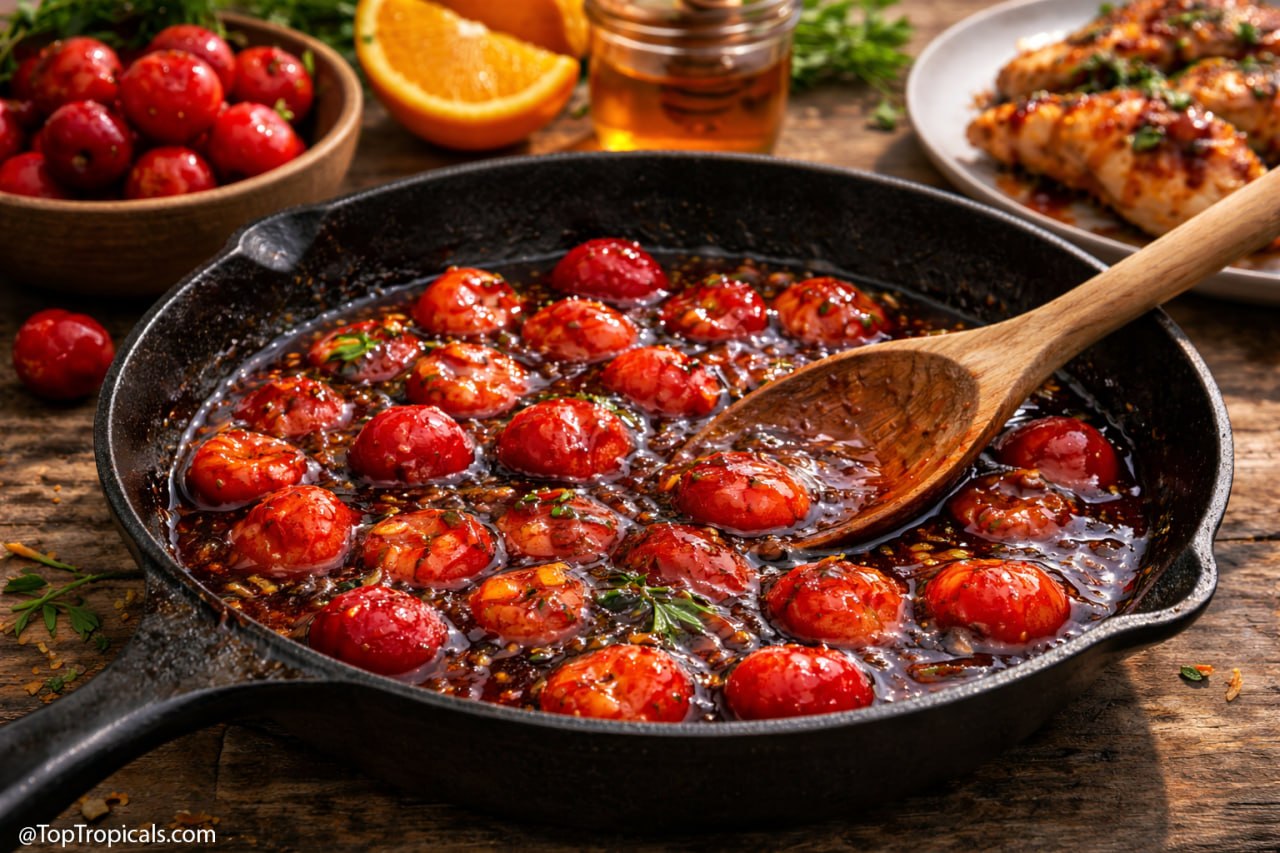
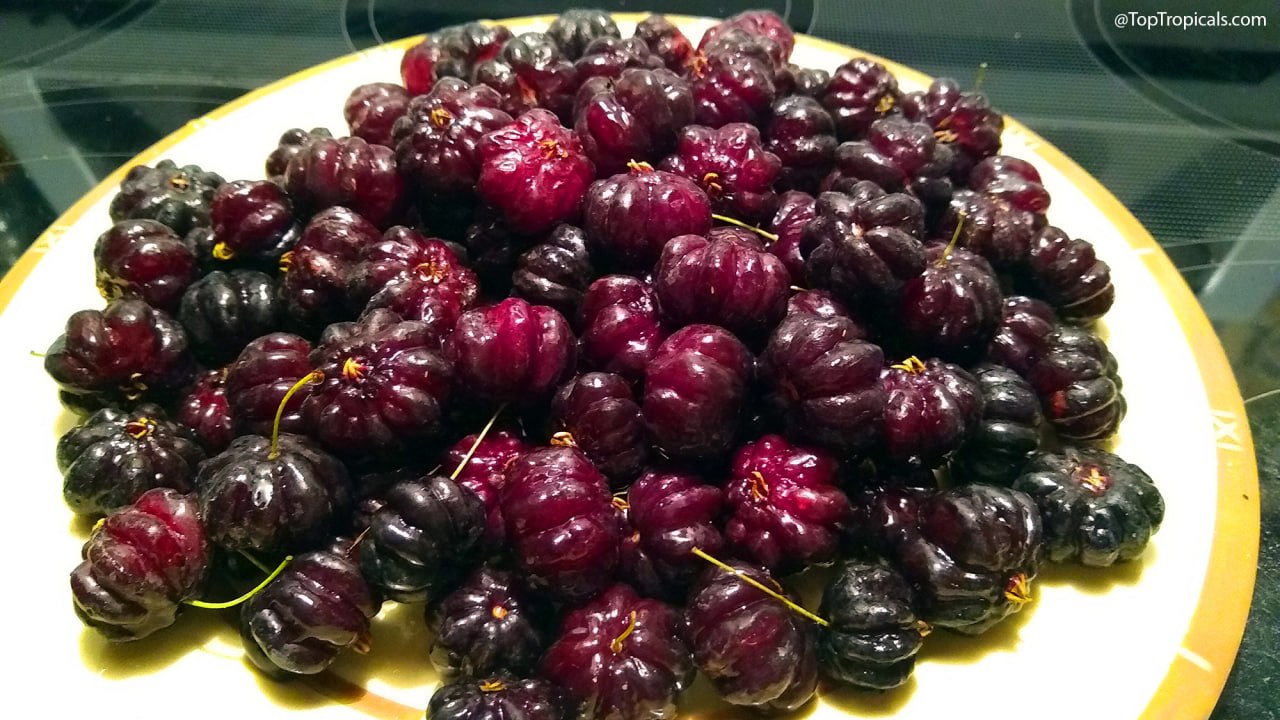
🔴Halve ripe Surinam cherries, take the seed out 🔴Cook in a pan with honey and a squeeze of orange. Simmer until syrupy. 🔴Pour over grilled chicken or roasted vegetables.
🌿 About the plant:
Surinam cherry produces bright ribbed fruit that range from sweet to tangy depending on variety and ripeness.
🏡 In the garden:
A tough, adaptable shrub that can be trimmed as a hedge. Fruits multiple times a year in warm climates.
Rare Night-Blooming Cactus that Glows and Grows Large Edible Fruit
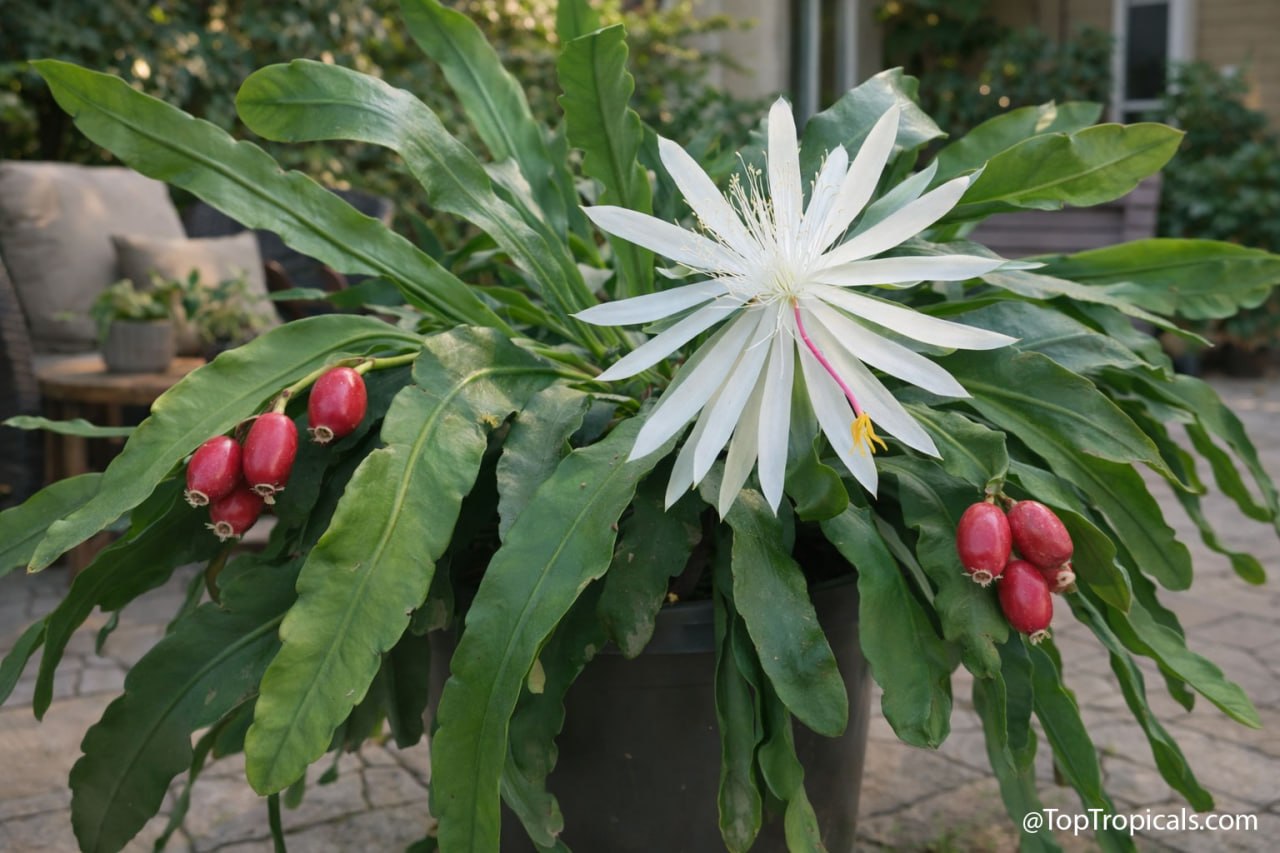
Epiphyllum hookeri - Rare Night-Blooming Cactus with fragrant flowers and large edible fruit
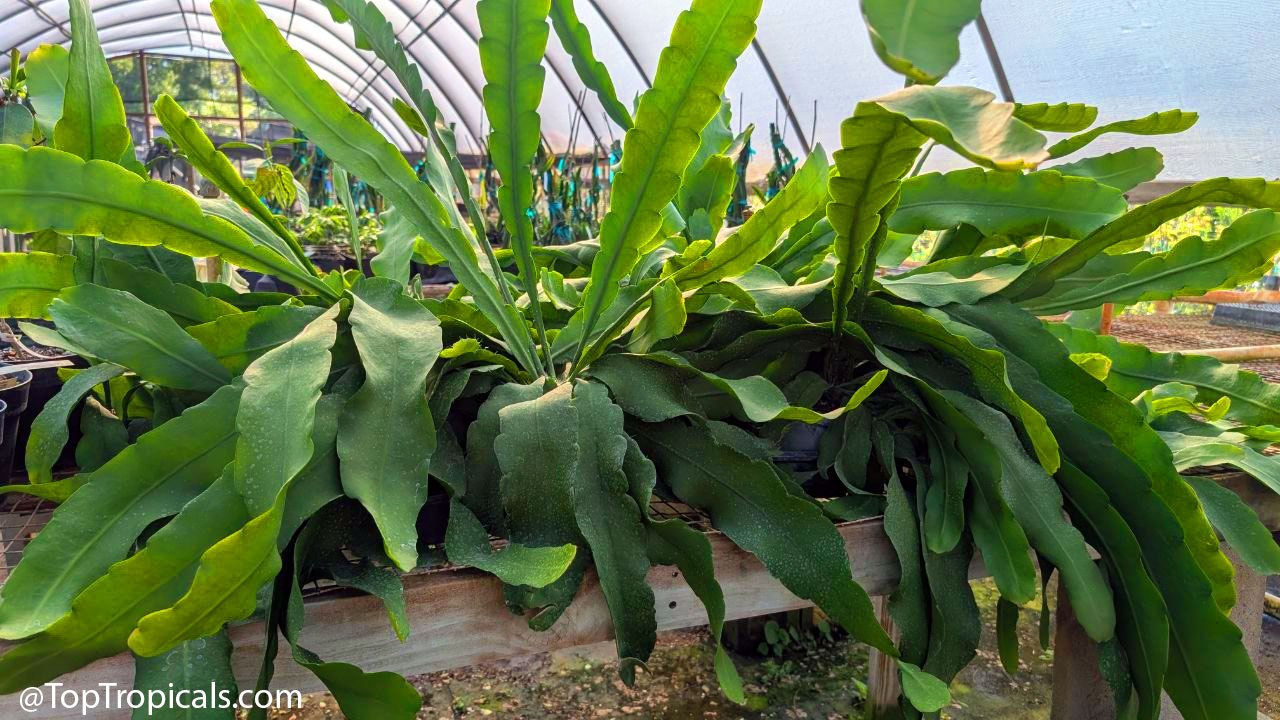
Epiphyllum hookeri - Night-Blooming Cactus with large leaves
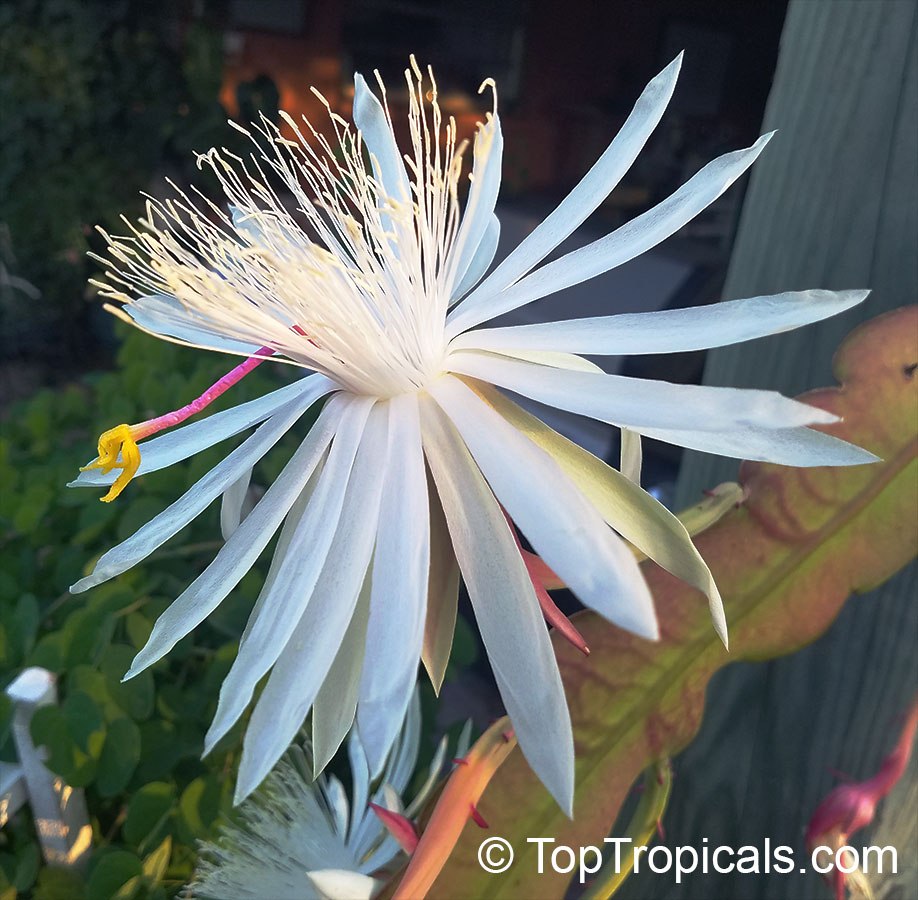
Epiphyllum hookeri - Night-Blooming Cactus large flowers
Rare Night-Blooming Cactus that Glows and Grows Large Edible Fruit 🍅
Did you know this nigh blooming beauty has large edible fruit? Why the Epiphyllum hookeri is the ultimate two-for-one plant for tropical garden lovers.
Climbing Cactus Plant Facts
Botanical name: Epiphyllum hookeri, Epiphyllum strictum, Epiphyllum stenopetalum, Epiphyllum phyllanthus Also known as: Climbing Cactus, Hooker's Orchid Cactus
USDA Zone: 9 - 11
Highligths
🌠 The Midnight Spectacle
Most gardeners grow the Epiphyllum hookeri for its "ghostly" white flowers. These massive, fragrant blooms wait until sunset to unfurl, reaching their peak beauty under the moonlight before fading at dawn.
🌠 The Edible Bonus
What many don’t realize is that this specific seed-grown type is a "fruiting" powerhouse. After the dramatic floral display, the plant sets smooth, elongated fruit. The flavor? Mild, sweet, and surprisingly refreshing -think of it as a garden-grown secret.
🌠 How to Grow It
Light: Filtered sun or bright shade (no harsh midday sun!). Hydration: Regular watering in well-drained soil. Display: It’s a natural climber/cascader—put it in a hanging basket and let it shine.